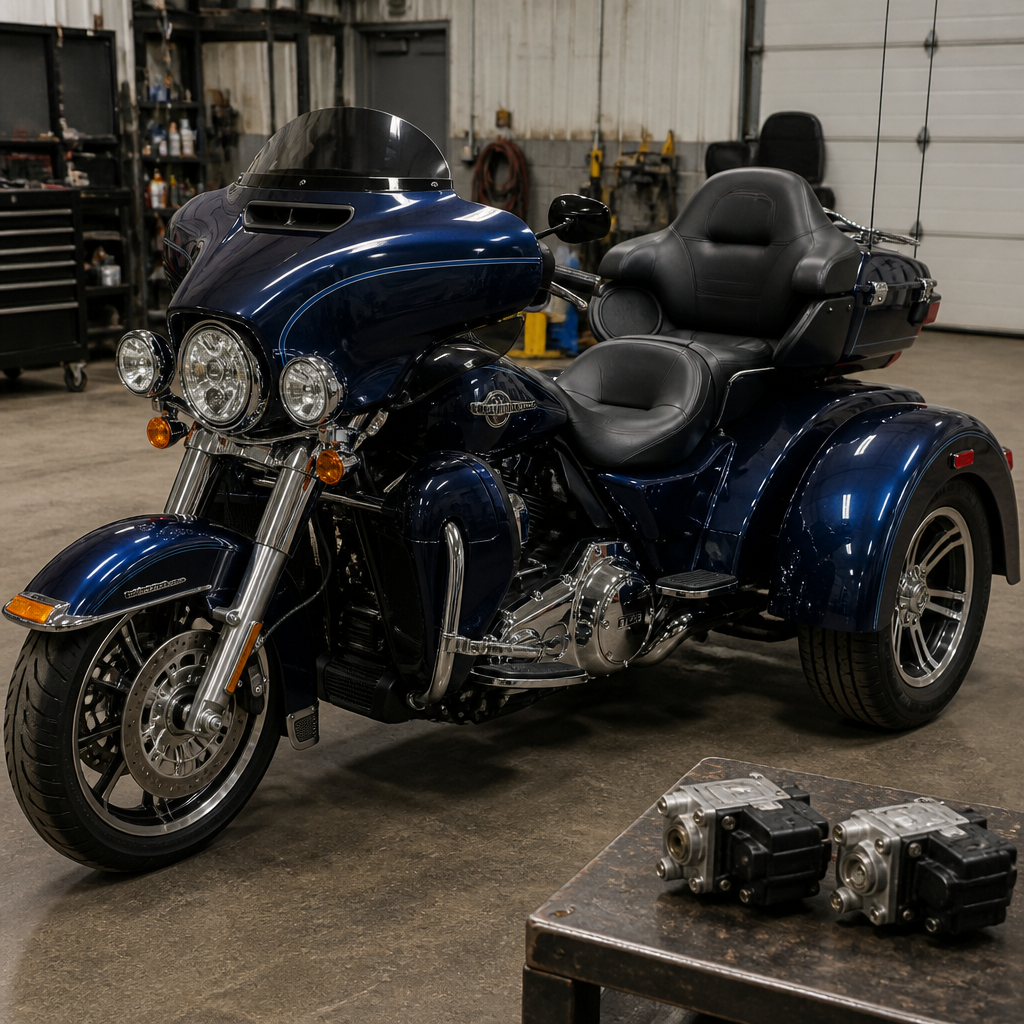
A used Harley-Davidson Tri-Glide Ultra from 2019 through 2025 can be a strong touring buy, but the traction control and ABS modules deserve closer inspection than paint, chrome, or even service stamps. These three-wheel tourers are heavy, expensive to repair when electronics fail, and often ridden in weather that exposes wheel-speed sensors, hydraulic circuits, and control units to moisture, heat, and road debris. For a buyer shopping the Used Buyer Guides: 1990–2033 range under the broader Harley-Davidson topic, this hub matters because braking and stability systems mark one of the clearest dividing lines between older analog machines and newer electronically managed touring platforms. If you understand how Harley’s modern trike braking architecture works, how to spot early faults, and how model-year context changes what “normal” looks like, you will make better buying decisions across the full used timeline, not only on the 2019–2025 Tri-Glide Ultra.
On these models, ABS refers to the anti-lock braking system that modulates brake pressure to prevent wheel lock during hard stops. Traction control monitors wheel-speed data and intervenes when driven-wheel slip exceeds allowable thresholds. On a Tri-Glide Ultra, those functions are tied into a network of sensors, hydraulic components, wiring, and software logic rather than one simple black box. In practice, buyers usually describe the problem as “an ABS light,” “no traction control,” or “linked brakes feel odd,” but root causes vary widely. I have inspected enough late-model Harley touring and trike units to know that a clean title and a smooth test ride are not enough; intermittent faults often hide until the machine reaches heat soak, low battery voltage, or wet-road conditions. That is why a structured inspection process is essential.
The 2019–2025 period is especially important because it sits in the mature phase of Milwaukee-Eight touring development, when Harley-Davidson refined rider-assistance electronics, infotainment integration, charging systems, and diagnostics. Buyers often assume newer means risk-free. My experience says the opposite: newer trikes can be excellent, but they punish lazy inspections because the repair bill for a neglected electronic braking issue can quickly exceed the savings of buying used. A wheel-speed sensor may be inexpensive, while a hydraulic control unit, wiring repair, or module replacement can become a four-figure event once labor, bleeding procedures, calibration, and dealership programming enter the picture. For anyone building a mental map of Harley-Davidson used buyer guides from 1990 to 2033, this model family is where electronic inspection discipline becomes mandatory rather than optional.
Why the Tri-Glide Ultra’s braking electronics matter more than on a two-wheel Harley
The Tri-Glide Ultra is not just an Ultra Limited with one extra wheel. It has different weight distribution, different rear-end packaging, and different expectations in low-grip conditions. A loaded Tri-Glide can exceed 1,200 pounds with rider, passenger, luggage, and fuel, so controlled braking is central to safety, tire life, and rider confidence. Modern Harley trikes rely on wheel-speed inputs and hydraulic modulation to keep that mass manageable during panic stops or uneven-surface braking. If the system is compromised, stopping distances can increase, pedal feel can become inconsistent, and dashboard warnings may disable rider aids altogether. The result is not always dramatic enough to scare a casual test rider, which is exactly why buyers miss problems.
Another reason these systems matter is usage pattern. Many Tri-Glide owners are experienced touring riders who cover long highway miles, use battery tenders inconsistently, and sometimes let the trike sit for weeks or months. Long storage periods can flatten batteries, low voltage can trigger misleading fault histories, and moisture can corrode connectors around wheels and frame junctions. Trikes also see more reverse maneuvering stress, parking-lot abrasion, and curb-contact risk near sensors and harness routing. I routinely check these areas because cosmetic sellers often detail the bodywork while ignoring exposed undercarriage wiring. A spotless fairing tells you almost nothing about the health of the ABS hydraulic unit mounted lower in the machine’s functional plumbing.
Model-year context for 2019 through 2025 and how this fits the 1990–2033 used guide timeline
As a hub article, this page should help buyers place the 2019–2025 Tri-Glide Ultra inside the wider Harley-Davidson used landscape. In the 1990s, most Harley touring models were mechanically simpler, with buyer attention focused on charging systems, cam-chain tensioners on later Twin Cam bikes, carburetion, chassis wear, and crash damage. Through the 2000s and early 2010s, ABS became a meaningful checklist item, but diagnostics were still less deeply integrated than on newer touring platforms. By the late 2010s into the 2020s, electronic rider aids, infotainment, CAN-based communication, and software-dependent calibration became part of the ownership equation. That does not make newer trikes fragile by default. It means inspection standards must evolve with technology.
For 2019–2025 Tri-Glide Ultra buyers specifically, expect generally strong drivetrain durability if routine maintenance has been performed, but do not let engine confidence distract from chassis electronics. Ask whether recalls or service campaigns were completed, whether the battery is original, whether brake fluid flushes were done on schedule, and whether warning lights were ever “cleared” before sale. Harley dealers using Digital Technician can pull active and historic trouble codes, and that information is worth far more than a seller saying, “The light went away.” Across the broader 1990–2033 buyer-guide series, this is the threshold where scan-tool verification becomes as important as a compression check once was on older bikes.
How the traction control and ABS modules actually work on a used Tri-Glide Ultra
At a functional level, the system combines wheel-speed sensors, a control module, hydraulic valves, pump circuitry, and wiring that communicates with other motorcycle systems. Wheel-speed sensors read tone rings or encoded targets as wheels rotate. The control logic compares rotational speed differences among front and rear wheels, then decides whether one wheel is locking under braking or slipping under throttle. If lock is detected, the ABS function pulses hydraulic pressure. If excessive slip is detected, traction control reduces available drive influence according to programmed thresholds. On trikes, the calibration strategy matters because rear axle behavior differs from a motorcycle leaning through a turn. The software is tuned for a vehicle that remains upright and transfers load differently.
For used buyers, the practical takeaway is simple: faults can come from sensing, hydraulics, power supply, communication, or software state. The module itself is only one possible failure point. I have seen buyers assume any ABS lamp means “bad ABS pump,” then over-negotiate or walk away unnecessarily when the actual issue was a damaged sensor cable or weak battery. I have also seen the opposite mistake, where a seller blames a persistent traction-control warning on a battery despite evidence of previous hydraulic work and stored wheel-speed faults. Good inspection separates symptoms from causes, and that discipline saves money.
Inspection checklist: what to look at before, during, and after the test ride
Start with battery voltage and charging behavior because modern Harley electronics are intolerant of weak electrical foundations. A resting battery in healthy condition should generally show around 12.6 volts or slightly more after sitting, and charging voltage with the engine running should be consistent with normal system output. Then inspect brake fluid condition at both reservoirs, looking for dark, contaminated fluid or signs of moisture neglect. Check around calipers, lines, fittings, and the hydraulic control area for seepage, abrasion, or non-factory fasteners that suggest previous repair. Follow wheel-speed sensor leads visually wherever access allows; look for rubbing, pinching, splices, cracked insulation, or mud packed around tone-ring areas.
Before the ride, turn the ignition on and confirm that warning lamps illuminate in the expected self-check sequence. A lamp that never appears can be as suspicious as one that stays on, because some sellers become creative. During the ride, test straight-line braking on clean pavement at low and moderate speeds. Feel for a firm, predictable pedal and lever response. Pulsation under hard braking can be normal when ABS actively intervenes, but random pulsing on dry pavement at modest pressure can indicate false sensor input or rotor-related issues. If conditions safely allow, observe whether warnings appear only after several miles, after hot restarts, or after rough-road vibration. Intermittent failures often reveal themselves late.
| Inspection point | What good looks like | Red flag | Likely implication |
|---|---|---|---|
| ABS/traction-control lamps | Normal self-check, then off | Stays on or returns while riding | Stored fault, active sensor issue, voltage problem, or module fault |
| Battery and charging | Strong start, stable voltage | Slow crank, recent unexplained replacement | Electrical instability causing false or repeated codes |
| Wheel-speed sensor wiring | Clean routing, intact clips | Chafing, splices, missing retainers | Intermittent signal loss from vibration or steering movement |
| Brake fluid and hydraulic areas | Clean fluid, dry fittings | Dark fluid, seepage, tool marks | Poor maintenance, possible internal corrosion, prior repair |
| Road-test brake feel | Linear, confident stopping | Unexpected pulsing, soft feel, uneven response | Air in system, sensor errors, hydraulic control concerns |
Common fault patterns buyers see on used 2019–2025 examples
The most common pattern is a wheel-speed sensor or sensor-circuit issue rather than immediate catastrophic module failure. Dirt, metal debris, physical damage, connector corrosion, or harness chafing can distort signals and trigger ABS or traction-control warnings. Second is low system voltage. Late-model Harleys do not like weak batteries, and a marginal battery can create startup faults that confuse owners and shoppers alike. Third is poor brake-fluid maintenance. Brake fluid is hygroscopic, so it absorbs moisture over time. If fluid changes are skipped, internal corrosion risk rises within valves and passages, and brake feel degrades. On low-mileage garage queens, neglect can be worse than on regularly serviced tourers.
Less common but more expensive are hydraulic control unit failures, module communication problems, and damage following collision repair. A trike that lightly struck a curb or was tied down improperly during transport may show no obvious body damage, yet still suffer bent tone-ring hardware, strained harnesses, or damaged sensor brackets. That is why service records and underbody inspection matter. Ask direct questions: Was any brake work performed beyond pads and fluid? Were rear-end or wheel bearings serviced? Was the machine ever in a flood, tip-over, or trailer incident? Honest sellers usually answer clearly. Evasive answers are often more revealing than the fault itself.
Diagnostics, service records, and when to involve a Harley dealer
If a 2019–2025 Tri-Glide Ultra shows any active warning light, price the machine as though dealer-level diagnostics are mandatory. Harley-Davidson’s Digital Technician platform can read fault codes, module histories, and system status more comprehensively than a generic scan tool. For a purchase in this price class, paying for a pre-purchase inspection is sensible, especially when electronic brake systems are involved. I advise buyers to request printed service history when available and to compare mileage dates with fluid-service intervals. A trike with annual dealer invoices showing brake flushes, battery replacement, and software updates is usually a safer bet than one with a handwritten note saying “all serviced.”
Also evaluate whether the machine still wears factory-spec wheels, tires, and brake components. Nonstandard tire sizes or poor aftermarket installation can affect wheel-speed comparisons and system behavior. That does not mean every modification is a problem; it means any deviation should be understood. Dealer involvement is especially wise if the seller says a code was recently cleared, the battery was disconnected to “reset the computer,” or a module was replaced. Programming, calibration, and bleed procedures matter. On these trikes, successful repair is not just parts replacement; it is correct installation, electronic recognition, and verification on the road.
Buying strategy, ownership outlook, and where this hub leads next
The best used Tri-Glide Ultra from 2019 to 2025 is rarely the cheapest listing. It is the example with transparent records, healthy voltage, clean hydraulic maintenance, no active warnings, and a test ride that remains uneventful after full warm-up. Budget buyers should leave room for baseline service immediately after purchase, including fluid replacement if history is incomplete. If a seller discounts the trike because “it only needs a sensor,” insist on proof or assume further diagnostic cost. In my experience, disciplined buyers do well with these machines because the market often undervalues careful records and overvalues cosmetics. Electronics reward paperwork.
As the hub for Used Buyer Guides: 1990–2033 within the Harley-Davidson topic, this article sets the inspection mindset for the rest of the series. Earlier guides should teach buyers to watch for era-specific mechanical weaknesses, while later guides should continue this focus on electronics, software dependency, and integrated safety systems. The core lesson is consistent across decades: match your inspection method to the technology of the motorcycle. On a 2019–2025 Tri-Glide Ultra, that means treating traction control and ABS modules as central buying criteria, not secondary details. Use this page as your starting point, apply the checklist to every candidate, and move to the next Harley-Davidson buyer guide with the same disciplined approach.
Frequently Asked Questions
What makes the traction control and ABS modules so important on a used 2019-2025 Tri-Glide Ultra?
On a used Harley-Davidson Tri-Glide Ultra, the traction control and ABS modules matter because they are tied directly to safety, braking stability, and the overall cost of ownership. These systems do far more than illuminate a warning light when something goes wrong. The ABS module monitors wheel-speed data and brake pressure behavior to help prevent wheel lockup under hard braking, while traction control uses that same speed information to detect unwanted wheel slip and manage power delivery. On a heavy three-wheel touring machine, those functions are especially valuable because of the vehicle’s weight, passenger and luggage capability, and the variety of real-world riding conditions these bikes often see.
From a used-buying standpoint, these components deserve extra attention because electronic brake and stability-related faults can be expensive, time-consuming, and frustrating to diagnose. A Tri-Glide that looks clean, starts easily, and has a full stack of service receipts can still hide sensor corrosion, intermittent wheel-speed signal problems, contaminated hydraulic components, or module communication faults. Many examples are ridden long-distance and in mixed weather, which means moisture, heat cycles, road grime, and storage conditions all play a role in long-term reliability. In short, cosmetic condition can be misleading. A shiny touring trike with neglected brake fluid changes or unresolved ABS fault codes may become a far costlier purchase than a less flashy example with clean diagnostics and documented maintenance.
What are the most common warning signs of ABS or traction control trouble during an inspection or test ride?
The clearest warning sign is any ABS, traction control, or related warning light that stays on after startup and initial roll-off. Some lights may briefly illuminate as part of a normal self-check, but they should not remain active once the system confirms proper operation. If a seller says, “It just needs to be ridden a little” or “That light has been on forever and means nothing,” treat that as a reason to investigate more deeply, not as reassurance. Intermittent warnings are also important. A light that comes and goes can point to a failing wheel-speed sensor, damaged tone ring, weak connection, or wiring issue that may only appear when the bike is hot or after hitting bumps.
During a test ride, pay attention to inconsistent brake feel, unusual pulsing outside of hard-braking events, or a sensation that braking intervention is not smooth. Also notice whether the bike throws a warning after riding through rough pavement, after repeated stops, or after a longer ride when heat builds in the system. If traction control behavior feels abrupt, delayed, or unpredictable on low-grip surfaces, that may suggest the system is receiving bad wheel-speed data rather than responding accurately. Visual clues matter too. Corrosion around sensor areas, damaged wiring near the wheels, evidence of prior rear-end work, or signs of water intrusion in connectors should all raise concern. Even if the bike seems to ride normally, stored fault codes can reveal problems that have not yet become constant enough to trigger obvious symptoms every time.
How should a buyer inspect the wheel-speed sensors, wiring, and related ABS hardware on a Tri-Glide Ultra?
Start with a careful visual inspection before the engine is even started. Look at the wheel-speed sensor mounting areas and inspect for heavy grime buildup, rust, impact damage, missing fasteners, pinched wiring, or amateur repairs such as electrical tape, non-factory splices, or loose zip-tied harnesses. On a touring trike that may have seen years of wet-weather travel, low-mounted components can collect road debris and moisture, so the condition of connectors and sensor leads matters a great deal. You want to see hardware that looks intact, properly routed, and undisturbed rather than patched together after a previous issue.
Next, check for physical signs that the bike may have experienced curb strikes, wheel work, tire changes, or rear axle service that could have affected sensor alignment or tone ring condition. A wheel-speed sensor does not need dramatic damage to create problems; a slightly bent bracket, contaminated pickup face, or compromised air gap can be enough to produce intermittent faults. If possible, compare both sides and look for inconsistencies. Also inspect the brake lines and surrounding hydraulic components for leakage, seepage, corrosion, or evidence that fluid maintenance has been neglected. Dark, dirty brake fluid does not automatically mean the ABS module is failing, but poor fluid condition suggests the system may not have been maintained properly, and internal hydraulic components do not like neglect.
Finally, the best inspection includes an electronic scan for stored and historic fault codes. A clean dash is helpful, but code history is better. If the seller cannot provide diagnostic results, arranging a pre-purchase inspection with a Harley-Davidson dealer or a specialist familiar with late-model touring trikes is money well spent. That inspection can confirm whether the sensors are reporting correctly, whether faults are active or merely historic, and whether the ABS and traction control systems are communicating as they should.
Can neglected maintenance or storage conditions damage the ABS and traction control systems?
Yes, and this is one of the biggest reasons these systems deserve more attention than many buyers give them. Brake fluid absorbs moisture over time, and when fluid service is ignored, the risk of internal corrosion rises. That is bad news for any brake system, but it is especially concerning in a machine with a sophisticated ABS hydraulic unit and electronic controls. Moisture-contaminated fluid can affect valves, passages, and internal components that are expensive to replace or rebuild. A seller may focus on oil changes, tire age, and battery condition, but overdue brake fluid service can be the more serious issue on a late-model Tri-Glide Ultra.
Storage conditions matter as well. A trike kept in a damp environment, exposed to repeated condensation, or stored for long periods without proper care may develop corrosion in connectors, sensors, grounds, or module-related wiring. Bikes ridden year-round can also suffer from road salt exposure, standing water, and heat cycling that slowly degrade seals and electrical contact quality. None of this guarantees failure, but it increases the likelihood of intermittent electronic faults that become difficult to trace. When shopping used, ask not only what maintenance was done, but when it was done and how the bike was stored. A machine that lived indoors, had regular fluid changes, and was exercised consistently is usually a much safer bet than one that sat for long stretches and only received cosmetic attention before being listed for sale.
Is it worth buying a used 2019-2025 Tri-Glide Ultra if the ABS or traction control system already shows a fault?
That depends on the exact fault, the price, and how much risk you are willing to accept, but in most cases a caution-first approach is the smart one. Some issues are relatively straightforward, such as a damaged sensor, dirty pickup area, or connector problem. Others can involve the ABS module itself, hydraulic control hardware, or persistent communication faults that require specialized diagnostic time and expensive parts. Because the Tri-Glide Ultra is a premium touring model with substantial weight and sophisticated electronics, repair costs can escalate quickly. A bike priced attractively enough to compensate for that risk may still be worth considering, but only if you have a clear diagnosis in hand rather than a seller’s guess.
The key is to separate a known, documented problem from an unknown one. If a dealer or qualified independent shop has identified a specific failed sensor and provided an estimate, you can evaluate the purchase much more confidently. If the warning lights are on and nobody knows why, assume the worst until proven otherwise. For most used buyers, especially those shopping within a broad long-year buyer-guide category and comparing many touring Harleys, the better move is usually to hold out for an example with clean diagnostics, proper brake-fluid service history, and a fault-free test ride. There are too many good used touring trikes on the market to begin ownership with unresolved safety-system questions unless the discount is substantial and the repair path is clearly understood.