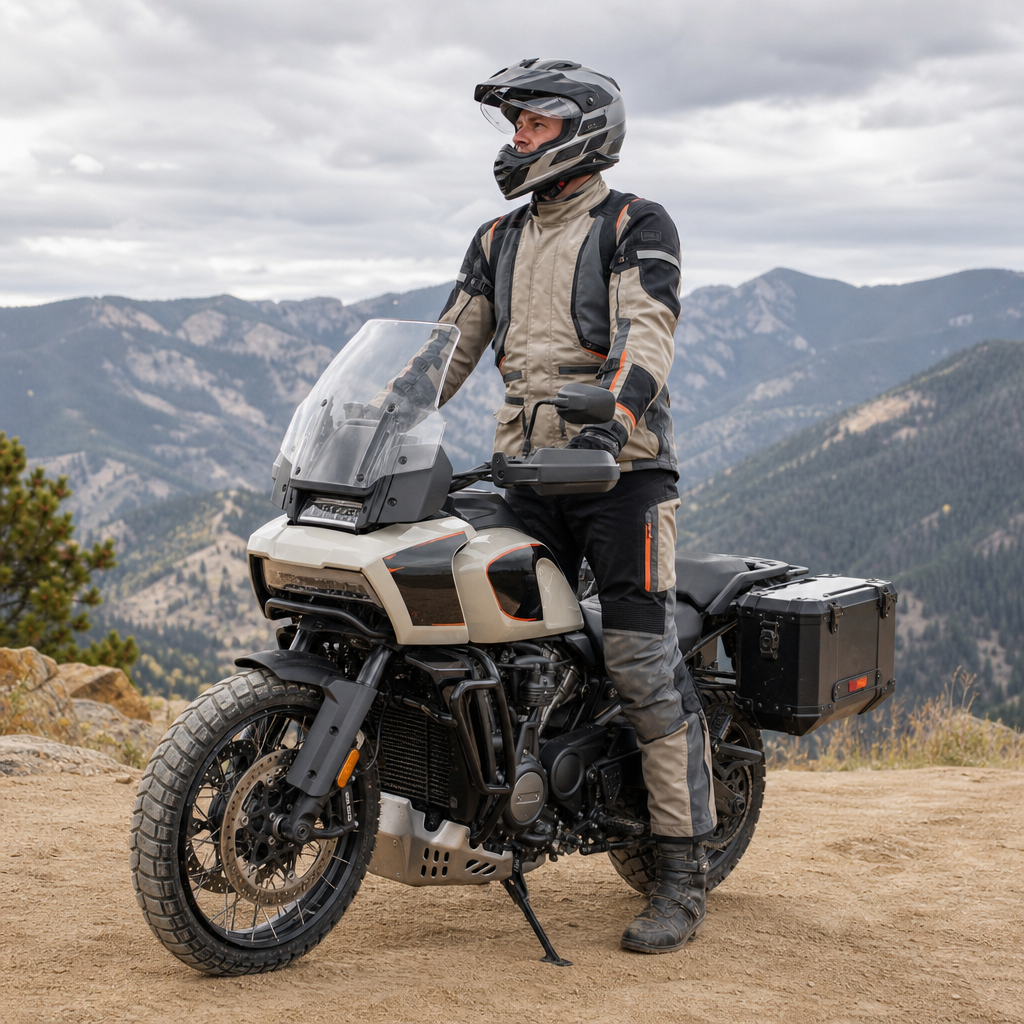
The 2026 Harley-Davidson Pan America is already one of the most accommodating adventure motorcycles in the segment, but riders who stand 6’4″ and taller still need a deliberate setup to unlock its full comfort, control, and off-road confidence. A proper tall boy setup means tuning the motorcycle’s ergonomics, chassis attitude, wind management, and luggage interface so the bike fits a long inseam, long reach, and higher center of mass without compromising the Pan America’s balanced handling. I have set up large ADV bikes for tall riders often enough to know the pattern: if the bars are too low, knees too bent, pegs too high, and windscreen too turbulent, even a technically excellent motorcycle feels cramped after an hour and awkward in rough terrain.
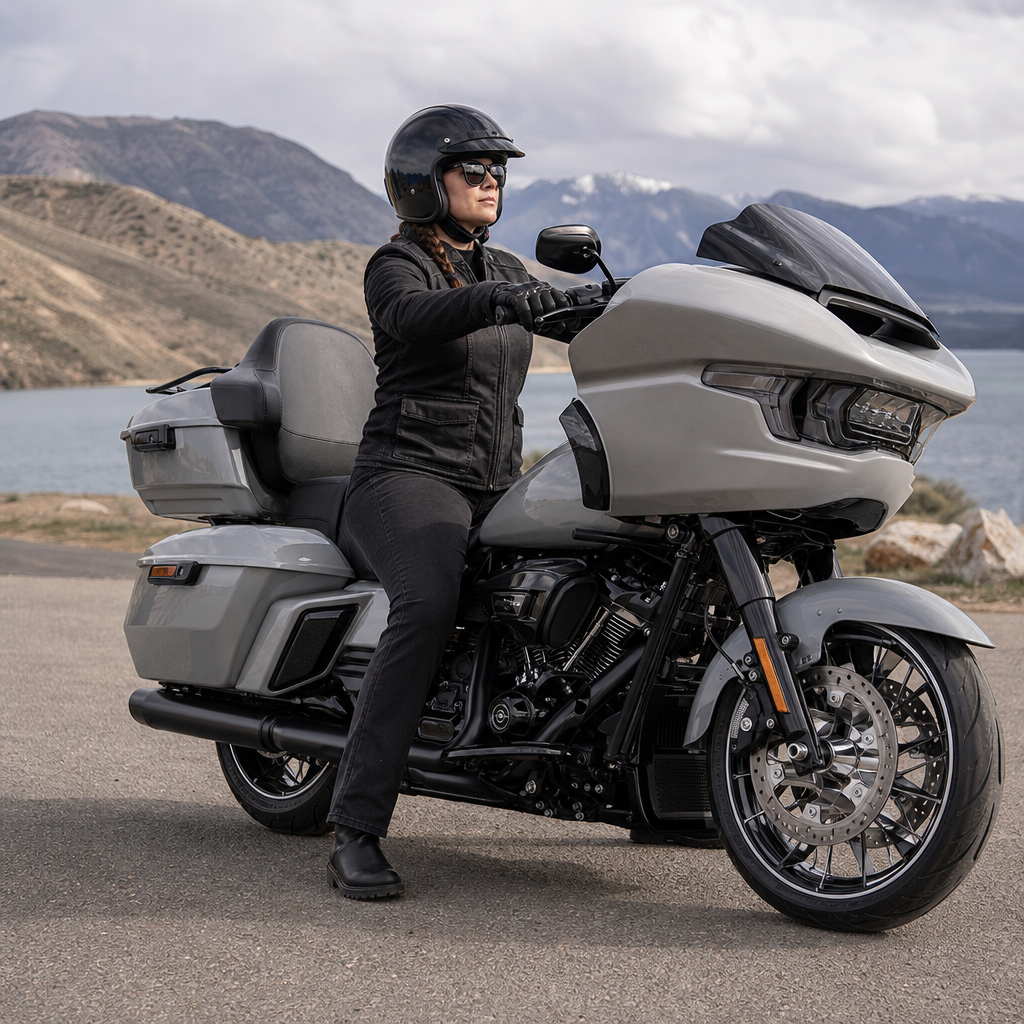
For this sub-pillar hub, model-specific ergonomics and performance recipes means repeatable adjustment combinations built around a particular motorcycle platform. On the 2026 Pan America, that includes seat height choices, Adaptive Ride Height behavior, bar rotation or risers, footpeg position, lever angle, suspension preload, damping, tire selection, and accessory choices that preserve rider triangle comfort. The rider triangle is the spatial relationship among seat, footpegs, and handlebars; for tall riders, small dimensional changes produce large effects in hip angle, knee bend, standing posture, and weight transfer.
This topic matters because adventure motorcycles are used across mixed conditions that punish poor fit. A cramped street bike is tiring; a cramped ADV bike can be unstable when standing, harder to steer with the feet, and more likely to cause lower-back fatigue, wrist loading, and knee pain. Tall riders also load the chassis differently. Their mass sits higher, they create more wind drag, and they often need more room to transition between seated and standing positions. When the 2026 Pan America is adjusted correctly, it becomes far easier to ride all day on pavement, move confidently on loose surfaces, and manage slow-speed sections without fighting the machine.
As the hub page for Harley-Davidson model-specific ergonomics and performance recipes, this article maps the major setup decisions and explains what each one fixes. It is designed to help a tall owner diagnose fit issues quickly, choose the right modifications in the right order, and understand where dedicated child pages should go deeper, from seat options to suspension tuning.
Start With the Rider Triangle and Baseline Measurements
The first step in any tall rider Pan America setup is measurement, not shopping. I begin by recording inseam, boot sole thickness, arm length, and the rider’s normal standing posture. Then I evaluate three positions on the bike: seated neutral cruising, seated aggressive cornering, and standing attack stance. On a 6’4″+ rider, the most common baseline problem is excessive knee flexion combined with a forward torso hinge when seated, followed by excessive reach down to the bars when standing. These two issues usually point to a combined solution rather than a single accessory.
Measure the seat-to-peg distance, peg-to-bar reach, and standing bar height relative to the rider’s natural hip hinge. Even five to fifteen millimeters at the pegs or bars can transform comfort because the changes stack geometrically across long legs and arms. If the rider’s elbows lock while standing or the back rounds, the bars are too low, too far forward, or both. If knees flare sharply and the rider slides rearward to find room, the seat profile is likely the limiting factor.
The Pan America platform rewards baseline notes because its geometry is sensitive but predictable. Track what changes after each adjustment: knee angle, wrist pressure, ease of standing transition, and low-speed steering feel. This creates a true recipe instead of a pile of parts.
Seat Height, Shape, and Adaptive Ride Height Strategy
For very tall riders, the seat is usually the highest-value change because it affects comfort, leverage, and transition space simultaneously. The standard instinct is to choose the tallest seat available, but height alone is not enough. What matters is usable height with supportive foam and a shape that lets the rider move fore and aft. A dished seat can trap a tall rider in one pocket, increasing knee bend even if published seat height looks generous. A flatter rally-style seat often works better because it opens hip angle and creates room to shift body position in dirt.
The 2026 Pan America’s Adaptive Ride Height adds nuance. ARH lowers the bike at stops, improving dab confidence, then returns to ride height when moving. For a 6’4″+ rider, this system can be beneficial, neutral, or mildly counterproductive depending on use. If the rider already has no issue with inseam reach, ARH may reduce ground clearance at moments when a tall rider does not need the help. On the other hand, ARH can still be valuable on heavily loaded travel bikes because it simplifies stop-and-go balance with luggage and a passenger. The key is not assuming that tall equals no need for ARH. It should be evaluated based on terrain, load, and preference.
In practice, the best seat recipe for a tall Pan America rider is usually a tall or extra-tall flat seat with firm foam, paired with enough bar and peg adjustment to preserve seated-to-standing flow. This creates room without forcing the rider into excessive forward reach.
Handlebar Position, Risers, and Control Angle
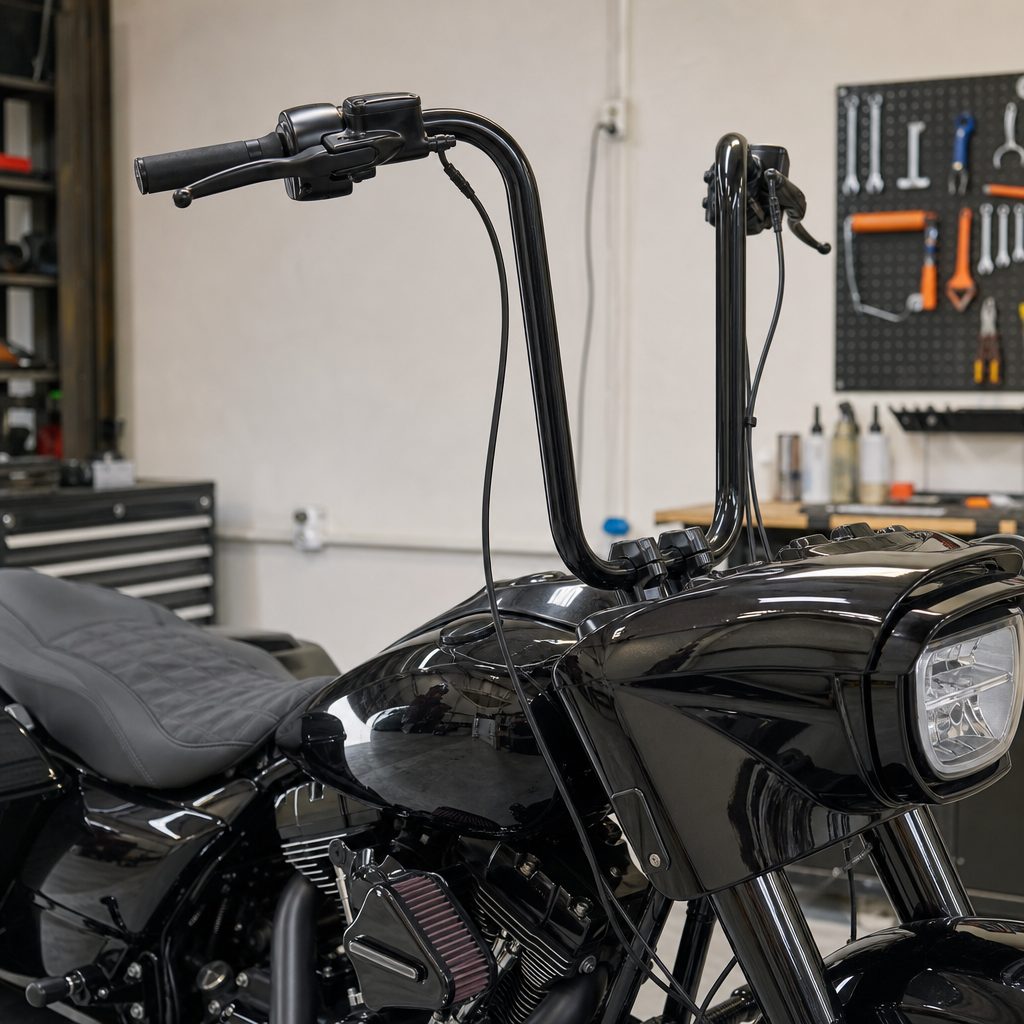
Bar setup determines whether the Pan America feels athletic or awkward for a tall rider. The goal is not simply “higher bars.” It is bars positioned so the rider can stand with a neutral spine, slight knee bend, and elbows comfortably out, while seated steering remains natural and front-end feedback is preserved. Too much rise can make seated cornering vague, lighten front wheel feel, and increase steering input delay. Too little rise leaves the rider bent over and overloaded through the palms while standing.
I typically address bar position in sequence: first rotate the stock bar within safe control-cable limits, then test moderate risers, then assess whether a different bend is necessary. For riders above 6’4″, a modest riser often helps, but the winning setup depends on torso length more than total height. A rider with a 36-inch inseam and average torso may need less rise than a similarly tall rider with long arms and a shorter inseam who stands more upright.
Control angle matters as much as bar height. Brake and clutch levers should align with the forearm in the rider’s standing stance, not just seated posture. On many adventure bikes, tall owners leave the levers rotated too flat for standing work, causing wrist extension and fatigue. Correcting this improves confidence immediately in gravel, ruts, and descents because one- and two-finger braking become more natural.
Footpegs, Knee Angle, and Standing Control
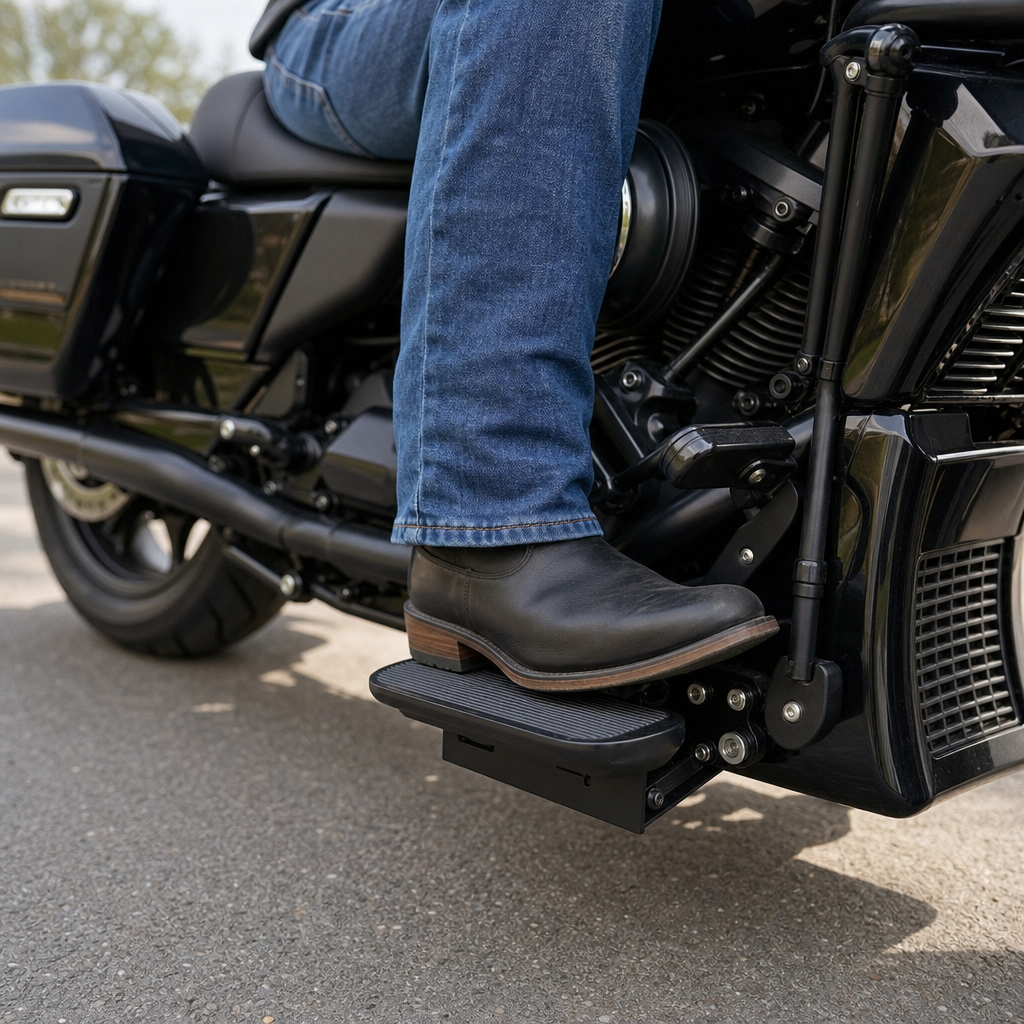
Lower or repositioned footpegs are one of the cleanest ways to improve fit for a 6’4″+ Pan America rider, but they must be chosen with awareness of tradeoffs. Dropping the pegs opens knee angle and can reduce pressure on hips and lower back during long seated sections. It also changes the standing platform, often making the rider feel “in” the bike rather than perched above it. On the Pan America, this can significantly improve balance in slow technical terrain.
The tradeoff is ground clearance and, in some cases, shifter and rear brake interface. Any peg drop should be matched by shifter and pedal adjustment so the rider can operate controls with adventure boots without ankle strain. Wide off-road pegs are usually worth it for tall riders because they spread load across the boot and improve leverage when weighting the outside peg in loose corners.
| Adjustment Area | Typical Tall Rider Goal | Main Benefit | Primary Tradeoff |
|---|---|---|---|
| Seat | Taller, flatter profile | Opens hip and knee angle | Higher effective reach at stops |
| Bars | Moderate rise or rotation | Neutral standing posture | Too much rise can dull front feel |
| Footpegs | Slight drop, wider platform | Less knee bend, better standing leverage | Reduced clearance if overdone |
| Suspension | Higher support under load | Stability and balance | Harshness if preload or damping is excessive |
| Windscreen | Cleaner airflow at helmet height | Less fatigue and noise | Larger screens can add buffeting |
For many tall riders, the ideal recipe is a small peg drop rather than an extreme one. That preserves cornering clearance while still relieving the cramped feeling that appears after several hours on the stock layout.
Suspension Setup for a Higher Center of Mass
Tall riders do not just change ergonomics; they change how the motorcycle carries weight. A 6’4″+ rider often has a higher center of mass and longer body movements under braking, acceleration, and terrain impacts. On the 2026 Pan America, that means preload and damping settings matter more than many owners realize. If the bike rides low in the stroke with a tall rider and luggage, steering slows, ground clearance shrinks, and transition behavior becomes vague. If preload is increased without damping support, the bike can feel springy and unsettled.
Start by setting sag correctly for the rider’s real travel load, including crash bars, panniers, tools, water, and camping kit if those are part of the mission. Electronic suspension modes simplify adjustment, but they do not replace critical observation. Watch for fork dive, rear squat, and whether the bike holds a neutral chassis attitude through a fast paved sweeper and through a series of washboard bumps. The right setup keeps the Pan America composed without making it harsh.
In my experience, taller riders benefit from a slightly more supportive baseline than average-size riders, especially at highway pace or with luggage. That support maintains geometry and keeps steering response consistent. It also helps preserve the ergonomic gains of seat and peg changes because the chassis is not collapsing under load.
Wind Protection, Highway Stability, and Long-Distance Fatigue
Wind management is often the hidden issue on adventure bikes for riders over 6’4″. A screen that works well for average-height testers can direct turbulent air straight at the top vent or visor line of a tall rider’s helmet. The result is noise, head shake, and neck fatigue that riders sometimes misdiagnose as suspension harshness or poor helmet design. On the Pan America, windscreen position, spoiler choice, and helmet shape interact strongly.
The solution is not automatically a taller windshield. In many cases, a different angle or an adjustable spoiler creates cleaner laminar flow than a huge touring screen. Tall riders should test airflow at several speeds, ideally with earplugs and the same helmet they use for travel. If buffeting increases with a taller screen, the issue may be low-pressure turbulence behind the screen rather than lack of height.
Highway stability also depends on luggage placement and rider posture. A very tall rider acts like a larger sail, so top cases and broad duffels can amplify weaving in crosswinds. Keeping heavier luggage low and forward improves the Pan America’s planted feel and reduces steering corrections on long interstate sections.
Tires, Boots, and Luggage: The Often-Missed Fit Multipliers
The most effective Pan America recipes account for the items attached to the rider and the bike, not just the motorcycle itself. Adventure boots can add substantial sole thickness, altering shifter access, stop reach, and perceived peg height. A boot with a stiff ankle and thick sole may justify slightly different lever settings than a road-oriented touring boot. I always make final control adjustments with the rider wearing the boots they actually use off road.
Tire choice changes feel too. A more aggressive 50/50 or off-road-biased tire can raise seat height slightly, slow turn-in, and alter the rider’s sense of leverage when standing. That does not make it wrong; it means ergonomic setup should be finalized with the intended tire category in mind. Likewise, soft luggage versus aluminum panniers changes both width and rider movement. Tall riders often use more body English, and wide panniers can interfere with heel position or leg swing during technical riding.
These details seem minor until they combine. On a bike already close to fitting, boots, tires, and luggage can be the difference between all-day comfort and persistent annoyance.
Building a Repeatable Tall Boy Recipe for the 2026 Pan America
The best tall boy setup for the 2026 Pan America is a balanced package, not an extreme build. In plain terms, most 6’4″+ riders should begin with a flatter tall seat, then evaluate a modest bar rise or rotation, then consider a slight peg drop with control readjustment, followed by suspension tuning for actual rider-and-luggage weight. Next, test wind management before buying the tallest screen available. Finally, confirm the setup with the rider’s real boots, preferred tires, and travel luggage installed.
That order matters because each change influences the next. Raising bars before selecting the seat can mask the real problem. Lowering pegs without addressing shifter position can create new discomfort. Changing windscreen height before confirming riding posture can lead to expensive trial and error. A recipe works because it is sequenced and measured.
As the hub for Harley-Davidson model-specific ergonomics and performance recipes, this page establishes the framework that deeper articles should follow: one article on tall seat options, one on ARH strategy, one on bar risers and cable limits, one on peg kits, one on electronic suspension tuning, and one on travel load management. If you ride a 2026 Pan America and stand 6’4″ or taller, focus on fit before power accessories. When the bike matches your body, every mile gets easier, every surface gets more manageable, and the Pan America finally feels like it was built around you. Use this hub as your starting point, then dial in each subsystem methodically.
Frequently Asked Questions
1. What does a proper “tall boy” setup actually mean on a 2026 Harley-Davidson Pan America for riders 6’4″ and taller?
A true tall rider setup is much more than simply raising the seat. For a 6’4″+ rider, the goal is to create a neutral, natural riding triangle between the seat, bars, and foot controls so the motorcycle supports a longer inseam, longer arms, and a higher center of mass without making the bike feel awkward or top-heavy. On the 2026 Harley-Davidson Pan America, that usually means evaluating seat height and shape, handlebar position, peg placement, windscreen performance, suspension preload, and even how luggage affects body movement when standing or transitioning off road.
The reason this matters is that a tall rider can technically fit on a stock adventure bike and still be uncomfortable or less effective. Knees may be too bent when seated, hips may feel closed, and the rider may have to hunch forward or down to reach the bars when standing. That creates fatigue, reduces precision in rough terrain, and can make the motorcycle feel smaller than it really is. A proper tall boy setup corrects those pressure points so the rider can sit upright on pavement, stand with relaxed elbows off road, and move forward and back on the bike without interference.
On the Pan America specifically, the best setup preserves the bike’s balanced chassis while opening up the rider compartment. In practical terms, that often means a taller or flatter seat, lower or repositioned footpegs, bar risers or a bar rotation that improves standing posture, and suspension settings that keep the bike supported under a heavier or taller rider. The end result should be simple: the bike feels like it was scaled for the rider, not merely tolerated by the rider.
2. What are the most important ergonomic changes tall riders should make first on the 2026 Pan America?
If you want the highest-impact changes first, start with the seat, footpegs, and handlebars. Those three points define nearly all rider comfort and control. For a rider over 6’4″, the stock layout may already be decent by segment standards, but most tall riders benefit from increasing seat-to-peg distance and making it easier to stand without bending too much at the waist. A taller seat or seat in the higher adjustment position is often the first step because it opens the knee angle and gives the rider more room to shift around during long days.
Footpegs are next because they influence both seated comfort and standing leverage. Lower pegs can create meaningful extra legroom, but they need to be chosen carefully so they do not excessively reduce ground clearance or make contact too early in aggressive riding. Many tall riders also prefer wider adventure pegs because they improve support through the boots during long periods of standing. That extra platform helps control the Pan America with the legs rather than overloading the hands and shoulders.
Handlebars are equally important, especially for off-road use. A rider who is 6’4″ or taller often feels fine seated but too folded over when standing. Bar risers, a different bend, or even a small bar rotation can transform that posture. The objective is not to create a chopper-like upright reach, but to allow the rider to stand with a neutral spine, slight bend in the elbows, and enough leverage to steer the bike through loose terrain. If the bars are too low or too far forward, the rider ends up hanging on the front end and loses confidence in technical sections.
In terms of priority, most tall Pan America owners should first set seat height, then evaluate peg position, and finally fine-tune the bars. That sequence works well because each change affects the others. Once those three contact points are sorted, the motorcycle usually feels significantly larger, calmer, and more controllable without changing its essential character.
3. How should suspension and chassis settings be adjusted for a 6’4″+ rider on the Pan America?
Suspension setup is one of the most overlooked parts of a tall rider build, yet it is critical because a taller rider usually brings different weight distribution, more upper-body leverage, and a higher center of mass. On the 2026 Pan America, the goal is not just to support the rider’s weight, but to maintain the bike’s intended attitude so steering, braking stability, and traction all stay predictable. If the rear sits too low under load, the front can feel light and vague. If preload is excessive or unevenly balanced, the bike may feel nervous, tall in the wrong way, or harsh over repeated impacts.
The first step is to set sag correctly for the rider in full gear and in the actual configuration the bike will be used in, whether that is solo, loaded with luggage, or mixed touring and dirt use. Many tall riders also weigh more simply because of their frame size, so preload and damping settings should be revisited rather than assumed. Electronic suspension modes, if equipped, can help, but they still benefit from rider-specific baseline choices. A bike that feels comfortable in the parking lot can still ride nose-up or rear-low once loaded for a trip.
For taller riders, chassis attitude matters as much as pure comfort. Because your body has more leverage over the bike, small changes in pitch and ride height are more noticeable. A properly set Pan America should feel planted entering corners, stable on the brakes, and easy to steer with the feet while standing. If it wallows under acceleration, dives excessively, or feels like you are “on top of” the bike rather than “in” it, the setup likely needs refinement.
Another key point is balancing suspension changes with ergonomic changes. For example, adding a taller seat increases effective rider height and changes how weight transfers through the chassis. Likewise, luggage mounted high or far back can amplify rear sag and make the front end feel remote. The best tall rider setup treats suspension as part of the ergonomic package. When done correctly, the Pan America remains composed and confidence-inspiring, even with a very tall rider, full gear, and adventure luggage onboard.
4. How can tall riders improve wind protection and long-distance comfort on the 2026 Pan America?
Wind management is a major issue for riders over 6’4″ because airflow that is smooth for average-height riders often hits a taller rider right at the helmet or upper chest. That can create noise, buffeting, neck fatigue, and the impression that the bike is less refined on the highway than it really is. On the Pan America, long-distance comfort for tall riders usually comes from combining the right windscreen height or profile with better seat support and a posture that keeps the torso relaxed rather than braced against the wind.
The first thing to understand is that the tallest screen is not always the best answer. A screen that puts turbulent air directly into a tall rider’s visor can be worse than a lower screen that delivers clean airflow. Many tall riders do best with a windscreen or spoiler setup that either moves the airflow clearly above the helmet or keeps it low enough to avoid turbulent impact. Fine-tuning matters here, because an inch or two of added height or a slight change in angle can produce a significant difference at highway speeds.
Seat comfort also plays directly into wind comfort. If the seat slopes forward, creates pressure points, or locks the rider into one position, the rider tires faster and becomes more sensitive to wind blast. A taller, flatter seat often helps because it allows small posture changes throughout the day and supports the pelvis more evenly. That reduces lower-back fatigue and lets the rider stay relaxed in crosswinds and headwinds.
For serious travel, tall riders should also think about hand protection, tank bag position, and upper-body layering. Cold wind on the hands and shoulders creates fatigue long before most riders realize what is happening. A well-managed cockpit on the 2026 Pan America should let a tall rider spend long hours in the saddle without constantly adjusting posture to escape buffeting. When wind, seat support, and handlebar reach are working together, the bike becomes much more comfortable for back-to-back adventure miles.
5. What luggage and off-road setup mistakes should very tall Pan America riders avoid?
The biggest mistake tall riders make with luggage is focusing only on carrying capacity and ignoring how bags affect body movement. A rider over 6’4″ needs more room than average to swing a leg over, shift rearward on steep descents, and move around while standing. Oversized top boxes, very wide panniers, or rear luggage stacked too high can interfere with all of that. On the Pan America, luggage should complement rider mobility, not trap the rider in one position.
High-mounted weight is especially problematic for tall riders because it compounds the effect of an already higher center of mass. Even if the total load is reasonable, placing it too far back or too high can make low-speed balance feel awkward and can exaggerate chassis movement on rough trails. A better approach is to keep heavy items low, close to the center of the bike, and as symmetrical as possible. That helps preserve the Pan America’s natural balance and makes transitions from seated touring to standing trail work much easier.
Another common mistake is building an ergonomic setup for the road only. Tall riders may install a high touring screen, rearward bars, and a bulky seat that feels fantastic on pavement, then discover the bike is harder to control