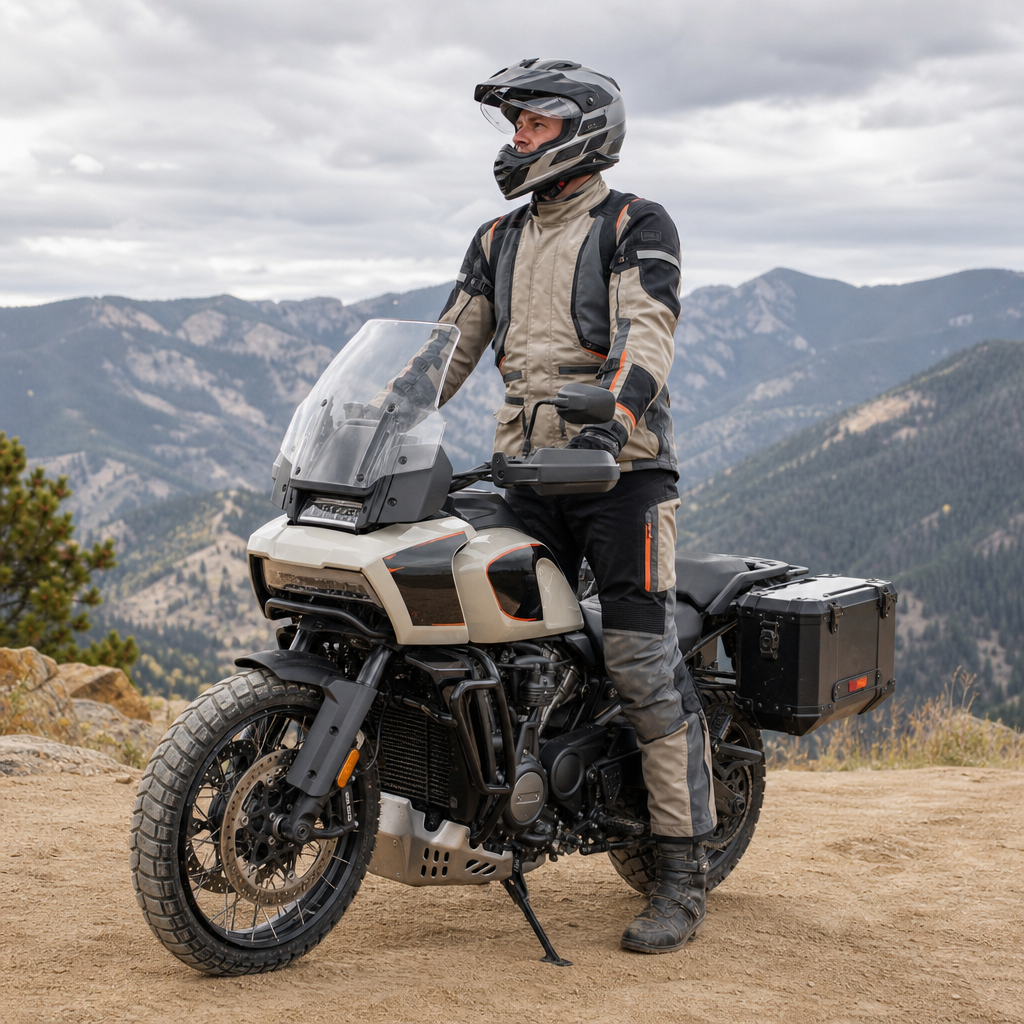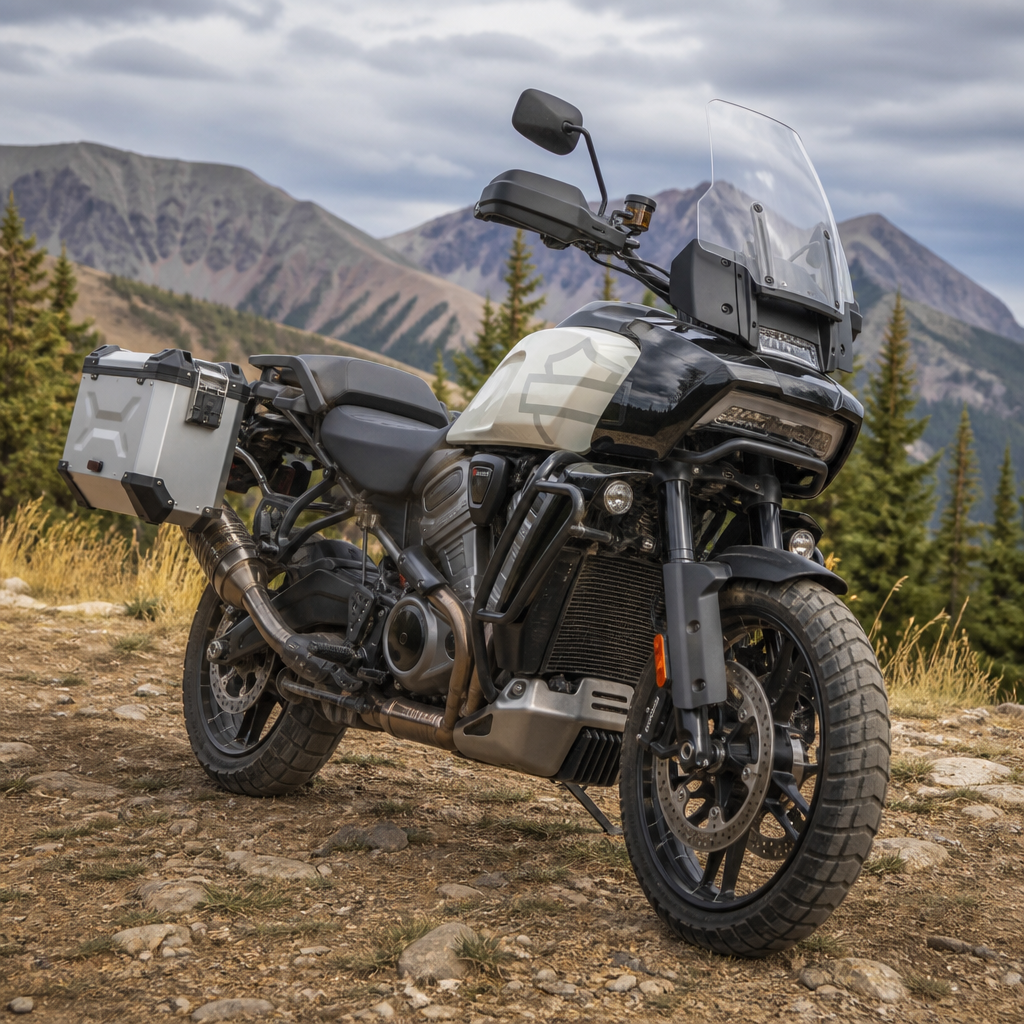
The 2021-2024 Harley-Davidson Pan America changed the company’s adventure-touring reputation overnight, but buying one used requires a sharper eye than buying an air-cooled cruiser. This guide explains how to shop the first-generation Pan America, which electrical bugs matter, which do not, and how this page fits into a broader used buyer guide library covering Harley-Davidson models from 1990 through 2032. For shoppers comparing a Pan America 1250, Pan America 1250 Special, and later revisions, the central question is simple: can you get the capability of Harley’s most technically ambitious platform without inheriting the early ownership headaches that shaped online discussion?
First, define the problem clearly. “First-generation electrical bugs” does not mean every Pan America suffers a fatal wiring defect. In practice, buyers are usually talking about software instability, battery-voltage sensitivity, intermittent warning messages, accessory integration faults, switchgear communication issues, keyless-start inconsistencies, ride-height calibration errors on Adaptive Ride Height models, and sensor-related no-start or limp-mode events. Most of these concerns sit at the intersection of hardware, firmware, and setup quality. I have inspected enough used examples to see the same pattern repeatedly: many “electrical” complaints begin with weak batteries, poor dealer pre-delivery setup, outdated calibration files, or owner-added accessories wired without respect for the bike’s CAN bus architecture.
That matters because the Pan America is not a simple machine masquerading as an ADV bike. It uses the liquid-cooled Revolution Max 1250 engine as a stressed member, ride-by-wire throttle, multiple ride modes, IMU-supported cornering electronics, TFT display integration, and optional electronically adaptive suspension features. When voltage is marginal or software is out of date, one small issue can create a chain of confusing symptoms. Buyers who understand that systems approach can avoid overreacting to harmless history or, just as important, underestimating a genuinely troublesome bike. That is why a used Pan America guide must be more detailed than a generic “check the battery and take a test ride” checklist.
This article serves as the hub for Harley-Davidson used buyer guides spanning 1990-2032. In that larger series, older Twin Cam, Evolution, Sportster, Touring, Dyna, Softail, Street, Bronx-era concepts, and future-era model-year references all demand different evaluation methods. The Pan America occupies a critical position in that timeline because it marks Harley-Davidson’s leap into high-electronics, globally benchmarked adventure machinery. If you learn how to assess a used 2021-2024 Pan America correctly, you also learn the mindset needed for the brand’s most complex modern motorcycles. Start with records, software status, battery health, and evidence of competent ownership; then judge chassis, engine, and accessories in context.
Why the 2021-2024 Pan America deserves a different used-buying process
The Pan America deserves its own process because it combines premium ADV performance with first-cycle model risk. The 150-horsepower Revolution Max engine is robust when maintained, but the surrounding electronics package is far more interconnected than what long-time Harley buyers may expect. On a Road King, a weak battery usually reveals itself plainly. On a Pan America, low voltage can trigger a Christmas tree of warnings, rough starting behavior, disabled rider aids, or intermittent communication faults between modules. That does not automatically mean the bike is bad. It means the bike demands disciplined diagnosis.
Model-year differences matter. Early 2021 motorcycles carried the largest share of first-wave software refinement issues simply because they were first out the door. By 2022 and 2023, many dealer campaigns, firmware improvements, and owner lessons had already filtered through the market. A 2021 bike with complete service records, the latest updates, and a healthy charging system can be a better buy than a neglected 2023. Trim also matters. The Pan America 1250 Special, often equipped with Adaptive Ride Height, heated grips, center stand, aluminum luggage, and spoked wheels, brings more features and therefore more systems to inspect. More equipment is not bad, but every feature adds another opportunity for deferred maintenance or setup errors.
Used buyers should also understand normal behavior versus problem behavior. TFT screen boot-up lag is different from repeated display resets. A one-time historic warning code is different from an active code that returns after clearing. Suspension self-leveling noises are normal on Adaptive Ride Height machines; failure to settle consistently, warning messages, or asymmetrical stance are not. The best deals go to shoppers who can separate normal complexity from genuine fault patterns.
The electrical bugs buyers hear about most often
The most common concerns cluster into seven categories: battery and charging weakness, software calibration issues, display and switchgear glitches, key fob and security faults, ARH calibration problems, sensor-triggered warning lights, and accessory-caused electrical gremlins. In my experience, battery health sits at the center of the map. AGM batteries that have been repeatedly discharged, left on the wrong tender, or stressed by infrequent riding can still crank the engine while failing to maintain stable system voltage during startup. That is enough to confuse sensitive modules.
Software issues are the second major category. Harley-Davidson released updates to address drivability, warning logic, display behavior, and system communication. A used bike that never returned to the dealer after initial sale may still run old calibrations. Sellers often say, “It just needs a reset,” but that phrase should prompt follow-up questions. What was reset, when, and why? If the bike needed repeated resets to clear recurring faults, you may be looking at a pattern rather than a harmless software housekeeping event.
Third, many owners added lights, GPS units, heated gear leads, auxiliary horns, and chargers. Done properly through fused distribution and switched circuits, those accessories are fine. Done poorly with vampire taps, overloaded ports, or direct battery clutter, they create intermittent faults that are maddening to trace. I have seen used Pan Americas with no fundamental factory defect at all, only a mess of aftermarket wiring tucked behind side panels and the TFT.
| Issue area | Typical symptoms | What a buyer should verify |
|---|---|---|
| Battery and charging | Slow crank, random warnings, ride modes unavailable | Battery age, resting voltage, load test, charging output, tender history |
| Software level | Display glitches, recurring fault messages, poor idle or stalling complaints | Dealer service printout showing current calibrations and completed campaigns |
| Adaptive Ride Height | Uneven stance, warning lights, inconsistent lowering or raising | Calibration records, function during cold and warm starts, leak or damage inspection |
| Keyless and switchgear | No-start, delayed recognition, buttons not responding predictably | Spare fob operation, switch feel, module fault codes, battery condition |
| Aftermarket accessories | Intermittent faults, drained battery, blown fuses, display resets | Wiring quality, fuse protection, relay use, professional installation evidence |
How to inspect a used Pan America before money changes hands
Begin with documentation, not cosmetics. Ask for VIN-specific dealer service records, not just handwritten oil-change notes. You want proof of software updates, warranty repairs, battery replacement dates, campaign completion, and any suspension or sensor work. A seller who cannot provide records is not automatically hiding something, but the price should reflect the uncertainty. Confirm whether the bike has the original battery, because a first-generation Pan America running its factory battery deep into used-bike age deserves immediate replacement budgeting.
Next, perform a cold-start inspection. Arrive before the engine is warmed. Watch the TFT boot sequence, confirm warning lights clear correctly, and listen for cranking speed. A healthy bike should start decisively. If the seller has a charger attached when you arrive, ask why. Put attention on idle stability and scan the display for active alerts. Cycle through ride modes, heated equipment if fitted, and menu functions. On ARH-equipped bikes, observe height changes from startup through stop-and-go operation. Inconsistent lowering or failure to return smoothly can point to calibration, sensor, or component problems.
Then inspect the battery area and wiring paths. Remove enough panels, with permission, to see whether accessory leads are tidy, fused, and routed away from heat or steering pinch points. Corrosion, loose terminals, stacked ring connectors, and cheap add-on modules are all warning signs. If possible, use a multimeter. A healthy resting battery usually sits around 12.6 to 12.8 volts after settling, and charging output should rise meaningfully when running. Exact values vary by conditions, but weak numbers justify either renegotiation or a professional pre-purchase inspection.
Finally, ride the motorcycle long enough to heat-soak it. Some faults appear only after vibration, heat, and repeated starts. Test low-speed fueling, clutch take-up, cruise control if equipped, ABS behavior on a loose surface where safe and legal, and any linked phone or navigation functions the seller claims work perfectly. A short spin around a block does not tell you enough about an electronics-heavy adventure bike.
Which years are safest, and when a 2021 can still be the best buy
If you want the lowest-risk answer, 2023 and 2024 examples generally offer the most mature ownership experience within this first-generation window. They benefit from accumulated factory updates, dealer familiarity, and a used market where recurring trouble bikes have often already revealed themselves. That said, blanket year-based shopping leaves money on the table. I would rather buy a documented 2021 from a meticulous owner than a 2024 with poor wiring modifications, weak battery history, and no records. Condition, update status, and ownership behavior outrank calendar age.
The 2021 model can be an excellent value because the market often discounts it the most heavily. If service records show completed software campaigns, battery replacement with a quality unit, no chronic warning-code history, and clean accessory work, it may represent the sweet spot. The 2022 model usually strikes a middle ground: less stigma than 2021, often lower pricing than 2023 or 2024, and enough time for initial bugs to have been addressed. For buyers who prioritize warranty-like peace of mind, later bikes still hold the edge, but informed shoppers should not dismiss early bikes automatically.
Geography and use case also matter. A bike that spent winters on a maintainer in a dry garage is different from one that sat outdoors with infrequent starts and repeated short trips. Adventure bikes often lead harder lives than cruisers. Check skid plate damage, wheel trueness, radiator guard condition, handguard scuffs, and signs of repeated drops. Electrical reliability suffers when a bike has been crashed, pressure-washed aggressively around connectors, or repaired casually after trail incidents.
Common ownership patterns that predict trouble or confidence
The best used Pan America sellers usually sound boring. They can explain when the battery was replaced, which dealer performed updates, what tender they used, what accessories were added, and whether any warning lights appeared and how they were resolved. They do not describe the motorcycle as “quirky but amazing” without being specific. Specificity is confidence. Vagueness is risk. If the seller says the bike “sometimes throws codes but rides fine,” assume you are buying unfinished diagnostic work.
Ownership patterns also show up physically. A carefully maintained bike will have consistent fasteners, proper harness routing, clean battery terminals, and accessories mounted with brackets rather than improvised straps and zip ties. Tires reveal how the bike was used. A Pan America on 90 percent street tires with intact rims may have lived an easy touring life. A bike on fresh knobbies with dented rims and scarred crash bars may still be fine, but inspect much harder. Off-road use is not a disqualifier; hidden impact damage and water intrusion are.
Dealer support history matters more on this model than on simpler Harleys. A seller who used a dealer familiar with Pan America diagnostics is an advantage. These bikes benefit from technicians who understand calibration procedures, service bulletins, and module communication. Independent shops can maintain them well, but for software history and campaign completion, dealer records remain the clearest paper trail.
Where this hub fits in Harley-Davidson used buyer guides from 1990 to 2032
This Pan America article is the hub for the wider Harley-Davidson used buyer guide range covering model years 1990 through 2032. In a complete buyer-guide library, this page should connect readers to era-specific guides for Evolution Big Twin models, early fuel-injected Twin Cam bikes, six-speed Touring machines, Dyna variants, Milwaukee-Eight Softails and Tourers, Sportster generations, Street platform models, LiveWire-adjacent technology transitions, and future model-year updates as they arrive. The Pan America hub is the right organizing center because it teaches the most modern inspection discipline: evaluate software, electronics, service campaigns, and owner modifications alongside traditional mechanical checks.
For site structure, readers shopping used Harleys often move laterally. Someone researching a Pan America may also compare a used Low Rider ST for touring, a Road Glide for long-distance road focus, or a Sportster S for Revolution Max platform familiarity. This page therefore works best when linked to broader Harley-Davidson used buyer guides, first-generation model-year problem indexes, maintenance cost explainers, and trim-comparison articles. The hub topic is not only “how to buy a Pan America,” but “how to think about used Harley-Davidson motorcycles across generations with the right model-specific standards.”
The takeaway for the Pan America specifically is straightforward. Do not fear the first generation blindly, but do not shop it casually. Prioritize records, verify software, test battery health, inspect accessory wiring, and treat repeated unexplained warnings as leverage or a reason to walk away. If you are building out a full Harley-Davidson used buyer guide path from 1990-2032, make this article your starting point for modern electronics-aware inspection. Then continue into the era and model guides that match your budget, riding style, and tolerance for complexity. Shop patiently, pay for a pre-purchase inspection when the bike is expensive enough to justify it, and you can buy a used Pan America with confidence instead of inheriting someone else’s troubleshooting project.
Frequently Asked Questions
What are the most important electrical problems to look for when buying a 2021-2024 Harley-Davidson Pan America used?
The biggest priority is separating minor software-related annoyances from faults that suggest a deeper electrical or communication issue. On a first-generation Pan America, buyers should pay close attention to repeated warning lights, intermittent no-start behavior, display glitches, ride-mode errors, and anything involving the bike’s networked electronics not waking up correctly. The Pan America relies heavily on sensors, modules, and software integration compared with older Harley-Davidson models, so even a small voltage problem can create multiple symptoms at once. A weak battery, poor charging performance, or unstable system voltage can trigger misleading fault behavior, which is why battery health and charging-system output deserve just as much attention as the flashy dashboard errors.
During inspection, watch for a TFT display that reboots, freezes, loses menu functions, or shows persistent warning messages. Confirm that ride modes switch normally, ABS and traction-control lights cycle as expected, and all switchgear inputs work without hesitation. If the bike is equipped with Adaptive Ride Height or other electronically managed features on Special trims, verify that those systems initialize correctly and operate consistently. Ask the seller whether the motorcycle has received factory software updates and whether any repeated electrical complaints required dealer diagnosis. One isolated glitch years ago is not as concerning as a pattern of recurring visits for fault clearing, module replacement, or wiring troubleshooting.
Also inspect the practical basics: battery terminals should be secure, accessory wiring should be tidy and fused properly, and there should be no signs of amateur electrical additions that can introduce parasitic drain or communication faults. Used adventure bikes often carry GPS units, auxiliary lights, heated gear leads, chargers, and other accessories, so a sloppy add-on harness can be more troublesome than the original bike itself. A healthy used Pan America should start crisply, run with no electronic drama on a cold start, and complete a test ride without random warning lamps or disabled rider aids. That is the standard to hold it to.
Are the 2021 models significantly riskier than 2022-2024 Pan America models, or can an early bike still be a smart buy?
The 2021 model year generally deserves the closest scrutiny because it was the launch-year version of an all-new platform, and first-year motorcycles often see the highest concentration of software revisions, running updates, and early-production fixes. That does not automatically make a 2021 Pan America a bad purchase, but it does mean you should evaluate its history more carefully than you would for a later bike. An early example that has been dealer-serviced, kept current on software campaigns, and ridden regularly can be a better buy than a newer bike with weak maintenance records, poor battery care, or questionable accessory wiring.
By 2022 through 2024, Harley-Davidson had more time to refine calibration, address known trouble patterns, and improve production consistency. In practical used-bike terms, later bikes tend to inspire more confidence if all else is equal. Even so, condition and service history still matter more than model year alone. A neglected 2023 with multiple owners and unresolved dashboard errors is not safer than a documented 2021 that has had the appropriate updates and has behaved normally since. What you are really buying is the quality of the bike’s electronic life so far: whether it has been kept on a healthy battery, updated properly, and not left sitting for long periods with low voltage and no maintenance support.
If you are considering a 2021 specifically, ask for service invoices, recall or campaign records, and proof of software-related dealer work. A seller who can clearly explain what was addressed and when is much easier to trust than one who says the bike “just does that sometimes.” Launch-year Pan Americas can still be smart buys if priced fairly and documented well. They simply require more diligence, which is exactly why a used buyer should inspect them through an electrical-history lens rather than just mileage, cosmetics, and accessories.
How can I tell whether an electrical issue is just a harmless software quirk or a sign I should walk away from the bike?
The best way to judge severity is by looking for patterns. A harmless or low-level software quirk is usually infrequent, non-progressive, and not tied to core functions like starting, charging, braking aids, or ride-by-wire response. For example, a one-time display hiccup that was corrected by an update and never returned is far less concerning than repeated communication faults that continue to appear across multiple rides. A used Pan America worth buying should behave consistently. If the seller describes the bike as generally fine but admits it occasionally loses settings, throws random warnings, hesitates to recognize key inputs, or needs battery resets, treat that as a meaningful signal rather than normal personality.
Serious warning signs include recurring check-engine lights, unexplained limp-mode behavior, repeated battery drain, intermittent failure of the TFT or switchgear, and any evidence that the bike has stranded the owner. Faults that affect ABS, traction control, suspension-related electronics, ride modes, or starting reliability deserve special caution because they point to systems you do not want to troubleshoot after purchase. Likewise, if the seller says the dealer “couldn’t duplicate it” over multiple visits, that may mean the issue is intermittent and unresolved rather than imaginary. Intermittent electrical problems are often the most frustrating ownership experience because they are hard to replicate but easy to live with badly.
A pre-purchase inspection from a Harley-Davidson dealer or a knowledgeable independent shop is especially valuable here. Diagnostic scans, battery and charging tests, and confirmation of current software status can reveal whether the bike is simply up to date and healthy or carrying a buried issue. If the bike starts cleanly from cold, shows no active warnings, charges correctly, runs every control system normally, and has a service paper trail that supports the seller’s story, a minor past glitch is usually manageable. If instead the story is vague, the evidence is inconsistent, and the electronics act strangely in front of you, it is smarter to walk away and wait for a cleaner example.
What should I check on a used Pan America 1250 versus a Pan America 1250 Special, especially if I am comparing features and long-term reliability?
The core engine and platform architecture are shared, so your baseline concerns about first-generation electrical behavior remain similar between the standard Pan America 1250 and the Pan America 1250 Special. The key difference is that the Special typically carries more electronic and convenience content, which gives you more features but also more systems to verify. When comparing two used examples, do not just compare mileage and price. Compare complexity, feature operation, and whether those features have behaved properly over time. More equipment can mean more value, but only if it all works exactly as intended.
On the Special, carefully test every electronically managed feature fitted to the bike, including suspension-related adjustments, rider-assist functions, display controls, and Adaptive Ride Height if equipped. Make sure those systems initialize correctly at startup and operate predictably during the ride. Confirm there are no suspension warnings, no ride-mode irregularities, and no unusual delays in menu navigation or system activation. If the bike has been lowered, modified, or fitted with non-standard components, ask whether those changes affected any calibration or electronic function. Adventure bikes often get personalized for touring or off-pavement use, and modifications can complicate diagnosis later.
The standard Pan America 1250 may appeal to buyers who want a slightly simpler ownership experience, but simplicity alone should not outweigh actual condition. A well-kept Special with complete records can be the better buy over a neglected base model. Think in terms of execution, not brochure hierarchy. Which bike has the stronger service history, cleaner charging system, fewer accessories spliced into the harness, more complete update record, and more convincing real-world behavior on startup and test ride? That is the bike with the better reliability outlook. Feature count matters, but maintenance discipline matters more.
Where does this Pan America used guide fit within a broader Harley-Davidson buyer guide library, and what should shoppers compare before making a final decision?
This Pan America guide fits into a much larger used-buyer framework because Harley-Davidson ownership risks vary dramatically by era, engine family, and level of electronic complexity. A shopper moving from air-cooled touring bikes, Dynas, Softails, or Sportsters built between the 1990s and early 2010s should not assume the Pan America is evaluated the same way. Older Harley models often reward buyers who focus on mechanical wear, oil leaks, charging basics, and evidence of sensible modifications. The 2021-2024 Pan America still requires those fundamentals, but it adds a much stronger emphasis on software status, module communication, sensor health, TFT behavior, and system voltage stability. In other words, it belongs to the modern Harley category where diagnostics and update history matter almost as much as traditional wrenching clues.
Within a broader guide library covering Harley-Davidson models from 1990 through 2032, the Pan America stands out as a reputation-shifting machine: it opened the brand to serious adventure-touring shoppers but also introduced a more technologically dense ownership experience. That is why a model-specific used guide is valuable. It helps buyers avoid overreacting to every online horror story while still taking known first-generation electrical bugs seriously. Not every warning-light anecdote is a disaster, and not every “it just needed a reset” story