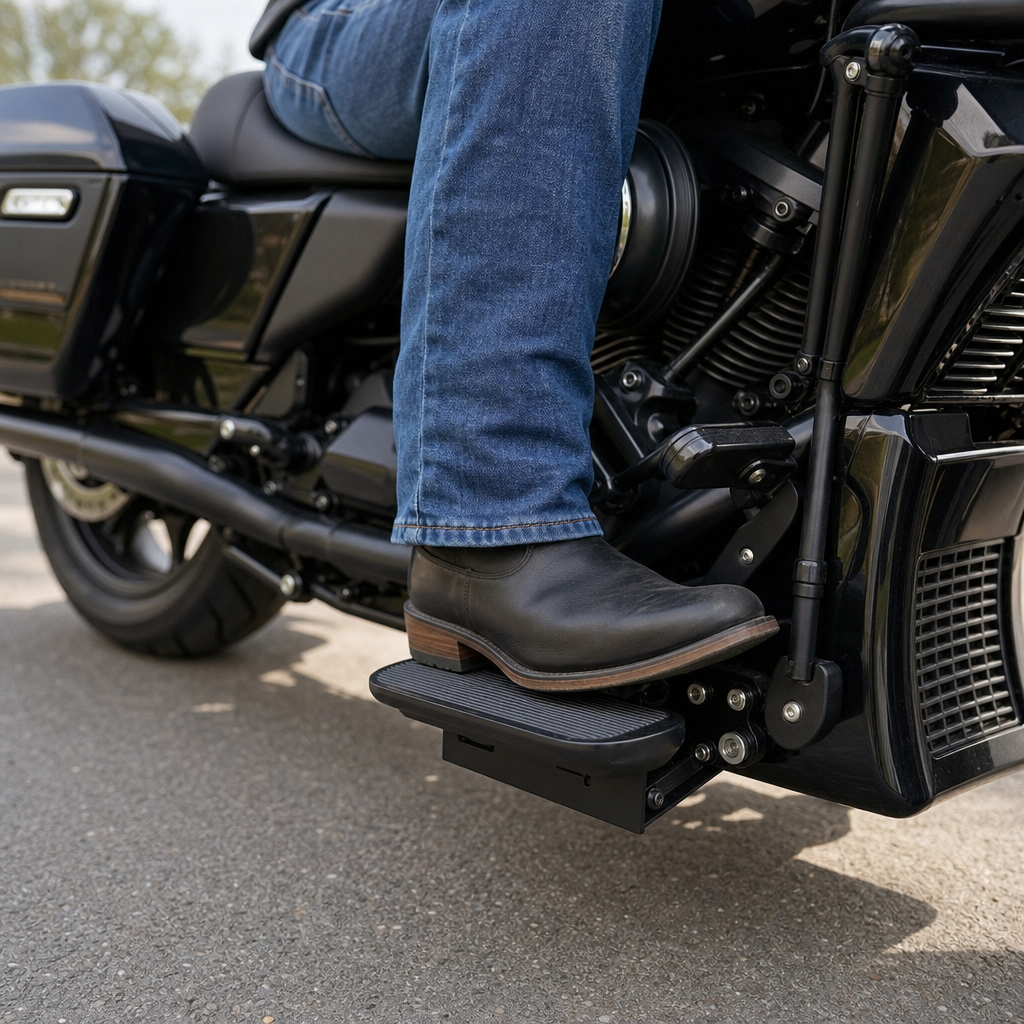
Floorboard spacers on the 2026 Grand American Touring models solve a specific ergonomic problem: the stock rider triangle can close the hip angle enough to create groin pressure, lower back fatigue, and limited leg movement on long rides. In practical terms, a floorboard spacer is a machined plate or block installed between the floorboard mount and the board assembly to shift foot position slightly outward, downward, or both, depending on design. On Harley-Davidson Road Glide, Street Glide, Road King Special, Ultra Limited, and related Grand American Touring platforms, that small change can materially alter comfort, cornering confidence, and even low-speed control. I have fitted spacers, reduced them, and removed them for riders with very different builds, and the lesson is consistent: one inch in the wrong direction can feel worse than no change at all.
This matters because touring ergonomics are cumulative. A seat with deep bucket shaping, bars with too much rearward sweep, and boards that hold the knees inward can combine into a cramped posture, especially for taller riders, riders with reduced hip internal rotation, or anyone spending six to ten hours a day in the saddle. Correcting hip angle is not about chasing a generic “comfort upgrade.” It is about managing three measurable relationships: hip flexion, knee bend, and ankle position while maintaining safe brake and shift access. The 2026 Grand American Touring line gives riders strong baseline comfort, but stock geometry is still a compromise built for broad market fit, emissions packaging, lean-angle targets, and manufacturing consistency.
As the hub for model-specific ergonomics and performance recipes, this article explains how floorboard spacers fit into the broader setup process. Many owners ask the same questions: Do spacers really open the hip angle? Which models respond best? Do they reduce lean angle? Should they be combined with seat, bar, or suspension changes? The short answer is yes, usually, sometimes, and often. A properly chosen spacer can rotate the femur into a more natural line, reduce the “knees-in” sensation caused by tank and fairing width, and let the pelvis sit more neutrally. But spacers are not a universal fix. On some riders, a taller seat, less lumbar support, or a bar change creates a bigger improvement with fewer tradeoffs. The best recipe starts with the rider, then the model, then the parts list.
Why hip angle becomes a problem on Grand American Touring bikes
Hip angle describes the relationship between the torso and upper thigh. On a touring Harley, that angle is influenced by seat height, seat pocket depth, board position, peg or board width, handlebar reach, and suspension ride height. When the angle is too closed, the pelvis rolls backward, the lumbar spine loses its neutral curve, and pressure shifts to the tailbone and lower back. Riders describe it as feeling “folded up,” “jammed into the seat,” or “stuck behind the bars.” In my experience, this complaint shows up most often on riders over about 5’11”, riders with hip impingement history, and riders using wide touring seats with aggressive lumbar rise.
The 2026 Grand American Touring chassis masks this issue at first because the bikes are stable and the floorboards are roomy. Around town, the posture can feel fine. The problem appears after forty-five minutes to two hours, when static loading sets in. The rider begins moving feet to the rear edge of the boards, pointing toes outward, or pressing one knee into the tank cutout for relief. Those are classic signs that the stock foot platform is not letting the hips rest in a neutral range. A spacer changes that by shifting the contact point and reducing adduction at the hips. Even a modest lateral move can stop the thighs from converging unnaturally.
There is also a performance dimension. A cramped lower body makes low-speed maneuvering harder because the rider cannot easily weight one board, stand slightly over bumps, or transition body position in tight parking-lot turns. On heavy touring bikes, lower body leverage matters. If the rider is locked into a closed hip angle, steering effort rises and confidence drops. That is why floorboard spacers belong in a performance recipe as much as a comfort recipe. Better ergonomics improve bike control.
How floorboard spacers change the rider triangle
A rider triangle is the spatial relationship among seat, bars, and foot controls. Spacers affect the lower point of that triangle. Most designs move the boards outward from the bike centerline, and some add a small drop. Outward movement typically helps more than vertical drop on touring Harleys because it reduces hip adduction and femur rotation. In plain terms, your knees stop being forced inward, so the hips relax. A drop can further open the knee angle, but it must be evaluated against cornering clearance and brake-pedal geometry.
On the 2026 Grand American Touring models, the sweet spot for many riders is subtle. A change in the range of roughly 0.5 to 1.25 inches per side often produces a meaningful difference without creating awkward brake or shift reach. Beyond that, tradeoffs increase quickly. The outer edge of the floorboard moves closer to the pavement in turns, and the rider may need to rotate the foot unnaturally to cover the rear brake. This is why the best kits are machined precisely, use grade-rated hardware, and preserve board support rather than relying on stacked washers or improvised brackets. Spacer installation is a structural modification, not a cosmetic one.
When I test setups, I evaluate three moments: seated cruising at highway speed, standing slightly over sharp impacts, and full-lock low-speed turns. If the rider can sit with relaxed thighs, lift slightly from the seat without hunting for footing, and still cover shift and brake naturally, the spacer is working. If any of those actions feel compromised, the recipe needs revision. Ergonomic gains only count if control inputs remain intuitive.
Model-specific recipes for the 2026 lineup
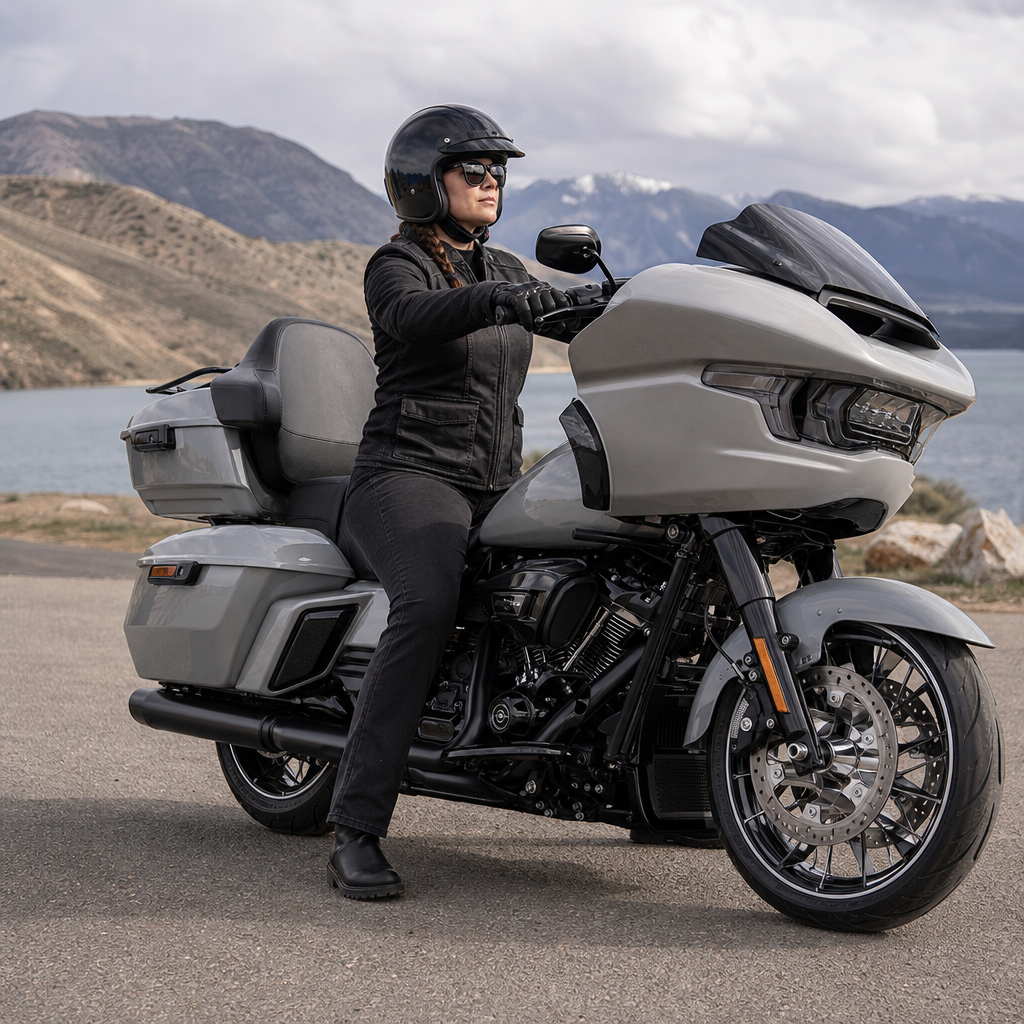
Different Grand American Touring models respond differently because fairing shape, seat design, floorboard mount geometry, and intended use vary. The Road Glide and Street Glide often benefit first from outward board movement because many riders pair them with performance-oriented seats that lock the pelvis in place. That seat support improves control but can close the hip angle. A modest spacer restores leg room without losing the seat’s bracing effect. On the Road King Special, riders often have slightly more freedom to move upper body position due to the absence of a batwing or sharknose fairing envelope, but the same lower-body constraints can remain.
Ultra Limited and other full-dress touring models introduce another variable: passengers and luggage. Heavier touring loads compress rear suspension, which can effectively raise the rider’s knees relative to the hips if the seat pocket settles deeper under weight. In those cases, spacers can help, but rear shock preload and spring rate may create a larger net gain. I have seen owners chase comfort with boards when the real problem was insufficient ride height under load. That is why a complete recipe must consider suspension, not just control contact points.
| Model | Typical Rider Complaint | Spacer Strategy | Check Before Finalizing |
|---|---|---|---|
| Road Glide | Knees angled inward, tight hips on long freeway days | Moderate outward spacer, minimal drop | Rear brake coverage during aggressive corner exits |
| Street Glide | Lower back fatigue from deep seat pocket | Outward spacer paired with seat review | Shifter toe reach with boots used for touring |
| Road King Special | Need more leg room without losing easy stand-up leverage | Small outward spacer only | Board feel in parking-lot full-lock turns |
| Ultra Limited | Cramped legs under passenger and luggage load | Spacer plus suspension preload assessment | Loaded lean clearance and passenger floorboard relation |
These are starting points, not universal prescriptions. Rider inseam, boot sole thickness, prior injuries, and even preferred cruising speed all affect the final answer. A rider who spends most time on interstate slab may accept a little lean-angle loss for all-day comfort. A rider who frequents mountain roads may prioritize clearance and body mobility instead.
Installation, safety, and geometry tradeoffs
Proper installation begins with verifying mount compatibility on the 2026 platform, because mid-cycle bracket revisions, ABS line routing, and brake linkage details can change even when the bike looks similar externally. Use hardware that matches or exceeds the original fastener grade, torque to specification, and apply the threadlocker specified by the spacer manufacturer when appropriate. After installation, cycle the board through its folding range, confirm return spring action, and inspect for interference with primary cover, exhaust shields, crash bars, and lower fairings. A touring bike generates significant vibration and load, so sloppy fitment will reveal itself quickly.
The first tradeoff is lean angle. Any outward or downward relocation increases the chance of touching the board earlier. Harley touring boards are already intended to make occasional contact with feelers under spirited riding, but moving the board changes the contact timing and the rider’s perception of available grip. This does not automatically make the bike unsafe; it simply changes the warning margin. Riders need to recalibrate on familiar roads before assuming previous corner speeds feel the same. The second tradeoff is control access. If the brake pedal now sits too far inboard relative to the boot, delayed rear brake application becomes a real risk. The same goes for toe shifter engagement, especially with bulky waterproof boots.
There are also biomechanical tradeoffs. A wider stance can help the hips but irritate the knees if the feet are pushed too far apart for the rider’s natural alignment. Riders with sensitive SI joints may prefer a small drop with minimal width change. Riders with limited ankle dorsiflexion often need pedal adjustments after spacers. The right setup is the one that improves comfort while preserving reflexive control inputs.
When spacers are the right fix, and when they are not
Floorboard spacers are the right fix when the rider’s main issue is hip crowding created by board position, especially if the rider already likes the current seat and handlebar relationship. They are also useful when a rider wants more room without raising seat height, which can matter for shorter inseams at stops. If the discomfort appears as inner thigh tension, knees pointing inward, or the urge to splay toes outward for relief, spacers deserve serious consideration.
They are not the right first fix when the problem starts at the seat. A seat with excessive lumbar rise can pin the pelvis into posterior tilt, causing back pain regardless of floorboard position. Likewise, bars with too much pullback can collapse the torso and close the hip angle indirectly. Suspension is another common misdiagnosis. When rear shocks ride low in their stroke, the entire posture can feel compressed. In those cases, correcting spring rate or preload may outperform any floorboard change. I treat spacers as one lever in a system, not a magic part.
This is why this page serves as a hub for model-specific ergonomics and performance recipes. The best Harley-Davidson touring setup often combines small changes: a seat that supports the sit bones without trapping the pelvis, bars that allow a neutral bend in the elbows, floorboards positioned for natural leg alignment, and suspension that maintains ride height under actual touring load. Each linked subtopic should be evaluated against the same standard: does it improve both comfort and control on the specific 2026 Grand American Touring model being ridden?
Best-practice tuning process for owners and shops
The most reliable process is simple and repeatable. First, document the stock setup: seat model, shock preload, rider weight with gear, inseam, boot type, and average ride duration. Second, identify the exact symptom and when it appears. Third, make one change at a time and test on the same route. Fourth, photograph foot position and knee angle from the side and front. Fifth, reassess brake and shift access after every change. This method prevents the common mistake of stacking parts and losing track of what actually helped.
Shops that specialize in Harley-Davidson ergonomics often use smartphone video, digital angle measurements, and rider interviews after thirty-minute and two-hour test loops. That approach works because ergonomic complaints are time dependent. A setup that feels great around the block may fail on a touring day. Owners can do the same with disciplined note-taking. If you are building a true touring recipe for the 2026 Grand American Touring line, validate changes under the conditions you actually ride: loaded luggage, usual windscreen, normal boots, and real highway speeds.
Floorboard spacers are one of the most effective targeted changes for correcting hip angle on 2026 Grand American Touring models because they address lower-body geometry directly. They can reduce hip crowding, ease lower back fatigue, and improve leverage at low speed when chosen with restraint and installed correctly. They also carry real tradeoffs, mainly lean-angle reduction and the need to recheck brake and shifter ergonomics. The key takeaway is straightforward: treat spacers as part of a model-specific recipe, not an isolated accessory.
For most riders, the winning formula starts with diagnosis. Confirm whether the discomfort comes from hip angle, seat shape, bar reach, or suspension height, then choose the smallest change that solves the problem. On Road Glide, Street Glide, Road King Special, and Ultra Limited models, that often means a modest outward spacer combined with careful control adjustment and a realistic test ride. Build your setup methodically, keep notes, and use this hub as the starting point for every Harley-Davidson ergonomics and performance recipe you evaluate next.
Frequently Asked Questions
What do floorboard spacers actually do on the 2026 Grand American Touring models?
Floorboard spacers are designed to change the rider’s lower-body position by moving the floorboards slightly outward, downward, or both, depending on the spacer design and the motorcycle’s mounting layout. On the 2026 Grand American Touring models, that small shift can make a very noticeable difference because the stock rider triangle can place the hips in a more closed position than some riders find comfortable. When the hip angle is too tight, pressure can build in the groin area, the lower back has to work harder to stabilize the body, and leg movement becomes more restricted over longer distances.
By repositioning the feet, spacers effectively open the hip angle. That creates a more natural alignment from the seat to the knees to the ankles, which can reduce the pinched feeling many riders notice after an hour or two in the saddle. The benefit is not just comfort in one isolated area. A better hip angle often improves pelvic posture, takes strain off the lumbar spine, and allows the rider to move around more easily during highway miles, stop-and-go traffic, or long touring days. On baggers such as the Road Glide and Street Glide, where rider ergonomics matter tremendously for distance riding, that seemingly minor floorboard adjustment can have an outsized effect on overall comfort and endurance.
How do floorboard spacers help correct hip angle and reduce groin or lower back discomfort?
The key issue is body geometry. If the stock floorboard location places the feet too close inboard or too high relative to the seat, the hips stay more flexed than ideal. That closed hip angle can rotate the pelvis in a way that increases pressure at the front of the seat, which many riders describe as groin pressure, hot spots, or general discomfort in the upper inner thigh area. At the same time, the lower back can become fatigued because the spine and supporting muscles are compensating for a cramped lower-body position.
Floorboard spacers address that problem by changing where the rider’s feet naturally rest. Moving the boards outward can reduce the amount of inward leg tuck, which often allows the hips to sit in a more open, neutral position. If the spacer also drops the board slightly, that can further lengthen the leg position and reduce hip flexion. The result is usually better weight distribution across the saddle, less concentrated pressure in sensitive areas, and a riding posture that feels less compressed. Riders often report that they can shift their feet more freely, relax their knees, and stay comfortable for longer stretches without constantly trying to reposition themselves. It is a simple mechanical change, but it directly influences the body mechanics that determine whether a touring bike feels supportive or fatiguing over the course of a full day.
Which riders benefit most from adding floorboard spacers to a Road Glide, Street Glide, or Road King?
Floorboard spacers tend to help riders who feel cramped in the stock setup, especially on long rides. Taller riders are the most obvious group because they often need more room between the seat and the boards, but height alone is not the only factor. Riders with broader hips, longer femurs, limited hip mobility, previous lower back issues, or sensitivity to groin pressure can also benefit significantly. Even an average-height rider may find that the factory ergonomics are acceptable for short rides but become fatiguing after several hours on the highway.
They are especially useful for touring riders who spend sustained time in one seated position. If you ride a Road Glide, Street Glide, or Road King for commuting, weekend trips, or multi-state travel, comfort changes that reduce cumulative strain matter more than they might on a bike used only for short local rides. Riders who notice numbness, front-of-seat pressure, frequent lower back tightness, or a constant urge to stretch their legs are strong candidates for this modification. In many cases, floorboard spacers are part of a broader ergonomic strategy that can also include seat changes, handlebar adjustments, suspension tuning, or highway pegs. But for riders whose discomfort clearly starts with a cramped leg position, spacers are often one of the most direct and effective fixes available.
Do floorboard spacers affect control, cornering clearance, or overall riding feel?
They can, but the effect depends on how much the boards are moved and the specific design of the spacer. In most well-engineered applications, the goal is to improve rider comfort without meaningfully compromising control. A modest outward or downward relocation typically preserves normal access to the brake pedal and shifter while giving the rider a more relaxed lower-body position. In fact, many riders feel more stable and more confident once they are no longer fighting a cramped posture, because they can maintain better posture and move their feet more naturally.
That said, any change to floorboard position should be evaluated realistically. If the boards are lowered, there may be some reduction in cornering clearance, particularly on a heavy touring motorcycle already ridden aggressively in sweepers or mountain roads. If the boards are moved outward, riders should confirm that boot placement still feels intuitive and that reaching the controls remains clean and repeatable. A properly designed kit for the 2026 Grand American Touring platform should account for these issues, but installation should always be followed by a careful fit check and a short test ride. For most touring-focused riders, the tradeoff is minimal and the comfort gain is substantial. The ideal setup is one that opens the hip angle enough to relieve pressure while preserving the natural, confident control feel expected from a premium touring bike.
Are floorboard spacers difficult to install, and should they be combined with other ergonomic upgrades?
In most cases, floorboard spacers are a straightforward bolt-on modification, but difficulty varies depending on the bike, the mounting hardware, and whether the kit requires any control-side adjustments. Because the spacer sits between the original floorboard mount and the floorboard assembly, installation usually involves removing the existing hardware, positioning the spacer correctly, and reinstalling everything to the manufacturer’s torque specifications. The important part is not just getting the parts attached, but making sure the boards sit square, the hardware is secured properly, and the brake and shifter side still function exactly as intended. Riders who are comfortable with basic mechanical work may be able to handle the job themselves, while others may prefer professional installation for peace of mind.
As for pairing spacers with other upgrades, that is often where the best ergonomic results happen. Floorboard spacers solve one specific issue: they improve foot position and open the hip angle. But rider comfort is a system, not a single part. If the seat pushes the pelvis forward, the bars are too far away, or the suspension is transmitting too much harshness into the spine, those issues can still limit comfort even after the boards are moved. Many riders get the best outcome by combining spacers with a seat that better supports the pelvis, handlebars that reduce reach strain, and suspension settings that keep the chassis composed over long miles. Still, if your main complaint on a 2026 Grand American Touring model is a cramped lower-body posture leading to groin pressure, lower back fatigue, and limited leg movement, floorboard spacers are one of the most targeted and practical upgrades you can make.