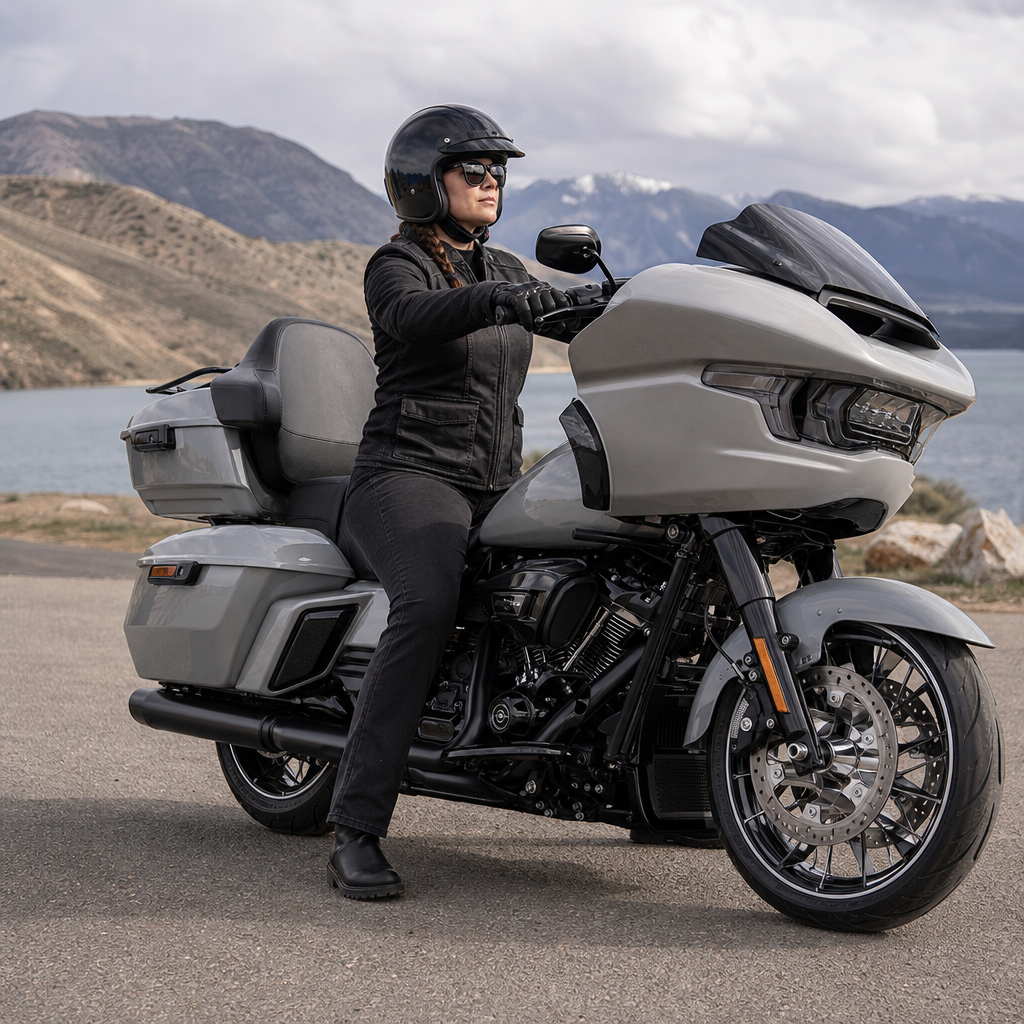
The 2026 Road Glide Limited Reach setup matters because fit determines control, comfort, and confidence, especially for shorter riders managing a heavy touring motorcycle at low speed. On a Harley-Davidson Road Glide, “limited reach” refers to changes that reduce the distance from the seat to the bars, controls, and floorboards so the rider can maintain a neutral shoulder angle and a slight bend in the elbows. “Handlebar riser options” means the combination of bar height, pullback, riser geometry, and cable routing used to bring the grips closer without compromising steering lock, fairing clearance, or electronic integration. I have fitted touring bars on multiple late-model Road Glides, and the same lesson keeps repeating: an inch in the right direction can transform a bike more than a flashy horsepower upgrade. This hub article covers model-specific ergonomics and performance recipes for the 2026 Road Glide Limited, explains what shorter riders should measure before buying parts, and shows how riser choices affect posture, handling, passenger comfort, and long-distance fatigue.
The reason this topic deserves a dedicated hub is simple: the Road Glide Limited is not a generic motorcycle. Its frame-mounted sharknose fairing, touring trunk, wide seat, floorboard position, and electronic architecture create packaging constraints that make “just add taller bars” bad advice. Shorter riders often focus only on bar height, when effective reach is really a three-part equation made up of seat pocket position, grip sweep, and wrist angle at cruising speed. For a rider around 5-foot-2 to 5-foot-8, with average or shorter inseam and arm length, the goal is usually not towering ape-style height. It is controlled pullback, clean wrist alignment, and enough rise to prevent hunching forward into the fairing. Done correctly, the bike tracks better in parking lots, the rider uses less upper-back tension on the highway, and steering inputs become smoother because the hands are no longer stretched to the grips. That is why handlebar riser options are central to any Road Glide Limited reach recipe.
What shorter riders need to measure before choosing Road Glide Limited reach bars
The best limited reach plan starts with measurements taken on the actual motorcycle, not with catalog claims. First, sit in your normal riding boots and place the bike upright, ideally with a helper balancing it. Measure shoulder-to-grip distance, elbow bend angle, and how far your torso must lean forward before your lower back rounds. Second, note wrist extension. If your wrists are bent upward or outward when the bars are straight, the stock bar shape is already costing you comfort. Third, check full-lock clearance with your knees, tank console, and infotainment screen line. On a Road Glide Limited, the frame-mounted fairing means bars move independently of the outer fairing, but switch housings, mirrors, and hand position can still create awkward interference at lock.
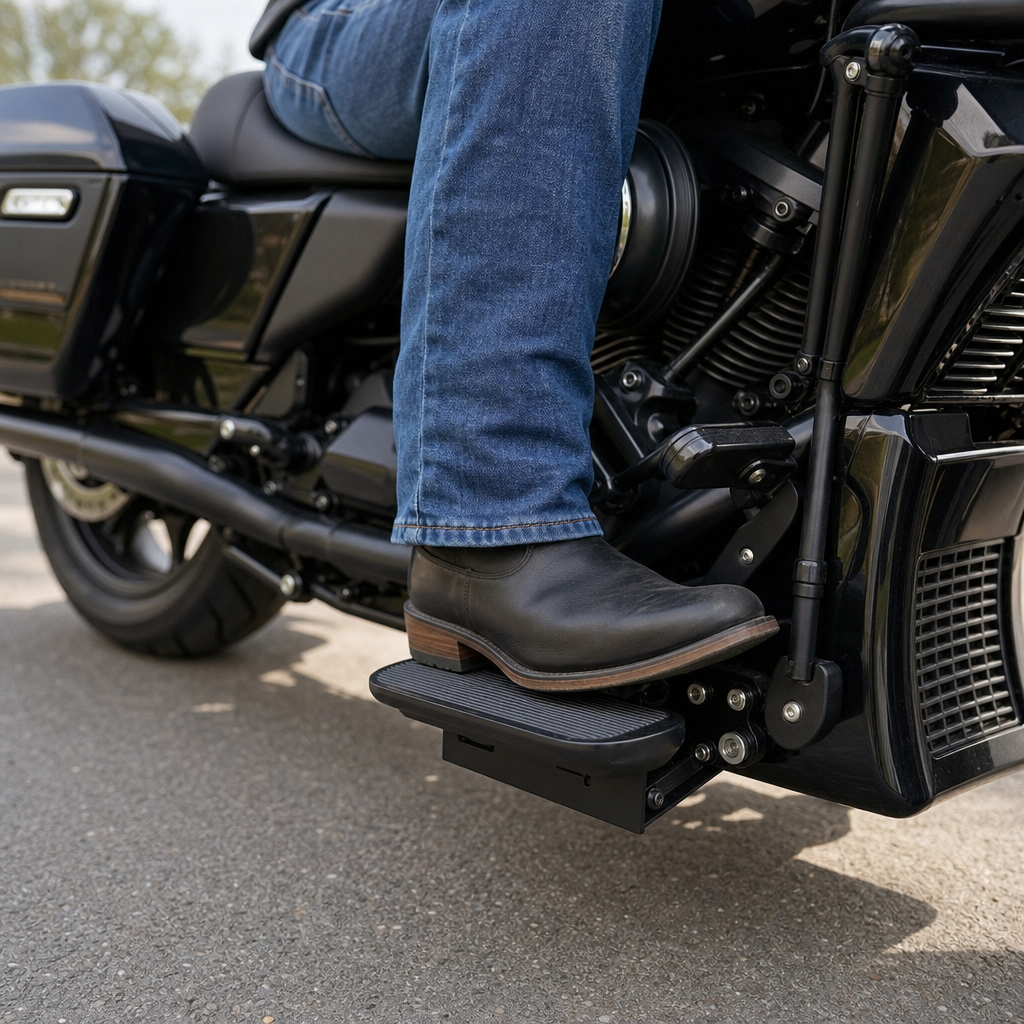
I also recommend measuring seat pocket depth because the seat can change reach as much as many bar swaps. A deeper saddle pocket effectively moves the rider backward and down, increasing the distance to the grips. A limited reach seat or reshaped foam can move the rider forward by roughly 0.5 to 1.5 inches, which may reduce the amount of pullback required in the bars. That matters because excessive pullback can narrow chest opening and make slow-speed steering feel cramped. In practical fitting sessions, I treat bars, seat, and floorboard relationship as one system. If a rider cannot place both feet confidently at stops, a bar change alone will not solve the underlying ergonomic mismatch.
How riser height, pullback, and bar sweep change comfort and control
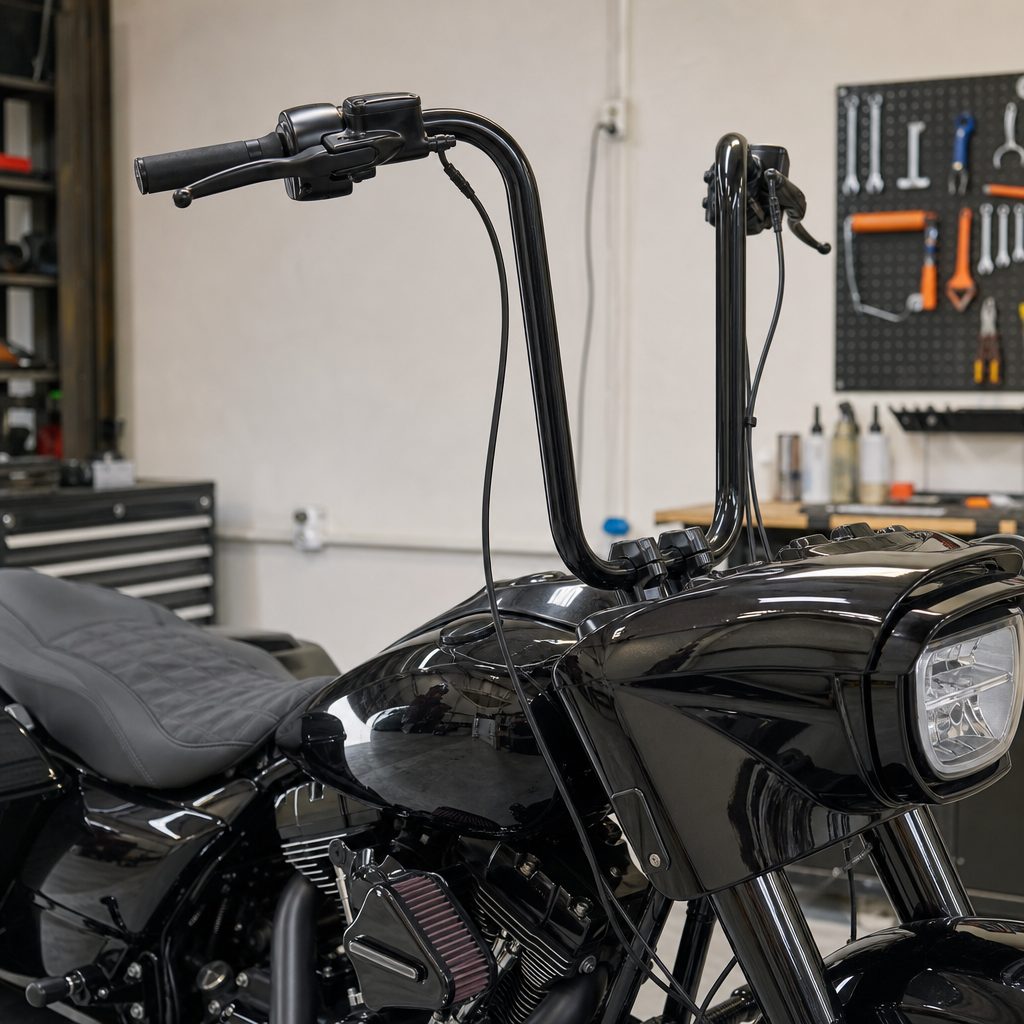
For shorter riders, the key terms are rise, pullback, width, and sweep. Rise is how high the grip area sits above the clamp point. Pullback is how far the grips come toward the rider. Width influences leverage and shoulder opening. Sweep is the rearward angle of the grip ends, which affects wrist neutrality. On a heavy touring bike, width helps leverage, but too much width forces shorter riders to abduct the shoulders and reach outward. Too much sweep can turn the wrists inward uncomfortably. The ideal Road Glide Limited reach bar usually balances moderate width with meaningful pullback and a bend that keeps the wrists straight at cruising speed.
Riser options for the 2026 Road Glide Limited generally fall into three categories. First are low-rise replacement bars that preserve near-stock cable demands while adding better sweep. Second are mid-rise bars, often around the range many riders call “sweet spot touring height,” because they improve posture without creating a high-hand riding position. Third are modular riser-and-bar systems that separate the riser from the top bar section, allowing fine adjustment of height and pullback. Modular systems offer the most tuning potential, but they also create more decisions around clamp compatibility, wire extension, and fairing clearance. For shorter riders, adjustability can be worth the complexity because a half-inch change in pullback is often the difference between neutral posture and shoulder fatigue.
| Option type | Typical fit goal | Main advantage | Main tradeoff |
|---|---|---|---|
| Low-rise replacement bar | Reduce wrist strain with minimal install changes | Usually simpler wiring and cable retention | Limited reach improvement |
| Mid-rise touring bar | Bring grips up and back for neutral elbows | Best balance for many shorter riders | May require line or wire extensions |
| Adjustable riser plus moto-style bar | Fine-tune fit with precise pullback | Maximum customization | More parts, cost, and fitment checks |
Best handlebar riser recipes for the 2026 Road Glide Limited
A good recipe is a tested combination of parts and dimensions aimed at a specific rider outcome. Recipe one is the “comfort touring correction.” This suits riders who can reach the stock grips but feel neck and shoulder tension after an hour. The usual solution is a mid-rise bar with modest additional pullback and a seat that does not push the rider rearward. The result is a more upright spine, relaxed scapula position, and reduced pressure on the palms. Highway comfort improves because the rider is no longer supporting upper-body weight through locked elbows.
Recipe two is the “confidence at stops” package. This is for shorter riders who feel stretched when backing the bike or making tight U-turns. Pair a limited reach seat with bars that come back enough to keep the torso upright during clutch modulation. Often the important gain is not during straight-line cruising but during walking-speed steering, where having bent elbows gives the rider more leverage. Parking-lot control gets better because the bars can be turned without the rider’s shoulders rolling forward. Add a careful clutch friction-zone practice routine and this setup makes a large touring Harley feel significantly less intimidating.
Recipe three is the “long-haul two-up balance” setup. The Road Glide Limited is often ridden with a passenger and full luggage, so ergonomics must still work when the rear suspension settles under load. In this case, bars should place the rider in a neutral position that does not collapse when wind pressure increases at interstate speed. I usually avoid extreme pullback here because it can make steering inputs too tight with passenger weight shifting behind the rider. A moderate rise, moderate pullback, and supportive lumbar-focused seat tend to preserve both comfort and precise tracking over long distances.
Fitment limits unique to the 2026 touring platform
The 2026 Road Glide Limited may look similar to prior touring models, but every model year can bring changes in switchgear, brake line routing, infotainment packaging, and factory harness lengths. That is why model-specific fitment matters. Harley-Davidson touring bikes use increasingly integrated electronics in the handlebar area, including control modules, wiring looms, and in some trims rider-assistance-related interfaces. Before buying risers, verify compatibility with the exact model code, fairing stay geometry, and any factory options such as heated grips. A bar that physically bolts on can still become a poor installation if the internal wiring path is too tight or the brake hose routing binds at full lock.
Shorter riders should also think about windshield line and mirror position. A higher hand position can alter where your forearms sit relative to wind coming off the fairing. I have seen riders solve reach, then discover new helmet buffeting because their torso became more upright and moved into a different airflow pocket. That is not a reason to avoid risers; it is a reminder to tune the full cockpit. Sometimes a small windshield adjustment or different seat foam profile completes the package. The best Road Glide Limited ergonomics recipe is never one part in isolation.
Installation, cable management, and safety checks that matter
Handlebar riser installation on a modern Road Glide Limited is not merely a cosmetic bolt-on. It involves torque specifications, control alignment, clutch and brake line freedom, and secure electrical routing. Follow Harley-Davidson service manual procedures, use the correct clamp torque sequence, and check that the front brake line does not tension when the fork is turned lock to lock. On bikes with internal wiring, pulling harnesses through bars can consume more labor than the mechanical swap itself. Shops that regularly build touring Harleys often use wire pullers, heat-shrink planning, and pre-measured extension kits to avoid chafing and pinched conductors.
After installation, perform a static and dynamic check. Static means bars centered and at both steering stops, suspension compressed, and controls actuated while watching for line stretch or switch interference. Dynamic means a careful test ride focused on low-speed turns, emergency-braking posture, and shoulder comfort after at least thirty minutes. If your hands go numb, your wrists kink, or you feel trapped when countersteering, the setup still needs work. Safety and comfort are linked; a bike that fits poorly encourages delayed inputs and fatigue-based mistakes.
How bar changes affect handling, endurance, and touring performance
Many riders ask whether risers hurt handling. The honest answer is that bad fit hurts handling more than sensible riser changes do. If the grips are too far away, the rider braces on the bars, stiffens the shoulders, and makes abrupt steering corrections. When the bars are properly positioned, steering becomes lighter because the arms can push and pull from a stable, bent-elbow posture. On a Road Glide Limited weighing well over 900 pounds ready to ride, rider leverage matters. Smooth bar input is especially important in crosswinds, off-camber parking lots, and two-up mountain switchbacks.
Endurance also improves when reach is corrected. Over a full day, small postural errors become pain generators: elevated shoulders create neck tension, overextended elbows increase palm pressure, and rounded lower backs accelerate fatigue. The right riser setup distributes effort through the core and seat instead of the hands. For touring riders, that translates into fewer rest stops forced by discomfort and more mental bandwidth for traffic, weather, and route decisions. The performance benefit is not top speed; it is sustained competence over distance.
How this hub connects the wider Harley-Davidson ergonomics recipe series
This page serves as the hub for model-specific ergonomics and performance recipes within the Harley-Davidson topic because bar reach decisions connect to almost every other fit variable. From here, related articles should branch into limited reach seats, suspension sag setup for shorter riders, floorboard positioning, clutch lever span adjustment, windshield tuning after posture changes, and low-speed technique on heavyweight touring motorcycles. The Road Glide Limited is the ideal anchor model because it exposes how rider triangle changes influence real touring performance, not just showroom comfort.
The main takeaway is clear: the best 2026 Road Glide Limited reach solution for shorter riders is usually a balanced recipe, not the tallest bar available. Measure your current posture, decide whether your problem is height, distance, or wrist angle, then choose a riser option that preserves control at full lock and works with the bike’s cables, electronics, and fairing layout. Pair the bars with the right seat and verify the setup with real riding, not just a garage sit test. When the grips come to your hands instead of forcing your body to chase them, the motorcycle feels smaller, steadier, and easier to enjoy for hundreds of miles. Use this hub as your starting point, then map your next upgrade in the Harley-Davidson ergonomics series with fit first, style second.
Frequently Asked Questions
What does “limited reach” mean on a 2026 Road Glide, and why is it so important for shorter riders?
On a 2026 Road Glide, “limited reach” refers to ergonomic changes that bring the rider’s contact points closer and into better alignment. In practical terms, that usually means reducing the distance from the seat to the handlebars, hand controls, and floorboards so the rider does not have to stretch forward to operate the motorcycle. For shorter riders, this matters because proper fit has a direct effect on control, comfort, and confidence, especially on a heavy touring bike that can feel demanding during parking-lot maneuvers, stop-and-go traffic, and slow-speed turns.
If the bars are too far away, the rider often ends up with locked elbows, rounded shoulders, and too much weight carried through the upper back and wrists. That position can make steering inputs feel heavier, increase fatigue over long miles, and reduce confidence when making tight corrections at low speed. A well-planned limited-reach setup aims for a more neutral shoulder angle, a slight bend in the elbows, and a posture that lets the rider keep the torso stable without reaching. That translates into better leverage, smoother steering response, and less strain over a full day in the saddle.
For many shorter riders, the goal is not simply “higher bars.” It is a complete reach solution. Seat shape and height, bar width, pullback, riser height, grip angle, and control positioning all work together. The right setup helps the bike feel smaller, more manageable, and easier to balance, which can make a major difference in both daily comfort and real-world riding confidence.
How do handlebar riser options help shorter riders on a Road Glide Limited Reach setup?
Handlebar riser options help by changing where the grips sit in relation to the rider’s body. On a Road Glide, that typically means adjusting a combination of rise, pullback, width, and wrist angle so the hands come closer without forcing the rider into an awkward posture. For shorter riders, the biggest benefit is usually improved access to the controls while keeping the shoulders relaxed and the elbows slightly bent rather than fully extended.
Riser height alone is only part of the equation. A taller setup can move the hands upward, but if it does not include enough pullback, the rider may still have to reach too far forward. Likewise, a bar with aggressive pullback can shorten reach effectively, but if the height or wrist angle is wrong, it may create pressure points in the wrists, forearms, or shoulders. This is why experienced fitters and builders look at the entire cockpit as a system rather than selecting risers based on height alone.
For a shorter rider on a touring Harley, the best riser setup often improves low-speed handling feel because the rider can maintain a stronger, more balanced upper-body position. That can make U-turns, lane changes, and parking maneuvers feel more controlled. It also reduces fatigue on longer rides by keeping the chest open and minimizing the tendency to slump forward. In other words, the right riser option does not just change appearance; it improves the way the motorcycle responds to the rider and the way the rider feels after hours on the road.
What should shorter riders look for when choosing bar height, pullback, and riser geometry for a 2026 Road Glide?
Shorter riders should focus on fit first and style second. The most useful starting point is to sit on the bike in a normal riding position and evaluate whether the shoulders are relaxed, the elbows have a natural bend, and the wrists remain close to neutral when the hands are on the grips. If the rider has to roll the shoulders forward or straighten the arms to reach the controls, more pullback or a different riser geometry may be needed. If the hands sit too high, the rider may feel shoulder tension; too low, and there may be extra pressure on the wrists and lower back.
Pullback is often one of the most important dimensions for shorter riders because it directly reduces forward reach. Width matters too. Extremely wide bars can increase the effective reach even if the bars are technically closer, because the rider must spread the arms farther apart. A slightly narrower or better-shaped handlebar can make the front end feel more manageable. Rise should then be used to place the grips at a comfortable vertical level, ideally where the rider can steer with relaxed shoulders and stable posture.
Riser geometry also affects the final result. Different risers move the bars not just up, but also back or forward depending on design. That is why two risers with the same advertised height can feel very different once installed. Shorter riders should also account for hand control angle, lever reach adjustment where available, and visibility through the fairing area after changes are made. The ideal setup is one that supports precise control with no strain, not one that simply looks taller or more custom. Test-fitting, measuring current reach, and working with a shop familiar with Harley touring ergonomics can save time and produce a far better outcome.
Can handlebar risers alone solve reach issues, or should shorter riders consider other ergonomic changes too?
In many cases, risers help significantly, but they work best as part of a broader ergonomic plan. If a shorter rider is struggling with overall fit on a 2026 Road Glide, the problem may not be limited to the bars. Seat shape and height can affect how far the rider sits from the controls. A seat that places the rider too far back or too high can make even a well-chosen bar setup feel like a stretch. Likewise, floorboard position and control placement influence how stable the rider feels when stopped and how naturally the lower body supports the upper body while riding.
That is why many limited-reach setups combine risers with a reach-oriented seat, careful control adjustment, and, where appropriate, changes to grips or lever positioning. Even a small improvement in seat pocket position can shorten the effective reach enough to allow a more moderate and natural riser setup. This usually creates a better result than trying to solve everything with extreme bar dimensions alone.
For shorter riders, the best approach is to think in terms of rider triangle optimization: seat, bars, and foot position. When all three work together, the motorcycle becomes easier to control at low speed, less tiring on longer trips, and more confidence-inspiring in everyday use. Risers are often the most visible upgrade, but they are only one piece of what makes a Road Glide truly fit the rider.
How can a rider tell if their Road Glide handlebar setup is correct after installing risers?
A correct handlebar setup should feel natural almost immediately, especially during the first few minutes of normal riding. The rider should be able to sit upright or in a slight natural lean without reaching, shrugging the shoulders, or locking the elbows. The hands should rest on the grips with a slight bend in the elbows and minimal wrist angle. During slow-speed riding, the rider should feel able to turn the bars confidently without shifting excessively in the seat or losing upper-body balance.
There are also several signs that the setup still needs refinement. If the rider feels pressure between the shoulder blades, numbness in the hands, wrist discomfort, or a tendency to slide forward or brace against the bars, the dimensions may still be off. Bars that are too high can create shoulder fatigue, while bars that are too far back can crowd the rider and reduce natural steering feel. Controls that are rotated incorrectly can also ruin an otherwise good riser setup by forcing the wrists into an awkward position.
The best test includes both static and real-world evaluation. With the bike stationary, the rider should check full lock-to-lock steering, lever access, fairing clearance, and line or wiring slack. On the road, attention should be paid to parking-lot maneuvers, stop starts, highway comfort, and fatigue after at least a moderate ride. If the bike feels easier to manage at low speed, the rider’s posture stays relaxed, and upper-body fatigue is noticeably reduced, the setup is probably close to correct. Fine-tuning is normal, and small adjustments in bar rotation or control angle can make a surprisingly large difference in final comfort.