The used Road Glide 3 from 2023 to 2025 sits in a rare position in Harley-Davidson’s lineup: it is both a familiar touring machine and a first-generation trike with no long back-catalog of ownership history. That combination makes buyers ask a fair question: is the first-gen trike worth the risk? The short answer is yes for the right rider, but only if you evaluate it like a touring platform, a reverse-trike alternative, and a limited-production first iteration all at once. I have inspected used trikes for touring riders who wanted comfort without giving up the sharknose fairing, and the Road Glide 3 consistently attracts people moving off two wheels because they value stability, weather protection, and Harley dealer support.
To judge a used Road Glide 3 properly, define the key terms first. “First-gen” means the first production generation of a specific model configuration, not the first Harley trike overall. Harley had already sold Tri Glide models for years, so the Road Glide 3 borrowed an established trike architecture rather than introducing a brand-new rear platform. “Risk” in this context does not mean the machine is inherently unreliable. It means uncertainty around depreciation, early production quirks, parts evolution, resale demand, and whether the package delivers enough value over a used Tri Glide or a two-wheel Road Glide. “Used buyer guide” means more than pricing; it includes model-year differences, service history, recall verification, ergonomics, insurance, and suitability for your type of riding.
This article is the hub for Harley-Davidson used buyer guides from 1990 to 2040 because the same buying logic applies across decades: know the platform, confirm maintenance, understand common issues, and match the bike to how you ride. On older Evolution and Twin Cam machines, buyers worry about cam chain tensioners, charging systems, and rubber mounts. On Milwaukee-Eight era tourers, they focus on infotainment, heat management, hydraulic clutch feel, and electronic rider aids. On future-facing late-2020s and 2030s models, the same core question remains: does this specific example justify its asking price after known strengths and weaknesses are weighed? The Road Glide 3 is an excellent case study because it blends mature Harley touring hardware with the uncertainty every first-application model carries.
What makes this machine matter in the used market is simple. It gave riders the Road Glide fairing on a factory trike without forcing them into aftermarket conversions, and it entered the market when many Harley owners were aging into three-wheel ownership. That means used demand is not just driven by enthusiasts chasing a novelty. It is driven by real comfort, accessibility, and confidence needs. At the same time, first-wave buyers often paid premium pricing, added accessories quickly, and traded early, which creates opportunity for used shoppers. If you know what to inspect, a used 2023, 2024, or 2025 Road Glide 3 can be one of the smarter premium Harley buys in the current touring market.
What the Road Glide 3 Actually Is
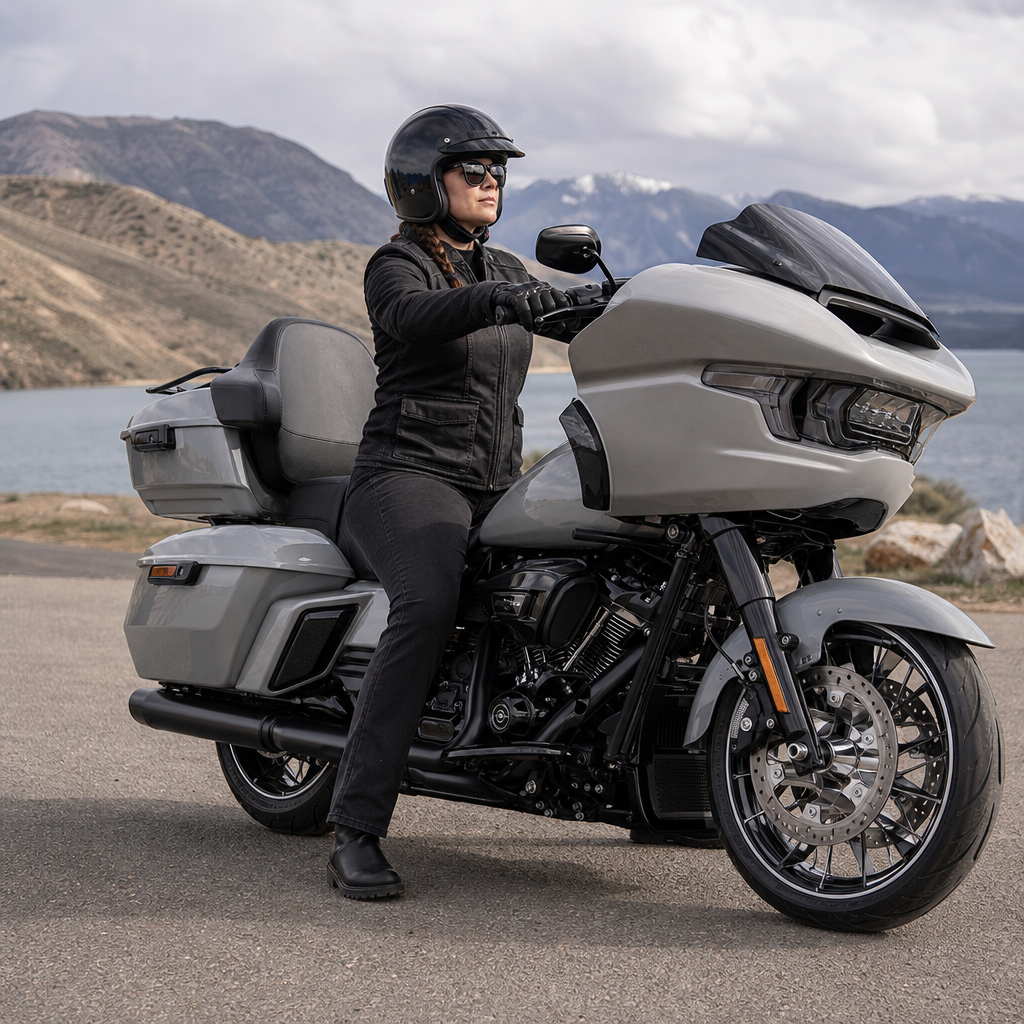
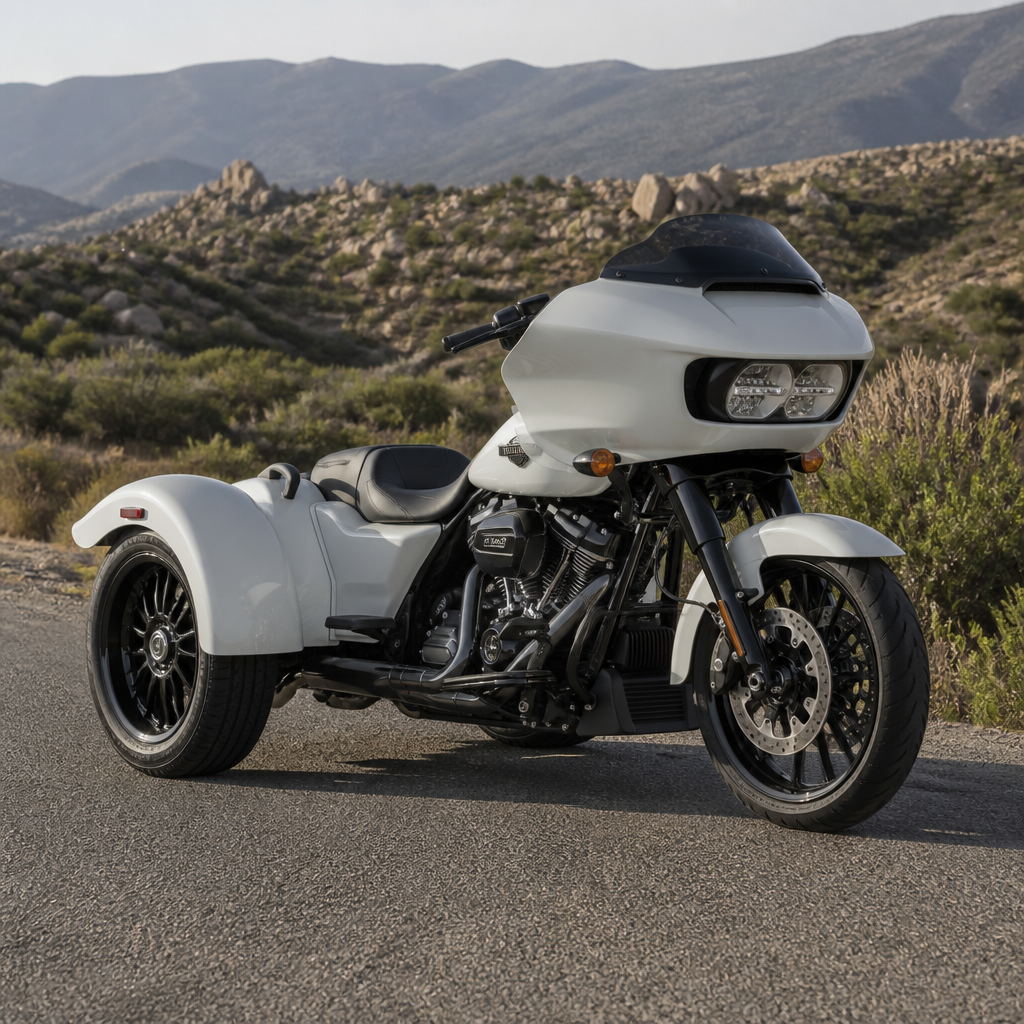
The Road Glide 3 is a factory Harley-Davidson trike built around the company’s touring front end and trike rear chassis. In practical terms, think of it as combining the fixed sharknose fairing and touring cockpit associated with the Road Glide family with the trunked rear axle layout long associated with Harley trikes. Early models used the Milwaukee-Eight 114 engine, a six-speed Cruise Drive transmission, linked braking behavior, and a chassis calibrated for three-wheel stability rather than lean-angle handling. This distinction matters because many buyers approach the Road Glide 3 expecting it to ride like a Road Glide Limited that happens to have an extra wheel. It does not. It steers heavier at low speed, tracks differently over crowned roads, and rewards smooth inputs more than aggressive corner entries.
That said, the platform is not experimental in the way a completely new motorcycle is experimental. Harley’s trike frame, rear suspension concept, and touring controls were already proven in production. The novelty was the bodywork, rider interface, and buyer audience. That lowers mechanical risk compared with a true clean-sheet launch. In my experience, this is the most important mindset shift for shoppers: buy the Road Glide 3 as an adaptation of established Harley systems, not as an unknown prototype. When you do that, the question becomes less “Will it hold together?” and more “Does this specific trim and year deliver enough for the money?”
Used Road Glide 3 Model Years: 2023, 2024, 2025
The 2023 model year is the launch version and usually the one that raises the most concern among used buyers. Launch-year bikes deserve closer scrutiny because assembly updates, software revisions, and accessory compatibility often improve after the first production run. However, 2023 Road Glide 3 examples also offer the biggest pricing spread, and that can make them compelling if dealer records are complete. Look for evidence of early warranty work being performed correctly. A first-year bike that had software updates, recall work, and routine service done at a Harley dealer can be a better buy than a neglected newer unit.
The 2024 model year benefited from Harley’s broader touring-platform momentum and stronger market familiarity. By this point, sales staff, technicians, and owners better understood how the trike fit the lineup. Used shoppers often find 2024 examples with cleaner service histories and less buyer’s-remorse pricing distortion. They may still carry expensive touring accessories such as luggage racks, wind deflectors, heated grips, rider backrests, and communication systems. Those extras add value only if they are factory or high-quality branded parts installed correctly. Cheap accessory wiring is one of the fastest ways to turn a premium used trike into a diagnostic headache.
The 2025 Road Glide 3 is typically the lowest-risk used buy simply because it is the newest, but newest does not automatically mean best value. Pricing often remains close to new-old-stock territory, and at that point warranty coverage, financing incentives, and dealer support on a brand-new machine may outweigh the savings. If a used 2025 is less than ten percent below comparable new inventory, I usually tell buyers to slow down and compare out-the-door numbers carefully.
| Model year | Main advantage | Main risk | Best buyer fit |
|---|---|---|---|
| 2023 | Lowest entry price, widest used supply | Launch-year uncertainty, more variation in setup | Value-focused buyer with inspection discipline |
| 2024 | Better market familiarity, often cleaner histories | Still expensive if heavily accessorized | Balanced shopper wanting lower risk |
| 2025 | Newest condition, likely least wear | Used pricing may be too close to new | Buyer prioritizing freshness over savings |
Common Risks on a Used First-Generation Harley Trike
The largest risk is not engine failure. The Milwaukee-Eight 114 is a known quantity when serviced properly. The bigger risks are ownership-pattern risks. Many trikes are bought by riders making a physical transition from two wheels due to age, injury, or passenger comfort demands. Some owners ride huge highway miles immediately; others barely use the machine because they never fully adapt to trike steering. That creates a strange used market where one bike may have 20,000 sorted touring miles and another may have 1,200 miles but stale tires, old fuel, weak battery health, and no meaningful shakedown use. Low mileage is not automatically a positive on a Road Glide 3.
Steering effort and front-end feel are the next concerns. Buyers new to trikes sometimes report wandering, handlebar shake over rough surfaces, or fatigue from muscling the front end. Often this is not a defect but a setup issue involving tire pressure, alignment, suspension settings, or rider expectation. Still, you should test for abnormal pull, uneven tire wear, or resistance that suggests alignment trouble. A trike that tracks poorly will never feel premium, no matter how glossy the paint looks.
Electronic and accessory issues matter more than major mechanical failures. Infotainment systems, navigation functions, communication modules, USB ports, battery tenders, and added lighting all increase the chance of parasitic drain or intermittent faults. Harley’s systems are generally robust, but aftermarket audio and lighting installations cause real problems. I have seen beautiful touring Harleys spend weeks in service over bad accessory splices. On a used Road Glide 3, insist on seeing how every added electrical component was installed.
Inspection Checklist Before You Buy
Start with paperwork. Verify the VIN, confirm title status, and ask for service records showing break-in service, annual fluid changes, and recall completion. Harley dealers can usually confirm campaign history. Then inspect consumables. Tires on a trike wear differently than on a two-wheel bagger, and the rear pair must be checked for age, sidewall cracking, and even wear. Replace all three tires if age or mismatch is questionable. The cost is meaningful and should influence your offer.
Move to chassis condition. Look for evidence of curb strikes on wheels, underside scrapes near the frame, and damage around the trunk and rear fenders. Trikes are easier to tip in garage mishaps than many people assume because riders forget the machine’s width when maneuvering slowly. Cosmetic cracks around mounts or trunk hardware can reveal an owner who struggled with parking or trailering. Check rear suspension operation, trunk latch integrity, reverse function if equipped, and parking brake behavior.
On the road, the bike should start cleanly, idle steadily, shift without drama, and brake in a straight line. Expect trike-specific steering effort, but do not accept clunks, pronounced weave, or dashboard warnings. During the test ride, evaluate heat management at low speed, wind protection from the fairing, and whether your shoulders and hands tolerate the steering load. A mechanically sound Road Glide 3 can still be the wrong buy if your body dislikes trike ergonomics after thirty minutes.
Ownership Costs, Depreciation, and Market Value
Used Harley trikes cost more to own than many first-time trike buyers expect. Tire replacement, scheduled service, insurance, storage space, and accessory temptation all run high. Fuel economy is generally lower than on a two-wheel touring Harley because of weight and aerodynamics. Depreciation, however, is more nuanced. Premium Harley trikes often hold value better than many niche powersports machines because there is a dedicated customer base, dealer familiarity, and a steady stream of riders seeking three-wheel stability. The Road Glide 3 benefits from all three.
Where depreciation bites hardest is in overpriced accessories and original MSRP inflation. A seller may expect full value for custom seats, upgraded bars, chrome trim, or infotainment add-ons. The market rarely pays dollar-for-dollar for those parts. In appraisal conversations, I value accessories at a fraction of retail unless they solve a known need, such as a rider backrest, trunk rack, or quality wind management part. Buyers should also compare used Road Glide 3 pricing against the Tri Glide Ultra. In some regions, a used Tri Glide with stronger touring equipment can be priced surprisingly close, which changes the value equation.
For this hub’s broader “Used Buyer Guides: 1990–2040” purpose, the Road Glide 3 teaches a durable rule: buy on condition and records first, then year, then accessories. That rule works whether you are shopping a 1998 Road King, a 2007 Twin Cam Ultra, a 2018 Milwaukee-Eight Street Glide, or a 2030s Harley with more electronics than chrome. Condition and documentation remain the real currency.
Who Should Buy One, and Who Should Walk Away
A used Road Glide 3 makes sense for riders who specifically want factory trike stability with the Road Glide cockpit. It is especially strong for long-distance riders who prefer a frame-mounted fairing feel, want passenger confidence, and no longer want the physical demands of holding up a heavy two-wheel touring bike. It also suits buyers who value dealer access, parts availability, and a platform based on proven Harley touring hardware. If that is your use case, the first-generation label should not scare you away.
You should walk away if you are hoping it will feel almost identical to a standard Road Glide in corners, if your budget only covers the purchase price and not premium maintenance, or if the example in front of you has murky service history and complicated electrical modifications. You should also pause if the used discount is too small relative to a new unit with full warranty support. The best used Road Glide 3 is not the cheapest one. It is the one with documented care, honest wear, and a setup that matches your body and riding plans.
The verdict is clear: the first-gen Road Glide 3 is worth the risk when the risk is evaluated realistically. It is not a fragile experiment; it is a smart recombination of established Harley trike and touring components, sold into a market that genuinely wants it. The downside is mainly financial and fit-related, not catastrophic mechanical uncertainty. For shoppers building a Harley-Davidson buying strategy from 1990 through 2040, that distinction matters. Separate platform risk from owner risk, inspect with discipline, and compare price against mission. Do that, and a used 2023, 2024, or 2025 Road Glide 3 can be a confident, comfortable, and financially sensible step into three-wheel touring. Start by test-riding one, pulling the service records, and pricing it against both a Tri Glide and a new leftover model before you decide.
Frequently Asked Questions
Is a used 2023-2025 Harley-Davidson Road Glide 3 actually worth buying, or is the first-generation risk too high?
For the right buyer, yes—a used Road Glide 3 can absolutely be worth buying. The key is understanding that you are not evaluating a typical used Harley touring bike. You are evaluating a first-generation trike based on a familiar bagger platform, with the added reality that there is still a shorter ownership history than with more established Harley trikes. That does not automatically make it a bad purchase. It just means your inspection standards need to be higher.
The Road Glide 3 appeals to riders who want Harley touring character, frame-mounted fairing styling, and trike stability without moving into a much larger full-dress three-wheeler. That gives it a unique place in the used market. It feels familiar to experienced Harley touring riders, but it also behaves differently enough that buyers should avoid assuming it is simply a two-wheel Road Glide with an extra axle. Rear-end behavior, loading characteristics, tire wear patterns, and suspension feel all deserve close attention.
What makes the risk manageable is that much of the bike’s DNA comes from proven Harley touring components, including the Milwaukee-Eight powertrain family and the broader touring ecosystem. What increases the risk is the first-gen nature of the complete package: fewer years of owner reports, fewer long-term wear case studies, and less certainty about how every trim-specific part ages over high mileage. If the example you are considering has been dealer serviced, kept mostly stock, ridden consistently, and shows no signs of neglect, it can be a very smart buy. If it has poor maintenance records, heavy customization, crash damage, or obvious signs of hard use, the first-generation unknowns become much more concerning.
In practical terms, the Road Glide 3 is worth the risk if you are buying condition, service history, and platform fit—not just price. A clean, documented, properly maintained unit is a much safer bet than a cheaper trike with missing records and questionable modifications. If you approach it with the mindset of a careful platform buyer instead of an emotional badge buyer, the risk is usually reasonable.
What should I inspect most carefully on a used Road Glide 3 before buying?
Start with the basics, then move into the trike-specific areas. First, verify service history. You want evidence of regular oil changes, brake fluid service, scheduled maintenance, and any factory campaigns or warranty work. A first-generation model without records deserves extra skepticism. Paperwork matters more here than it might on a long-established platform, because the service trail can reveal whether the previous owner and dealer network were still working through early-production issues correctly.
Next, inspect the rear section very carefully. Look at rear tire wear, wheel condition, axle area cleanliness, suspension components, brake hardware, and signs of impact or scraping underneath. Because a trike’s rear structure and dynamics differ from a standard two-wheeler, uneven wear or repaired damage in the back can tell you a lot. You are looking for consistency, not just cosmetic cleanliness. Freshly detailed parts can hide neglect, so check for fluid seepage, mismatched fasteners, or components that look newer than the surrounding hardware without a clear explanation.
Pay close attention to steering feel and front-end condition as well. On a Road Glide 3, the front end has to work with different chassis loads and rider inputs than a standard bagger. During a test ride, the steering should feel stable and predictable, not vague, heavy in an unnatural way, or prone to pulling. Check fork condition, front tire wear, head bearings, and any signs that the trike has hit curbs, potholes, or road debris hard. Also inspect the fairing mounts and surrounding structure. Because this model’s identity is tied to the Road Glide layout, any damage or misalignment around the frame-mounted fairing deserves attention.
Then inspect electronics and touring equipment. Test the infotainment system, lighting, switchgear, charging ports, audio, and any rider-assist or convenience features. Touring buyers often focus on drivetrain health and forget that electrical gremlins can become annoying ownership costs. A used touring-trike platform should be judged partly by how well its comfort and convenience systems still function, because that is a major part of the ownership experience.
Finally, look for modification quality. Some upgrades are harmless or even beneficial, but amateur wiring, suspension changes, tuning without documentation, or cosmetic add-ons that required cutting or relocation of factory parts can create future headaches. On a used first-gen trike, stock or near-stock examples are usually the safer play.
How does the Road Glide 3 compare with a traditional Harley trike or a reverse-trike alternative?
The Road Glide 3 sits in an interesting middle ground. Compared with a traditional Harley trike such as the larger full-dress models, it offers a more compact touring feel and stronger visual connection to the Road Glide bagger family. That appeals to riders who want three-wheel confidence without stepping into the full-size trike experience. The tradeoff is that it may feel less plush or less “big-mile luxury” oriented than Harley’s larger trike offerings, depending on your expectations and riding style.
Compared with a reverse-trike alternative—meaning a machine with two wheels up front and one in the rear—the Road Glide 3 delivers a very different feel. A reverse trike generally offers front-end grip confidence and a different style of cornering behavior that some riders find easier to adapt to. The Harley layout, with one front wheel and two rear wheels, keeps more of the motorcycle visual and control identity, but it also asks the rider to understand trike-specific road reactions, especially over crowned pavement, expansion joints, and uneven surfaces. Buyers cross-shopping these formats should not treat them as interchangeable. They solve the same stability problem in very different ways.
Where the used Road Glide 3 can make strong sense is for a rider who specifically wants Harley touring character and style but no longer wants, or can no longer comfortably manage, a two-wheel touring bike at low speeds or while loaded. In that context, it can be a better emotional and practical fit than a reverse trike, even if the reverse-trike platform may seem less risky from a development-history standpoint. Harley buyers often care deeply about ergonomics, brand ecosystem, dealership familiarity, and aftermarket support. Those factors matter in real-world ownership.
The main caution is this: do not buy the Road Glide 3 expecting it to feel exactly like either a standard Road Glide or a reverse trike. It is its own category experience. If you ride it with the right expectations, it can be satisfying. If you expect it to duplicate another machine type, disappointment is more likely than mechanical trouble.
Are there any common reliability concerns or first-year issues buyers should expect on a used Road Glide 3?
With any first-generation machine, the real concern is not necessarily one catastrophic flaw. It is the higher chance of small, platform-specific issues that only become obvious once enough owners accumulate time and miles. On the Road Glide 3, buyers should think in terms of early-production refinement, component aging, fit-and-finish consistency, and owner adaptation. Sometimes what gets blamed on “reliability” is actually the result of poor setup, infrequent use, bad storage practices, weak battery maintenance, neglected service, or modifications that changed how the trike behaves.
The engine and broad touring-family hardware are not the biggest source of fear for most informed buyers. Harley has extensive experience with the major touring architecture. The more realistic concerns involve how the complete trike package wears over time: rear suspension feel, brake wear patterns, alignment-related behavior, premature tire wear if pressures or setup were ignored, and any low-volume trim or body-specific parts that may be more expensive or slower to source. These are not necessarily deal-breakers, but they matter when you are estimating long-term cost.
Electrical issues are also worth watching simply because touring machines tend to carry more feature content, and many used examples end up with added lighting, audio, charging accessories, or tuning devices. The more accessories installed, the more important it is to verify that the wiring remains tidy, fused properly, and free of quick-fix splices. A clean electrical inspection can tell you a lot about the ownership quality of the whole machine.
Another point buyers often miss is usage pattern. A trike that sat long periods can be just as concerning as one with high mileage. Long storage can mean battery issues, aging fluids, flat-spotted or aged tires, sticky controls, and seals that have not benefited from regular operation. A consistently ridden, properly serviced Road Glide 3 with moderate mileage is often a safer bet than a barely used example with years of inactivity. In other words, mileage alone is not the best risk indicator. Maintenance quality and storage history matter more.
What kind of rider is the used Road Glide 3 best suited for, and who should probably skip it?
The Road Glide 3 is best suited for a rider who already knows why a trike makes sense in their life. That may be someone transitioning from two wheels due to strength, balance, confidence, passenger needs, or comfort priorities. It also fits riders who want Harley touring identity in a three-wheel format without stepping all the way into a larger, more traditional full-dress