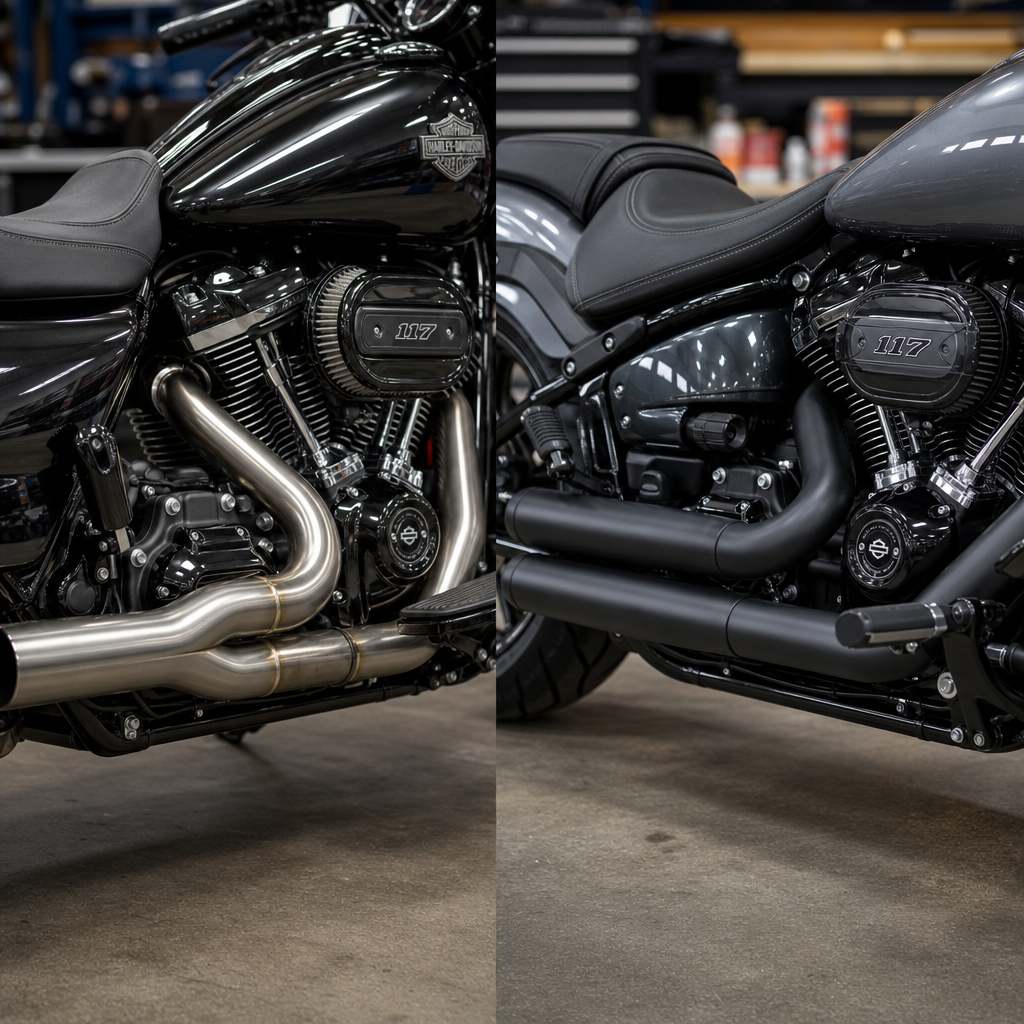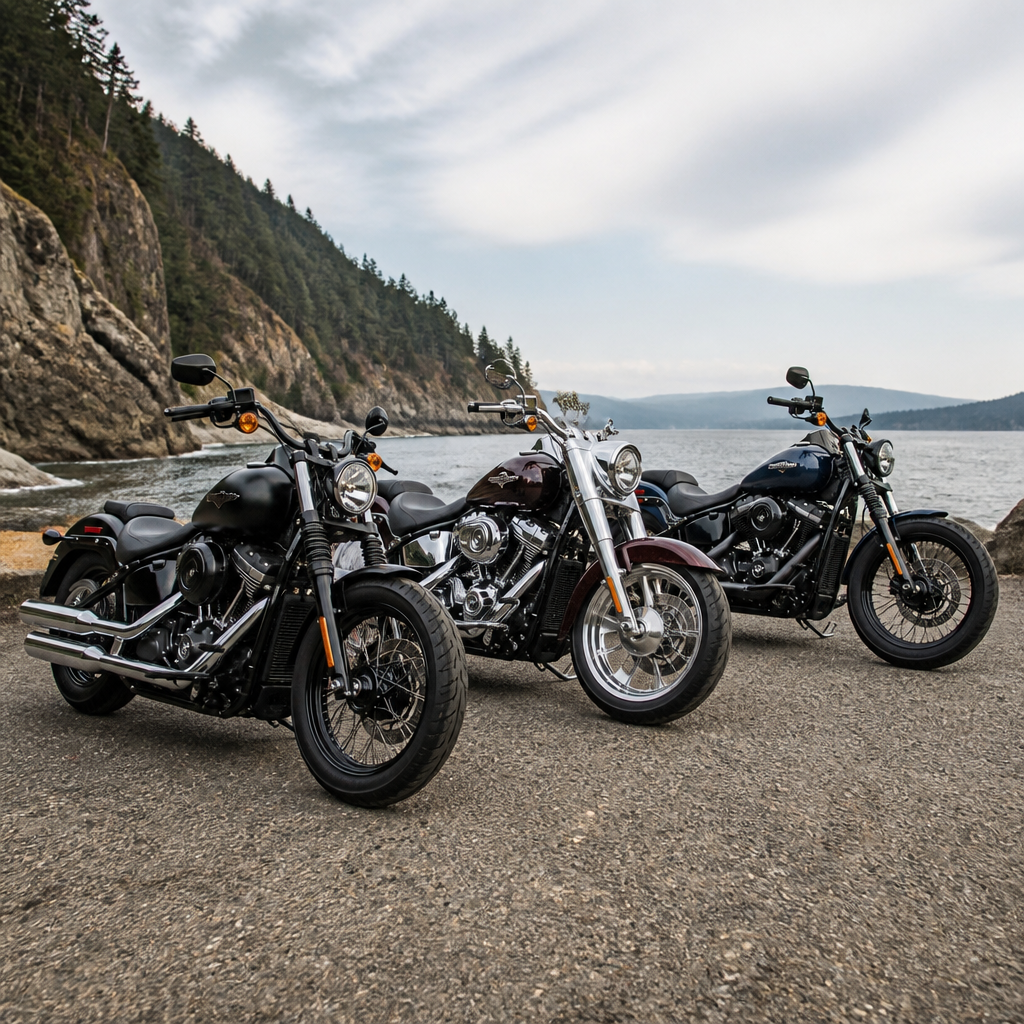
The used Harley-Davidson market rewards informed buyers, and nowhere is that clearer than with 2020-2025 Softails, where mileage can move asking prices by thousands of dollars even when two bikes look nearly identical in photos. In this 2026 valuation guide, mileage means more than the number on the odometer: it is a proxy for wear cycles, maintenance timing, parts life, resale confidence, financing risk, and the likelihood that a bike has spent years sitting versus years being ridden. Softail refers to Harley-Davidson’s modern cruiser platform that includes models such as the Street Bob, Standard, Fat Boy, Heritage Classic, Breakout, Low Rider S, Low Rider ST, and Sport Glide, all built around the Milwaukee-Eight engine family and updated chassis architecture. Buyers searching used Softails usually ask the same practical questions: what counts as low mileage, how much is too much, which years hold value best, and how should mileage be weighed against service history, modifications, title status, and local demand. I have appraised, bought, and helped clients price late-model Harleys for years, and the pattern is consistent: mileage matters most when it changes the story a bike tells about future cost. A clean 2021 Street Bob with 18,000 well-documented miles can be a better buy than a 2020 Fat Boy with 3,000 miles, old tires, stale fluids, and years of deferred service. That is why this guide is not just a price list. It is a valuation framework for the full “Used Buyer Guides: 1990–2039” subtopic, using 2020-2025 Softails as the central example while showing how to judge age, use, and condition across generations. If you want a fair number before negotiating, trading, insuring, or listing a Harley-Davidson, you need to understand how mileage changes value in context, not in isolation.
Why mileage matters on 2020-2025 Softails
Mileage affects used motorcycle value because it changes expected maintenance, component fatigue, and buyer psychology. On 2020-2025 Softails, the odometer interacts with the Milwaukee-Eight 107, 114, and 117 engines, six-speed drivetrains, belt final drive, ABS systems, electronic aids, and increasingly expensive cosmetic parts. In most markets, the first sharp pricing break appears once a Softail crosses roughly 10,000 to 12,000 miles, because buyers know major routine items are no longer “nearly new.” The next common break shows up around 20,000 miles, where suspension wear, brake rotor condition, charging system performance, wheel bearings, clutch feel, and bushing condition begin to deserve closer inspection. Above 30,000 miles, value depends heavily on records. A 32,000-mile Heritage Classic with dealer stamps, tire dates, brake fluid changes, and a recent drive belt inspection often sells faster than a 14,000-mile bike with no proof of service.
Softails also occupy a part of the market where emotional buying is common. Many shoppers compare paint, bars, pipes, and stance before they compare service intervals. That creates opportunity. Higher-mileage bikes are sometimes discounted more than their actual mechanical condition justifies, especially if they remain stock or tastefully upgraded. Conversely, very low-mileage examples can command unrealistic premiums because sellers anchor to nostalgia rather than replacement cost. In practical valuation work, I treat mileage as a confidence multiplier. Low miles raise value only when condition and maintenance support the reading. Average miles with complete documentation produce the most stable valuations. High miles without records require the biggest discount because the buyer must reserve cash for catch-up service and hidden wear.
What counts as low, average, and high mileage in 2026
By 2026, a used 2020 model is six years old and a 2025 model is one year old, so mileage bands should be judged against age rather than with a single universal threshold. A useful benchmark for cruisers is 2,000 to 4,000 miles per year, though rider behavior varies widely by climate and ownership type. Weekend garage queens may average under 1,500 miles annually, while touring-oriented Softails can exceed 5,000 without being abused. For valuation, I classify mileage on 2020-2025 Softails this way: significantly below expected use, roughly age-appropriate, moderately above expected use, and clearly high for age. This method aligns better with how lenders, insurers, and experienced buyers actually think than simplistic labels like “low miles” in classified ads.
| Model year | Low mileage in 2026 | Average mileage in 2026 | High mileage in 2026 |
|---|---|---|---|
| 2025 | Under 1,500 | 1,500-4,000 | Over 4,000 |
| 2024 | Under 3,000 | 3,000-8,000 | Over 8,000 |
| 2023 | Under 5,000 | 5,000-12,000 | Over 12,000 |
| 2022 | Under 7,000 | 7,000-16,000 | Over 16,000 |
| 2021 | Under 9,000 | 9,000-20,000 | Over 20,000 |
| 2020 | Under 11,000 | 11,000-24,000 | Over 24,000 |
These ranges are valuation tools, not mechanical verdicts. A 2020 Low Rider S with 26,000 highway miles is not automatically worn out. Harley’s Milwaukee-Eight platform regularly handles that distance with no drama when oil changes, primary and transmission service, tires, battery care, and brake maintenance are current. However, the market still discounts higher mileage because resale buyers price risk before they price reality. That spread between actual durability and perceived wear is where disciplined buyers find value.
How mileage changes price by model and trim
Not every Softail reacts to mileage the same way. Entry and midrange models, especially the Softail Standard and Street Bob, tend to show the clearest dollar-for-mile relationship because buyers in those segments are budget sensitive and cross-shop aggressively. Premium trims such as the Fat Boy, Heritage Classic, Breakout, and Low Rider ST hold stronger absolute prices, but mileage still narrows demand if cosmetic condition is only average. The reason is simple: once asking prices climb, buyers expect near-showroom presentation or documented premium accessories. A 15,000-mile Breakout with paint chips and no records can sit for weeks, while a 15,000-mile Street Bob priced correctly usually moves faster.
In 2026 market behavior, every jump from low mileage to average mileage often trims about 5 to 9 percent from private-party asking strength when all else is equal. Moving from average to high mileage often subtracts another 8 to 15 percent, depending on model desirability. Low Rider ST and Low Rider S bikes usually resist mileage penalties better than Softail Standard models because demand remains strong and owners often add useful accessories like saddlebags, fairings, crash protection, or suspension upgrades. Heritage Classic models also tolerate miles well when buyers view them as practical long-distance cruisers. Fat Boy and Breakout buyers, by contrast, often pay more attention to visual condition and lower odometer readings because those models sell partly on presence and collector appeal.
Special paint, discontinued colors, and factory-option combinations can soften mileage discounts, but not eliminate them. Dealers also use mileage strategically in trade-in offers. If a 2022 Street Bob crosses 15,000 miles, a store may treat it as less finance-friendly even if it is clean, because the next buyer wants payment-sensitive terms on a still-modern bike. That trade dynamic can widen the spread between wholesale and retail. For shoppers, this creates room to negotiate, especially late in the riding season or when a seller is trading up to a touring model.
When mileage matters less than condition and records
The biggest mistake used buyers make is treating mileage as the only trustworthy signal. On 2020-2025 Softails, condition, storage history, and documentation often matter more. Tires age out before they wear out; brake fluid absorbs moisture; batteries sulfate; fuel degrades; seals dry; and neglected cosmetic corrosion can spread on low-mileage bikes that sat in humid garages. I have inspected two-year-old Harleys with under 2,000 miles that needed tires, battery replacement, fluid service, and injector cleaning, making them worse values than bikes with four times the mileage and a folder of receipts.
Service records directly protect value because they convert uncertainty into evidence. At minimum, a serious buyer should look for proof of engine oil changes, primary and transmission fluid service, brake fluid replacement every two years, battery age, tire date codes, recall completion, and any warranty or dealer campaign work. On Milwaukee-Eight bikes, start-up behavior, idle stability, charging voltage, clutch engagement, and heat management tell a better story than the odometer alone. Modifications deserve separate treatment. Quality upgrades from known brands such as Öhlins, Legend Suspension, S&S, Bassani, or Harley-Davidson Genuine Parts can support price if installed correctly, but loud pipes, deleted emissions equipment, hacked wiring, or poorly tuned engine parts usually reduce buyer confidence. A stock or reversibly modified Softail almost always appraises more cleanly than a heavily customized example.
Title brand matters too. Salvage, rebuilt, theft recovery, or insurance auction history can erase any premium created by low mileage. So can accident evidence hidden under fresh paint or aftermarket tins. Whenever miles seem unusually low, verify consistency across inspection stickers, dealer printouts, title records, ECU data where available, and wear points like grips, pegs, rotors, seat edges, and switchgear. Odometer fraud is less common than on older machines, but undisclosed cluster replacement and simple misrepresentation still happen.
How to use this hub for Used Buyer Guides: 1990-2039
This page serves as the hub for the broader Harley-Davidson “Used Buyer Guides: 1990–2039” topic, and the mileage logic here scales across eras with the right adjustments. For 1990s Evolution models, mileage interacts more strongly with carburetor condition, rubber components, and age-related electrical issues. For Twin Cam bikes from the late 1990s through the 2010s, buyers also need model-specific knowledge about cam chain tensioners, compensators, transmission bearings, and heat management. For modern Milwaukee-Eight models, attention shifts toward software updates, charging health, suspension wear, ABS function, and whether the bike’s maintenance followed time-based as well as distance-based intervals.
Use this hub as your starting framework. First, judge whether mileage is low, average, or high for age. Second, identify the platform-specific wear items for that generation. Third, compare the bike against local market comps, not national dream pricing. Fourth, adjust for records, tires, battery, cosmetic damage, and title status. Fifth, discount heavily for unresolved modifications or missing keys, fobs, and security components. This approach works whether you are pricing a 1998 Fat Boy, a 2007 Softail Deluxe, a 2016 Slim S, or a 2024 Low Rider ST. Mileage always matters, but the reason it matters changes with the engineering and with what buyers fear most in that era.
As you build internal comparisons across Harley-Davidson buyer guides, keep one rule in mind: the best used bike is rarely the one with the lowest miles. It is the one with the lowest future cost relative to the asking price. That is the principle that turns mileage from a marketing slogan into a valuation tool.
Smart pricing and negotiation tactics for buyers and sellers
If you are buying, begin with completed-sale evidence from dealer listings, local classifieds, auction results where available, and valuation services such as J.D. Power, while remembering that automated guides lag fast-moving regional demand. Then subtract for age-related service due now, not later. A bike needing tires, brake flush, and battery can require $800 to $1,500 in immediate spend depending on parts choices and labor rates. Use those numbers specifically in negotiation. Saying “the miles are high” is weak; saying “this 2021 Heritage has 21,000 miles, 2020-dated tires, and no brake fluid record, so I need a $1,200 adjustment” is credible.
If you are selling, prepare the bike before defending the odometer. Wash it thoroughly, correct small cosmetic issues, gather receipts, print recall completion if available, photograph tire tread and date codes, and disclose any tuning or parts changes clearly. Honest listings with underside photos, cold-start video, and service chronology outperform vague listings even at slightly higher asking prices. On late-model Softails, documentation routinely preserves more value than chrome accessories. Buyers pay for certainty.
In 2026, the strongest strategy is balanced realism. Mileage affects the price of 2020-2025 Softails because it changes expected maintenance, financing appeal, and resale confidence, but it never acts alone. Age-appropriate miles plus records usually beat ultra-low miles plus neglect. Model desirability can soften the discount, yet condition, title quality, and service history decide whether that discount is fair. Use the mileage bands in this guide, compare against actual local comps, and adjust for tangible costs you can name and verify. That method will help you buy below market risk or sell without leaving money on the table. If you are researching Harley-Davidson values across decades, use this page as your base framework, then move to the generation-specific buyer guides in the 1990–2039 series and evaluate each bike with evidence instead of guesswork.
Frequently Asked Questions
How much does mileage really affect the price of a 2020-2025 Harley-Davidson Softail?
Mileage can have a major effect on the asking price of a 2020-2025 Softail, often shifting value by several thousand dollars even when two bikes appear nearly identical in listing photos. Buyers and lenders tend to view mileage as a shorthand for overall use, future maintenance needs, and resale confidence. A lower-mileage bike usually commands a premium because it suggests fewer wear cycles on the engine, drivetrain, suspension, brakes, bearings, and electronics. At the same time, that premium only holds if the bike also has a solid service history and no signs of neglect from long periods of storage.
In the 2026 market, mileage matters most when it moves a Softail into a different perceived ownership category. For example, a bike with unusually low miles for its model year may be treated as a premium example, while one with average miles is priced more competitively, and one with high miles often attracts value-driven buyers who expect a discount. That said, mileage is never a standalone number. A 2021 Softail with 18,000 well-documented miles and regular service can be more desirable than a 2020 Softail with 4,000 miles but a weak maintenance record, old tires, stale fluids, and evidence that it sat unused for long stretches. The smartest valuation approach is to treat mileage as one of the strongest price factors, but always in combination with condition, service documentation, accident history, modifications, and local market demand.
What is considered low, average, and high mileage for a 2020-2025 Softail in 2026?
There is no single cutoff that applies to every Softail model, but buyers generally judge mileage against age and expected annual use. In practical terms, many riders and dealers use a normal-use range of roughly 2,500 to 5,000 miles per year for late-model cruisers, though regional riding seasons and owner habits can push that higher or lower. Using that framework, a 2020 Softail in 2026 with around 15,000 to 30,000 miles may feel broadly average to the market, while significantly below that range may be viewed as low mileage and significantly above it may be treated as high mileage. A 2025 model, by contrast, will naturally be judged on a much shorter ownership window, so even 6,000 to 8,000 miles may feel active but not necessarily excessive.
What matters most is whether the odometer reading looks reasonable for the bike’s age, style, and ownership story. A low-mileage touring-oriented Softail might be appealing, but buyers may also wonder whether it spent most of its life parked. An average-mile example often hits the market sweet spot because it has been used enough to stay exercised without crossing into obvious heavy-use territory. A high-mile Softail is not automatically a bad purchase, especially with strong records, but it usually faces more price resistance because buyers mentally budget for near-term maintenance such as tires, brakes, drive components, battery replacement, fluid service, suspension attention, and model-specific wear items. In other words, mileage bands are relative, but market perception is very real, and that perception influences value just as much as the mechanical reality.
Is a very low-mileage Softail always worth paying more for?
Not always. Very low mileage can increase value, but only when the rest of the bike supports that premium. In the used Harley-Davidson market, an ultra-low odometer reading tends to attract attention because buyers associate it with less wear and longer remaining component life. However, motorcycles that sit for long periods can develop their own problems. Seals can dry out, batteries can weaken, tires can age out before they wear out, fuel systems can suffer from stale gas, and fluids can degrade simply from time. A bike with extremely low mileage but poor storage practices may require immediate recommissioning work that reduces the benefit of the low odometer number.
That is why informed buyers in 2026 look beyond the mileage headline. They check tire date codes, battery age, service intervals, brake fluid condition, belt condition, signs of corrosion, and whether factory scheduled maintenance was completed on time rather than just by miles. They also examine whether the bike was started and ridden regularly or simply left parked for seasons at a time. If a low-mileage 2022 or 2023 Softail has climate-controlled storage, clean records, fresh consumables, and documented service, then paying a premium can make sense. If it has cosmetic shine but old rubber, unknown fluids, and no paper trail, the premium should shrink quickly. Low mileage is valuable, but healthy use and proper care are often more important than the odometer alone.
How do maintenance records change the way buyers interpret mileage on a Softail?
Maintenance records can completely change how mileage is perceived and priced. On paper, mileage tells you how much a motorcycle has been used. Service documentation tells you how responsibly it has been owned. When buyers compare two 2020-2025 Softails with similar miles, the one with receipts, dealer stamps, or organized owner logs almost always inspires more confidence and supports a stronger asking price. Records show that oil changes, inspections, brake service, tire replacement, battery care, and scheduled maintenance were handled on time. That reduces uncertainty, and reduced uncertainty is a major driver of value in the used market.
This is especially important in the middle and higher mileage ranges. A 25,000-mile Softail with documented fluid changes, regular inspections, and replacement of expected wear items can present as a dependable, well-sorted bike rather than a risky one. By contrast, a 12,000-mile bike with no paperwork may trigger more caution because buyers do not know whether services were skipped or simply forgotten. Records also help explain the bike’s mileage pattern. They can confirm seasonal use, verify odometer consistency, and support the impression that the bike was ridden regularly rather than neglected. In valuation terms, paperwork often narrows the discount applied to a higher-mileage bike and helps preserve the premium on a lower-mileage one. For sellers, good documentation is one of the easiest ways to defend price. For buyers, it is one of the clearest signs that the mileage number reflects a bike that has been cared for, not just counted.
Should buyers avoid high-mileage 2020-2025 Softails, or can they still be good value?
High-mileage Softails should not be dismissed automatically. In many cases, they can offer some of the best value in the market, especially for buyers who prioritize riding over showroom-level resale appeal. A higher-mile bike usually sells at a noticeable discount because many shoppers focus heavily on the odometer. That creates opportunity when the motorcycle has been maintained well, inspected carefully, and priced realistically. Harley-Davidson Softails from the 2020-2025 period can remain highly usable motorcycles well beyond the mileage point where casual buyers start to hesitate, particularly when maintenance has been consistent and there are no red flags involving accident damage, abuse, or neglected wear items.
The key is to price the mileage correctly against upcoming costs. A buyer should inspect service history, tire condition, brakes, belt and pulleys, suspension feel, charging system performance, battery health, wheel bearings, steering-head bearings, fluid condition, and signs of leaks or corrosion. If those areas check out, a high-mileage Softail may be a smarter buy than a lower-mile example with deferred maintenance and an inflated asking price. The tradeoff is that resale later on may be narrower because future buyers will also react to the odometer. Financing and extended warranty options may be more limited as well, depending on mileage thresholds and lender policies. Still, for a buyer who wants a dependable rider and understands how to evaluate condition, a higher-mile 2020-2025 Softail can represent strong real-world value. The market tends to punish mileage faster than it punishes actual mechanical integrity, and that gap is where informed buyers often win.