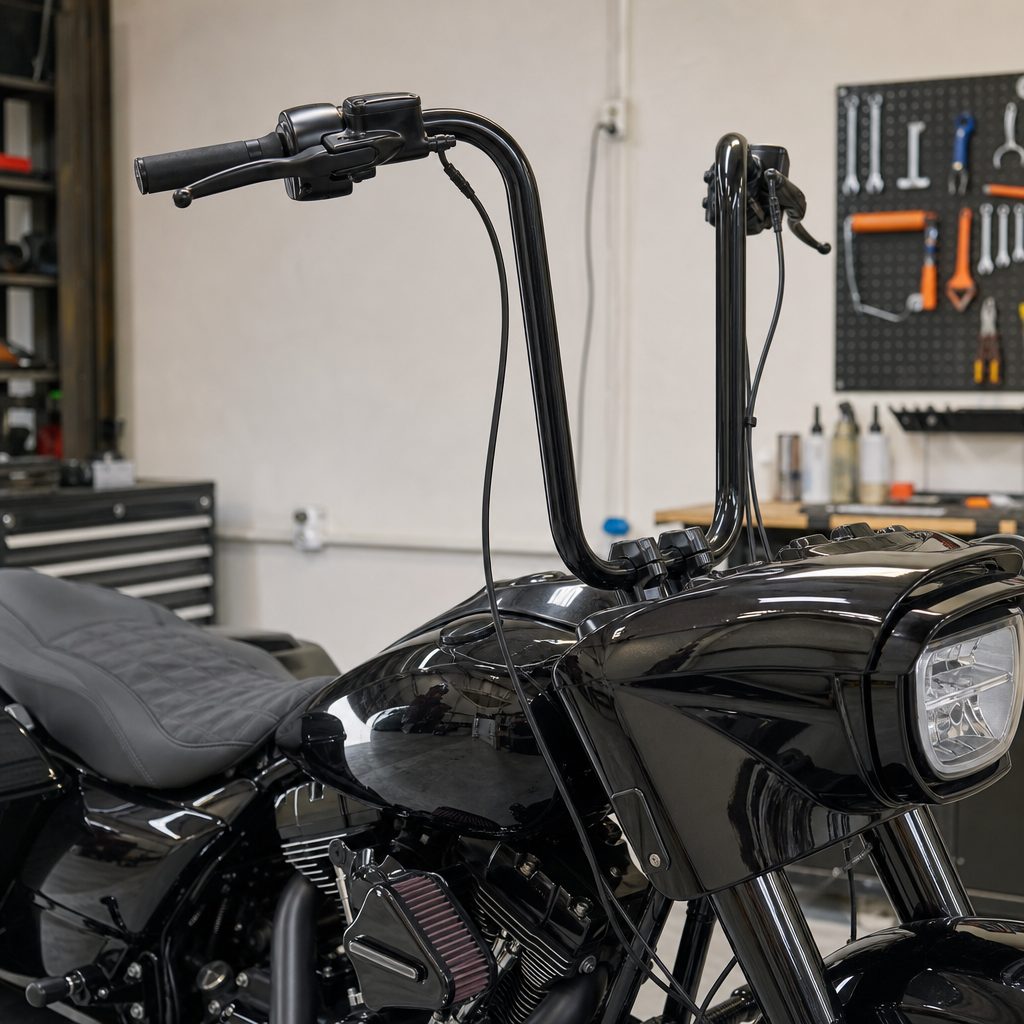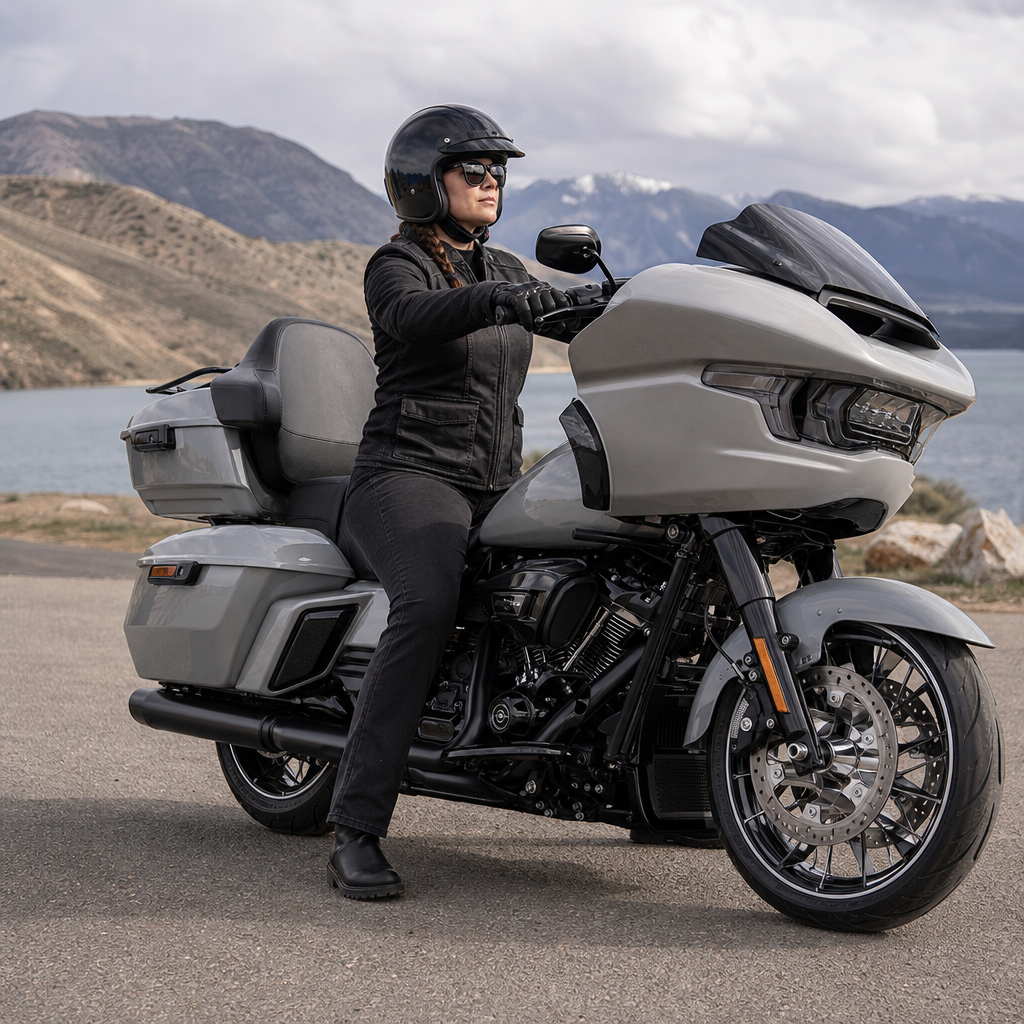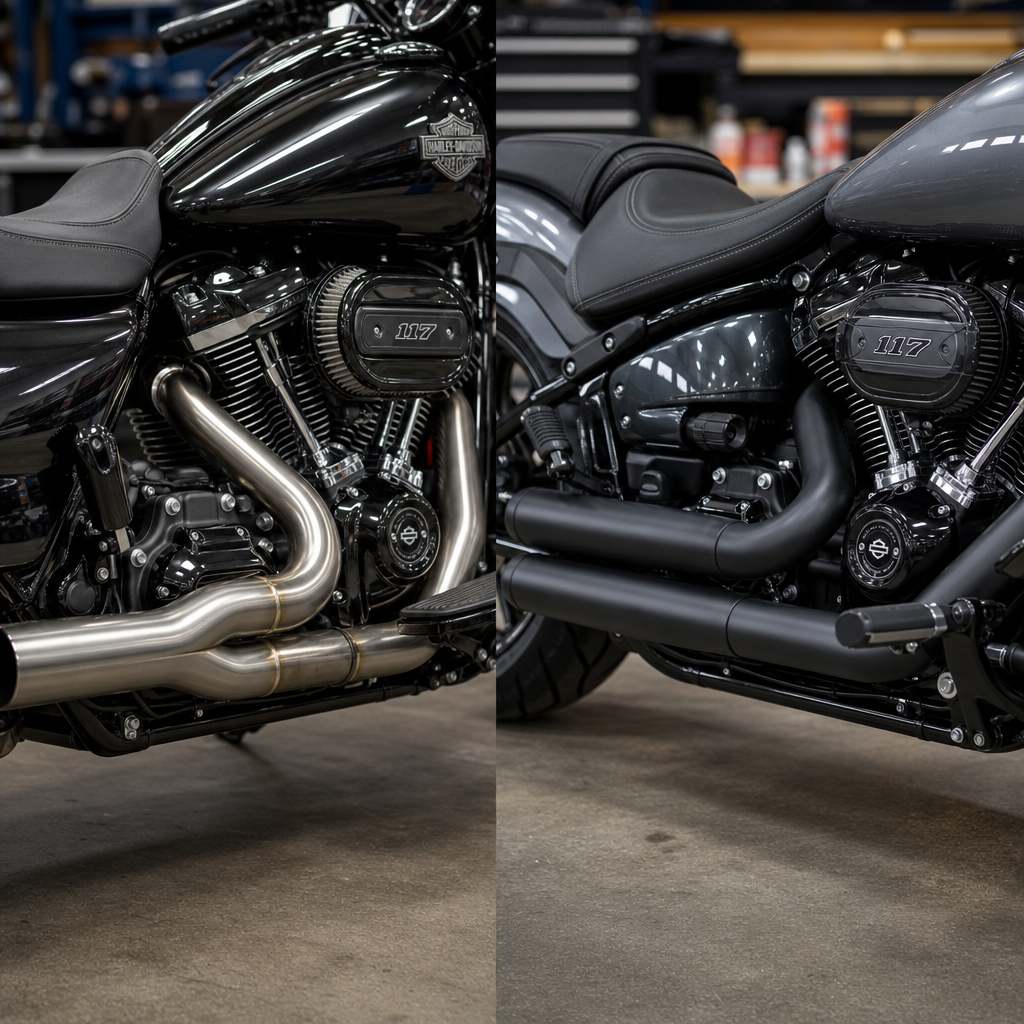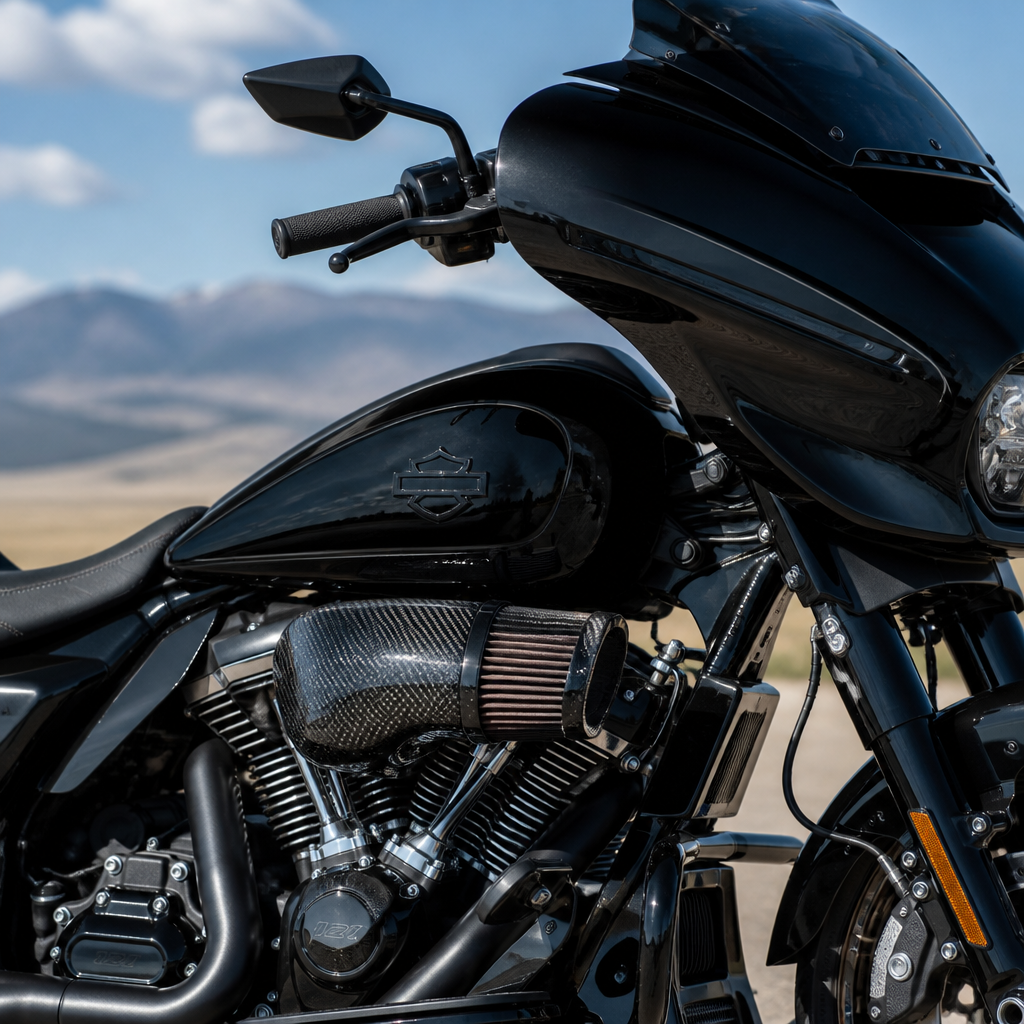
The 2026 CVO Street Glide ST’s carbon fiber intake velocity is more than a styling detail. It is a functional airflow strategy built into Harley-Davidson’s highest-performance bagger, and it matters because intake speed, pressure stability, and heat control directly affect torque, throttle response, and rider feel. In simple terms, intake velocity describes how quickly and cleanly air moves from the atmosphere into the engine’s throttle body, manifold, and combustion chambers. On a modern Milwaukee-Eight performance platform, that process is shaped by inlet area, runner geometry, plenum behavior, filter media, and engine calibration. Carbon fiber enters the picture because it lets engineers create a light, rigid, heat-resistant intake structure with complex shapes that would be heavier or less stable in metal or molded plastic.
I have spent years around Harley-Davidson performance builds, dyno sessions, and touring chassis upgrades, and intake design is one of the easiest areas to misunderstand. Riders often assume a larger opening automatically makes more power. In practice, the goal is not maximum opening alone. The goal is usable airflow with high mixture quality across a broad rpm range. The 2026 CVO Street Glide ST sits at the center of that conversation because it blends factory performance engineering with premium materials, and it does so on a motorcycle that must work on city streets, long highway pulls, hot-weather traffic, and loaded touring miles.
This article serves as a technical hub for Harley-Davidson engine deep-dives, especially Milwaukee-Eight, Twin Cam, Evolution, and RevMax platforms. The CVO Street Glide ST is the anchor, but the larger purpose is to explain how Harley-Davidson intake philosophy has evolved across generations. If you are comparing M8 baggers to Twin Cam builds, tracing lessons from Evo head flow, or wondering how the liquid-cooled RevMax changes the airflow discussion, this guide gives you the framework. By the end, you should understand what the carbon fiber intake velocity concept really means, why it supports the 2026 CVO Street Glide ST’s performance character, and how it connects to the broader Harley-Davidson technical landscape.
What the 2026 CVO Street Glide ST’s Carbon Fiber Intake Velocity Actually Means
On this motorcycle, carbon fiber intake velocity refers to the engineered movement of incoming air through a high-performance intake assembly designed to preserve speed and directional control. That matters because cylinders do not simply need air volume; they need consistent cylinder filling. When intake velocity stays high without becoming turbulent, the engine sees better combustion stability, stronger midrange torque, and cleaner response when the rider rolls on the throttle. Harley-Davidson’s performance baggers live or die in that midrange. A touring rider overtaking from 60 to 90 mph cares less about peak dyno bragging rights than about immediate, predictable thrust.
The carbon fiber structure helps in several ways. First, carbon fiber offers excellent stiffness for its weight. That makes it possible to hold a precise internal shape under vibration and pressure pulsation. Second, it resists heat soak better than many metal components placed near hot cylinder heads. Cooler incoming air is denser, and denser air improves combustion potential. Third, carbon fiber allows complex contours that smooth transitions between the external opening, filter cavity, and throttle body inlet. In airflow work, abrupt transitions cause separation and turbulence. Smooth radii, stable walls, and controlled cross-sectional changes preserve energy in the air column.
Velocity also connects to acoustic tuning. Every intake tract behaves like a pressure-wave system. Valve events, cam timing, intake length, and plenum volume all affect how pressure pulses reflect and return. Engineers can use those returning waves to improve cylinder filling at targeted rpm bands. That is one reason the best factory intake systems often outperform crude aftermarket “big hole” designs in everyday riding. They are tuned, not merely enlarged.
How Harley-Davidson Intake Engineering Evolved from Evo to Twin Cam, M8, and RevMax
Harley-Davidson intake development makes more sense when viewed across engine families. The Evolution engine established a reputation for durability and mechanical honesty. Its intake discussion was usually straightforward: improve breathing with better heads, carburetion, cam selection, and exhaust matching. Velocity remained important, but tuning was more mechanical and less electronically managed. A well-set-up CV carburetor on an Evo could deliver excellent rideability because vacuum signal and intake speed were preserved rather than sacrificed.
Twin Cam engines raised the ceiling for displacement and aftermarket tuning, but they also exposed the tradeoff between airflow quantity and mixture speed. Builders learned quickly that oversized throttle bodies or ports could flatten low-end response. Good Twin Cam combinations matched head work, cam timing, compression ratio, and intake tract dimensions. On a heavy bagger, that balance was everything. A dyno chart with a strong top number meant little if the bike lost punch between 2,500 and 4,000 rpm.
The Milwaukee-Eight sharpened combustion efficiency with four-valve heads, better breathing, and stronger stock torque characteristics. Because the M8 platform already moves air more effectively than prior Big Twins, intake tuning became even more sensitive. Small changes in plenum behavior, runner entry, and calibration can be felt immediately. That is why a premium intake material and shape strategy on the 2026 CVO Street Glide ST is significant. The system is supporting an engine architecture capable of using that precision.
RevMax changed the discussion further. It is a liquid-cooled, high-revving platform with a very different mission profile. Here, intake velocity must support broader rpm spread, more aggressive volumetric efficiency targets, and tighter integration with electronics. Comparing RevMax to an M8 bagger is useful because it shows Harley-Davidson is not pursuing one airflow philosophy across all products. The company tunes each engine family for its use case: classic torque delivery for air/oil-cooled touring twins, and faster-breathing, more sport-oriented behavior for the liquid-cooled line.
| Engine family | Typical intake priority | Key airflow lesson | Real-world takeaway |
|---|---|---|---|
| Evolution | Signal strength and simple tuning | Moderate port size often preserves response | Balanced carb and head work beats oversized parts |
| Twin Cam | Matching displacement, cams, and port volume | Too much intake area can hurt low-rpm torque | Heavy touring bikes need velocity, not just flow |
| Milwaukee-Eight | High-efficiency cylinder filling | Refined inlet shape and calibration matter greatly | Factory performance systems can be very sophisticated |
| RevMax | Wide-rpm breathing and electronic integration | Airflow tuning must support higher rev ceilings | Different engine missions require different intake strategies |
Why Carbon Fiber Is a Functional Material, Not a Cosmetic One
On premium motorcycles, carbon fiber can become a marketing shortcut, so it is fair to ask whether it is truly useful here. In intake applications, the answer is yes, when the part is engineered correctly. Carbon fiber composites combine low mass with high rigidity, and that matters on a large V-twin that produces constant vibration pulses. An intake body that flexes or shifts shape under load can disrupt airflow consistency and sealing quality. Stable geometry protects repeatable performance.
Thermal behavior is equally important. Intake systems mounted near cylinders, heads, and oil-cooled zones are exposed to significant radiant and conductive heat. Aluminum can absorb and transmit heat rapidly. Some plastics insulate better but may not deliver the same stiffness or premium structural control. Carbon fiber composites, depending on resin system and layup, offer a useful middle ground: low weight, strong dimensional stability, and reduced heat transfer into the incoming charge. Lower intake air temperature is not magic, but it is measurable, and on a calibrated fuel-injected engine, small temperature improvements can support denser charge conditions.
Manufacturing freedom is another real benefit. Complex curvature, gradual bell-mouth entries, and structurally reinforced thin-wall sections are easier to execute in composite form than in many traditional materials. That lets designers shape airflow pathways around packaging constraints in a batwing-style performance bagger. The result is not just visual drama. It is a part that can be shaped for pressure recovery and smooth transition while still fitting around rider ergonomics, frame clearances, and service requirements.
How Intake Velocity Affects Torque, Throttle Response, and Rideability
Torque on a street-driven Harley is strongly influenced by how effectively the cylinders fill at realistic rpm. Intake velocity plays a central role because faster-moving air has momentum. When the intake valve is closing, that momentum helps continue cylinder filling. If port and tract size are too large for the engine speed, the air column slows, fuel atomization suffers, and throttle response can feel softer. Riders describe this as laziness off the line or a dead spot in roll-ons.
The 2026 CVO Street Glide ST benefits from a performance-focused intake because the platform is expected to do conflicting jobs well. It must idle cleanly in traffic, pull hard from low rpm, and keep feeding airflow at higher road speeds. That is why intake design cannot be judged by peak cfm alone. Bench flow matters, but dynamic flow matters more. Engines inhale in pulses, not in a steady stream. The best intake systems maintain speed through those pulses while minimizing reversion and uneven distribution.
Throttle response is where riders feel the system immediately. A stable, well-shaped intake tract gives the electronic throttle and fuel mapping a more predictable airflow signal. Predictability helps transient fueling, especially during fast throttle changes. In dyno tuning, this shows up not only in horsepower and torque curves but in smoother air-fuel ratio traces and cleaner acceleration runs. On the road, it feels like a bike that responds crisply instead of hesitating before it drives forward.
Calibration, Cam Timing, and the Limits of Intake Upgrades Alone
No intake system works in isolation. On a modern Harley-Davidson, the final result depends on engine calibration, camshaft timing, exhaust scavenging, compression ratio, and head flow. This is where many riders overspend. They install an impressive intake and expect universal gains, even though the stock cam closes the intake valve at a point that favors a certain rpm band, or the exhaust is limiting evacuation efficiency. The result is partial improvement rather than a fully realized package.
On Milwaukee-Eight engines especially, I have seen the best results when intake, cam, and tuning are treated as one system. Tools such as dyno-based calibration software, wideband oxygen analysis, and datalogging reveal whether the engine is truly using the airflow available. A freer-flowing intake can require revised volumetric efficiency tables, ignition timing adjustments, and torque management refinement. Without that work, the bike may sound sharper yet leave meaningful performance untapped.
There are also practical limits. On a touring motorcycle, filtration quality matters. An intake that maximizes airflow at the cost of filtration efficiency can increase wear over time, especially in dusty regions. Water exposure, service intervals, and replacement filter availability also matter to owners who actually travel. The best factory-engineered systems account for these factors. They do not chase one sensational dyno pull at the expense of durability, emissions compliance, or all-weather function.
How This CVO Hub Connects to Deeper Harley-Davidson Technical Research
The 2026 CVO Street Glide ST’s carbon fiber intake velocity is an ideal hub topic because it touches every major Harley-Davidson engine discussion. If you are studying Milwaukee-Eight performance, it opens the door to combustion chamber design, four-valve head flow, torque-focused cam selection, and bagger cooling strategies. If you are comparing Twin Cam combinations, it highlights the long-standing lesson that airflow velocity often matters more than raw port size on a heavy street bike. If you come from the Evolution world, it reinforces the older truth that a well-matched intake path creates rideability that numbers alone cannot explain. And if you are looking at RevMax, it provides a contrast case for how Harley-Davidson adapts intake architecture to different rpm targets and cooling systems.
That makes this page a practical starting point for a broader technical library. From here, the most useful next reads are detailed guides on Milwaukee-Eight head design, Twin Cam intake and cam matching, Evolution carburetion versus EFI conversion strategy, and RevMax high-rpm airflow management. Together, those topics create a complete map of Harley-Davidson breathing theory across generations. They also help owners make better modification decisions, because every intake choice should be evaluated in the context of engine family, intended riding style, and full-system compatibility.
Understanding the 2026 CVO Street Glide ST’s carbon fiber intake velocity ultimately means understanding that performance is engineered, not guessed. Air must enter quickly, evenly, and coolly enough to support efficient combustion across the rpm range riders actually use. Carbon fiber earns its place by enabling precise shape control, low weight, and reduced heat influence. Harley-Davidson’s modern intake strategy, especially on premium CVO and performance-focused models, reflects decades of lessons from Evo simplicity, Twin Cam experimentation, Milwaukee-Eight efficiency, and RevMax integration.
For riders, builders, and researchers, the takeaway is clear: judge intake systems by the quality of airflow they deliver, not just by appearance or opening size. When you explore the rest of this Harley-Davidson technical deep-dive series, use this principle as your filter. Follow the airflow, match every component to the engine’s real operating range, and you will understand why the best-performing Harley combinations always feel deliberate from the saddle. Continue to the supporting articles in this hub to compare M8, Twin Cam, Evo, and RevMax systems in detail and choose upgrades with confidence.
Frequently Asked Questions
What does “carbon fiber intake velocity” mean on the 2026 CVO Street Glide ST?
On the 2026 CVO Street Glide ST, “carbon fiber intake velocity” refers to the way the intake system is shaped, built, and tuned to help air move quickly, smoothly, and consistently into the engine. It is not just about how much air the engine can ingest, but how efficiently that air travels from the outside atmosphere through the intake tract, into the throttle body, through the manifold, and ultimately into the combustion chambers. The word “velocity” matters because engines respond differently to fast, stable airflow than they do to air that is turbulent, heated, or unevenly delivered.
In practical terms, Harley-Davidson is using carbon fiber as part of a high-performance airflow strategy. Carbon fiber is lightweight, rigid, and well suited to complex shapes that can guide air with precision. That allows engineers to create intake components that support a cleaner path for incoming air, helping preserve airspeed and reducing disruptions that can hurt engine response. On a performance-focused bagger like the CVO Street Glide ST, that matters because the engine needs immediate airflow when the rider opens the throttle, whether accelerating out of a corner, rolling on for a pass, or pulling hard from low and midrange rpm.
So while the part may look premium and aggressive, its real value is functional. It contributes to how the engine breathes, how quickly it reacts, and how confidently it delivers torque. For riders, that translates into sharper throttle response, stronger pull, and a more connected feel between wrist input and engine output.
Why is intake velocity so important for torque and throttle response?
Intake velocity is critical because an engine performs best when it receives a steady, well-managed charge of air at the right speed and pressure. Torque, especially in the low and midrange where a large-displacement V-twin spends much of its time on the street, depends heavily on cylinder filling efficiency. If air enters the engine quickly and cleanly, the cylinders can fill more effectively during each intake event. Better cylinder filling generally supports stronger combustion, and stronger combustion supports more useful torque.
Throttle response is tied to the same principle. When a rider twists the throttle, the engine management system and throttle body react immediately, but the real-world feel depends on how quickly the intake tract can supply stable airflow. If the airflow path is efficient, the engine responds with less hesitation and more precision. If the air is disrupted by turbulence, inconsistent pressure, or excessive heat, the engine may feel softer or less crisp when transitioning from closed to open throttle or from steady cruise to rapid acceleration.
On a motorcycle like the 2026 CVO Street Glide ST, this becomes especially important because rider feel is a major part of the performance experience. A high-output Milwaukee-Eight engine is not judged only by peak horsepower numbers. Riders notice how hard it pulls off the line, how immediate it feels when rolling on in top gear, and how controllable the power is in real riding situations. Intake velocity influences all of that. It helps the engine maintain momentum in the airflow stream, supporting responsiveness and making power delivery feel cleaner, stronger, and more deliberate.
How does the carbon fiber material itself help the intake system perform better?
Carbon fiber offers more than visual appeal. In an intake application, it can provide a useful combination of low weight, structural rigidity, and thermal advantages. Because it is strong and light, engineers can design intake parts that maintain their shape under load and vibration without adding unnecessary mass. That rigidity helps preserve the intended airflow path, which is important when intake tuning depends on specific internal contours, volumes, and transitions.
Another major advantage is heat management. Intake performance is heavily influenced by air temperature, because cooler air is denser than hotter air. Denser air contains more oxygen for a given volume, which can support more efficient combustion. Carbon fiber does not transfer heat in the same way many metals do, so it can help reduce heat soak into intake components compared with more thermally conductive materials. That does not mean the intake stays cold under all conditions, but it can help limit how much engine heat affects the incoming air charge.
There is also a packaging benefit. Carbon fiber allows complex, aerodynamic shapes that may be difficult or less efficient to produce in other materials. That means engineers can create intake forms designed to reduce sharp transitions, smooth airflow entry, and support consistent pressure behavior. On the 2026 CVO Street Glide ST, those details matter because high-performance intake design is often about refinement rather than one dramatic change. The carbon fiber construction supports that refinement by helping the intake system remain light, stable, and thermally controlled while maintaining the airflow characteristics needed for a strong, responsive V-twin.
Does the carbon fiber intake velocity design improve real-world riding, or is it mainly noticeable on a dyno?
It can absolutely improve real-world riding, and in many ways that is where riders are most likely to appreciate it. A dyno can show measurable gains in horsepower or torque, but intake velocity design often reveals its biggest advantages in the quality of power delivery rather than in a single peak number. Riders tend to notice how quickly the engine reacts, how smoothly it transitions under throttle, and how confidently it pulls through the rev range. Those are very real performance benefits on the road.
For example, when accelerating from a stop, passing at highway speeds, or rolling the throttle open while exiting a bend, a well-managed intake system can make the bike feel more eager and less delayed. The engine may build power in a cleaner, more linear way because it is receiving air with better speed and stability. That can also improve rider confidence, since the relationship between throttle input and rear-wheel response feels more predictable.
Heat control also matters in real use, especially on a large-displacement touring-performance motorcycle that may spend time in traffic, on hot roads, or under repeated hard acceleration. If the intake system better resists heat soak and helps maintain denser incoming air, performance can remain more consistent instead of feeling dulled as temperatures rise. So while dyno charts are useful, the real value of the 2026 CVO Street Glide ST’s carbon fiber intake velocity strategy is that it can enhance the day-to-day and mile-to-mile character of the bike, making it feel sharper, stronger, and more refined in actual riding conditions.
Is this intake design mainly for style, or is it a serious performance feature on Harley-Davidson’s highest-performance bagger?
It is a serious performance feature first, even though it also delivers a distinctive premium look. On a flagship machine like the 2026 CVO Street Glide ST, Harley-Davidson is not adding a carbon fiber intake element only for appearance. The company understands that on a high-performance bagger, every major component has to contribute to the motorcycle’s overall mission. In this case, the intake system plays a direct role in airflow efficiency, temperature control, throttle reaction, and the engine’s ability to produce usable torque across the range where riders spend most of their time.
Styling and function often overlap in modern performance motorcycles, and this is a good example. The aggressive visual presence of a carbon fiber intake can communicate speed and exclusivity, but the engineering intent goes deeper. Intake tract shape, material choice, and airflow behavior all affect how the Milwaukee-Eight breathes. If the design helps reduce turbulence, preserve intake charge quality, and maintain better pressure stability, then it is doing real mechanical work that supports performance.
For buyers and enthusiasts, the key takeaway is that this feature should be viewed as part of the CVO Street Glide ST’s complete performance package, not as cosmetic decoration. It reflects the fact that Harley-Davidson is paying attention to airflow dynamics in the same way it considers engine calibration, exhaust tuning, chassis balance, and rider control. In other words, the carbon fiber intake velocity concept matters because it helps the motorcycle feel more responsive and more purpose-built, which is exactly what riders expect from Harley-Davidson’s top-tier performance bagger.