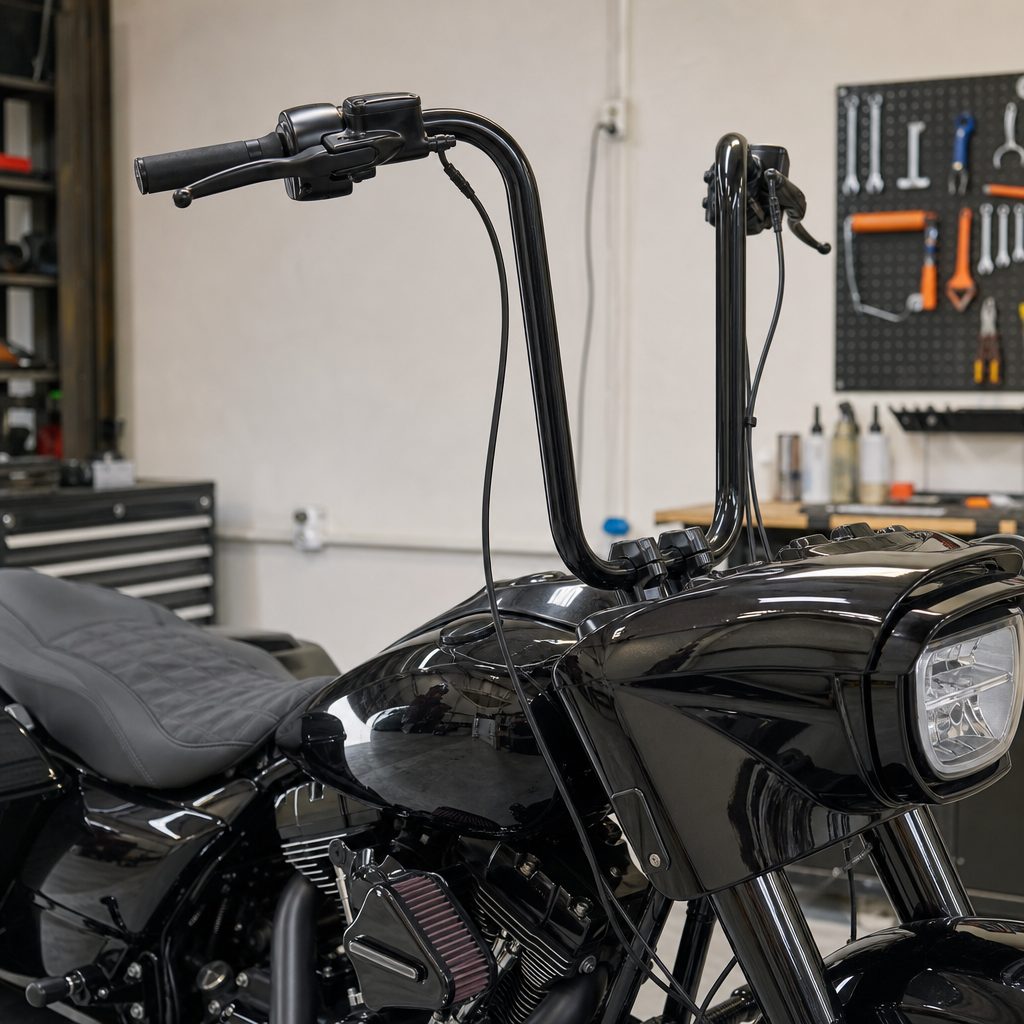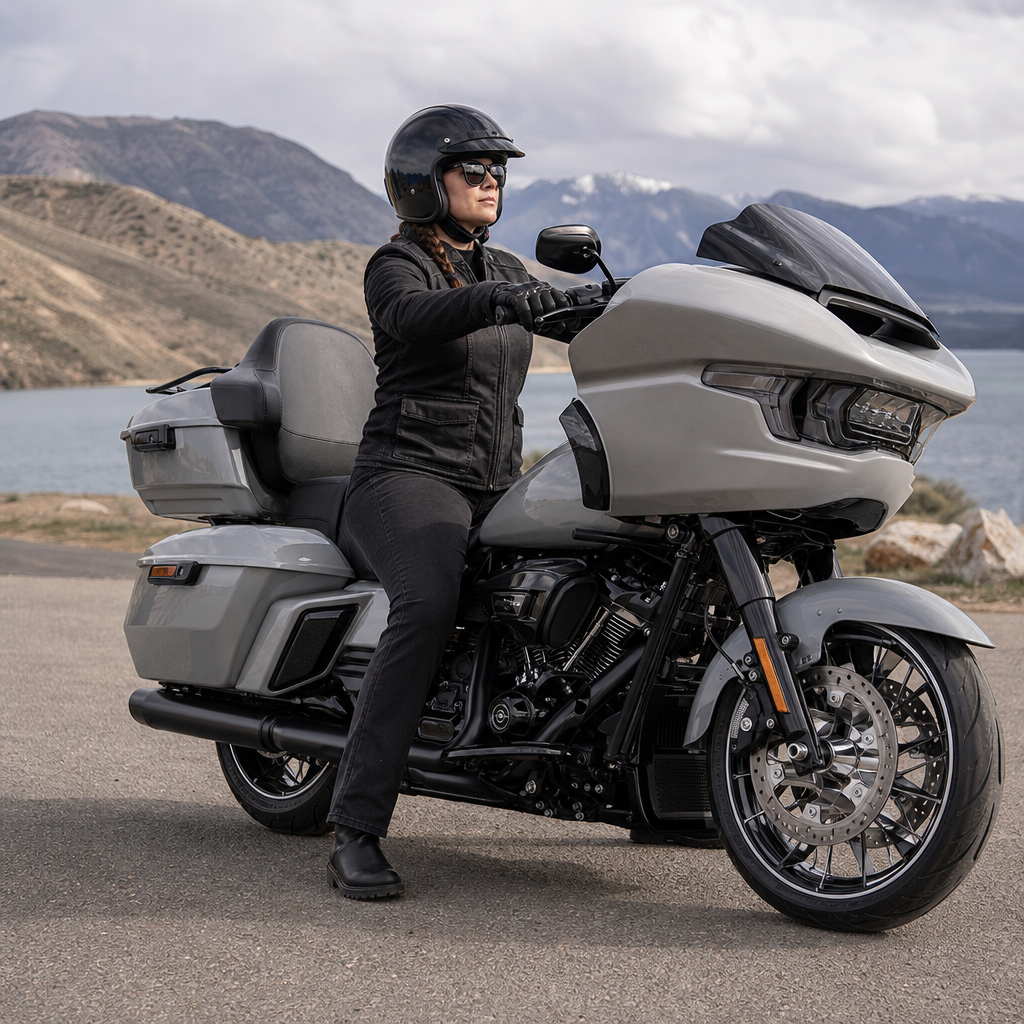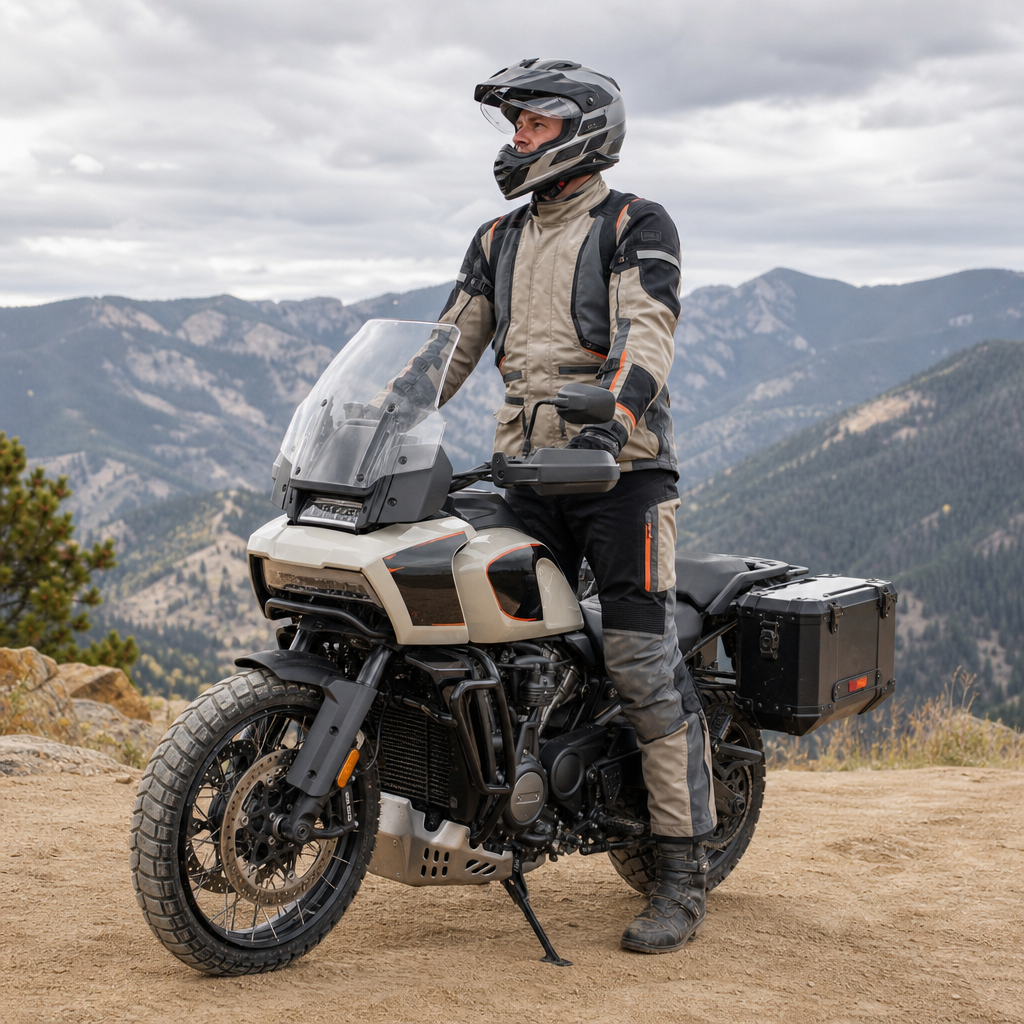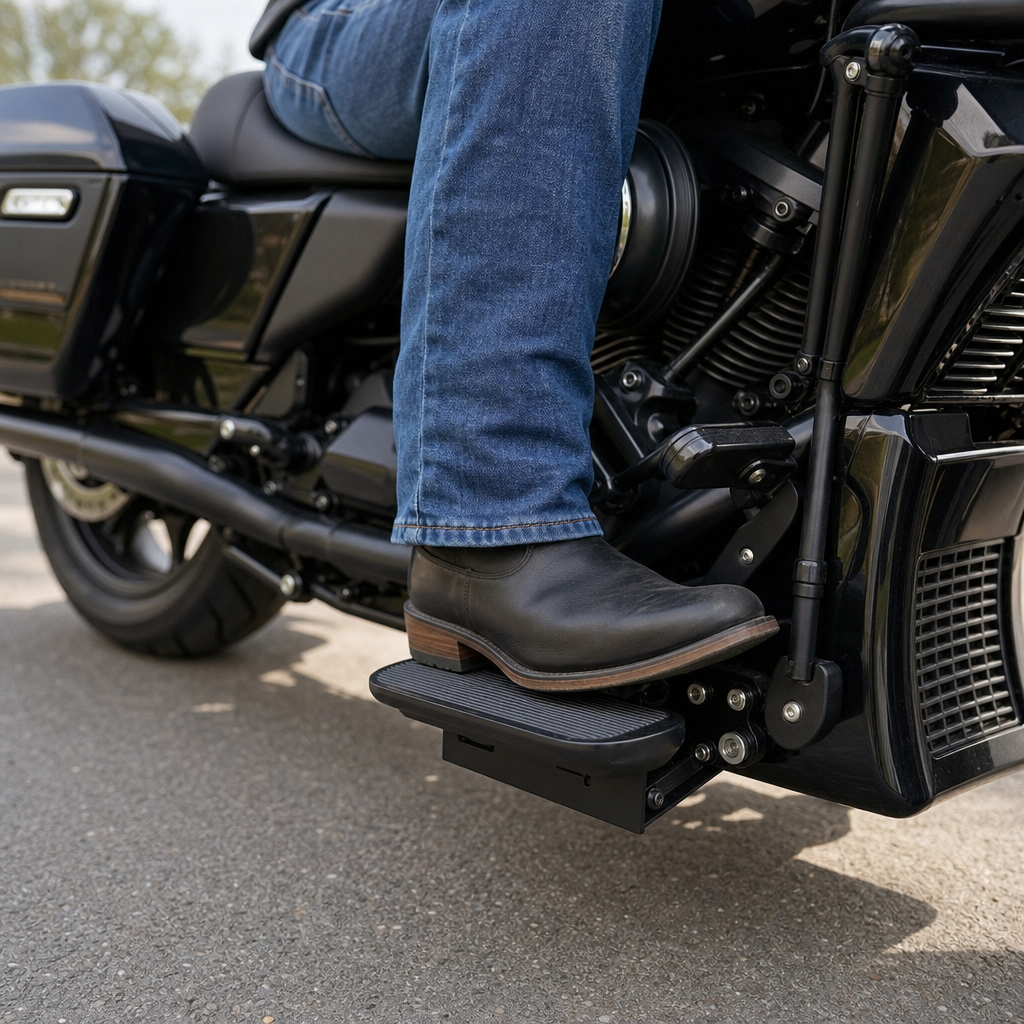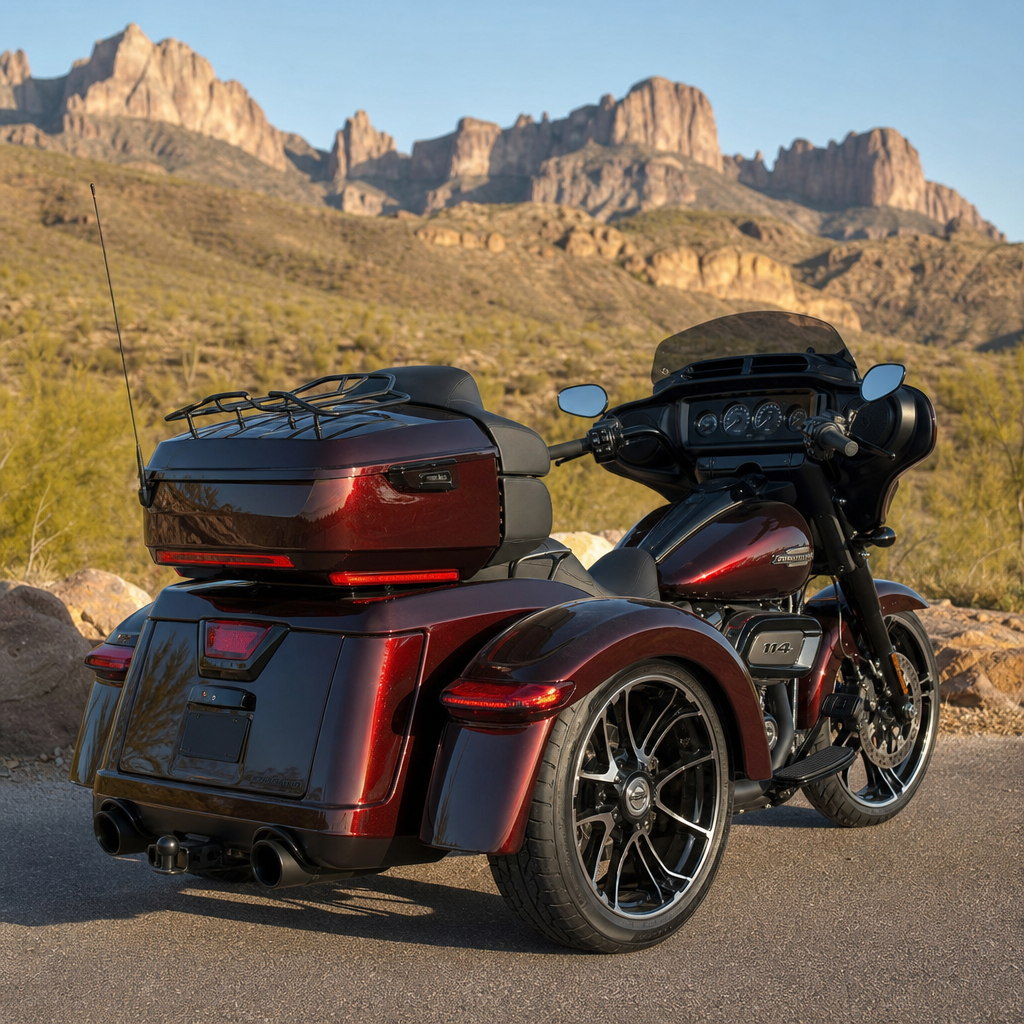
The 2026 Road Glide 3 sits in a very specific corner of the Harley-Davidson touring lineup: a frame-mounted-sharknose trike built for riders who want long-haul comfort, stable low-speed manners, and the cargo flexibility to turn a weekend machine into a true travel platform. In practice, the bike’s biggest opportunity is not horsepower or infotainment, but packaging. Riders quickly discover that a smart luggage rack and Tour-Pak mounting hack can transform how the Road Glide 3 carries weight, supports passengers, and manages day-to-day touring compromises.
That matters because touring on a trike exposes tradeoffs that two-wheel baggers can sometimes hide. The rider cannot simply shift body position to compensate for poor cargo placement, and extra rear weight changes steering effort, braking feel, and passenger room more noticeably than many owners expect. When I set up touring Harleys for real trips, I treat luggage mounting as an ergonomics and performance recipe: rider triangle, passenger back support, load path, suspension behavior, and access to essentials all have to work together. On the 2026 Road Glide 3, those details determine whether the machine feels planted and practical or bulky and compromised.
For clarity, a luggage rack is the external platform mounted above or behind the trunk area for strapping soft bags or adding attachment points. A Tour-Pak is Harley-Davidson’s hard top case with integrated storage and passenger back support, often mounted on a docking or fixed system. A mounting hack is not a shortcut that ignores safety; it is a repeatable setup method that improves function, usually by changing spacers, rack geometry, tie-down points, or quick-detach hardware selection while respecting load limits and clearances.
This article serves as the hub for model-specific ergonomics and performance recipes under the Harley-Davidson category, using the 2026 Road Glide 3 as the anchor example. The goal is comprehensive coverage: how to fit the bike to the rider, how luggage changes handling, how to mount a Tour-Pak without creating awkward passenger reach, and which supporting upgrades make the whole system work. If you are planning distance touring, two-up travel, or a flexible commuter-to-road-trip build, this guide gives you the framework to make the trike carry better, steer better, and feel more intentional on every mile.
Why the Road Glide 3 responds strongly to cargo setup
The Road Glide 3 is unusually sensitive to where and how you place cargo because of its chassis layout. The frame-mounted fairing keeps steering inputs cleaner at highway speed than fork-mounted designs, but the rear structure still has to deal with a wide trunk area, passenger seating needs, and the leverage created by anything mounted high and aft. Add a luggage rack plus a loaded Tour-Pak, and the center of mass shifts rearward and upward. On a trike, that does not create lean instability in the motorcycle sense, but it absolutely affects steering effort, front-end bite on turn-in, and how firmly the machine tracks across expansion joints or crowned pavement.
There is also an ergonomics issue unique to this platform. Riders often buy the Road Glide 3 expecting lounge-chair comfort, then discover that passenger space shrinks fast once a top case is added without measurement. A poorly mounted Tour-Pak can force the passenger forward, reduce hip room when climbing on, and make the rider sit too close to the tank because the passenger backrest intrudes into the seat pocket. The right mounting recipe preserves the usable seat pan while still giving a secure backrest and enough luggage capacity for genuine touring.
In plain terms, the Road Glide 3 works best when the heaviest items stay low and close to the axle line, while the rack and top case carry lighter, frequently accessed gear. Rain layers, chargers, gloves, and compressible clothing belong up high; tools, fluids, locks, and dense camping gear generally do not. That one decision improves steering feel more than many owners realize.
The luggage rack and Tour-Pak mounting hack that actually works
The most effective mounting hack for the 2026 Road Glide 3 is to treat the luggage rack and Tour-Pak as a combined system rather than stacking parts in the order they came out of the box. The practical approach is a low-profile rack with multiple fore-aft strap slots, paired with a Tour-Pak mounting plate that lets you bias the case slightly forward without interfering with seat removal, trunk opening, or passenger leg swing. On several Harley touring builds, I have found that moving the Tour-Pak forward by even a small amount can noticeably improve passenger security and reduce the pendulum effect that comes from hanging mass too far behind the rear bodywork.
The “hack” is usually a hardware and spacing strategy: use model-correct mounting points, verify rack plate flatness, add only the minimum spacer height needed for clearance, and choose quick-detach or rigid hardware based on actual use instead of catalog convenience. If the Tour-Pak sits above a rack, avoid creating a tall tower of brackets. Every extra millimeter of stand-off increases leverage. Low stack height is the priority. If your setup allows the rack to remain functional behind or around the Tour-Pak, reserve that area for light duffels only and use quality cam straps rather than elastic cords.
| Setup Goal | Recommended Approach | What It Improves |
|---|---|---|
| Daily solo use | Quick-detach Tour-Pak, low-profile rack, forward-biased plate position | Cleaner handling, easier parking, removable passenger support |
| Two-up weekend touring | Fixed Tour-Pak with integrated backrest pad, light cargo on rack only | Passenger comfort, consistent fit, reduced packing hassle |
| Long-distance travel | Rigid mount, internal organizers, heavy items in lower trunk compartments | Better load control, less oscillation, faster roadside access |
| Hotel-to-hotel touring | Rack-mounted soft tail bag plus partly loaded Tour-Pak | Flexible capacity, simpler unpacking, lighter top-case weight |
Before final tightening, check five things every time: trunk lid clearance, seat removal path, passenger back contact point, taillight and antenna clearance if equipped, and tie-down strap rub points. A setup that looks centered in the garage can still fail on a trip if straps abrade painted surfaces or if the Tour-Pak lid cannot open fully with the rack loaded.
Ergonomics recipes for rider and passenger comfort
The best Road Glide 3 touring setup starts with the rider triangle: seat height relative to floorboards, bar reach, and back support. Because the bike is heavy and does not require balancing at stops in the same way as a two-wheeler, many riders tolerate a seat that is too far back or bars that are too high. That becomes a problem after three hours, when shoulder tension and lower-back fatigue build up. If a Tour-Pak pushes the passenger forward, the rider often slides toward the tank and compensates by locking elbows. The cure is not just a different bar; it is restoring seat pocket space.
For most average-height riders, the cleanest recipe is a supportive touring seat with a defined rider bucket, bars that keep elbows slightly bent, and a Tour-Pak pad angle that supports the passenger without forcing constant pressure into the rider’s lumbar area through shared seat compression. On test rides, I tell owners to pay attention to whether they can roll shoulders down and keep wrists neutral while holding a steady 65 to 75 mph. If not, luggage may be the hidden cause because the seating relationship has shifted.
Passenger ergonomics matter even more on a trike because many buyers choose the platform for two-up confidence. A useful benchmark is whether the passenger can mount cleanly, settle back naturally, and keep knees and hips relaxed without perching on the front edge of the seat. If the Tour-Pak steals too much room, select a mount position or back pad shape that returns at least a small amount of breathing space. That is often worth more than adding another storage bag.
Performance recipes: weight distribution, steering, braking, and tire behavior
Model-specific performance recipes for the 2026 Road Glide 3 begin with weight distribution. Riders often assume the trike rear end can absorb cargo mistakes because it has two rear contact patches, but the opposite is often true. Load the tail too heavily and the front tire may feel less planted in fast sweepers or during hard braking. Steering can become heavier entering turns, then oddly vague mid-corner over patched pavement. Those sensations are not mysterious; they come from reduced front loading and increased inertia behind the axle line.
The fix is straightforward. Put dense cargo low in the trunk floor area or side compartments if your luggage system allows it. Keep the Tour-Pak contents limited to medium or light items. On the rack, carry only soft, light gear with low wind drag. This recipe improves transient response and braking feel because the machine does not have to manage as much elevated rearward mass. It also helps the rear suspension work within a more stable range, which reduces the hobby-horse sensation some riders notice on broken highway surfaces.
Tire behavior changes too. Overloaded rear storage can increase wear patterns and make pressures more critical, especially on long summer runs when heat cycles build. Use manufacturer pressure guidance as your starting point, then verify with actual load conditions and ambient temperature in mind. The same principle applies to braking. More rear cargo increases stopping distance and can make abrupt inputs feel less composed. Smooth, progressive braking with a properly distributed load is the fastest way to make a fully packed Road Glide 3 feel expensive and controlled instead of merely heavy.
Supporting upgrades that make the mounting system better
A luggage rack and Tour-Pak setup performs best when supported by a few adjacent upgrades. Suspension is first. If preload or damping support is inadequate for the combined rider, passenger, and cargo weight, no mounting trick will fully mask the problem. A touring-calibrated rear suspension setup helps maintain ride height and preserves geometry under load, which directly improves steering accuracy. Second is the seat. A seat with correct foam density and a stable pocket can rescue an otherwise acceptable top-case position by preventing the rider from sliding forward.
Third is organization inside the luggage itself. Use internal liners, packing cubes, and a strict heavy-low, light-high rule. I recommend keeping roadside essentials in one repeatable location: tire plug kit, mini compressor, rain gloves, charging cables, and paperwork. That reduces unnecessary unpacking and keeps the Tour-Pak from becoming a random catch-all that steadily gains weight. Fourth is paint protection. Clear protective film at strap contact zones and around mounting hardware saves expensive cosmetic damage, especially on black finishes that show every rub mark.
Finally, test the complete setup in stages. Ride solo with the rack. Then add the Tour-Pak empty. Then load it lightly. Then repeat with a passenger. This stepwise method tells you exactly which change altered handling or comfort. It is the same workshop logic used when dialing in suspension or bar position: one variable at a time, with notes. That discipline is what turns a parts install into a reliable touring recipe.
How this Road Glide 3 guide anchors the wider Harley-Davidson subtopic
As a hub article, this guide connects the broader subject of model-specific ergonomics and performance recipes across Harley-Davidson motorcycles. The Road Glide 3 is an ideal anchor because it forces the conversation to be practical. Cargo mounting, back support, seat space, weight distribution, and touring comfort are not abstract ideas on this machine; they are immediate, measurable factors that decide whether the bike excels on a thousand-mile trip. The same analytical method applies across the lineup: define rider use case, measure contact points, place weight intentionally, and validate changes on the road.
For readers exploring related Harley-Davidson setup topics, the next logical clusters are seat and handlebar fit by model, suspension recipes for loaded touring, passenger comfort upgrades, trunk and rack compatibility, and luggage organization for long-distance travel. When you evaluate any future article in this sub-pillar, use the same filter introduced here: does the modification improve comfort, control, access, and reliability together, or does it only add parts? The best Harley touring builds are integrated systems, not accessory piles.
The key takeaway is simple. Touring with the 2026 Road Glide 3 gets better when you mount luggage with the same care you give suspension and seating. Use a low, forward-biased Tour-Pak position, keep rack loads light, protect passenger space, and store heavy gear low. That one strategy sharpens comfort and control at the same time. If you are building your Harley-Davidson touring setup now, start by auditing your current cargo placement and mount geometry, then make one measured improvement before your next trip.
Frequently Asked Questions
Why is a luggage rack and Tour-Pak mounting upgrade such a big deal on the 2026 Road Glide 3?
The 2026 Road Glide 3 already does a lot of things well for touring riders. Its trike layout gives it excellent low-speed stability, confident parking-lot manners, and a relaxed long-haul personality that appeals to riders who want comfort without constantly managing balance at stops. Where many owners quickly see room for improvement is cargo management. The stock setup can work for day rides and light overnight use, but once you start packing for multi-day travel, carrying passenger gear, rain layers, tools, electronics, or camping equipment, storage organization becomes just as important as engine performance or suspension comfort.
A properly chosen luggage rack and a smart Tour-Pak mounting solution expand the Road Glide 3 from a comfortable cruiser into a more capable travel platform. The biggest advantage is not simply adding more space, but adding more usable space in the right location. A rack lets you secure soft luggage, duffels, or lightweight weatherproof bags externally while preserving locked compartment room for essentials. A Tour-Pak mounting hack, especially one that improves placement or adaptability, can help you better balance cargo, improve passenger back support, and create a cleaner packing strategy for longer trips.
For Road Glide 3 owners, packaging matters because weight distribution matters. On a trike, adding luggage high, rearward, or unevenly can affect ride feel, steering effort, and overall confidence. The right rack and mount arrangement helps keep cargo more centralized and predictable. It also makes loading and unloading much easier, which is a huge quality-of-life improvement on tour. In real-world use, this kind of upgrade often delivers more day-to-day value than flashier modifications because it directly improves how the machine functions for the purpose many buyers chose it for: serious, comfortable travel.
What is meant by a Tour-Pak mounting “hack” on the Road Glide 3, and is it actually safe?
In this context, a Tour-Pak mounting “hack” usually does not mean a crude shortcut or unsafe improvisation. More often, it refers to a practical modification or fitment strategy that allows the Tour-Pak to work better than the standard arrangement. That may include changing mounting points, using a model-specific adapter plate, repositioning the Tour-Pak slightly for passenger room or cargo access, combining a luggage rack with the Tour-Pak setup more efficiently, or adapting hardware from another Harley-Davidson touring application in a way that better suits the Road Glide 3’s trike-specific rear structure.
The key question is always whether the modification respects load paths, mounting surface strength, and fastener integrity. If the “hack” uses quality brackets, correct-grade hardware, proper backing plates, and preserves structural support, it can absolutely be safe and reliable. If it relies on thin unsupported material, mismatched bolt spacing, improvised spacers with poor compression strength, or overloads a rack that was never designed to carry a trunk and gear together, then it is not a smart touring solution. The difference is engineering discipline.
On the Road Glide 3, safety matters even more because trike owners often carry more gear and tend to ride longer distances. A good Tour-Pak mounting approach should account for vibration, repeated loading cycles, passenger use, and the leverage created by a trunk mounted behind the seat. Best practice includes checking torque specs, using threadlocker where appropriate, confirming rack and mount weight ratings, and verifying that the trunk does not interfere with seat removal, rear access, lighting visibility, or passenger ergonomics. A well-executed mounting hack is really a fitment optimization. A poorly executed one is just added stress on expensive bodywork and hardware.
How should luggage be packed and positioned on a 2026 Road Glide 3 after adding a rack and Tour-Pak?
The most effective packing strategy is to treat the Road Glide 3 like a vehicle that rewards low, secure, and balanced loading. Even though a trike feels more stable at stops than a two-wheeler, it still responds to where weight is placed. Heavier items should go as low and as close to the center of the machine as possible. That means tools, spare fluids, tire kits, dense electronics, and other heavy gear should generally live in lower storage areas rather than high in the Tour-Pak or piled on top of the luggage rack. The Tour-Pak is ideal for medium-weight items you want quick access to, such as jackets, gloves, chargers, snacks, and travel essentials.
The luggage rack should usually be reserved for lighter, compressible items like a duffel full of clothing, rain gear, or a compact sleeping system if you are traveling farther. The mistake many riders make is using the rack as the default home for the heaviest bag simply because it is easy to strap down. That can move mass too far rearward and too high, which may subtly affect steering feel and ride quality. On long trips, those small changes become noticeable, especially in crosswinds, uneven pavement, or when maneuvering with a full load.
Organization also matters. Use weatherproof bags with defined shapes, quality straps rather than elastic cords, and a repeatable packing layout so you know where critical items are without unpacking everything. Keep frequently needed gear accessible. Make sure no straps can chafe painted surfaces, contact hot exhaust components, or obstruct lights. After loading, sit on the bike, check passenger space if applicable, and verify trunk lids, saddle compartments, and fuel access all remain practical. The best setup is not the one that carries the most gear; it is the one that carries the right gear without compromising comfort, control, or convenience.
Will adding a luggage rack and Tour-Pak mount affect passenger comfort or the handling of the Road Glide 3?
It can, and that is exactly why setup details matter. Passenger comfort can improve dramatically if the Tour-Pak is positioned correctly, especially when it provides a supportive backrest and a more secure feeling on long rides. Many riders and passengers prefer a setup that gives the passenger a defined seating pocket rather than leaving them exposed on the rear portion of the saddle. On a machine built for touring, that extra support can reduce fatigue over full-day rides and make the bike feel more premium and purpose-built.
That said, if the Tour-Pak is mounted too close, passenger legroom and seating posture can suffer. If it is too far back, it may reduce support while increasing leverage on the mount. The sweet spot is a position that supports the passenger naturally without forcing them forward or creating a cramped knee angle. This is where a thoughtful mounting hack becomes valuable: it can help fine-tune placement rather than forcing the rider to accept a one-size-fits-all compromise.
Handling can also change depending on total cargo weight and where it sits. The Road Glide 3 is designed for stability and comfort, but it still benefits from smart load management. Extra weight mounted high and rearward can make the front feel lighter and can increase the sensation of body movement over bumps or during transitions. A balanced setup with moderate weight in the Tour-Pak and light gear on the rack usually feels much more composed. The practical rule is simple: add storage capacity, but do not treat every new surface as a place to carry maximum weight. Passenger comfort and overall ride confidence are best when the mounting system is strong, the trunk placement is sensible, and the luggage plan is disciplined.
What should riders look for when choosing hardware for a Road Glide 3 luggage rack and Tour-Pak mounting setup?
Start with compatibility. The Road Glide 3 occupies a specific place in the Harley-Davidson lineup, and not every touring accessory translates cleanly to the trike platform. Buyers should look for hardware that is either explicitly designed for the Road Glide 3 or proven by fitment experience on the same chassis family. That includes verifying hole spacing, body clearance, seat compatibility, and whether the hardware accounts for the trike’s rear structure rather than assuming a two-wheel touring frame layout. This is one area where “close enough” can become expensive very quickly.
Material quality is the next priority. Strong steel brackets, well-finished aluminum adapter plates where appropriate, corrosion-resistant coatings, and high-grade fasteners are worth paying for. Touring bikes live in vibration, weather, and repeated load cycles. Cheap hardware may fit initially but loosen, flex, or corrode over time. Look for broad mounting footprints, reinforcement where stress concentrates, and designs that spread load rather than focusing it on a small section of bodywork or rack tubing. If a product does not clearly state load guidance or installation method, that is a warning sign.
Finally, think beyond installation day. The best setup is serviceable. You should still be able to access storage, remove the seat if necessary, inspect fasteners, and maintain the bike without disassembling half the luggage system. A good rack and Tour-Pak arrangement should support real touring use: repeat packing, passenger riding, wet-weather travel, and miles of vibration without constant adjustment. Riders who choose hardware based on structure, fit, and long-term practicality usually end up with a setup that feels factory-level in daily use, even if the solution itself started as a clever mounting hack.