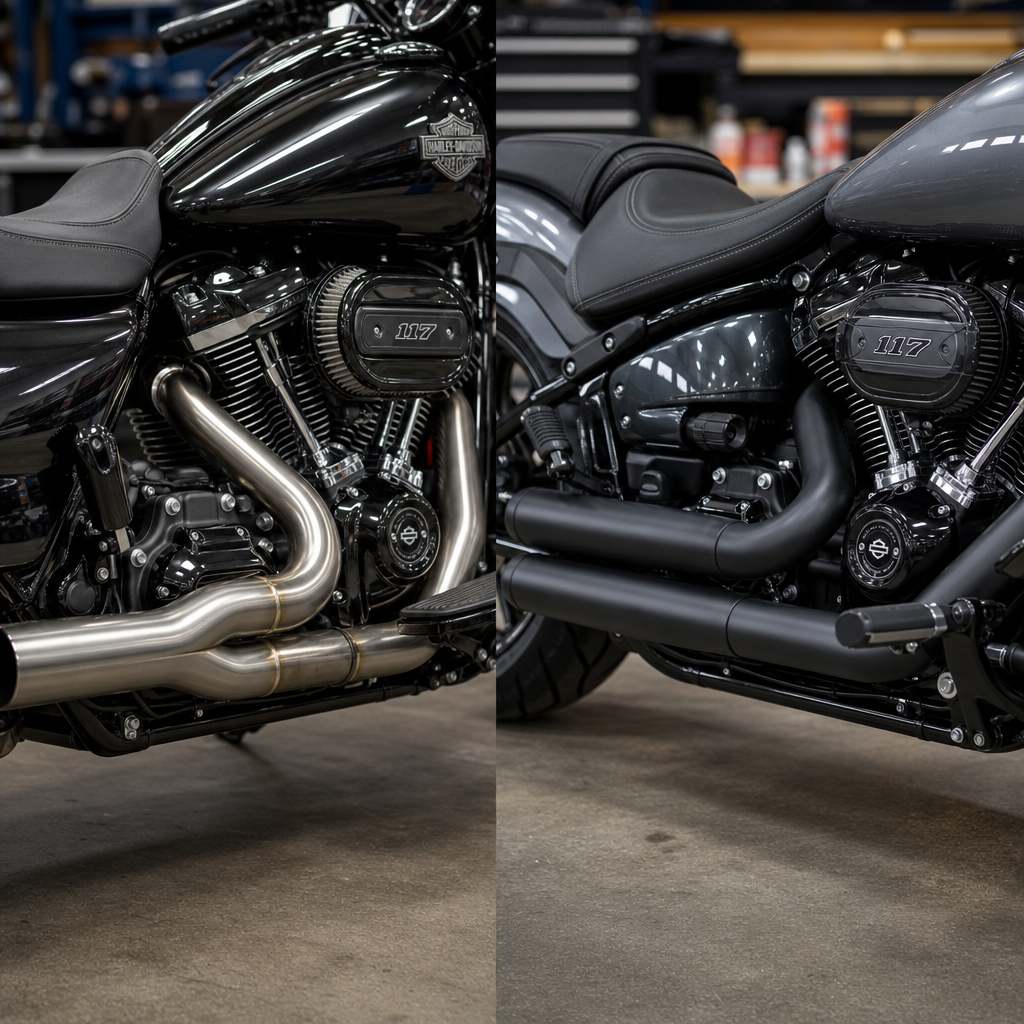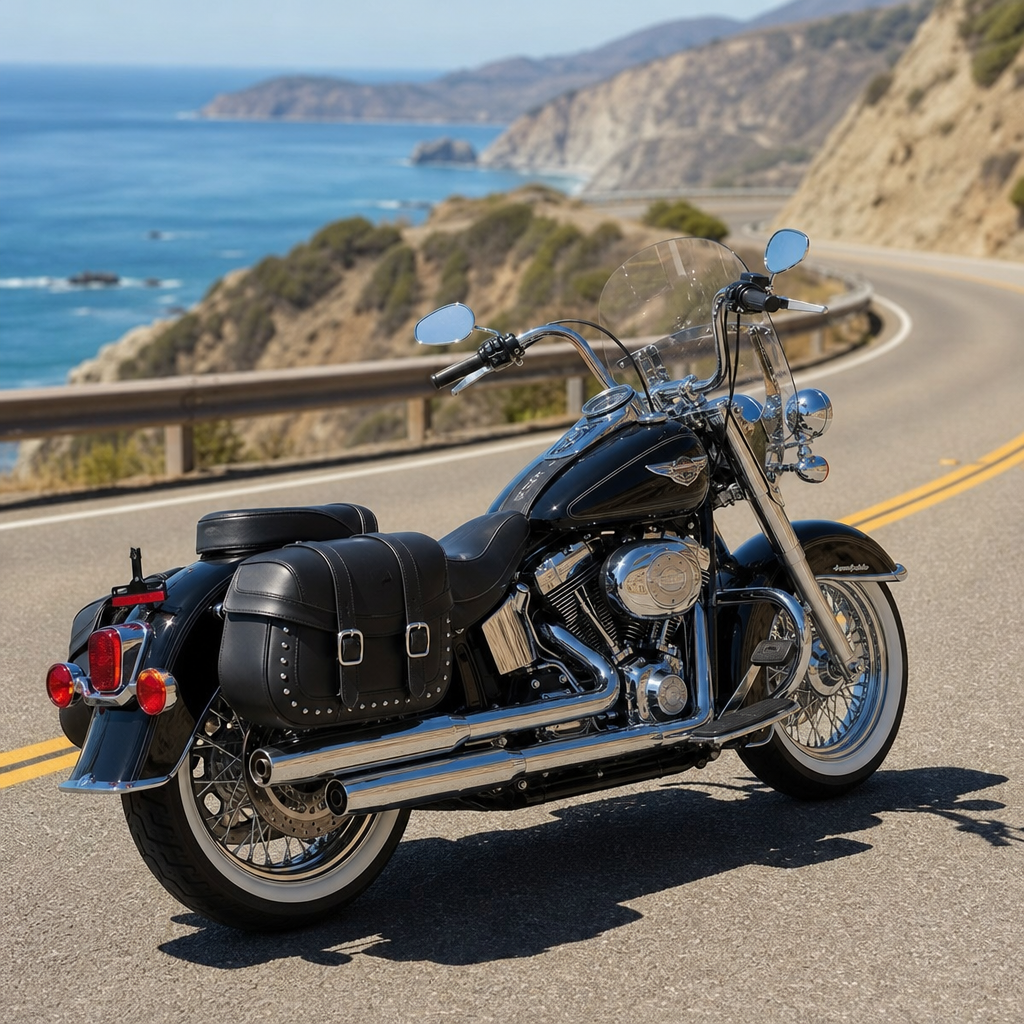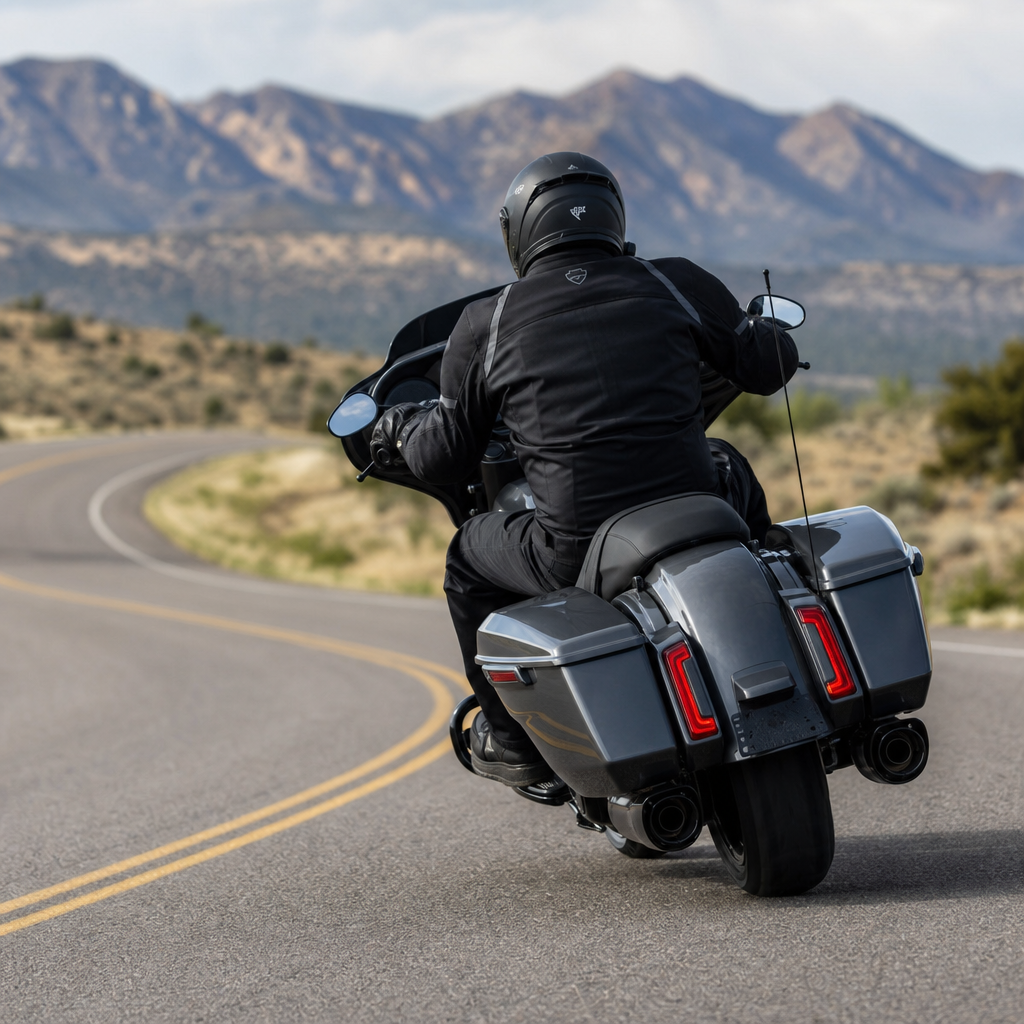
The 2027 Harley-Davidson Limited models are impressively refined touring machines, but many riders still report one stubborn comfort issue: exhaust buffeting around the helmet, shoulders, and lower back. In practical terms, buffeting is the repeated pulse of turbulent air that shakes the rider instead of flowing past cleanly. On a full-dress bagger, that turbulence is rarely caused by one part alone. It usually comes from the interaction among the batwing or sharknose fairing, windshield height, fork lowers, hand controls, rider position, passenger load, trunk shape, saddlebags, and the pressure wave created behind the bike by its exhaust and rear bodywork.
When riders call a touring setup a quiet bagger, they are not talking only about exhaust volume. They mean a motorcycle that feels aerodynamically calm at highway speed, lets them hear music or comms clearly, reduces head toss, and avoids the low-frequency drumming that creates fatigue over a long day. I have spent years test-fitting windshields, seat combinations, and vent settings on Harley touring platforms, and the pattern is consistent: small ergonomic changes can produce outsized gains when they are made in the right order. Random accessories rarely solve buffeting. A measured recipe does.
This matters because comfort is performance on a touring Harley-Davidson. A rider fighting turbulence tenses their neck, grips the bars harder, and loses concentration. Passenger comfort drops even faster, especially on Limited models carrying a Tour-Pak and full luggage. The fix is not to chase silence, which is impossible on a large V-twin, but to manage pressure differentials and airflow separation so the rider sits in cleaner air. That is the goal of this hub article on model-specific ergonomics and performance recipes: understand what creates buffeting on the 2027 Limited models, identify the variables that matter most, and build a repeatable setup that suits rider height, inseam, helmet shape, and real-world cruising speed.
The core terms are simple. Laminar flow is smoother, more uniform airflow; turbulent flow is chaotic, swirling air; pressure differential is the mismatch between high pressure in front of a shield and low pressure behind it; recirculation is the looping air that gets pulled back toward the rider. Exhaust buffeting, in rider language, is often a mix of aerodynamic wake and low-frequency pressure pulses that seem to come from the rear of the bike. On Harley-Davidson touring platforms, especially heavily equipped Limited models, the quietest setup comes from balancing front-end airflow with rear-body management rather than treating the exhaust system as the only culprit.
Why Limited models develop buffeting differently
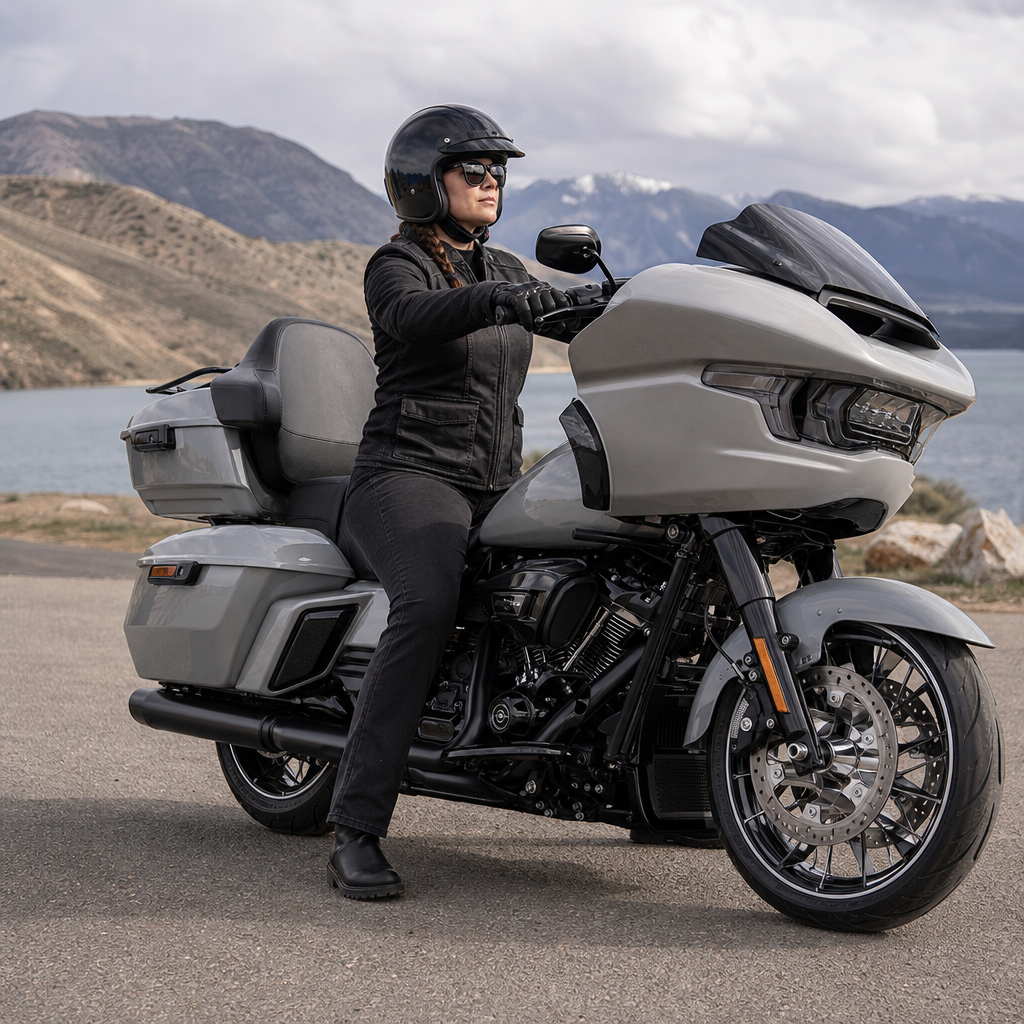
A Harley-Davidson Limited carries more bodywork than many other touring bikes, and that changes the airflow map. The fairing and windshield push air up and around the rider, while the fork area, tank, lowers, side covers, saddlebags, and Tour-Pak all influence where that air reconnects behind the bike. At 65 to 80 mph, the rider occupies a pressure pocket shaped by all of those components. On 2027 Limited models, the bigger issue is often not wind hitting the rider head-on, but unstable air collapsing into the pocket from the sides and rear.
That is why two riders on the same bike can give opposite reviews. A 5-foot-8 rider with a long torso may sit directly in the windshield’s turbulent edge, while a 6-foot rider with a shorter torso rides above it. Helmet design matters too. A smooth touring helmet with sealed neck roll behaves differently from a peaked modular helmet. Add a passenger, open the fairing vent, or load a top case differently, and the wake changes again. The Limited is sensitive because its comfort equipment creates both protection and complexity.
Harley-Davidson riders also use the term exhaust buffeting loosely. Sometimes they mean actual sound resonance from slip-ons or header design. Sometimes they mean the thumping air pressure felt behind the seat at highway speed. Those are related but not identical. If the problem appears only with a new exhaust at specific rpm, acoustics may be central. If it appears with multiple exhausts and changes when you alter windshield height, lowers, or seating position, the root cause is aerodynamic. The correct diagnosis prevents expensive guesswork.
The diagnostic sequence that works
The fastest way to calm a Limited is to test one variable at a time in a fixed route. Use the same highway segment, same helmet, same load, and the same speed bands: 45, 60, 70, and 80 mph. I recommend riders log where they feel turbulence: visor, forehead, ears, shoulders, passenger back, or lower spine. That body-map approach reveals whether the turbulence starts at the shield lip, the fairing sides, or the rear wake. It also makes accessory decisions far more objective.
Start with the stock configuration and verify basics. Check tire pressures, steering head condition, saddlebag fit, Tour-Pak alignment, and any loose trim. Mechanical vibration can masquerade as air buffeting. Then evaluate windshield height. The right windshield should place the rider’s eye line roughly over the top edge, not through the middle, while still allowing clean over-the-top vision in rain. If the shield is too short, the airflow hits the helmet directly. If it is too tall, the rider looks through distortion and may create a stronger low-pressure pocket behind it.
Next, test venting and lowers. Harley touring aerodynamics often improve when controlled air is allowed behind the windshield to reduce vacuum. Fork lowers and fairing lowers can either stabilize the pocket or worsen side turbulence depending on rider height and ambient temperature. In many workshop tests, opening or closing one vent changed perceived buffeting more than swapping mufflers. After the front is sorted, move rearward: seat height, rider setback, passenger backrest position, Tour-Pak loading, and finally exhaust choice.
| Variable | Typical symptom | Most likely fix |
|---|---|---|
| Windshield too short | Helmet shake at eye level | Taller shield or recurved lip |
| Windshield too tall | Booming pocket behind shield | Shorter shield or better venting |
| Open side turbulence | Shoulder and ear drumming | Deflectors or lower adjustment |
| Seat too low and rearward | Head in turbulent shear zone | Taller or forward seat |
| Tour-Pak wake interaction | Passenger back pressure pulses | Reposition load or adjust backrest setup |
| Exhaust resonance | RPM-specific booming | Different baffle, dB insert, or tune review |
Windshield, vent, and fairing recipes
On a Limited, windshield choice is the highest-value change because it defines the initial airflow path. Recurved windshields work well because they add effective height without an excessively tall screen. In plain terms, the top lip kicks air upward, allowing a rider to look over the shield while moving the turbulent edge above the helmet. That is often the cleanest solution for riders between about 5-foot-9 and 6-foot-1, though torso length matters more than total height. Brands differ, but the physics does not.
Fairing vent management is the second lever. A vent is not just for cooling; it bleeds high-pressure air into the low-pressure pocket behind the screen. That reduces the vacuum that pulls swirling air back toward the rider. I have seen riders spend heavily on exhaust and still get relief only after they corrected the venting pattern. If your 2027 Limited uses adjustable lowers or fairing side deflectors, treat them as tuning tools. A winter setting that feels warm may be a summer setting that creates shoulder buffet.
A useful recipe for solo highway touring is a medium-height recurved windshield, vent open at speeds above 55 mph, lowers set to reduce side spill, and mirrors checked for unexpected turbulence. Mirror stalk shape can matter more than many riders expect. If you ride two-up, test again with the passenger aboard. Passenger mass changes rear ride attitude and shifts the rider relative to the windshield. A setup that is quiet solo may put the helmet directly into the shear layer when loaded for travel.
Seat position, bars, and rider posture
Ergonomics are aerodynamic on a bagger. If the seat places you too low or too far back, your helmet can sit in the exact spot where smooth air breaks into turbulence. That is why a seat change often fixes buffeting even though it does not alter the fairing itself. On Harley-Davidson Limited models, a seat that raises the rider by even 20 to 30 millimeters can move the head into cleaner air. A forward seating position can do the same by changing the distance to the windshield and fairing pocket.
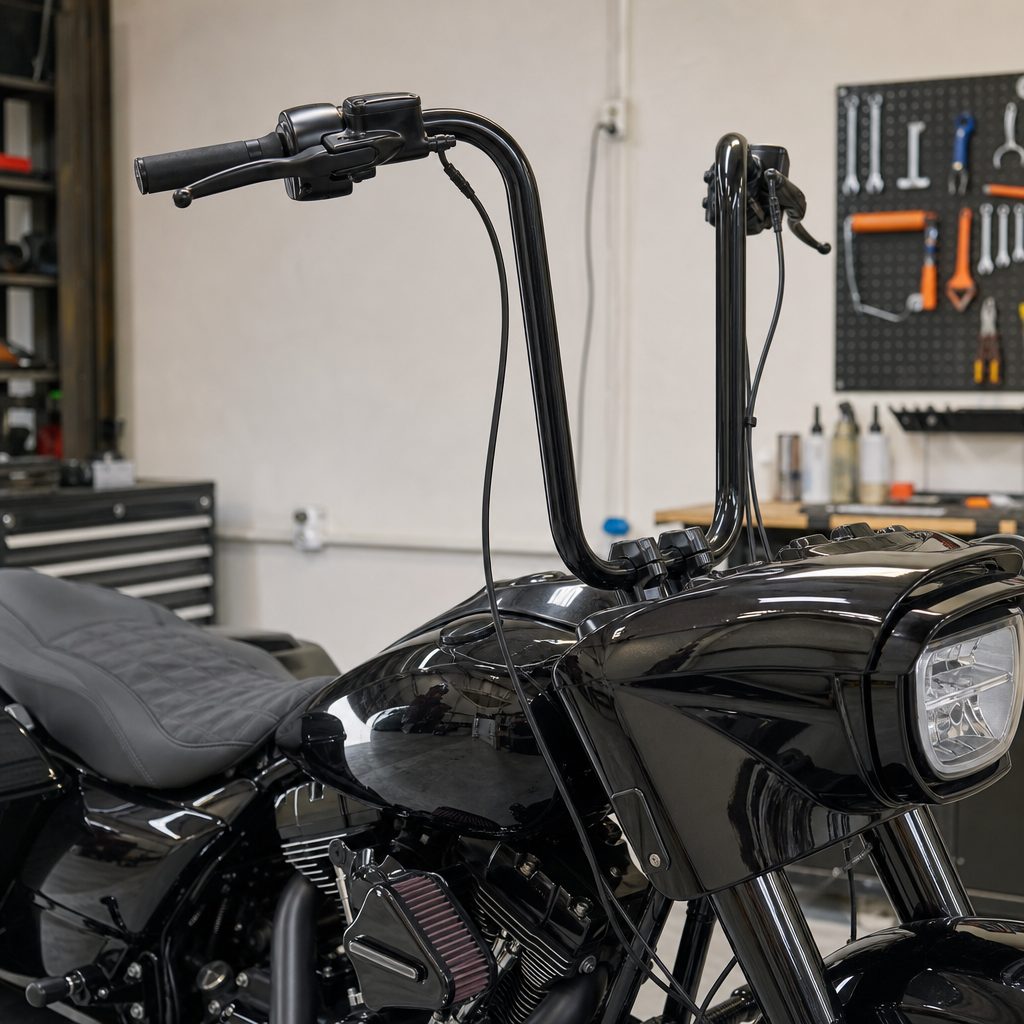
Handlebar reach also matters. When bars are too far away, riders lean into the wind pocket with rounded shoulders, exposing more helmet surface and creating neck strain. A better bend or riser can put the spine upright, relax the shoulders, and reduce how much turbulence the rider perceives. This is not cosmetic. A neutral riding triangle allows the body to absorb less buffeting because the head is balanced instead of braced. On long interstate days, that difference is dramatic.
For riders building a quiet setup, the best recipe is usually seat first, bars second, windshield third only if the current shield becomes mismatched after the ergonomic change. That order saves money because changing your seating position can completely alter which windshield height works. It also explains why online reviews conflict. One rider’s perfect 10-inch shield may be another rider’s worst option because they are sitting in different places on the same motorcycle.
Rear wake, luggage, passenger effects, and exhaust choices
The rear of a Limited is where many unexplained comfort complaints originate. Saddlebags, Tour-Pak geometry, passenger backrest shape, and luggage stacked above the trunk can all change how air detaches and rolls back toward the rider. A duffel on top of the rack may seem harmless, but at highway speed it can create a blunt obstacle that deepens the low-pressure area behind the rider. Passengers often feel this first as pulses against the back or side-to-side helmet movement.
Load placement should stay low and forward whenever possible. Heavy items in the saddlebags are preferable to bulky items perched high behind the passenger. If a passenger is aboard regularly, test the backrest pad position carefully. A small gap change can alter airflow around the passenger’s torso. Suspension preload matters as well, because rear sag changes the bike’s attitude. Increase preload for two-up touring so the chassis stays level; otherwise the rider effectively sits lower behind the windshield, often increasing buffeting.
Actual exhaust selection still matters, but mostly after the airflow recipe is right. Slip-ons with less baffling can introduce low-frequency boom that riders interpret as buffeting, especially around 2,500 to 3,200 rpm on highway grades. The answer is not always a quieter pipe; sometimes a different baffle core, catalytic configuration, or fueling adjustment removes the resonance. A proper tune using tools such as Screamin’ Eagle calibration, Dynojet Power Vision, or professional dyno mapping can reduce harshness by smoothing combustion and eliminating surging that exaggerates vibration and noise.
The model-specific setup strategy for a truly quiet bagger
The best 2027 Limited setup is not one magic part. It is a repeatable recipe built in layers: verify mechanical condition, establish rider posture, choose the right seat, match bar reach, set preload for actual load, select windshield height by eye line and torso length, tune venting, then evaluate rear luggage and exhaust resonance. That sequence works because it follows the airflow path from front to rear while respecting how Harley-Davidson touring ergonomics change the rider’s position inside that airflow.
As the hub for model-specific ergonomics and performance recipes, this page should guide every later decision you make on your Harley-Davidson. The same method can branch into deeper topics such as windshield sizing, two-up passenger comfort, Tour-Pak load management, suspension setup, and exhaust tuning. The key lesson is simple: buffeting on Limited models is a system problem, not a single-part problem. Riders who approach it systematically spend less, test smarter, and end up with a motorcycle that feels calmer, quieter, and far less tiring over a full day in the saddle.
If you want your Limited to live up to the idea of a quiet bagger, start with measurement instead of guesswork. Record your speed, load, rider position, and exact turbulence symptoms, then change one variable at a time. That disciplined approach consistently produces the best results. Build your recipe, keep notes, and use this hub as the starting point for every Harley-Davidson comfort and performance upgrade that follows.
Frequently Asked Questions
What exactly is exhaust buffeting on a 2027 Limited, and why does it feel worse on some bikes than others?
Exhaust buffeting is the repeating, choppy pulse of turbulent air that reaches the rider instead of passing smoothly around the motorcycle. On a 2027 Harley-Davidson Limited, riders usually notice it at the helmet, shoulders, passenger backrest area, and sometimes the lower back or hips. Even though many people describe it as “exhaust buffeting,” the source is often not the mufflers alone. In most cases, it is an airflow management issue created by the combination of the fairing, windshield height and shape, lower fairings, engine heat deflectors, floorboards, saddlebags, trunk, passenger seat, and even the rider’s own height and posture.
The reason it feels worse on some bikes is that touring motorcycles create several competing air streams at once. Clean air moves over the windshield, air pressure builds behind the fairing, and other air spills around the sides of the bike and up from behind the saddlebags and rear fender. If those streams do not balance correctly, they collide and create pressure pulses. That is the shaking or drumming sensation riders call buffeting. Two otherwise identical Limited models can feel very different because the rider’s inseam, torso height, helmet shape, seat choice, suspension preload, and accessory setup all change where that turbulence hits.
On a full-dress bagger, small changes matter more than many riders expect. A windshield that is one or two inches too tall may force air directly at the top vent of a helmet. One that is too short may dump turbulent flow into the rider’s face. A passenger backrest or tour pack can also change the low-pressure pocket behind the rider and pull disturbed air upward from the rear of the bike. That is why solving buffeting is usually about tuning the whole airflow package rather than blaming a single part.
Is the windshield usually the main cause of buffeting, and how do I know if mine is the wrong height or shape?
The windshield is one of the biggest factors, but it is not always the only cause. On the 2027 Limited, windshield height and profile determine where the main air stream breaks and where the pressure behind the fairing equalizes. If the windshield is too tall, the flow can separate sharply at the top edge and tumble back toward the rider’s helmet. If it is too short, the rider may sit directly in the transition zone where smooth air becomes chaotic. In either case, the result can be head shake, booming noise, shoulder slap, or that familiar pressure pulse at highway speed.
A good rule of thumb is that your line of sight should be either comfortably over the windshield or, if your setup is designed differently, through it with a clear and safe optical field. Most touring riders prefer to look over the top edge, with the upper lip sitting around nose level or slightly lower when seated in a natural riding position. If the top of the windshield sits at eye level, it often creates both visibility issues and inconsistent airflow. The shape matters too. A windshield with a recurved top or vented design may carry the air stream higher and reduce the vacuum behind the fairing, which can calm helmet movement significantly.
You can diagnose windshield-related buffeting with simple road testing. At steady highway speed, raise your body slightly an inch or two off the seat. If the buffeting improves, your helmet is likely sitting in the disturbed air zone and windshield height is a prime suspect. If you crouch down a little and the airflow gets smoother, that also points to a windshield issue. Another clue is whether changing helmet visor position or opening a helmet vent alters the severity. If it does, the turbulence is probably striking the helmet at a specific angle. The key is to make one change at a time, because swapping a windshield without considering lowers, seat height, and rider posture can solve one problem while creating another.
How do fairings, lowers, and venting affect the “quiet bagger” feel on these Limited models?
The fairing and lower sections of the bike are central to how calm or chaotic the airflow feels. A touring fairing does more than block wind; it manages pressure. As air hits the front of the motorcycle, some of it is directed around the sides, some over the top, and some must be allowed to equalize behind the screen. If the pressure behind the fairing drops too low, the bike effectively creates a suction pocket that pulls turbulent air inward from the edges and from behind the rider. That pressure imbalance is a major contributor to buffeting.
Lower fairings can help or hurt depending on conditions and setup. In cooler weather, closed lowers may improve comfort by reducing direct wind on the legs, but they can also change the path of air around the tank and rider’s torso. Opened vents or adjustable lowers sometimes reduce back pressure behind the fairing and smooth the overall flow. On the other hand, in some setups they may introduce more side turbulence. That is why there is no universal “always open” or “always closed” answer. The right setting depends on rider height, windshield style, speed, crosswind angle, and whether the bike is loaded for solo or two-up travel.
If your goal is a truly quiet bagger feel, think in terms of airflow balance rather than wind blockage. Blocking more wind is not automatically better. The smoothest setup often comes from letting controlled air into the low-pressure area behind the fairing so the main stream over the top stays attached and stable. Riders who chase silence by adding taller screens and more deflectors sometimes accidentally trap themselves in a larger turbulence pocket. The best approach is to test vent settings and lower-fairing positions at the same speed and route, then note changes in helmet movement, shoulder pressure, and low-frequency booming. The bike should feel settled, not merely less windy.
Can luggage, passenger setup, or rear accessories make lower-back and shoulder buffeting worse?
Yes, very often. Rear airflow is one of the most overlooked causes of buffeting on a Limited model. Saddlebags, trunk shape, passenger backrest, luggage stacked on the tour pack, and even the gap around the seat can all influence how air rises from behind the rider. When air detaches from the back of the bike, it leaves a low-pressure wake. That wake can pull disturbed air forward and upward, which is why some riders feel pulsing at the lower back or the back of the helmet even when the front windshield seems acceptable.
A passenger backrest or large tour pack can either help stabilize rear airflow or worsen the wake, depending on its height and relationship to the rider’s shoulders. Extra luggage strapped on top can create a blunt, uneven surface that adds drag and turbulence. Two-up riding also changes the equation significantly because the passenger occupies space that affects how the wake forms behind the rider. Many solo riders notice one set of symptoms, then find the bike feels very different with a passenger and full luggage load. That difference is not imaginary; it is a direct result of changed aerodynamics and altered rear suspension sag.
Suspension setup matters here too. If the rear preload is low and the bike rides tail-down, the effective angle between the rider, windshield, and incoming airflow changes. That can move the turbulence zone upward into the shoulders and helmet. Before buying more wind accessories, make sure the bike is properly set for rider weight, passenger weight, and luggage. Also check that seats, backrests, and luggage are mounted securely and aligned as intended. Rear-end airflow problems are easy to misdiagnose as a windshield issue, but if you only fix the front of the bike while the wake behind you remains unstable, the “quiet bagger” result will stay out of reach.
What is the best step-by-step way to reduce buffeting on a 2027 Limited without wasting money on random parts?
The smartest approach is methodical testing, because buffeting on a touring Harley is almost always a systems problem. Start with the motorcycle in known-good mechanical condition. Check suspension preload, tire pressures, seat position, and anything that affects rider height or posture. Confirm that all factory vents, lowers, deflectors, and fairing components are installed correctly and not loose or misaligned. A bike that sits differently under load will present a different aerodynamic profile, so set it up exactly how you actually ride it: solo, two-up, loaded for travel, or stripped down.
Next, establish a baseline on a familiar route at repeatable speeds, ideally in similar wind conditions. Pay close attention to where the turbulence hits: helmet crown, face shield, sides of the helmet, shoulders, lower back, or passenger area. Then make one change at a time. Start with the easiest variables: windshield height, vent position, lower-fairing setting, and rider posture. A temporary test can tell you a lot before you buy anything. For example, slightly raising yourself off the seat, trying a different seat height, or borrowing a windshield of another size can reveal whether the issue is top-edge flow, back pressure, or rear wake.
After that, work from front to rear. First optimize the windshield and fairing pressure balance. Then evaluate lowers and side deflectors. Finally, look at rear accessories, luggage, passenger setup, and suspension sag. Keep notes after every test. If a change reduces helmet shake but