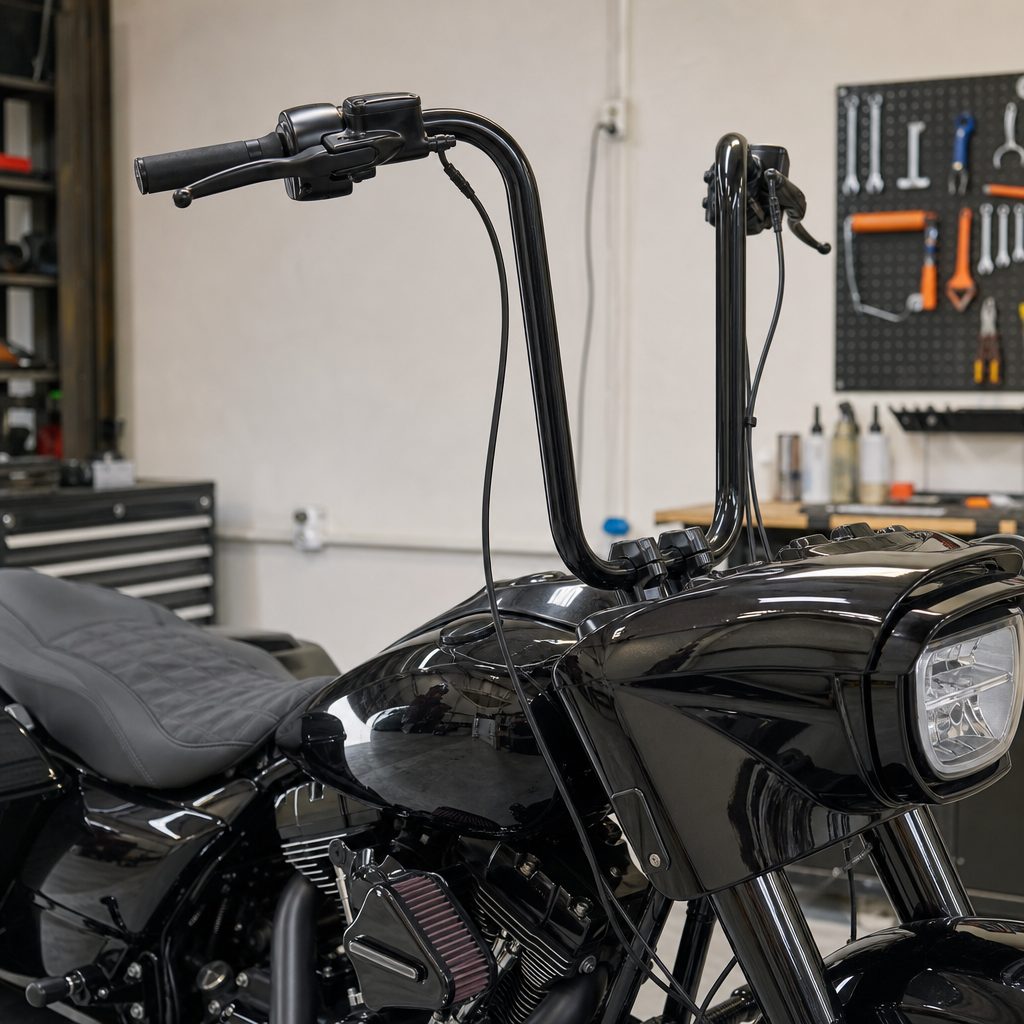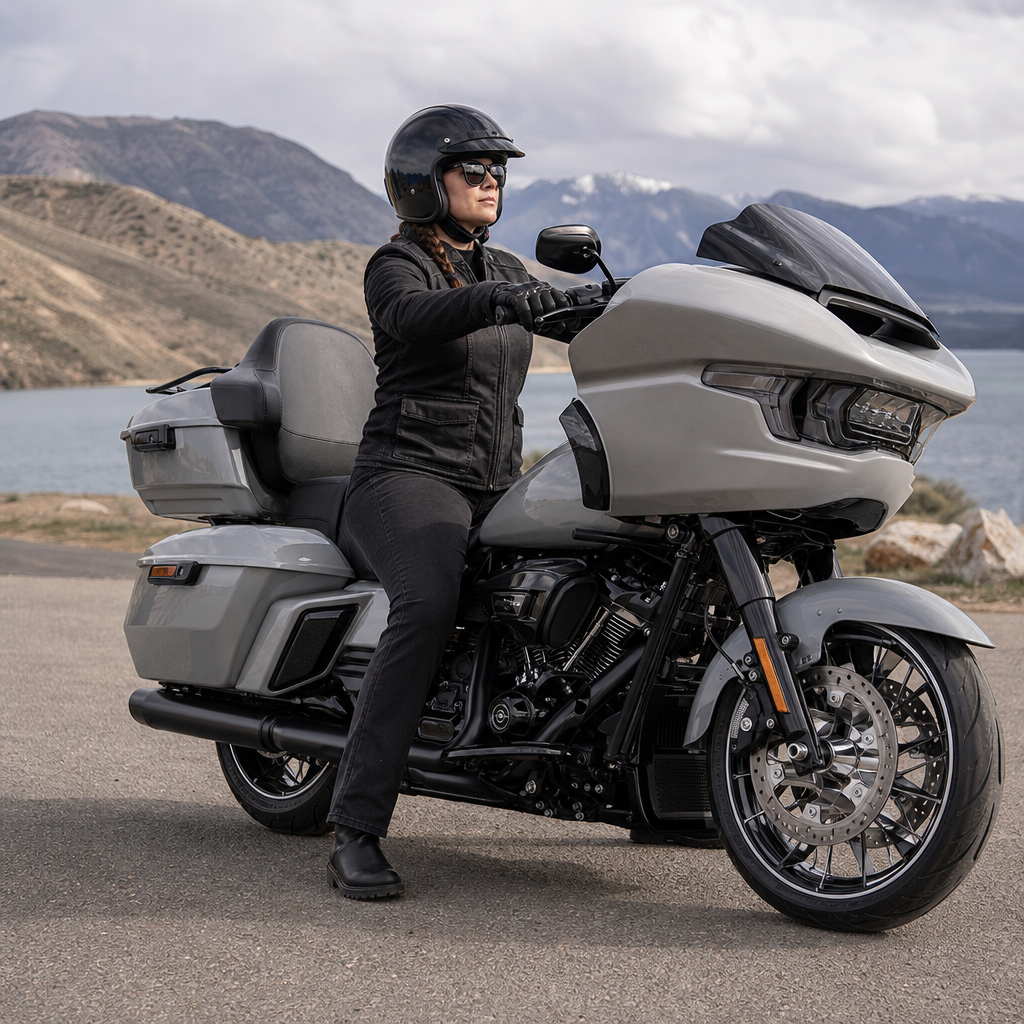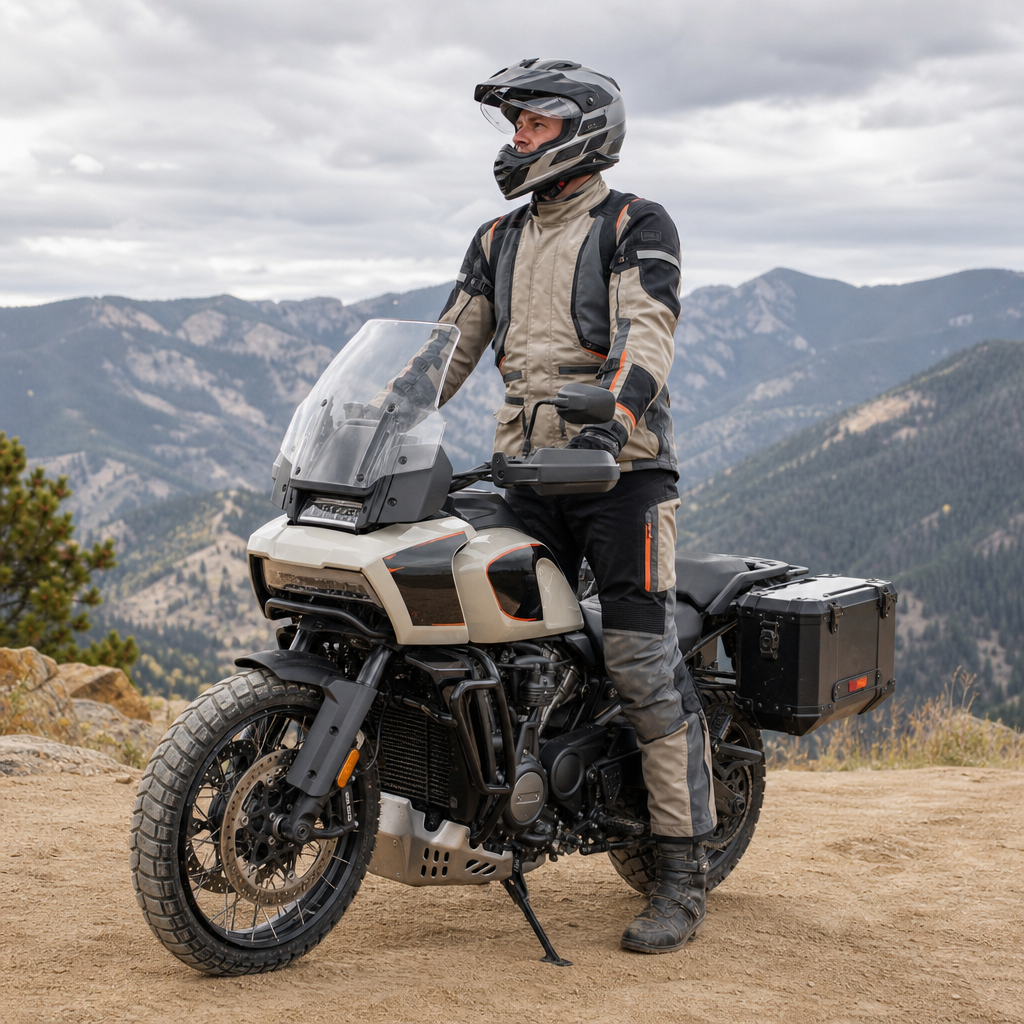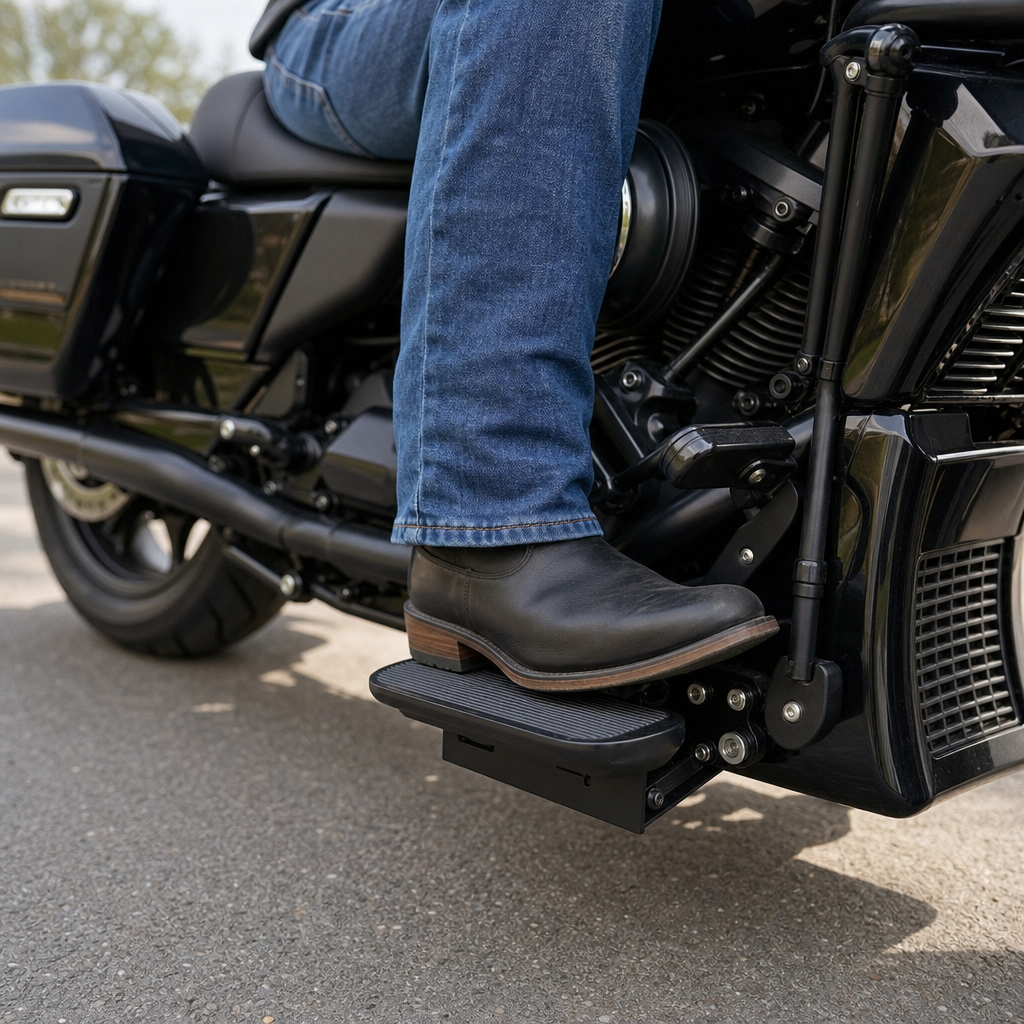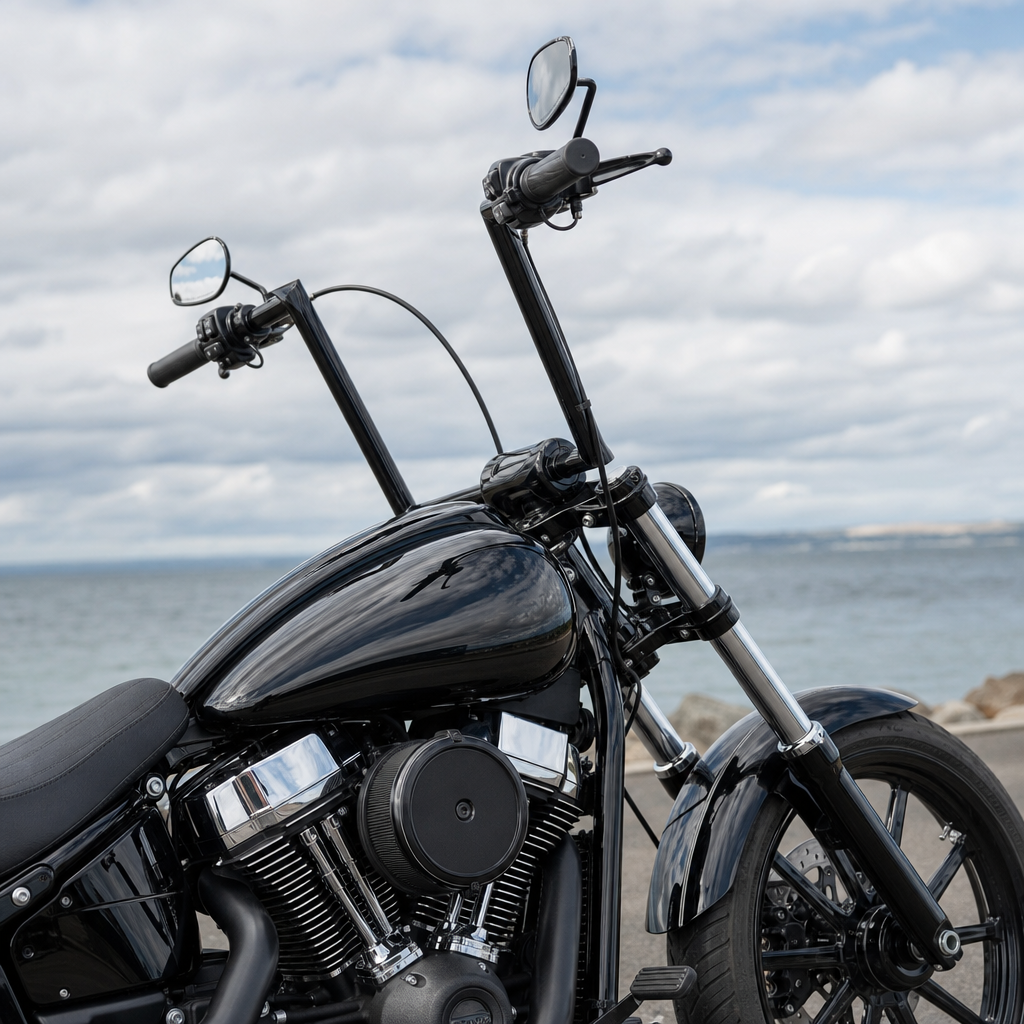
Pull-back risers are one of the smartest upgrades for riders preparing a long-rake cruiser for the 2026 season, because they correct reach, reduce upper-body strain, and create a more controllable riding position without changing the motorcycle’s character. On stretched-front-end Harley-Davidson builds and factory long-rake cruisers, the distance from seat to grips often looks right in the showroom but feels wrong after an hour on the road. The problem is simple: the rider must reach too far forward, too high, or too wide, which loads the shoulders, locks the elbows, and makes steering inputs less precise. Pull-back risers solve that by moving the handlebar contact point closer to the torso and, in many setups, slightly upward as well. In practical terms, that means less numbness in the hands, less tension between the shoulder blades, and better leverage at parking-lot speeds and on rough pavement. For Harley-Davidson owners, this topic sits at the center of model-specific ergonomics and performance recipes because bar position affects comfort, confidence, cable routing, suspension feel, and even how the bike tracks under braking.
When I set up cruisers for real road use, I treat pull-back risers as an ergonomic correction, not a cosmetic accessory. Reach is the horizontal distance from the rider’s shoulder line to the grips. Rise is the vertical change in grip height. Sweep is the rearward angle of the bar itself. Riser pull-back is the amount the riser relocates the clamp area toward the rider. Those dimensions interact with seat pocket depth, foot-control location, tank shape, fork rake, and fairing clearance. A rider on a Harley-Davidson Breakout-style machine can have perfect seat height yet still feel stretched because the stock bar path asks the wrists to angle outward while the torso leans forward. That is why this hub article matters. If you are building a 2026 breakout-ready cruiser, you need a repeatable recipe that connects bar geometry to comfort and control, then links that decision to cables, brake lines, steering limits, and complementary upgrades. This guide gives that full picture so you can choose the right pull-back risers once, install them correctly, and build outward from a sound ergonomic baseline.
Why Long-Rake Cruisers Need a Different Ergonomic Recipe
Long-rake cruisers demand a different setup than a standard Harley-Davidson because front-end geometry changes how the rider perceives weight, steering effort, and reach. A stretched fork and wide front tire shift visual mass forward, encouraging manufacturers to pair the bike with low seats and forward-biased bars that preserve the custom silhouette. The tradeoff is that many riders end up supporting part of their torso with their hands. On a short ride, that can feel sporty. On a full day ride, it becomes fatigue. The shoulders elevate, the wrists extend, and small steering corrections begin from a compromised position.
On bikes similar to the Breakout, the effect is amplified by a rearward seat pocket and forward controls. Your hips rotate, your lower back flattens, and your arms become the bridge between the machine and your torso. A pull-back riser changes that triangle. Bringing the grips back by even 1.5 to 2 inches can unlock the elbows and let the spine settle against the seat support. Most riders immediately notice improved low-speed control because the bar can be turned with leverage instead of with tension. That matters in U-turns, gas stations, and traffic, where long wheelbase cruisers already ask more from the rider.
For Harley-Davidson owners using this page as a sub-pillar hub, the larger point is that ergonomics and performance recipes start with contact points. Before tuning suspension, changing seats, or experimenting with floorboard relocation, correct the hand position. It is the fastest way to reveal whether your discomfort is truly a bar issue or a deeper fit issue involving controls, seat contour, or core support.
How Pull-Back Risers Improve Reach, Steering, and Road Confidence
The direct benefit of pull-back risers is improved reach, but the deeper benefit is better control bandwidth. With the grips closer, the rider can steer with a neutral wrist and slightly bent elbow. That posture allows quick countersteering inputs, smoother corrections in crosswinds, and less overreaction when the front wheel follows grooves or patched pavement. On a long-rake cruiser, where steering response is naturally slower than on a standard or touring chassis, this extra leverage is not minor. It changes the rider’s confidence threshold.
I have seen riders blame a Breakout-style bike for being heavy in town when the real problem was excessive forward reach. Once the bars moved back, they stopped fighting the bike. Their hands relaxed, they looked farther through turns, and their slow-speed balance improved because they were no longer hanging from the grips. The same setup often helps on the highway. When the torso is less pitched forward, wind pressure is distributed across the chest instead of concentrated through locked shoulders. That can reduce fatigue even without a windshield.
There is also a safety argument. When the rider is overstretched, emergency braking often pulls the body farther onto the bars, making it harder to modulate the front brake smoothly. A corrected reach lets the rider brace through the core and seat while keeping stronger fingertip control at the lever. That is especially useful on powerful Harley-Davidson cruisers where front brake feel and straight-line stability need to work together.
Choosing the Right Pull-Back Riser Dimensions for a Harley-Davidson Cruiser
The right dimensions depend on your body, your seat, and your intended use. As a starting point, most long-rake cruiser riders benefit from 1 to 3 inches of pull-back and 2 to 6 inches of rise, but those numbers only matter when paired with bar width and sweep. A narrower bar can feel effectively farther away if sweep is limited. A bar with more rearward sweep can reduce wrist strain but may crowd the tank at full lock if paired with aggressive riser pull-back.
Use a simple fit test before buying parts. Sit on the bike in riding boots, place your feet on the actual controls, close your eyes, relax your shoulders, and raise your hands as if gripping an ideal bar. Open your eyes and measure to the current grip position. The horizontal difference is your approximate needed pull-back. The vertical difference is your needed rise. Then check whether the current bar bend already gives enough sweep. If not, the correct recipe may be moderate pull-back risers plus a different handlebar, not extreme risers alone.
| Rider Goal | Typical Riser Change | Common Matching Bar Strategy | Main Benefit |
|---|---|---|---|
| Reduce shoulder reach on stock Breakout-style setup | 1.5 to 2 inches pull-back, 2 to 4 inches rise | Keep stock bar if wrist angle is acceptable | Less upper-back fatigue with minimal styling change |
| Improve low-speed leverage and neutral wrist angle | 2 to 3 inches pull-back, 4 to 6 inches rise | Use a bar with moderate sweep | Better control in turns, parking, and traffic |
| Preserve aggressive look while shortening reach | 1 to 1.5 inches pull-back, 2 to 3 inches rise | Select slightly wider bar with controlled sweep | Balanced ergonomics without losing stretched profile |
| Fit shorter rider with forward controls | 2 to 3 inches pull-back, 3 to 5 inches rise | Often pair with reduced-reach seat | Brings cockpit into usable range |
Known brands in this category include LA Choppers, KST, Thrashin Supply, Arlen Ness, Kodlin, and Harley-Davidson Genuine Parts, depending on clamp size and styling direction. Always confirm center-to-center mounting dimensions, bar diameter at the clamp, and whether your model uses electronic throttle-by-wire with enough harness slack for the change.
Fitment Factors: Cables, Brake Lines, Clamp Sizes, and Tank Clearance
Fitment mistakes are where many otherwise good riser projects go wrong. On Harley-Davidson cruisers, the first checks are clamp size and cable length. Many modern models use a 1.25-inch bar that tapers to a 1-inch clamping area, while some aftermarket bars and risers are designed around different standards. Confirm the riser top clamp matches the handlebar center section exactly. If it does not, do not force the fit with shims unless the manufacturer explicitly supports that solution.
Next, evaluate brake hose, clutch cable, and wiring slack from lock to lock. Turn the bars fully left and right with the front wheel unloaded if possible. Watch for tension at the master cylinder, throttle housing, and lower triple-tree routing points. On throttle-by-wire Harley-Davidson models, electrical harness length can become the limiting factor before the brake line does. A change that looks small on paper can require cable extensions because pull-back changes the routing arc, not just the straight-line distance.
Tank and nacelle clearance matter too. Some bars rotate rearward as the fork approaches full lock, and pull-back risers can place switch housings or the master cylinder closer to the tank than expected. Measure with the bike compressed under rider weight, not just on a lift, because suspension sag changes angles slightly. If your cruiser uses a small cowl, gauge mount, or integrated riser clamp, check sightlines as well. A great ergonomic setup is still wrong if it blocks warning lights or places mirrors where your shoulders fill the entire view.
Installation Standards and Setup Checks That Actually Matter
Proper installation is about alignment and load control, not just tightening hardware. Use the service manual torque values for your Harley-Davidson model and the riser manufacturer’s instructions for any proprietary fasteners. If those specifications conflict, verify with the part maker before proceeding. Clean threads, inspect rubber or polyurethane bushings if equipped, and replace worn isolators. A loose or overcompressed riser mount can create vague steering feel that riders often misdiagnose as tire or suspension trouble.
Set the bar angle with the rider on the motorcycle, hands resting naturally, and wrists neutral. The front brake lever should align with the forearm when the fingers cover the lever. The clutch lever should match that angle closely. After torquing the clamps, check that the top clamp gap is even if the manufacturer calls for parallel clamping, or intentionally offset if specified. Generic tightening habits cause cracked clamps and bar slippage.
Then perform three final checks: full-lock steering with no cable bind, front suspension compression with no line stretch, and a short road test that includes braking, slow turns, and rough pavement. Re-torque after the first ride cycle. That extra step catches seating changes in fresh hardware and is standard practice on any control-related modification.
Building the Full Ergonomics and Performance Recipe Around the Risers
Pull-back risers work best when treated as the foundation of a broader recipe. If the rider still feels stretched after the riser change, the next likely variable is seat position. A reduced-reach seat or one with better lumbar support can move the pelvis forward and stabilize the lower back. On Harley-Davidson cruisers, seat shape often changes effective reach more than published dimensions suggest because the seating pocket can lock the rider in one position.
Foot controls are the other half of the equation. Forward controls look right on a long-rake bike, but some riders benefit from mini-floorboards, highway pegs used as alternates rather than primaries, or mid-control conversions on specific models. When the feet come slightly rearward, the core can support the torso and the hands can relax. That can make a moderate riser setup feel ideal without needing extreme pull-back.
Suspension also belongs in the recipe. If the rear shock sags excessively, the rider slides back into the seat pocket and effectively increases reach again. Setting preload for actual rider weight often improves bar comfort indirectly. Tire pressure, grip diameter, and lever reach adjustments complete the system. As a hub topic under Harley-Davidson model-specific ergonomics and performance recipes, the key lesson is that bars, seat, controls, and suspension must be tuned as one package.
Best Use Cases, Tradeoffs, and How to Know You Got It Right
The best candidates for pull-back risers are riders who feel shoulder tension within thirty minutes, riders who struggle with U-turns despite experience, shorter riders on stretched cruisers, and anyone who wants to preserve a custom look while making the bike truly rideable. They are also valuable for older riders managing wrist mobility or neck stiffness, because small changes in reach can produce major comfort gains.
The tradeoffs are real. Too much pull-back can make the cockpit cramped, reduce front-end feel, or place the elbows in an awkward rearward position. Excessive rise can increase wind load on the arms and may require longer lines and internal wiring work. A setup that feels comfortable in the garage can still be wrong at speed if the wrists are kinked or the shoulders hunch upward. That is why measurement, mock-up, and test riding matter more than chasing a style trend.
You know the recipe is right when your elbows stay soft, your shoulders stay down, your wrists remain neutral, and you can steer full lock in a parking lot without feeling like you are dragging yourself forward. On the highway, you should be able to loosen your grip and let the bike track without upper-back tension. If your Harley-Davidson cruiser does that after the riser change, you have improved both comfort and usable performance. Start by measuring your current reach, compare it to your natural hand position, and choose pull-back risers that support the way you actually ride.
Frequently Asked Questions
Why are pull-back risers such an effective upgrade for a 2026 Breakout or any long-rake cruiser?
Pull-back risers work so well on a long-rake cruiser because they solve one of the most common ergonomic problems on this style of motorcycle: the handlebars sit just far enough forward that the rider has to constantly reach, even when the bike feels comfortable at first. On a 2026 Breakout or a similar stretched-front-end Harley-Davidson build, that extra reach can load the shoulders, upper back, wrists, and lower neck more than many riders expect. Around town it may seem manageable, but on longer rides the strain becomes obvious. Riders often notice they begin to lock their elbows, shrug their shoulders, or slide forward on the seat just to maintain contact with the grips.
Pull-back risers change that relationship by bringing the bars closer to the rider without fundamentally changing the personality of the motorcycle. That is what makes them such a smart upgrade. Instead of replacing the entire front-end feel or dramatically altering the silhouette, they fine-tune the cockpit. The result is a more natural arm bend, less pressure through the palms, and a posture that allows better steering input. When your arms are not fully extended, you can make smoother corrections, react more confidently at low speeds, and ride longer before fatigue sets in.
Another reason they are effective is that they preserve what owners like about long-rake cruisers in the first place. Most riders are not trying to turn a Breakout into a touring bike or a performance cruiser. They want the same long, stretched, muscular look, but with a riding position that feels intentional rather than compromised. Pull-back risers deliver exactly that balance. They improve reach, reduce upper-body strain, and make the bike feel more controllable, all while keeping the cruiser’s visual character intact.
How do I know if the stock handlebar position on my Breakout is actually too far forward?
There are several clear signs that the stock handlebar position is too far forward, and most of them show up in your body after real riding time rather than during a quick test sit. If you feel tension between your shoulder blades, numbness in your hands, soreness in your wrists, or tightness across the tops of your shoulders after 30 to 60 minutes, the bars may be asking too much from your reach. Another common clue is that you find yourself scooting forward on the seat to get closer to the grips, especially at highway speed or in stop-and-go traffic. That usually means your natural seated position and the handlebar location are not working together.
Pay attention to your elbows as well. On a well-set-up cruiser, your elbows should typically have a slight bend rather than being fully straight or locked out. If you constantly ride with your arms stretched and your shoulders rolled forward, that posture can reduce comfort and control at the same time. You may also notice that slow-speed maneuvers feel heavier than they should, because when you are reaching too far, it is harder to make precise steering inputs. Even simple tasks like turning in a parking lot or countersteering into a curve can feel less fluid.
One of the best ways to judge fit is to think about what your body is doing when you are relaxed. If you have to “hold” yourself up with the bars, or if the grips feel like they are pulling you away from the seat instead of meeting your hands naturally, the cockpit likely needs adjustment. Pull-back risers are often the cleanest answer because they address that exact issue directly. Rather than forcing your body to adapt to the bike, they bring the controls into a position that better matches your natural posture.
Will pull-back risers change the handling or feel of a long-rake cruiser?
Yes, but usually in a very positive and rider-friendly way. Pull-back risers do not change rake, trail, or the basic chassis geometry, so they are not transforming the motorcycle into something fundamentally different. What they do change is the rider’s leverage and body position, and that can have a major effect on how the bike feels in real-world use. When the bars are closer, your steering inputs become more efficient because your arms are operating from a stronger, less extended position. That often makes the bike feel easier to control at low speeds and less tiring to manage in traffic, parking lots, or long highway stretches.
Many riders describe the improvement as the bike feeling “lighter” in the front end, even though no front-end weight has changed. That sensation comes from better leverage and reduced physical strain. On a long-rake cruiser, where the front end already has a stretched look and feel, any setup that helps the rider stay relaxed tends to make the motorcycle feel more predictable. You are less likely to grip the bars too tightly, less likely to brace against wind pressure with locked arms, and more able to make calm, smooth steering corrections.
It is important to note that the best results come from choosing a pull-back amount and rise that match your body size, seat position, and bar shape. Too much rearward movement can make the cockpit feel cramped or alter wrist angle in a way that creates different discomfort. But when selected properly, pull-back risers generally improve comfort and control without taking away the visual drama or laid-back personality that riders want from a Breakout-style cruiser. In other words, they refine the experience rather than rewriting it.
What should I consider when choosing pull-back risers for a 2026 Breakout?
The first thing to consider is your actual fit goal, not just the appearance of the part. Some riders need only a modest amount of pull-back to remove that last inch or two of awkward reach, while others need a combination of added rise and rearward movement to truly correct their riding posture. Your height, arm length, torso length, seat choice, and even foot control position all influence what works best. A rider with a longer torso may need less correction than someone with shorter arms on the same motorcycle. That is why the right riser setup is always personal, even on the same model.
You should also evaluate your current handlebar bend and width. Risers do not work in isolation. If the stock or existing bars already have a certain sweep, adding pull-back risers may produce an ideal position, or it may bring the grips too close and create an odd wrist angle. The goal is to place your hands where they fall naturally when your shoulders are relaxed and your elbows have a comfortable bend. That often means thinking of the cockpit as a system rather than a single part upgrade.
Cable and brake line compatibility is another practical issue. Depending on how much rise and pull-back you add, your stock cables, clutch line, brake line, and wiring may or may not have enough length and routing flexibility. A well-planned install checks these details before finalizing the setup. You also want risers that are built to a high standard, fit your clamp and bar diameter correctly, and match the style of the bike. On a premium cruiser, function matters most, but appearance still counts. The best pull-back risers look like they belong on the bike while delivering a noticeably better riding position every time you settle into the seat.
Are pull-back risers mainly for comfort, or do they also improve safety and long-distance ride quality?
They absolutely improve more than comfort. Comfort is usually the first reason riders look at pull-back risers, but the benefits extend directly into control, endurance, and overall riding quality. When your upper body is less strained, your reactions tend to be smoother and more precise. You are better able to steer with intention instead of compensating for fatigue. On a long-rake cruiser, that matters because the bike already asks for deliberate input, especially at slower speeds and during transitions. A handlebar position that reduces overreach helps the rider stay engaged and balanced rather than tense and stretched out.
From a safety perspective, reduced fatigue is a real advantage. Tired shoulders, aching wrists, and numb hands are not just annoyances; they can distract you and degrade your control over time. If your posture is forcing you to support your torso with your arms, you may become less responsive after an hour or two on the road. By moving the bars into a more natural zone, pull-back risers help preserve stamina. That means better focus, better comfort under braking and maneuvering, and less tendency to make small mistakes because your body is worn down.
For long-distance ride quality, the improvement is often immediate. Riders commonly report that the motorcycle simply feels easier to live with over a full day in the saddle. Wind pressure becomes less tiring because the body is not already fighting the handlebar position. Your neck and shoulders stay looser, and your hands carry less constant load. The bike still looks like the long, aggressive cruiser you bought it for, but it feels more cooperative mile after mile. That combination of preserved style, improved ergonomics, and better rider endurance is exactly why pull-back risers are such a valuable upgrade heading into the 2026 riding season.