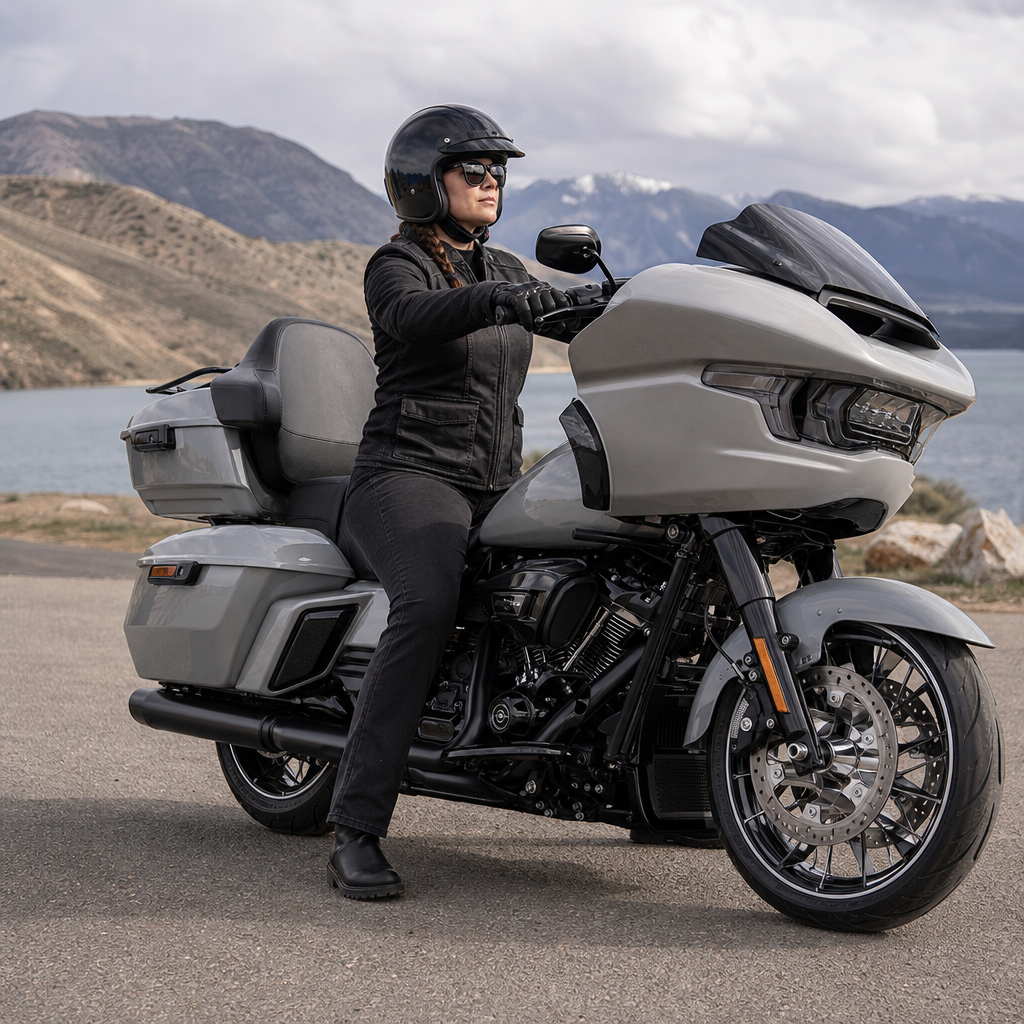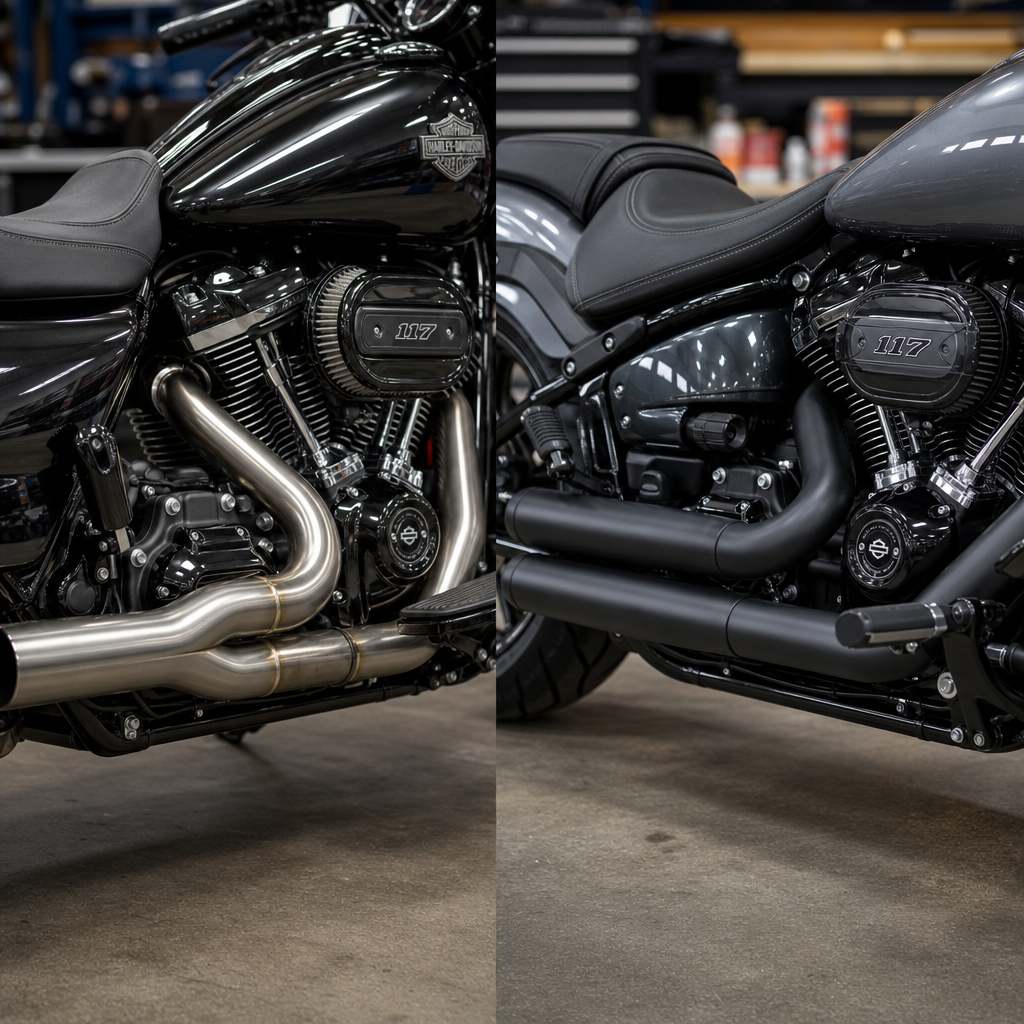
The 2026 CVO ST sits in a rare corner of the Harley-Davidson lineup: a factory hot-rod bagger built to cover distance fast, brake hard, and hold a line through sweepers without losing touring manners. For riders searching for a true performance bagger recipe, the biggest question is not whether to upgrade suspension, but which path makes the most sense: Ohlins or Showa. I have tuned touring Harleys for riders who commute, chase mountain roads, and run track-style training days, and the same pattern appears every time. The right suspension package transforms confidence, tire wear, passenger comfort, and usable speed far more than most exhaust or intake changes. On the 2026 CVO ST, that decision matters even more because the chassis is already capable enough to reveal small setup differences.
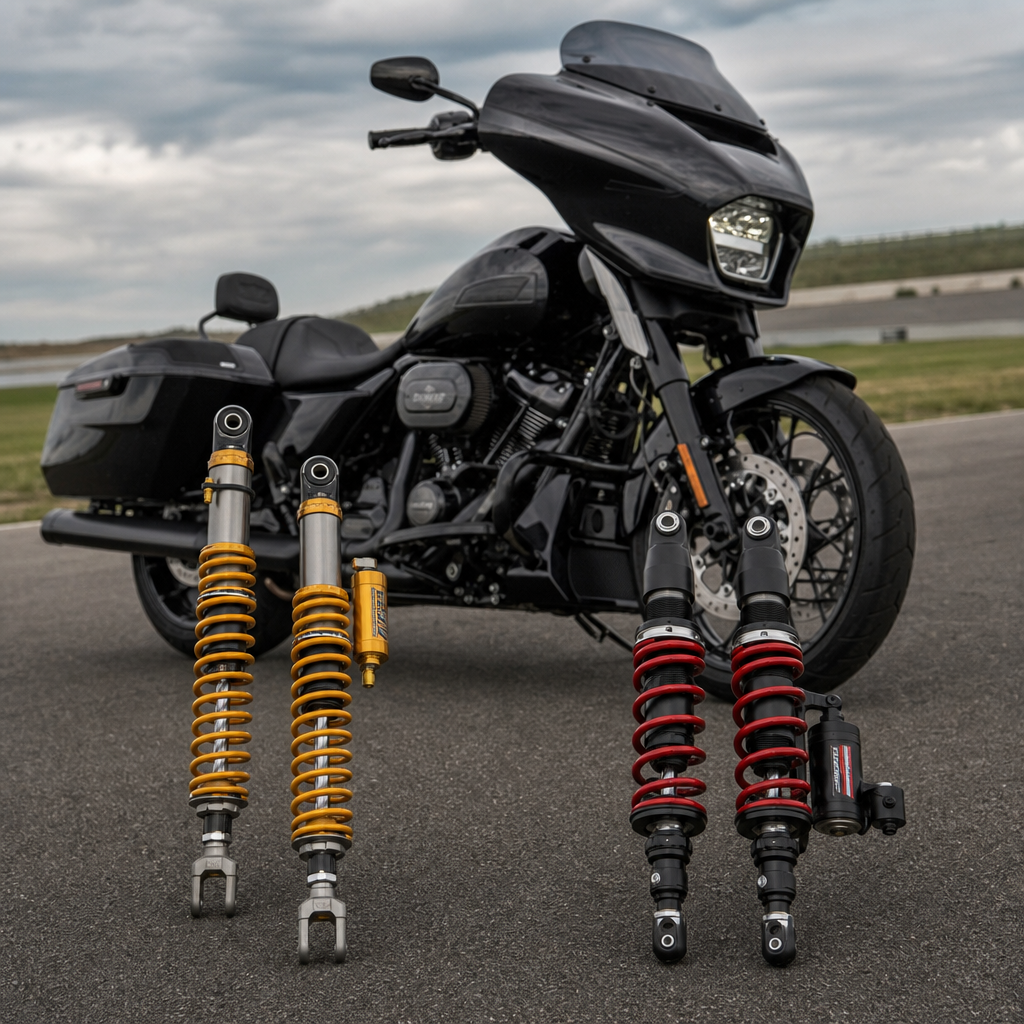
In this model-specific ergonomics and performance recipe hub, the goal is to define the decision points clearly. A performance bagger recipe is a matched combination of suspension, riding position, controls, tires, brakes, and setup choices tailored to how a rider actually uses the motorcycle. Ergonomics means the relationship among seat, bars, floorboards or pegs, reach to controls, wind protection, and body support under braking and acceleration. Showa and Ohlins are both premium suspension names, but they represent different upgrade philosophies. Showa often emphasizes broad OEM integration, consistency, and value within a factory-calibrated range. Ohlins is usually the benchmark when a rider wants deeper external adjustability, sharper damping control, and a wider tuning window for aggressive use.
This matters because the 2026 CVO ST is heavy, powerful, and expensive. Getting the suspension wrong can leave grip on the table, increase rider fatigue, and create the common complaint that a fast bagger feels composed on smooth roads but unsettled on patched pavement. Getting it right lets the bike stay flatter on corner entry, drive out cleaner, and remain comfortable over long miles. Just as important, this article serves as the central guide for all model-specific ergonomics and performance recipes in the Harley-Davidson category. If you are building a 2026 CVO ST for canyon riding, two-up sport touring, or all-around street use, this page gives you the framework to choose parts and priorities without wasting money on mismatched upgrades.
What the 2026 CVO ST Needs From a Real Performance Bagger Setup
A 2026 CVO ST performance bagger setup should solve four things at once: brake support, mid-corner stability, rear-drive traction, and rider control. Touring Harleys ask a lot from suspension because they carry substantial mass, long wheelbase geometry, saddlebags, and often a passenger or luggage. Add the CVO ST’s strong Milwaukee-Eight output and aggressive riding mission, and basic “stiffer is better” logic stops working. The bike needs controlled damping, not simply hard springs. It needs enough front support to resist excessive dive without skipping over sharp bumps, and enough rear compliance to keep the tire loaded when the pavement gets choppy while still maintaining ride height.
From an ergonomics standpoint, the CVO ST also needs a rider triangle that supports active inputs. A seat that locks the rider too far back can limit weighting the front end. Bars with too much rearward sweep can reduce leverage in quick transitions. Floorboard position affects hip angle and how easily a rider braces under braking. In workshop conversations, many riders describe suspension complaints that are partly ergonomic problems. If your lower back is taking impacts because the seat foam is collapsing, or your wrists are overloaded because the bars are too low for your torso length, even excellent dampers can feel wrong. That is why this hub treats ergonomics and chassis tuning as one recipe, not separate checklists.
The practical baseline is simple. Set laden sag correctly, confirm tire pressures when cold, inspect steering head bearings, and verify no bagger-specific accessories are upsetting balance. Then evaluate your actual use: solo sport, two-up touring, mixed commuting, or weekend canyon work. Only after that does the Ohlins versus Showa decision become meaningful.
Ohlins for the 2026 CVO ST: Best for Maximum Tuning Range and Aggressive Pace
Ohlins is the answer when the rider wants the broadest performance envelope and is willing to spend time dialing it in. Across motorcycles, Ohlins has built its reputation on precise damping circuits, consistent manufacturing tolerances, and externally adjustable components that respond predictably to small changes. On a heavy performance bagger like the 2026 CVO ST, those traits matter because the line between plush and underdamped is narrow. A quality Ohlins setup usually gives more defined chassis feedback at turn-in, better control during repeated hard braking, and cleaner recovery after big bumps while leaned over.
In real use, I see Ohlins shine with riders who push pace on imperfect roads. Think of a 220-pound solo rider with full gear attacking a mountain route with frequent downhill braking zones and rough patchwork pavement. A premium Ohlins front cartridge and matched rear shocks can hold the bike higher in the stroke, reduce wallow on corner exit, and improve tire contact consistency. That translates into less rider hesitation and less need to back off when the road surface turns ugly. Ohlins also tends to reward riders who understand clicker changes and can feel the difference between compression and rebound adjustments.
The tradeoff is that Ohlins does not automatically produce a better ride for every owner. If preload, sag, and damping are not set correctly, an expensive package can feel busy or harsh. Cost is another factor. Ohlins generally commands a premium, and the best results come when installation and setup are handled by a shop familiar with touring Harley geometry, spring-rate selection, and rider-load calculation.
Showa for the 2026 CVO ST: Best for Balanced Street Performance and OEM-Like Integration
Showa deserves more respect than it often gets in enthusiast debates. It has deep OEM experience and produces sophisticated suspension for high-performance motorcycles, including systems with excellent damping quality and durability. For the 2026 CVO ST rider who wants a meaningful upgrade without turning every ride into a tuning session, Showa is often the smarter route. The key advantage is balance. A well-chosen Showa-based setup can improve support, stability, and comfort in a way that feels natural from the first mile, especially for riders whose use is mostly street miles with occasional aggressive runs.
Consider a rider who splits time between suburban commuting, highway travel, and weekend back-road loops. That person may care less about ultimate damping nuance at ten-tenths and more about confidence over expansion joints, reduced front-end dive, and better composure with luggage. In those cases, Showa frequently delivers the best value per dollar. The bike retains an integrated, factory-resolved feel rather than taking on the sharper edge some riders love and others find tiring. Showa can also be easier to live with when the owner wants a “set it close and ride” result.
Where Showa can fall short compared with Ohlins is in adjustment breadth and the last layer of feedback at elevated pace. If your benchmark is repeated hard corner entries on rough roads, Ohlins usually provides more headroom. But for many CVO ST owners, Showa lands closer to the ideal compromise between comfort, support, and cost.
Direct Comparison: Ohlins vs. Showa for a 2026 CVO ST Performance Recipe
| Category | Ohlins | Showa |
|---|---|---|
| Damping feel | Sharper, more defined, especially at aggressive pace | Smoother, more OEM-like, easier to live with daily |
| Adjustment range | Usually broader and more responsive to fine changes | Adequate for most street riders, typically less expansive |
| Best rider profile | Sport-focused solo rider or advanced canyon rider | Mixed-use rider, commuter, touring rider, occasional aggressive use |
| Setup sensitivity | High; rewards careful sag and clicker tuning | Moderate; easier to get close quickly |
| Cost | Higher initial investment | Usually lower for comparable street-oriented gains |
| Two-up touring | Excellent when sprung correctly | Very strong, often ideal for comfort-biased setups |
If you want the shortest answer, here it is. Choose Ohlins for the 2026 CVO ST if your priority is maximum chassis precision, custom tuning range, and performance riding on challenging roads. Choose Showa if your priority is broad street competence, lower setup burden, and a planted, refined feel that still outperforms stock-oriented expectations. Neither choice is universally better. The better choice is the one that matches rider weight, pace, roads, and tolerance for setup work.
One point many articles miss is spring rate. Riders get caught up in brand labels, then keep generic springs that do not match total load. On the CVO ST, correct springing is non-negotiable. A 160-pound rider and a 250-pound rider cannot expect the same preload window or damping behavior. If your shop cannot explain spring selection with rider weight, gear, luggage, and passenger load included, keep shopping.
Building the Full Ergonomics and Performance Recipe Around Suspension
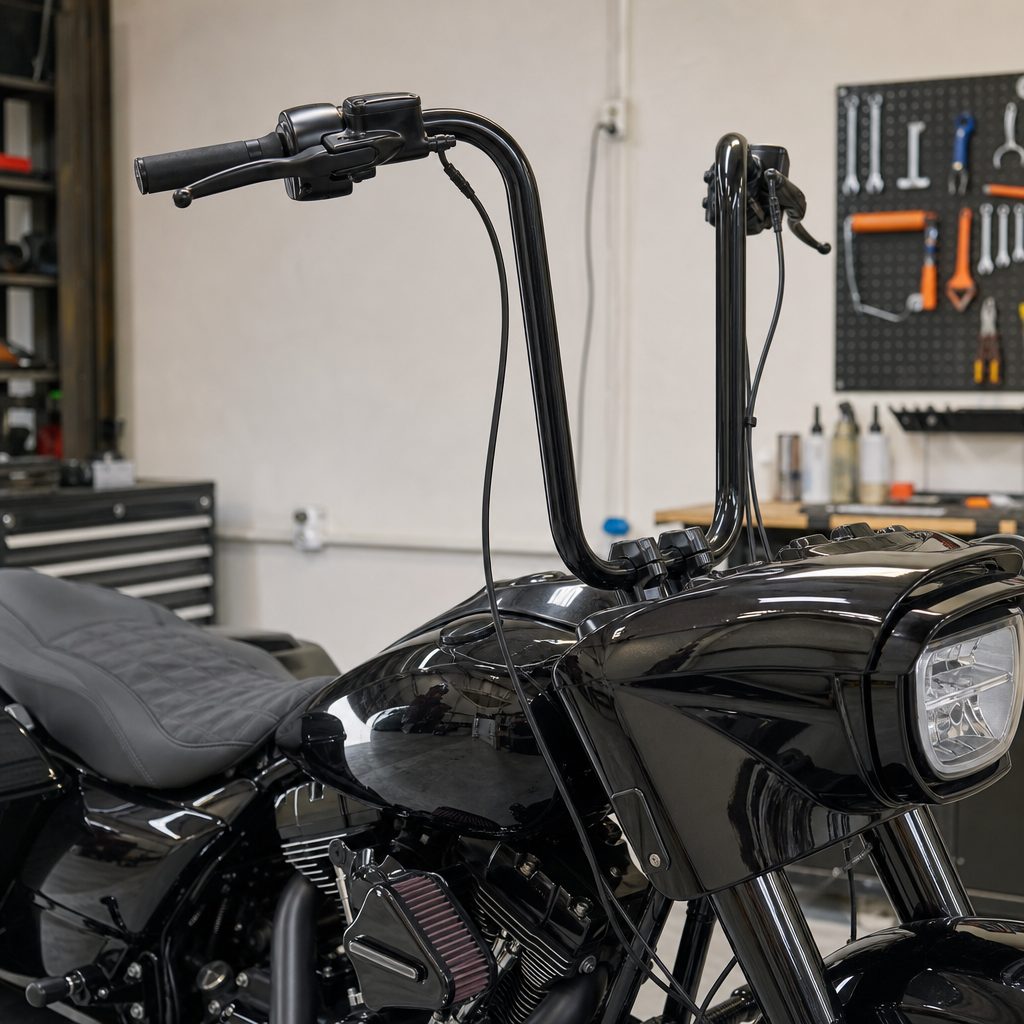
Suspension is the centerpiece, but the 2026 CVO ST becomes a true performance bagger only when the surrounding parts support it. Start with the seat. A seat with firmer foam and a defined pocket can improve braking stability by keeping the pelvis from sliding rearward. That lets the rider relax grip pressure on the bars and steer more accurately. Next, evaluate handlebar reach. A rider with long arms may prefer a slightly lower, flatter bend for front-end feel, while a shorter-torso rider may need more rise to avoid rounded shoulders and locked elbows.
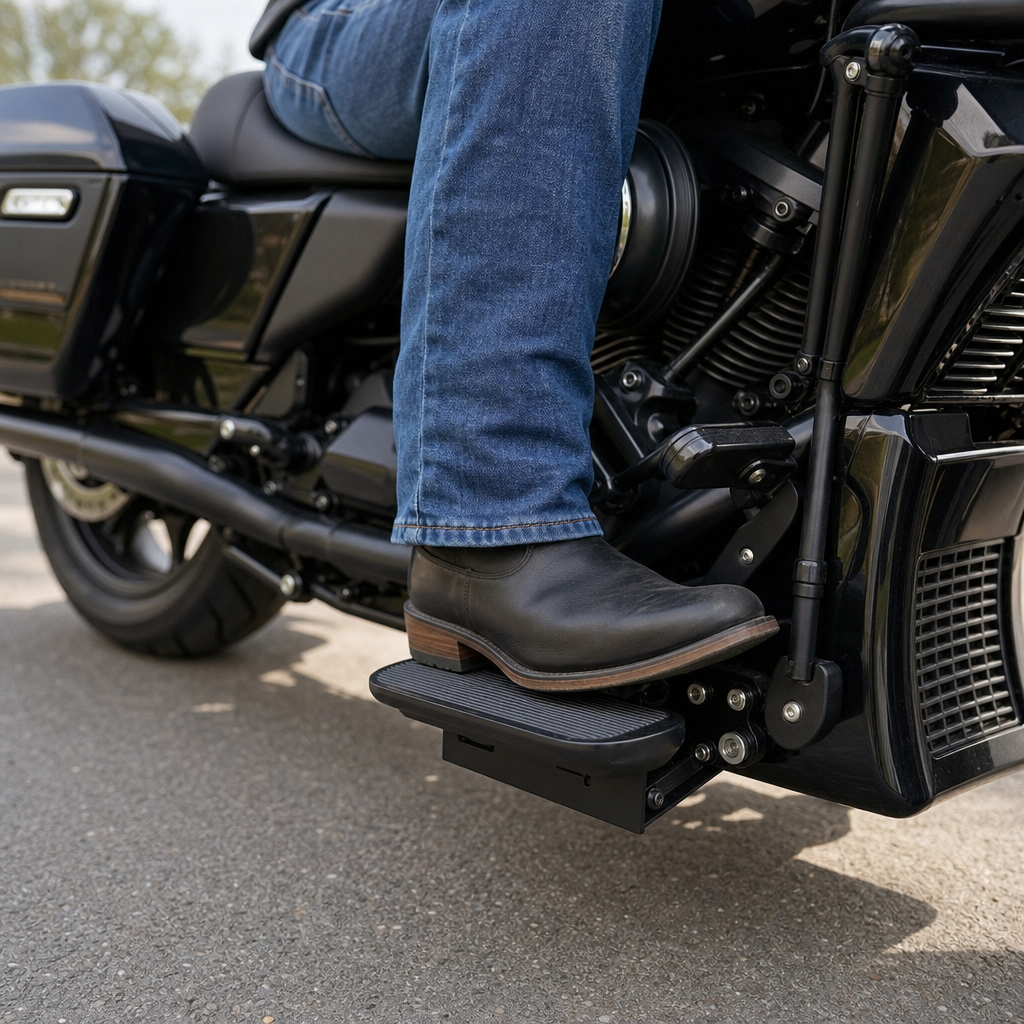
Foot control position matters more than many bagger owners realize. Floorboards are comfortable, but they can limit body repositioning compared with performance-oriented pegs. Riders who consistently push corner entry speed may benefit from a setup that gives clearer lower-body support and more available lean angle. Tires are equally critical. A suspension upgrade can only work through the contact patch, so pairing premium dampers with worn or touring-biased tires is a common and expensive mistake. For a CVO ST ridden hard, choose tires with strong carcass support and predictable warm-road behavior.
Brakes complete the recipe. Better suspension improves braking by controlling pitch, but pad compound, rotor condition, and fluid quality determine how repeatable that braking will be. On a heavy bagger, fresh high-temperature brake fluid and quality pads are not optional if the bike is ridden aggressively. This hub exists because model-specific performance is always a system, never one part number.
Common Mistakes CVO ST Owners Make When Choosing Ohlins or Showa
The first mistake is copying another rider’s setup without matching use case. A suspension package praised by a fast 190-pound rider in Arizona may feel terrible for a 240-pound rider in the Northeast on frost-heaved roads. The second mistake is treating preload as a comfort knob rather than a ride-height and sag tool. The third is upgrading only the rear shocks and ignoring the fork. On a bagger, an unbalanced front-to-rear setup often creates confusing feedback, such as improved drive grip but vague turn-in.
Another common issue is chasing internet clicker settings. Damping numbers are not magic. Tire construction, oil condition, ambient temperature, and even accessory weight change what the bike wants. Finally, many riders underestimate the value of professional setup. A capable technician with scales, sag tools, and Harley touring experience can save months of trial and error.
How This Hub Connects to the Wider Harley-Davidson Performance Upgrade Path
As the hub for model-specific ergonomics and performance recipes under the Harley-Davidson topic, this page should guide the next questions an owner asks. After suspension, riders usually move to tire selection, brake upgrades, bar and seat fitment, floorboard versus peg conversions, windshield tuning, and luggage-load setup. For the 2026 CVO ST, those downstream decisions should always be made after the suspension baseline is established, because the best bar, seat, or tire choice depends on how the chassis is riding in the stroke and how the rider is supported under load.
The central takeaway is clear. Ohlins and Showa are both valid answers for a 2026 CVO ST performance bagger recipe, but they serve different riders. Ohlins is the premium choice for riders chasing the highest ceiling in control and tuneability. Showa is the intelligent choice for riders who want excellent road performance, strong comfort, and easier day-to-day usability. In both cases, the winning setup starts with honest assessment of rider weight, speed, road quality, cargo, and ergonomic needs.
If you are building your own CVO ST recipe, start with a written baseline: current complaints, rider weight in gear, typical routes, passenger frequency, and budget. Then choose the suspension brand that fits those realities, not forum mythology. That disciplined approach produces the bagger every rider wants: faster, calmer, and easier to trust on every mile.
Frequently Asked Questions
Is the 2026 CVO ST already good enough from the factory, or does it really benefit from a suspension upgrade?
The 2026 CVO ST is absolutely one of the most capable factory touring Harleys ever built, and that matters because it sets a high baseline. It is not a bike that feels underdeveloped or vague in stock trim. It is fast, composed, and far more willing to corner hard than a traditional bagger. But “good from the factory” and “optimized for your riding” are not the same thing. That is where the suspension conversation begins.
Factory suspension has to satisfy a very wide range of riders, passenger loads, road surfaces, speeds, and comfort expectations. Harley-Davidson has to build something that works reasonably well for the rider who cruises highways, the rider who attacks backroads, and the rider who occasionally carries a passenger and luggage. That broad target means the stock setup is inevitably a compromise. It may brake-dive more than an aggressive rider wants, run out of damping control on rough pavement, feel too firm in sharp-edge hits, or lose some composure when the pace increases and the bike is asked to transition quickly from side to side.
On a machine like the CVO ST, those limits show up sooner because the chassis, brakes, tires, and engine invite a higher pace. Riders tend to push this bike harder than a standard touring model. Once you start riding it like a true performance bagger, suspension quality becomes one of the biggest factors in confidence. A well-chosen upgrade can improve front-end support under hard braking, keep the rear more planted while accelerating out of corners, reduce wallow in sweepers, and make the bike feel calmer over imperfect pavement. Just as important, it can improve comfort because a better damper is not simply “stiffer”; it is more controlled.
So yes, the 2026 CVO ST can absolutely benefit from upgraded suspension. The bigger point is that the benefit depends on your use case. If your riding is mostly straight-line highway touring at moderate speeds, the stock setup may be perfectly satisfying. If you ride mountain roads, commute on broken pavement, carry a passenger often, or attend track-style training days where braking and corner-entry stability really matter, suspension upgrades move from “nice to have” to “one of the smartest changes you can make.”
What is the real difference between Ohlins and Showa for a 2026 CVO ST performance bagger build?
The real difference is less about brand mythology and more about tuning philosophy, adjustability, and the kind of rider each setup tends to suit best. Both Ohlins and Showa can produce excellent results on a performance-oriented Harley. The question is how much control you want, how sensitive you are to chassis behavior, and whether your priority is broad real-world versatility or a more premium, highly tunable performance feel.
Ohlins is often the first name riders mention when they want the “best” because the brand is strongly associated with high-end motorsports and premium damping quality. On a CVO ST, an Ohlins setup typically appeals to riders who want sharper chassis response, more precise support during hard braking and fast transitions, and a wider tuning window for rider weight and pace. The feel many riders report is more planted, more controlled, and more communicative when the bike is being ridden aggressively. If you are the kind of rider who notices small changes in rebound, preload, and chassis attitude, Ohlins usually gives you more room to dial in exactly what you want.
Showa, on the other hand, should never be dismissed as the “less serious” option. Showa has enormous engineering depth and a long history in OEM and performance applications. Depending on the exact components chosen, a Showa-based upgrade path can deliver excellent control, strong everyday comfort, and a very balanced touring-sport character. For many CVO ST owners, Showa can feel more than capable without asking the rider to chase setup changes. It often makes sense for riders who want a meaningful improvement in damping quality and stability but still value a straightforward, highly usable setup for mixed street miles.
In practical terms, Ohlins tends to attract the rider who is building a more deliberate performance bagger recipe: someone who rides hard enough to appreciate premium damping behavior and may be willing to spend more for that last measure of chassis sophistication. Showa tends to fit riders who want excellent real-world function, confidence, and ride quality without necessarily prioritizing maximum adjustability or the boutique premium factor. Neither choice is automatically right. The better choice depends on whether your CVO ST is primarily a fast road bike with touring capability, or a touring bike that you also want to sharpen significantly.
Which suspension upgrade is better for aggressive canyon riding, track-style training days, and hard braking performance?
If your CVO ST regularly sees aggressive canyon riding, advanced cornering practice, or track-style training days, Ohlins usually has the edge. That is not because Showa cannot perform, but because riders pushing the chassis harder tend to benefit more from the level of damping refinement and adjustment range that Ohlins commonly brings to the table. When you are braking deep into a corner, asking a heavy bagger to settle quickly, hold a line, and stay calm over uneven pavement, suspension quality stops being a luxury and becomes a performance tool.
Under hard braking, the front end needs support without feeling harsh. Too much dive upsets geometry, overloads the front tire, and can make turn-in feel vague or delayed. Too little compliance makes the bike nervous over bumps and patches. A strong Ohlins setup often shines here because it can better separate support from harshness. You can get a firmer, more controlled front end while still preserving traction and feedback. That matters on a bagger because weight transfer is substantial, and once the chassis starts moving excessively, it takes more effort to get everything settled again.
On corner exit, rear shock performance is just as important. The rear has to absorb pavement imperfections, maintain tire contact, and resist wallow as you roll on power. Better damping helps the bike drive forward instead of bouncing, squatting excessively, or drifting wide. In long sweepers, that translates into a calmer line and less need for mid-corner correction. In quick left-right transitions, it helps the CVO ST feel lighter and more predictable than its size suggests.
That said, not every rider at a track-style school needs the most premium package available. If your pace is brisk but not extreme, and your goal is confidence, stability, and improved control on real roads, a well-matched Showa upgrade can still be very satisfying. The deciding factor is how hard you truly ride and how much you care about fine-tuning. The more you are using the bike’s braking and cornering limits, the more Ohlins tends to justify itself. The more you ride fast on the street but still prioritize balanced comfort and simplicity, the stronger the Showa case becomes.
How important are rider weight, passenger use, luggage, and setup when choosing between Ohlins and Showa?
They are extremely important. In fact, they matter more than the logo on the shock body. The best suspension brand in the world will disappoint if the spring rate is wrong, the preload is poorly set, or the damping is mismatched to how the bike is actually used. Conversely, a properly selected and correctly adjusted setup can transform the CVO ST even if the rider never touches a clicker again after installation.
Rider weight is foundational because suspension works in a specific range of movement. If the springs are too soft for your weight, the bike rides too low in its travel, feels lazy under braking and acceleration, and can blow through the stroke on rough roads. If the springs are too stiff, the bike can ride too high, lose compliance, and feel skittish instead of planted. Add a passenger, hard bags full of gear, or long-distance travel loads, and the demands on the rear suspension increase even more. A bagger that feels controlled solo may become underdamped and under-sprung when loaded for a weekend trip.
This is why serious tuners always start with intended use. Are you mostly solo? Do you ride two-up every weekend? Do you carry gear often? Are your roads smooth, or are they patched and broken? Do you want more ground clearance and cornering support, or is comfort still the top priority? Those answers determine spring choice, preload target, and damping direction. They also help decide whether you really need a more adjustable Ohlins setup or whether a quality Showa package tuned correctly for your weight and use will deliver nearly everything you want.
Setup is where many riders leave performance on the table. Even a premium suspension package can feel underwhelming if sag is wrong or if rebound and compression are not aligned with the bike’s weight and speed. On the 2026 CVO ST, a correct setup can improve steering response, braking composure, and ride comfort all at once. That is why the smartest approach is to choose the suspension path based on real riding conditions, then make sure it is sprung and adjusted for the rider instead of installed as a generic catalog upgrade.