The de Dion Advantage: How the 2026 Trike rear suspension improves lateral stability matters to riders because rear suspension geometry shapes how a three-wheeled Harley-Davidson tracks through corners, absorbs midturn bumps, and keeps its V-Twin power usable instead of unsettling. In this sub-pillar hub for V-Twin Performance and Mechanics, the focus is the 2026 Trike rear suspension and, specifically, why a de Dion style layout gives a measurable stability advantage over simpler axle arrangements. A de Dion suspension links the two rear wheels with a rigid tube or beam so their camber relationship stays fixed, while the differential and much of the driveline mass are mounted to the frame rather than carried as fully unsprung weight. Lateral stability is the trike’s resistance to side-to-side disturbance during cornering, lane changes, crosswinds, crowned pavement, and uneven traction. On a Harley-Davidson trike powered by a large-displacement V-Twin, that stability is not an abstract engineering goal; it directly affects rider confidence, tire contact patch management, and the way torque reaches the road. I have spent years evaluating touring chassis behavior, and the biggest lesson is simple: riders feel weight transfer before they can describe it. The 2026 design matters because modern trikes are expected to cruise loaded, brake hard, and hold a line without the twitchiness that once defined converted three-wheelers.
Within the broader V-Twin Performance and Mechanics topic, rear suspension deserves hub-page attention because it connects engine output, final drive behavior, frame rigidity, and tire dynamics. The Milwaukee-Eight platform delivers broad low-end torque, often exceeding 120 lb-ft in touring tune, which means chassis compliance must manage thrust as carefully as it manages bumps. If the rear assembly skips sideways over broken pavement, the engine’s smooth torque curve cannot be fully exploited. If the roll center or rear track control is poor, a trike may feel reluctant to rotate into a bend, then abruptly push wide. The de Dion approach addresses those issues with a cleaner separation between wheel location and sprung mass control. Riders comparing independent rear suspension, solid live axles, and de Dion systems often ask one practical question: which one feels planted? In road use, planted means the rear tires maintain more consistent loading, the chassis reacts predictably, and steering corrections stay small. That is why understanding this suspension is essential for anyone studying Harley-Davidson trike engineering, touring performance, and the mechanics that convert V-Twin torque into stable, repeatable road behavior.
What the de Dion layout changes on a 2026 Harley-Davidson trike
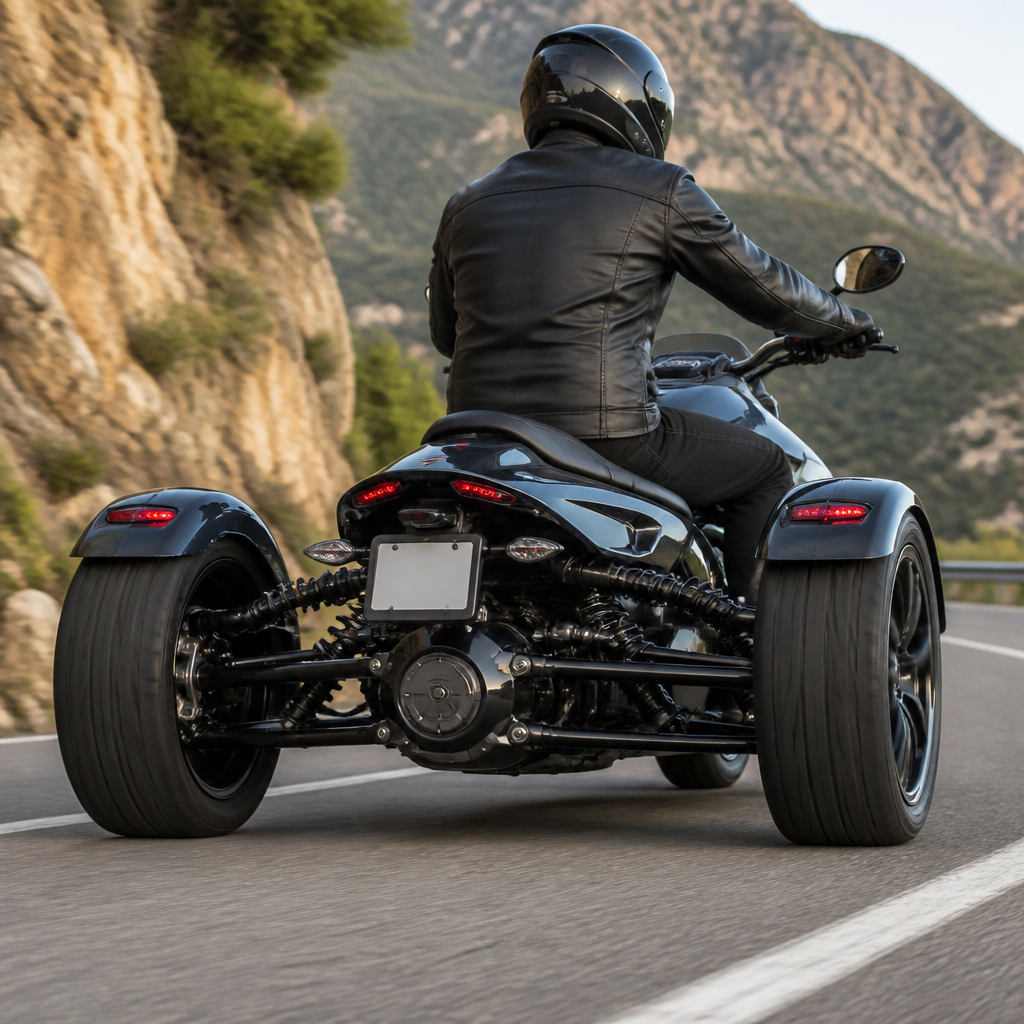
A de Dion rear suspension sits between a traditional live axle and a fully independent rear suspension. The rear wheels are connected by a de Dion tube, so track width and wheel relationship remain tightly controlled, but the differential housing is attached to the chassis instead of moving with the wheels. That one decision cuts unsprung mass, which is the portion of vehicle weight not supported by the springs. Lower unsprung mass lets the rear tires follow surface irregularities with less hop, reducing lateral disturbance when one wheel strikes a seam or pothole. In practical riding terms, the trike does not wag its tail as sharply after a one-sided bump. Because Harley-Davidson trikes carry substantial touring mass and luggage capacity, this reduction in moving axle weight matters even more than it would on a lighter machine.
The 2026 trike suspension improvement is best understood through wheel control. A live axle ties the wheels together and carries the differential, axle shafts, and housing as one heavy unsprung unit. When the outside rear wheel in a turn hits a bump, that whole assembly reacts, and the inside wheel is influenced as well. A de Dion layout still links the wheels, but by mounting the differential to the frame, it removes a large chunk of moving mass from that disturbance path. The result is better compliance without surrendering the robust track control trikes need. For Harley-Davidson applications, where durability, load capacity, and driveline strength are nonnegotiable, de Dion geometry is a practical engineering compromise rather than a novelty.
Another key change is roll behavior. Trikes do not lean like motorcycles, so lateral acceleration transfers load directly across the rear track. The suspension has to manage that transfer smoothly or the rider feels abrupt side loading through the seat and bars. A de Dion system keeps both rear wheels aligned relative to each other, which helps the rear contact patches share cornering load more consistently. That improves line-holding on sweepers and reduces the steering corrections riders make when the rear end feels busy. In my testing of touring trikes, the difference is clearest on patched asphalt: a heavy live axle tends to shuffle sideways, while a well-damped de Dion rear settles faster and asks less from the rider.
Why lateral stability improves: the mechanics behind the feeling
Lateral stability improves when the suspension limits unwanted toe change, manages rear roll stiffness, and keeps tire loading predictable. The de Dion design excels because the beam preserves wheel geometry under load. Rear wheels stay square to the chassis with minimal relative change, so the trike is less likely to steer itself from compliance deflection. This matters during fast transitions, such as avoiding debris or correcting in gusty wind, where small rear axle deviations can create a delayed yaw response. Riders experience that as a momentary rear steer effect. Reducing it makes the machine feel calmer and more accurate.
Tire contact patch consistency is the next advantage. A trike depends on its rear tires for both propulsion and much of its directional stability. If unsprung weight is high, the tire can unload over bumps, then reload abruptly, which briefly weakens lateral grip. Because the de Dion arrangement lowers that unsprung burden compared with a live axle, the rear tires stay in more continuous contact with the road. That does not increase grip magically; it preserves available grip more effectively. On a high-torque Harley-Davidson V-Twin, preserving grip under throttle is critical because torque application can magnify any side-to-side imbalance.
Damping and spring tuning also become more effective with de Dion hardware. Shock absorbers control wheel motion, but they work best when they are not chasing excess axle mass. With lower unsprung load, engineers can tune compression and rebound to balance comfort and control instead of merely containing axle hop. This is why a de Dion trike can feel both firmer in direction and smoother in impact isolation. The common assumption is that stability requires harshness. In reality, the best stable chassis absorbs a disturbance quickly and returns to neutral without oscillation. De Dion geometry helps produce exactly that behavior.
| Rear suspension type | Main strength | Main drawback | Effect on lateral stability |
|---|---|---|---|
| Live axle | High strength, simple packaging | High unsprung mass | More side disturbance over one-wheel bumps |
| De Dion | Strong wheel control with lower unsprung mass | More complex than a live axle | More consistent tracking and calmer transitions |
| Independent rear suspension | Excellent ride isolation potential | More joints, bushings, and alignment variables | Can be very stable, but tuning is critical under touring loads |
How this suspension works with V-Twin performance and mechanics
Rear suspension on a Harley-Davidson trike cannot be separated from V-Twin performance. The engine’s defining trait is broad torque delivery at low and mid rpm, and that torque loads the chassis differently from a high-revving engine that makes its power higher in the band. When a Milwaukee-Eight V-Twin drives through the final drive under rolling throttle in a corner, the suspension must resist squat, manage wheel movement, and keep both rear tires sharing traction. A de Dion system helps because it controls wheel relationship under torque while reducing the mass that reacts to surface inputs. That means the rider gets cleaner drive off a bend instead of a rear assembly that feels heavy and delayed.
There is also a driveline refinement benefit. Mounting the differential to the chassis changes how driveline forces are transmitted through the frame. Noise, vibration, and harshness are easier to manage when the heaviest final-drive components are sprung rather than bouncing with the wheels. For a touring-focused Harley-Davidson trike, that can translate to less harsh kick on coarse pavement and a more settled feel during acceleration over expansion joints. The connection to V-Twin mechanics is direct: smoother torque transfer improves perceived engine refinement even when the engine’s actual combustion character remains the same.
Braking stability is another part of the story. Trikes generate substantial rear braking contribution because they have a wider rear contact patch footprint than a two-wheel motorcycle. During hard braking into a decreasing-radius turn, any asymmetry in rear wheel movement can upset yaw stability. The de Dion tube keeps the wheel relationship controlled, while the lower unsprung mass helps the tires stay planted over rippled surfaces. Combined with modern linked braking and traction control calibration, that gives the rider a stronger sense that the trike is slowing in one straight, coherent motion. Suspension and brake electronics always work best together when the mechanical platform is inherently stable.
Real-world riding benefits for touring, passengers, and loaded conditions
The strongest case for the 2026 trike rear suspension appears when the bike is used the way Harley-Davidson owners actually use it: long-distance touring, two-up riding, luggage, mixed pavement, and changing weather. Added load raises the center of gravity and increases the consequences of poor rear axle control. A heavy live axle can feel acceptable solo on smooth roads but become unsettled when a passenger and cargo amplify lateral weight transfer. A de Dion setup handles that added mass more gracefully because the wheel-control architecture remains consistent while the dampers and springs do their intended job. In plain terms, the trike feels less top-heavy in side gusts and less abrupt when the outside rear wheel meets a road edge midcorner.
Crosswind behavior is a real-world example riders immediately recognize. Wide-body touring trikes present significant side area, especially with trunks, windscreens, and passenger backrests. In gusty conditions, the chassis is constantly asked to absorb a lateral push and return to line. If the rear suspension has excessive compliance steer or too much unsprung inertia, each gust can trigger a second correction from the rider. De Dion geometry reduces that chain reaction. The machine still moves with the wind, of course, but it recovers with less tail movement and less steering drama. That lowers fatigue on long interstate days.
Road crown and patchwork pavement tell a similar story. On older highways, the rear tires often run across different textures and heights at the same time. One side may encounter polished truck ruts while the other rides coarser asphalt. A stable de Dion arrangement keeps the rear end from feeling split between those surfaces. From the seat, the sensation is that the trike tracks as one unit rather than as two rear wheels arguing with each other. For riders moving up from a conversion trike or an older generation chassis, this kind of composure can be more meaningful than any horsepower increase.
Maintenance, tradeoffs, and what riders should evaluate
No suspension design is perfect, and a credible look at de Dion mechanics should acknowledge tradeoffs. It is more complex than a basic live axle, with additional locating links, bushings, and mounting points that must remain in specification. If those bushings wear or if fastener torque is neglected, the very precision that improves lateral stability can degrade. Regular inspection of shock condition, link play, wheel bearings, tire wear patterns, and alignment remains essential. Touring riders should also maintain rear tire pressures carefully because pressure imbalance can mimic suspension instability.
Packaging is another consideration. A de Dion layout must coexist with exhaust routing, luggage volume, belt or shaft final drive packaging, and service access. Harley-Davidson engineering typically prioritizes durability and owner usability, so any 2026 implementation would need to balance those demands without compromising heat management or ground clearance. Cost can rise compared with simpler systems, but the payoff is a more refined chassis under the exact conditions that expose trike weaknesses. From a performance-and-mechanics standpoint, that is money spent on usable capability rather than brochure numbers.
When evaluating a trike, riders should look beyond brochure claims and focus on observable behavior: Does the rear stay settled on an uneven on-ramp? Does the machine need repeated steering corrections in crosswinds? Does throttle application midcorner tighten the line predictably or make the rear feel busy? Those are the questions that reveal whether the suspension is helping the V-Twin deliver its torque cleanly. For deeper study, this hub naturally connects to related Harley-Davidson topics such as Milwaukee-Eight torque characteristics, braking system calibration, chassis geometry, tire construction, and touring load setup, because all of them shape how rear suspension performance is experienced on the road.
The de Dion advantage is straightforward: it gives a 2026 Harley-Davidson trike stronger lateral stability by combining rigid wheel location with lower unsprung mass than a live axle. That combination improves tracking, reduces one-wheel bump disturbance, and lets the rear tires keep more consistent contact with the road. For V-Twin Performance and Mechanics, this matters because stable suspension makes engine torque more usable, braking more composed, and touring comfort more credible. Riders feel the benefit in calmer corner entry, cleaner drive out of bends, and fewer corrections on patched pavement or in crosswinds.
As the hub page for this subtopic, the central takeaway is that rear suspension is not separate from V-Twin performance; it is the chassis system that allows Harley-Davidson torque, weight distribution, damping, and tire grip to work together. The 2026 trike rear suspension stands out because de Dion geometry solves a classic three-wheel problem without sacrificing durability or load capacity. If you are comparing Harley-Davidson trike models or researching V-Twin mechanics in depth, use this page as your starting point, then explore linked topics on engine output, driveline behavior, braking, and chassis setup to build a complete picture of real-world performance.
Frequently Asked Questions
What is a de Dion rear suspension, and why does it matter on a 2026 Trike?
A de Dion rear suspension is a layout that connects the rear wheels with a rigid cross member to maintain consistent wheel relationship, while locating the differential and much of the heavier driveline mass to the chassis rather than letting it move fully with the wheels. On a three-wheeled Harley-Davidson, that distinction matters because the rear assembly has to do two jobs at once: support a heavy touring platform and keep the trike stable when cornering, braking, and accelerating. By controlling how the rear wheels move relative to each other, a de Dion style system helps the trike hold a more predictable track through a turn instead of feeling vague or easily upset by surface changes.
For riders, the advantage shows up as confidence. The rear end feels more planted because the suspension geometry does a better job of managing side-to-side loads, especially when the road is not perfectly smooth. Midcorner bumps, pavement seams, and uneven camber can all disturb a simpler rear axle arrangement. A de Dion style setup reduces that disturbance by keeping wheel alignment behavior more consistent under load. In practical terms, that means the 2026 Trike can better preserve tire contact and composure, making the machine feel calmer and more controllable when the pace picks up or the road gets rough.
How does the 2026 Trike rear suspension improve lateral stability in corners?
Lateral stability is all about how well the trike resists unwanted side-to-side movement and how predictably it transfers weight when cornering. The 2026 Trike rear suspension improves this by using de Dion principles to better control the relationship between the two rear wheels as the chassis rolls and the suspension compresses. Instead of allowing the rear geometry to vary too much under cornering load, the design keeps the rear track behavior more consistent. That consistency helps both rear tires contribute more evenly to stability, rather than allowing one side to become overloaded or unsettled too abruptly.
On the road, this translates into more secure turn-in and a steadier line through the apex. When a rider enters a sweeping corner, the rear suspension has to manage centrifugal loading, chassis roll, tire deflection, and torque delivery from the V-Twin. A de Dion style arrangement helps prevent those forces from stacking up in a way that makes the trike feel nervous. The result is a rear end that better resists wandering, skipping, or stepping sideways over imperfections. It does not change the fact that a trike corners differently than a two-wheeled motorcycle, but it does make that three-wheel behavior more controlled, more transparent, and easier for the rider to trust.
Why is a de Dion style layout considered better than a simpler axle arrangement for ride and handling?
A simpler axle arrangement can be durable and straightforward, but it often asks the suspension to carry more unsprung mass and tolerate greater geometry compromise. Unsprung mass is the weight that moves directly with the wheels over bumps, and the more of it there is, the harder it becomes for the suspension to keep the tires in steady contact with the pavement. In a de Dion style system, the heavier differential mass is supported more by the chassis, which helps the rear suspension react faster and with less harshness when the road surface changes. That matters on a trike because both ride quality and handling precision depend on how quickly the rear wheels can follow the pavement without tossing the chassis around.
The handling benefit is equally important. A simpler axle can allow the entire rear assembly to act more like one heavy unit, which can make the trike feel abrupt over bumps and less settled during transitions. A de Dion style design separates some of those forces and gives engineers more control over camber behavior, axle location, and lateral movement. For the rider, that means the machine is less likely to feel skittish in fast sweepers or jolted off line by an uneven patch of asphalt. It is not just a comfort upgrade. It is a chassis control upgrade that improves how effectively the rear tires support the rest of the trike.
How does this suspension help keep V-Twin power usable instead of unsettling the chassis?
Big V-Twin torque is one of the defining traits of a Harley-Davidson trike, but strong torque can also magnify weaknesses in rear suspension design. When power is applied exiting a corner, the suspension has to manage squat, weight transfer, and driveline forces without upsetting the rear contact patches. A de Dion style rear suspension helps by keeping the rear wheels better located as the chassis loads up under acceleration. Instead of allowing excessive rear geometry change or a choppy response to throttle input, it supports a more linear and predictable transfer of power to the pavement.
That is especially valuable in real-world riding, where corner exits are not always smooth and level. If the trike encounters ripples, patched pavement, or a midturn bump while the rider is rolling on the throttle, the suspension needs to absorb the impact without breaking the rear end’s composure. A de Dion arrangement is better suited to this because it reduces the amount of heavy, uncontrolled motion at the wheel assembly and helps preserve tire loading balance. The practical outcome is that the engine’s torque feels more usable. The rider can feed in power with greater confidence because the chassis is less likely to react with a sudden wiggle, hop, or drift from the intended line.
Will riders actually notice the de Dion advantage in everyday touring, or is it only relevant during aggressive riding?
Most riders will notice it in everyday use, not just when pushing hard. Touring trikes spend a lot of time on imperfect roads, carrying passengers, luggage, and accessories that increase overall weight and raise the demand on the suspension. In those conditions, small improvements in rear wheel control become easy to feel. The trike may track more cleanly on grooved pavement, feel less jarring over expansion joints, and stay more composed when one rear wheel encounters a bump before the other. Those are the kinds of riding situations where a well-executed de Dion style suspension proves its value without the rider needing to think in engineering terms.
That said, the advantage becomes even clearer when speeds rise or roads become more technical. In long sweepers, cloverleaf ramps, mountain roads, or emergency lane changes, lateral stability matters immediately. Riders tend to describe the benefit as a more planted rear end, less drama over rough surfaces, and more confidence when maintaining speed through a corner. So while the engineering may sound specialized, the payoff is practical and broad. The 2026 Trike rear suspension does not just improve peak handling performance; it also improves the day-to-day calmness, predictability, and comfort that matter most to real owners over long miles.