The 2026 H-D Rider Safety Suite puts Cornering-Enhanced ABS 7 at the center of Harley-Davidson’s modern engineering story, linking electronic safety, chassis dynamics, and powertrain behavior across Milwaukee-Eight, Twin Cam, Evolution, and Revolution Max models in one technical conversation. In Harley-Davidson language, the Rider Safety Suite is the integrated package of rider-assistance technologies that manages braking, traction, torque, and vehicle stability through sensors, hydraulic controls, and software maps. Cornering-Enhanced ABS 7 is the latest iteration of anti-lock braking calibrated to work not only in straight-line emergency stops, but also while the motorcycle is leaned over, where tire grip is already divided between cornering and braking. That distinction matters because the physics of a leaned motorcycle are unforgiving. In a corner, any abrupt brake pressure can overwhelm the contact patch, especially on a heavy touring bike, a performance cruiser with a wide rear tire, or an adventure model on mixed surfaces.
I have spent years around Harley platforms, from cable-throttle Twin Cams to ride-by-wire Milwaukee-Eight touring bikes and the radically different RevMax architecture used in the Pan America and Sportster S. The common thread is that modern safety systems are no longer accessories added after the engine and frame are developed. They are part of the motorcycle’s core design. Riders shopping a 2026 Harley-Davidson, owners comparing generations, and enthusiasts researching technical deep-dives into M8, Twin Cam, Evo, and RevMax all need to understand how this suite changes real-world riding. It affects stopping distance, rider confidence, suspension setup, tire choice, and even whether an older model feels dated beside a current machine. This hub article explains the system clearly, places it in Harley-Davidson’s broader technical evolution, and shows how Cornering-Enhanced ABS 7 fits within the company’s most important engine families.
What Cornering-Enhanced ABS 7 Actually Does
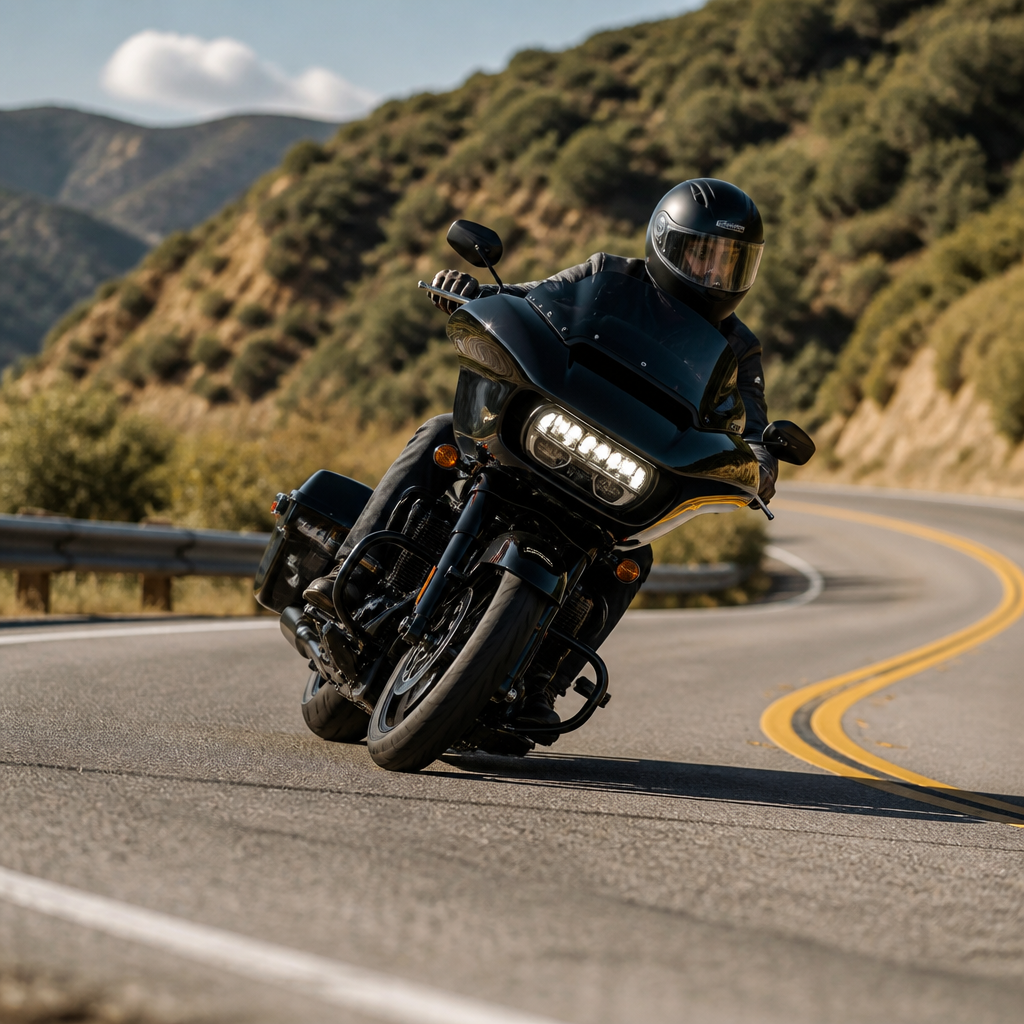
Cornering ABS uses an inertial measurement unit, or IMU, to monitor lean angle, pitch, roll rate, yaw, and acceleration. Wheel-speed sensors still do the classic ABS job of detecting impending lockup, but the IMU adds context the older systems lacked. Instead of asking only whether the wheel is slowing too quickly, the controller asks how much grip is likely available given the bike’s lean angle and motion. On a 2026 Harley-Davidson equipped with Cornering-Enhanced ABS 7, the control unit modulates brake pressure to keep tires rotating and maintain a usable slip ratio while preserving directional stability. That helps the rider slow down in a curve without instantly standing the bike up or losing the front end.
The practical benefit is simple: panic braking in a corner becomes more manageable. It does not repeal physics. If a rider enters a decreasing-radius turn much too fast on cold tires over diesel spill, no software can guarantee recovery. What the system can do is reduce the chance that a sudden handful of front brake becomes an immediate washout. Harley’s implementation typically works alongside linked or partially linked braking strategies, traction control, drag-torque slip control, and vehicle hold features depending on model family. When tuned well, the rider barely notices intervention beyond a subtle pulsing at the lever or pedal and a motorcycle that stays composed instead of turning chaotic.
The “7” in Cornering-Enhanced ABS 7 signals an evolved calibration generation rather than a marketing flourish. Successive generations generally improve processor speed, sensor fusion, hydraulic response, and integration with ride modes. That matters on Harley models because the company sells everything from long-wheelbase baggers to high-center-of-gravity adventure bikes. A useful safety suite has to respect those different mass distributions, tire profiles, wheel sizes, and suspension travel ranges. A Pan America on a rough downhill switchback and a Road Glide on wet interstate concrete need different intervention thresholds, even if the underlying objective is the same.
How the Safety Suite Fits Harley-Davidson’s Technical Evolution
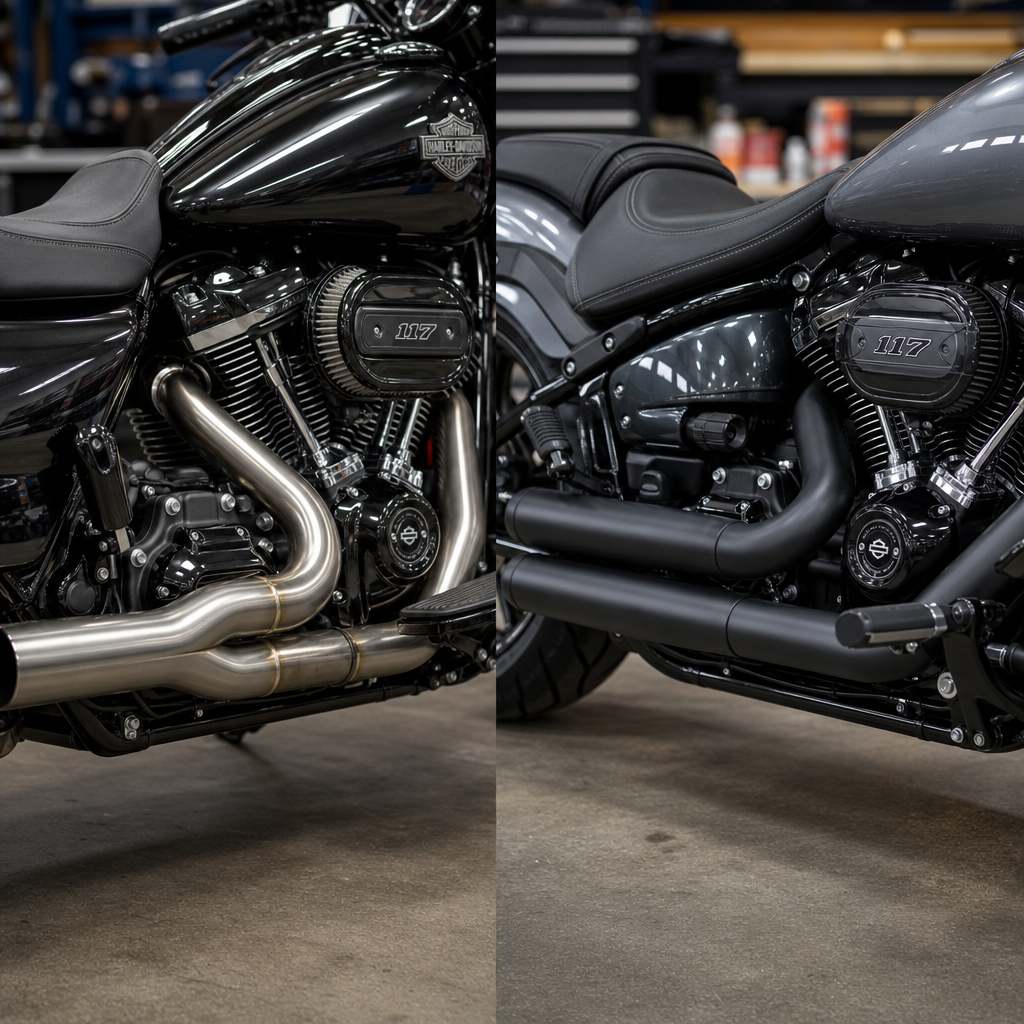
To understand why this system deserves a hub article, look at Harley-Davidson’s engine and chassis history. Evolution, or Evo, represents the durable, air-cooled foundation that helped restore the company’s reputation for reliability beginning in the 1980s. Twin Cam brought higher output and more emissions-era complexity, plus familiar debates over cam chain tensioners, heat, and vibration control. Milwaukee-Eight modernized the big-twin formula with four-valve heads, improved breathing, dual spark plugs, cleaner combustion, and refined balance strategies. Revolution Max broke from tradition with liquid cooling, overhead cams, variable valve timing, and a stressed-member design philosophy.
Each engine family shaped the electronics around it. Evo motorcycles were fundamentally analog machines. Their braking systems, where ABS existed at all in later years, were comparatively isolated from engine management. Twin Cam models introduced more electronic coordination but still carried architecture rooted in earlier expectations about rider input and chassis behavior. Milwaukee-Eight touring and CVO platforms accelerated the move toward integrated rider aids because their performance, curb weight, and customer use cases demanded it. RevMax models were conceived from the start as software-defined motorcycles in a way older Harleys never were. That is why Cornering-Enhanced ABS 7 is best understood not as a single feature, but as the result of decades of platform development across Harley-Davidson technical deep-dives.
For riders exploring this Harley-Davidson subtopic, the key insight is that engine generation influences safety performance indirectly. Power delivery, engine braking, throttle mapping, crankshaft inertia, and chassis packaging all affect how the safety suite must be tuned. A loping air-cooled cruiser with a low seat, limited cornering clearance, and strong rear-biased weight transfer behaves differently under trail braking than a tall ADV bike with semi-active suspension. When Harley updates its software, sensors, or brake hardware, it is responding to those platform realities, not just adding features to a brochure.
Milwaukee-Eight: Where Safety Electronics Became Core Harley Engineering
The Milwaukee-Eight, introduced for 2017 touring models and later expanded across Softail and CVO applications, is the engine family most closely associated with Harley-Davidson’s mature electronic safety approach. Its four-valve cylinder heads improved volumetric efficiency, while dual spark plugs supported more complete combustion. The result was stronger low-end torque and better thermal management than many Twin Cam predecessors. From a safety perspective, smoother torque delivery gives traction-control and cornering-brake strategies a cleaner signal to work with. Abrupt fueling transitions make intervention harder. Predictable torque lets software trim force precisely.
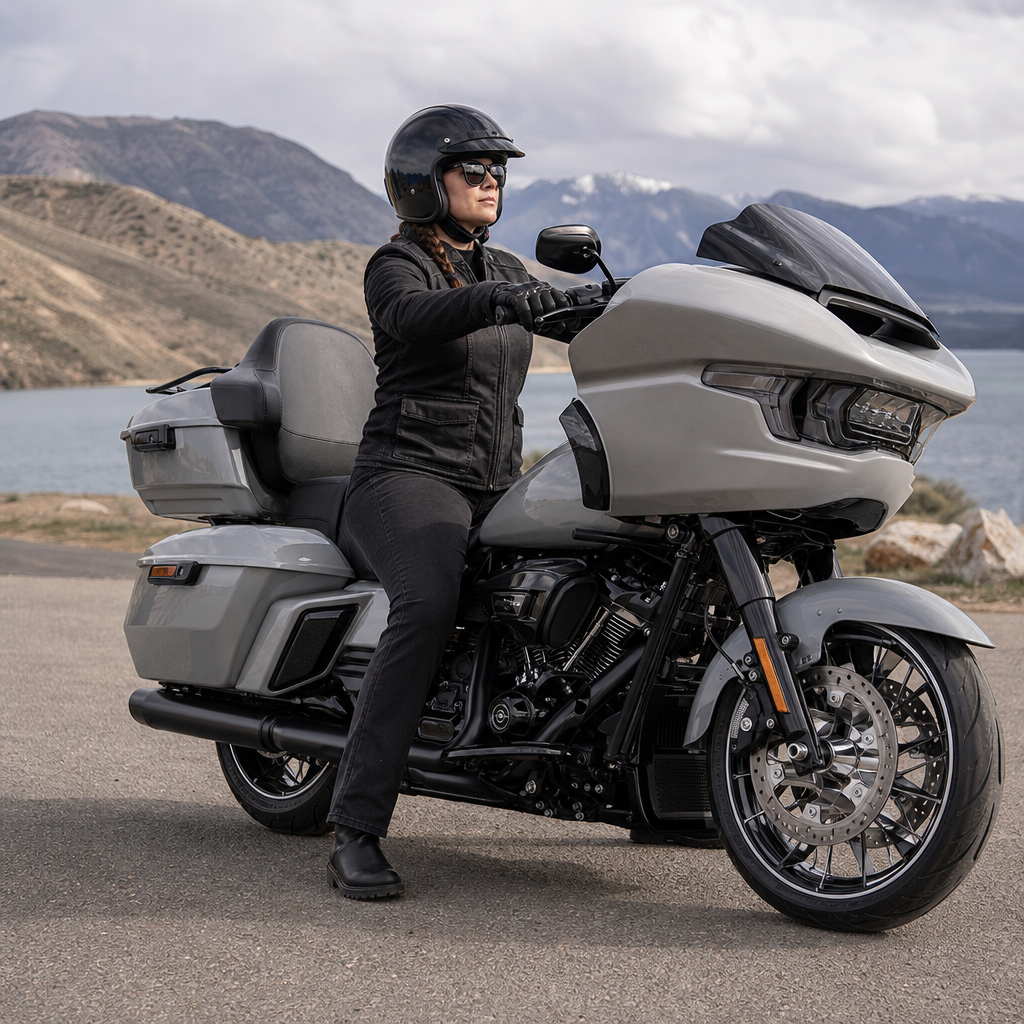
On M8 touring motorcycles such as the Street Glide, Road Glide, Road King Special, and Ultra variants, Harley could pair substantial braking hardware with cornering-aware control logic because the platform’s ride-by-wire system, CAN-based electronics, and premium trim expectations justified the integration. In practice, the system benefits the exact situations touring riders encounter: descending mountain passes with luggage, braking on wet painted lane markings, or adjusting speed mid-corner when traffic compresses unexpectedly. These are not edge cases. They are common scenarios on long-distance rides, especially for two-up touring where weight transfer becomes more dramatic.
Another reason the M8 platform matters is scale. Because Milwaukee-Eight spans mainstream and premium Harley-Davidson models, it normalizes advanced safety features for a wider rider base. That influences the rest of the lineup and makes this hub relevant beyond one motorcycle. If you are reading related articles on M8 cylinder-head flow, oil cooling, cam timing, or intake tuning, remember that engine upgrades can alter how the safety suite feels. More engine braking from cam changes or recalibration, for example, can affect rear-wheel behavior on aggressive downshifts. Well-developed drag-torque slip control compensates for that, but poorly integrated aftermarket tuning can undermine factory smoothness.
Twin Cam and Evo: What Older Platforms Teach About Modern Safety
Twin Cam and Evolution motorcycles remain central to Harley-Davidson ownership because they are repairable, charismatic, and deeply supported by the aftermarket. They also show how much rider safety technology has advanced. On many Evo and early Twin Cam bikes, braking performance depended far more on rider finesse, tire quality, and maintenance condition than on electronics. A soft front hose, glazed pads, old fork oil, or squared-off tires could transform a manageable motorcycle into one that felt vague under pressure. Riders learned to brake upright before turning, modulate carefully in the wet, and treat mid-corner corrections as high-risk moves.
That old-school skill set still matters. Cornering-Enhanced ABS 7 is a backstop, not a substitute for proper technique. Yet anyone moving from an Evo Dyna or Twin Cam Electra Glide to a 2026 machine will immediately notice the difference in stability and confidence. The comparison is especially stark on inconsistent pavement. Where an older bike might chatter, stand up, or ask the rider to release brake pressure suddenly, the newer system keeps the chassis calmer. This does not mean an older Harley-Davidson is unsafe. It means the margin for error is narrower, and the rider supplies more of the stability management that software now assists.
| Engine family | Typical cooling and valvetrain | Electronic integration level | Safety suite implications |
|---|---|---|---|
| Evolution | Air-cooled, pushrod, two valves per cylinder | Low to moderate | Relies heavily on rider technique, tire condition, and brake maintenance |
| Twin Cam | Air or twin-cooled, pushrod, two valves per cylinder | Moderate | Some later ABS support, but less lean-sensitive intervention and less integrated control |
| Milwaukee-Eight | Air, oil, or liquid-assisted cooling, pushrod, four valves per cylinder | High | Strong platform for cornering ABS, traction control, ride modes, and linked systems |
| Revolution Max | Liquid-cooled, DOHC, four valves per cylinder, VVT | Very high | Designed around IMU-based intervention, advanced mapping, and multi-surface adaptability |
For owners of older Harleys, the practical takeaway is not that they must upgrade immediately. It is that setup matters more when electronics are limited. Modern radial tires, stainless brake lines, fresh suspension components, and precise steering-head adjustment can close part of the confidence gap. Still, no retrofit duplicates the deep integration of a current IMU-based system because the motorcycle’s sensors, brake hydraulics, ECU logic, and ride-by-wire calibration were designed together on newer platforms.
Revolution Max: The Best Lens for Understanding the 2026 System
Revolution Max, often shortened to RevMax, is Harley-Davidson’s most technically ambitious production engine family and the clearest expression of where the Rider Safety Suite is heading. Used in the Pan America and Sportster S, the 60-degree liquid-cooled V-twin employs dual overhead camshafts, hydraulic lash adjustment, and variable valve timing. It also serves as a stressed chassis member, reducing frame mass and centralizing loads. Those decisions do more than improve performance. They create a platform where electronic intervention can be sharper, faster, and more transparent because the base motorcycle is inherently more rigid, sensor-rich, and software-driven.
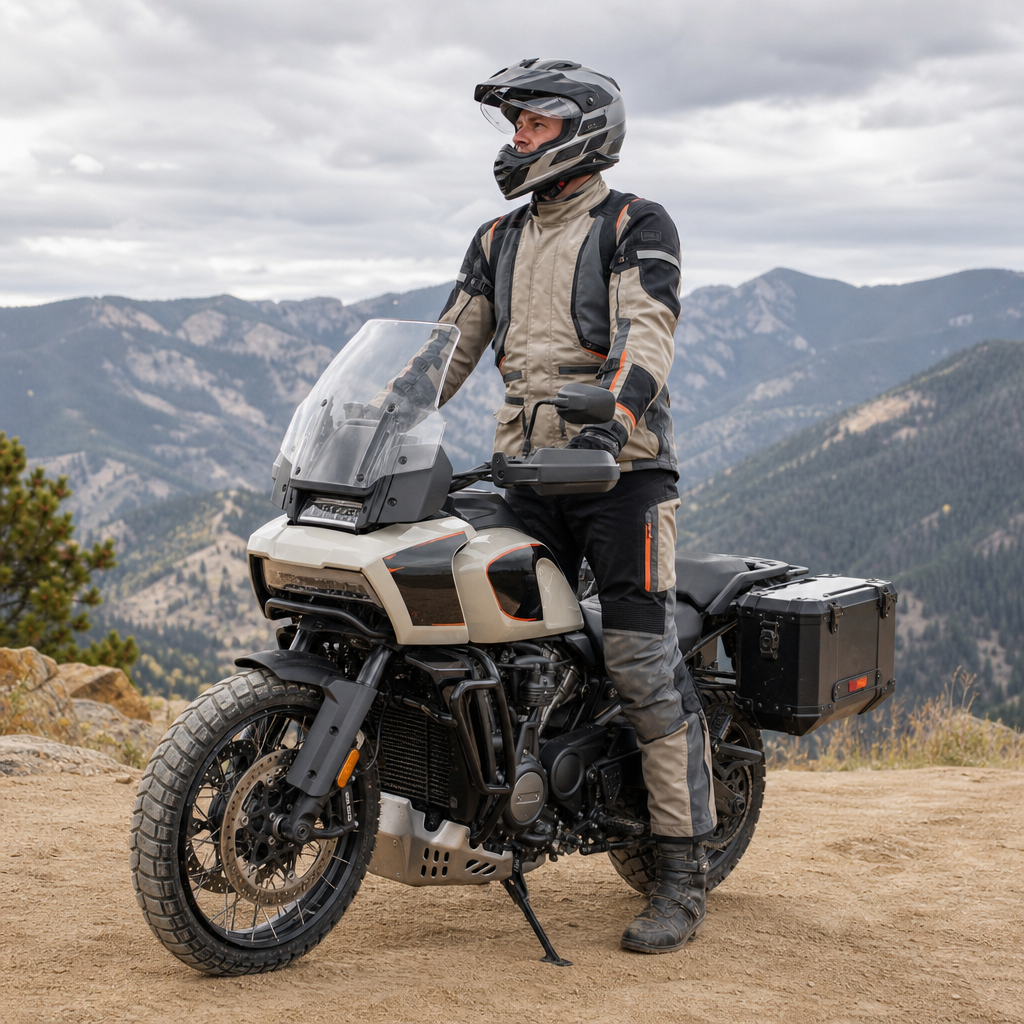
On the Pan America, cornering ABS has to cope with asphalt, gravel, elevation changes, and suspension movement that would be unusual on a touring bike. Harley’s adaptive ride-height option on some versions further illustrates how interconnected these systems have become. Chassis attitude, wheel travel, brake pressure, throttle response, and ride mode selection all influence what the rider experiences during a sudden stop in a bend. When the system is calibrated correctly, the motorcycle feels intelligent rather than intrusive. That is the benchmark for 2026: intervention that preserves rider confidence without numbing feedback.
The Sportster S presents a different challenge. It is shorter, more aggressive, and tuned around explosive torque. Here, Cornering-Enhanced ABS 7 must manage strong deceleration forces and a geometry profile that invites spirited road riding. If you are comparing Harley-Davidson technical deep-dives, RevMax models show why old assumptions about Harleys being simple air-cooled cruisers no longer hold. They are now part of the same safety and software conversation as European performance and adventure bikes, and that shift affects buyer expectations across the whole lineup.
What Riders Should Know Before Trusting the System
Trust in a safety suite comes from understanding its boundaries. Cornering-Enhanced ABS 7 works best with correct tire pressures, quality rubber, matched tire types, and suspension in good condition. Worn cupped fronts, overloaded luggage, or a shock with inadequate damping can reduce the system’s effectiveness because the available grip and chassis control have already been compromised. Brake fluid condition also matters. Even the best modulation algorithm cannot fix boiling fluid or contaminated pads. Harley-Davidson owners who actually use these motorcycles for distance or varied weather should treat maintenance as part of the electronics package.
Riders should also expect some model-specific character. A Road Glide may feel conservative and planted under intervention, while a Pan America may allow more dynamic pitch and surface adaptation. That is not inconsistency; it is calibration matched to purpose. In training sessions and test rides, I advise riders to familiarize themselves with ABS behavior in controlled straight-line stops first, then build confidence gradually in real corners on public roads with generous margins. The system is there for surprises, not for proving bravery. Riders who deliberately overload entry speed because they believe software will save them are misusing the technology.
The smartest next step is to read the model-specific technical articles linked under this Harley-Davidson hub, compare how M8, Twin Cam, Evo, and RevMax platforms handle braking and stability, and evaluate your own bike setup with the same seriousness you give horsepower numbers. Cornering-Enhanced ABS 7 is valuable because it expands your safety margin in the moments that matter most. Understand it, maintain the motorcycle properly, and use that added margin to ride smoother, farther, and with better judgment on every road.
Frequently Asked Questions
What is Cornering-Enhanced ABS 7 in the 2026 H-D Rider Safety Suite, and how is it different from conventional ABS?
Cornering-Enhanced ABS 7 is Harley-Davidson’s advanced anti-lock braking system designed to help the motorcycle maintain more predictable braking behavior not only in straight-line stops, but also while the bike is leaned over in a corner. Conventional ABS mainly monitors wheel-speed differences to detect when a wheel is about to lock under braking. That works well in upright, straight-line situations, but real-world riding often involves trail braking into turns, adjusting speed mid-corner, or reacting to changing pavement while leaned over. Cornering-Enhanced ABS 7 adds another layer of intelligence by using sensor inputs that track lean angle, yaw, pitch, and other dynamic movements of the motorcycle, then adjusting brake pressure with that context in mind.
In practical terms, that means the system is not simply asking, “Is the wheel about to lock?” It is also asking, “What is the bike doing right now, and how much braking force is realistic for this exact cornering condition?” By combining wheel-speed data with inertial measurement information and hydraulic brake modulation, the system can better manage available traction during a turn. It does not eliminate the physics of cornering, and it does not create unlimited grip, but it can reduce the chance that abrupt brake input leads to a loss of composure. That is a major difference from older ABS designs, which were far less aware of chassis attitude and lean-sensitive stability demands.
Within the broader 2026 H-D Rider Safety Suite, Cornering-Enhanced ABS 7 is important because it represents a fully integrated approach rather than a stand-alone feature. Harley-Davidson positions the suite as a coordinated network of electronic controls governing braking, traction, torque management, and overall vehicle stability. So Cornering-Enhanced ABS 7 should be understood as part of a larger engineering strategy that connects chassis behavior, braking hydraulics, and engine response across multiple Harley-Davidson platforms, including Milwaukee-Eight, Twin Cam, Evolution, and Revolution Max applications where applicable.
How does the Rider Safety Suite use sensors and electronic controls to improve braking and stability while cornering?
The Rider Safety Suite works by bringing together several layers of hardware and software that continuously monitor how the motorcycle is moving and how the rider is interacting with it. At the core are wheel-speed sensors, brake-pressure controls, and an inertial measurement unit that can detect motion along multiple axes. Those sensors allow the motorcycle to understand whether it is upright or leaned over, whether it is accelerating or decelerating, whether it is pitching forward under braking, and whether one wheel is behaving differently from the other. That data is processed in real time by the control system, which then commands hydraulic and engine-management responses intended to preserve stability.
When the rider applies the brakes mid-corner, for example, the system does not just react to the possibility of wheel lock. It also evaluates how much lean angle is present and how that lean affects the tire’s available grip. Tires have a finite traction budget, and in a corner some of that grip is already being used for turning. The electronic control strategy accounts for that by moderating brake pressure in a more nuanced way than a traditional anti-lock setup. Instead of waiting for a dramatic lock event, the system can intervene earlier and more precisely to keep the contact patch working within a safer operating window.
The same principle extends beyond braking. Because the suite links braking, traction, and torque-related systems, it can coordinate with engine behavior as well. If the motorcycle detects conditions where abrupt power delivery, deceleration torque, or excessive rear-wheel slip could upset the chassis, the electronics can make corrections through throttle management, spark, fueling, or related control methods depending on the platform. This integrated control philosophy is why Harley-Davidson presents the Rider Safety Suite as a package of rider-assistance technologies rather than a list of unrelated features. The value comes from the systems communicating with each other to support stability during complex riding scenarios, especially when road conditions and rider inputs are changing quickly.
Does Cornering-Enhanced ABS 7 make riding in corners safer on all Harley-Davidson engine platforms, including Milwaukee-Eight, Twin Cam, Evolution, and Revolution Max?
In principle, yes: the safety benefit comes from the control architecture, not from any one engine family alone. Cornering-Enhanced ABS 7 is part of a broader conversation about how Harley-Davidson integrates modern electronics with the motorcycle’s chassis, brake system, and powertrain behavior. Whether the bike is built around a Milwaukee-Eight, Twin Cam, Evolution, or Revolution Max engine, the key idea is that braking and stability systems work best when they are matched to the machine’s geometry, weight transfer characteristics, tire behavior, and torque delivery profile. Different engine platforms may produce power in different ways, but the need for stable braking and predictable chassis responses exists across all of them.
That said, the exact riding feel and system calibration can vary significantly by model. A heavyweight touring bike with a Milwaukee-Eight engine will not respond exactly like a lighter performance-oriented model with a Revolution Max engine. Similarly, a motorcycle derived from older Twin Cam or Evolution architecture may have different packaging constraints, suspension setups, and brake system characteristics. Harley-Davidson’s engineering challenge is to tune the intervention strategy so it complements each motorcycle’s intended use. The best electronic rider aids are not one-size-fits-all; they are calibrated to the machine’s mass distribution, wheelbase, steering geometry, suspension behavior, and tire specification.
So while the underlying goal is consistent across platforms, riders should think of Cornering-Enhanced ABS 7 as a model-specific implementation of a common safety philosophy. It is there to help preserve control during demanding braking situations, especially while leaned over, but it will still feel native to the motorcycle it is installed on. The system is not replacing the personality of the bike; it is adding a protective layer of intelligence that works within that motorcycle’s unique dynamic envelope. That is why the 2026 H-D Rider Safety Suite matters from an engineering standpoint: it connects classic and modern Harley-Davidson powertrains to a shared electronic safety framework without pretending every model behaves the same way.
Can Cornering-Enhanced ABS 7 override rider skill, poor technique, or the limits of tire grip?
No. Cornering-Enhanced ABS 7 is a sophisticated aid, but it is not a substitute for rider judgment, sound technique, or basic physics. The system can help reduce the risk of wheel lock and improve braking control when the motorcycle is leaned over, but it cannot create traction where none exists. If the road surface is dirty, wet, polished, broken, or otherwise low-grip, the tires still have strict limits. Likewise, if a rider enters a corner too fast, applies abrupt control inputs, or uses poor line selection, the electronics may help manage the situation but cannot guarantee recovery.
This is an important point because advanced rider-assistance systems are most effective when the rider treats them as support tools rather than invincibility features. In a corner, the tire is already using grip to generate lateral force for turning. Heavy braking asks the same tire to provide longitudinal force at the same time. Cornering-Enhanced ABS 7 helps balance those competing demands by modulating brake pressure more intelligently, but it still operates within the traction available at the contact patch. If that traction is exceeded because of speed, surface conditions, extreme lean, or sudden panic input, there are hard limits no software can fully overcome.
The best way to think about the system is that it narrows the margin for error and improves the motorcycle’s chances of staying composed during imperfect rider inputs. That is valuable, especially in emergency or surprise situations, but it does not remove the need for training, smooth braking technique, proper tire maintenance, and realistic corner-entry speed. Harley-Davidson’s Rider Safety Suite is part of modern motorcycle engineering because it adds layered protection, not because it makes skill irrelevant. Riders who understand that distinction will get the most benefit from Cornering-Enhanced ABS 7 and the surrounding suite of stability technologies.
Why is Cornering-Enhanced ABS 7 considered central to Harley-Davidson’s modern engineering story for 2026?
It is central because it illustrates how Harley-Davidson is framing motorcycle performance in 2026: not just as engine output or styling identity, but as the coordinated behavior of the entire machine under real riding conditions. Cornering-Enhanced ABS 7 sits at the intersection of multiple disciplines. It depends on precise sensor data, rapid electronic processing, hydraulic brake control, tire-road interaction, suspension movement, and the motorcycle’s overall chassis geometry. It also connects to powertrain behavior because engine torque and deceleration characteristics influence stability, especially when riders are transitioning on and off the throttle in corners. That makes the feature more than a braking upgrade; it becomes a visible expression of system-level engineering.
For Harley-Davidson, this matters strategically as well as technically. The brand has long been associated with strong mechanical identity through engines like the Evolution, Twin Cam, Milwaukee-Eight, and now Revolution Max. By placing the Rider Safety Suite at the center of the discussion, Harley-Davidson is showing that modern engineering leadership includes electronics that shape how those engines interact with the road. The story is no longer only about displacement, torque curves, or cooling strategy. It is also about how a motorcycle senses motion, manages risk, and supports