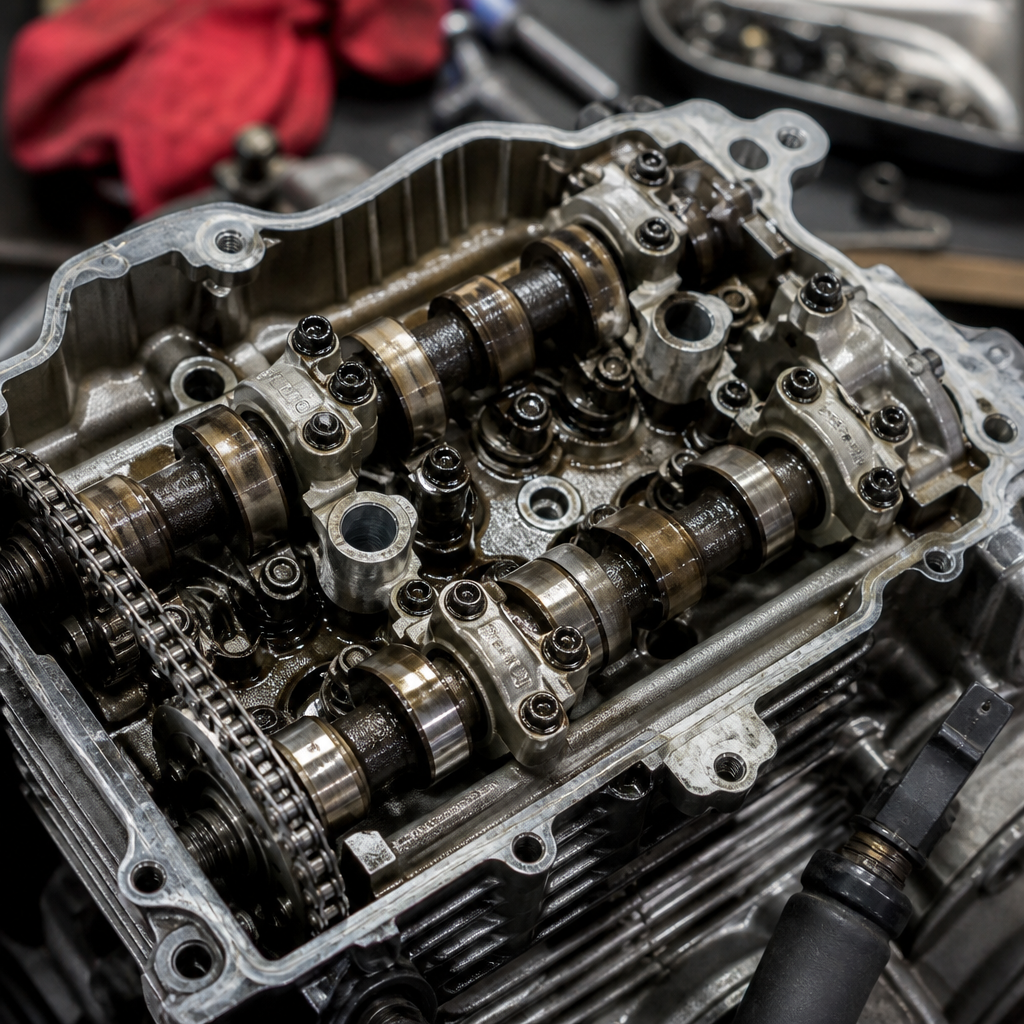
The RevMax 1250 brought liquid cooling, variable valve timing, and modern performance to Harley-Davidson, but one maintenance truth still surprises many owners in 2026: valve clearance remains a mechanical setting that wears, drifts, and occasionally needs manual shim changes. In simple terms, a valve adjustment restores the tiny gap between cam-driven valvetrain parts so the intake and exhaust valves open fully, close completely, and survive heat cycles without damage. Riders shopping Pan America service intervals, comparing Revolution Max engines with Milwaukee-Eight, Twin Cam, or Evo platforms, or planning long-distance ownership need to understand why this matters. This hub article explains the issue in plain language, then connects it to the broader Harley-Davidson technical deep-dives covering M8 hydraulic lifters, Twin Cam cam chest wear points, Evo simplicity, and the RevMax’s tighter tolerances. I have worked through valve inspections on high-mile adventure bikes and high-output street engines, and the pattern is consistent: advanced electronics do not eliminate mechanical clearance checks. They make precision more important.
Harley-Davidson’s RevMax 1250 uses dual overhead camshafts and shim-under-bucket valve actuation rather than hydraulic lash compensation. That design supports higher engine speeds, stable valve control, and compact packaging, especially under the demanding thermal loads of an adventure bike ridden in traffic, mud, cold rain, and desert heat. Yet the tradeoff is scheduled inspection and, when measurements move out of specification, manual shim selection. Riders often ask the same direct questions. Do valves on the RevMax self-adjust? No. Can they tighten over time? Yes, especially as valve seats and faces wear together. Is a noisy valve always bad? Not necessarily; on shimmed valvetrains, tight valves are often quieter and more dangerous than slightly loose ones. Can ignoring the interval hurt starting, idle quality, fuel economy, and eventually burn a valve? Absolutely. Understanding these basics helps owners make better maintenance decisions and avoid treating the engine like a hydraulic-lifter Big Twin when it is fundamentally a different machine.
This page serves as the central resource for Technical Deep-Dives: M8, Twin Cam, Evo, and RevMax. The common thread across all four families is valvetrain management, but the hardware and service logic differ sharply. Milwaukee-Eight engines generally use hydraulic lifters that automatically take up lash, shifting attention toward oil quality, lifter health, and cam timing components rather than periodic shim swaps. Twin Cam engines also rely on hydraulic lifters, but introduce their own priorities, including cam chain tensioner evolution, oiling updates, and bearing selection. Evolution motors remain the benchmark for accessible air-cooled service, with simpler layouts and broad parts familiarity. RevMax, by contrast, follows modern sport and adventure engineering rules: higher specific output, overhead cams, tighter manufacturing windows, and more exacting inspection procedures. Riders who understand these distinctions spend money where it counts, ask better questions at the service counter, and maintain performance instead of chasing myths spread across forums.
Why the RevMax 1250 still needs manual shims
Manual shims exist because the RevMax valvetrain is designed for accuracy at high rpm, not automatic lash compensation. In a shim-under-bucket system, the cam lobe acts on a bucket tappet, and a calibrated shim establishes valve clearance. As miles accumulate, the valve face repeatedly contacts the seat, microscopic material transfer occurs, and clearances usually decrease. Heat, sustained highway running, dust ingestion, and repeated cold starts can accelerate this trend. Variable valve timing does not change that physics; it alters cam phasing, not lash. The result is simple: every inspection is a measurement exercise, and any valve outside specification requires replacing the shim with a different thickness to restore the correct gap.
The reason this matters more than many riders expect is that tight valves often give subtle symptoms before serious failure. On bikes I have seen in service, the earliest signs may be harder hot starts, a faintly unstable idle, or compression that looks borderline rather than catastrophic. Exhaust valves are especially vulnerable because they run hotter and have less time to shed heat into the seat if clearance disappears. Once a valve cannot fully close, combustion gases leak past the sealing surface and temperatures spike. That can burn the valve edge, damage the seat, and turn a routine inspection into a cylinder-head repair. Manual shims are not old-fashioned. They are the price of precise control in a high-performance top end.
How RevMax compares with M8, Twin Cam, and Evo valvetrains
To understand the service burden, compare the RevMax with Harley’s other major engine families. Milwaukee-Eight and Twin Cam platforms use pushrods and hydraulic lifters. Under normal conditions, those lifters maintain zero lash by using engine oil pressure and internal spring preload. Owners still need to care about oil viscosity, lifter bleed-down, collapsed lifters, pushrod adjustment on modified builds, and cam chest wear, but they do not perform scheduled shim calculations. The Evolution engine follows a similar hydraulic-lifter logic, though with an older architecture and lower performance ceiling. That is one reason Evo and Big Twin riders often assume all Harleys “self-adjust” their valves. The RevMax breaks that expectation completely.
The deeper distinction is engine mission. Evo was built for durability and serviceability, Twin Cam for more displacement and emissions-era refinement, Milwaukee-Eight for smoother combustion and updated packaging, and RevMax for competitive power density. A Pan America 1250 Special needs strong top-end breathing, broad rpm capability, and stable valve timing under conditions where an air-cooled pushrod engine would face different compromises. Dual overhead cams and shim-under-bucket followers are standard solutions across high-output motorcycles for a reason: they reduce valvetrain mass and support aggressive cam profiles. The maintenance workload is not a flaw. It is a design choice aligned with performance, emissions control, and long-term valve stability when serviced correctly.
| Engine family | Valvetrain type | Valve lash management | Main service focus |
|---|---|---|---|
| RevMax 1250 | DOHC, four valves per cylinder | Manual shim-under-bucket | Measured clearance inspections, shim selection, cam timing accuracy |
| Milwaukee-Eight | Pushrod, four valves per cylinder | Hydraulic lifters | Oil health, lifter condition, cam chest components |
| Twin Cam | Pushrod, two valves per cylinder | Hydraulic lifters | Tensioners, bearings, oiling, cam chest wear |
| Evolution | Pushrod, two valves per cylinder | Hydraulic lifters | Routine oil service, top-end sealing, simple mechanical upkeep |
What a valve inspection on the RevMax actually involves
A proper RevMax 1250 valve inspection is far more than listening for noise. The technician must access the top end, position the engine precisely, measure each valve with feeler gauges at the correct cam lobe orientation, and compare results against factory specifications. If any measurement falls outside range, camshaft removal and shim calculation follow. That means recording existing clearance, measuring or reading the installed shim thickness, then selecting a replacement shim that mathematically returns the valve to target. Accuracy matters because even a 0.01 mm change can determine whether a valve sits in the safe middle of spec or near the edge.
On modern Harley-Davidson service benches, this work also intersects with digital documentation and model-specific procedures. Timing marks, torque sequences, sealant choices, and one-time-use fasteners must be handled exactly as the service manual states. A careful technician will inspect cam lobes, buckets, chain guides, and any evidence of abnormal wear while the engine is open. On adventure bikes, I also watch for dust-related intake tract issues and owner modifications that affect heat or fueling. A valve check becomes a health audit of the entire top end, which is why skipping it can hide small problems until they become expensive.
Common myths riders still believe in 2026
The biggest myth is that advanced motorcycles no longer need manual valve adjustments because sensors and software will compensate. Sensors can correct fueling and ignition within limits, but they cannot restore physical valve clearance. Another myth says that if the engine runs fine, the valves must be in spec. That is false. Many tight valves produce acceptable performance until damage has already begun. A third myth holds that only race bikes need shim checks. In reality, adventure and sport-touring use can be harder on clearances because of long heat cycles, dirty air, sustained load, and irregular owner maintenance. Mileage alone never tells the whole story.
There is also confusion around sound. Riders trained on pushrod engines may assume any tapping means an urgent valvetrain problem. On a shimmed overhead-cam engine, slight mechanical ticking can be normal, while a dangerously tight valve may be nearly silent. Another misunderstanding concerns dealer service costs. Owners sometimes view the inspection interval as arbitrary, but the labor reflects real access time and precision measurement. If no shim change is needed, the service still delivered value by establishing a baseline. If a shim change is required, catching it early is dramatically cheaper than replacing burnt valves, seats, or damaged head components later.
How this hub connects the Harley-Davidson technical deep-dives
As the hub for Technical Deep-Dives: M8, Twin Cam, Evo, and RevMax, this article helps readers navigate the right maintenance mindset for each engine. If you are researching Milwaukee-Eight reliability, the next logical topics are hydraulic lifter behavior, oil aeration, camshaft upgrades, and how four-valve heads change combustion efficiency. If your interest is Twin Cam, focus on spring versus hydraulic cam chain tensioners, inner cam bearings, oil pump alignment, and the service history that separates healthy high-mile engines from neglected ones. If you own an Evolution model, the deep dives should center on rocker box leaks, charging system health, breather routing, and practical top-end refresh intervals.
For RevMax readers, the surrounding articles should go further into variable valve timing operation, cooling-system demands, starter and charging loads during repeated short-trip use, and the service strategy differences between a Pan America used for commuting versus one ridden off-road and fully loaded. The point of a hub page is not to flatten every engine into the same checklist. It is to map the technical landscape so owners understand where each platform asks for attention. That clarity improves troubleshooting, budgeting, and upgrade planning, especially for riders moving from legacy Harley-Davidson twins into the more mechanically exacting RevMax family.
Best practices for owners choosing service, tools, and intervals
If you plan to keep a RevMax 1250 long term, treat valve inspections as scheduled risk management, not optional maintenance. Use the factory service manual, confirm the latest Harley-Davidson technical service information, and keep a written log of every measured clearance, even when all valves remain in spec. Trend data matters. A valve that moves steadily toward minimum clearance deserves closer watch at the next interval than one that has remained stable. Owners doing their own work need quality metric feeler gauges, a micrometer or accurate shim measurement method, proper torque tools, and absolute discipline about cleanliness and timing alignment.
Choosing who performs the work is just as important as choosing when. Ask whether the shop has direct RevMax experience, whether it records all before-and-after measurements, and whether it inspects related components while access is open. Good documentation protects resale value and helps future diagnosis. For riders comparing Harley-Davidson engine families, that is the final lesson from this hub: each platform rewards maintenance literacy in different ways. RevMax owners gain reliability by respecting manual shims, M8 and Twin Cam owners by understanding hydraulic systems and cam chest health, and Evo owners by preserving a simple design with consistent basics. Learn your engine’s logic, follow the schedule, and use this hub to guide your next deep dive into Harley-Davidson technical service.
Frequently Asked Questions
Why does the RevMax 1250 still need manual valve shim adjustments if it has such advanced engine technology?
The RevMax 1250 is a very modern engine, but advanced features like liquid cooling, dual overhead cams, and variable valve timing do not eliminate the basic mechanical reality of valve clearance. The valves, seats, cams, buckets, and shims are still hard parts moving against each other through thousands of heat cycles and millions of engine revolutions. Over time, those components wear and settle in, which changes the small clearance engineered into the valvetrain. That clearance is critical because it allows the valves to fully close as the engine expands with heat, while also ensuring the cams can open the valves accurately and consistently.
On the RevMax 1250, the system is not hydraulic or self-adjusting. Instead, it relies on measured clearances and specific shim thicknesses to keep everything within specification. If the gap tightens too much, valves may not fully seat, which can lead to hard starting, loss of compression, rough running, burned valves, and expensive top-end damage. If the gap becomes too loose, you may hear excess valvetrain noise, and valve timing and lift events can become less precise. In other words, modern design improves performance and durability, but it does not remove the need for periodic inspection and, when needed, manual shim replacement. That is why riders in 2026 still need to take valve service seriously on the RevMax platform.
What exactly happens during a RevMax 1250 valve adjustment service?
A proper valve adjustment on the RevMax 1250 begins with inspection, not immediate parts replacement. The technician removes the components necessary to access the top end of the engine, then measures the valve clearances with the engine at the correct temperature and the cam lobes positioned according to service procedure. Those measurements are compared to Harley-Davidson’s intake and exhaust clearance specifications. If all valves fall within spec, no shim change may be required, but the inspection still has value because it establishes a wear baseline for future maintenance.
If one or more valves are outside specification, the technician must determine the correct shim thickness to bring each affected valve back into range. On a shim-under-bucket style setup, that usually means careful disassembly of camshaft-related components, documenting timing positions, removing the bucket or accessing the shim, measuring the existing shim, and installing a different one with the calculated thickness. After reassembly, clearances are rechecked to confirm the correction is accurate. Because the RevMax 1250 uses sophisticated cam timing and a compact high-performance design, precision matters at every step. This is not a simple “turn a screw and lock it down” service. It is a measured, mechanical calibration process that restores correct valve operation, protects the engine, and helps preserve the performance characteristics riders expect from the Pan America and other RevMax-powered models.
How can a rider tell if the valves on a RevMax 1250 may be out of adjustment?
In many cases, a rider cannot reliably tell from feel alone, which is exactly why scheduled inspection matters. Valve clearance can drift gradually and silently, especially when the clearance is tightening rather than loosening. A bike may seem to run fairly normally while the valves are moving closer to the edge of tolerance. By the time obvious symptoms show up, the problem may already be affecting engine efficiency or long-term durability. That is one reason experienced technicians caution owners not to wait for dramatic warning signs before checking clearances.
When symptoms do appear, they can include harder cold starts, rough idle, reduced power, inconsistent throttle response, misfires, increased mechanical noise, or a subtle sense that the engine no longer feels as crisp at higher rpm. Tight valves are often more dangerous than noisy loose ones because they can prevent full valve seating, allowing combustion heat to leak into the valve face instead of transferring properly into the seat. That can eventually burn valves or damage sealing surfaces. Riders who spend a lot of time in high-load conditions, hot climates, adventure touring environments, or frequent stop-and-go riding should be especially mindful. The safest approach is not to diagnose by ear, but to follow the inspection interval and let measured clearance numbers guide the decision.
Is valve adjustment on the RevMax 1250 a do-it-yourself job, or is it better left to a professional?
For a very skilled home mechanic with the correct tools, a factory service manual, a clean workspace, and experience working on shim-style overhead cam engines, it can be a do-it-yourself task. However, the RevMax 1250 is not an ideal first valve adjustment project. Access can be time-consuming, measurements must be exact, and any error involving cam timing, shim selection, torque procedures, or reassembly can create serious engine problems. This is especially important on an engine that combines high compression, modern cam control, and tight performance tolerances. A small mistake can turn a maintenance job into a very expensive repair.
Most owners are better served by having the inspection and any required shim changes done by a qualified technician familiar with the platform. A professional shop can document measurements, verify timing alignment, calculate correct shim sizes, and confirm the engine is reassembled to specification. That said, there is a middle ground for mechanically curious riders: learning the inspection schedule, understanding the symptoms, asking for the measured clearance values on your service invoice, and keeping records over time. Even if you do not do the work yourself, knowing what was measured and what was adjusted helps you make smarter maintenance decisions and evaluate the long-term health of your RevMax 1250.
Why is valve clearance service especially important for riders buying or owning a used Pan America or other RevMax 1250 model in 2026?
Used-bike buyers in 2026 often focus on mileage, accessories, software updates, and cosmetic condition, but valve maintenance history can be just as important as any of those items. The RevMax 1250 is a durable and well-engineered engine, yet it still depends on accurate valve clearances to maintain compression, power, fuel efficiency, and long-term reliability. If a previous owner skipped the inspection interval or ignored a needed shim adjustment, the bike may still run well enough to pass a casual test ride while hiding early valvetrain or valve-seat issues. That is why maintenance records matter so much on these machines.
For current owners, staying ahead of valve service protects both the engine and the bike’s value. For shoppers, proof of inspection or adjustment can be a strong sign that the motorcycle was cared for properly. If records are missing, it is wise to budget for a baseline inspection after purchase, especially on a machine with unknown service history or one used heavily for touring, off-pavement riding, or sustained high-speed travel. In practical terms, valve service is not just a maintenance line item. It is a key part of preserving the RevMax 1250’s performance and avoiding the kind of preventable wear that can turn a great adventure bike into a costly ownership experience. For 2026 riders comparing used examples, documented valve care is one of the clearest indicators of responsible ownership.