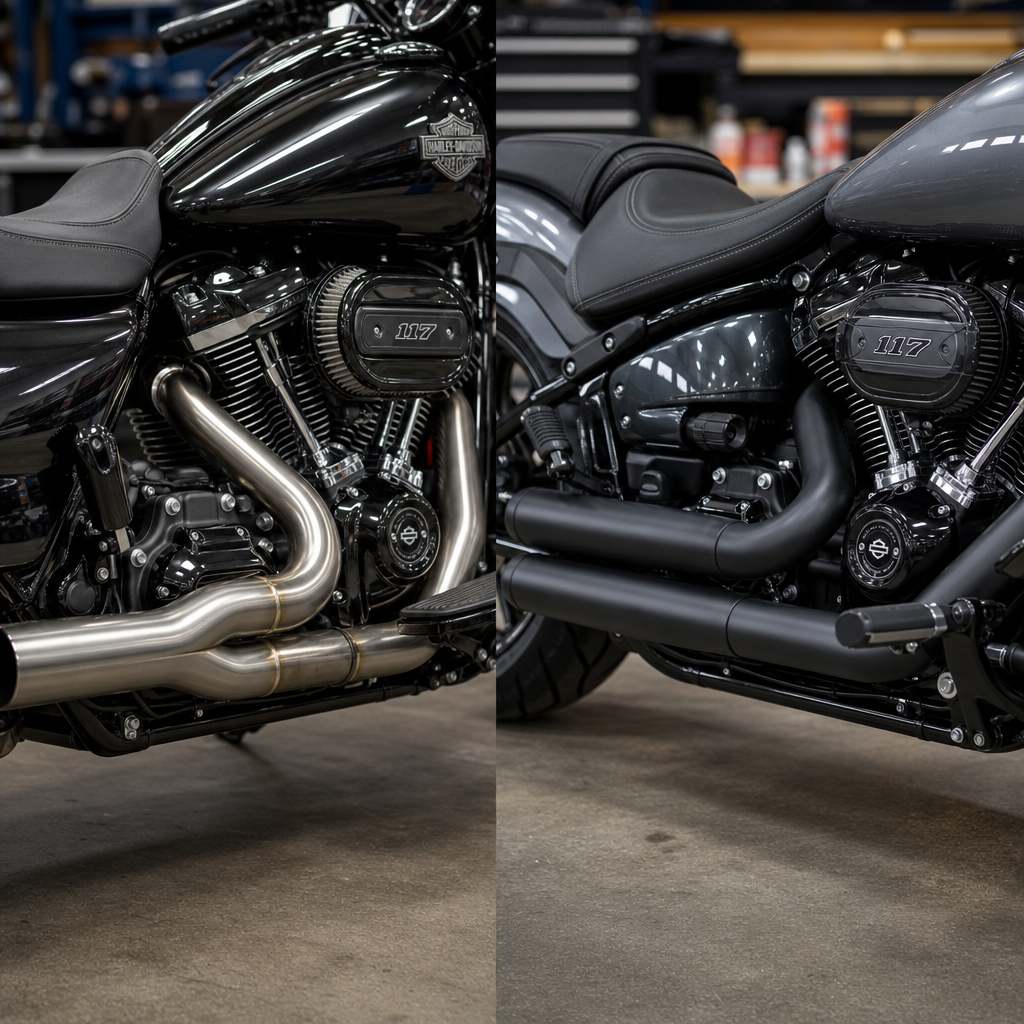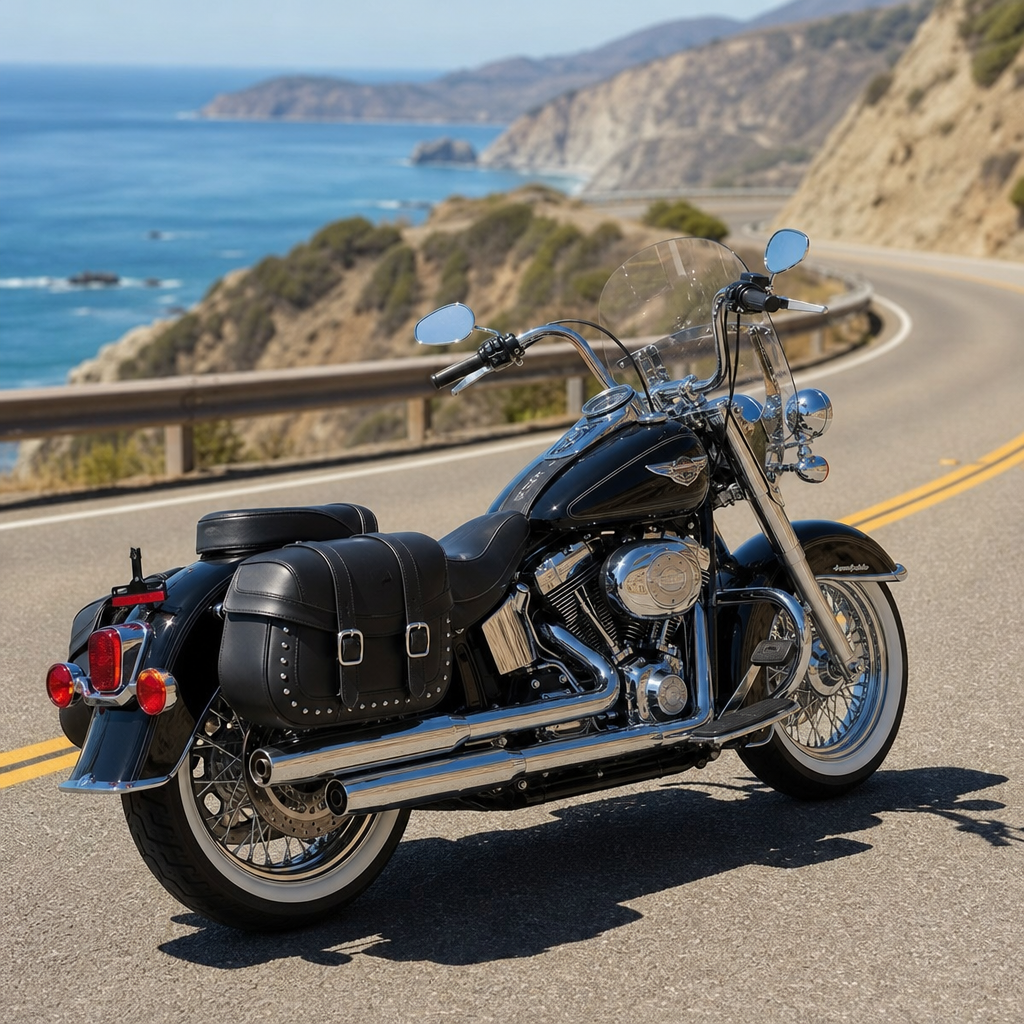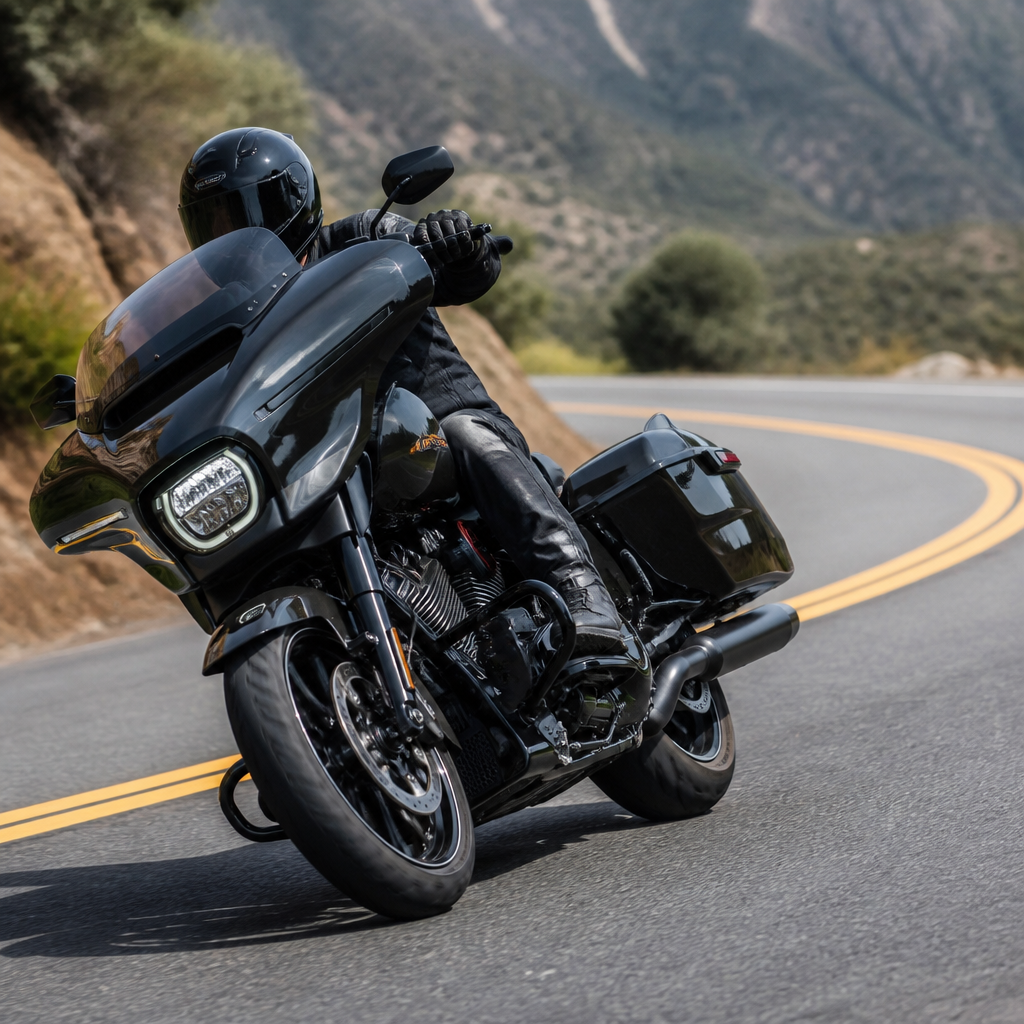
Drag torque slip control is the system that keeps a motorcycle stable when a rider snaps down through the gearbox at high rpm, and on the 2026 CVO it matters because modern Harley-Davidson performance has moved well beyond traditional big-twin expectations. In simple terms, drag torque is the reverse force created when engine braking tries to slow the rear wheel faster than available traction allows. Slip control is the strategy used to limit that mismatch. I have tuned and tested big-inch V-twins on street and track-oriented roads long enough to know that abrupt downshifts can unsettle even a heavy touring motorcycle, especially on cold pavement, downhill entries, or wet intersections. The 2026 CVO addresses that risk with a coordinated blend of slipper clutch behavior, engine management, throttle control, and traction-aware calibration.
This article is a technical hub for Harley-Davidson powertrain deep-dives, covering the Milwaukee-Eight, Twin Cam, Evolution, and Revolution Max families through the lens of downshift stability. That framing matters because each engine architecture creates engine braking differently. Cam timing, compression ratio, reciprocating mass, flywheel effect, throttle body strategy, and clutch design all influence how a Harley reacts when a rider closes the throttle and selects a lower gear. Riders researching M8 tuning, Twin Cam comparisons, Evo reliability, or RevMax electronics usually ask the same practical question: what actually happens between the tire contact patch and the crankshaft when rpm rises during a downshift? The answer sits at the intersection of mechanics and software, and understanding it helps riders choose parts, tuning methods, and riding techniques with fewer compromises.
For Harley-Davidson owners, this topic matters for three reasons. First, safety: smoother high-rpm downshifts reduce rear-wheel hop, chassis pitch, and corner-entry drama. Second, drivability: a well-managed bike feels more composed whether ridden aggressively or fully loaded with luggage and a passenger. Third, platform selection: the best calibration path differs between an air-cooled Evo, a cable-throttle Twin Cam, an electronically managed Milwaukee-Eight, and a high-tech RevMax. As a hub page, this guide explains the core engineering, then connects the behavior of these four major Harley-Davidson engine families so readers can understand where the 2026 CVO fits and why its control strategy represents a meaningful step.
What drag torque slip control does on the 2026 CVO
On the 2026 CVO, drag torque slip control manages the deceleration forces generated during aggressive downshifts so the rear tire stays within its traction envelope. When a rider closes the throttle and drops one or more gears, engine speed rises sharply. If the engine’s braking effect exceeds available grip, the rear wheel can momentarily decelerate too quickly, leading to chirping, hopping, weaving, or anti-lock braking system intervention. The CVO’s control logic monitors wheel speeds, throttle position, gear selection, engine rpm, clutch state, and in some configurations inertial data, then softens the event by adjusting torque delivery and clutch slip characteristics.
In practice, the rider experiences this as a cleaner corner entry. Instead of a harsh rear-end shake after a rushed downshift, the chassis settles. The system does not eliminate engine braking. It meters it. That distinction is important because experienced riders still want the stabilizing feel of deceleration from the engine, particularly on a large-displacement V-twin. Harley-Davidson’s calibration target is not to make the motorcycle feel numb. It is to preserve the direct, mechanical character of the bike while avoiding a traction spike the tire cannot absorb.
The system works best when combined with a slip-assist clutch. Under drive, the assist ramps increase clamp load so lever effort stays manageable. Under aggressive back-torque, the slipper function allows controlled clutch separation, preventing the rear wheel from forcing the engine to accelerate instantly. Electronic intervention complements that mechanical slip window by momentarily adjusting throttle opening or torque request. On a premium touring CVO, where weight, passenger load, and wheelbase all affect transfer under deceleration, that layered approach is more effective than relying on clutch hardware alone.
Why high-rpm downshifts upset big V-twins
Large-displacement Harley engines generate distinctive engine braking because they combine substantial piston area, meaningful compression, and strong pumping losses when the throttle closes. That reverse torque is part of the riding experience, but it can become disruptive. A high-rpm downshift increases the difference between current wheel speed and the engine speed demanded by the lower gear. If clutch engagement happens faster than the tire can accept the resulting deceleration load, the rear contact patch starts to slip.
Several factors amplify the effect. Heavy flywheels resist sudden rpm changes, while high compression increases braking force once the throttle closes. Final-drive ratios, gear spacing, and wheelbase determine how abruptly torque reaches the tire and how the chassis responds. Tire compound and temperature are equally important. A hot performance tire on clean asphalt can absorb far more back-torque than a cold touring tire on painted crosswalk lines.
Rider technique still matters. Rev matching reduces rpm mismatch before clutch engagement, but no rider matches perfectly every time, especially when carrying luggage or descending mountain roads. That is why manufacturers now engineer for the imperfect but realistic downshift. The 2026 CVO’s system is designed around those real inputs: hurried shifts, mixed surfaces, changing loads, and the strong engine braking characteristic that defines a Harley-Davidson feel.
How Harley-Davidson engine families differ under engine braking
The four major Harley-Davidson engine families covered in this technical hub behave differently during deceleration, and those differences shape how drag torque slip control should be understood. The Evolution engine is mechanically simple, air-cooled, and comparatively straightforward to tune, but it lacks the electronic oversight of modern platforms. Its behavior under downshift is mostly a product of gearing, clutch condition, carburetion or basic fuel injection, and rider inputs. A well-sorted Evo can feel predictable, yet it offers little automatic correction if the rear tire starts to skip.
Twin Cam engines introduced new performance potential, but many examples still rely on cable throttles and more limited electronic intervention than current touring models. Cam selection, compression changes, and tuning maps can dramatically alter decel feel. I have ridden Twin Cams with aggressive cam timing that freewheel more on closed throttle, and others with tighter combinations that produce pronounced engine braking. Neither is inherently better; the use case decides. Without integrated torque management, though, the margin for rushed downshifts is narrower.
Milwaukee-Eight engines, especially in current touring applications, are where Harley-Davidson’s road manners took a noticeable leap. Better cylinder head breathing, refined balance, and more sophisticated electronic controls make M8 models easier to calibrate for smooth decel transitions. That matters directly to the 2026 CVO. The platform can coordinate throttle, spark, fueling, and clutch behavior more seamlessly than earlier big twins.
Revolution Max is the outlier in the best sense. It is liquid-cooled, high-revving, and designed around modern electronic integration from the start. Because the RevMax uses a broad sensor suite and ride modes as core architecture, it can manage abrupt torque reversals with greater precision. Riders coming from Pan America or Sportster S hardware may recognize a more transparent intervention style than on older Harleys. The lesson across all four families is simple: engine braking is never just an engine trait. It is the combined result of hardware, calibration, and rider demand.
Mechanical and electronic tools used to control downshift instability
Drag torque slip control on a modern Harley is not one component. It is a stack of systems working together. The table below shows the main tools and what each one contributes during high-rpm downshifts.
| Component or strategy | Primary function | Real-world effect on the rider |
|---|---|---|
| Slip-assist clutch | Allows controlled clutch slip under back-torque | Reduces rear-wheel hop and lever effort |
| Ride-by-wire throttle | Modulates throttle plate independently of wrist position | Smooths abrupt decel transitions during downshifts |
| ECU torque management | Coordinates spark, fuel, and throttle response | Prevents sudden engine braking spikes |
| Wheel-speed sensing | Detects mismatch between front and rear wheel speeds | Helps identify impending rear-wheel slip |
| IMU-based inputs | Measures lean, pitch, and dynamic load changes | Tailors intervention to cornering and downhill conditions |
| ABS and traction logic integration | Shares data across braking and stability systems | Creates a more composed chassis during emergency downshifts |
The most important distinction is that mechanical slipper action reacts to back-torque after it appears, while electronic management can anticipate and shape the torque event before the tire is overloaded. That is why the 2026 CVO feels more polished than an older bike fitted only with aftermarket clutch parts. Mechanical upgrades remain valuable, but the best results come from integrated calibration. On a touring motorcycle with substantial rotating mass and long-distance duty, integration is what turns a helpful feature into a confidence-building one.
Milwaukee-Eight, Twin Cam, Evo, and RevMax: the subtopic hub overview
As the hub for Harley-Davidson technical deep-dives, this page should help readers navigate what to study next in each engine family. For Milwaukee-Eight readers, the key themes are combustion efficiency, oil and cooling strategies, cam chest upgrades, throttle calibration, and touring driveline refinement. Most downshift-stability questions on M8 models lead back to clutch design, ECU mapping, and how the bike blends rider-requested decel with safety overlays.
For Twin Cam owners, the next layer is usually mechanical. Camplate condition, chain tensioner history, clutch pack wear, primary setup, and chosen gear ratios have outsized influence. A Twin Cam article in this cluster should explain how tuning choices affect manifold vacuum, decel popping, and rear-wheel behavior during entry speed control.
For Evolution models, the technical deep-dive focus is durability, carburetor or early EFI setup, charging reliability, and straightforward driveline geometry. Evo readers often benefit from learning what cannot be electronically corrected and must instead be addressed with maintenance discipline and riding technique. That honesty is valuable because it prevents false expectations.
For Revolution Max, the deep-dive path centers on variable performance character, ride modes, IMU-enabled control systems, and the difference between a traditional Harley power pulse and a more rev-happy liquid-cooled response. In this family, drag torque management is part of a broader conversation about integrated chassis control. Taken together, these four branches form a complete picture of how Harley-Davidson evolved from mostly mechanical responses to software-shaped behavior without abandoning brand identity.
What riders should know about tuning, maintenance, and limitations
No slip-control system can overcome bad maintenance or unrealistic rider inputs. Worn clutch plates, contaminated primary fluid, uneven tire pressures, damaged wheel-speed sensors, or outdated calibration files can all undermine performance. On any Harley-Davidson, start with fundamentals: correct final-drive condition, healthy clutch stack height, proper throttle adaptation where applicable, and tires suited to the bike’s weight and use. The 2026 CVO may be sophisticated, but it still depends on friction materials and sensor accuracy.
Tuning changes deserve caution. Aftermarket flashes that sharpen decel or alter throttle closure behavior can unintentionally reduce the smoothness of factory drag torque management. I have seen bikes gain a crisper feel on paper yet become less settled entering corners because the calibration no longer coordinates clutch slip and torque request as cleanly. The fix is not to avoid tuning. It is to tune with an understanding of torque intervention tables, decel fuel strategy, and the intended relationship between rider feel and traction protection.
There are also limitations by design. Slip control is not a substitute for proper rev matching, and it cannot repeal physics on gravel, painted lines, or standing water. It may feel less active in some scenarios because engineers deliberately allow a degree of natural engine braking to preserve predictability. That restraint is good calibration, not a flaw. Riders should judge the system by chassis stability, not by whether they can sense every intervention.
Why this matters for buyers and for future Harley-Davidson development
The broader value of drag torque slip control is that it expands the usable performance of a heavy, powerful motorcycle without diluting rider involvement. For buyers considering a 2026 CVO, it means the motorcycle can better handle fast touring pace, mountain descents, and imperfect downshifts with less drama. For owners of older Milwaukee-Eight, Twin Cam, or Evo machines, it provides a benchmark for what modern integrated control can deliver and clarifies which improvements can be achieved mechanically versus electronically.
It also signals where Harley-Davidson engineering is heading. The company’s technical arc from Evo to Twin Cam to M8 and RevMax shows increasing control over transient torque, not just peak horsepower. That is the real story. Peak numbers attract attention, but decel behavior determines confidence on real roads. If you are building your understanding of Harley-Davidson engines, start here, then explore each engine family in detail with a focus on how combustion, clutch design, gearing, and software shape the ride. That approach will make you a better buyer, a sharper tuner, and a more confident rider.
Frequently Asked Questions
What is drag torque slip control, and why does it matter on the 2026 CVO?
Drag torque slip control is the electronic strategy that helps keep the rear tire from becoming unsettled during aggressive downshifts, especially when engine speed is high and the rider drops through multiple gears quickly. In that situation, the engine can create strong braking force through the drivetrain, and if that reverse torque exceeds the rear tire’s available grip, the wheel can momentarily slow too abruptly. That is what riders feel as rear-wheel hop, chatter, stepping out, or a generally nervous chassis on corner entry or hard deceleration.
On the 2026 CVO, this matters more than ever because modern Harley-Davidson performance is operating at a much higher level than older big-twin assumptions would suggest. These bikes make stronger power, carry speed more effectively, and invite a more assertive riding style. When a heavyweight performance V-twin is ridden hard, the forces involved in a high-rpm downshift are substantial. Drag torque slip control acts like a smart buffer between the engine, transmission, and rear tire, reducing the mismatch before it becomes instability.
In practical terms, the system helps the motorcycle stay composed when the rider asks a lot from it all at once. Instead of the rear tire being forced to absorb every bit of aggressive engine braking instantly, the electronics manage the transition so the bike tracks more predictably. The result is improved control, smoother corner approach behavior, and greater confidence when riding quickly or braking late into a turn.
How does the 2026 CVO system manage high-rpm downshifts without making the bike feel disconnected?
The key is that the system is not there to erase rider input; it is there to manage excess mechanical shock when traction is at risk. During a high-rpm downshift, the motorcycle’s sensors monitor wheel-speed relationship, engine behavior, throttle position, gear state, and deceleration conditions. If the control system detects that the rear wheel is being dragged down too abruptly by engine braking, it can intervene in a controlled way to reduce that destabilizing effect.
On a modern performance motorcycle, that intervention is typically subtle and fast. Rather than producing an obvious interruption, the system works in the background to let the rear wheel recover and continue rolling in a more stable manner. Riders often describe the best-calibrated systems as almost invisible because the motorcycle still feels mechanically connected, but the harshest part of a poorly matched downshift never fully reaches the chassis.
That balance is especially important on a CVO, where riders expect both character and refinement. A Harley-Davidson performance bike should still feel like a strong, torque-rich V-twin, not like a sanitized machine that overrides every human input. When the calibration is right, drag torque slip control preserves the sensation of engine braking and drivetrain involvement while trimming only the part that would upset the rear tire. In other words, it helps the bike behave better at the limit without dulling the riding experience in normal use.
What does drag torque slip control feel like from the rider’s seat during aggressive riding?
From the seat, the biggest thing most riders notice is what does not happen. Instead of feeling the rear end chatter, wiggle, or tighten the chassis abruptly on a hard downshift, the bike remains calmer and more settled. The transition into deceleration feels smoother, and the motorcycle is less likely to react with that sharp, mechanical protest that can happen when engine braking suddenly overwhelms rear-wheel traction.
In a corner-entry situation, that can be a major advantage. A bike without effective drag torque management may feel like it wants to stand up, squirm, or force the rider to pause before committing to lean. With a well-sorted system, the CVO can accept a more assertive downshift while maintaining a cleaner line and a more predictable attitude. That predictability is what gives riders confidence, especially on unfamiliar roads or when pace increases.
It is also worth noting that the sensation may vary depending on the rider’s technique. A very smooth rider who already rev-matches carefully may feel the system less often because there is less instability to correct. A rider who downshifts more aggressively, or who encounters uneven pavement, limited traction, or high engine speed, may notice the benefit more clearly. In either case, the ideal feel is not dramatic intervention. The ideal feel is that the motorcycle remains composed, controlled, and cooperative when conditions would otherwise make it edgy.
Is drag torque slip control the same as a slipper clutch or traction control?
No, although all three are related to stability and grip management, they do different jobs and can overlap in useful ways. A slipper clutch is a mechanical solution designed to reduce the amount of back-torque transferred from the engine to the rear wheel during aggressive deceleration. It helps the clutch partially relieve that force before it shocks the tire. Drag torque slip control, by contrast, is an electronic control strategy that monitors riding conditions and actively manages rear-wheel deceleration when the system senses excessive slip risk.
Traction control addresses a different phase of tire loading. It is primarily concerned with limiting excessive rear-wheel spin during acceleration, when engine torque is trying to drive the rear tire faster than available grip allows. Drag torque slip control deals with the opposite side of the problem: deceleration and engine braking, particularly during downshifts. One helps when the rear tire is being overdriven; the other helps when it is being overdamped by the engine.
On a sophisticated motorcycle like the 2026 CVO, these systems can complement one another. A slipper clutch may provide a baseline mechanical cushion, while electronic controls refine behavior based on speed, traction conditions, and rider demand. That layered approach is valuable because it gives the bike both a natural mechanical feel and a more adaptive safety margin. For riders, the takeaway is simple: slipper clutch, traction control, and drag torque slip control are not interchangeable terms. They are separate tools working toward the same larger goal of keeping the motorcycle stable and usable when performance riding pushes traction toward its limits.
Who benefits most from this system, and does it matter for everyday street riding?
The short answer is that almost every rider benefits, just in different ways. Advanced riders and fast street riders benefit because the system supports harder braking zones, more assertive corner entries, and quicker gear changes without punishing the chassis for small timing errors. If you ride the 2026 CVO the way a modern high-performance bagger or performance V-twin invites you to ride, drag torque slip control becomes especially valuable because it helps the bike stay composed when engine speed is high and rider inputs are coming quickly.
Intermediate riders may benefit even more in real-world terms. Not everyone nails every rev-match, and not every road offers perfect traction. Street surfaces can be cold, dusty, rippled, crowned, or unexpectedly slick. In those conditions, even a routine downshift can create more rear-tire drama than intended. Drag torque slip control adds a layer of forgiveness by reducing the chance that a rushed shift or a traction-limited surface will translate into a rear-wheel upset.
For everyday riding, the system still matters, even if it stays mostly unnoticed. Its value is not limited to track-style aggression. Any rider descending a hill, setting up for a decreasing-radius corner, managing a passenger and luggage load, or simply making a fast stop in traffic can benefit from smoother, more controlled deceleration behavior. On a heavy, powerful touring-performance machine like a CVO, stability under braking and downshifting is a meaningful part of comfort and safety. The best systems prove their worth not by constantly announcing themselves, but by making the motorcycle feel more planted, more polished, and more confidence-inspiring across the full range of real riding situations.