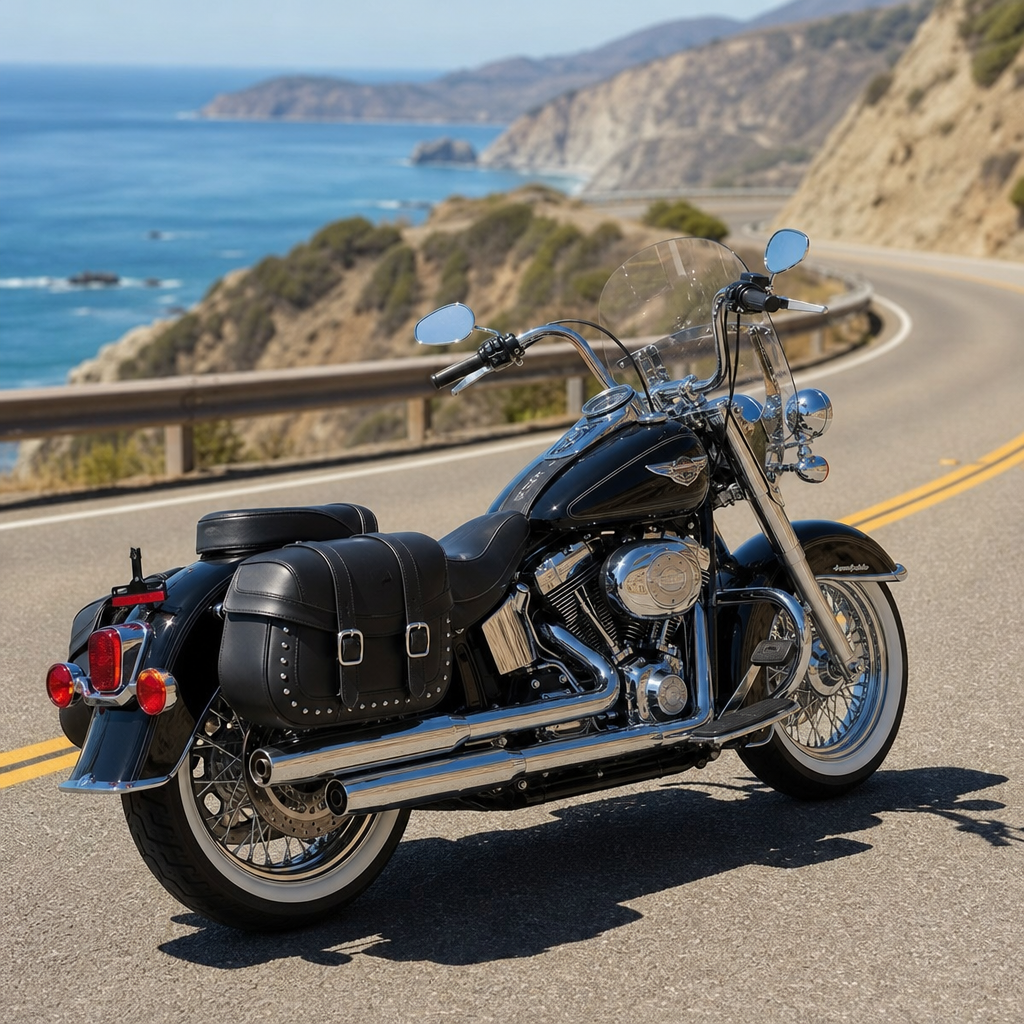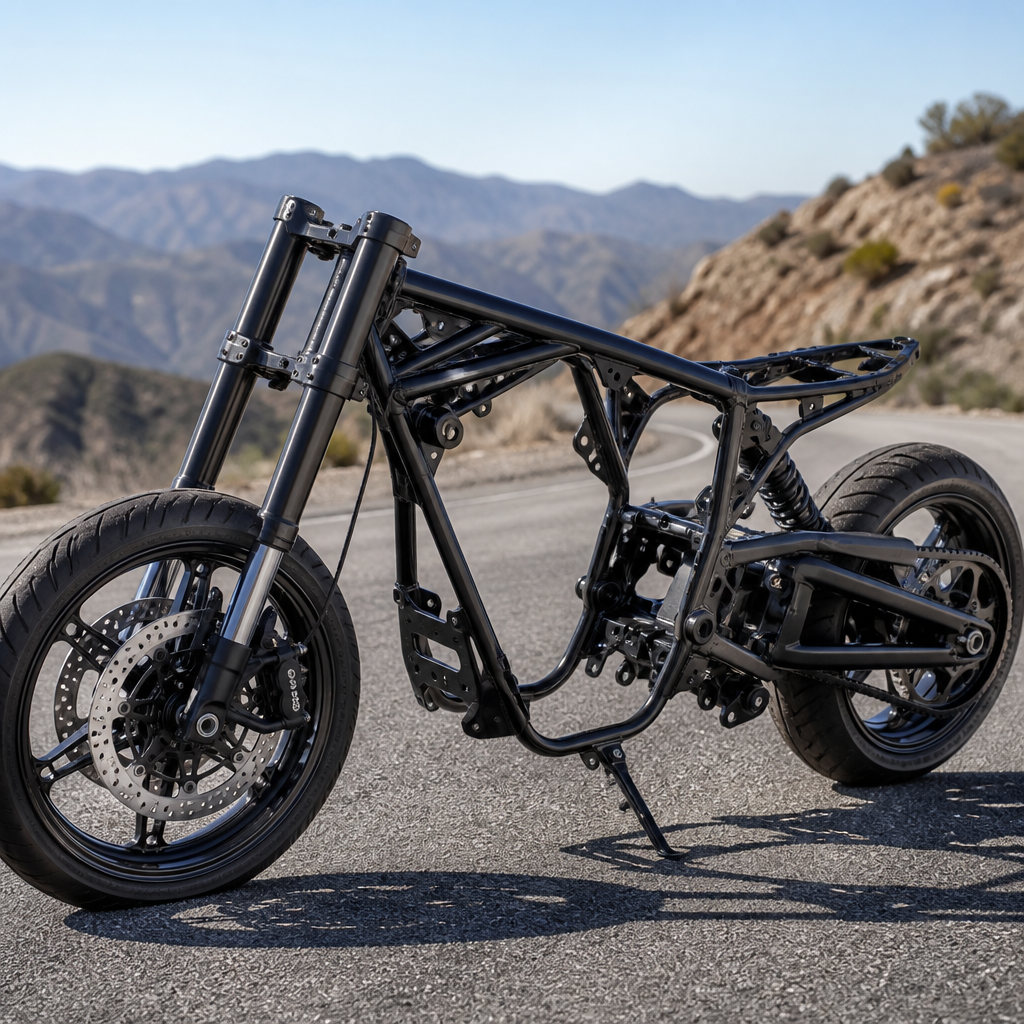
The 2026 H-D chassis update targets a problem riders describe in plain language as high-speed wobble and engineers define more precisely as a coupled instability involving frame torsion, swingarm deflection, steering geometry, tire compliance, suspension damping, and mass distribution. On Harley-Davidson touring and performance-cruiser platforms, that instability has never had a single cause, which is why simplistic claims about one magic fix rarely hold up in the workshop. The new frame matters because it addresses the system, not just one component, and because it arrives at a moment when Harley-Davidson’s major engine families—Milwaukee-Eight, Twin Cam, Evolution, and RevMax—are being judged not only by power and sound, but by how confidently the motorcycle carries that power at interstate speeds, in sweepers, with luggage, passenger load, and uneven pavement.
In chassis terms, wobble is a rapid oscillation around the steering axis, while weave is a slower whole-bike yawing motion. Riders often use the terms interchangeably, yet the distinction matters when diagnosing handling complaints. I have chased both on heavily loaded touring bikes, on older rubber-mount baggers with worn swingarm bearings, and on modified performance builds where engine output outpaced chassis control. In nearly every case, stability improved only after looking at the stack of variables together: frame stiffness, neck area reinforcement, swingarm pivot alignment, fork condition, rear shock damping, wheel runout, tire carcass construction, steering-head bearing preload, and aerodynamic load from fairings or luggage. The 2026 update appears designed around that same systems-thinking approach.
This article serves as the technical hub for Harley-Davidson chassis and powertrain deep-dives. It explains how the new frame reduces high-speed wobble, then connects that chassis discussion to the four engine families that shape modern Harley behavior: Evo, Twin Cam, Milwaukee-Eight, and RevMax. Those engines differ in mounting strategy, vibration signature, output curve, cooling architecture, and packaging, all of which affect how a frame must resist twist and track straight. Understanding those relationships helps owners, tuners, and shoppers ask better questions before they blame tires, suspension, or engine mounts in isolation.
What Changed in the 2026 H-D Frame
The core improvement in the 2026 H-D chassis update is increased structural rigidity in the areas that matter most under speed and load: the steering head, backbone junctions, swingarm pivot zone, and rear substructure that carries luggage and passenger weight. Harley-Davidson has historically balanced stiffness against comfort, style, and manufacturing cost. Too little stiffness allows the steering head and swingarm pivot to move out of phase, which can amplify weave. Too much stiffness without revised suspension rates can make a bike feel harsh or nervous. The smartest frame updates stiffen selected paths for torsional and lateral loads while preserving vertical compliance through suspension rather than through uncontrolled flex.
That distinction is critical. Riders often say a frame “flexes,” but not all flex is harmful. Harmful flex is movement that changes wheel alignment under load. When a motorcycle hits a pavement seam mid-corner at 85 mph, the steering head, engine cradle, swingarm pivot, rear shocks, and tire sidewalls all react at once. If the structure allows delayed or uneven recovery, the bike can begin oscillating. A stronger neck casting, revised gusseting, more direct load paths between the backbone and pivot area, and better triangulation around the rear frame are the kinds of changes that reduce that behavior. Even small gains in torsional stiffness can materially improve rider confidence because the bike returns to neutral faster after a disturbance.
Another likely part of the update is tighter control of manufacturing tolerances and joint consistency. In practice, alignment matters almost as much as headline stiffness numbers. I have seen touring bikes with no dramatic damage still handle poorly because of subtle misalignment after hard impacts, worn isolators, or tolerance stacking across wheels, neck bearings, and swingarm hardware. A modern frame program usually includes fixture accuracy, weld sequencing, hydroformed or cast node design, and fastener strategy aimed at repeatability. Better repeatability means the bike a customer buys behaves more like the bike the development team signed off.
Why High-Speed Wobble Happens
High-speed wobble rarely starts with one defective part. It emerges when several factors line up badly. The classic setup is a bike carrying luggage or a passenger, rear preload set too low, front tire partly cupped, steering-head bearings slightly loose, and rear damping past its best years. Add a long wheelbase and a frame with limited torsional stiffness, and the motorcycle can become vulnerable to weave in fast sweepers or during dirty-air passes behind trucks. Strong engine torque can worsen the feeling because accelerating loads the chassis asymmetrically through the driveline and rear contact patch.
On Harleys, rubber mounting, engine weight, and accessory loading add complexity. Saddlebags, tour packs, tall windshields, crash bars, floorboards, and fairings all change mass and aerodynamics. A top case loaded with dense gear behind the rear axle can make a stable bike feel vague. So can aftermarket rear shocks with inadequate rebound control. That is why a frame update matters: a better baseline chassis is more tolerant of real-world variation. It cannot cancel bad setup, but it can widen the margin before those variables trigger instability.
There is also a speed component. At low speeds, tire and suspension forces are small enough that a structurally soft area may go unnoticed. At higher speeds, aerodynamic load and tire self-aligning forces rise, and the energy feeding any oscillation increases. Engineers address that with stiffness, damping, mass centralization, and geometry. Steering geometry—rake, trail, fork offset, and wheelbase—sets the bike’s natural stability window. The 2026 chassis update seems aimed less at changing the Harley character and more at keeping that character while reducing the unwanted motions riders notice above ordinary back-road pace.
How Frame Stiffness, Geometry, and Suspension Work Together
A motorcycle frame does not operate alone; it is the reference structure for the suspension and steering system. If the frame twists, the suspension cannot do its job consistently because the attachment points are moving. That is why improved rigidity often lets manufacturers run more precise damping and spring calibrations. The result is not only less wobble, but better line-holding, clearer feedback at the bars, and less need for the rider to make constant micro-corrections.
Consider the relationship between the steering head and swingarm pivot. Those two points define much of the bike’s directional behavior. Under acceleration over uneven pavement, the rear suspension transmits force through the swingarm pivot into the main frame. If that area deflects, rear wheel alignment relative to the front changes momentarily. At the same time, the fork reacts through the steering head. When those responses are not synchronized, the bike can yaw. By strengthening the path between those nodes, Harley reduces lag and phase mismatch. In plain terms, the bike behaves more like one solid instrument and less like separate parts negotiating among themselves.
Suspension settings remain essential. A stronger frame does not rescue poor damping. Rebound control is especially important because a pogoing rear end can feed weave after a bump. I tell owners to think in sequence: first confirm tire condition and pressures, then check steering-head bearings, wheel bearings, swingarm bearings, fork oil condition, shock preload, and sag numbers. Only after that do you evaluate whether the bike’s structural behavior still feels unsettled. The 2026 frame gives tuners a stronger foundation, which should make setup changes more predictable and effective.
How the Engine Family Influences Chassis Behavior
Harley-Davidson’s four major engine families create different demands on a frame. Evolution engines are comparatively simple, mechanically direct, and lighter on peak output than later big twins. Twin Cam models introduced more torque and, depending on platform, exposed chassis weaknesses when owners added power and load. Milwaukee-Eight engines improved smoothness and broadened torque delivery, which raised expectations for stable touring performance because the powertrain became more capable at sustained highway speeds. RevMax, as used in newer liquid-cooled models, changes the equation further with higher specific output, different mounting strategy, and a more modern approach to using the engine as a stressed or semi-stressed element.
Those differences matter because the frame must manage not just static weight, but dynamic reactions: crankshaft pulses, driveline lash, chain or belt tension changes, cornering loads, and braking forces. An engine with stronger midrange can expose chassis motion that a milder engine never reaches. Likewise, a smoother engine can make subtle weave easier for riders to detect because vibration no longer masks it. In shop conversations, riders often say a newer bike “feels loose” at a speed where an older bike simply “felt busy.” That does not always mean the newer bike is less stable; sometimes it means the rider can finally sense the underlying chassis behavior clearly.
| Engine family | Typical chassis interaction | Common stability considerations |
|---|---|---|
| Evolution | Lower output, simpler packaging, strong mechanical character | Mount condition, aging suspension, tire profile changes on older frames |
| Twin Cam | Higher torque and heavier touring loads on many applications | Swingarm bearings, rear damping, frame flex under luggage and passenger weight |
| Milwaukee-Eight | Smoother delivery and stronger real-world passing power | Demands better chassis precision at sustained highway speed |
| RevMax | High specific output with modern structural integration | Requires rigid architecture and well-matched electronics and suspension |
Technical Deep-Dive Hub: M8, Twin Cam, Evo, and RevMax
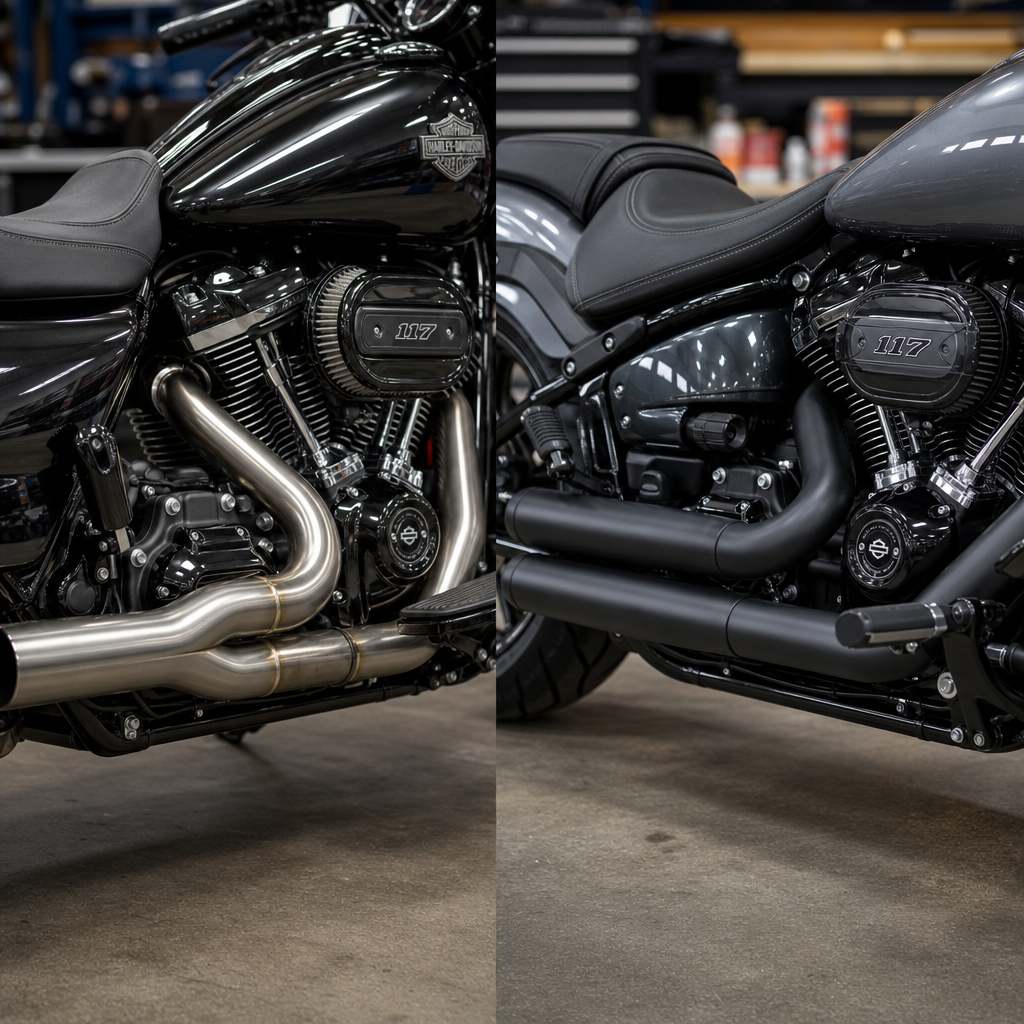
As the hub for Harley-Davidson technical deep-dives, this page should orient readers to what each engine family contributes to the handling conversation. Milwaukee-Eight, often shortened to M8, uses four valves per cylinder, improved combustion efficiency, and better breathing than Twin Cam. The result is broader torque, lower heat in many operating conditions, and smoother performance. For chassis engineers, that means riders spend more time comfortably at speeds where weave issues become visible if the frame is not up to the task. M8 touring and cruiser articles should therefore be read alongside suspension, wheel, and frame content, not as isolated engine stories.
Twin Cam remains central to the modern Harley aftermarket. Cam plate choices, chain versus gear drive discussions, compensator wear, and engine mounting condition all matter to owners, but so does the way added displacement and torque change chassis demand. A 103 or 110 build with luggage and a passenger asks more of the swingarm pivot and rear shocks than a stock machine. Evo content sits earlier in the lineage, yet it remains relevant because many riders are restoring or performance-building Evo-powered bikes with modern tires and suspension. Once you add contemporary grip to an older frame, you often uncover structural limits that period rubber never stressed.
RevMax deserves separate attention because it represents a different engineering philosophy. Liquid cooling, DOHC valvetrain design, and more integrated architecture allow higher output and broader operating range. That package requires equally modern thinking about frame stiffness, electronics calibration, and suspension control. If your interest in Harley-Davidson technical deep-dives spans M8, Twin Cam, Evo, and RevMax, the right approach is comparative: study engine architecture, then map how each powertrain influences mounting, geometry, heat management, rider position, and high-speed stability. This chassis update is important precisely because it ties those technical strands together.
Real-World Riding and Setup Implications
For riders, the practical question is simple: what will the 2026 H-D chassis update feel like on the road? The best answer is greater composure. Expect less handlebar correction in fast sweepers, less vague movement when crossing bridge joints under throttle, and less sensitivity to passenger and luggage load when preload is set correctly. You should also expect more honest feedback. A rigid frame reveals weak tires, tired shocks, and poor setup faster than a flexy one because it stops masking them.
That honesty is useful. When diagnosing stability, start with tire age, construction, and pressure. Harley touring bikes can react sharply to mismatched front and rear profiles or to rear tires with softened carcasses. Then inspect steering-head bearing preload, wheel balance, wheel runout, swingarm side play, fork bushing wear, fork oil level, shock damping, and ride height. Check motor mounts where applicable and verify alignment after any crash-bar, bagger, or suspension modification. Aerodynamics matter too: a tall windshield paired with a heavily loaded top case can create lift and steering lightness at speed.
The wider benefit of the new frame is confidence under imperfect conditions. Most riders do not travel on ideal pavement with empty bags and textbook suspension settings. They ride crosswinds, tar snakes, truck turbulence, and patched asphalt. A better frame reduces the chance that those inputs stack into an oscillation. It also gives aftermarket tuners a cleaner baseline for springs, shocks, fork cartridges, and tire choices, which should improve the quality of setup advice across the Harley-Davidson ecosystem.
What This Means for Owners, Buyers, and Builders
If you own an older Harley, the 2026 chassis update does not make your bike obsolete. It does, however, clarify where the factory now sees the biggest gains: structural precision and stability margin. Owners of Evo, Twin Cam, and early M8 machines should take that as a cue to evaluate the complete handling package, not just horsepower upgrades. Suspension refreshes, swingarm bearings, quality tires, and careful load placement often deliver a larger real-world improvement than another engine part.
For buyers, the message is equally direct. Test ride with highway time, not just urban loops. Bring the bike up to the speeds where weave would normally appear, and note whether it tracks cleanly through long curves and over pavement seams. For builders, especially in the M8 and Twin Cam world, plan horsepower around chassis capacity. A stable motorcycle is faster, safer, and less tiring than a powerful one that needs constant correction. Explore the linked technical deep-dives on M8, Twin Cam, Evo, and RevMax with that principle in mind, then use the 2026 frame update as the benchmark for what a modern Harley platform should feel like: planted, predictable, and confidence-inspiring. If your goal is a better Harley-Davidson, start with the chassis and build outward.
Frequently Asked Questions
What exactly is “high-speed wobble,” and why does Harley-Davidson describe it as more than just a frame problem?
High-speed wobble is the rider-friendly term for a stability issue that shows up when the motorcycle begins to oscillate or feel unsettled at elevated speeds, especially when the chassis is loaded, the road surface is imperfect, or the rider makes a quick correction. In engineering terms, this is not usually one isolated defect. It is a coupled instability, meaning multiple parts of the motorcycle can interact in ways that amplify unwanted movement. Frame torsion, swingarm flex, steering geometry, tire sidewall compliance, suspension damping, wheel alignment, weight distribution, luggage load, passenger weight, and even rider posture can all contribute.
That is why the 2026 H-D chassis update is important. Harley-Davidson is not treating wobble as if it comes from a single weak bracket or one bad setup number. Instead, the updated frame addresses the larger system that governs how forces travel through the motorcycle. When a bike is pushed hard at highway speeds, every input matters: the frame resists twisting, the swingarm manages rear-wheel tracking, the steering head maintains directional control, and the suspension must absorb disturbances without feeding them back into the chassis. If one component moves too much or reacts too slowly, it can trigger an oscillation that feels vague, nervous, or increasingly unstable.
So when riders ask whether the new frame “fixes wobble,” the better answer is that it helps reduce the conditions that allow wobble to build in the first place. That is a much more realistic and technically sound claim. The frame update matters because it improves the foundation of the system, but Harley-Davidson’s own engineering logic suggests the real gain comes from better interaction among the frame, rear structure, steering behavior, suspension response, and overall mass management.
How does the 2026 H-D frame actually help reduce high-speed wobble?
The main benefit of the 2026 Harley-Davidson chassis update is that it gives the motorcycle a more controlled structural platform under load. At speed, the frame is not just a place to mount the engine and suspension. It is the central path through which braking forces, cornering loads, engine mass, road impacts, and rider inputs all move. If the frame twists too easily or flexes in ways the suspension cannot manage, the bike can start to feel delayed in response, imprecise in transitions, or unsettled during fast sweepers and lane changes.
By improving frame rigidity in the right areas and managing how the structure flexes overall, Harley-Davidson can reduce the mismatch between what the front wheel is doing and what the rear wheel is doing. That matters because wobble often develops when the motorcycle is no longer tracking as one coherent unit. A stronger or better-optimized chassis can help keep steering geometry more consistent under acceleration and cornering, reduce unwanted torsional movement between the steering head and swingarm pivot region, and limit the kind of delayed chassis reactions that riders perceive as weave, wallow, or bar shake.
Just as important, a better frame allows the rest of the motorcycle to do its job more effectively. Suspension damping works best when it is controlling wheel movement rather than compensating for excessive chassis twist. Tires work better when contact patch loading is more predictable. Steering feel improves when flex is reduced in the structure supporting the front end. In practical terms, the 2026 update should make the motorcycle feel calmer, more planted, and more confidence-inspiring at speed, not because the bike becomes perfectly rigid, but because the frame now contributes less unwanted motion to the total equation.
Is the new frame a complete cure, or can suspension, tires, and setup still cause wobble on a 2026 Harley-Davidson?
The new frame is a major improvement, but it is not a magic cure. That is one of the most important points to understand. High-speed wobble has never had a single cause on touring and performance-cruiser platforms, and that remains true even with a better chassis. A motorcycle can still develop instability if the tires are worn, underinflated, mismatched, or poorly suited to the bike’s load and speed range. Suspension can still contribute if damping is too soft, rebound is uncontrolled, spring rates are wrong for the rider and cargo, or preload is not adjusted properly. Steering-head bearings, swingarm bearings, wheel balance, alignment, and even accessory weight placement all still matter.
In the workshop, this is why experienced technicians tend to avoid simplistic explanations. If a rider says the bike wobbles at 90 mph with a passenger, a tour pack, and soft rear preload on a worn rear tire, the frame may only be one part of the story. If another rider has a well-maintained bike with proper sag, fresh tires, correct pressures, and balanced luggage, the same platform may feel extremely stable. The 2026 chassis update raises the baseline by making the core structure more resistant to the instability, but it does not exempt the motorcycle from basic setup principles.
The smart takeaway is that the new frame gives riders a better starting point. It reduces one major contributor to instability, especially under high load and speed, but the full result depends on how the bike is maintained and configured. Riders who want the best real-world benefit should still pay close attention to suspension tuning, tire condition, loading practices, and routine chassis inspection. That is how the frame update delivers its maximum value.
What will riders likely notice on the road with the 2026 chassis update?
Most riders will not describe the difference in engineering terms. They will describe it in feel. The bike should feel more planted at highway speed, less busy over rough pavement, and more composed when loaded with luggage or a passenger. In fast sweepers, the motorcycle may hold its line with less mid-corner correction. During quick transitions, it may feel more connected front to rear, with less lag between steering input and chassis response. On imperfect roads, the bike should be less likely to develop that vague, oscillating sensation that makes riders roll off the throttle and question what the chassis is doing underneath them.
Another likely improvement is confidence. Riders often sense instability before it becomes a dramatic wobble. That early warning can feel like a light weave, a slight handlebar nervousness, or a rear-end movement that seems to steer the bike from behind. If the updated frame reduces those tendencies, the motorcycle can feel calmer and more trustworthy long before any true wobble event would have occurred. That is a meaningful upgrade because real-world stability is often about reducing the small motions that add up under speed, load, and road disturbance.
It is also worth noting that improved stability does not necessarily mean the bike feels harsh or lifeless. Well-executed chassis design is not about making everything rigid at all costs. It is about balancing stiffness, flex characteristics, damping, and geometry so the motorcycle can absorb inputs without becoming unstable. If Harley-Davidson has executed the 2026 update correctly, riders should feel a bike that is both more secure and more refined, especially in the conditions where older chassis setups were most likely to draw complaints.
Why are claims about “one simple fix” usually misleading when discussing Harley-Davidson wobble issues?
Claims about one simple fix are misleading because they ignore how motorcycles behave as systems. On Harley-Davidson touring and performance-cruiser models, high-speed wobble is typically the result of several factors interacting at once. A rider might install a stiffer stabilizer, change shocks, replace tires, or add a steering damper and see improvement, but that does not prove the original problem had one single cause. It only proves that changing one part of the system altered the overall behavior enough to reduce the symptoms.
This is exactly why the 2026 H-D chassis update deserves serious attention. Harley-Davidson appears to be addressing the root architecture rather than promoting a cosmetic or overly narrow solution. The frame is central because it influences torsional behavior, swingarm control, geometry retention, and load paths throughout the bike. But even then, the company’s approach makes more sense when viewed as part of a broader stability package, not as a standalone miracle part. Engineers know that tire compliance, damping curves, rider load, and center-of-mass shifts can either support or undermine the best frame in the world.
For riders and buyers, the practical lesson is straightforward: be skeptical of easy answers. If someone says wobble is always caused by the neck area, always caused by the swingarm, or always cured by one aftermarket part, they are oversimplifying a very complex dynamic problem. The 2026 frame update matters precisely because it acknowledges that complexity. It improves one of the biggest structural variables in the equation, which should make the entire motorcycle easier to tune, easier to trust, and less prone to instability when ridden in the demanding real-world conditions where wobble tends to appear.