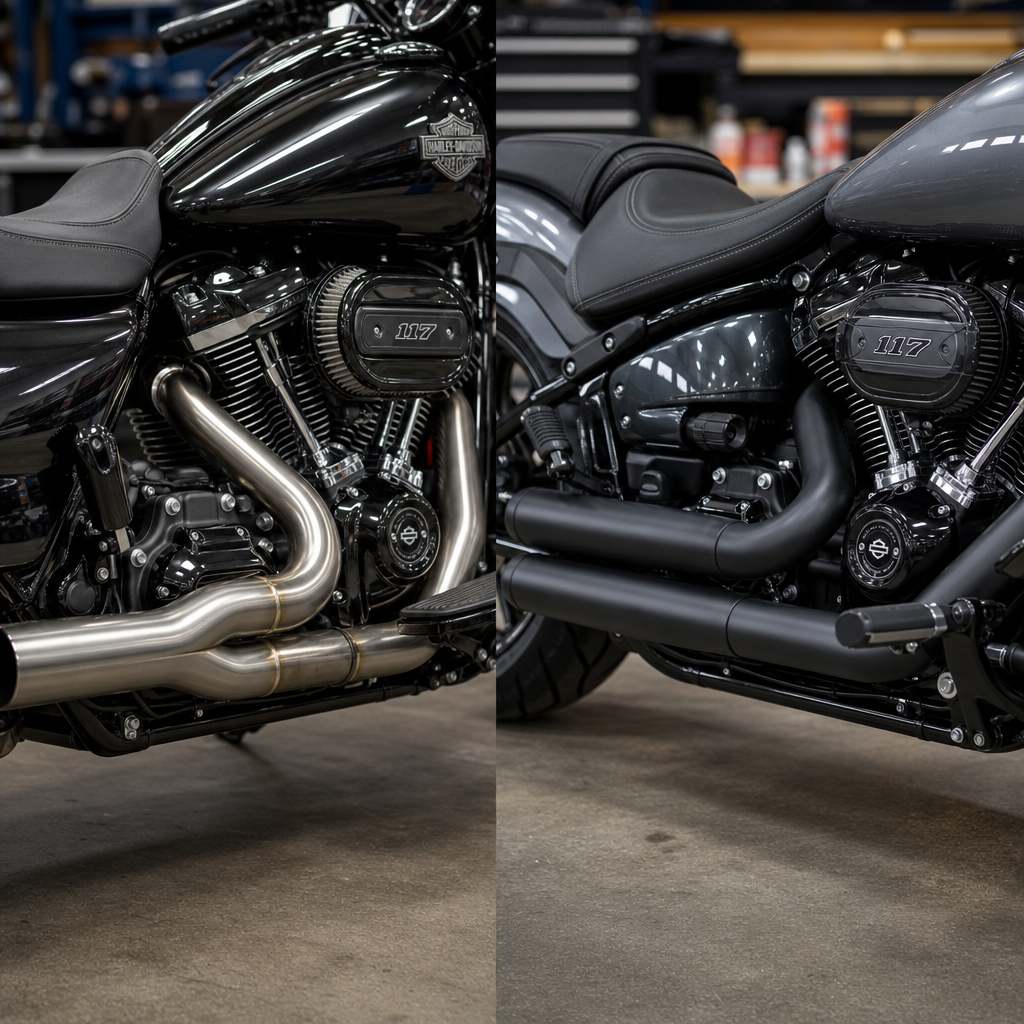
The Stage IV M8 recipes that reliably reach 150 horsepower on the 2026 121 HO platform start with one truth: this engine is already an unusually strong foundation, but making big power live on the street requires matching airflow, cam timing, compression, fuel, cooling, and calibration as one system. In Harley-Davidson terms, the Milwaukee-Eight is the current four-valve V-twin architecture, the 121 HO is the high-output 121 cubic inch version, and a “Stage IV” build generally means replacing core top-end components and supporting them with induction, exhaust, and tuning upgrades rather than stopping at bolt-ons. Riders care because 150 horsepower at the wheel transforms a bagger or performance cruiser from quick to genuinely fast, yet the line between a thrilling street build and a fragile dyno queen is narrow. I have worked through enough M8 combinations to know that the winning recipe is never a single magic part. It is careful parts selection, verified clearances, disciplined tuning, and realistic expectations about fuel quality, heat, and intended use.
As a hub for V-Twin performance and mechanics, this guide covers the mechanical logic behind a 150 horsepower Stage IV 121 HO build and the supporting topics every owner should understand before spending money. That includes cylinder head flow, camshaft strategy, compression ratio, throttle body sizing, injector demand, exhaust scavenging, clutch holding power, oil control, and dyno validation. It also includes the questions riders ask most often: Can a stock bottom end survive? What fuel is required? Does torque suffer? What parts matter most? The short answer is that a well-built 2026 121 HO can reach 150 horsepower with a stock-style bottom end if tune quality and rev limits stay sensible, premium fuel or better is available, and the package is designed around broad volumetric efficiency rather than peak numbers alone. The longer answer is in the sections below, where each subsystem is explained in plain terms with the tradeoffs that separate durable performance from expensive disappointment.
Understanding the 2026 121 HO as a performance base
The 2026 121 HO platform gives builders several advantages before the first wrench turns. Displacement is already substantial, valve area is better than older Twin Cam designs, and the Milwaukee-Eight combustion chamber supports efficient burn when squish and ignition timing are managed correctly. High-output factory variants typically bring improved port shape, stronger springs, and calibration changes that make them more receptive to aftermarket camshafts than lower-spec versions. In practical shop terms, that means the 121 HO does not need extreme RPM to make serious power. Most successful 150 horsepower recipes target a usable band between roughly 3,000 and 6,500 rpm, because heavy Harley-Davidson applications reward midrange and over-rev less than a lightweight sport machine would.
Another reason this platform matters is that it sits at the center of modern Harley-Davidson performance culture. Owners building Road Glides, Street Glides, Low Riders, and custom touring conversions all start from the same basic V-twin mechanics: air in, fuel metered accurately, burn efficiently, evacuate exhaust cleanly, and keep temperature under control. The hub value of the 121 HO is that nearly every subtopic in V-Twin performance branches from it. Cylinder head articles connect directly to airflow limits. Cam articles explain intake closing and overlap. Tuning articles cover lambda targets, spark tables, and knock sensitivity. Drivetrain pages address clutch capacity and compensator behavior. Understanding the platform first makes every later upgrade decision more rational.
The airflow recipe: heads, throttle body, intake, and exhaust
If 150 horsepower is the target, airflow is the first gatekeeper. On every serious M8 build I have seen succeed, the cylinder heads do more than advertise bigger numbers; they deliver stable velocity, consistent seat work, and chamber quality that supports compression without detonation. A proper Stage IV approach usually includes CNC or hand-finished porting from a respected shop, oversized or optimized valves where appropriate, multi-angle valve jobs, and spring packages matched to the chosen cam lift and intended rev ceiling. Flow benches matter, but so does port cross-section. A head that chases peak cfm and kills port speed can soften the street manners that make a 121 enjoyable in a heavy chassis.
Throttle body and intake choices should support the heads instead of bottlenecking them. Many builders step into the 64 mm class or similar effective area, with a high-flow manifold that avoids abrupt transitions at the port entry. The best setups are measured, not guessed. If the manifold overhangs the head port or leaves a step, signal quality and distribution can suffer. Exhaust completes the airflow picture. A tuned 2-into-1 system is usually the most repeatable path to 150 horsepower because it improves scavenging and broadens the curve better than most dual systems. Collector design, primary diameter, and muffler core all influence whether the engine carries power after 5,000 rpm or signs off early. On dynos, I routinely see excellent heads and cams underperform simply because an attractive but restrictive pipe turns the whole package into a compromise.
| Component | Typical 150 hp Stage IV Direction | Why It Matters |
|---|---|---|
| Cylinder heads | Ported heads with quality valve job and matched springs | Raises airflow while preserving velocity and chamber efficiency |
| Throttle body | High-flow unit in the 64 mm class | Prevents inlet restriction at higher rpm and load |
| Intake manifold | Port-matched manifold with smooth transitions | Maintains airspeed and cylinder-to-cylinder consistency |
| Air cleaner | Large surface area high-flow assembly | Reduces pressure drop ahead of the throttle body |
| Exhaust | Tuned 2-into-1 with proven collector design | Improves scavenging, torque spread, and top-end carry |
Camshaft, compression, and valvetrain strategy
The camshaft determines whether a 121 HO feels like a brute everywhere or a peaky number-chaser. For a real 150 horsepower street build, cam timing must complement displacement and head flow. The key events are intake opening, intake closing, exhaust opening, and overlap. Intake closing has an outsized effect on dynamic compression and low-speed cylinder pressure. Close it too late and the engine becomes lazy below the sweet spot. Close it too early and top-end breathing can flatten. Most proven M8 combinations in this range use a performance cam with enough lift and duration to exploit the heads, but not so much overlap that reversion and heat make traffic riding miserable.
Compression is the other half of the equation. More airflow without adequate compression leaves power on the table, yet too much compression on pump fuel shortens the tuning window dramatically. In the real world, many successful 150 horsepower builds end up in a compression range that is assertive but still manageable with premium fuel, precise quench, and conservative ignition where knock risk appears. Piston design matters here. Dome shape, valve relief volume, and ring package all affect burn speed and oil control. Valvetrain stability cannot be an afterthought. Stronger pushrods, matched lifters, upgraded springs, and verified coil bind and retainer clearance are basic requirements, not luxury add-ons. When a builder skips those checks, the result may survive a dyno pull but fail in actual road use.
Fueling, calibration, and thermal control
On a modern Harley-Davidson, tuning quality often decides whether the same hardware makes 142 horsepower or 150 with better rideability. Injector sizing must cover the target horsepower with safe duty cycle margin, especially if the engine will see sustained high-load operation in hot weather. The tuner then has to calibrate volumetric efficiency tables, target air-fuel ratios, spark advance, transient fueling, idle strategy, and rev limits in a coherent way. Tools commonly used in the M8 world include Dynojet Power Vision and ThunderMax, though the right choice depends on the bike, the tuner’s workflow, and whether full control or simpler flash-based refinement is preferred. What matters most is not the brand on the screen but whether the person using it understands combustion.
Thermal management is inseparable from tuning. Large-displacement air-cooled and partially oil-cooled V-twins make impressive torque, but they also punish sloppy calibrations with rising head temperature, oil breakdown, and knock sensitivity. A rich tune everywhere is not the answer; it can wash cylinders, dull throttle response, and hide inefficiency. The right tune uses load-based logic, realistic lambda targets, and spark advance that reflects fuel quality and chamber behavior. Supporting hardware helps. A quality oil cooler, synthetic oil of the correct viscosity, clean injector spray patterns, and intact seals around the intake tract all contribute to stable temperatures and repeatable power. In my experience, the strongest 121 HO builds are rarely the flashiest. They are the ones that hot-start cleanly, idle consistently, and repeat the same pull three times in a row.
Bottom-end durability, clutch capacity, and chassis realities
Can the stock-style bottom end survive 150 horsepower? Usually yes, if the engine is assembled correctly, revved within reason, and not exposed to chronic detonation. The 121 HO’s crankshaft, rods, and cases are stronger than many riders assume, but horsepower numbers alone do not tell the whole stress story. Heavy motorcycles load the drivetrain hard in the midrange, where torque spikes can challenge the clutch and primary components more than a brief top-end sweep. That is why a complete recipe includes clutch upgrades, inspected compensator and chain drive components where relevant, and attention to transmission behavior under load. A slipping clutch can make dyno data misleading and road performance inconsistent.
Chassis setup also belongs in a V-Twin performance hub because power without control is wasted. A 150 horsepower touring Harley-Davidson benefits from better rear suspension, fork tuning, and brake pad choice because acceleration arrives much faster than the factory setup expects. Tire selection matters too. Some riders focus entirely on engine parts, then discover that wheelspin, vague damping, or long stopping distances limit confidence more than horsepower ever did. The strongest builds I have delivered were complete packages: engine, tune, clutch, suspension, tires, and rider ergonomics working together. That systems view is what separates mature V-Twin performance building from a parts list copied off a forum thread.
Proven Stage IV combinations and how to choose the right one
There is no single mandatory Stage IV recipe, but there are proven patterns. One common path pairs ported heads, a high-lift cam designed for 124-to-131 cubic inch Milwaukee-Eight applications, forged pistons that establish a pump-gas-friendly compression ratio, a 64 mm throttle body, high-flow intake, quality injectors, and a tested 2-into-1 exhaust. Another path keeps compression slightly lower for hotter climates or variable fuel quality, then leans harder on head efficiency and cam design to reach the target with a wider safety margin. Both can work. The deciding factors are rider weight, bike model, fuel availability, climate, and whether the owner values peak horsepower, passing power, or two-up touring manners most.
For most street riders, the best 150 horsepower build is the one that gives up a few bragging-rights dyno points if necessary to preserve torque from 2,500 rpm upward and stay tolerant of real-world conditions. Ask any experienced tuner what causes regret, and the answer is usually the same: mismatched components chosen in isolation. Big heads with the wrong cam, too much compression for available fuel, or an undersized exhaust can all sabotage the result. Choose a builder with documented M8 results, ask for before-and-after dyno charts rather than headline numbers, and insist on assembly measurements such as piston-to-valve clearance, deck height, and spring installed height. Those details are where durable horsepower is made.
Achieving 150 horsepower on the 2026 121 HO platform is absolutely possible, but it happens when the entire V-Twin system is engineered, not when parts are piled on. The essential lessons are straightforward. Start with airflow, because the heads, intake tract, and exhaust define the engine’s breathing ceiling. Match that airflow with a camshaft that suits displacement and intended rpm, then set compression high enough to make efficient cylinder pressure without cornering the tune on pump fuel. Support the build with correct injector capacity, a disciplined calibration, and thermal management that keeps performance repeatable in traffic and on long pulls. Finally, protect the investment with clutch, drivetrain, suspension, and tire upgrades that let the motorcycle use the power safely.
As the hub for Harley-Davidson V-Twin performance and mechanics, this page should help you evaluate every related topic with sharper judgment, from head porting and cam selection to dyno tuning and drivetrain setup. The main benefit of understanding the whole recipe is simple: you spend once, ride more, and avoid combinations that look impressive online but disappoint on the road. If you are planning a Stage IV M8 build, define your riding goals first, choose proven components that work as a package, and work with a tuner and engine builder who can show repeatable 121 HO results.
Frequently Asked Questions
What does a Stage IV M8 recipe usually include when the goal is 150 hp on the 2026 121 HO platform?
A true Stage IV recipe for the 2026 121 HO is much more than “cams and heads.” To reliably reach the 150 hp neighborhood, the build has to be treated as a complete airflow and durability package. On a Milwaukee-Eight, that usually means CNC head work or fully developed performance heads, a matched camshaft designed for the intended rpm range, higher-capacity valve springs, upgraded pushrods, larger throttle body and intake manifold, a high-flow air cleaner, a properly sized exhaust, and precise ECU calibration. Depending on the exact combination, many builders also address compression ratio, piston design, fuel injector capacity, and clutch holding power so the package works together rather than fighting itself.
The reason this matters so much on the 121 HO is that the engine already starts from a strong baseline. It has displacement, improved cylinder filling potential, and a modern four-valve layout, so the path to 150 hp is not about throwing random “race parts” at it. It is about improving the areas that limit flow at high demand while keeping combustion stable and heat under control for street use. The best recipes pair the cam’s intake closing point with the compression ratio, then support that with enough intake and exhaust flow to make the extra valve lift and duration worthwhile.
In practical terms, a reliable 150 hp combination is usually built around a known, dyno-proven parts list rather than experimental one-off choices. Builders who repeatedly hit this target tend to use cylinder head and cam packages that have already shown they can make the number on pump-friendly street tunes, and they finish the job with careful setup: correct piston-to-valve clearance, proper installed spring height, pushrod geometry, leak-free exhaust sealing, and disciplined tuning. That recipe mindset is what separates a strong-running 150 hp 121 HO from an expensive collection of parts.
Is 150 horsepower on a street-driven 2026 121 HO realistic, or is it more of a dyno-only number?
Yes, 150 hp is realistic on a street-driven 2026 121 HO, but only when the combination is built for that target from the start. This is not the same as chasing a hero dyno pull with aggressive timing, marginal air-fuel ratios, or a setup that only behaves well at wide-open throttle. A genuinely usable 150 hp street package has to idle cleanly, start reliably hot and cold, pull smoothly in the midrange, and survive repeated heat cycles in real riding conditions. That means the tune, cam, compression, and airflow parts all need to support broad power rather than peak power alone.
The 121 HO gives builders a better starting point than older, smaller-displacement engines because the platform already has enough cubic inches to make meaningful torque without needing extreme rpm. That is important because street reliability usually improves when power is achieved through efficient cylinder filling and smart cam timing instead of revving far beyond the engine’s happy range. In other words, the easiest 150 hp is the one made with a balanced combination that preserves torque and combustion efficiency, not a peaky setup that only comes alive at the top of the graph.
That said, “realistic” depends on expectations. One builder’s 150 hp recipe may produce a dead-smooth, premium-fuel street bike with strong cooling margins and conservative ignition timing. Another may hit the same number with a more aggressive package that is fussier in traffic, hotter in summer conditions, or less tolerant of inconsistent fuel quality. So the answer is yes, it can absolutely be done, but the best builds define success as repeatable street performance, not just a screenshot from a favorable dyno session.
Why is matching airflow, cam timing, compression, fuel, cooling, and calibration so important on a Stage IV Milwaukee-Eight build?
Because on a high-output V-twin, every one of those systems directly affects the others. Airflow determines how much air the engine can actually move, but airflow parts alone do not make power if the camshaft closes the intake valve at the wrong time for the compression ratio and operating range. Compression influences cylinder pressure, but too much cylinder pressure without the right fuel, spark, and chamber efficiency creates detonation risk. Fuel delivery has to support the airflow increase, but simply dumping in more fuel will not make a poor chamber or weak tune safe. Cooling becomes more critical as power rises, because the engine now produces more heat under sustained load, especially in heavy bikes ridden on the street.
This is why experienced Stage IV builders think in terms of a system, not isolated upgrades. A larger throttle body and freer intake help only if the heads and cam can use the added flow. A high-lift cam with long duration is productive only if the springs, pushrods, piston clearance, and exhaust support it. Higher compression can sharpen torque and improve efficiency, but only if the fuel quality and combustion event are controlled through proper chamber design and mapping. Once any one piece gets out of balance, the engine may still run, but it will not run at its best, and long-term reliability usually pays the price.
Calibration ties the whole package together. On modern Milwaukee-Eight platforms, the ECU is not a minor finishing touch; it is the control center that determines how well the mechanical combination actually behaves. Correct fueling, ignition timing, throttle strategy, and temperature-based compensations are what turn a pile of premium parts into a cohesive 150 hp motorcycle. The reason some builds feel effortless and others feel temperamental is usually not one dramatic part choice, but how well all of these variables were matched from the beginning.
What are the biggest mistakes people make when trying to build a 150 hp 121 HO Stage IV setup?
The most common mistake is chasing a parts catalog number instead of a tested recipe. People often assume that the biggest throttle body, the most aggressive cam, or the highest advertised-flow head will automatically make the most power. In reality, mismatched parts can hurt both torque and reliability. A cam that wants more rpm than the rest of the engine can support may soften the street manners and require more compression or better heads than the build actually has. Likewise, oversized intake parts can reduce velocity and make the combination less responsive if they are not appropriate for the displacement and rpm band.
Another major mistake is underestimating tuning and fuel demands. Reaching 150 hp on a 121 HO generally narrows the margin for error compared with a mild bolt-on build. If the injectors are marginal, if the tune is based on guesswork, or if the bike is ridden on inconsistent fuel quality with an aggressive spark map, the result can be detonation, overheating, or poor drivability. Many disappointing builds are not mechanical failures in the dramatic sense; they are combinations that technically run but never feel clean, crisp, or trustworthy because the calibration was treated as an afterthought.
Durability oversights are also common. Builders sometimes focus heavily on peak horsepower while neglecting valve spring quality, clutch capacity, oil control, heat management, and installation accuracy. A 150 hp motorcycle that slips the clutch, pounds the valvetrain, or constantly heat-soaks in traffic is not a successful street recipe. The better approach is to define the mission first: pump-gas street bike, aggressive canyon machine, loaded touring bike, or occasional strip use. Once the mission is clear, the parts and tune can be selected to hit the number without creating avoidable weaknesses elsewhere in the package.
How do you choose the right Stage IV recipe if you want 150 hp without giving up street manners and longevity?
Start by being honest about how the motorcycle is ridden. If the bike spends most of its life on the street, especially in warm weather, traffic, or long-distance touring conditions, the ideal 150 hp recipe is usually not the most radical one available. Street manners come from efficient heads, a well-matched cam with a usable powerband, sensible compression for available fuel, stable idle quality, and a tune that prioritizes clean transient response as much as peak output. The best street combinations make strong torque everywhere, not just horsepower at the top, and they do it without needing constant attention from the rider.
It also helps to choose a recipe from a builder with repeatable results on the 121 HO specifically, not just general Milwaukee-Eight experience. The 2026 121 HO may be a strong base, but platform details matter, and proven combinations save time, money, and frustration. Ask what fuel octane the build expects, what rpm range it is designed around, whether clutch and cooling upgrades are recommended, and how the tune was developed. A quality builder should be able to explain not only that the setup makes 150 hp, but why the parts were chosen together and what compromises, if any, come with that power level.
Finally, think of longevity as part of the recipe, not a separate concern. That means selecting parts with known spring life and valvetrain stability, confirming clearances carefully during assembly, keeping compression and ignition timing appropriate for the fuel you will actually buy, and making sure the calibration is refined enough for real-world heat and load conditions. When people say a 150 hp 121 HO “drives like stock, only stronger,” that usually comes from exactly this kind of disciplined planning. The power