The RevMax 1250 Stator Health: Preventing charging failures on the 2026 Pan America Limited starts with understanding how Harley-Davidson’s liquid-cooled V-twin manages electrical demand under real adventure-touring conditions. The stator is the stationary winding inside the charging system that generates alternating current as the rotor spins around it. That current is converted by the regulator/rectifier into usable direct current for the battery, ignition, fuel injection, ride modes, ABS, heated accessories, and the Pan America Limited’s electronically controlled suspension systems. On the 2026 model, charging system reliability matters more than ever because modern motorcycles carry far more electrical load than older carbureted machines. A weak stator does not simply leave a rider with a dead battery; it can trigger hard starting, unstable voltage, fault codes, reduced accessory performance, and intermittent rideability complaints that are easy to misdiagnose.
In workshop practice, stator problems rarely appear as a dramatic single failure at first. More often, I see a pattern: the battery tests fine after charging, the owner reports slow cranking after long highway runs with auxiliary lights on, and measured charging voltage looks acceptable at idle but sags when the engine is hot. That pattern points toward heat stress, insulation breakdown, connector resistance, or regulator strain rather than a bad battery alone. The RevMax 1250 engine, with its compact packaging, high output, and adventure-bike duty cycle, places the charging system in an environment of vibration, splash exposure, and sustained temperature swings. Preventing charging failures therefore means treating the stator as part of a complete electrical ecosystem, not as an isolated component.
This hub article covers the core mechanics that every Pan America owner or technician should know within the wider Harley-Davidson world of V-Twin Performance and Mechanics. It defines how the charging system works, why stator health degrades, how to recognize early warning signs, what diagnostic tests matter, and which maintenance habits reduce risk. It also frames the related topics that belong in this sub-pillar: oil and thermal management, battery condition, connector integrity, regulator performance, CAN-bus electrical behavior, starting-system load, and accessory planning. If you want fewer roadside surprises and better long-term reliability from a 2026 Pan America Limited, mastering stator health is one of the highest-value places to start.
How the RevMax 1250 charging system works on the 2026 Pan America Limited
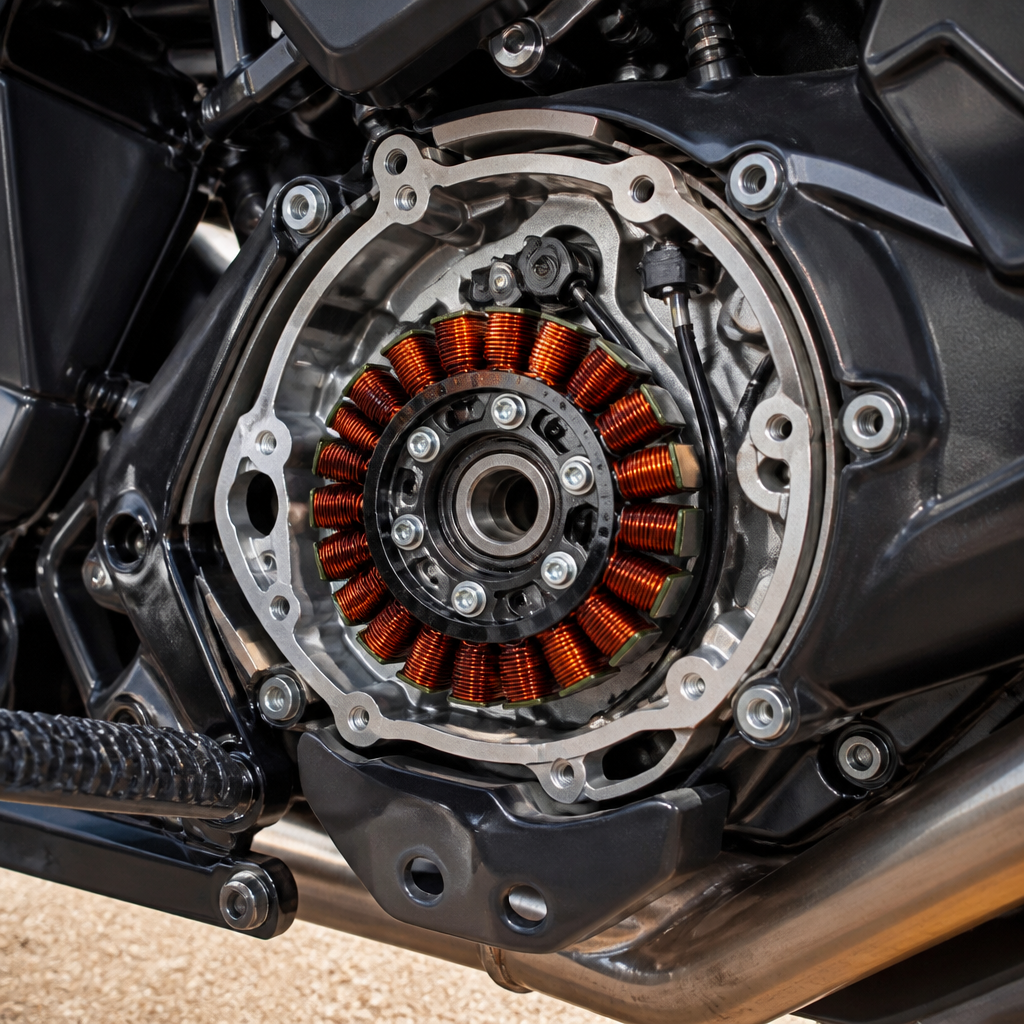
The RevMax 1250 uses a permanent-magnet charging system. In simple terms, the rotor carries magnets that spin with the engine crankshaft, while the stator remains fixed and contains copper windings. As engine speed rises, magnetic flux passing through those windings induces three-phase AC output. The regulator/rectifier then converts AC to DC and limits system voltage, typically keeping charging output near the mid-13 to low-14 volt range depending on temperature, state of charge, and load. This architecture is common on modern motorcycles because it is compact and robust, but it sheds excess electrical energy as heat. Heat is the stator’s long-term enemy.
On the Pan America Limited, the charging system must support EFI, throttle-by-wire, ignition coils, sensors, the TFT display, adaptive electronics, lighting, radiator fans, and common rider add-ons such as GPS units, heated grips, heated gear, and auxiliary lamps. The practical takeaway is straightforward: if the battery is weak, the regulator is overworked, connectors have developed resistance, or accessories are drawing current near system limits at low rpm, the stator runs hotter and insulation ages faster. V-Twin performance is not just about horsepower and torque. Mechanical output and electrical stability are linked, because engine speed, thermal load, and rider equipment all influence charging behavior.
Within the broader Harley-Davidson mechanical landscape, this makes the stator a gateway subject. Riders who search for rough starting, fluctuating idle voltage, warning lights, or unexplained battery drain are often really dealing with the intersection of charging performance, thermal management, and load planning. A healthy stator supports every other system on the motorcycle. A marginal one undermines diagnostics everywhere else.
Why stators fail: heat, load, oil, and connection losses
Most stator failures come down to insulation breakdown in the copper windings. That breakdown is accelerated by heat. The causes of heat, however, are layered. Sustained high engine speed increases generated output. Heavy accessory use raises electrical demand. A battery with one weak cell forces the regulator and stator to work harder. Corroded connectors create resistance, which produces localized heating. Repeated heat cycles harden insulation over time until turns in the winding short together. Once that happens, output drops and failure accelerates quickly.
Oil condition also matters. On many motorcycle engines, the stator operates in an oil-bathed environment, and that oil helps carry away heat. Degraded oil, incorrect viscosity, contamination, or extended service intervals can reduce cooling effectiveness. That does not mean every neglected oil change kills a stator, but in real service I have seen charging systems live longer on bikes with disciplined fluid maintenance, especially those used in hot climates or slow off-road travel where fan cycling is frequent and engine heat soaks everything.
Connection losses deserve special attention. A connector can look acceptable externally and still have spread terminals, oxidation, or slight fretting damage from vibration. Even a small increase in resistance at the stator plug or regulator terminals can create enough heat to discolor plastic housings and reduce charging efficiency. Once a connector has browned, melted, or become brittle, replacing only the stator is incomplete repair. The same applies to frame grounds and battery terminals. Mechanical integrity and electrical integrity are the same conversation on a modern adventure bike.
| Failure factor | What happens | Early clue | Best prevention step |
|---|---|---|---|
| Excess heat | Winding insulation degrades and shorts develop | Voltage drops when fully hot | Maintain oil, cooling system, and charging load margins |
| High accessory demand | System runs near output limit at low or mid rpm | Battery loses charge during slow riding | Calculate total wattage and prioritize efficient accessories |
| Weak battery | Charging system works harder for longer periods | Slow cranking after short stops | Load-test battery and replace aging units early |
| Connector resistance | Localized heat damages terminals and reduces output | Brown plug, melted plastic, erratic voltage | Inspect, clean, tension-check, and replace damaged connectors |
| Regulator fault | Overcharging or undercharging stresses stator and battery | Voltage above 14.8 or below 13 under load | Test regulator and grounds during every charging diagnosis |
Symptoms of a weak stator before total charging failure
The clearest early symptom is inconsistent charging voltage across conditions. A bike may show normal voltage immediately after startup, then fall below expectation once fully warmed. Another sign is a battery that repeatedly needs charging even though it passes a casual static-voltage check. Static voltage alone is not enough; surface charge can hide a battery that is not being replenished properly on the road.
Riders often describe the problem in practical terms rather than electrical ones. The TFT may dim slightly at idle with heated gear on. The engine may crank strongly first thing in the morning, then more slowly after fuel stops. Auxiliary lights may flicker when cooling fans engage. Fault messages can appear briefly and vanish on restart. On a machine with multiple control modules, low system voltage can create confusing secondary symptoms, including sensor plausibility errors and communication faults.
There are also sensory clues. Burnt varnish smell from the left-side engine area, discolored connector shells, and darkened stator windings during inspection are classic indicators. So is an unexplained pattern of battery replacement every season or two. Batteries are often blamed because they are easy to change, but repeated battery failure usually means the charging system is not maintaining proper voltage or is overcharging and cooking the battery. On any Harley-Davidson V-twin platform, recurring battery issues should immediately trigger a full charging-system assessment.
Diagnostic process: what to test and what the numbers mean
The correct workflow begins with the battery. Use a quality tester from a reputable brand such as Midtronics, Clore, or Bosch to verify state of health, not just state of charge. Then confirm clean, tight battery terminals and primary grounds. Next, measure charging voltage at the battery with the engine at idle and again at elevated rpm, both cold and fully hot, with and without normal accessory loads. The exact specification should always be confirmed in the factory service information, but the key is consistency and thermal stability.
After that, isolate the stator. Measure AC output phase-to-phase at the stator connector with the regulator disconnected, and compare all three legs. A healthy three-phase stator produces balanced output. Then check resistance between phases and verify there is no continuity from any stator lead to ground unless the design specifically calls for it. Uneven resistance, low AC output on one leg, or any grounding fault strongly indicates winding damage.
The regulator/rectifier must be evaluated in context. A good stator with a failing regulator can still undercharge or overcharge. Likewise, a good regulator cannot rescue a shorted stator. I also inspect connector pin tension with a terminal tool, not just a flashlight, because loose female terminals are common hidden faults. Thermal imaging can be useful after a road test; overheated connectors and grounds stand out quickly. This methodical sequence prevents expensive parts swapping and ties directly into every related topic under V-Twin Performance and Mechanics, from starting performance to accessory integration and long-distance reliability.
Maintenance habits that extend stator life on adventure-touring Harleys
Preventing charging failures is mostly about disciplined routine. Keep the battery on a smart maintainer when the motorcycle sits, especially in cold weather. Replace a marginal battery before it becomes a charging-system stress multiplier. Follow oil service intervals closely and use the viscosity and specification recommended for the RevMax engine and expected ambient conditions. Maintain the cooling system because lower engine temperature reduces thermal stress around the stator area.
Accessory planning matters more than many riders realize. Heated jacket, gloves, grips, auxiliary lights, GPS, and phone charging can add meaningful continuous load, particularly during low-speed riding where fan operation is frequent and rpm stays modest. Use efficient LED lighting, switch accessories off during prolonged idling, and avoid stacking nonessential loads in stop-and-go traffic or technical trail sections. If a device is wired directly, use proper fused circuits and weather-sealed connectors rather than improvised taps.
During service, inspect the stator and regulator connectors for discoloration, oil contamination, moisture intrusion, or hardened insulation. Apply the right dielectric practices where appropriate, but do not use grease as a substitute for damaged terminals or weak pin tension. Verify charging voltage a few times a year and record the readings. Trend data is powerful: a gradual change over months often exposes a problem before a trip-ending failure occurs. That is the central benefit of this Harley-Davidson hub approach. Once you understand stator health, you can connect it to battery care, thermal control, electrical accessories, and overall V-twin mechanical reliability.
How this hub connects the broader V-Twin Performance and Mechanics topic
Stator health is one branch of a larger system, and that is why it works well as a sub-pillar hub for Harley-Davidson readers. The same owners concerned about charging reliability also need guidance on battery testing, starter draw analysis, regulator diagnosis, oil selection, cooling-system efficiency, connector repair, parasitic drain checks, and accessory power budgeting. They also benefit from platform-specific articles on RevMax engine thermal behavior, Pan America long-distance service prep, and troubleshooting intermittent electrical faults after water crossings or off-road vibration exposure.
In practice, these topics overlap constantly. A rider may search for poor starting and actually need a battery load test plus stator AC output testing. Another may suspect a regulator because heated gear cuts out, when the real issue is undersized accessory wiring or excessive idle-time load. A third may think engine performance has declined, when low charging voltage is affecting control-module stability. By organizing V-Twin Performance and Mechanics around these connections, this hub helps readers move from symptoms to root cause faster.
The key takeaway is simple: the 2026 Pan America Limited is electrically sophisticated, mechanically dense, and fully capable of reliable adventure touring when its charging system is monitored proactively. Protect the stator by controlling heat, keeping the battery healthy, respecting accessory limits, and inspecting every connector in the charging path. Test before replacing parts, use factory specifications, and document voltage trends over time. If you want your Harley-Davidson to start confidently, support its electronics, and avoid preventable roadside charging failures, make stator health a regular part of your maintenance plan and continue through the rest of this V-twin mechanics hub for the related systems that complete the picture.
Frequently Asked Questions
1. What does the stator do on the 2026 Pan America Limited, and why is it so important to charging system reliability?
The stator is a core part of the RevMax 1250 charging system. It is the stationary set of windings mounted inside the engine cover, and as the rotor spins around it, alternating current is produced. That raw AC power does not go directly to the motorcycle’s electronics. Instead, it is sent to the regulator/rectifier, which converts it into direct current and manages charging voltage for the battery and the bike’s electrical systems. On a modern adventure-touring motorcycle like the 2026 Pan America Limited, that matters more than ever because the charging system is supporting far more than basic ignition and lighting.
In real-world use, the stator helps supply power to fuel injection, ride modes, ABS, traction control, suspension-related electronics, heated accessories, lighting, display systems, and battery recovery after repeated starts. If the stator output becomes weak, intermittent, or overheated, the entire electrical system can become unstable. Riders may first notice subtle symptoms such as slower cranking, low-voltage warnings, dim lighting at idle, or inconsistent accessory performance. If the problem progresses, the battery may no longer stay charged during normal riding, and the motorcycle can eventually become difficult or impossible to start.
What makes stator health especially important on an adventure bike is the variety of operating conditions involved. Long highway runs, slow technical riding, hot weather, extra electrical accessories, repeated stop-and-go use, and exposure to dirt, moisture, and vibration all place demands on the charging system. A healthy stator is not just about keeping the battery topped off. It is about maintaining stable voltage across every system the motorcycle depends on, especially when conditions are less than ideal.
2. What are the most common warning signs of a failing stator or charging problem on the RevMax 1250?
The earliest warning signs are often easy to overlook because they can resemble a weak battery or a minor wiring issue. One of the first clues is a battery that seems to lose charge even though the motorcycle is being ridden regularly. You may also notice hard starting, especially after the bike has been sitting overnight, or a starter that turns the engine more slowly than usual. Those symptoms can point to inadequate charging rather than a battery that is simply old.
Other common indicators include fluctuating system voltage, warning messages on the display, lights that dim or flicker at low rpm, or accessories such as heated grips and auxiliary gear that seem weaker than normal. In some cases, the bike may run normally at first but develop low-voltage behavior after extended riding when heat builds up in the charging system. That is important because stator issues can worsen as components get hot, making the problem intermittent and harder to diagnose if you only test the bike when it is cold.
There can also be more advanced signs. A failing stator may produce a burnt smell from overheated winding insulation, or inspection may reveal darkened oil near the stator area if overheating has been severe. If the regulator/rectifier or connector plugs have been stressed, you may find melted plastic, brittle insulation, or corrosion at the charging system connections. On some motorcycles, unexplained electronic faults can appear when voltage becomes unstable, because modern control modules rely on consistent charging voltage to operate correctly.
The key is not to wait for a complete no-start situation. If the battery repeatedly goes flat, if charging voltage looks inconsistent, or if the bike behaves differently with electrical loads switched on, it is worth testing the charging system promptly. Catching a weak stator early can prevent secondary damage to the battery, connectors, and regulator/rectifier.
3. What causes stator failures on adventure-touring motorcycles like the 2026 Pan America Limited?
Stator failures are usually the result of heat, electrical load, age-related insulation breakdown, contamination, or a problem elsewhere in the charging system that forces the stator to work under poor conditions. Heat is one of the biggest factors. The stator lives in a demanding environment, exposed to engine temperature and oil temperature while continuously generating power. During hot-weather riding, slow-speed off-road sections, or heavy traffic, heat can accumulate and gradually damage the insulating varnish on the windings. Once that insulation degrades, the winding can short internally, reducing output and accelerating failure.
Electrical demand also matters. The Pan America Limited is designed to support sophisticated electronics, and many riders add heated clothing, GPS units, auxiliary lights, communication equipment, or charging ports for devices. Accessories do not automatically destroy a stator, but high and sustained demand increases the importance of a healthy charging system and clean electrical connections. If the bike is frequently operated near the upper end of its electrical capacity, any weak point becomes more likely to show up sooner.
Connector condition is another major factor. Resistance caused by loose terminals, corrosion, moisture intrusion, or heat-damaged plugs can create localized heating and voltage drop. That added resistance forces the system to work harder and can contribute to stator and regulator stress. Likewise, a failing regulator/rectifier can create charging imbalances or excess heat, and that can damage an otherwise decent stator over time. This is why proper diagnosis should always consider the charging system as a whole rather than blaming only the stator.
Adventure use adds its own challenges. Water crossings, mud, dust, vibration, long-distance touring with luggage, and low-speed riding in harsh conditions can all contribute to electrical wear. Even something as simple as repeated short rides can be a factor, because the battery may never fully recover from starting loads, masking a charging weakness until it becomes serious. In most cases, stator failure is not caused by one single dramatic event. It is more often the result of cumulative thermal and electrical stress that goes unnoticed until performance drops below what the motorcycle requires.
4. How can riders prevent charging failures and extend stator life on the RevMax 1250?
The best approach is preventive maintenance combined with realistic management of electrical demand. Start with the battery, because a weak or sulfated battery places additional stress on the charging system. Make sure the battery is healthy, properly charged, and replaced when it no longer holds voltage as it should. A charging system is always working against battery condition, so maintaining the battery is one of the simplest ways to protect the stator and regulator/rectifier.
Next, inspect the charging system connections regularly. Look at stator connectors, regulator/rectifier plugs, battery terminals, and grounding points for looseness, corrosion, discoloration, or signs of heat. Clean and secure connections matter because even small amounts of resistance can create heat and reduce charging efficiency. On an adventure motorcycle, this inspection is especially useful after wet rides, dusty travel, or rough off-road use where vibration and contamination can take a toll on connectors.
Be thoughtful about accessories. Heated gear, auxiliary lighting, and multiple USB-powered devices are common on touring setups, but they should be installed correctly and used with awareness of total system load. Quality wiring, fused circuits, proper routing, and relay-controlled accessory setups reduce unnecessary strain and help avoid voltage drop. If the bike is already supporting high-demand equipment, it is smart to monitor charging voltage during real riding conditions rather than assuming everything is fine because the motorcycle still starts.
Oil and cooling system health can also indirectly support stator longevity. Because the stator operates in a heat-sensitive environment, maintaining correct oil level, using the proper oil specification, and ensuring the engine cooling system performs as intended can help limit unnecessary thermal stress. Riders who spend a lot of time in slow technical terrain or high ambient temperatures should be especially attentive to any signs of charging weakness afterward.
Finally, treat voltage checks as routine, not emergency-only diagnostics. Periodic testing at the battery and, when necessary, direct stator output testing can catch declining performance before it leaves you stranded. Preventing charging failure is really about staying ahead of small changes in voltage behavior, connector condition, and battery performance before they become a larger system failure.
5. How should the charging system be tested if stator trouble is suspected on the 2026 Pan America Limited?
A proper diagnosis begins with the battery, because testing the charging system with a damaged or severely discharged battery can produce misleading results. First confirm the battery is fully charged and capable of holding voltage. Then measure resting voltage and compare it with expected healthy battery range. After that, check charging voltage at idle and again at higher rpm with the motorcycle warmed up. The exact specification should always be verified from the service information, but the goal is to confirm that voltage rises appropriately and remains stable under normal operating conditions.
If charging voltage is low, inconsistent, or drops when electrical loads are applied, the next step is to isolate the stator from the regulator/rectifier and test stator output directly. This typically includes measuring AC voltage across the stator phases, checking resistance between windings, and confirming there is no continuity to ground where there should not be any. Balanced AC output across phases is important. A low reading on one leg, unequal phase output, or continuity to ground can indicate internal winding failure or insulation breakdown.
Connector and harness inspection should happen alongside electrical testing, not after the fact. Many charging issues are caused or worsened by overheated plugs, corroded terminals, damaged