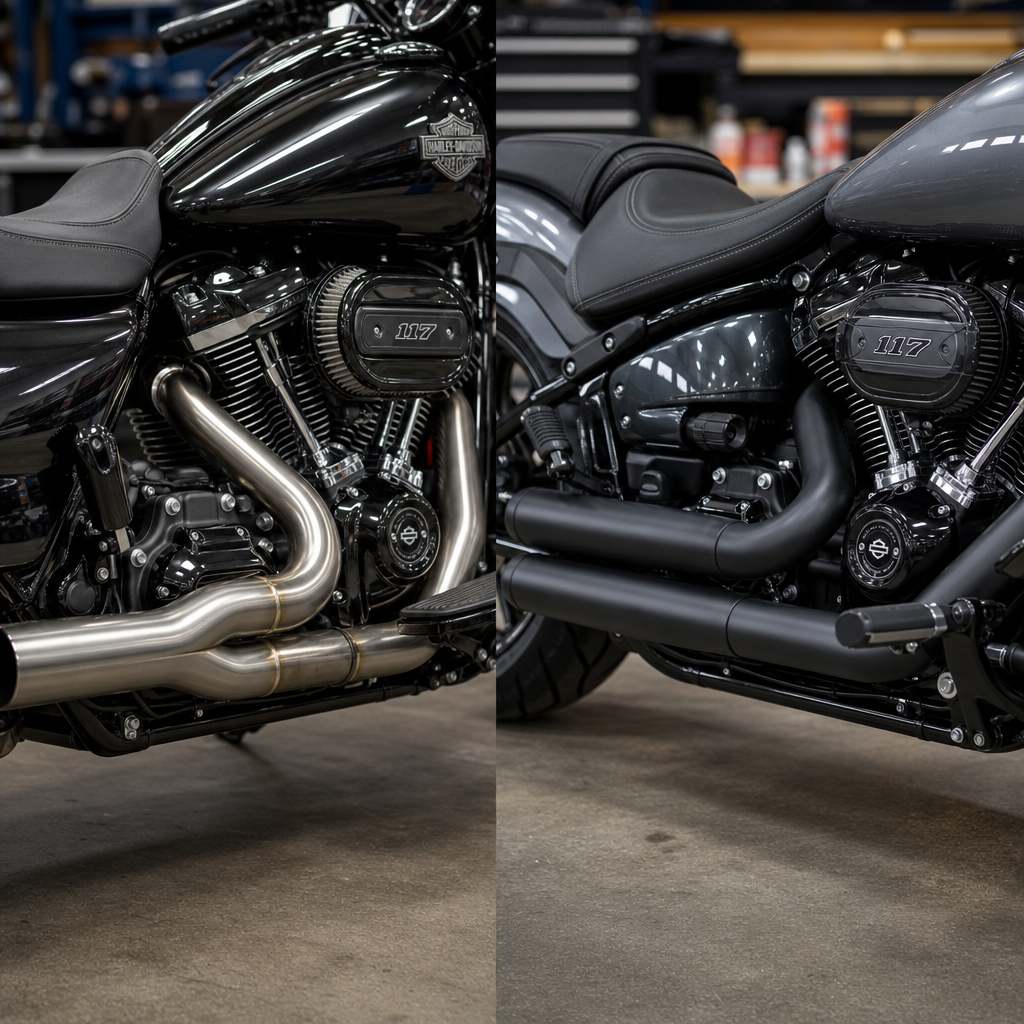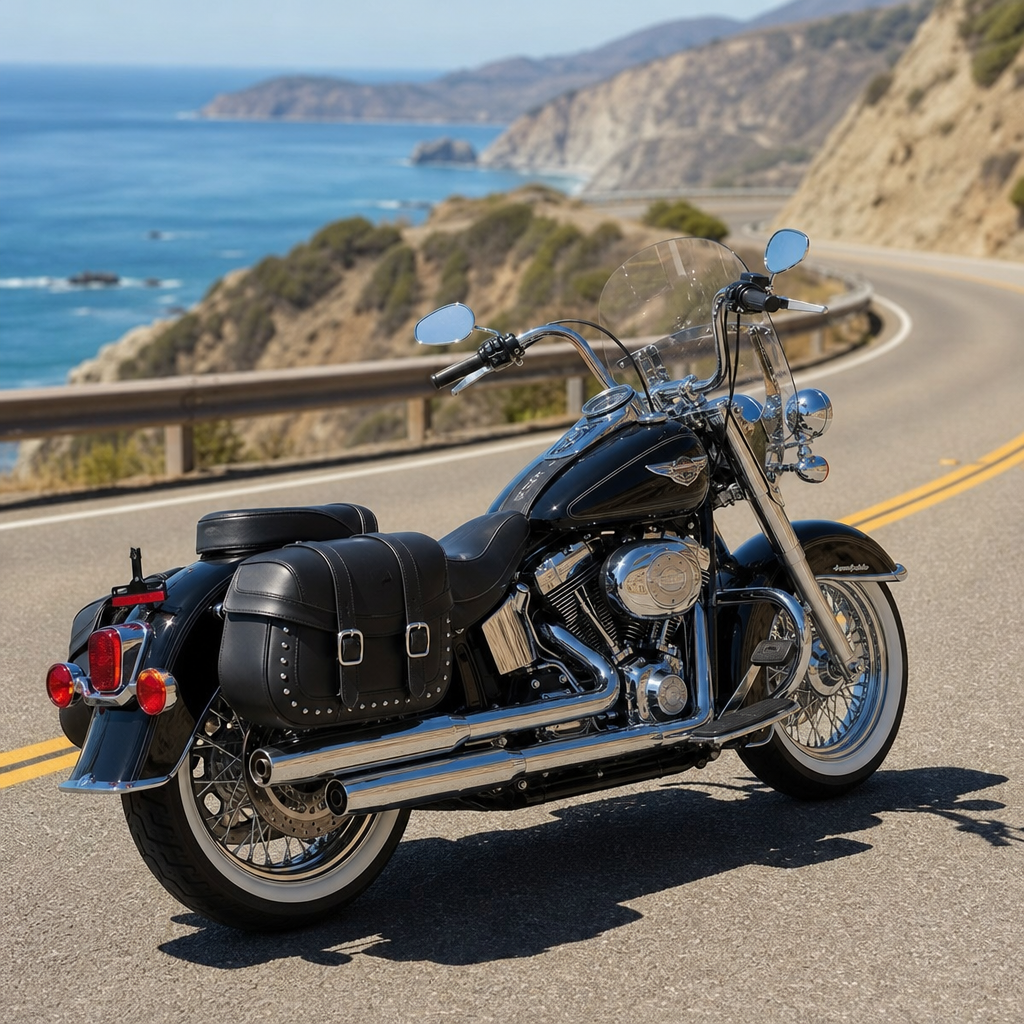
The 2026 Harley-Davidson 121 High Output platform gives riders an unusually strong foundation for a Stage I build, and the smartest way to unlock it starts with the throttle, not just the parts catalog. In Harley-Davidson tuning language, a Stage I performance tune recipe usually means three coordinated changes: improved intake flow, reduced exhaust restriction, and calibrated fuel and spark mapping. On the 2026 121 HO throttle, that recipe extends further into ride-by-wire behavior, torque request tables, engine braking strategy, and rider ergonomics that influence how power feels at the grip. I have worked through enough Milwaukee-Eight combinations to say this clearly: the best Stage I result is not the loudest exhaust or the biggest dyno number, but the cleanest relationship between wrist input, airflow, combustion efficiency, and rider control. That matters because the 121 HO is already a high-capacity V-twin with strong cylinder fill, and small calibration errors become obvious fast.
This article serves as the hub for model-specific ergonomics and performance recipes across the Harley-Davidson lineup, with the 2026 121 HO throttle as the anchor example. “Model-specific ergonomics” means the way bar reach, seat height, floorboard position, grip diameter, lever angle, and rider triangle shape how a throttle map is perceived. “Performance recipe” means a repeatable combination of hardware, software, setup checks, and riding goals tailored to a specific motorcycle rather than generic advice. Riders searching for a Stage I tune often ask simple questions: What parts do I need, what changes in real riding, what is safe for warranty and engine life, and which tune feels best in traffic, touring, or aggressive backroad use. Those are the right questions. A responsible answer has to cover airflow, calibration, drivability, heat management, emissions-related constraints, and comfort. Done correctly, a Stage I recipe makes the 121 HO easier to modulate at low speed, stronger through the midrange, and more natural over long days in the saddle.
Understanding the 2026 121 HO throttle and why Stage I starts here
The 121 HO uses electronic throttle control, so the grip is not opening the throttle body directly. Instead, the twist grip sends a rider demand signal to the electronic control system, which references throttle angle targets, torque request logic, engine speed, gear, temperature, and protective limiters. That is why two bikes with the same intake and exhaust can feel completely different after tuning. One can feel abrupt off idle, lazy in the first quarter-turn, or overly aggressive in Rain or Road modes, while another feels linear and precise. The throttle on this engine is the gatekeeper for drivability.
On a Stage I 121 HO, the biggest improvement often comes from refining the first 15 percent of grip rotation. That is where riders notice parking lot manners, corner exits, passenger smoothness, and stop-and-go comfort. I have seen perfectly good hardware combinations disappoint because the throttle translation tables remained too conservative in one ride mode and too abrupt in another. A quality tune addresses commanded throttle angle, air-fuel targets under load, ignition advance where knock margin allows, deceleration fuel behavior, and idle stability. Those details matter more than internet claims about peak horsepower alone.
The 121 HO also responds strongly to intake tract changes because high-displacement twins are sensitive to pressure drop and reversion. If the throttle strategy is optimized but the intake is poorly chosen, the bike may gain noise yet lose tractability. If the intake is efficient but the tune ignores transient fueling, you may feel lean tip-in, surging, or excess heat. The takeaway is simple: on this platform, throttle behavior is the backbone of the Stage I recipe, and every supporting part should serve that calibration goal.
Core Stage I hardware recipe for the 121 HO
A practical Stage I recipe for the 2026 121 HO starts with a high-flow air cleaner, a freer-flowing exhaust that preserves usable scavenging, and a tuning solution capable of adjusting more than basic fuel trims. Look for an intake with a sealed backing plate, consistent filter surface area, and proven flow data rather than marketing language alone. Screamin’ Eagle, S&S Cycle, Arlen Ness, and K&N all have recognizable designs, but the best choice depends on rider priorities: maximum knee clearance, wet-weather protection, service interval, and midrange torque behavior. A large exposed element may flow well, yet some touring riders prefer a compact design that protects the right leg and sheds less water in storms.
Exhaust choice is just as important. The common mistake is selecting the shortest, loudest system available and assuming power will follow. On the 121 HO, backpressure is not the point; gas velocity, collector behavior, and wave timing are. A well-designed 2-into-1 often delivers the strongest midrange and best tuning consistency, especially for riders who care about passing power and corner-exit drive. Dual systems can still work well, but they typically require more careful calibration to avoid soft spots in the curve. When customers ask me what they feel most from a sensible Stage I exhaust, the answer is not top-end rush. It is a broader, cleaner torque band between roughly 2,500 and 4,500 rpm.
The tuning device must match the sophistication of the motorcycle. Dynojet Power Vision remains a common benchmark because it allows detailed map control and data logging. Screamin’ Eagle tuner solutions may appeal to riders who want an ecosystem closer to factory support. TTS MasterTune has long been respected among experienced tuners for deep access and strong results when used correctly. Whatever tool you choose, the requirement is the same: it must support accurate calibration of fueling, spark, throttle behavior, and compensations rather than relying on canned files alone.
| Component | Best Stage I Priority | What It Changes on the 121 HO | Main Tradeoff |
|---|---|---|---|
| High-flow air cleaner | Stable airflow and serviceability | Improves cylinder fill and supports cleaner fueling targets | More intake noise, possible weather exposure |
| 2-into-1 exhaust | Midrange torque and scavenging | Stronger roll-on power and easier map consistency | Style may not suit every touring build |
| Dual exhaust | Appearance and balanced sound | Can improve flow over stock while retaining classic look | Usually less midrange efficiency than the best 2-into-1 systems |
| Advanced tuner | Full calibration control | Refines throttle, fuel, spark, and heat behavior | Requires expertise and validation time |
How ergonomics change the feel of a Stage I tune
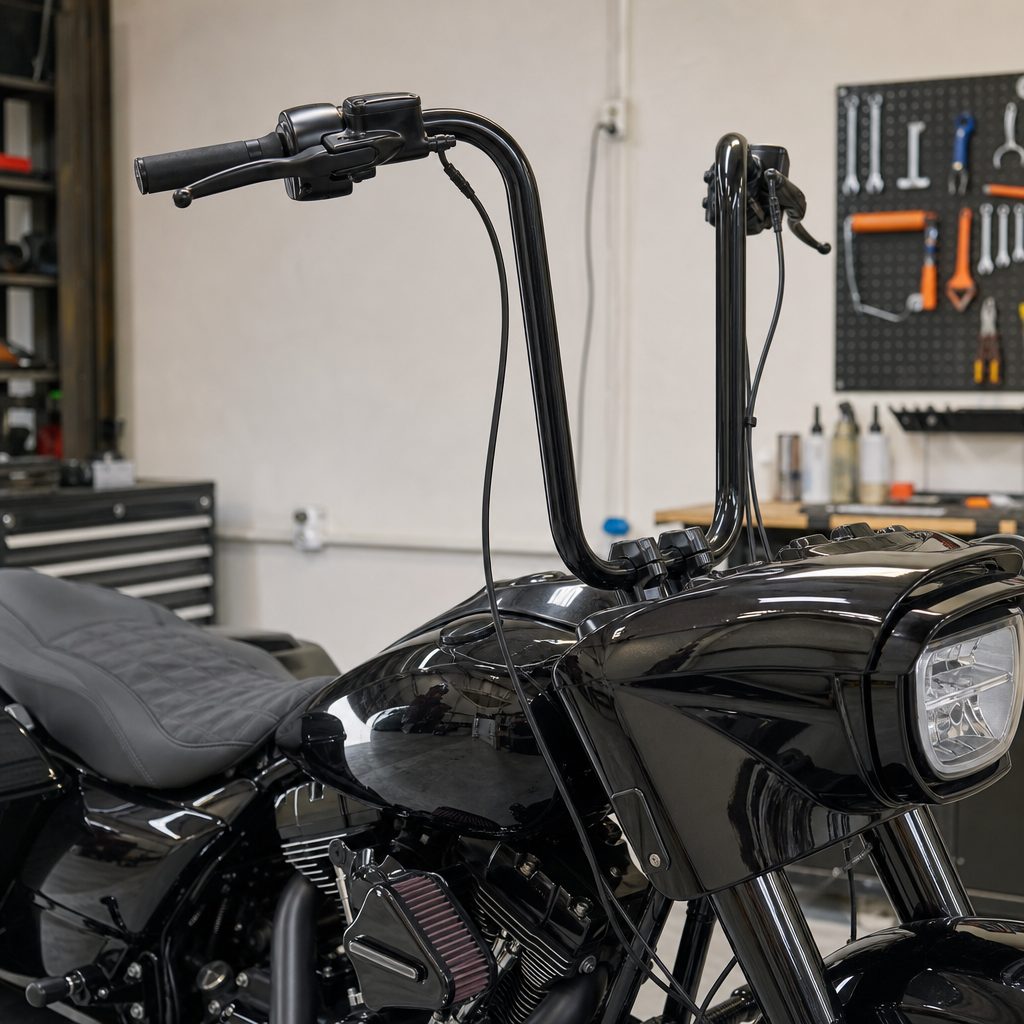
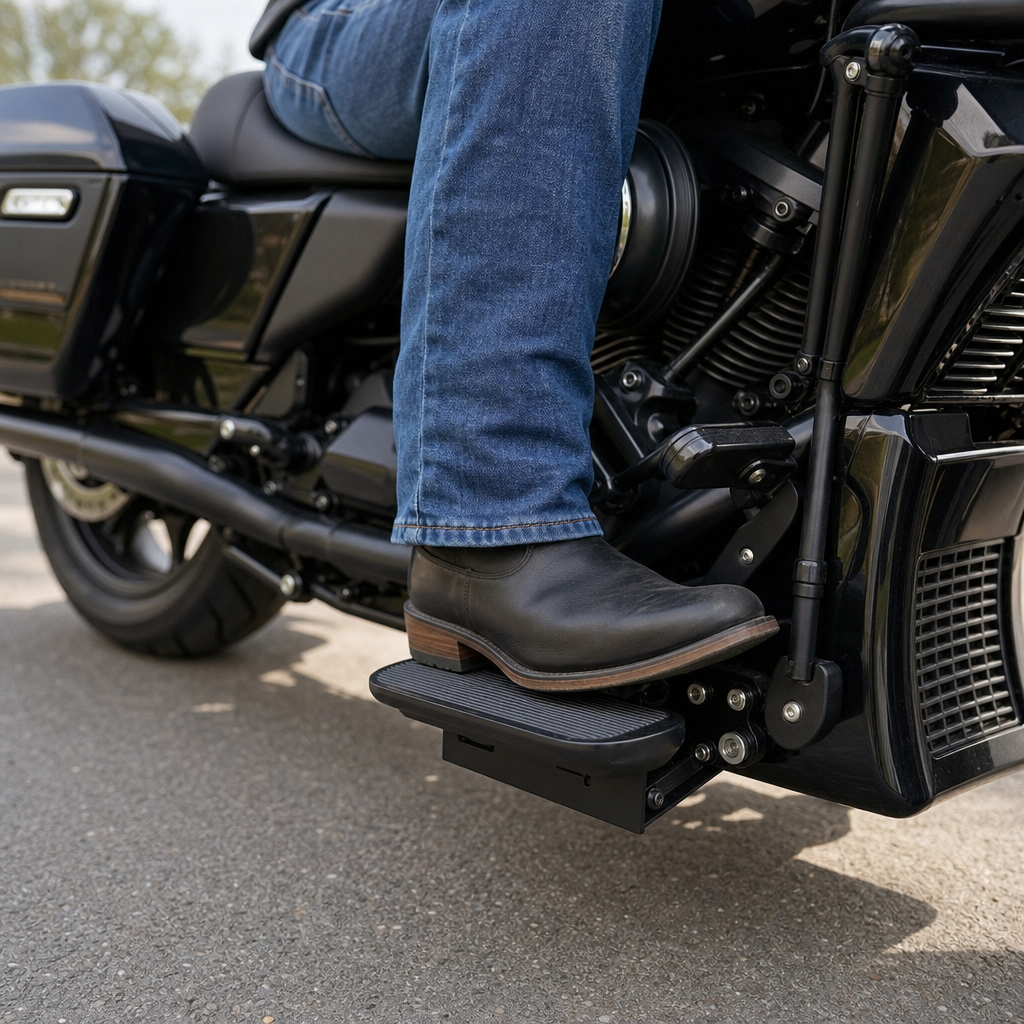
Riders often describe a tune as smooth, jumpy, heavy, or precise when they are actually feeling a combination of calibration and ergonomics. On Harley-Davidson touring and performance bagger models, bar width and pullback alter wrist angle, which changes how small throttle inputs are applied. A rider with too much reach tends to stabilize the upper body by loading the grips, creating unintended throttle movement over bumps. The same tune can feel calm on one bike and twitchy on another because the bar, seat, and floorboard relationship changed.
Grip diameter matters more than many people expect. A thicker grip reduces the angular sensitivity of the hand, which can make the first few degrees of twist easier to meter. Lever position matters too, because a poor front brake lever angle forces the wrist into extension, making fine throttle control harder during trail braking or low-speed maneuvers. Seat shape changes pelvic tilt and lower-back support, which affects how much the rider braces against acceleration. When I set up a 121 HO for someone who complains about abrupt throttle, I check fit before rewriting maps. A one-inch reach difference at the bars can solve what looks like a fuel problem.
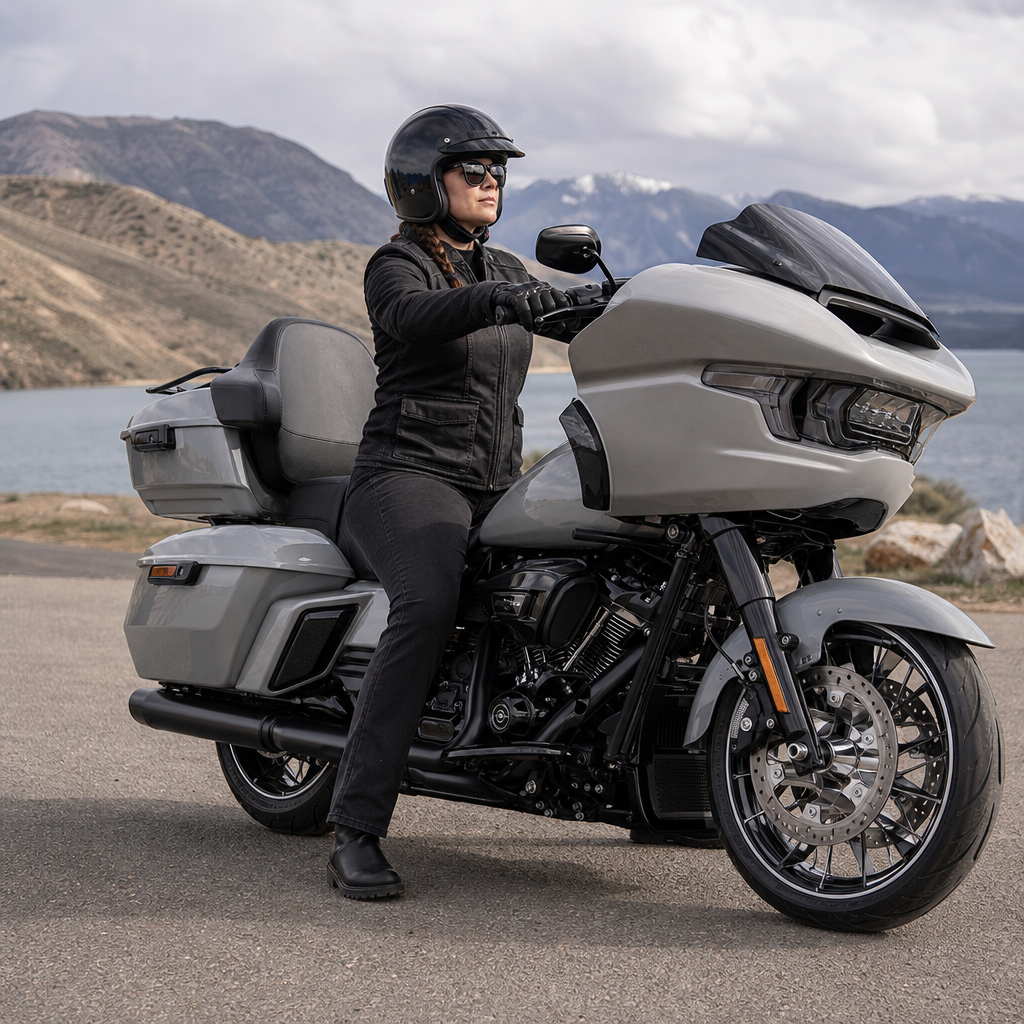
This is why this page functions as a hub for model-specific ergonomics and performance recipes. A Road Glide, Street Glide, CVO ST, Low Rider ST, and Road King can share engine architecture but require different setup logic. Fairing weight, bar geometry, rider posture, and intended use all shape the right throttle strategy. The best tuning process links the map to the machine and the machine to the rider.
Calibration strategy: fuel, spark, torque, and temperature
A proper Stage I tune for the 2026 121 HO is not just “add fuel.” Closed-loop and open-loop operation, volumetric efficiency modeling, spark advance, knock control, and temperature compensations must all agree. At light load, many riders want smoothness, low heat, and no surge. Under moderate load, they want immediate roll-on response without a flat spot. At wide-open throttle, they want repeatable power with safe combustion margins. Those are different operating zones, and each needs deliberate calibration.
Fueling should target stable combustion, not myth-driven richness. Excessively rich maps can dull response, wash cylinders over time, and inflate fuel consumption without improving reliability. Spark should be advanced only where the engine’s octane environment and chamber conditions support it. The 121 HO can reward intelligent timing changes in the midrange, but careless advance under heavy load invites knock activity and heat stress. Good tuners use data logs, dyno traces, and controlled road validation rather than guesses.
Throttle mapping deserves separate attention. A rider may want stronger response in a sport-oriented mode while preserving softer initial torque delivery in wet conditions or urban use. Engine braking strategy can also be tuned to improve corner entry or reduce passenger helmet bump. Idle quality and hot restart behavior must be checked after changes. If the motorcycle idles beautifully on the dyno but struggles in summer traffic, the map is incomplete. The best calibration is the one that works on a cool morning, a loaded highway trip, and a long heat-soaked ride through town.
Real-world recipes by use case
For touring riders, the most effective Stage I recipe usually prioritizes low-rpm smoothness, moderate sound levels, and heat control. A sealed high-flow intake, a quality touring-oriented 2-into-1 or restrained dual exhaust, and a conservative but refined tune create a bike that passes confidently without tiring the rider. The win is not bragging rights; it is clean throttle pickup with luggage, a passenger, and changing elevations.
For performance bagger riders, the recipe shifts toward sharper demand tables, stronger midrange torque, and a freer exhaust with proven collector design. Here, the 121 HO throttle can be tuned to feel more direct in the mid-grip range, helping the bike drive harder between corners. Suspension and brakes become part of the recipe because extra acceleration exposes chassis weaknesses. More power without better control is unfinished work.
For urban and mixed-use riders, the ideal recipe often surprises people: smoother is faster. A predictable first crack of the throttle, controlled decel, and manageable heat make the motorcycle easier to ride well every day. If the bike sees frequent rain, stop-start traffic, or short hops, intake protection and stable idle control matter more than the final two horsepower. The right Stage I setup is always the one that improves the conditions you actually ride in.
Common mistakes, compliance, and long-term reliability
The biggest Stage I mistake is treating the 2026 121 HO like an old cable-throttle twin where any air cleaner, any slip-ons, and any generic tune will do. Modern electronic throttle systems are more capable, but they punish lazy calibration. Other frequent errors include mixing parts with conflicting design goals, skipping baseline checks for intake leaks or exhaust leaks, and chasing dyno peak numbers while ignoring ride quality. Even tire pressure and clutch adjustment can distort a rider’s impression of throttle response.
Reliability depends on disciplined setup. Before tuning, verify spark plug condition, battery health, charging stability, manifold sealing, and throttle body cleanliness. After tuning, confirm cold start behavior, hot idle, cruise stability, and repeatability across fuel quality changes. Use the octane the tune expects. Recheck fasteners and inspect the intake element regularly. A Stage I build is mild compared with cam or head work, but it still changes the engine’s operating environment.
Compliance and warranty considerations also matter. Emissions rules vary by jurisdiction, and some hardware or calibration choices may not be legal for public-road use everywhere. Riders should verify local requirements and understand how modifications can affect factory coverage. The right approach is informed, documented, and honest about tradeoffs rather than casual or evasive.
The best Stage I performance tune recipe for maximizing the 2026 121 HO throttle is coordinated, not random. Start with the right airflow parts, choose an exhaust for usable torque instead of noise, and invest in a tuning solution that can shape throttle behavior as carefully as fuel and spark. Then match the map to the rider through ergonomics: bar position, seat support, grip size, lever angle, and riding purpose. That is how a strong stock platform becomes a motorcycle that feels cleaner, quicker, and easier to control everywhere you ride.
As the hub for Harley-Davidson model-specific ergonomics and performance recipes, this guide sets the standard for every related build article: no one-size-fits-all advice, no obsession with peak numbers, and no separation between comfort and performance. On a modern 121 HO, the throttle is where engine tuning, chassis setup, and rider fit meet. Get that relationship right, and every mile improves, from parking lots to mountain roads to loaded interstate passes.
If you are planning your own Stage I upgrade, begin with a clear use case, list your ergonomic constraints, and select parts only after deciding how you want the throttle to feel. Then work with a proven tuner, validate the results in real conditions, and use this page as your starting point for deeper Harley-Davidson model-specific recipes.
Frequently Asked Questions
What does a Stage I performance tune recipe really include for the 2026 121 HO throttle?
On the 2026 Harley-Davidson 121 High Output platform, a true Stage I tune recipe is more than bolting on an air cleaner, mufflers, and flashing a generic map. At the basic level, Stage I still means the classic three-part approach: better intake flow, less restrictive exhaust flow, and revised fuel and spark calibration to support those airflow changes. What makes the 2026 121 HO throttle different is that the ride-by-wire system has a much bigger effect on how the motorcycle actually feels, responds, and delivers torque. In other words, the engine may have more airflow potential, but the throttle strategy determines how effectively and how predictably that potential reaches the rear wheel.
That means a smart Stage I recipe on this platform should account for throttle progression, torque request modeling, and the relationship between rider input and actual throttle blade behavior. A well-developed tune can improve low-speed smoothness, sharpen roll-on response, reduce abruptness on tip-in, and better align the bike’s power delivery with the stronger breathing parts you have installed. The goal is not simply “more power everywhere,” but a more coherent powertrain package where airflow, fueling, ignition timing, and throttle behavior all agree with each other. When those elements are calibrated together, the result is a bike that feels cleaner, stronger, and more controllable across the entire rpm range rather than just louder or peakier.
Why is the throttle such an important starting point on a Stage I build instead of focusing only on intake and exhaust parts?
The throttle is the rider’s direct connection to the engine, so it shapes every impression of the build. On a modern ride-by-wire Harley-Davidson, the throttle grip is not opening the throttle body mechanically in a one-to-one way. Instead, it is sending a request to the electronic control system, which then decides how much throttle opening, torque delivery, and fueling response to provide under those conditions. Because of that, even excellent hardware can feel disappointing if the throttle calibration is lazy, abrupt, inconsistent, or limited by conservative torque management.
Starting with the throttle strategy matters because it affects launch behavior, traffic manners, corner exits, passing response, and how usable the added performance really is. A freer-flowing intake and exhaust can increase the engine’s ability to move air, but if the throttle translation is poorly matched, the bike may feel jerky at small openings, flat in the midrange, or strangely delayed when the rider asks for immediate acceleration. By prioritizing throttle behavior within the Stage I recipe, the tuner can preserve drivability while enhancing performance. That often leads to a motorcycle that feels dramatically improved even before the rider looks at dyno numbers, because the gains are present in every gear and every riding scenario.
How do intake, exhaust, and calibration changes work together on the 2026 121 HO platform?
These three areas are interdependent, and the 2026 121 HO responds best when they are treated as a system rather than separate upgrades. A higher-flow intake allows the engine to ingest more air with less restriction, especially as rpm and load increase. A less restrictive exhaust helps the engine evacuate spent gases more efficiently, which can improve cylinder filling and support stronger torque production. However, once airflow changes, the original fuel and spark tables are no longer ideally matched to the engine’s new breathing behavior. Without proper calibration, the motorcycle may run leaner or richer than intended in certain areas, show uneven throttle transitions, or leave performance on the table because ignition timing and torque intervention remain too conservative for the new setup.
On the 121 HO platform, the tune needs to account not only for air-fuel ratio and ignition advance, but also for how the ECM interprets load, throttle demand, and torque targets. This is where a thoughtful Stage I recipe separates itself from a basic parts swap. The tuner is effectively balancing combustion efficiency, thermal control, ride quality, and power delivery at once. When the intake, exhaust, and calibration are matched correctly, the engine typically shows stronger low- and midrange pull, cleaner roll-on acceleration, and more confidence-inspiring consistency from part throttle to wide-open throttle. The best outcome is not just a higher peak number, but a broader, smoother, more usable torque curve that suits real-world riding.
Will a Stage I throttle-focused tune make the bike faster, or is it mainly about smoother drivability?
It is usually both, but the biggest difference for many riders is how much more immediate and usable the motorcycle becomes. A throttle-focused Stage I tune can absolutely contribute to stronger acceleration because it helps the engine access its improved airflow and torque potential more effectively. If the stock calibration limits throttle opening behavior, softens response in key areas, or applies torque management more heavily than necessary, then revising those strategies can help the bike pull harder when the rider asks for it. Combined with proper intake and exhaust upgrades, that often translates to noticeable gains in roll-on power, passing performance, and overall urgency.
At the same time, smoother drivability is often the more meaningful win in day-to-day use. A good tune can reduce hesitation, clean up surging, improve low-speed maneuvering, and create a more natural connection between the rider’s wrist and the engine’s response. That matters on a powerful V-twin because abrupt delivery can make the bike tiring in city traffic or unsettling in technical corners, while overly muted response can make the platform feel less alive than it should. The right calibration strikes a balance: sharper without being twitchy, stronger without being harsh, and more responsive without sacrificing control. So yes, a well-executed Stage I recipe can make the bike faster, but it also makes that speed more accessible and more enjoyable.
What should riders look for when choosing a Stage I tune setup for the 2026 121 HO throttle?
Riders should look for a complete tuning approach, not just a box of parts or a one-size-fits-all flash. First, the intake and exhaust combination should be selected with a clear goal in mind, whether that is broad street torque, stronger midrange response, cooler operation, or a more aggressive top-end feel. Second, the calibration should be specific to the exact hardware setup and ideally tailored to how the motorcycle is used. A touring rider who spends long hours at part throttle may want a different throttle character and power delivery than a rider who prioritizes quick backroad response or more aggressive acceleration.
It is also important to work with a tuner or tuning solution that understands modern Harley-Davidson ride-by-wire behavior, not just fuel tables. Ask whether the tune addresses throttle mapping, torque management, spark strategy, and transition areas such as tip-in and decel. Those details have a major influence on how refined the finished bike feels. Riders should also value repeatability and reliability. The best Stage I setup is one that delivers consistent performance without creating excessive heat, poor manners, or unnecessary stress on the engine. In practical terms, that means choosing proven components, a reputable calibration strategy, and a setup philosophy focused on balance rather than chasing one headline dyno figure. When the entire package is aligned, the 2026 121 HO throttle can feel exceptionally responsive, muscular, and polished for a Stage I build.