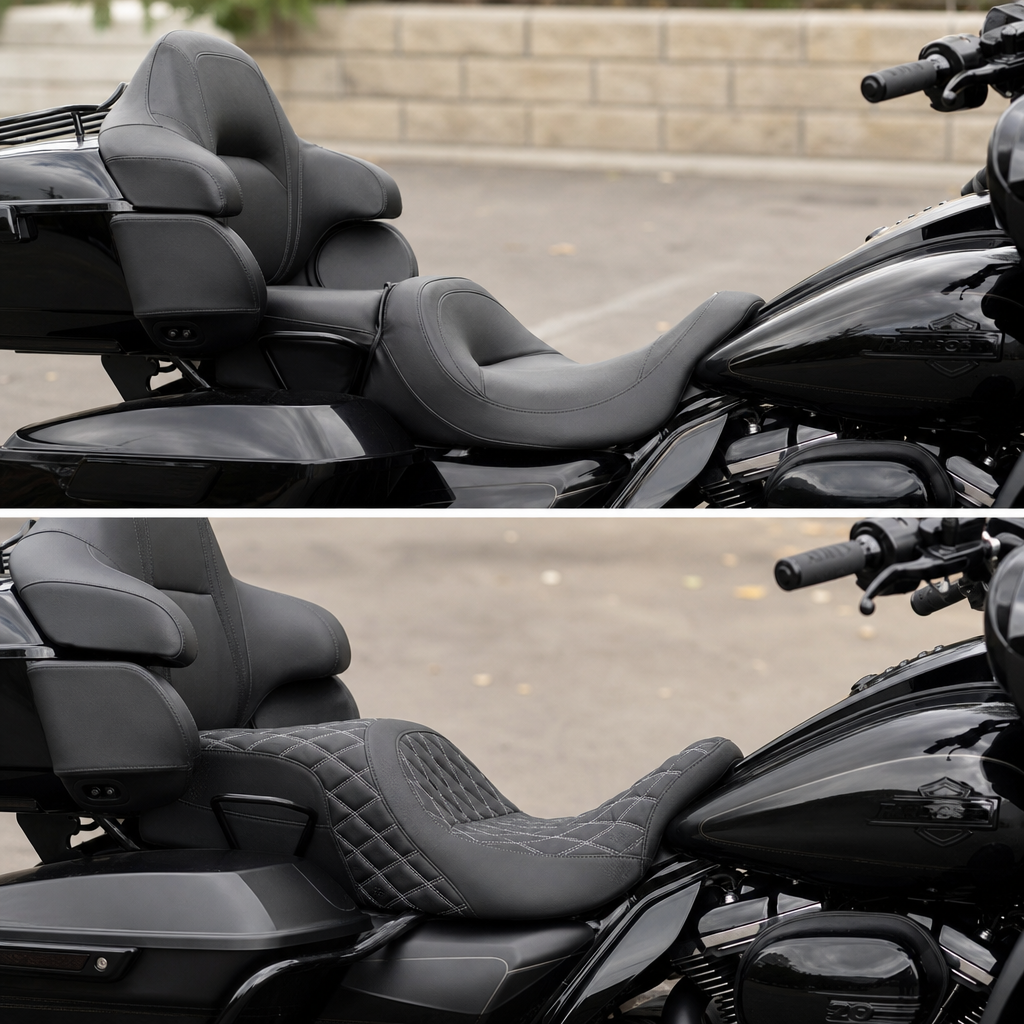
The 2026 Street Glide Limited comfort seat recipe starts with a simple question: should you keep the factory saddle and tune the rest of the bike around it, or replace it with a Mustang seat and build your ergonomics package from there? On a touring Harley, the seat is not just upholstery. It is the structural contact point that determines hip rotation, lumbar loading, knee angle, reach to the bars, and how effectively the rider can stay relaxed over a full tank of fuel. When riders talk about comfort, they often mean several different variables at once, including foam density, seat width, bucket shape, passenger support, and how the seating position changes control access. Defining those terms matters, because a seat that feels plush in the showroom can become punishing after two hours if it locks the pelvis in the wrong position or creates pressure points under the sit bones.
I have set up enough Harley touring bikes to know that seat selection rarely works as a one-part decision. On the Street Glide platform, especially a fully loaded Limited-style touring build, every ergonomic change interacts with another one. Raise the rider one inch and the windshield airflow changes. Move the pelvis rearward and the bars may suddenly feel too far away. Add floorboard spacers or different boots and the knee bend changes again. That is why I use the word recipe. A comfort recipe is a repeatable combination of seat, bar reach, foot position, suspension sag, and wind management that produces low fatigue rather than just soft padding. For a model-specific ergonomics and performance recipe, the 2026 Street Glide Limited deserves that level of precision because it is ridden for exactly the kinds of miles that expose bad fit quickly.
This article serves as the hub for Street Glide and Harley-Davidson touring fitment decisions within the broader category of model-specific ergonomics and performance recipes. The goal is comprehensive clarity: how the factory seat typically fits, what Mustang changes in real use, where each option works best, and how to choose based on rider dimensions, passenger needs, and touring priorities. You will also see the related systems that belong in the same decision tree, from bars and floorboards to suspension preload and windshield height. If you are comparing factory versus Mustang for a 2026 Street Glide Limited, the right answer is not the same for every rider. The right answer is the one that preserves neutral posture, stable control inputs, and comfort at highway duration without creating new compromises elsewhere on the motorcycle.
What the factory Street Glide Limited seat does well
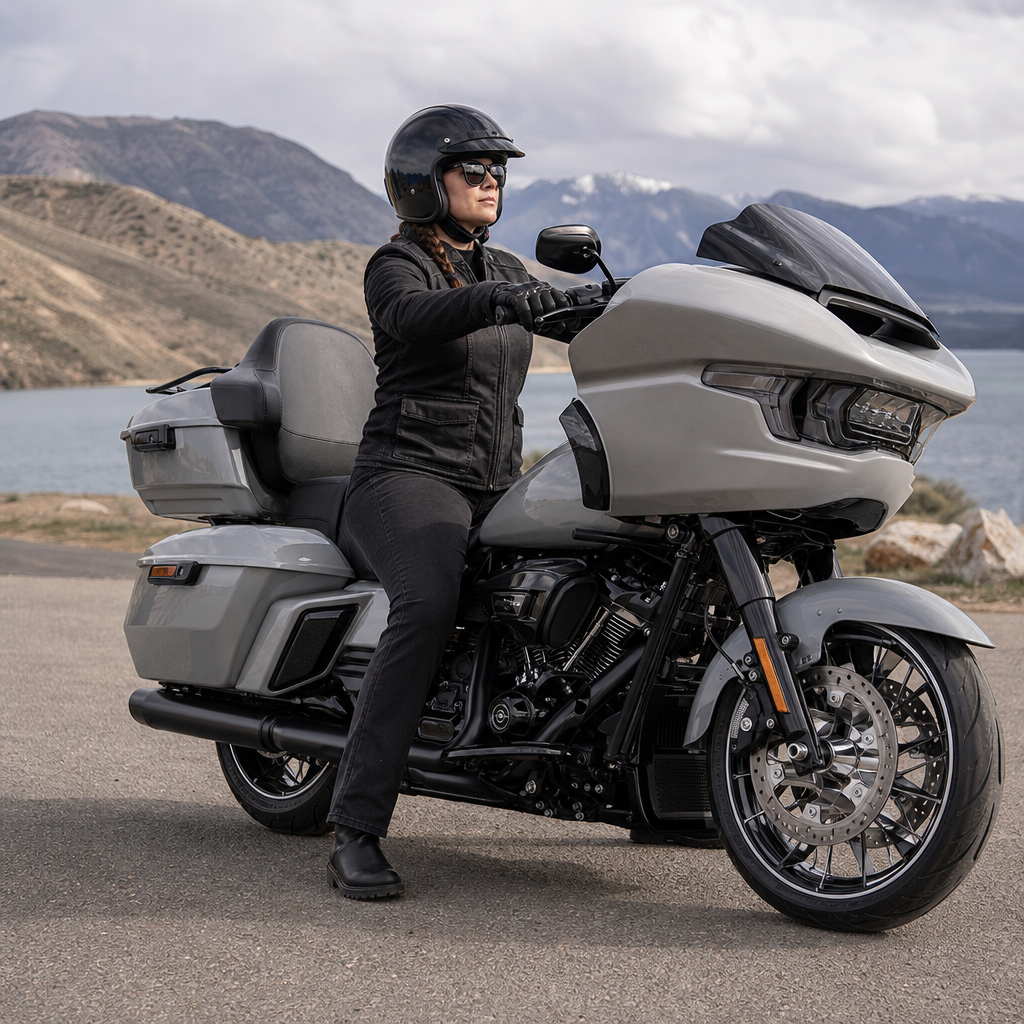
The stock Harley touring seat is designed to satisfy a wide range of riders, pass durability requirements, and preserve a familiar showroom feel. In practical terms, that usually means medium-density foam, a seating pocket that is neither extremely deep nor aggressively dished, and a rider triangle intended to work for average-height riders in casual clothing and standard boots. Factory seats also tend to integrate cleanly with the bike’s styling, latch hardware, and passenger accommodations. On a 2026 Street Glide Limited, that matters because many owners want immediate compatibility with tour-pak use, backrest fitment, and weather-resistant materials without adding variables.
Where the factory seat often succeeds is short to medium distance comfort and balanced reach. A rider with a 30- to 32-inch inseam may find the stock saddle naturally supportive around town, with an easy stoplight stance and no exaggerated reach to the bars. The narrower nose section common to factory touring seats can also help shorter riders get a cleaner leg drop to the ground. Another advantage is predictability. Harley’s stock ergonomics are developed around the complete motorcycle package, so if the bars, boards, and windshield already feel close to correct, leaving the seat alone can preserve that balance while you fine-tune smaller items such as suspension preload or grips.
The limitation is that factory comfort is usually optimized for broad acceptability, not maximum long-range support. Many riders report that the seat feels acceptable for the first hour, then develops tailbone pressure, hamstring edge pressure, or lower-back fatigue as the miles add up. This is not always because the foam is bad. More often, the contour does not match the rider’s pelvis shape or the bucket places too much weight in one area. On a heavyweight touring Harley, that becomes obvious during interstate runs where body position stays static for long periods. A stock saddle may also be less effective for heavier riders who compress the foam more deeply, or for riders who need stronger lumbar support to keep from slouching into the bars.
How Mustang changes the fit and ride experience
Mustang seats have earned a strong reputation in the Harley touring world because they usually make a deliberate ergonomic statement rather than trying to please everyone equally. In most cases, a Mustang touring seat uses firmer, more supportive foam than stock, a more defined seating bucket, and a shape intended to spread load across a broader area. Riders sometimes mistake that firmer first impression for reduced comfort. In real-world distance riding, the opposite is often true. Properly tuned seat foam should resist collapse, maintain shape after hours in the saddle, and support the pelvis instead of allowing it to sink into pressure points.
On the Street Glide Limited, a Mustang seat often changes two major things at once: where you sit and how your weight is supported. Depending on the exact model, you may sit slightly lower, slightly higher, or farther back than stock. Even small changes matter. Moving back half an inch can open the knee angle and relieve hip compression for a taller rider, but it can also increase bar reach enough to create shoulder tension. A deeper bucket can improve lower-back support on the highway, yet make active body repositioning slightly less free during aggressive backroad riding. These are not flaws. They are design choices, and they should be evaluated as part of the full ergonomic package rather than in isolation.
Passenger comfort is another reason Mustang often enters the conversation. On touring Harleys carrying two people for full-day rides, the passenger section can matter as much as the rider pocket. Better foam support, wider surface area, and more stable posture reduce shifting and fidgeting, which in turn helps the rider maintain smooth control. I have seen riders upgrade to a Mustang primarily for themselves and end up keeping it because their passenger immediately noticed less sliding forward under braking. That kind of real-world benefit is significant on a bike intended for loaded travel, where comfort failures multiply over distance and luggage weight.
Factory vs Mustang: the model-specific comfort recipe
The best way to compare the factory Street Glide Limited seat with a Mustang is to evaluate each one inside a repeatable recipe. Start with five checkpoints: seat height relative to the floorboards, fore-aft seating position, lumbar support, pressure distribution after ninety minutes, and passenger stability. Then add two performance checkpoints that many comfort discussions miss: control confidence in low-speed maneuvers and reduced fatigue at sustained highway speed. A seat is part of performance because tired riders make slower, less precise inputs. If your hips are cramped or your lower back is burning, you will feel it first in steering smoothness and braking consistency.
| Factor | Factory Seat | Mustang Seat | Best Fit Scenario |
|---|---|---|---|
| Initial feel | Softer, familiar, easy to adapt to | Firmer, more supportive over time | Factory for short rides; Mustang for distance touring |
| Rider position | Usually neutral and broadly accessible | More defined pocket, may move rider slightly | Factory for average fit; Mustang for targeted posture correction |
| Pressure management | Can compress more during long rides | Better load distribution on long highway runs | Mustang for riders with tailbone or sit-bone pain |
| Passenger comfort | Adequate for many riders | Often improved support and stability | Mustang for frequent two-up touring |
| Control access | Designed around stock bars and boards | May require bar or peg reconsideration | Factory for plug-and-play; Mustang for custom fit builds |
If you are a shorter rider prioritizing secure footing at stops, the factory seat often remains a strong baseline, especially if your current complaint is minor and can be addressed through suspension adjustment. If you are a taller rider, a heavier rider, or someone doing repeated 300-mile days, Mustang usually has the advantage because support quality tends to matter more than showroom softness. Riders with low-back fatigue often benefit from the more structured seating pocket. Riders who frequently move around in the saddle during urban riding may prefer the stock seat’s less restrictive shape. The correct recipe depends on where discomfort starts and whether your problem is support, reach, or pressure concentration.
How to match the seat to bars, boards, suspension, and wind protection
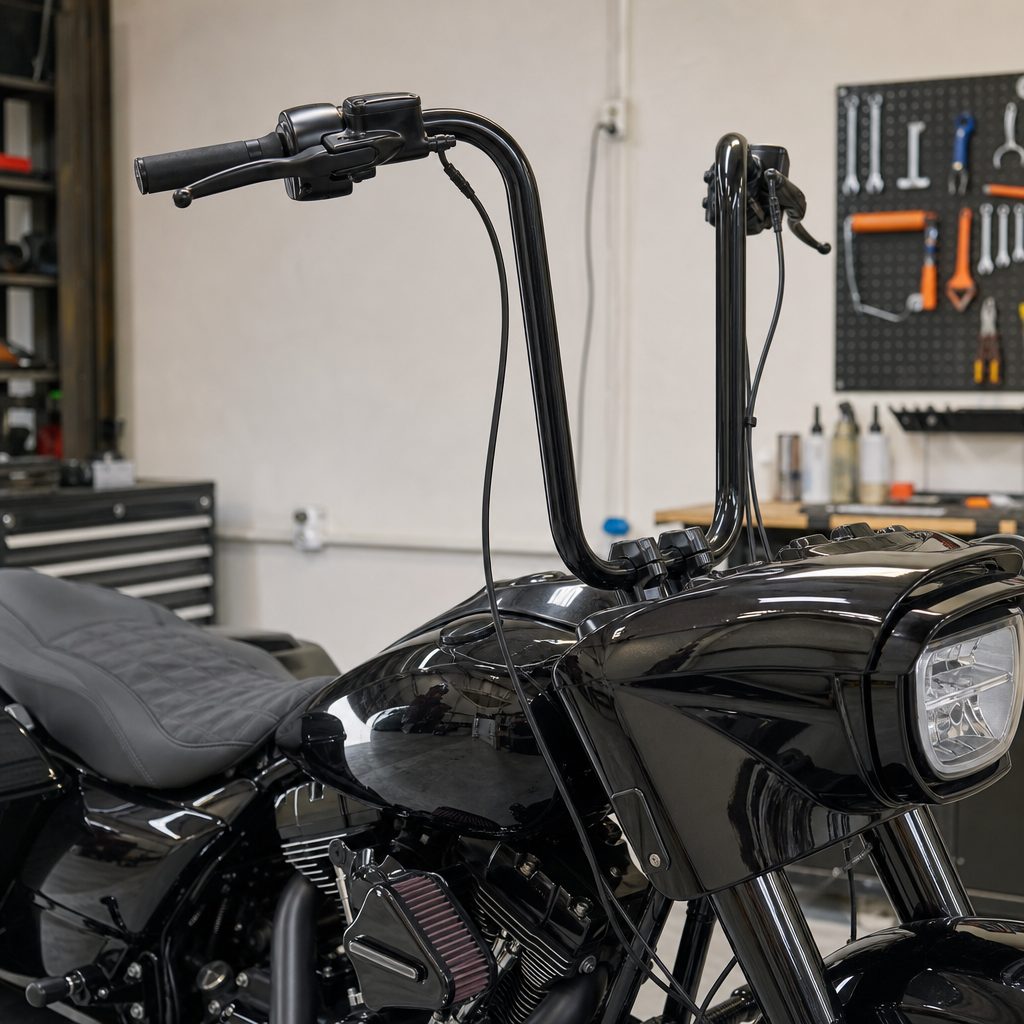
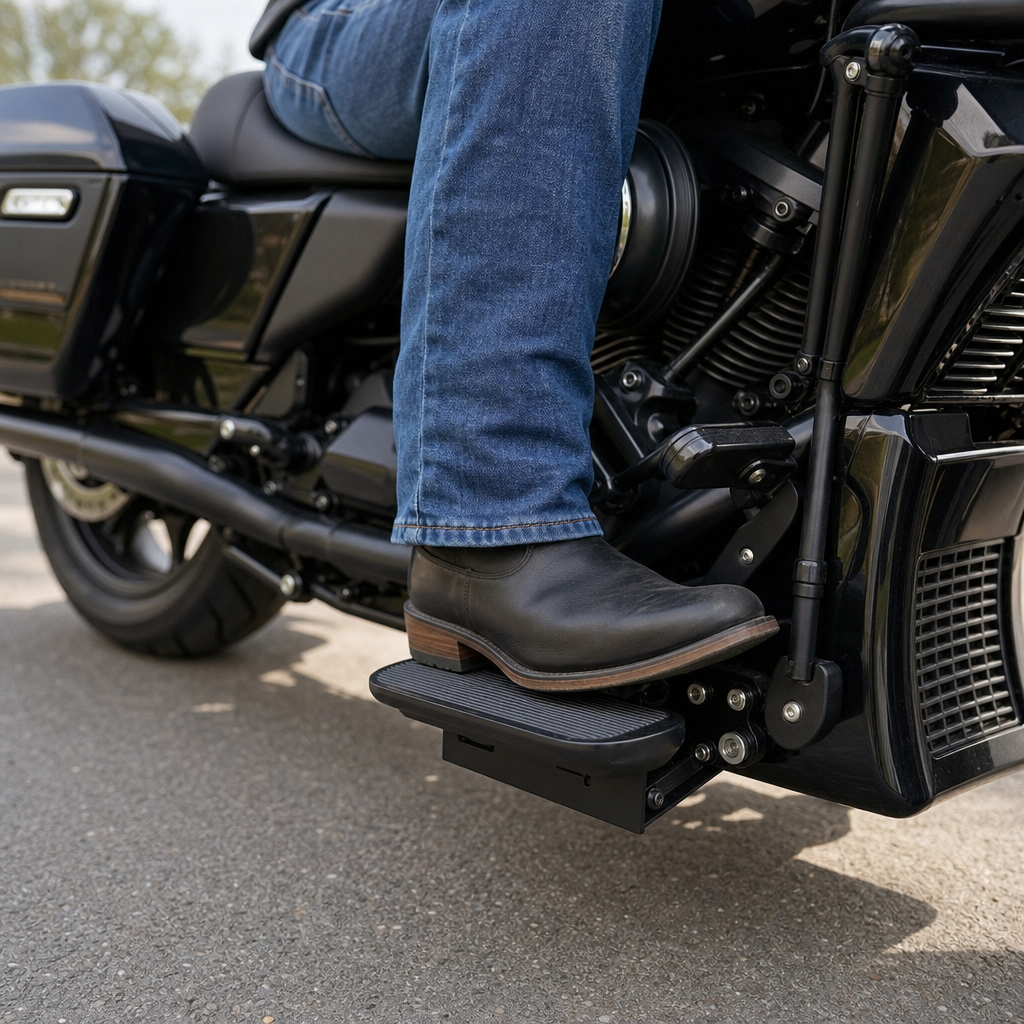
A seat should never be selected without checking the other touchpoints. First, bars. If a Mustang seat moves you rearward, stock bars may force elbow lockout or shoulder rounding. That is a sign to measure grip reach, not to assume the seat is wrong. On Harley touring builds, even a modest handlebar change in pullback or rise can restore neutral arm bend and remove upper-back strain. Second, floorboards. Knee angle is one of the fastest predictors of touring fatigue. If the seat raises you or moves you rearward, floorboard extenders or different foot placement strategies may be necessary for riders with long femurs or tight hips.
Third, suspension. This is the most overlooked element in any comfort seat recipe. Rear shock preload affects ride height, chassis attitude, and how much impact energy reaches the seat. On a loaded Street Glide Limited, incorrect sag can make a good seat feel bad because the suspension is riding too deep in its travel. Premium shocks from companies such as Öhlins, Legend Suspensions, or Progressive Suspension can transform comfort, but even stock hardware performs better when preload is set correctly for rider, passenger, and luggage weight. Fourth, wind protection. Change your seat height and you change where your helmet sits in the wind stream. If buffeting increases after a seat swap, the problem may be windshield height or vent management rather than the saddle itself.
This integrated approach is what makes a hub article useful across the Harley-Davidson category. The same logic applies to Road Glide, Ultra, and other touring models, but each bike needs model-specific measurements and rider feedback. For the 2026 Street Glide Limited, the strongest comfort outcomes come from treating the seat as the center of a system. Build around it deliberately. If the stock seat keeps your pelvis neutral and your controls close, improve the suspension and airflow first. If the stock seat collapses under you or creates repeatable hot spots, a Mustang is often the cleaner solution, provided you are willing to recheck bar reach and passenger setup afterward.
Decision framework for real riders
Choose the factory seat if you fit the bike well now, ride mostly under two hours at a stretch, value easy reach to the ground, and want zero fitment surprises with stock touring equipment. Choose a Mustang if you ride all-day distances, carry a passenger often, need firmer support, or know that your discomfort comes from pressure concentration rather than simple stiffness. Test rides matter, but they must be long enough to reveal delayed fatigue. I tell riders to evaluate at the ninety-minute mark, then again at the first fuel stop after that. Comfort decisions made in the dealership parking lot are rarely reliable.
Keep notes during your test. Are you pushing yourself backward at every light? Are you stretching for the bars after thirty minutes? Does your passenger slide forward under braking? Do your knees ache first, or your lower back, or your tailbone? Those answers point directly to the fix. A stock seat with a suspension correction may outperform an aftermarket saddle on one rider’s bike. A Mustang with a small bar adjustment may become the best long-distance upgrade another rider has ever made. The point of a 2026 Street Glide Limited comfort seat recipe is not to crown one brand universally. It is to create a fit that lets the motorcycle disappear beneath you so the miles feel shorter and control stays natural.
The key takeaway is clear: factory versus Mustang is really a choice between broad stock compatibility and targeted long-distance support. The factory seat remains the right answer for many riders because it preserves the original rider triangle, keeps stop-and-go confidence high, and integrates seamlessly with the touring package. Mustang becomes compelling when your use case exposes the limits of that compromise, especially on repeated highway days, heavier loads, or regular two-up travel. In those scenarios, firmer support and better pressure distribution usually beat softer first impressions.
For the 2026 Street Glide Limited, comfort should be measured as a system outcome, not a catalog feature. Seat shape, foam density, rider position, suspension sag, floorboard relationship, and windshield airflow all influence one another. If you approach the bike as a recipe, your decisions become more accurate and your upgrades become more cost-effective. Start by diagnosing the exact source of discomfort, then choose the seat that fixes that problem without creating a new one at the bars or boards. That method works across the full Harley-Davidson touring lineup, which is why this article serves as a hub for model-specific ergonomics and performance recipes.
If you are deciding today, begin with your riding pattern. Mostly local and medium rides with good current fit: keep the factory seat and refine the chassis around it. Frequent long-distance or two-up touring with recurring hot spots: move the Mustang to the top of the list and verify reach afterward. Use this framework as your baseline, then continue into the related Harley-Davidson fitment guides in this subtopic to dial in bars, suspension, wind protection, and passenger setup with the same model-specific discipline.
Frequently Asked Questions
Is the 2026 Street Glide Limited factory seat good enough, or is a Mustang seat usually the better starting point?
The honest answer is that it depends on what problem you are trying to solve. The factory seat on a 2026 Street Glide Limited is designed to satisfy the widest possible range of riders, which means it usually does a respectable job across short rides, commuting, and general touring. It often preserves the original riding triangle Harley intended, keeps the bike visually stock, and avoids introducing fitment or expectation issues. If your current discomfort is minor and mainly shows up after several hours, the factory seat can still be a very workable foundation if you adjust the rest of the ergonomics around it. That might include changing bar position, floorboard use, suspension preload, backrest setup, and even boot choice before you spend money on a replacement saddle.
A Mustang seat becomes the better starting point when the seat itself is clearly the root of the problem. That usually means you are sliding into the tank, carrying too much pressure on the tailbone, feeling your hips rotate forward in an unnatural way, or finding that the foam loses support long before the fuel tank is empty. A good aftermarket touring seat can change the shape, density, and support area enough to alter how your pelvis sits on the bike, which then affects lumbar stress, knee bend, and reach to the bars. In practical terms, riders often choose Mustang because they want a broader support platform, different contouring, and a more defined pocket that helps them stay planted without constantly bracing themselves.
If you are building a true comfort recipe, the best way to think about it is this: the seat should be the anchor point, not an afterthought. If the stock seat already puts your hips and spine in a healthy position, keep it and optimize around it. If it forces bad posture from mile one, replacing it first is often smarter than trying to compensate with every other part on the motorcycle. The right answer is not “factory versus aftermarket” in the abstract. It is which seat gives you the best neutral posture for your body so the rest of the bike can be tuned around a stable foundation.
How does changing from the factory saddle to a Mustang seat affect rider ergonomics on a Street Glide Limited?
Changing seats can affect almost every major touchpoint on a touring Harley, even if the difference looks subtle in photos. The seat determines where your hips sit relative to the floorboards and handlebars, how much your lower back must support your upper body, and whether your knees remain comfortably open or get tucked too tightly for long-distance use. A Mustang seat may position you slightly higher, lower, farther back, or more securely “in” the bike depending on the exact model and contour. Those changes can improve long-haul comfort dramatically, but they can also reveal other ergonomic issues that were less obvious before.
For example, if a Mustang seat moves you rearward, you may gain welcome room in the knees and hips, but you may also increase your reach to the bars. That can shift tension into the shoulders, neck, wrists, and upper back if your handlebars were already near the edge of your comfort range. On the other hand, if the seat’s bucket better supports your pelvis, you may need less effort to hold your torso upright, which can reduce fatigue despite a slightly longer reach. Similarly, if the seat changes effective height, the angle at your knees and the pressure distribution on your feet at the floorboards may change enough to make highway pegs either more or less necessary.
This is why experienced touring riders do not judge a seat by padding alone. They evaluate hip rotation, lumbar support, sit-bone pressure, ability to shift position during a long day, and whether the seat works with their bars, windshield setup, and suspension. On a Street Glide Limited, the seat is a central ergonomic control point. A Mustang seat can absolutely improve comfort, but the real benefit comes when that new seating position also aligns your spine, relaxes your shoulders, and lets you ride a full tank without constantly adjusting to escape pressure points.
What signs tell you the factory seat is the real cause of discomfort rather than handlebars, suspension, or riding posture?
There are several reliable clues. If discomfort starts specifically at the seat contact points, such as hot spots under the sit bones, numbness in the rear, pressure on the tailbone, or a feeling that the seat pushes you toward the tank, the saddle is a prime suspect. Another clear sign is when you feel temporary relief every time you stand on the floorboards, shift to one side, or scoot back for a few minutes. That pattern usually means the pressure distribution or seat contour is wrong for your body rather than the problem being purely upper-body posture.
You can also learn a lot by paying attention to how fatigue develops over time. If your lower back begins to ache because your pelvis is being rolled forward or because you cannot settle into a supported position, the seat may be causing secondary problems elsewhere. Likewise, if your knees and hips feel cramped even though your inseam suggests the bike should fit you reasonably well, a seat with the wrong pocket location or foam shape may be stealing usable room. The key is understanding whether the discomfort begins at the seat and radiates outward, or begins somewhere else and only makes the seat feel worse later in the ride.
That said, riders often blame the seat for issues that actually come from suspension harshness, poorly placed bars, or posture habits. If sharp impacts feel like they drive straight through the chassis into your spine, your rear suspension setup may be contributing just as much as the saddle. If your shoulders are tense and you are supporting too much body weight through your hands, handlebar reach or pullback may be part of the problem. The best approach is to isolate symptoms methodically. If the pressure point is immediate and localized to how you sit, start with the seat. If the discomfort is more global and linked to control reach or ride quality, treat the seat as one part of a larger ergonomic system rather than the sole fix.
Should you build your comfort setup around the seat first, or upgrade bars, suspension, and pegs before replacing the saddle?
In most cases, you should start with the seat because it defines your base position on the motorcycle. Once your hips are placed correctly, every other adjustment becomes more logical. Your reach to the bars, your knee angle to the floorboards, your backrest relationship, and even your wind protection all make more sense when the seat is settled first. If you adjust bars or add other ergonomic parts before solving a poor seating position, you may end up compensating for a bad foundation and then having to rework those changes later.
There are exceptions. If the factory seat feels fundamentally acceptable and your discomfort is obviously tied to another issue, such as bars that are too far forward or a suspension setup that is punishing over broken pavement, then it can be smart to address those first. A rider who is reaching too much will often mistake upper-body fatigue for overall seating discomfort. Likewise, a harsh rear end can make even a decent seat seem inadequate because no foam can fully mask repeated impact loading. In those cases, the seat may not need replacement at all.
The most effective “comfort recipe” is to think in sequence. First, determine whether the factory seat puts your pelvis in a neutral, supported position. If yes, keep it and tune the surrounding ergonomics. If no, replace it with a seat that better suits your body shape and riding goals, then reassess bar reach, backrest position, suspension, and foot options. Touring comfort is cumulative. The rider who gets the best result is usually the one who treats the seat as the center of the system and makes every other adjustment support that center rather than fight it.
For long-distance touring, what makes a Mustang seat appealing compared with the stock 2026 Street Glide Limited seat?
For serious mileage, a Mustang seat is often appealing because it is typically chosen for support, shape, and endurance rather than for broad showroom compromise. Long-distance comfort is less about softness than about maintaining circulation, reducing concentrated pressure, and keeping the rider in a stable posture without muscular bracing. A well-designed touring seat can spread load across a larger area, support the sit bones more effectively, and reduce the constant micro-adjustments that wear you down over a full day. That matters on a Street Glide Limited because the bike is built to eat miles, and the seat largely determines whether those miles feel easy or like a countdown to the next stop.
Another advantage is consistency over time. Many riders find that aftermarket touring seats hold their support better across extended use, especially once the ride stretches beyond the first hour or two. The shape of the seating pocket, the firmness of the foam, and the way the seat cradles the rider can all help maintain a neutral posture longer than a flatter or less supportive stock design. That can mean less lower-back tension, less sliding forward under braking, and less need to push against the bars just to stay in place. On a bike with a full tank range meant for real touring, those small differences become major comfort factors by midday.
Still, the appeal of Mustang is strongest when it matches your body and your priorities. Some riders prefer the factory seat because it allows easier movement, feels familiar, or works better with their exact height and reach. Others immediately benefit from the aftermarket contour and would never go