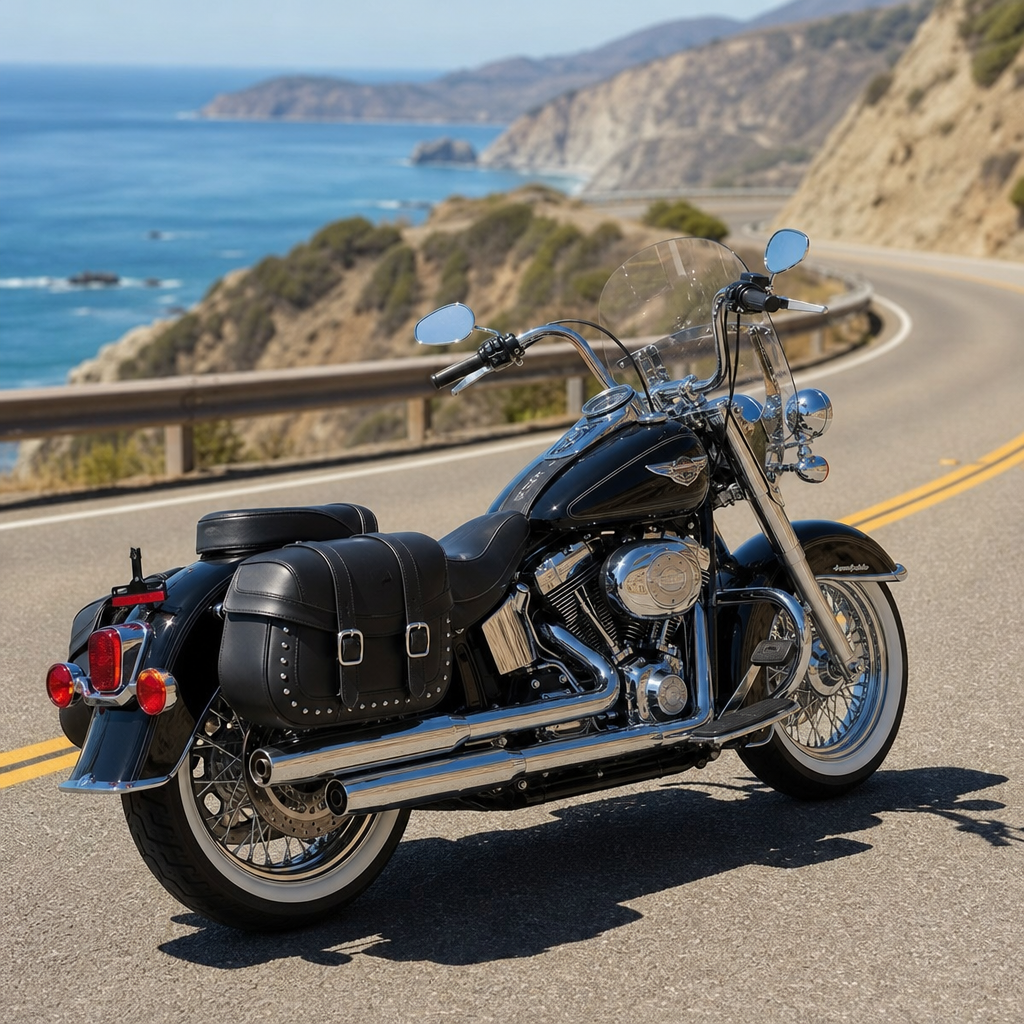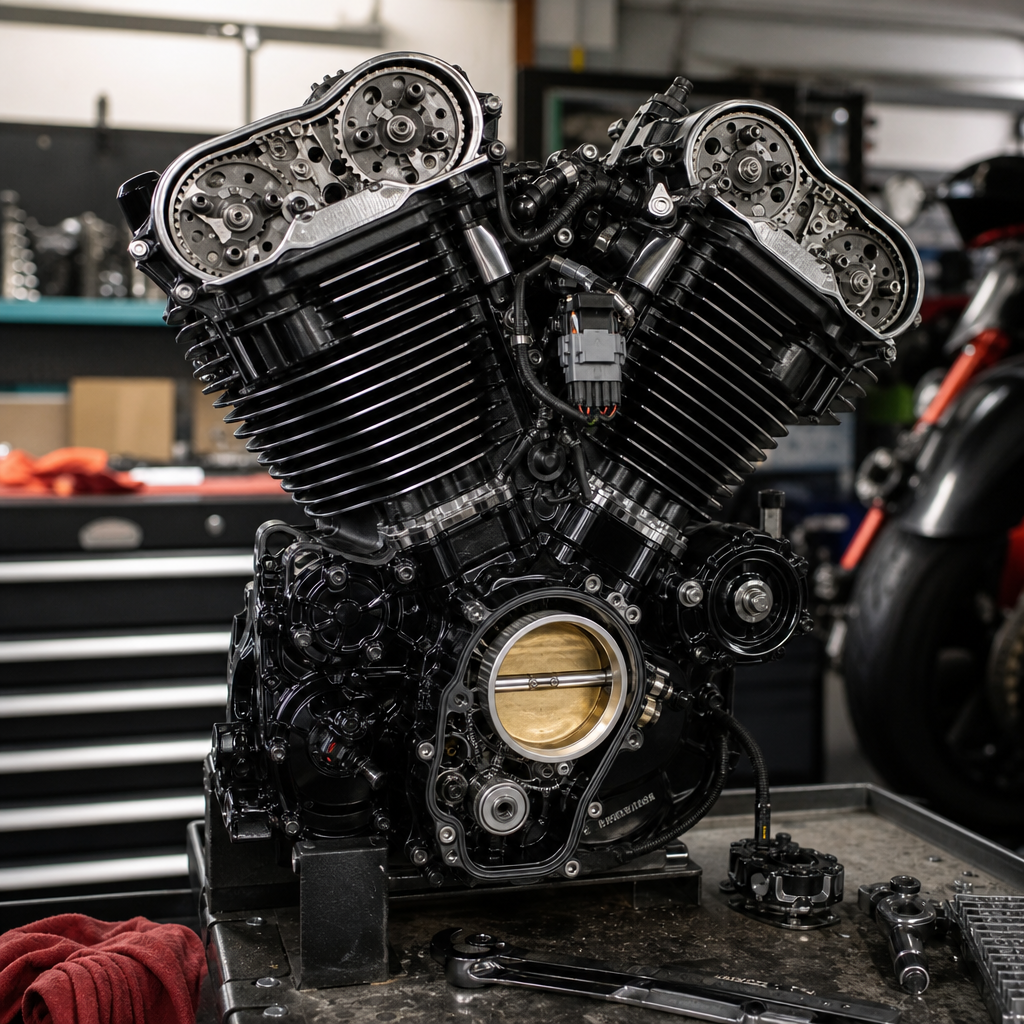
The CVO 121 VVT Valve Phasing Recipe for optimizing 2027 tuning logic starts with a simple truth: Harley-Davidson’s variable valve timing changes how torque, heat, rideability, and calibration strategy interact, so model-specific ergonomics and performance recipes must be built around both the engine map and the rider’s physical interface with the motorcycle. On the 2027 CVO 121 platform, “valve phasing” refers to commanded camshaft advance and retard relative to crank position, usually managed through oil-pressure-actuated cam phasers and interpreted by the ECU alongside throttle angle, manifold pressure, engine speed, knock feedback, exhaust oxygen correction, and temperature compensation tables. “Tuning logic” means the rules behind those commands: when timing advances to improve low-end cylinder fill, when it retards to protect against knock or reduce pumping loss, and how those shifts affect the way a touring Harley feels under a real rider in real traffic.
I have tuned late-model big-inch V-twins long enough to know that owners rarely ask for abstract improvements. They ask for cooler operation in parade traffic, cleaner roll-on power with a passenger, less surge in partial throttle, stronger passing torque from 2,500 to 4,000 rpm, and a seating, bar, floorboard, and windshield setup that lets them use that power for hours without fatigue. That is why this article treats the CVO 121 VVT not as an isolated engine project but as the hub for Harley-Davidson model-specific ergonomics and performance recipes. A proper recipe combines valve phasing, fueling, spark, torque intervention, gearing expectations, rider triangle fit, thermal management, and load scenario. When those pieces align, the motorcycle stops feeling merely powerful and starts feeling coherent.
This matters because the 121 cubic inch VVT era rewards precision more than older fixed-cam Milwaukee-Eight combinations. A broad-stroke calibration that worked decently on a non-VVT bagger can leave performance on the table here. Advancing intake phasing too aggressively at low rpm may sharpen torque but also elevate effective cylinder pressure and heat. Retarding too early can flatten the midrange riders actually use on public roads. Ergonomic mismatch creates a parallel problem: if bars are too far forward, the rider braces against the grips under acceleration and perceives the engine as abrupt; if the seat locks the pelvis in a rearward pocket, throttle transitions can feel harsher than the data suggests. Therefore, the best 2027 tuning logic is not a single magic map. It is a repeatable recipe framework that links calibration decisions to model, rider size, use case, and expected load.
Why the CVO 121 VVT needs a recipe-based tuning approach
A recipe-based tuning approach means starting from a known mechanical and ergonomic baseline, then applying repeatable calibration changes in a controlled order. On the CVO 121 VVT, that order should begin with mechanical health: no intake leaks, no exhaust leaks ahead of oxygen sensors, stable oil pressure, correct cam phaser control, fresh plugs, battery voltage under load, and current firmware. Harley-Davidson touring motorcycles are sensitive to small sensor deviations, especially when the ECU is blending closed-loop fueling with torque-based intervention. If the front and rear cylinder trims are already compensating around an unaddressed fault, any valve phasing optimization becomes guesswork.
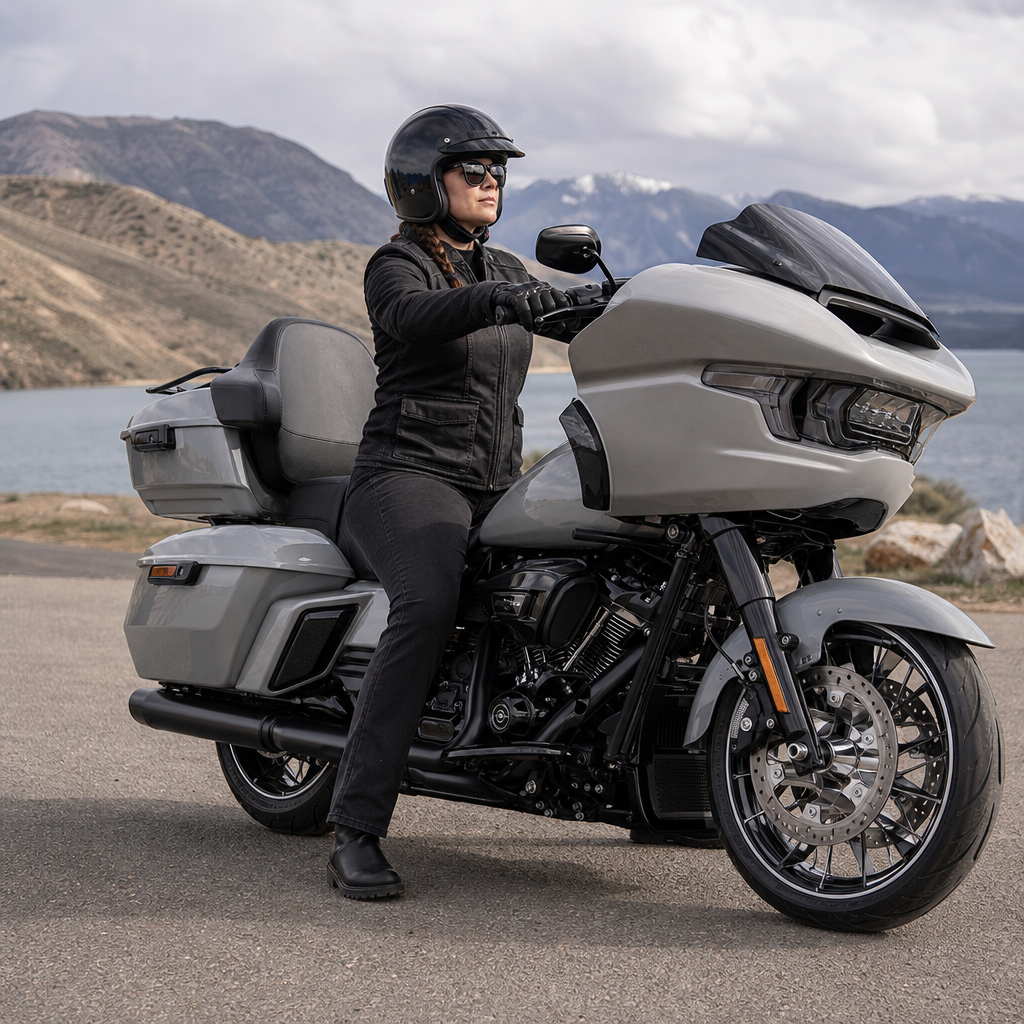
The second reason recipes matter is model variation. Even within the Harley-Davidson touring family, a CVO Road Glide, Street Glide, and heavily accessorized bagger with a trunk, taller screen, and passenger backrest do not load the engine or rider the same way. Aerodynamic drag rises fast at highway speed, and rider posture changes throttle behavior. I have seen two motorcycles with nearly identical dyno curves feel completely different on the road because one had a reach that forced the rider to roll the wrist awkwardly through mid-throttle. In practice, tuning logic must reflect where the motorcycle lives most often: urban stop-and-go, two-lane sweepers, interstate travel, mountain grades, or fully loaded two-up touring.
The third reason is that VVT broadens the useful operating window, but only if the ECU strategy is coherent. Variable cam timing can improve low-speed torque, reduce residual exhaust contamination, help emissions control, and preserve top-end breathing. Yet those benefits depend on matching phasing to fuel, spark, and torque requests. A recipe lets you define intended behavior by zone. For example, low-rpm cruise may target smooth combustion stability and lower heat, while midrange roll-on targets immediate but progressive torque without abrupt driveline lash. That is how a hub article should frame performance recipes: not as isolated peak-horsepower pursuits, but as purpose-built combinations.
Core valve phasing principles for 2027 tuning logic
For the 2027 CVO 121 VVT, the foundation is understanding what cam phasing changes inside the cylinder. Advancing intake timing generally closes the intake valve earlier relative to piston travel, which can increase dynamic compression and strengthen torque at lower engine speeds where charge velocity matters. Retarding it tends to favor higher-rpm breathing by reducing overlap-related reversion and shifting the torque curve upward. Exhaust phasing, where applicable in strategy interpretation, affects scavenging, residual gas fraction, and temperature behavior. The ECU does not treat these moves in isolation. It calculates torque demand, monitors knock activity, references cylinder airmass models, and uses cam position feedback to command a target that satisfies both rider demand and protection logic.
In plain terms, the best valve phasing recipe for a heavy touring Harley is usually not the most aggressive one on the dyno. It is the one that delivers the strongest average torque across the 2,000 to 4,500 rpm band while preserving combustion stability, minimizing knock retard, and avoiding excessive heat soak during prolonged low-speed operation. That means conservative incremental changes, validated on both a load-bearing dyno and the road. I generally look for three things after each phasing revision: cleaner manifold pressure trace at steady cruise, reduced spark correction under hot conditions, and improved repeatability in roll-on acceleration from a fixed starting rpm and gear.
Another key principle is transition control. Riders feel transient errors more than they notice small steady-state differences. If cam phasing shifts too suddenly near a common cruise or passing zone, the motorcycle can feel like it steps into the powerband instead of flowing into it. Good 2027 tuning logic smooths those handoff regions by aligning phasing transitions with fueling enrichment, spark slope, and electronic throttle progression. This is especially important on premium touring models where refinement is part of the product. Peak numbers matter, but hesitation-free behavior at 15, 30, and 60 percent throttle matters more to owner satisfaction.
Model-specific ergonomics and performance recipes for Harley-Davidson riders
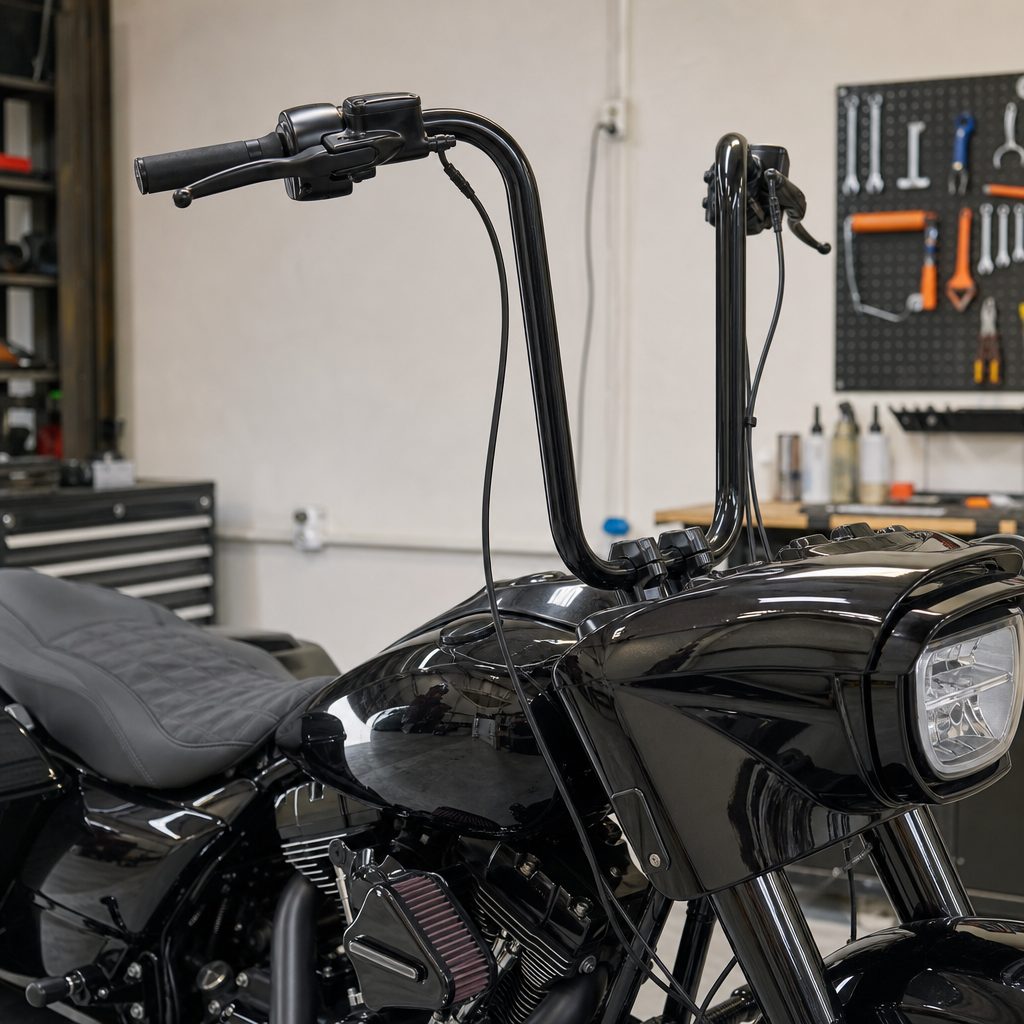
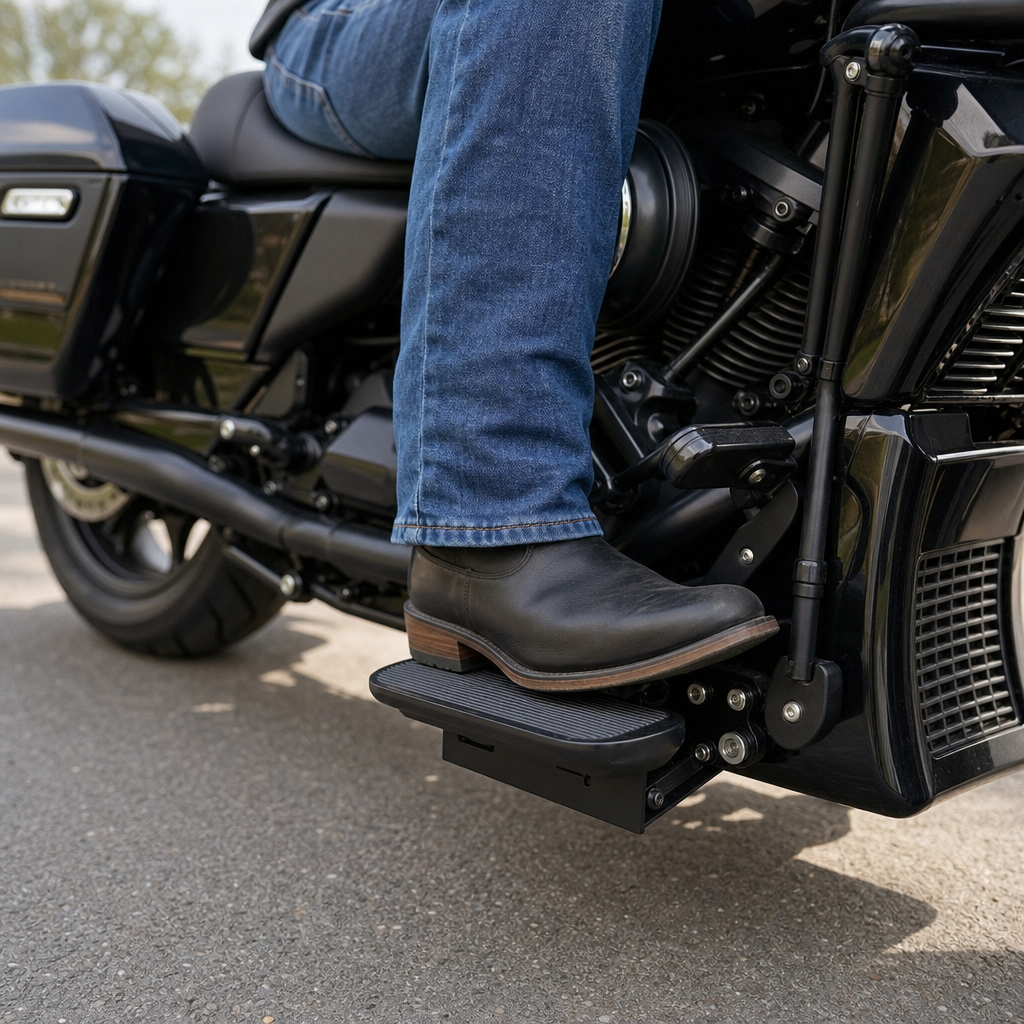
Ergonomics and engine calibration should be developed together because the rider’s body changes how torque is applied and perceived. On Harley-Davidson baggers, the main touchpoints are seat height and contour, bar reach and pullback, floorboard position, shifter and brake lever setup, windshield height, and back support. A rider who sits too far from the bars tends to hold tension in the shoulders and wrists, which makes small throttle corrections less precise. That can be misdiagnosed as poor fueling. Conversely, a rider locked into a supportive seat with neutral wrist angle often reports the same motorcycle as smoother and easier to modulate, even before any software changes.
When I build a model-specific recipe, I divide riders into use profiles rather than only body sizes. A solo urban commuter needs immediate off-idle civility, manageable heat, and mirror clarity around 2,500 rpm. A two-up touring rider prioritizes roll-on torque under load, rear-cylinder heat management, and long-range comfort. An aggressive canyon rider benefits from firmer control placement, a more direct throttle relationship, and phasing logic that preserves midrange pull through repeated corner exits. All three may own a CVO 121 VVT, but their ideal recipe is different because the motorcycle’s job is different.
| Use profile | Ergonomic priorities | Performance priorities | Valve phasing tendency |
|---|---|---|---|
| Urban solo | Reduced reach, supportive seat, moderate screen height | Smooth low-speed response, cooler idle behavior, no surge | Mild low-rpm advance, gentle transitions, heat-aware logic |
| Two-up touring | Passenger support, backrest, neutral floorboard angle | Strong midrange roll-on, stable cruise, low fatigue | Broad 2,500–4,000 rpm torque focus, conservative knock margin |
| Sport-touring rider | Closer controls, firmer seat pocket, clear sightline | Immediate corner-exit drive, crisp throttle, upper-mid pull | Slightly delayed retard to hold torque deeper into midrange |
This sub-pillar hub exists because each of those recipes deserves its own supporting article: bar and seat fitment, passenger load tuning, heat management strategies, throttle mapping refinement, intake and exhaust matching, and dyno validation methods. Internal linking between those topics helps riders move from broad strategy to exact setup steps. The hub article’s role is to show that model-specific ergonomics and performance recipes are not accessories layered on after tuning. They are part of the tuning logic itself.
Building a reliable 2027 calibration workflow
A reliable workflow starts with baseline data capture. Before changing any phasing target, log rpm, throttle position, manifold absolute pressure, intake air temperature, oil temperature, cylinder head temperature if available, commanded and actual cam position, spark advance, knock retard, lambda, injector pulse width, gear, and vehicle speed. Use a reputable interface and software suite that preserves timestamp resolution. Whether the shop works with a factory-backed solution, Dynojet hardware, TTS-style datalogging methods, or another professional package, consistency matters more than brand loyalty. The same route, same fuel octane, and similar ambient conditions make small improvements visible instead of anecdotal.
Next, separate steady-state and transient tuning. Steady-state cells reveal the broad relationship between phasing, spark, and fueling at fixed load points. Transient testing reveals whether the motorcycle behaves naturally when the rider cracks the throttle open, rolls off for traffic, or re-applies power mid-corner. Many calibrations look acceptable on a dyno sweep but stumble in the first half-second of rider demand because throttle progression and cam transition logic are mismatched. On the CVO 121 VVT, that mismatch often shows up as a soft hesitation followed by a harder-than-expected torque hit.
Then account for thermal scenarios. Harley-Davidson touring owners do not live on ideal dyno fans and cool concrete. They idle at long lights, creep through event traffic, and run cross-country in summer. A 2027 tuning logic recipe should therefore include hot restart behavior, low-speed airflow limitations, and passenger load. If knock control is constantly active after heat soak, the map is not optimized no matter what the peak sheet says. Final validation should include cold start, hot idle, part-throttle cruise, uphill roll-on, and repeated acceleration runs after the motorcycle is fully heat soaked. That disciplined workflow is what makes a recipe transferable from one bike to the next.
Common mistakes when optimizing CVO 121 VVT performance
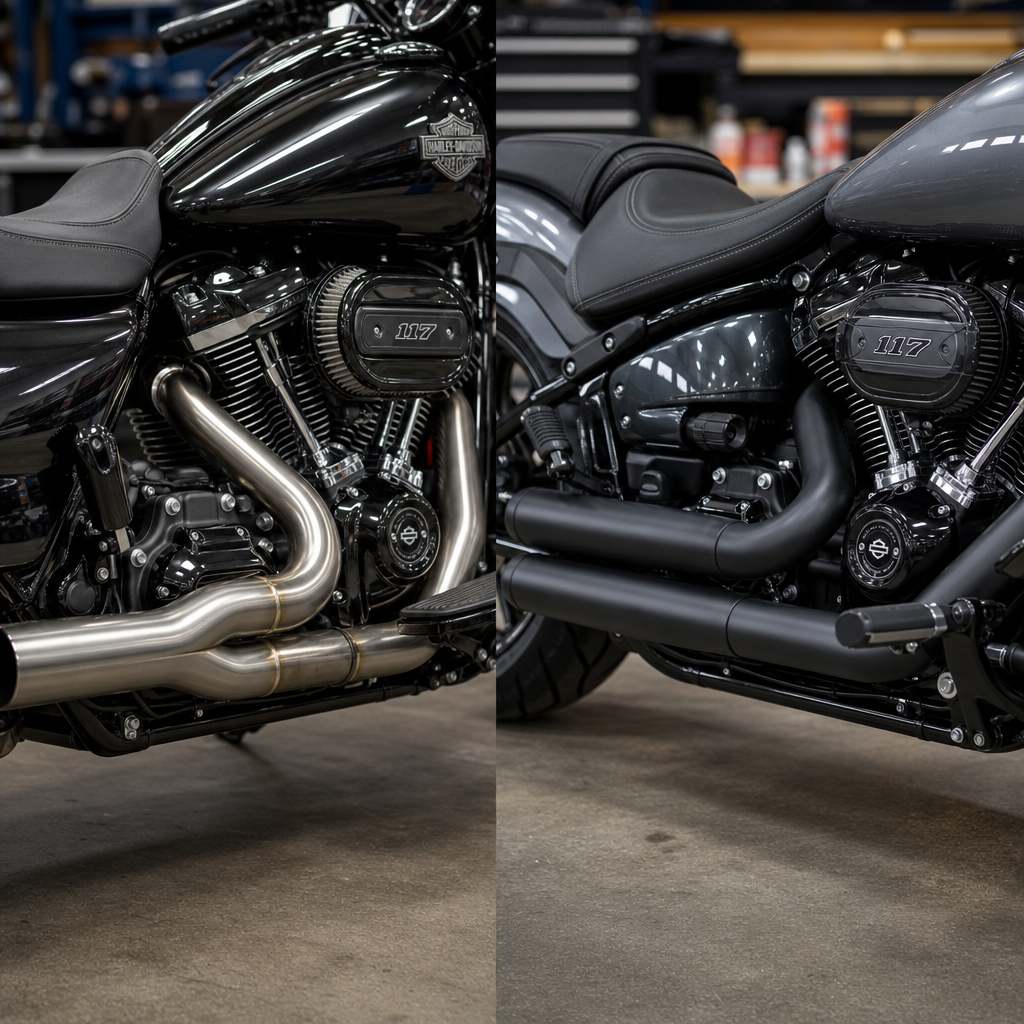
The most common mistake is chasing maximum advance in the low and midrange because the first dyno pull looks promising. More advance can produce an attractive torque spike, but if it pushes the engine into frequent knock correction or raises thermal stress, average road performance declines. The rider experiences that as inconsistency: the bike feels strong on one pass and flatter on the next. The second mistake is ignoring the relationship between intake and exhaust hardware and the ECU’s airflow model. A freer-flowing exhaust or intake can change scavenging behavior and oxygen sensor interpretation enough that the original phasing assumptions no longer fit. Calibration must follow hardware, not the other way around.
Another mistake is neglecting ergonomics during diagnosis. If a rider says the motorcycle is abrupt leaving corners or tiring on long rides, do not assume the fuel table is wrong. Check seat pocket depth, bar roll, lever angle, and wrist position first. I have corrected “throttle snatch” complaints with a modest bar change and a better seat before touching the map. That does not mean calibration is secondary. It means performance perception is biomechanical as well as mechanical.
Finally, avoid one-size-fits-all internet recipes. They rarely account for fuel quality, elevation, climate, rider mass, accessories, or software version. The CVO 121 VVT is sophisticated enough that borrowed settings can create subtle issues even when nothing fails outright. A durable Harley-Davidson performance recipe is always validated against the specific motorcycle and the specific rider.
The best CVO 121 VVT Valve Phasing Recipe for optimizing 2027 tuning logic is a complete system, not a single cam table. Start with mechanical integrity, gather clean data, and tune in a sequence that respects airflow, spark, fueling, heat, and torque intervention. Then match that calibration to the rider’s real posture, reach, load, and road use. When you do, the motorcycle delivers stronger usable torque, calmer low-speed manners, better hot-weather consistency, and less rider fatigue across long miles.
As the hub for Harley-Davidson model-specific ergonomics and performance recipes, this page establishes the method: define the use profile, create the ergonomic baseline, optimize valve phasing by rpm and load, validate transitions, and confirm behavior under heat and weight. Every deeper topic under this sub-pillar should connect back to that framework because it is what turns isolated modifications into a coherent package. Riders do not benefit from peak output alone; they benefit from a motorcycle that responds predictably, fits correctly, and keeps delivering after hours in the saddle.
If you are planning your own 2027 CVO 121 VVT setup, begin with your actual riding pattern and body fit before making calibration changes. Document the baseline, change one variable at a time, and use model-specific recipes rather than generic maps. That approach will save money, reduce troubleshooting, and produce a Harley-Davidson that feels purpose-built every time you ride.
Frequently Asked Questions
1. What does “valve phasing” mean on the 2027 CVO 121 VVT platform, and why does it matter for tuning?
On the 2027 CVO 121 VVT platform, valve phasing refers to the commanded advance or retard of the camshaft in relation to crankshaft position. In practical tuning terms, that means the engine management system can change when the intake and exhaust events occur during the four-stroke cycle, rather than locking the engine into one fixed cam timing strategy everywhere in the rev range. That flexibility is what makes the CVO 121 VVT so responsive to calibration changes, but it is also what makes tuning more interconnected than on a conventional fixed-cam setup.
Why it matters is simple: valve phasing affects cylinder filling, combustion behavior, torque production, heat output, throttle smoothness, and even how the motorcycle feels to the rider at the bars, seat, and pegs. Advancing cam timing in one operating area may improve low- and mid-range response, while retarding it elsewhere may help top-end breathing or reduce unwanted combustion harshness. But every gain comes with tradeoffs. A phasing change can alter manifold pressure behavior, change effective volumetric efficiency, influence spark tolerance, and shift how the bike reacts in part-throttle cruising versus roll-on acceleration.
For a 2027 tuning logic strategy, that means valve phasing cannot be treated as an isolated table. It must be developed as part of a complete recipe that includes fueling, spark, torque modeling, throttle mapping, idle control, temperature management, and rideability refinement. On a heavyweight touring or performance-cruiser platform like the CVO 121, the rider’s physical interface also matters more than many tuners first assume. Small calibration changes that look acceptable in data logs can still feel abrupt, hot, or inconsistent from the saddle. A strong valve phasing recipe therefore aims for more than peak dyno numbers; it aims for predictable torque delivery, manageable thermal behavior, smooth transitions, and a riding character that fits the machine’s intended use.
2. How should a tuner build a valve phasing recipe for the 2027 CVO 121 without chasing only peak horsepower?
The best approach is to build the recipe around operating zones, not just wide-open-throttle output. A disciplined tuner starts by separating the engine’s use cases into idle, light cruise, steady-state mid-load, transient roll-on, high-load acceleration, and upper-rpm power operation. Each of those zones places different demands on airflow, combustion stability, and rider comfort. If the entire phasing strategy is optimized only for the final horsepower pull, the result may look strong on a chart but feel rough, hot, or lazy in the real-world conditions where the bike spends most of its time.
In low-rpm and part-throttle areas, the goal is often to preserve strong combustion quality, clean response, and usable torque without creating excessive heat or abruptness. In the mid-range, where large-displacement V-twins spend much of their practical riding life, the recipe should focus on broad, predictable torque and smooth torque delivery. In higher-load or higher-rpm zones, the strategy can shift more toward airflow efficiency and top-end support, provided the engine remains stable and the rest of the calibration can support it. This is where careful correlation between valve phasing, spark timing, and fueling becomes essential. A phasing move that improves airflow may also increase sensitivity to spark or alter exhaust gas temperature behavior, so the tuner needs to validate the whole operating package, not a single table in isolation.
Equally important, the tuner should evaluate how the motorcycle behaves during transitions. Riders experience calibration through clutch take-up, throttle tip-in, corner exits, passing maneuvers, and heat felt in stop-and-go traffic. A solid 2027 CVO 121 valve phasing recipe is one that blends these transitions cleanly. That usually means smoothing interpolation between neighboring load and rpm cells, avoiding dramatic phasing swings that can create nonlinear feel, and validating on-road behavior in addition to dyno data. The final recipe should be judged by repeatability, thermal control, tractability, and how naturally the engine responds to rider input, not just by one best pull.
3. How do torque, heat, and rideability interact when changing VVT settings on the CVO 121?
These three factors are tightly linked, and that is the core reason VVT tuning must be handled carefully. Torque is the most obvious result people chase, but changes in valve phasing also affect combustion efficiency and residual exhaust gas behavior inside the cylinder, which in turn influences operating temperature and throttle character. A phasing adjustment that builds stronger cylinder fill in one area may also raise thermal load if combustion becomes more aggressive or if the engine spends more time producing pressure where the rider uses it most. Conversely, a strategy that calms heat in certain zones may soften response if it gives away some torque or combustion sharpness.
Rideability is where these tradeoffs become visible. On the CVO 121, a rider does not just “hear” the tune; they feel it through driveline reaction, throttle pick-up, and localized heat. If valve phasing changes are too aggressive between neighboring cells, the motorcycle can feel inconsistent as it crosses those boundaries under real load. If the engine is tuned for maximum torque too early or too abruptly, the bike may feel snatchy in urban riding or difficult to modulate in low-speed maneuvers. If the tune favors heat reduction at the expense of combustion stability, it may become soft or uneven at cruise.
The right tuning logic balances these outcomes intentionally. That generally means building torque where the chassis and rider can use it cleanly, softening or smoothing areas where abruptness hurts confidence, and managing combustion conditions so the bike remains comfortable and durable in normal use. Because Harley-Davidson touring and CVO riders often spend long periods in mixed environments, from slow traffic to open-road passing, the best phasing recipe is rarely the most extreme one. It is the one that delivers torque in a usable shape, limits unnecessary heat buildup, and preserves a calm, premium feel across the entire riding envelope.
4. Why does the rider’s physical interface with the motorcycle matter when optimizing 2027 tuning logic?
It matters because the rider experiences calibration through the whole motorcycle, not through engine data alone. On the 2027 CVO 121 platform, the engine’s torque pulses, thermal behavior, throttle response, and driveline reactions all pass through the machine’s ergonomics. Bar position, seat shape, floorboard or peg placement, riding posture, and even how wind load affects throttle use can change how a tune feels in practice. Two valve phasing strategies that produce similar dyno curves can create very different rider impressions once they are tested in real traffic, on uneven roads, or during repeated roll-ons.
For example, a rider on a long-distance CVO setup may prioritize smoothness, manageable heat around the legs, and easy throttle modulation during sustained cruising. That same rider may consider a very aggressive mid-range hit tiring or intrusive, even if it improves measured acceleration. Another rider may want immediate roll-on authority for spirited riding and accept slightly firmer response. This is why a true “recipe” for CVO 121 VVT tuning is not only engine-specific, but also use-case-specific. The engine map must align with how the rider physically interacts with the motorcycle during starts, lane changes, uphill low-speed operation, and highway passing.
From a tuning standpoint, this means validating phasing strategy with ergonomic reality in mind. Does the bike surge when the rider holds a steady wrist angle? Does heat become noticeable during city operation? Does torque arrive smoothly enough to avoid unsettling the chassis mid-corner or mid-shift? Does the tune feel refined during the exact rpm and load ranges where that rider spends most of their time? Answering those questions is what separates a technically functional calibration from a truly optimized one. On a premium platform like the 2027 CVO 121, refinement is part of performance, and rider interface is one of the main tools for judging whether the valve phasing recipe actually works.
5. What are the most common mistakes people make when tuning VVT valve phasing on a 2027 CVO 121?
The first major mistake is treating valve phasing as a standalone power adder. It is not. VVT changes airflow behavior, combustion timing sensitivity, torque characteristics, and heat patterns, so it must be calibrated alongside fueling, spark, throttle control, and torque management logic. If someone adjusts phasing aggressively without reconciling those related systems, the result can be inconsistent performance, poor drivability, and misleading dyno conclusions.
The second common mistake is overvaluing peak numbers while ignoring transitional and part-throttle behavior. A touring-oriented high-displacement Harley does not live only at full throttle. Most real-world operation happens in low- and mid-load conditions, where abrupt torque changes, unstable combustion, or poor thermal control will be felt immediately. A tune that posts one strong headline result but behaves poorly in traffic, cruise, or roll-on use is not an optimized recipe. It is an incomplete one.
A third mistake is failing to smooth the phasing strategy across the map. Sharp jumps between adjacent load or rpm cells can create noticeable response irregularities as the control system moves between those cells.