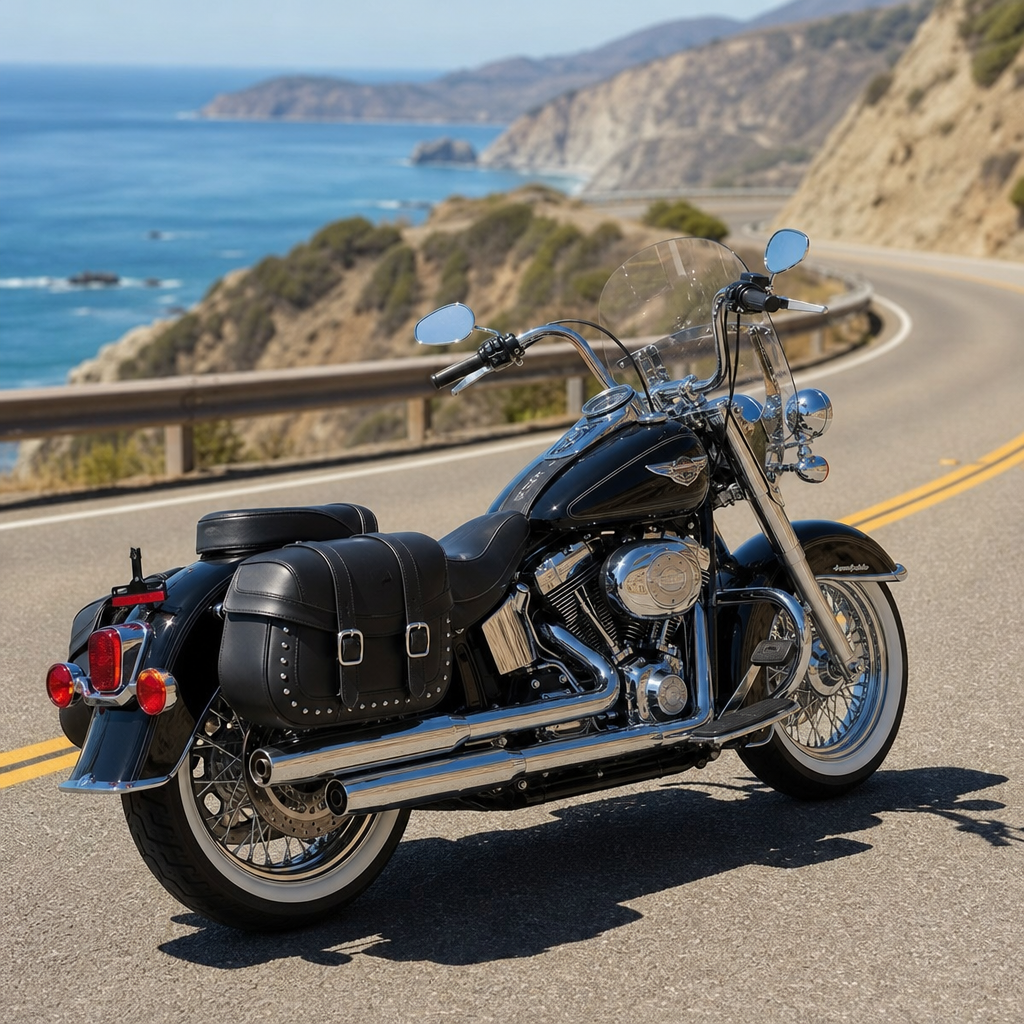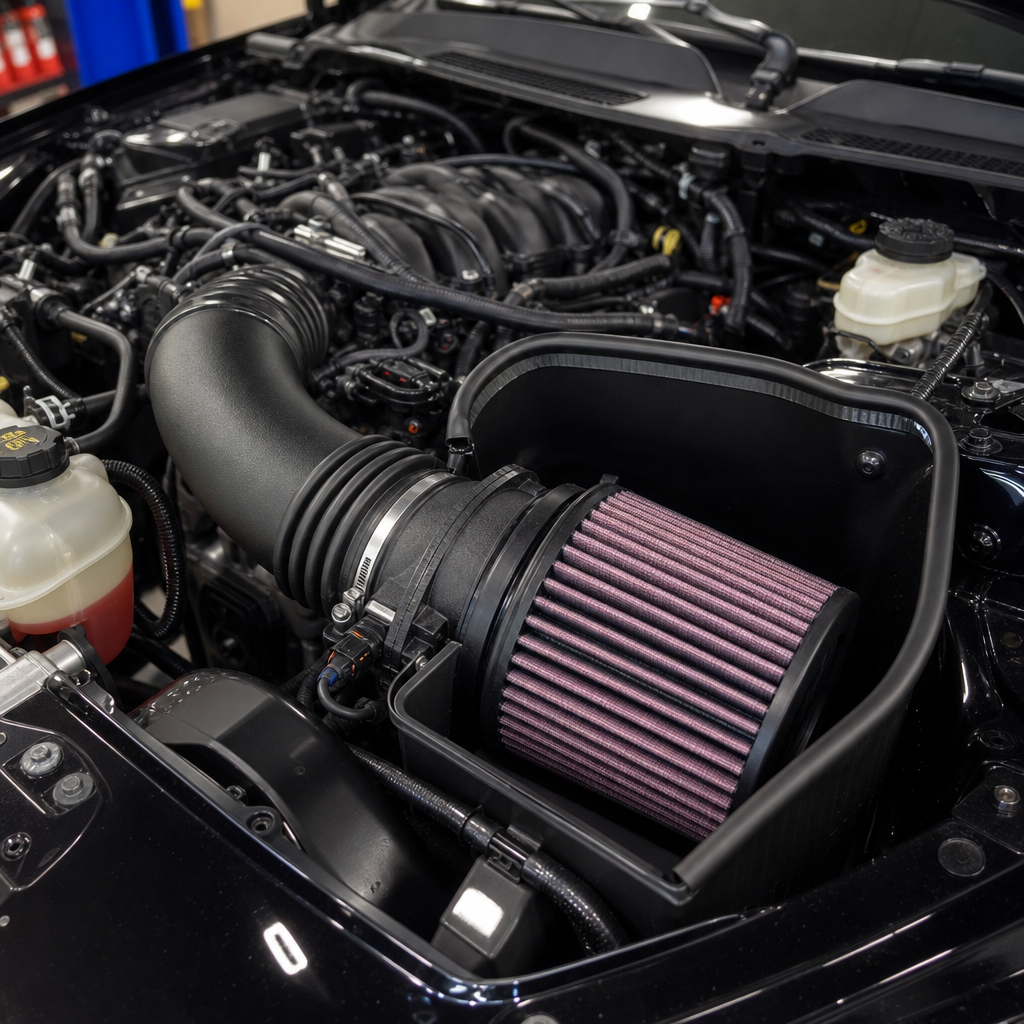
Stage 1 for 117 VVT starts with the intake because airflow, calibration headroom, and rider fit all change when the 2026 cam phasers are part of the equation. On current Harley-Davidson touring and cruiser platforms, a Stage 1 package usually means three coordinated changes: a less restrictive air cleaner, a freer-flowing exhaust, and an ECU tune that matches the new breathing characteristics. The 117 VVT designation refers to the Milwaukee-Eight 117 engine equipped with variable valve timing, using cam phasers to adjust valve events across the rev range for stronger torque spread, emissions control, and rideability. Selecting the best high-flow intake for that engine is not just a matter of picking the biggest filter element. It requires matching filter surface area, backing plate design, throttle body alignment, rider knee clearance, weather exposure, service interval, and tuning support to the specific motorcycle and the way it is ridden.
I have set up Stage 1 combinations on touring bikes, baggers, and performance-oriented cruisers, and the intake choice is where many builds either become balanced or frustrating. Riders often shop by appearance first, then discover a large forward-facing unit interferes with an aggressive mid-control posture, or a compact exposed filter loses consistency in heavy rain and dusty summer miles. On VVT-equipped 117 models, intake selection matters even more because the cam phasers broaden the engine’s useful operating range. A restrictive or poorly shaped intake can leave torque on the table in the low and midrange where this engine is especially rewarding, while an oversized but badly tuned system can trade smoothness for noise and throttle abruptness. The right high-flow intake supports the entire package, from cold-start manners to passing power.
This hub article covers the core decisions behind Model-Specific Ergonomics and Performance Recipes for Harley-Davidson riders building a practical Stage 1 setup around the 117 VVT. It explains what makes one intake better for a Road Glide than for a Low Rider ST, how rider height and leg position affect air cleaner choice, what technical features separate strong designs from cosmetic ones, and how to think about filtration, weather management, and calibration. Use this page as the starting point before drilling into model-specific fitment, tuning, exhaust pairing, and cockpit ergonomics. If the goal is a Stage 1 that feels stronger everywhere without compromising comfort or reliability, intake selection is the first decision to get right.
What a High-Flow Intake Actually Changes on a 117 VVT
A high-flow intake changes more than peak airflow. It alters pressure drop across the filter, inlet tract turbulence, effective plenum behavior near the throttle body, and the consistency of airflow presented to the ECU’s fueling model. On a 117 VVT engine, where valve timing can shift to optimize cylinder filling at different rpm and load points, the intake’s job is to deliver stable, low-restriction airflow across a wider operating window than a fixed-cam setup typically uses. In plain terms, the engine can take advantage of better breathing in more riding situations, not only at full throttle. That is why a good intake can sharpen roll-on response from 2,500 to 4,000 rpm as clearly as it helps power near the top of the pull.
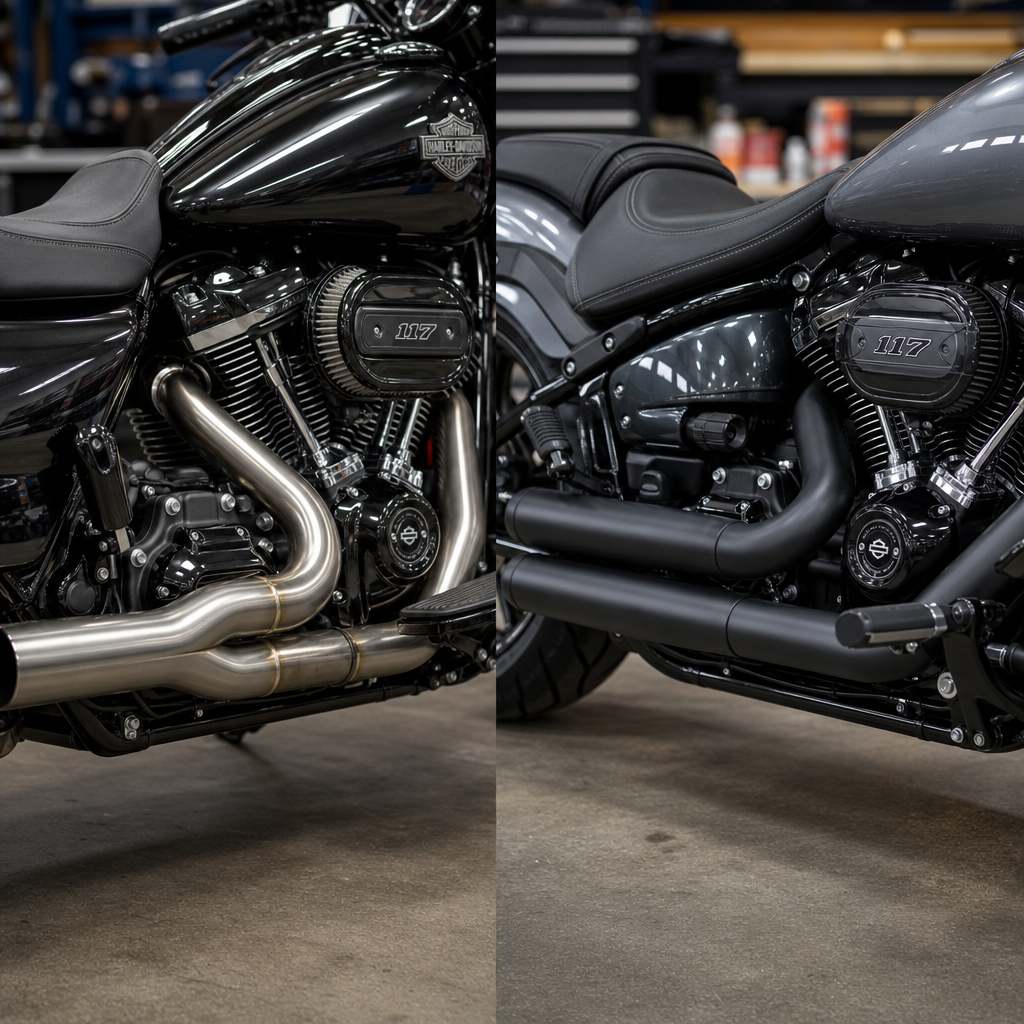
Most quality Stage 1 intake kits for Harley-Davidson models include a larger reusable filter element, a rigid backing plate, integrated breather routing, hardware, and a rain sock or water-management option. The strongest designs use a backing plate that seals cleanly, supports the throttle body opening without misalignment, and manages crankcase breather oil so the filter does not become saturated prematurely. Brands such as Screamin’ Eagle, S&S, Arlen Ness, K&N, and Vance & Hines have long offered kits with different priorities. Some emphasize compact ergonomics, some maximize exposed filter area, and some are tuned for weather protection and long-distance serviceability. There is no universal winner; the best intake is the one that fits the motorcycle’s geometry, the rider’s body position, and the tune strategy.
Model-Specific Ergonomics: Why Fit Matters as Much as Flow
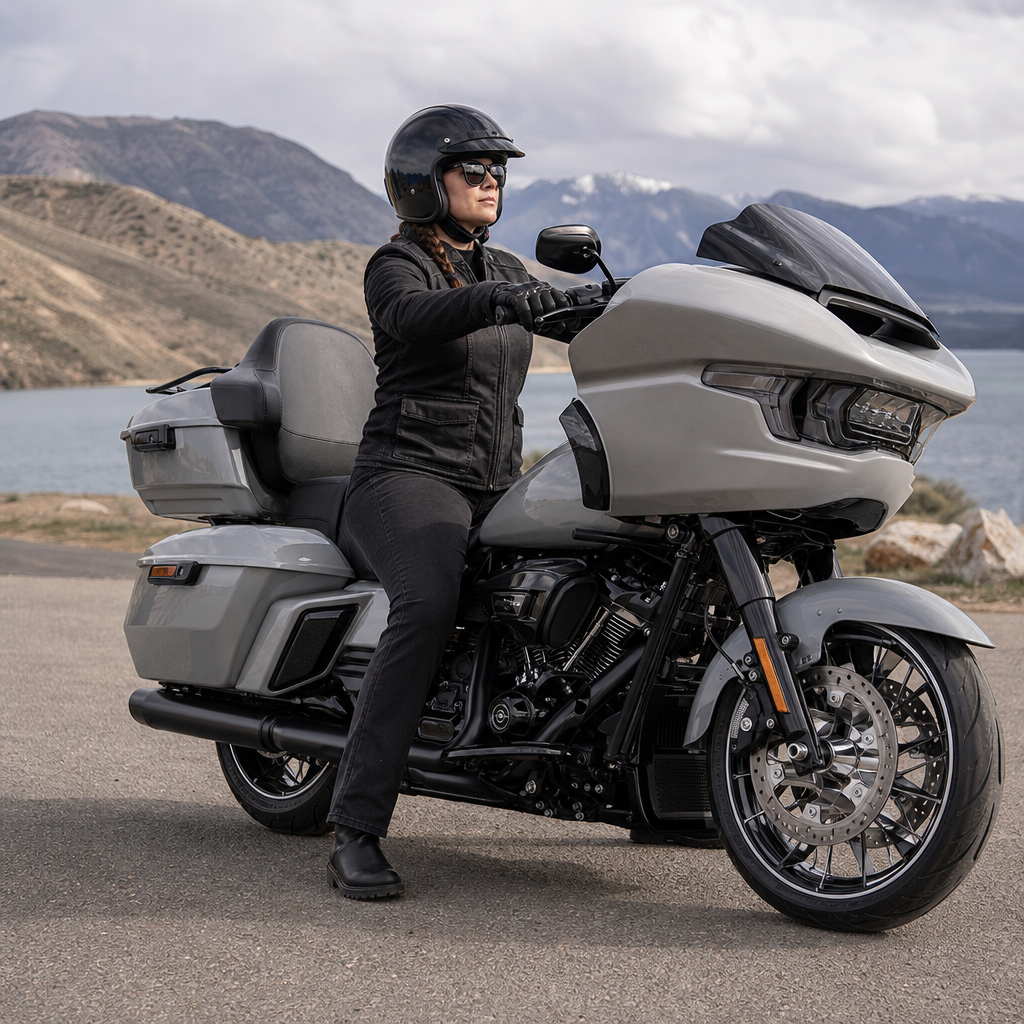
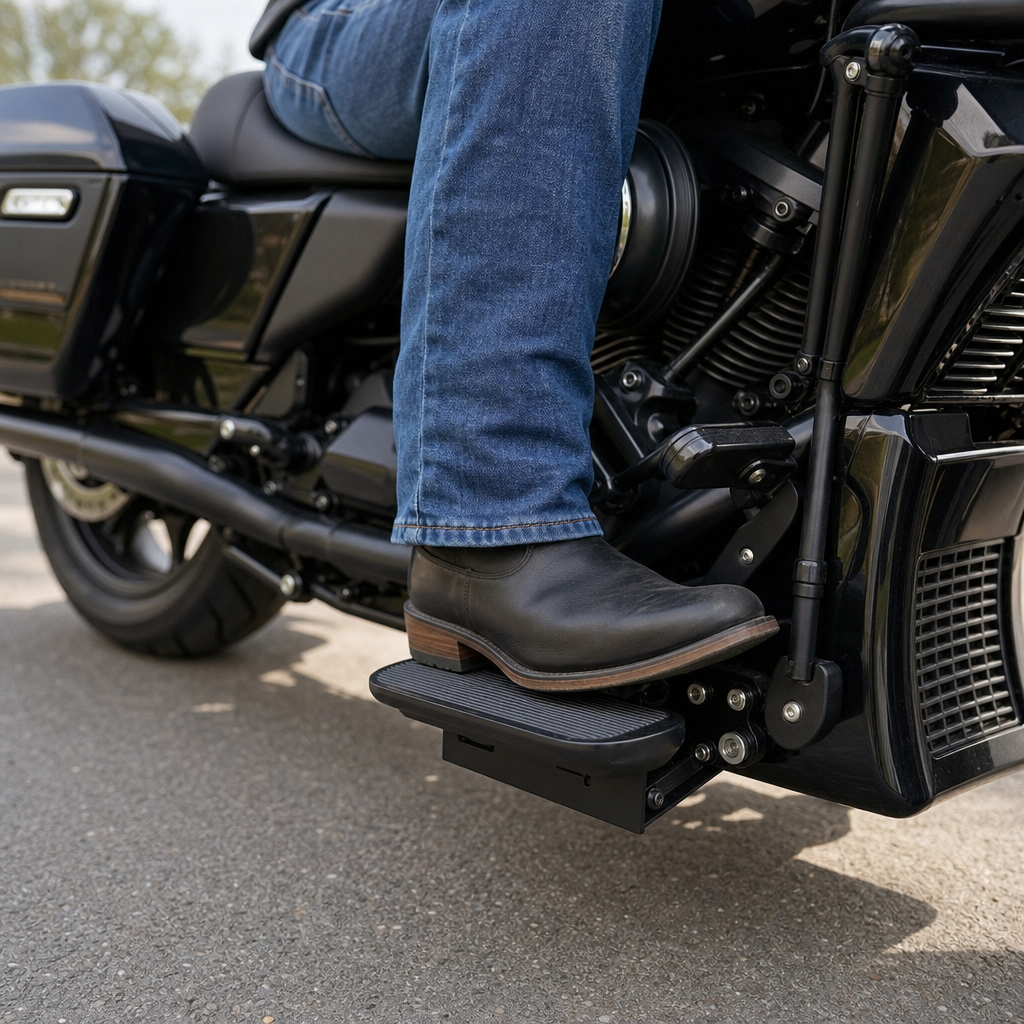
Model-specific ergonomics determine whether a high-flow intake feels invisible or irritating. On Harley-Davidson touring models such as the Street Glide and Road Glide, floorboards, wide tank shrouds, and a seated-in posture often allow slightly larger air cleaner assemblies without constant knee contact. Riders with a relaxed touring stance can usually tolerate a forward-projecting round filter better than riders on performance cruisers. By contrast, on a Low Rider ST, Low Rider S, or Sport Glide style platform, tighter leg bend and more active lower-body positioning can make an oversized intake intrusive on the right knee, especially for taller riders who grip the tank under braking.
This is where performance recipes become practical instead of generic. A rider around 5-foot-8 on a Road Glide may prioritize a broad, exposed filter with maximum easy access for service because knee interference is limited and highway miles dominate the use case. A rider at 6-foot-2 on a Low Rider ST may give up a small amount of ultimate flow to gain a slimmer offset design that clears the knee through city riding and canyon transitions. I have seen riders remove perfectly good intakes because the housing caught pants at every stop or forced the right foot outward on long rides. Those are not minor annoyances; they change confidence and control. A Stage 1 part that makes the bike less comfortable is the wrong part, even if the dyno sheet looks good.
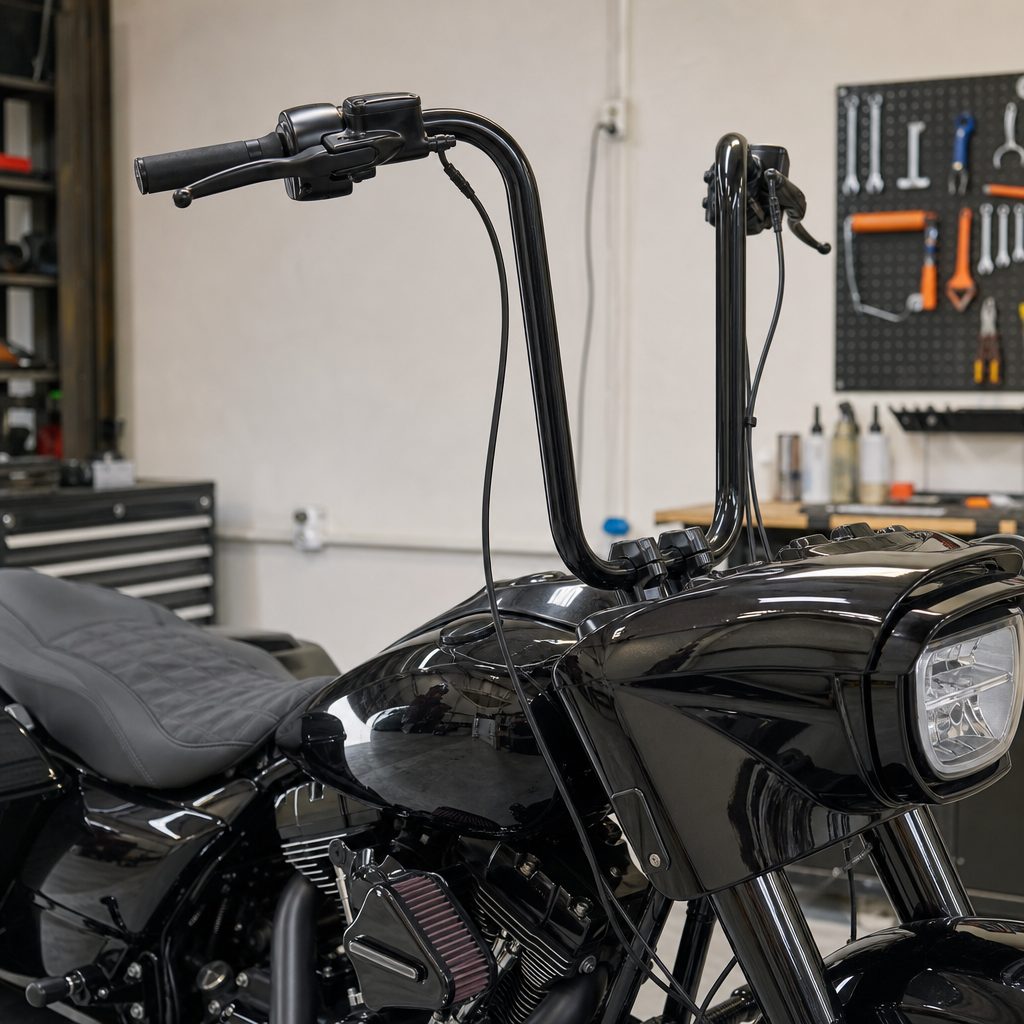
Bar position, seat height, mid-controls versus floorboards, and suspension setup all influence intake comfort. A taller saddle opens the knee angle and can improve clearance. Rear suspension changes that raise ride height may shift hip and knee alignment enough to make a previously acceptable intake feel bulky. That is why this hub topic links ergonomics directly to performance. The best intake for one rider on the same model may be the second-best option for another because body mechanics differ. Fit the rider first, then maximize flow within that envelope.
How to Compare High-Flow Intake Designs for 2026 Cam Phaser Bikes
When comparing intakes for a 2026 117 VVT platform, evaluate five factors: flow path, filter media, sealing, weather management, and tuning support. Flow path refers to the smoothness and diameter of the route from filter face to throttle body. Abrupt turns, poorly machined transitions, and undersized center openings can reduce the benefit of a large filter. Filter media usually falls into cotton gauze, synthetic, or oiled foam variants. Cotton gauze often flows well and is serviceable, but filtration efficiency depends heavily on maintenance. Synthetic media can offer strong dust control with consistent performance, making it attractive for riders who prioritize long engine life over chasing the last fraction of airflow.
| Intake priority | Best fit | Typical rider use | Main tradeoff |
|---|---|---|---|
| Maximum exposed filter area | Touring models with generous knee clearance | Highway touring, strong roll-on power focus | Greater weather exposure and possible bulk |
| Compact low-profile housing | Performance cruisers and taller riders | Urban riding, canyon use, active body position | May sacrifice some peak airflow |
| Enclosed or semi-enclosed design | All-weather commuters | Frequent rain, long service intervals | Usually heavier and less visually aggressive |
| Forward-facing ram-style appearance | Show builds and select baggers | Style-first builds with occasional spirited use | Can complicate fitment and tuning consistency |
Sealing matters because any leak downstream of the filter undermines filtration and can skew airflow assumptions. Weather management matters because Harley-Davidson riders do not all ride in ideal conditions. An intake that performs well on a dry dyno but ingests water on a storm ride is not a serious touring solution. Finally, tuning support matters because the best physical hardware still depends on a correct calibration. The ECU must account for the intake’s changed airflow characteristics, especially during transient throttle and part-load operation where smoothness is won or lost. Choose hardware that established tuners know how to map.
Building Performance Recipes by Harley-Davidson Model Family
For touring models, the best recipe usually balances broad torque, weather resilience, and low maintenance. A Road Glide or Street Glide with the 117 VVT responds well to a high-flow intake that preserves rider room and pairs cleanly with a moderate exhaust and conservative tune. Touring owners often value quiet mechanical behavior, clean hot restarts, and stable fueling in changing climates. In that context, a well-sealed backing plate and dependable filter service routine matter more than the most aggressive intake sound. The gain riders notice is stronger passing power in sixth gear and less effort accelerating with luggage or a passenger.
For performance cruisers such as the Low Rider ST or Low Rider S, the recipe shifts toward compact packaging and immediate throttle response. These bikes invite more dynamic body movement, so side profile and knee clearance rise in importance. A low-profile high-flow intake with an efficient backing plate often beats a larger protruding design because it lets the rider stay connected to the bike. The power improvement feels more direct exiting corners or making quick urban overtakes. Here, a smart tune can be as important as hardware choice because abrupt fueling is more obvious on a lighter, more responsive chassis.
For heritage-oriented or all-around cruiser models, aesthetics and usability often share equal weight. Riders may want the visual upgrade of a machined cover or exposed element without creating a maintenance burden. The best recipe is usually a reputable compact kit, matched slip-ons or a full system that does not erase midrange torque, and a calibration focused on smooth drivability rather than maximum dyno bragging rights. Across all model families, the common rule is simple: keep the intake proportional to the motorcycle’s ergonomics and the rider’s intended use.
Tuning, Filtration, and Reliability: The Decisions That Protect the Engine
No intake discussion is complete without tuning and filtration because both determine whether the Stage 1 upgrade remains an asset over tens of thousands of miles. On a modern Harley-Davidson ECU, tuning should be done with a platform and operator that understand the specific 117 VVT strategy. That can involve dealer-supported calibrations where available or aftermarket tools such as Dynojet Power Vision, depending on legal requirements, emissions rules, and model support. The point is not to chase an air-fuel number in isolation; it is to deliver correct fueling, ignition behavior, and throttle response across the load range the bike actually sees.
Filtration quality deserves equal attention. ISO 5011 style testing principles are often referenced when comparing filter efficiency, even though not every motorcycle intake brand publishes equivalent data. In real service, a filter that flows slightly less but captures more fine dust can be the wiser choice for riders in dry climates, on gravel roads, or in heavy summer traffic where airborne debris is constant. Reusable filters also demand proper cleaning and oiling. Over-oiling can contaminate nearby surfaces and affect consistency, while under-oiling can reduce filtration efficiency. Riders who know they will not maintain a filter precisely should choose a design with forgiving service characteristics.
Reliability also depends on breather management. Many Harley-Davidson high-flow kits route crankcase vapors through the backing plate. Poor design can leave residue on the filter and throttle body, affecting cleanliness over time. Better systems control oil mist and maintain stable sealing. After installation, inspect fastener torque, check for intake leaks, monitor idle quality, and confirm there is no contact between the air cleaner and the rider’s leg through full steering and body movement. The best Stage 1 setup is the one that keeps delivering the same clean response six months later, not just the one that feels loud on day one.
How This Hub Connects Ergonomics, Parts Choice, and Next-Step Upgrades
As a sub-pillar hub under Harley-Davidson, this page organizes the larger topic of Model-Specific Ergonomics and Performance Recipes into practical next steps. From here, riders should move to deeper guides on intake fitment by model, exhaust pairing for the 117 VVT, tuner selection, rain riding considerations, and seat-handlebar-floorboard combinations that preserve comfort after performance upgrades. The reason for this structure is straightforward: no single part exists in isolation. An intake influences rider space, sound, fueling, and maintenance. A seat changes knee angle, which can change intake preference. An exhaust alters torque character, which changes what riders expect from throttle response.
The key takeaway is that the best high-flow intake for the 2026 cam phaser-equipped 117 is the one that matches your motorcycle, your body position, and your use case while leaving enough tuning headroom for a complete Stage 1. For touring riders, that often means weather-resistant flow and easy service. For performance cruiser riders, it usually means compact packaging and clean response. For mixed-use cruiser owners, it means balancing style, filtration, and comfort. Start with a realistic assessment of how you ride, compare intake geometry before you buy, and choose proven hardware with calibration support. Then continue through the related Harley-Davidson guides in this hub to build a Stage 1 recipe that performs as well on the road as it does on paper.
Frequently Asked Questions
What does “Stage 1” mean for a 117 VVT Harley, and why does the intake come first?
On a 117 VVT Milwaukee-Eight, Stage 1 typically refers to the first coordinated set of airflow and calibration upgrades: a high-flow intake, a less restrictive exhaust, and an ECU tune designed around those changes. The intake usually comes first in the conversation because it is the point where the engine begins drawing in the air that every later modification depends on. If the intake is restrictive, the exhaust and tune can only do so much. Once you improve inlet airflow, you create more room for the engine to breathe, which gives the tuner more usable calibration headroom and helps the rest of the Stage 1 package work as intended.
The 2026 cam phasers add an extra layer of importance here. Variable valve timing changes how the engine fills the cylinders across different RPM and load conditions, so the intake is no longer just a simple bolt-on for sound or appearance. It becomes part of a broader airflow strategy. A well-matched high-flow air cleaner can improve throttle response, support stronger midrange performance, and give the ECU tune a more stable foundation, especially as valve timing shifts under real riding conditions. In other words, choosing the right intake first helps ensure the rest of the Stage 1 upgrade delivers smooth, usable gains instead of mismatched parts and compromised drivability.
How do the 2026 cam phasers affect intake selection on the 117 VVT platform?
The presence of cam phasers means intake selection should be approached with more precision than on a fixed-cam setup. Variable valve timing allows the engine to alter valve events depending on speed, load, and throttle demand, which changes the way the engine responds to airflow at different points in the powerband. Because of that, the “best” high-flow intake is not necessarily the one with the biggest opening or the most aggressive marketing claims. It is the one that supports stable, efficient airflow across the range where the VVT system is actively improving cylinder filling and rideability.
For the 2026 117 VVT, that usually means looking for an intake that balances flow capacity with air velocity, filtration quality, and compatibility with proper tuning. An intake that flows well at peak demand but disrupts fueling consistency at part throttle may not be the best choice for a touring or cruiser rider who values smooth roll-on power, clean idle behavior, and predictable response. Cam phasers can broaden the usable powerband, but they also make airflow behavior more dynamic, so intake design matters more than ever. Backing plate shape, filter element size, internal path smoothness, and how evenly the intake feeds the throttle body all play a role. A good intake for this platform should support the VVT engine’s flexibility, not just chase a dyno number at wide-open throttle.
What should I look for in the best high-flow intake for a Stage 1 117 VVT setup?
The best high-flow intake for a Stage 1 117 VVT setup should check several boxes at once. First, it needs to offer a meaningful reduction in restriction compared with the stock air cleaner. That sounds obvious, but real improvement comes from the total system design, not just a larger filter. You want an intake with a well-engineered backing plate, an efficient path into the throttle body, and a filter element that provides strong airflow without sacrificing filtration. On a street-driven Harley, especially one used for long-distance touring or everyday cruising, dirt control matters just as much as raw flow because engine longevity is part of overall performance.
Second, rider fit and usage matter. Some high-flow intakes protrude farther from the bike and can interfere with knee position or simply feel awkward over long rides. For touring riders, that ergonomic detail can become a daily annoyance. Third, support for tuning is critical. The intake should be from a reputable manufacturer with known compatibility on current Harley-Davidson touring and cruiser platforms, so your tuner has a clear baseline to work with. Finally, look for a product that complements your intended exhaust and ECU calibration rather than being selected in isolation. A strong Stage 1 result comes from parts that work together. The intake should deliver smoother airflow, cleaner fuel mapping potential, and real-world responsiveness, not just a flashy appearance or the biggest flow number in a lab setting.
Do I need a tune after installing a high-flow intake on a 117 VVT, especially if I plan to add exhaust later?
In most cases, yes—a proper tune is strongly recommended, and in many Stage 1 combinations it is essential. A high-flow intake changes how much air the engine can ingest, and once airflow changes, fuel delivery and ignition strategy need to be adjusted to match. On a 117 VVT engine, that need becomes even more important because the ECU is managing an engine whose valve timing behavior can vary across operating conditions. The tune is what ties the hardware together. Without it, you risk leaving performance on the table, compromising throttle smoothness, and creating drivability issues such as hesitation, inconsistent response, or an overly lean or poorly optimized running condition.
If you plan to add a freer-flowing exhaust later, it is smart to think of the intake, exhaust, and tune as one package rather than three unrelated upgrades. Some riders install the intake first and tune once all Stage 1 components are in place, while others use an interim calibration and then finalize the tune after the full setup is complete. The right approach depends on the exact parts, your tuner, and how the bike will be ridden in the meantime. Either way, the end goal is the same: a calibration that accounts for the new breathing characteristics of the engine. On a 2026 117 VVT, where airflow and valve timing are working together more actively, tuning is not an afterthought—it is the step that makes the intake upgrade perform correctly and reliably.
Is the highest-flow intake always the best choice for touring and cruiser riders using the 117 VVT?
Not necessarily. The highest-flow intake on paper is not automatically the best intake for the way most touring and cruiser riders actually use their bikes. Peak airflow matters, but so do filtration efficiency, throttle response, low- and midrange behavior, rider comfort, weather exposure, and long-term serviceability. A touring rider may care more about strong passing power, smooth part-throttle manners, and all-day comfort than about extracting the absolute highest top-end number. A cruiser rider may want a balance of performance, style, and street-friendly reliability. In both cases, the “best” intake is the one that delivers useful airflow gains without introducing compromises that make the bike less enjoyable to ride.
That is especially true with the 117 VVT and 2026 cam phasers in the mix. Because the engine can adapt valve timing to improve performance across a wider range, an intake that preserves clean airflow behavior and supports a broad torque curve can be more valuable than one optimized mainly for maximum flow at the far top end. Many riders will be better served by an intake that offers excellent real-world breathing, consistent tuning results, quality filtration, and good leg clearance rather than the most extreme design available. In short, the best choice is the intake that matches your riding style, your complete Stage 1 plan, and the way the VVT-equipped engine actually makes power on the road.