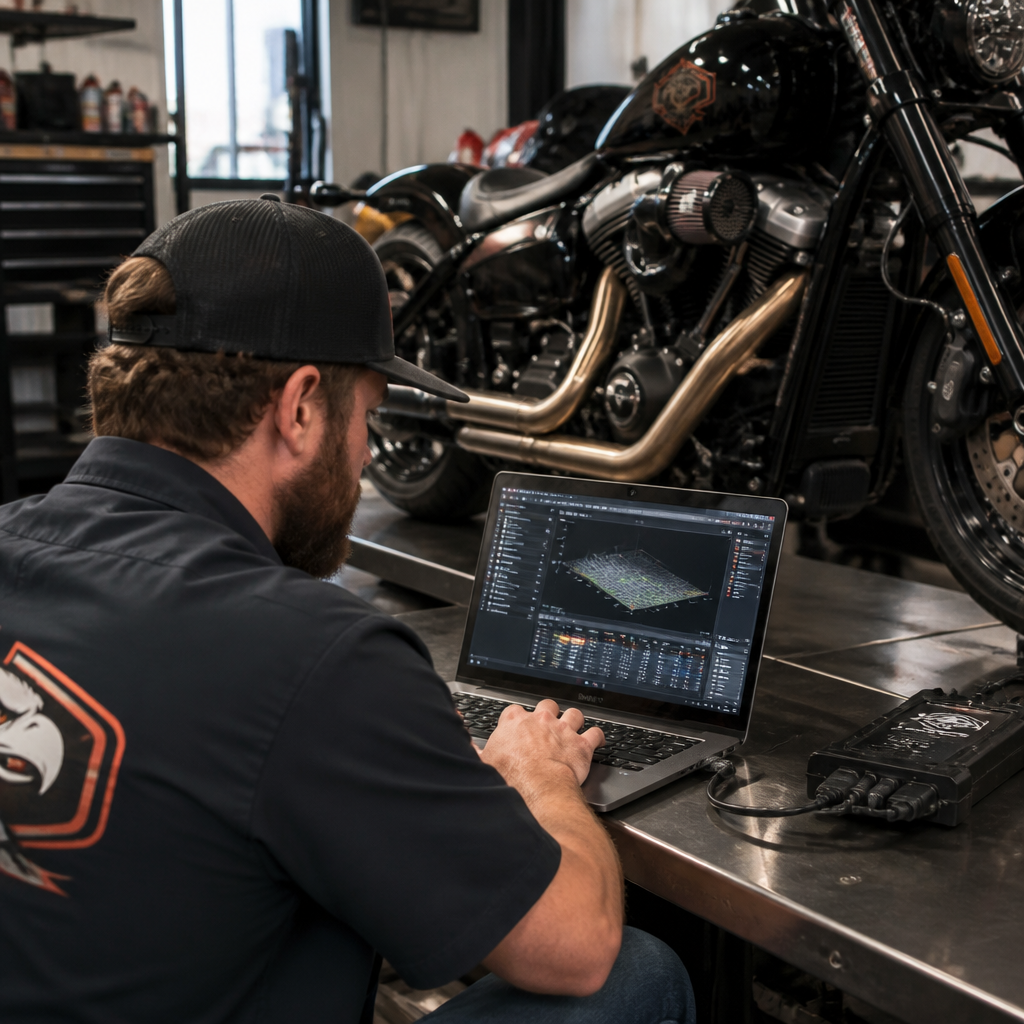
The Screamin’ Eagle Pro Street Tuner sits at the center of a difficult 2026 conversation for Harley-Davidson owners: how to keep a Milwaukee-Eight 117 VVT running cleanly, safely, and legally while still understanding the tuning, airflow, and calibration choices that shape performance. In this context, 117 VVT refers to the variable valve timing version of Harley-Davidson’s 117 cubic inch Milwaukee-Eight engine, and EPA compliance means the motorcycle continues to meet federal emissions requirements for evaporative and exhaust output when used on public roads. I have worked with Harley calibration files, dyno sessions, and dealer service workflows long enough to see the same problem repeat: riders hear conflicting advice about what a tuner can do, what a tuner should do, and what changes cross the line from legitimate service work into tampering. That confusion matters more in 2026 because emissions enforcement, software controls, and model-specific hardware integration are all tighter than they were even a few years ago.
This article serves as a technical hub for Harley-Davidson powertrain deep-dives, covering the Milwaukee-Eight, Twin Cam, Evolution, and RevMax families through the practical lens of the Screamin’ Eagle Pro Street Tuner. The main focus is the 117 VVT platform, but the broader value is understanding how Harley engines differ in control strategy, sensor feedback, fueling tolerance, and upgrade pathways. For riders, builders, and service managers, that knowledge saves money and avoids bad assumptions. A carbureted Evo, a cable-throttle Twin Cam, a non-VVT M8, and a liquid-cooled RevMax do not respond to changes in the same way, and they should not be tuned with the same expectations. If you are trying to determine whether the Screamin’ Eagle Pro Street Tuner remains a viable choice for a 2026-compliant street bike, the short answer is yes, but only when it is used within approved configurations, matching calibrations, and emissions-legal components.
What the Screamin’ Eagle Pro Street Tuner Actually Does on a 117 VVT
The Screamin’ Eagle Pro Street Tuner is Harley-Davidson’s dealer-supported calibration interface for street-legal applications tied to approved parts combinations. It does not function like an unrestricted race tuner, and that distinction is essential. On a 117 VVT Milwaukee-Eight, the tuner writes calibration data to the engine control module so the bike can correctly manage air-fuel delivery, spark advance, idle behavior, throttle response, and torque modeling within the boundaries Harley has certified. The 117 VVT adds another layer because valve timing authority changes airflow behavior across the rev range. That means calibration quality is no longer just about adding fuel for a freer-flowing intake or exhaust; it is also about making sure transient response, torque targets, and combustion stability remain correct as cam phasing changes.
In practice, a compliant tune on a 117 VVT should preserve closed-loop operation where intended, maintain onboard diagnostics readiness, and avoid disabling emissions functions. The engine management strategy relies on narrowband or wideband feedback depending on platform specifics, manifold pressure, throttle position, temperature inputs, crank and cam signals, and fault monitoring logic. Riders often ask whether the tuner can “unlock” hidden power. On a legal street setup, that is the wrong question. The correct question is whether the bike’s calibration matches its hardware so it starts cleanly, idles consistently, avoids detonation, protects exhaust temperatures, and delivers the torque curve Harley intended for that approved configuration. When I review real customer bikes, the best legal calibrations are rarely the most dramatic on paper; they are the ones with smooth part-throttle control, stable hot restarts, and no recurring trouble codes.
Why 2026 EPA Compliance Changes the Tuning Conversation
For 2026, the compliance discussion is stricter because modern motorcycles combine hardware certification with software traceability. EPA compliance is not simply about whether a tailpipe smells rich or whether a catalyst is still installed. It includes whether the bike’s emissions controls remain intact and whether the calibration continues to support certified operating conditions. The federal Clean Air Act prohibits tampering with emissions equipment on vehicles used on public roads, and enforcement actions over the last decade have made manufacturers and dealers far more careful about tuning products. Harley’s street tuner strategy reflects that reality. The Screamin’ Eagle Pro Street Tuner exists to support legal recalibration for approved combinations, not open-ended editing of every emissions-related table in the ECM.
On the 117 VVT, compliance sensitivity increases because variable valve timing can influence internal exhaust gas retention, combustion temperature, and catalyst loading. Small control changes can have emissions consequences that are not obvious from seat-of-the-pants testing. A bike may feel stronger after an aggressive aftermarket change while simultaneously increasing NOx output, degrading catalyst efficiency, or triggering adaptation issues. This is why legal calibrations are constrained. Riders sometimes frame that as a limitation, but from an engineering perspective it is a safeguard. A compliant calibration protects the catalyst, keeps monitors functioning, and reduces the risk that one modification creates a chain of drivability problems. For a daily ridden touring or cruiser platform, that reliability matters more than a dyno chart headline.
Understanding the 117 VVT Within the Milwaukee-Eight Family
The Milwaukee-Eight family already represented a major step beyond Twin Cam architecture with four-valve heads, dual spark plugs, improved cooling strategies, and more precise electronic control. The 117 VVT extends that evolution by altering valve timing according to operating conditions, broadening the useful torque band and improving efficiency. In plain terms, the engine can better balance low-speed response, midrange torque, and higher-rpm breathing without being locked into one cam timing compromise. That is excellent for rideability, but it also means calibration and diagnostics are more interconnected than on earlier Harley engines.
Compared with a standard M8, the VVT-equipped 117 asks more from the control system. Cam phasing must align with torque demand, spark calculations, knock resistance, fueling targets, and exhaust aftertreatment strategy. If the bike has a legal Screamin’ Eagle intake or exhaust combination, the calibration has to account for those airflow changes without undermining the VVT control logic. That is why copy-paste tuning habits from older Harleys fail here. The 117 VVT should be treated as an integrated emissions-managed system, not just a big-inch pushrod V-twin with more breathing. Owners who understand that make smarter modification choices and spend less time chasing idle instability, heat complaints, or surging that began with mismatched parts.
How M8, Twin Cam, Evo, and RevMax Differ in Tuning Strategy
As the hub for Harley-Davidson technical deep-dives, this page needs to draw clear lines between the four major engine families. The Evolution engine is mechanically simple, especially in carbureted form, with tuning centered on jetting, ignition timing, vacuum behavior, and basic airflow. Twin Cam introduced more complex electronic fuel injection on many models, but it still lives in a comparatively simple control world versus current machines. Milwaukee-Eight brought significantly better combustion efficiency, more advanced thermal management, and tighter integration between hardware and software. RevMax, used in platforms like the Pan America and Sportster S, is another leap entirely, with liquid cooling, dual overhead cams, high specific output, and modern ride-mode logic that makes it behave more like a contemporary performance engine than a traditional air-cooled Harley twin.
These differences affect what “tuning” means. On an Evo, tuning may mean changing a slow jet, checking plug color, and verifying timing advance with simple tools. On a Twin Cam Delphi EFI bike, tuning may involve VE tables, idle air control behavior, and injector scaling. On a Milwaukee-Eight 117 VVT, tuning is inseparable from emissions logic, torque requests, and variable valve timing strategy. On RevMax, calibration sits inside an even denser electronic ecosystem, including traction control, lean-sensitive interventions, and tightly managed fueling under varying load states. Anyone building a content hub around Harley technical deep-dives should make this hierarchy explicit because readers often search one engine family while unknowingly applying assumptions from another.
| Engine family | Core architecture | Typical tuning focus | Compliance risk level |
|---|---|---|---|
| Evolution | Air-cooled, simple valvetrain, carb or basic EFI | Jetting, ignition timing, intake and exhaust balance | Low to moderate, depending on year and equipment |
| Twin Cam | Air-cooled pushrod V-twin, EFI on many models | VE mapping, throttle response, cam support | Moderate |
| Milwaukee-Eight 117 VVT | Four-valve pushrod V-twin with variable valve timing | Approved calibrations, airflow matching, torque control | High |
| RevMax | Liquid-cooled DOHC performance twin | Integrated ride modes, fueling, torque and intervention logic | High |
Street-Legal Hardware Combinations and Common Mistakes
The most important rule for using the Screamin’ Eagle Pro Street Tuner in 2026 is simple: match the calibration to an approved parts combination. That usually means selecting emissions-legal Screamin’ Eagle or Harley-Davidson components listed for the specific model and engine package, then flashing the corresponding calibration through an authorized path. Problems start when owners mix a legal tuner with non-approved headers, remove catalysts, change camshafts outside supported packages, or assume a different model’s file is “close enough.” On older Harleys, people got away with rougher combinations because the control systems were simpler and enforcement was looser. On a 117 VVT, that shortcut can create adaptation errors, catalyst stress, poor cold operation, or warranty disputes.
Another common mistake is using internet folklore instead of service documentation. Riders may disable noise-related hardware, swap in an intake that disturbs measured airflow, or chase lower operating temperature by richening the mixture indirectly through unsupported changes. In real workshop terms, many complaints blamed on “bad factory tuning” trace back to hardware mismatch, exhaust leaks at the port, contaminated oxygen sensors, or battery voltage instability during flashing. The right process is boring but effective: verify part numbers, check service bulletins, confirm firmware compatibility, inspect for leaks, update the bike correctly, and road test under repeatable conditions. That discipline matters more than any brand loyalty argument.
Best Practices for Owners, Dealers, and Builders
If your goal is a compliant, strong-running 117 VVT, start with intended use. A touring rider who values range, smoothness, and trouble-free service intervals should prioritize approved intake and exhaust upgrades paired with the correct Screamin’ Eagle calibration. A builder planning major internal engine work should accept that a public-road compliance path may narrow sharply once the combination moves beyond certified hardware. Document everything: stock configuration, installed parts, calibration ID, firmware version, and any diagnostic codes before and after the flash. That record protects both the owner and the technician.
For dealers and independent professionals, the best customer conversations are direct. Explain that street-legal tuning is calibration matching, not emissions defeat. Explain that VVT-equipped Milwaukee-Eight models are less tolerant of random parts stacking than earlier platforms. Point riders toward engine-family-specific resources: M8 articles for VVT strategy and thermal behavior, Twin Cam articles for cam plate and EFI evolution, Evo articles for mechanical baseline fundamentals, and RevMax articles for modern electronic control philosophy. As a hub, this page should channel readers deeper into those subjects while answering the top-level question clearly. The Screamin’ Eagle Pro Street Tuner remains relevant because it offers the cleanest legal path for a modified street Harley, especially on the 117 VVT, but its value comes from restraint, precision, and compatibility rather than unlimited adjustment.
The takeaway is straightforward. The 2026 EPA landscape makes disciplined Harley-Davidson tuning more important than ever, and the Screamin’ Eagle Pro Street Tuner is best understood as a compliance-minded calibration tool for approved street combinations on engines like the 117 VVT. It helps the Milwaukee-Eight platform retain proper fueling, spark control, diagnostics, and rideability when matched to legal hardware, but it is not a blank-check performance device. That distinction becomes even clearer when you compare Harley engine families. Evo rewards mechanical simplicity, Twin Cam reflects the transitional EFI era, Milwaukee-Eight demands system-level thinking, and RevMax requires a fully modern control mindset.
For riders using this page as a sub-pillar hub under Harley-Davidson technical deep-dives, the broader lesson is to choose advice by engine family, model year, and emissions context. What works on an Evo chopper will not guide a 117 VVT touring bike. What feels acceptable on an older Twin Cam may be a diagnostic problem on a current M8. And what makes sense on a RevMax adventure platform follows a different engineering logic altogether. If you are planning upgrades, start with legality, verify approved parts, and use the right calibration path first. Then continue into the dedicated M8, Twin Cam, Evo, and RevMax deep-dive articles to build a modification plan that is informed, reliable, and road-ready.
Frequently Asked Questions
What is the Screamin’ Eagle Pro Street Tuner, and how does it relate to 2026 EPA compliance on a Milwaukee-Eight 117 VVT?
The Screamin’ Eagle Pro Street Tuner is Harley-Davidson’s street-oriented calibration tool designed to support approved tuning changes on compatible motorcycles while keeping the bike within the framework of emissions-legal operation when used as intended. In the specific case of the Milwaukee-Eight 117 VVT, its role is not simply to “add power,” but to help align fueling, throttle behavior, idle strategy, and related calibration values with factory-approved combinations of hardware and software. That distinction matters even more in 2026, because EPA compliance is not just about how the motorcycle feels on the road. It is about whether the engine, exhaust, intake, catalyst system, and calibration continue to function together in a way that satisfies federal emissions requirements.
On a 117 VVT engine, variable valve timing adds another layer of complexity. The engine can adjust valve events across different operating conditions, which means airflow and combustion behavior can change significantly depending on load, rpm, and throttle position. A compliant calibration has to account for those changes precisely. The tuner’s relevance, then, is that it helps ensure the engine management system is working with the correct approved data rather than a generic or improvised map that could create higher emissions, poor drivability, or long-term mechanical risk.
For owners, the key takeaway is that the Pro Street Tuner should be viewed as a legal calibration management tool first and a performance tool second. If the goal is to preserve 2026 EPA compliance on a 117 VVT, the safest path is to use the tuner only with emissions-compliant parts, approved calibrations, and documented fitments for that exact model and engine configuration. Once modifications move outside that approved envelope, the compliance picture can change quickly, even if the motorcycle seems to run well.
Can I still improve throttle response and ride quality on a 117 VVT without putting EPA compliance at risk?
Yes, but the improvements have to come from compliant combinations rather than unrestricted aftermarket experimentation. Many riders hear the word “tuning” and assume it automatically means an aggressive performance build, but that is not the only purpose of calibration work. On a Milwaukee-Eight 117 VVT, careful and approved calibration changes can improve throttle smoothness, reduce hesitation, optimize how the engine responds to legal intake and exhaust components, and preserve stable cold-start and part-throttle operation. Those changes can make the motorcycle feel cleaner, more predictable, and more refined in real-world riding without crossing into clearly noncompliant territory.
The reason this is possible is that drivability and compliance are not opposites. In fact, a well-matched factory-approved setup often runs better than a poorly assembled “performance” package. If the bike has the correct catalyst-equipped exhaust, the right intake components, and a calibration specifically intended for that 117 VVT configuration, the tuner can help the engine maintain proper air-fuel control, protect exhaust temperatures, and coordinate with the VVT strategy across changing load conditions. That can translate into smoother roll-on power, less abrupt response in traffic, and more confidence during hot-weather or touring use.
What owners should avoid is assuming that every airflow increase needs a custom street map or that every complaint about heat or throttle feel justifies disabling emissions-oriented functions. In 2026, the compliance standard is tied to the full emissions system operating as designed. The best approach is to focus on legal, documented upgrades and calibrations that improve rideability while preserving catalyst efficiency, onboard diagnostics behavior, and factory emissions logic. That route may be less dramatic than a race-style tune, but it is the one most likely to keep the motorcycle safe, durable, and federally compliant.
Why does the 117 VVT engine make tuning and emissions compliance more complicated than earlier Milwaukee-Eight setups?
The 117 VVT introduces variable valve timing into an already sophisticated engine management environment, and that changes how tuners and calibrators have to think about airflow, combustion, and emissions. Earlier fixed-cam arrangements worked with a more static set of valve events, which made airflow behavior more predictable across the rev range. With VVT, the engine can alter valve timing in response to operating demands. That can improve torque delivery, broaden the usable powerband, and help balance performance with emissions control, but it also means the calibration has to be much more precise.
From an emissions standpoint, VVT affects cylinder filling, residual exhaust gas, combustion temperature, and catalyst loading. Those are not small details. They influence how much fuel the engine needs, how cleanly it burns that fuel, how the exhaust aftertreatment performs, and how the bike behaves during transitions such as cold start, deceleration, and partial-throttle cruising. A tune that ignores or poorly supports those variables can create drivability issues, trigger fault codes, increase heat in the wrong places, or push emissions beyond legal thresholds even if wide-open-throttle performance appears acceptable.
That is why 2026 EPA compliance discussions around the Screamin’ Eagle Pro Street Tuner are so specific. The challenge is not just “can the engine be tuned,” but “can it be tuned in a way that remains valid for a street-legal emissions configuration on this exact VVT platform.” The answer depends on approved software, exact hardware pairing, and the ability of the engine management system to maintain proper control over fueling and emissions-related functions across the full operating range. In short, VVT gives the 117 more capability, but it also leaves less room for calibration shortcuts.
What kinds of modifications are most likely to affect EPA compliance when using a Pro Street Tuner on a 117 VVT?
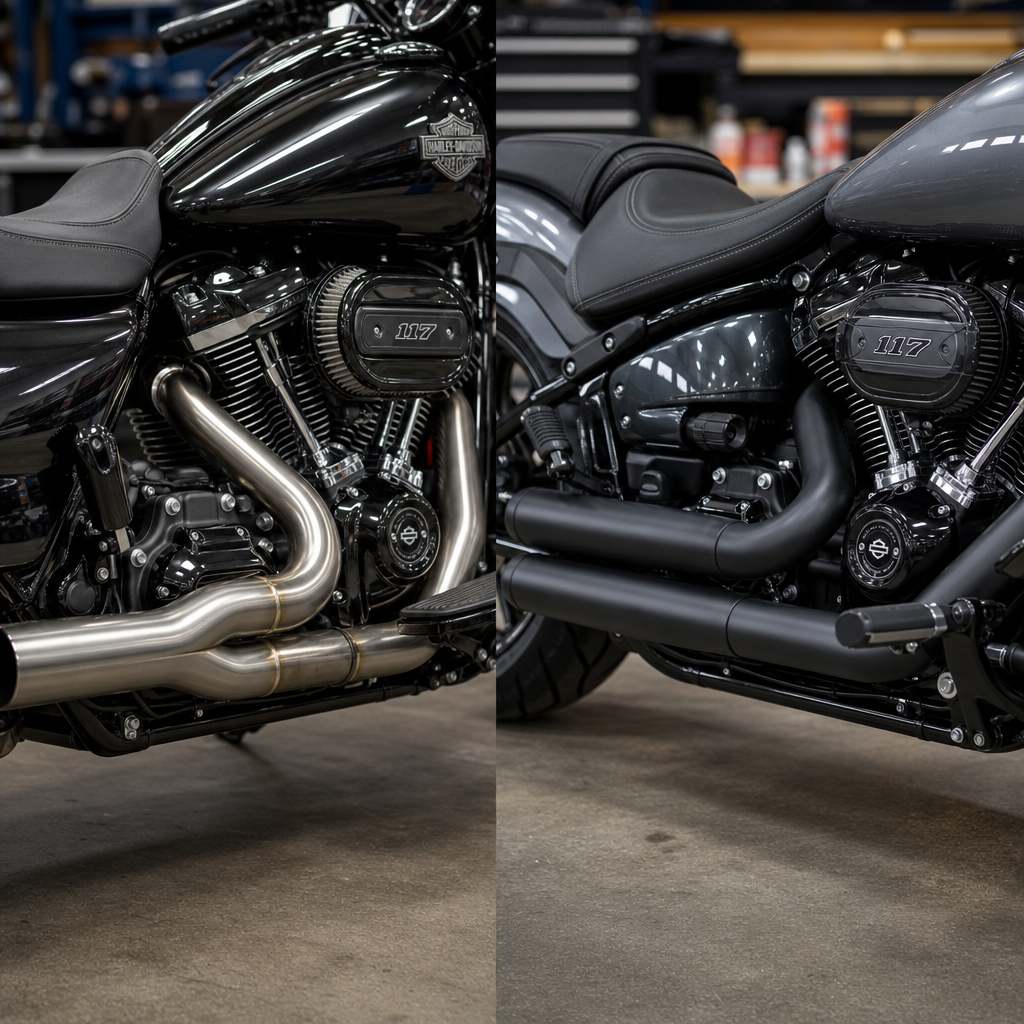
The modifications that most directly affect EPA compliance are anything that changes how the motorcycle breathes, burns fuel, or processes exhaust emissions. That includes exhaust systems, headers, mufflers, catalytic converter changes, intake assemblies, and any internal engine modifications that significantly alter airflow characteristics. Once one of those components changes, the calibration requirements can change as well. If the replacement part is not emissions-certified for that application, or if the calibration is not approved for that exact hardware combination, the motorcycle may no longer qualify as compliant even if it still runs smoothly.
Exhaust changes are especially important because the catalyst is central to federal emissions performance. Replacing a catalyst-equipped system with a non-catalyst or less-effective setup is one of the fastest ways to create a compliance problem. Intake changes can also matter more than riders expect. A high-flow air cleaner may improve airflow, but if it is not part of an approved package and the calibration is not designed around it, the engine may operate outside intended emissions parameters. On a 117 VVT, where airflow behavior changes dynamically, that mismatch can be even more significant than on earlier engines.
Owners should also remember that compliance is not determined only by the tuner itself. The Pro Street Tuner may be a legal tool, but legality depends on how it is used. A compliant tuner attached to a noncompliant hardware package does not somehow restore federal legality. The practical rule is simple: verify that the intake, exhaust, engine configuration, and calibration are all approved for that specific motorcycle application. If there is any uncertainty, ask for written confirmation from a qualified Harley-Davidson dealer or an expert familiar with current emissions rules and product fitment documentation.
What is the safest strategy for Harley-Davidson owners who want to stay legal, protect engine health, and still make smart tuning decisions in 2026?
The safest strategy is to think in terms of system matching, documentation, and restraint. Start by identifying the exact motorcycle, engine version, and current hardware on the bike, including whether the 117 VVT remains equipped with its original emissions-critical components. Then confirm which Screamin’ Eagle parts and Pro Street Tuner calibrations are specifically approved for that model. This step sounds basic, but it is where many compliance mistakes begin. Owners often assume that if a part physically fits, it is automatically legal and calibratable. That is not how EPA compliance works.
Next, prioritize reliability and legal compatibility over maximum airflow claims. A street bike that starts consistently, manages heat properly, maintains stable fueling across weather and altitude changes, and keeps its catalyst and emissions controls functioning correctly is usually the smarter long-term build. That is particularly true for the Milwaukee-Eight 117 VVT, where calibration has to cooperate with valve timing changes and modern control strategies. A conservative, approved tune can deliver excellent real-world satisfaction without exposing the owner to unnecessary legal or mechanical risk.
Finally, keep records. Save part numbers, installation invoices, calibration identifiers, and any compliance-related documentation associated with the build. If questions arise later about what was installed or whether the bike was configured properly, that paperwork matters. Just as important, work with a technician or dealer who understands the difference between race-only advice and street-legal calibration practice. In 2026, the smartest tuning decision for most owners is not the most aggressive one. It is the one that preserves emissions legality, supports the 117 VVT’s engineering, and delivers dependable performance for everyday riding.