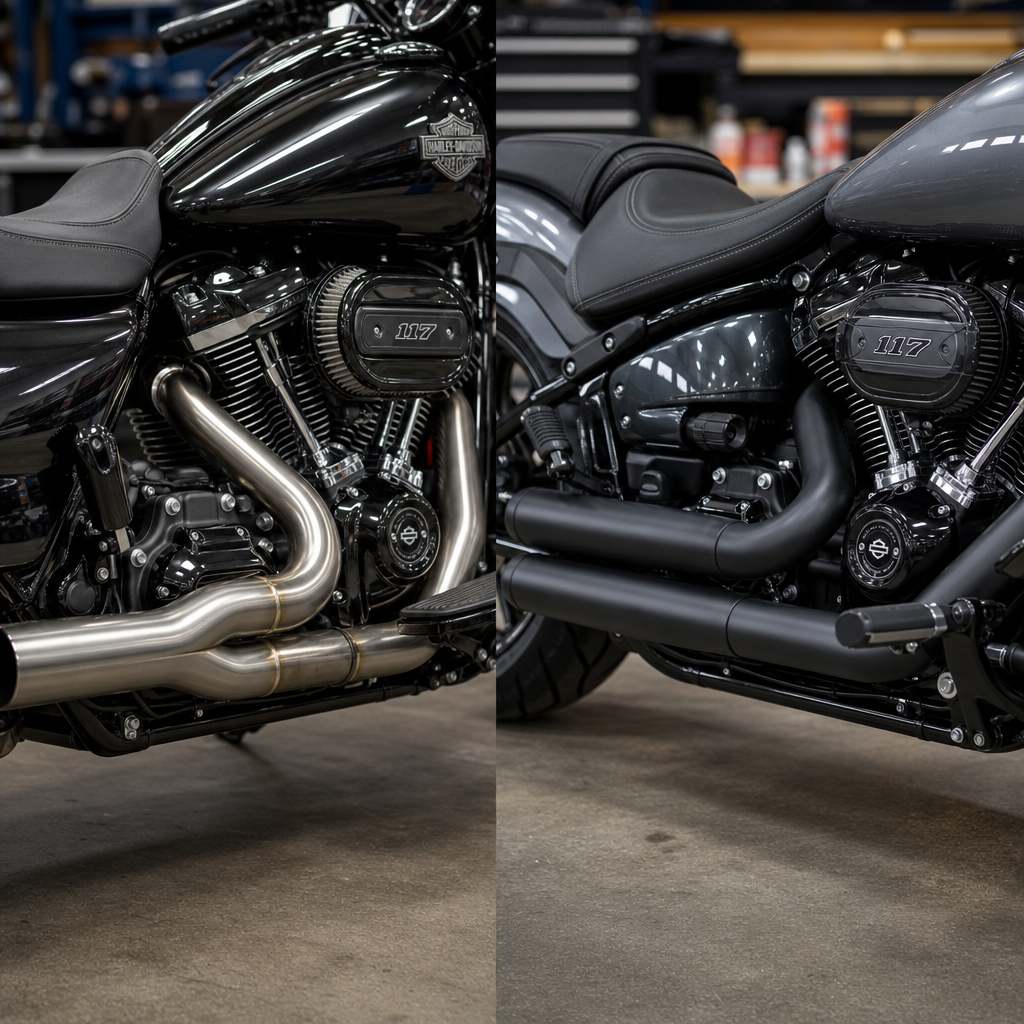
The 2026 Road Glide Limited arrives at a moment when touring motorcycles are expected to deliver big-mile comfort, emissions compliance, and stop-and-go civility without losing the mechanical character riders buy a Harley-Davidson for. Liquid-cooling the Road Glide Limited is not a cosmetic update. It is a thermal management strategy designed to stabilize cylinder head temperatures, protect combustion efficiency, reduce rider heat load, and preserve performance in conditions that air and oil cooling alone struggle to manage. When Harley-Davidson refers to a thermal management suite, the important idea is integration: coolant circuits, pumps, radiators, fan control, oil routing, electronic calibration, and heat shielding working as one system rather than a single add-on part.
For riders comparing the Milwaukee-Eight, Twin Cam, Evolution, and RevMax families, thermal control is the thread that connects engineering eras. Older Harley-Davidson engines relied primarily on fin area, vehicle speed, and oil capacity to carry heat away. Modern powertrains must also satisfy tighter emissions limits, higher combustion pressures, catalytic converter demands, and real-world urban use where airflow is inconsistent. I have spent enough time around touring bikes in summer traffic to know the practical difference between acceptable heat and the kind that bakes the seat, fades power, and shortens component life. This hub article explains how the 2026 system fits into Harley-Davidson’s broader engine story.
Understanding a few key terms makes the topic clearer. Air cooling uses finned cylinders and heads to reject heat directly to ambient air. Oil cooling supplements that process by circulating lubricant through hot zones and often through a dedicated cooler. Liquid cooling uses a water-glycol coolant, pump, passages, thermostat logic, and heat exchangers to move heat from the hottest engine regions to radiators. Thermal management is broader than cooling: it includes spark timing, fueling, idle strategy, catalyst temperature control, fan activation, ducting, insulation, and rider-facing comfort measures. On a fully dressed touring platform like the Road Glide Limited, those systems affect durability, emissions, drivability, and perceived refinement.
This page serves as the technical hub for deep dives on M8, Twin Cam, Evo, and RevMax engines. It connects the 2026 Road Glide Limited’s liquid-cooling package to the long development path that made it necessary and useful. If you want to understand why one Harley-Davidson runs cooler in parade traffic, why another feels simpler to service, or why modern calibration can extract more torque without detonation, thermal management is the right lens. The sections below map the engineering logic, the tradeoffs, and the practical implications for owners, tuners, and touring riders.
Why the 2026 Thermal Management Suite 4 matters on the Road Glide Limited
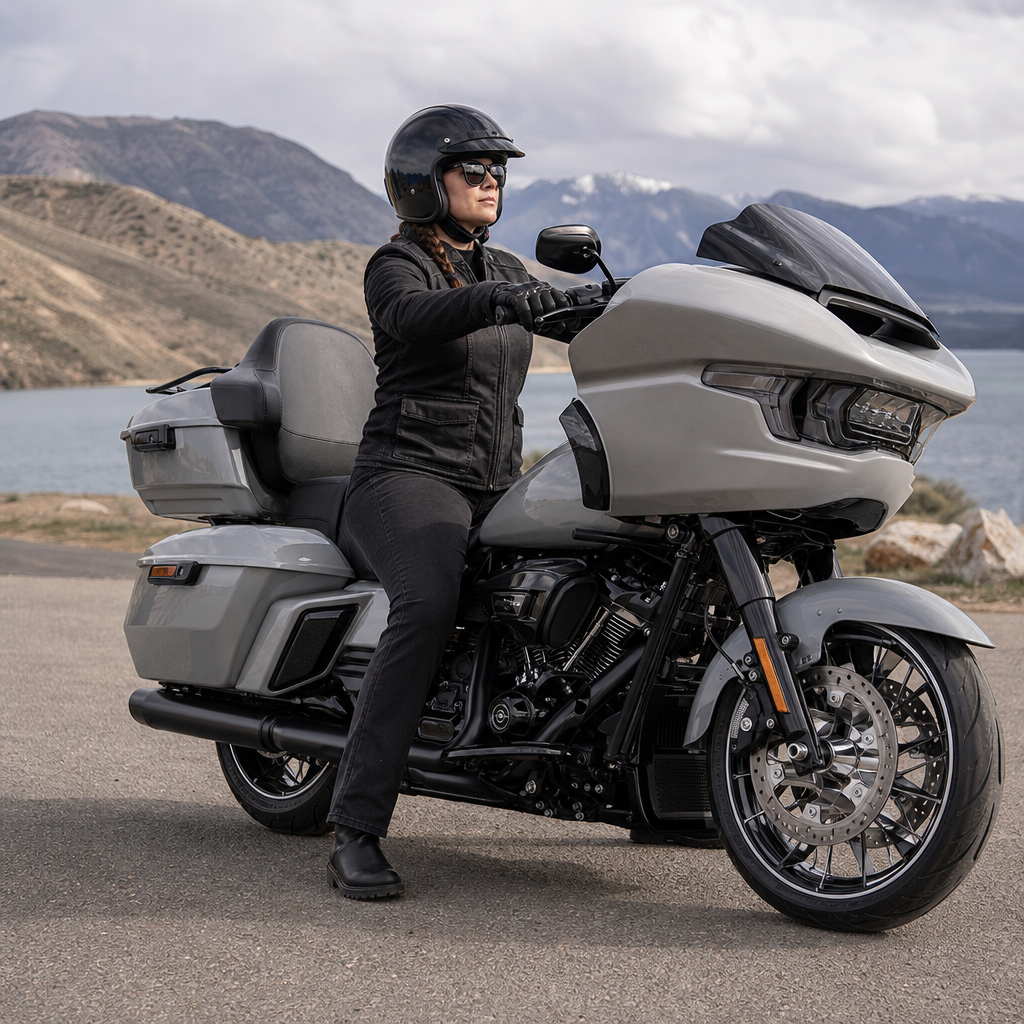
The Road Glide Limited is one of the hardest motorcycles in Harley-Davidson’s lineup to cool well because its mission profile is demanding. It carries fairing mass, luggage, passenger load, low-speed parade use, and interstate touring in one package. It also spends meaningful time idling at fuel stops, border crossings, and urban lights, where traditional ram-air cooling is weakest. In those conditions, cylinder head temperature rises quickly, combustion chambers become more knock-sensitive, and exhaust-side heat radiates toward the rider. A modern liquid-assisted system addresses exactly those pain points by targeting the hottest parts of the engine, especially around the exhaust valve bridges and combustion roof.
On large-displacement V-twins, thermal stability directly supports torque consistency. As head temperatures climb, the engine control module may retard ignition timing to prevent knock, especially on regular fuel or during heat soak restarts. That protects the engine, but riders feel the tradeoff as softer response and extra cabin-like heat around the seat and inner fairing. By holding temperatures in a narrower operating window, the 2026 suite can preserve its intended spark map longer, maintain cleaner combustion, and keep oil viscosity from thinning as aggressively in prolonged heat. Those effects matter more than peak dyno numbers because touring riders care about repeatable performance over hours, not one acceleration pull.
Another reason this system matters is regulatory reality. Tighter emissions standards force catalytic converters and fueling strategies that increase total heat in the powertrain and exhaust path. Manufacturers can no longer rely on rich mixtures to cool components under many operating conditions. Better heat rejection allows cleaner calibration without sacrificing durability. That is the engineering backdrop for Harley-Davidson’s gradual move from pure air cooling, to precision oil cooling, to partial and full liquid-cooling solutions depending on model family. The 2026 Road Glide Limited sits squarely in that evolution.
How Harley-Davidson cooling evolved from Evo to Twin Cam to Milwaukee-Eight and RevMax
The Evolution engine established a benchmark for durability and simplicity in Harley-Davidson’s modern era. Its cooling strategy was straightforward: robust finning, conservative tuning, and oil as a supplementary heat carrier. That recipe worked because power density was moderate and customer expectations for heat management were different. Twin Cam engines raised output and refinement demands while preserving the familiar architecture. They benefited from improved oil flow and, on later touring applications, more deliberate temperature management, yet they still depended heavily on airflow and engine oil.
The Milwaukee-Eight changed the conversation because it combined four-valve heads, improved breathing, and stronger torque with stricter compliance requirements. Harley-Davidson introduced variants that used precision liquid cooling at the cylinder heads rather than full engine water jackets. In practice, that meant engineers targeted the hottest zones first, where heat most affects knock margin and rider comfort. It was a pragmatic bridge between traditional Harley-Davidson packaging and modern thermal demands. I have seen riders underestimate this difference until they compare two bikes back-to-back in slow summer traffic, where the liquid-assisted head cooling pays off immediately.
RevMax represents the company’s most advanced thermal philosophy, built from the outset around liquid cooling, high specific output, and structural engine integration. It belongs to a different design brief than a heavyweight touring V-twin, but it proves how much calibration freedom comes from full liquid control. Higher compression ratios, more aggressive valve events, and tighter emissions targets become easier to manage when head, cylinder, and oil temperatures are all predictable. For a hub covering Technical Deep-Dives: M8, Twin Cam, Evo, and RevMax, the key takeaway is simple: each generation reflects a different balance between heritage architecture, packaging constraints, service philosophy, and heat rejection capability.
What Thermal Management Suite 4 likely includes in practical terms
Thermal Management Suite 4 should be understood as a coordinated package rather than a single cooling loop. On a touring Harley-Davidson, the likely components include liquid-cooled heads or targeted jackets, an electric coolant pump or mechanically driven pump depending on architecture, compact radiators integrated into lower fairing zones, thermostatic regulation, fan logic, revised oil cooler routing, catalytic heat shielding, and engine calibration that actively responds to temperature sensors. The cooling hardware is only half the story. Software determines when to prioritize combustion stability, rider comfort, idle quality, or emissions compliance.
Sensor strategy is especially important. Modern control systems monitor cylinder head temperature, intake air temperature, coolant temperature, oil temperature, manifold pressure, throttle position, and sometimes catalyst thermal state indirectly through modeled calculations. Those data points allow dynamic spark adjustment, idle speed changes, fan activation thresholds, and fueling corrections during heat soak. If a touring bike restarts after a brief stop in extreme heat, vapor management and immediate airflow become critical. Good thermal management reduces hot-start hesitation and prevents the harsh radiant blast riders often associate with large-displacement twins in midsummer.
| Engine family | Primary cooling approach | Main strength | Main limitation |
|---|---|---|---|
| Evolution | Air with oil assistance | Mechanical simplicity and easy service access | Limited thermal control in low-speed high-heat use |
| Twin Cam | Air/oil, improved oil management | Stronger output while retaining traditional layout | Heat concentration rises under emissions-era loads |
| Milwaukee-Eight | Air/oil with targeted liquid-cooled heads on some models | Better knock control and rider comfort | More components and packaging complexity |
| RevMax | Full liquid cooling | Highest thermal precision and calibration freedom | Different character and architecture than classic touring V-twins |
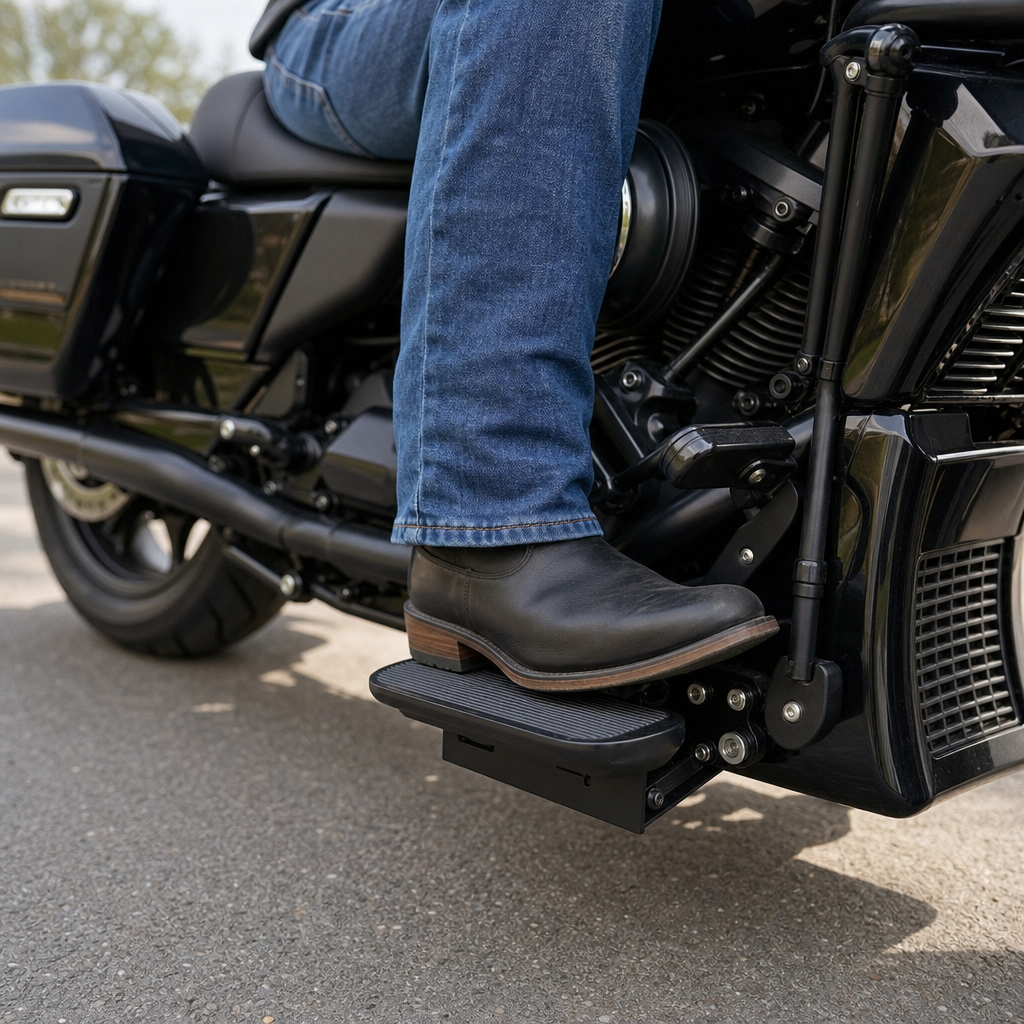
Packaging is where real engineering discipline shows. The Road Glide Limited cannot accept bulky side radiators without affecting style, steering feel, or legroom. That means duct efficiency, fan performance, and exit-air management are crucial. Engineers must move heat away without cooking the rider or compromising service access to lowers, crash bars, and body panels. Done correctly, the result feels invisible: the bike holds stable temperatures, the fans behave predictably, and the rider notices less heat at the thighs and right foot during extended idle periods.
M8 deep-dive: why targeted liquid cooling suits Harley-Davidson touring bikes
The Milwaukee-Eight architecture is especially compatible with targeted liquid cooling because its four-valve heads unlock better breathing but also create localized thermal intensity around the exhaust ports and valve seats. Those are the exact zones where coolant can make the biggest difference. Instead of surrounding the entire engine with water jackets, Harley-Davidson can cool the areas that most influence detonation resistance and valve durability while leaving much of the engine visually faithful to the traditional finned V-twin form. That is a smart compromise for touring customers who want modern function without abandoning the brand’s visual identity.
In practical riding terms, this means an M8 touring engine can maintain stronger combustion control when loaded with luggage and a passenger on a hot climb. Stable head temperature supports the intended air-fuel ratio and ignition strategy, reducing the need for protective timing retard. It also helps exhaust valve guides, seats, and bridge areas live a less stressful life over repeated heat cycles. For long-distance owners who keep bikes for many seasons, that matters more than brochure language. Heat is cumulative. Better management usually translates into cleaner oil life behavior, more stable idle, and fewer complaints about power fade in slow traffic.
There are tradeoffs. Added coolant circuits introduce hoses, clamps, pumps, seals, and bleeding procedures. Access for some maintenance tasks can become tighter, and crash damage near lower-mounted heat exchangers is a legitimate concern. However, these are manageable compromises when the system is designed with service intervals, airflow debris protection, and diagnostic access in mind. In my experience, riders who actually use touring Harleys in all temperatures quickly accept the extra complexity because the comfort and consistency gains are tangible every day, not just in edge cases.
Twin Cam and Evo lessons that still shape owner decisions
Twin Cam and Evolution engines remain central to any Harley-Davidson technical hub because they established the expectations many owners still bring to newer motorcycles. Evo earned trust through accessibility. A competent owner could understand its thermal behavior intuitively: keep oil fresh, keep fins clean, avoid abusive idling, and the engine would generally reward you with longevity. Twin Cam added performance and complexity, especially in touring trim, and owners learned that oil temperature, tune quality, and exhaust configuration could significantly change how much heat the motorcycle produced and how it felt to ride.
Those lessons still matter when evaluating the 2026 Road Glide Limited. Riders moving from Twin Cam often ask whether liquid assistance changes the service experience, whether it masks poor tuning, and whether it removes the traditional feel. The honest answer is nuanced. Better cooling does not excuse a bad calibration, clogged injectors, air leaks, or poor oil maintenance. It simply gives the engine a wider safe operating window. Likewise, liquid control does not erase the pulse, sound, or torque character of a large V-twin. What it changes is the penalty for using that motorcycle as a true touring machine in modern traffic and climate conditions.
For used-bike shoppers, the comparison is also financial. Older Evo and Twin Cam models often cost less to buy and may offer lower DIY maintenance barriers. Newer thermal systems return value through comfort, emissions legality, and repeatable performance under load. The right choice depends on riding pattern. If most miles are rural back roads in mild weather, classic air/oil setups remain satisfying. If the bike will carry two people through summer cities and mountain grades, advanced thermal management is not a luxury feature. It is a durability and usability feature.
RevMax context: what full liquid cooling teaches the touring category
RevMax is useful in this discussion because it demonstrates the ceiling of Harley-Davidson thermal control. Full liquid cooling supports higher specific output, tighter combustion chamber management, and more aggressive electronic strategies than classic touring architectures can easily adopt. The lesson for the Road Glide Limited is not that every Harley-Davidson should become a RevMax-powered motorcycle. The lesson is that precise temperature control expands what engineers can safely do with power, emissions, acoustics, and rider comfort. Once that principle is accepted, a touring thermal suite becomes a strategic necessity rather than a concession.
RevMax also shows how cooling interacts with chassis design. When the engine is a stressed member and mass centralization matters, routing coolant efficiently becomes part of overall vehicle dynamics. Touring bikes prioritize different outcomes, especially weather protection, passenger accommodations, and long-haul ergonomics, yet they benefit from the same discipline: model the heat, control the airflow, and use electronics to manage edge cases before the rider notices them. That is the broader engineering mindset likely informing the 2026 suite.
As this hub expands into dedicated sub-articles, readers should explore engine-specific topics such as M8 cylinder head cooling, Twin Cam oil temperature management, Evo long-term heat maintenance, and RevMax thermostat and radiator strategies. Seen together, they explain why liquid-cooling the Road Glide Limited is not a break from Harley-Davidson history. It is the latest answer to an old problem: how to keep a charismatic big twin reliable, compliant, and comfortable as real-world demands keep increasing.
Conclusion
The 2026 Thermal Management Suite 4 matters because it addresses the exact conditions that challenge heavyweight touring motorcycles most: high ambient temperature, low vehicle speed, passenger load, emissions-era combustion heat, and long continuous use. By combining targeted liquid cooling, smarter sensors, airflow management, and calibration strategy, Harley-Davidson can protect power consistency, reduce rider discomfort, and improve long-term durability where simpler cooling methods reach their limits.
For anyone studying Technical Deep-Dives: M8, Twin Cam, Evo, and RevMax, this Road Glide Limited article is the right starting point because it ties every engine family to the same core question: how does Harley-Davidson control heat without sacrificing identity? Evo and Twin Cam show the strengths of traditional air/oil design. Milwaukee-Eight shows why targeted liquid assistance became necessary. RevMax shows what full thermal precision can achieve. Together they map the company’s engineering direction clearly.
If you are researching your next touring bike, planning upgrades, or comparing generations, use this hub as your foundation and continue into the engine-specific deep dives. Understanding thermal management will help you choose the Harley-Davidson that fits your riding conditions, maintenance preferences, and performance expectations with far more confidence.
Frequently Asked Questions
1. Why did Harley-Davidson add liquid-cooling to the 2026 Road Glide Limited?
Harley-Davidson added liquid-cooling to the 2026 Road Glide Limited because modern touring motorcycles are expected to do far more than cruise comfortably at highway speed. They need to handle long-distance travel, heavy loads, hot weather, urban congestion, tighter emissions standards, and frequent low-speed operation without cooking the engine or the rider. In that environment, traditional air and oil cooling can reach their practical limits, especially around the cylinder heads where combustion heat is most intense. The 2026 thermal management suite is designed to stabilize those temperatures more precisely, which helps the engine maintain consistent combustion efficiency, smoother operation, and more predictable performance across a wider range of riding conditions.
Just as important, this is not simply a comfort feature or a styling change. It is a targeted engineering solution aimed at the places where heat matters most. By controlling head temperatures more accurately, the system helps preserve power delivery when the bike is idling in traffic, crawling through city streets, or operating in high ambient temperatures. It also reduces the amount of radiant and convective heat that reaches the rider, which is a major concern on fully dressed touring motorcycles. The goal is to keep the machine feeling like a Harley-Davidson while making it more usable, more durable, and more compliant with real-world expectations for refinement and emissions.
2. What exactly does the Thermal Management Suite 4 do on the Road Glide Limited?
The Thermal Management Suite 4 is best understood as an integrated heat-control strategy rather than a single component. Its job is to manage engine temperatures in a smarter, more active way so the motorcycle can protect performance and rider comfort at the same time. In practical terms, that means focusing cooling effort where combustion heat is concentrated, especially around the cylinder heads, valve areas, and other high-load thermal zones. Instead of relying solely on airflow and oil circulation, the system uses liquid-cooling as a controlled method of absorbing and moving heat away from critical engine components.
This matters because engine temperature is directly tied to efficiency, detonation resistance, emissions behavior, and mechanical longevity. If temperatures swing too high in stop-and-go conditions, the engine may be forced to compensate in ways that reduce smoothness or output. A more stable thermal envelope allows engineers to maintain cleaner combustion, tighter calibrations, and more consistent running characteristics. For the rider, the result is typically less heat felt in the seat and leg area, reduced heat soak after extended idling, and a touring platform that stays more composed when the weather and traffic are working against it. In short, the suite is there to make the Road Glide Limited perform like a premium touring bike in the exact situations where unmanaged heat usually causes compromise.
3. Does liquid-cooling change the traditional Harley-Davidson riding experience?
That is one of the most common concerns, and the short answer is no, not in the way many riders fear. The purpose of adding liquid-cooling to the 2026 Road Glide Limited is not to erase the personality of the engine or make the motorcycle feel generic. Harley-Davidson’s challenge was to preserve the mechanical character, torque-rich feel, and touring identity riders expect while addressing the thermal realities of modern use. Liquid-cooling is being applied as a thermal management tool, not as a complete philosophical departure from what makes the bike recognizable.
In practice, riders are more likely to notice the benefits than the intrusion of the system itself. The engine should feel more consistent in heat-soaked conditions, less stressed in slow traffic, and less prone to transmitting excessive heat to the rider. That translates into a touring experience that is calmer and more comfortable without necessarily feeling less engaging. The familiar strengths of a large-displacement Harley touring platform—strong low-end response, long-distance presence, and distinct mechanical identity—can remain intact while the cooling system quietly handles the workload that air and oil alone struggle to manage in extreme or low-airflow scenarios. So rather than changing the soul of the motorcycle, liquid-cooling is intended to protect it from the compromises imposed by heat.
4. How does liquid-cooling improve rider comfort on long trips and in traffic?
Rider comfort improves because unmanaged engine heat does not just affect metal parts; it affects the person sitting on the motorcycle. On a fully dressed touring model like the Road Glide Limited, heat can build up during extended idling, parade-speed riding, city congestion, and hot-weather travel. That heat often radiates upward and outward toward the rider’s legs, lower body, and seating area. Over time, especially on long-distance rides, that can become fatiguing and distracting. A liquid-cooled thermal management system helps reduce those heat peaks by carrying combustion heat away from the hottest parts of the engine before it accumulates and spills into the rider environment as intensely.
The benefit is especially noticeable in the kinds of real-world situations touring riders actually encounter: waiting at lights with a loaded bike, inching through traffic near a rally destination, crossing hot urban areas in midsummer, or climbing slowly through scenic but congested routes. Instead of allowing temperatures to spike sharply when airflow drops, the system helps keep the engine within a more controlled range. That means less perceived heat on the rider, less thermal discomfort for passengers, and a motorcycle that remains easier to live with over a full day in the saddle. Comfort on a touring bike is not just about seat foam and wind protection; thermal comfort is a major part of endurance, and this system addresses it directly.
5. Does better thermal control also help performance, durability, and emissions?
Yes, and that is a major reason systems like this are becoming so important on premium touring motorcycles. When engine temperatures are managed more precisely, the combustion process can remain more stable, which supports cleaner burning, stronger consistency, and more reliable response. Excessive heat can force compromises in ignition timing, fueling behavior, and overall engine calibration. By keeping critical areas such as the cylinder heads within a more controlled operating window, liquid-cooling helps the engine deliver performance more consistently instead of feeling strongest only when airflow and ambient conditions are ideal.
Durability also benefits from lower thermal stress. Repeated exposure to extreme heat can accelerate wear on gaskets, seals, valve train components, lubricants, and surrounding materials. Better thermal regulation does not eliminate wear, but it can reduce the severity of the heat cycles that contribute to long-term strain. On the emissions side, precise temperature control helps manufacturers meet stricter standards without making the engine feel lifeless or compromised. That is really the deeper story behind the 2026 Road Glide Limited’s cooling strategy: it is not just about preventing overheating. It is about preserving combustion efficiency, protecting key components, reducing rider heat load, and ensuring the motorcycle performs with premium touring composure in the exact conditions where older cooling approaches begin to show their limitations.