Harley-Davidson riders in 2026 have more control over throttle character than at any point in the company’s history, and ride mode customization now sits at the center of how a bike feels on the road. In practical terms, setting your own power delivery curve means deciding how aggressively torque arrives when you open the throttle, how quickly the engine responds to your wrist, and how electronic systems such as traction control, cornering ABS, and engine braking support that response. For riders building model-specific ergonomics and performance recipes, this matters because power delivery is never separate from posture, reach, seat height, handlebar leverage, foot control position, suspension attitude, tire choice, passenger load, or luggage weight.
I have spent years tuning modern Harleys for real riders rather than brochure conditions, and the same pattern repeats: two motorcycles with the same engine can feel completely different when the rider triangle and electronic setup are aligned correctly. A Road Glide with a neutral bar bend, mid-reach seat, and softened initial throttle ramp can feel calmer and more planted for long-distance work. A Low Rider ST with firmer rear preload, a slightly quicker first-third throttle map, and reduced intrusive intervention can feel sharper without becoming nervous. The term recipe is useful here because customization is cumulative. You are not changing one isolated setting; you are combining control inputs, geometry, load assumptions, and rider intent into a repeatable setup.
This hub article explains how to approach 2026 H-D ride mode customization as a system. It covers what a power delivery curve actually changes, how Harley’s major platform families respond, which ergonomic variables most affect perceived throttle behavior, and how to create practical recipes for touring, commuting, canyon riding, wet weather, and two-up use. It also points riders toward deeper Harley-Davidson articles within this subtopic by framing the key decisions each bike owner must make first. If you want your motorcycle to feel more predictable, more comfortable, and better matched to the way you actually ride, power delivery customization is one of the highest-value adjustments available.
What power delivery curve customization changes on a 2026 Harley-Davidson
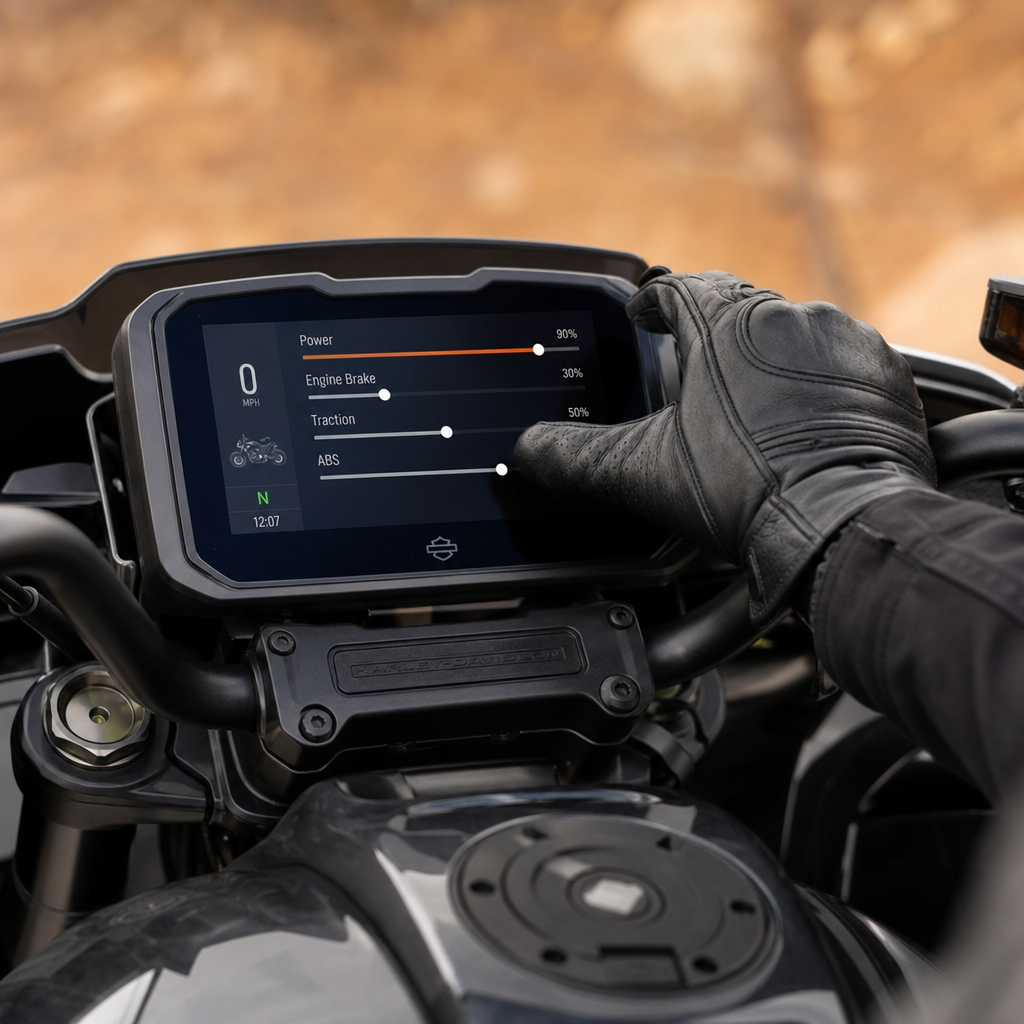
A power delivery curve is not a dyno chart rewrite inside the dash menu. The engine’s maximum output still depends on hardware, calibration limits, fuel quality, intake and exhaust configuration, and emissions strategy. What you are usually changing in a customizable ride mode is the relationship between throttle twist and delivered torque request, especially in the first half of throttle opening, where street riders spend most of their time. On current Harley-Davidson platforms, that typically includes throttle response sharpness, torque ramp rate, engine braking character, and the thresholds or sensitivity of rider aids that manage rear-wheel slip and chassis stability.
In plain terms, a steeper curve feels eager. Small wrist movement brings a larger response, which can make a bike feel lively, lighter, and more immediate. A flatter initial curve feels smoother and easier to meter in traffic, rain, gravel, parking lots, or with a passenger aboard. Neither is universally better. On the bikes I have set up, the right answer depends on leverage at the handlebar, rider experience, engine architecture, and how much mass the chassis is carrying. A touring bagger loaded for a weeklong trip often benefits from a gentler initial ramp but strong midrange access, while a solo performance cruiser can carry a quicker opening if the rider has supportive ergonomics and stable lower-body contact.
The key insight for 2026 owners is that customization works best when you treat the electronic map as a finishing layer, not the first fix. If a rider is overreaching to the bars, sliding forward on the seat, or carrying too little rear preload, abruptness at the throttle is often partly ergonomic or chassis-based. Correct those first, then refine the mode.
Model-specific ergonomics and performance recipes across Harley-Davidson platforms
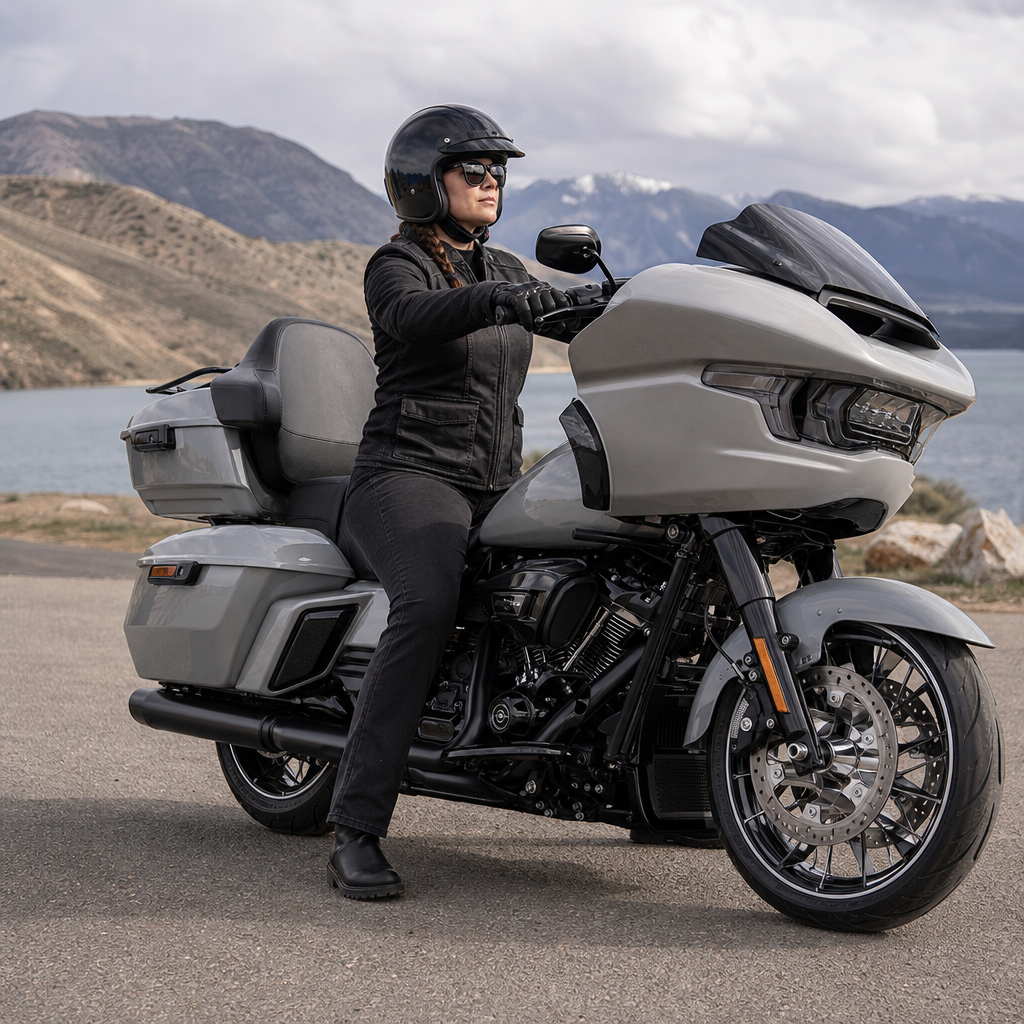
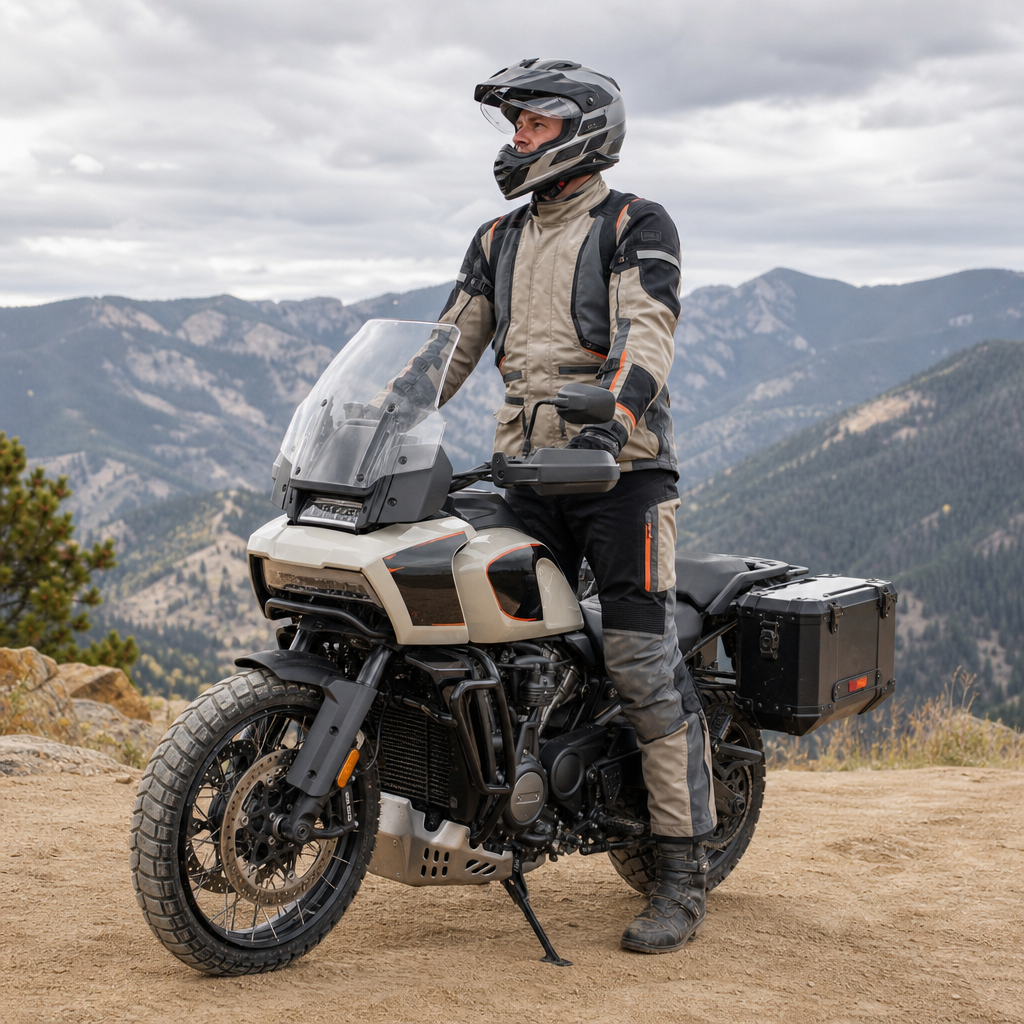
Different Harley-Davidson families translate the same ride mode logic into different seat-of-the-pants results. Touring models such as the Street Glide and Road Glide have longer wheelbases, more aerodynamic influence from the fairing, and more total mass. That means they usually accept slightly more assertive mid-throttle tuning than riders expect, because the chassis naturally damps sharp inputs. Softail-based models, including the Low Rider S, Low Rider ST, Breakout, Fat Boy, and Heritage Classic, often feel more sensitive to initial throttle rate because the rider sits more directly over the rear contact patch and has less mass isolating small torque changes. Sportster S and Pan America models react differently again because the Revolution Max engine family revs faster and can feel more immediate at small openings.
For hub-page purposes, think in recipes. A recipe starts with the platform, then matches rider posture, intended speed range, road surface, and load condition. Example: a Road Glide long-haul touring recipe often combines a neutral seat pocket that prevents forward slide, bars that keep elbows relaxed, floorboard placement that supports the hips, rear suspension preload adjusted for actual luggage weight, and a custom mode with smooth initial response, moderate engine braking, and full confidence aids for changing weather. Example two: a Low Rider ST backroad recipe may pair a firmer seat, slightly rearward body support, taller rear ride height within safe limits, and a custom mode that delivers stronger first-half response with reduced intervention only after tire condition and rider skill justify it. Example three: a Pan America mixed-surface recipe prioritizes precision at tiny throttle openings, because loose surfaces punish abruptness far more than peak power deficits do.
| Model family | Best starting ergonomic focus | Recommended power curve direction | Typical use case |
|---|---|---|---|
| Touring baggers | Seat support, bar reach, load-adjusted preload | Smoother initial ramp, strong midrange | Highway, two-up, loaded travel |
| Softail performance cruisers | Rear support, peg pressure, chassis balance | Quicker initial ramp with controlled aids | Backroads, solo sport touring |
| Classic cruisers | Low-speed stability, wrist angle, seat pocket | Gentle launch, predictable roll-on | City riding, scenic cruising |
| Adventure/Sport | Standing reach, fine throttle control, suspension setup | Linear response, traction-sensitive tuning | Mixed surface, fast transitions |
How ergonomics change perceived throttle response
Many riders blame the ECU for problems created by body position. If your wrists are cocked downward, any bump can cause unintended throttle input. If the seat tips you toward the tank, you brace on the bars during deceleration and amplify on-off transitions. If the bars are too wide for your shoulder width, steering corrections can coincide with throttle movement. These are not subtle effects. On Harley models with substantial low-end torque, small ergonomic mismatches can make a perfectly reasonable stock map feel abrupt.
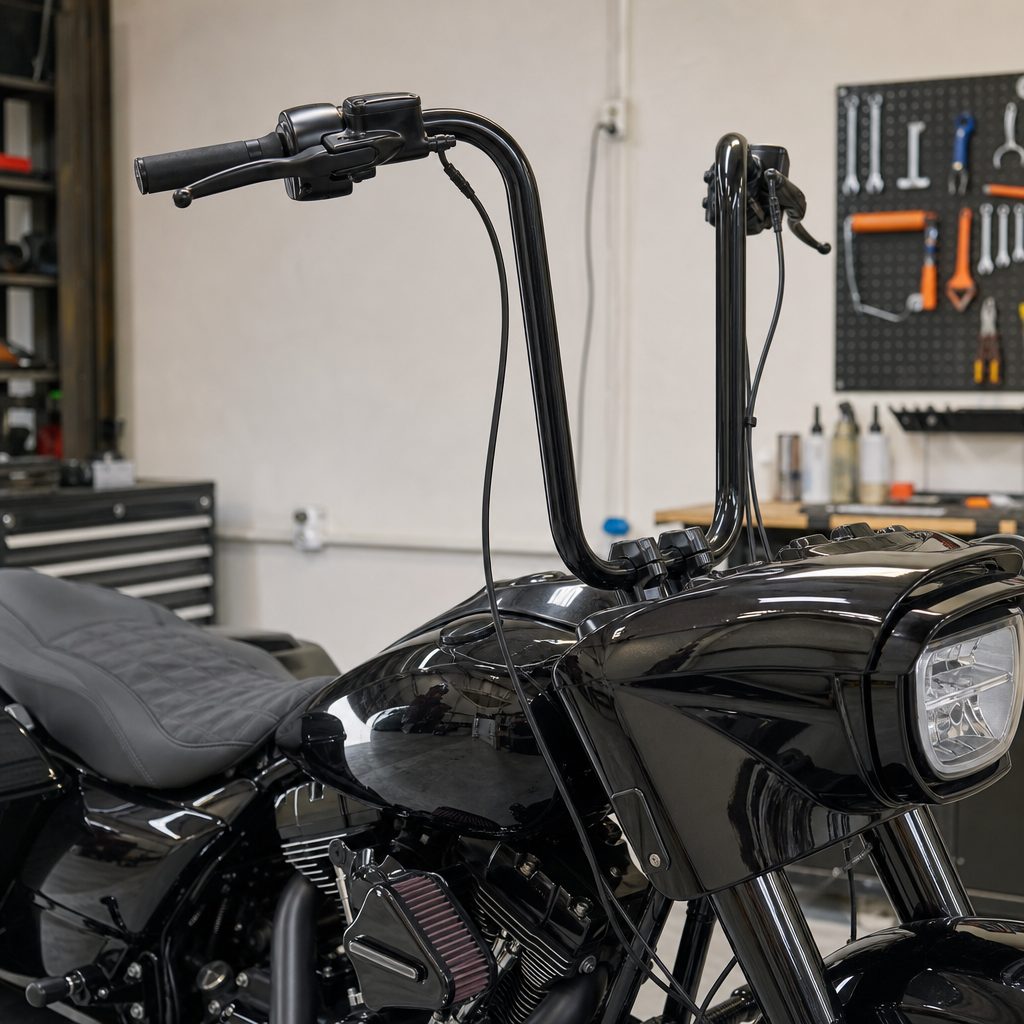
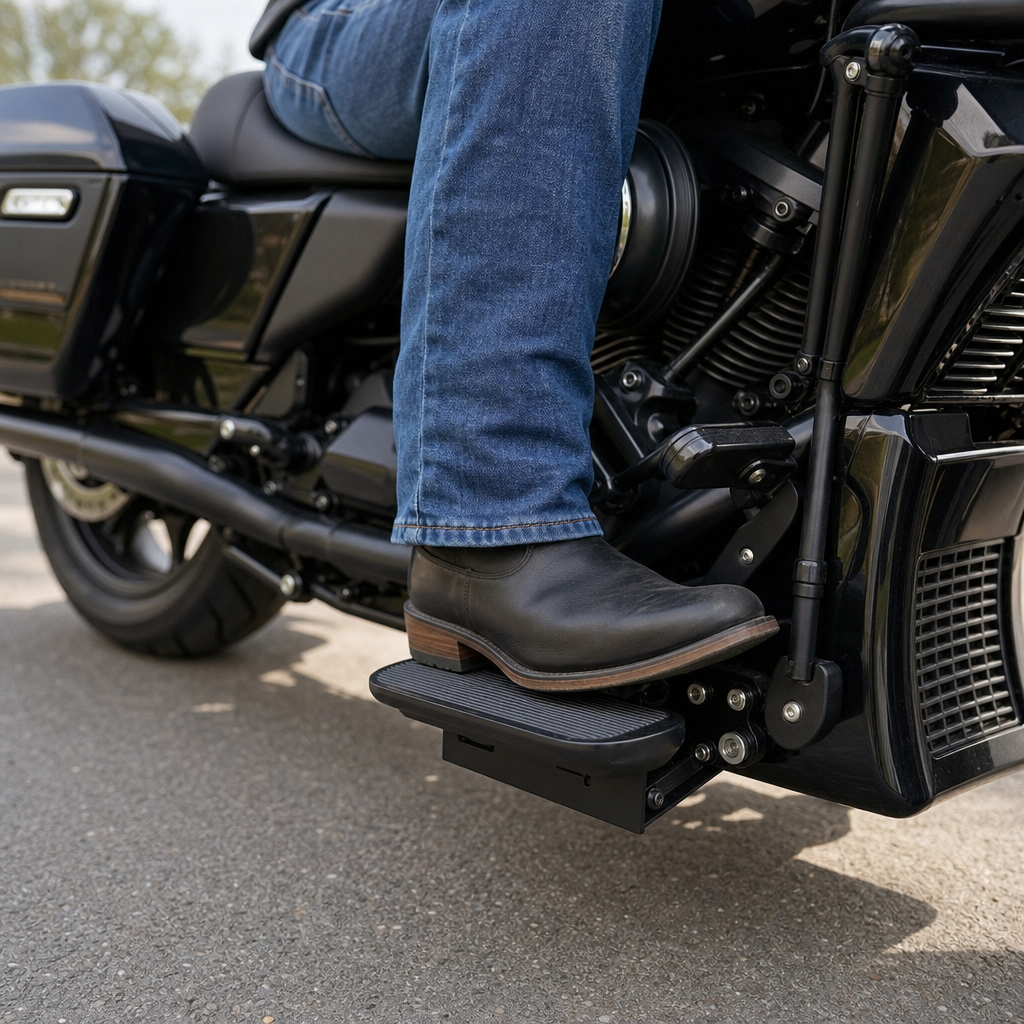
The most common fixes are straightforward. Seat shape determines pelvic stability; a deeper pocket usually improves throttle precision on torquey cruisers. Handlebar rise and pullback determine how much the rider hangs from the grips; reducing that load steadies the wrist. Footboards or pegs define lower-body anchoring; when the legs can support the torso, the right hand becomes more accurate. Suspension setup matters too. Excess rear sag lengthens the feeling between throttle input and chassis response, often leading riders to over-apply the throttle, then back off too sharply when torque arrives. Correct sag and damping create a cleaner one-to-one connection between command and motion.
This is why every serious performance recipe should begin with a cockpit audit. Measure reach. Check whether the rider can maintain neutral wrists at cruising speed. Confirm that the seat allows braking support without crushing the tank. Then evaluate ride mode changes. When riders do this in the right order, they often discover they need less aggressive electronic intervention than they assumed.
Building a custom mode: throttle, engine braking, traction, and load
When a 2026 Harley-Davidson lets you save a personalized mode, start by defining the use case in one sentence: “solo freeway commuting,” “two-up mountain touring,” “wet city riding,” or “fast weekend backroads.” That sentence should govern every choice. First adjust throttle response. For most riders, the biggest gain comes from smoothing the first 20 to 40 percent of opening while preserving decisive response past that point. This prevents lurching at low speed but keeps overtakes easy. Second, set engine braking. Too much can upset the chassis on downhill corner entries or with a passenger; too little can make the bike run on and increase brake workload. Third, review traction and stability thresholds. On cold pavement, worn tires, or crowned roads, conservative settings save mistakes. On warm dry roads with quality rubber and a skilled rider, slightly less intrusive intervention can make the bike feel cleaner mid-corner.
Load must be part of the recipe. Add a top case, passenger, and hard luggage, and the same throttle map can feel softer simply because mass increases. Riders then mistakenly sharpen the map instead of correcting suspension preload first. I have seen this repeatedly on baggers. After preload is set to restore proper ride height, the original map often feels right again. Tire pressure also changes the equation. Underinflated rear tires can make throttle response feel delayed and vague, followed by a squirming surge. Always establish a mechanical baseline before judging software.
A useful rule is one change per test loop. Use a consistent route with parking-lot speeds, urban roll-ons, a 45 to 65 mph merge, and at least one uneven corner. Note where the bike feels abrupt, lazy, or unstable. Then revise only one variable. That method produces reliable results far faster than random menu experimentation.
Practical recipes for common Harley-Davidson riding scenarios
For commuting, prioritize smoothness and repeatability. A commuter recipe should reduce fatigue, not chase excitement. Use a gentle initial throttle ramp, medium engine braking, and full rider aids. Pair it with a seat that prevents sliding, bars that relax the shoulders, and mirrors positioned without wrist compromise. On a Street Glide or Heritage Classic, this setup makes stop-and-go riding calmer and lowers the chance of jerky passenger reactions.
For long-distance touring, tune for stability under varying loads. Keep the initial throttle soft, maintain robust midrange for passing, and avoid aggressive engine braking that can disturb two-up comfort. This works especially well on Road Glide and Ultra-style machines where wind management encourages steady-state cruising but luggage and passenger weight can magnify chassis pitch if decel is abrupt. Include a suspension check whenever cargo changes by more than roughly 20 to 25 pounds.
For sport-oriented backroad riding, use a more direct first-half response only if your ergonomic support is solid. On Low Rider S, Low Rider ST, and Sportster S models, a sharper map can improve corner-exit timing, but only after seat support, peg pressure, and tire condition are sorted. Keep enough intervention to catch painted lines, patch repairs, and cold mornings. Fast does not mean reckless; the best recipe is the one you can repeat consistently.
For rain and low-grip conditions, flatten the initial torque request noticeably. That is the single most effective change. Leave traction systems conservative, reduce abrupt engine braking, and increase following distance. Adventure-oriented Harley riders already understand this principle on mixed surfaces, but cruiser owners benefit just as much in urban rain, especially over steel plates and polished intersections.
Common mistakes and where to go next in this Harley-Davidson hub
The biggest mistake is chasing a dramatic feel instead of a useful one. A hyper-reactive map can impress on a short test ride and become exhausting within a week. The second mistake is tuning around a bad fit. If the bars, seat, pegs, or suspension are wrong, the mode will never fully solve the issue. The third mistake is forgetting context. Tire age, compound, pressure, pavement temperature, passenger habits, luggage position, and even glove bulk affect how throttle response is perceived. Experienced setup work acknowledges those variables rather than pretending one custom mode is perfect everywhere.
As the hub for model-specific ergonomics and performance recipes, this page should help you decide which deeper Harley-Davidson setup path to follow next. Touring owners should move into articles focused on Road Glide and Street Glide seating, bar geometry, shock preload, and passenger-friendly decel control. Softail riders should explore model-specific guides for Low Rider S, Low Rider ST, Heritage Classic, Fat Boy, and Breakout ergonomics, especially the relationship between seat pocket, reach, and first-gear throttle feel. Pan America and Sportster S riders should look for pieces on standing ergonomics, fine low-speed control, and traction strategy on changing surfaces.
The main takeaway is simple: your ideal 2026 H-D power delivery curve is not just an electronics preference. It is the final expression of a complete rider-bike recipe built around fit, load, terrain, and intent. Start with ergonomics, establish the mechanical baseline, then tailor the custom mode to the way you actually ride. Do that methodically and your Harley-Davidson will feel smoother, faster, easier to trust, and more your own. Use this hub as your starting point, then build the specific recipe that matches your model and miles.
Frequently Asked Questions
What does “setting your own power delivery curve” actually mean on a 2026 Harley-Davidson?
On a 2026 Harley-Davidson, setting your own power delivery curve means tailoring how the motorcycle converts throttle input into engine response and rear-wheel torque. Instead of accepting a fixed factory feel, you can adjust how quickly power comes in when you twist the grip, how sharp or smooth the throttle reacts at low, mid, and higher openings, and how strongly the bike manages supporting systems around that request for power. In real-world riding, that changes the entire character of the motorcycle. A softer curve can make the bike feel calmer, easier to modulate in traffic, and more confidence-inspiring in rain or on cold pavement. A more aggressive curve can make it feel immediate, lively, and stronger off the line or when driving out of corners.
It is important to understand that this is not just about making the bike “faster.” In many cases, customization is about making response more predictable and more appropriate for your riding style. Two motorcycles with the same engine output can feel very different depending on how torque is delivered in the first few degrees of throttle opening. That is why ride mode customization matters so much. It lets a rider shape the bike’s personality by balancing throttle sensitivity, traction control intervention, cornering support, and engine braking behavior into one coordinated setup.
For Harley-Davidson riders, the practical advantage is control. If you spend most of your time touring, commuting, or riding with a passenger, a progressive and smoother curve may reduce fatigue and make the bike easier to ride cleanly. If you ride aggressively on open roads, you may prefer a more direct response that gives stronger acceleration with less wrist movement. The key idea is that the power delivery curve determines how the bike feels every time you crack the throttle, not just how much horsepower the engine makes on paper.
Which settings usually affect the feel of a custom ride mode besides simple throttle sensitivity?
Throttle sensitivity is the most obvious part of a custom ride mode, but it is only one piece of the system. On a 2026 Harley-Davidson, the overall feel of a mode is typically shaped by a combination of torque request mapping, traction control thresholds, cornering-sensitive intervention, ABS calibration, and engine braking levels. These systems work together, and the riding experience changes dramatically depending on how they are balanced. A bike may have sharp throttle response, for example, but if traction control is set to intervene early, the actual delivery at the rear wheel may still feel restrained under poor surface conditions.
Engine braking is another major factor riders often underestimate. When you roll off the throttle, the amount of deceleration created by the engine can influence how settled the bike feels entering a turn or coming down from highway speed. More engine braking can make a bike feel connected and controlled, especially for riders who like using the throttle to manage chassis attitude. Less engine braking can create a smoother, more free-rolling feel that works well for relaxed street riding or long-distance touring. That setting has a direct effect on how natural the power curve feels because acceleration and deceleration are part of the same rider input loop.
Cornering electronics also matter because modern ride modes are designed around stability, not just engine output. Lean-angle-aware traction control and ABS can modify how confidently the motorcycle applies or manages power while the bike is not upright. If your custom mode is intended for aggressive canyon riding, the ideal setup may be different from a mode built for wet-weather commuting. The best custom ride mode is rarely the one with the highest responsiveness in every category. It is usually the one where throttle behavior, wheel-slip management, braking support, and deceleration all complement each other in a way that feels intuitive to the rider.
How should a rider start building a custom power delivery curve without making the bike unpredictable?
The smartest way to build a custom power delivery curve is to start from a factory ride mode that already feels close to what you want, then make small, deliberate changes one at a time. If a Road, Sport, Rain, or Touring-style mode exists as a baseline, choose the one that most closely matches your usual riding conditions. From there, adjust throttle response first, because that is the setting most riders immediately notice. A small increase or decrease in initial sensitivity can tell you a lot about what direction the rest of the setup should go.
After that, evaluate the bike in controlled and familiar conditions. Ride the same stretch of road if possible, using the same types of inputs: smooth takeoffs, mid-corner roll-ons, low-speed maneuvers, and highway passing acceleration. The goal is not to chase excitement on the first test ride. The goal is to determine whether the motorcycle responds consistently and predictably to your hand. If the bike feels abrupt at parking-lot speeds, too jumpy in traffic, or unsettled during corner exits, the curve is likely too aggressive too early in the throttle opening. If it feels lazy or disconnected, you may want a little more immediacy in the first part of the map.
Once throttle response is where you want it, fine-tune supporting systems like engine braking and traction control. Avoid changing multiple variables at once, because that makes it hard to identify what solved or created a problem. A well-tuned custom mode should feel natural, not dramatic. It should reduce the need for constant correction and let the bike behave the way you expect in both routine and spirited riding. Riders often find that the best setup is not the one with the sharpest response, but the one they can repeat accurately in every situation, including rough pavement, uneven traction, and low-speed operation.
What is the best custom ride mode setup for street riding, touring, or wet-weather conditions?
There is no single best setup for every Harley-Davidson rider, but there are proven patterns that work well for specific uses. For everyday street riding, most riders benefit from a balanced power delivery curve with moderate initial throttle response, predictable midrange torque, normal-to-high electronic safety support, and engine braking that is noticeable but not abrupt. That kind of configuration gives you smooth low-speed control, enough urgency for merging and passing, and a forgiving feel when pavement conditions are not perfect. It is often the best all-around setup because it reduces harshness without making the bike feel dull.
For touring, comfort and smoothness become even more important. A good touring-oriented mode usually emphasizes a gentler initial throttle ramp, a broad and linear build in torque, and lower fatigue over long distances. Riders carrying luggage or a passenger often prefer a setup that avoids sudden driveline reactions and keeps acceleration easy to meter out. Moderate engine braking can help maintain composure without causing excessive pitch when rolling off. Traction and stability systems are usually best left relatively conservative in this kind of mode, especially if your travel includes changing weather, unfamiliar roads, or long hours in the saddle.
For wet-weather riding, confidence should take priority over immediacy. A rain-focused mode generally works best with reduced throttle sensitivity, slower torque ramp-in, and stronger traction control intervention. Cornering support and ABS settings become especially valuable here because the bike may encounter painted lines, metal surfaces, standing water, or inconsistent pavement grip. Many riders assume a wet mode simply cuts power, but the better interpretation is that it makes power easier to use. It gives you more room for error at the grip and helps the motorcycle maintain composure when traction is limited. In practice, a well-built wet-weather custom mode can make riding safer and less stressful while still leaving enough performance for real-world road use.
Can a custom power delivery curve improve rider confidence and safety, or is it mostly a performance feature?
A custom power delivery curve can absolutely improve rider confidence and safety, and for many riders that is more important than outright performance. The biggest benefit of customization is that it helps the motorcycle respond in a way that matches the rider’s skill level, environment, and expectations. When throttle response is too abrupt, riders often compensate by being overly cautious, tense on the controls, or inconsistent with inputs. When it is too soft, they may struggle to place the bike precisely in traffic or during corner exits. A well-matched custom mode reduces those mismatches and makes the bike easier to ride smoothly.
Confidence comes from predictability. If you know exactly how much drive the bike will deliver with a small wrist movement, you are more likely to be smooth at low speeds, more stable when riding two-up, and more composed on uneven surfaces. That predictability becomes even more valuable when electronic systems are integrated intelligently. Properly tuned traction control, cornering ABS, and engine braking can support the rider without making the bike feel intrusive or disconnected. The best setup is one where the technology works in the background while the motorcycle still feels mechanically honest and intuitive.
Performance is still part of the picture, but modern ride mode customization is really about usable performance. A motorcycle that puts torque down in a controllable, confidence-inspiring way is usually quicker and safer in the real world than one that feels edgy or difficult to modulate. For newer riders, a calmer curve can shorten the learning curve. For experienced riders, a personalized setup can unlock more consistency and precision. In both cases, the result is the same: better control, less surprise, and a motorcycle that feels like it is working with the rider rather than demanding constant adaptation.