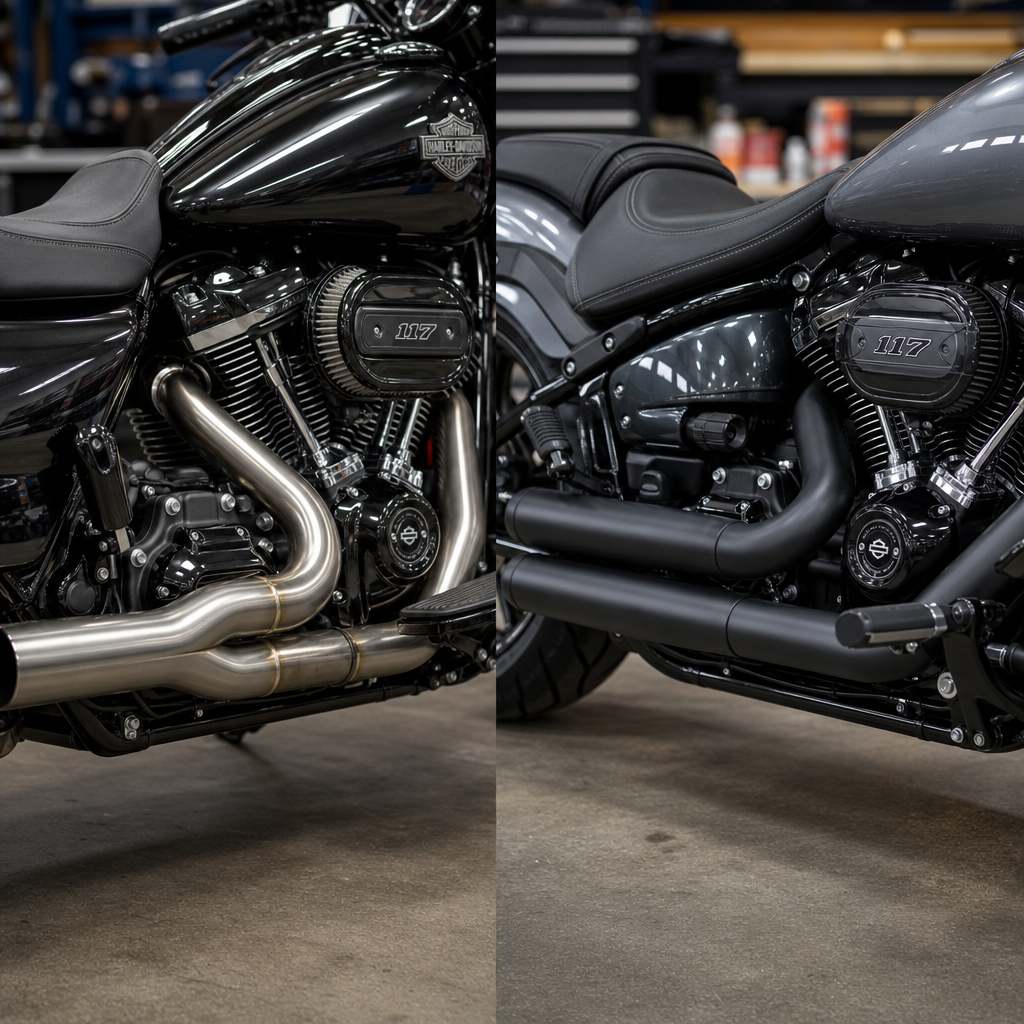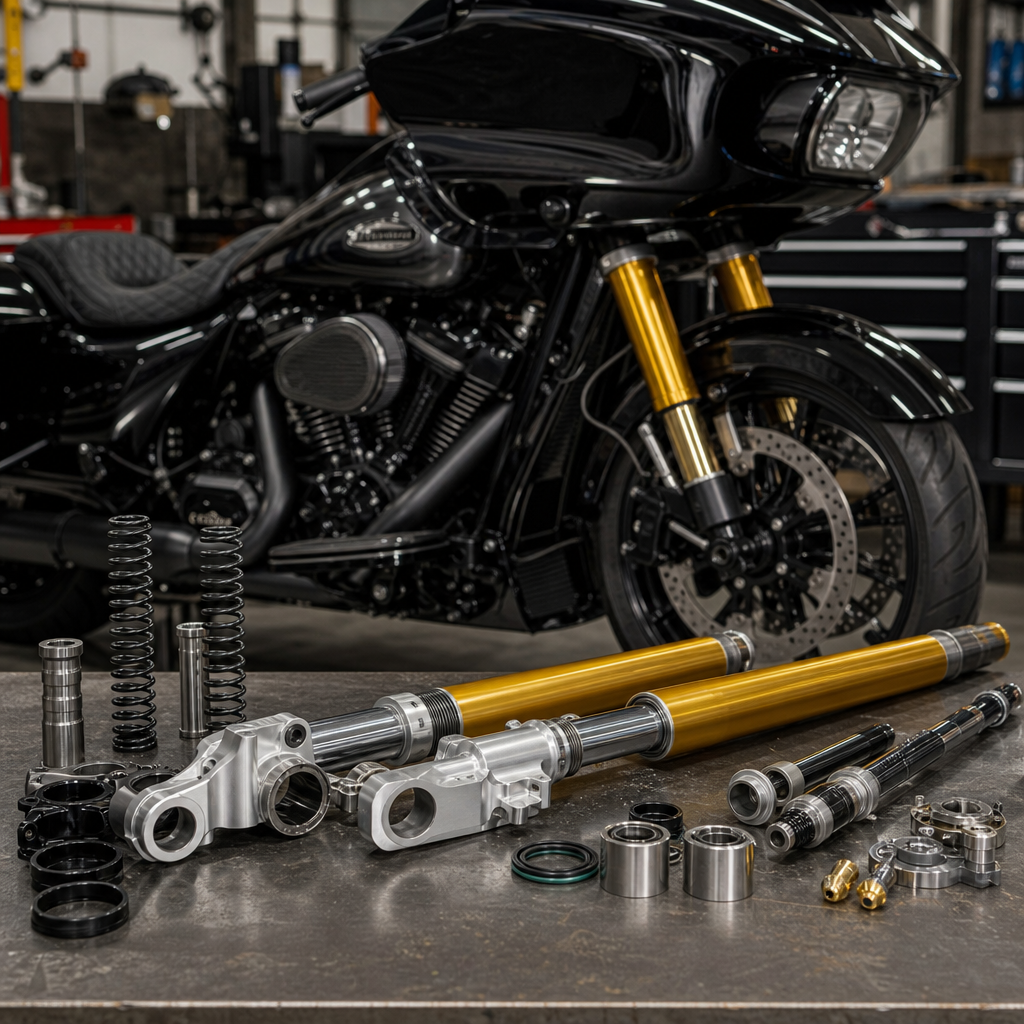
Performance bagger handling starts at the fork, and the biggest gains usually come from tuning the valving to match rider weight, chassis geometry, brake load, and the way a Harley-Davidson touring bike is actually ridden. In this hub, Performance Bagger Inverted Fork Tuning: Showa vs. Ohlins Valving Recipes, the focus is model-specific ergonomics and performance recipes for Harley-Davidson baggers using inverted front ends, especially Road Glide and Street Glide platforms built for canyon speed, aggressive braking, and high-mile comfort. A performance bagger is not just a dressed touring motorcycle with sticky tires; it is a heavy, long-wheelbase machine tuned to corner, resist dive, hold a line under brakes, and stay composed over expansion joints while loaded with rider, passenger, luggage, and fairing mass. Inverted forks matter here because their larger upper tubes improve rigidity, reduce flex during hard braking, and give tuners more precise control of damping behavior through cartridge design and shim stack changes.
When riders compare Showa and Ohlins, they are usually comparing two different starting philosophies rather than simply ranking one as better. Showa, especially in Harley-Davidson OE and Screamin’ Eagle applications, often prioritizes broad-road usability, durability, and manufacturing consistency. Ohlins typically arrives with a more motorsport-centered baseline, with firmer support, clearer damping separation, and a wide aftermarket ecosystem for springs, pistons, and shim data. Neither brand produces magic on its own. The result depends on spring rate, oil height, cartridge spec, seal drag, bushing condition, axle alignment, triple-clamp torque, rear ride height, bar reach, seat position, and tire carcass behavior. I have tuned both systems on touring Harleys where the wrong spring made premium cartridges feel harsh, and where a well-built Showa package outperformed an expensive but poorly matched Ohlins setup on real roads.
This article serves as the hub for model-specific ergonomics and performance recipes within the Harley-Davidson category. It explains how to think about fork valving recipes by rider profile and motorcycle configuration, then connects that thinking to fit and control points such as bars, seats, floorboards, peg pressure, and hand position. The practical question is simple: what valving recipe makes a given bagger easier to ride fast, safer to brake hard, and less fatiguing over distance? The answer starts with understanding the fork’s jobs. A properly tuned inverted fork controls brake dive, manages chassis pitch, absorbs square-edge hits, supports mid-corner stability, and keeps the front tire in a usable load window. Good tuning feels calm, planted, and predictable. Bad tuning feels vague on turn-in, busy over ripples, harsh on sharp hits, or wallowy when trail braking into a decreasing-radius corner.
What a valving recipe really means on a Harley-Davidson performance bagger
A valving recipe is the combination of spring rate, preload target, compression damping, rebound damping, oil viscosity, oil height, and internal hardware choices that create a repeatable front-end behavior for a defined use case. On a Harley-Davidson bagger, use case matters more than catalog language. A solo Road Glide ST ridden aggressively on smooth mountain roads needs a different recipe than a Street Glide with passenger backrest, trunk rack, and occasional two-up touring. The same fork can feel overdamped for a 160-pound rider and under-sprung for a 240-pound rider because mass, speed, and brake style change the force going through the chassis. That is why model-specific ergonomics belongs in the same conversation as damping. If the rider is stretched to the bars, sliding rearward on the seat, or unable to weight the outside floorboard, the fork receives inconsistent inputs and any valving comparison becomes misleading.
For baggers, the most useful baseline measurements are rider sag, static sag, available travel, front and rear ride-height balance, and actual loaded axle weights. A common target for spirited street use is roughly 30 to 35 percent of front travel in rider sag, paired with enough rebound control to stop pogoing after a hard release of the brake. Compression should be firm enough to resist deep dive but open enough to let the wheel move on broken pavement. If a fork resists the first part of the stroke, riders describe it as harsh or skittery. If it blows through the middle under repeated braking zones, they call it soft even when spring rate is technically high. The best recipe creates supple initial movement, strong mid-stroke support, and controlled ramp-up near the end of travel.
Showa tuning character: strengths, limits, and where it shines
Showa inverted fork packages on Harley-Davidson baggers often earn a bad reputation from riders who only experience stock settings, but the underlying hardware is usually more capable than people expect. In OE form, Showa tends to be conservative. The stock tune often favors comfort and broad rider acceptance, which can produce too much dive, muted feedback, and inadequate rebound control once speed rises or heavier riders add sticky tires and stronger brake pads. However, the Showa architecture generally responds well to proper springs, revised shim stacks, and careful oil-height adjustments. Many capable suspension shops can revalve Showa cartridges into a very balanced street-performance package that preserves ride quality better than many riders expect from a heavy touring chassis.
Where Showa shines is value, serviceability, and range. For a rider building a practical performance bagger, a reworked Showa front end can deliver excellent compliance on rough public roads. The valve design can be tuned for a softer breakaway force than some firmer aftermarket baselines, helping the front tire track chatter under real-world corner entries. The limitation is usually adjustment range and internal sophistication relative to high-end race-derived cartridges. On some applications, aggressive riders eventually want more defined low-speed compression support and more precise rebound separation than the stock-based Showa internals can provide economically. Still, for mixed use, including commuting, day rides, and occasional aggressive runs, a well-valved Showa setup remains one of the smartest Harley-Davidson performance recipes available.
Ohlins tuning character: strengths, limits, and where it shines
Ohlins has strong credibility in performance bagger circles because its fork kits and cartridge systems usually arrive with more focused damping control and a clearer tuning path. The brand’s common advantage is support in the mid-stroke. Under hard braking into fast sweepers, a well-set Ohlins fork often feels more settled, with less vague transition between initial dive and chassis hold-up. Riders notice this as confidence. The bike stays on line when they trail brake, and the bars communicate front-tire load without a sudden spike in harshness. Ohlins also benefits from broad spring availability and widespread familiarity among experienced tuners, which matters when you need changes beyond clickers.
The tradeoff is that Ohlins is not automatically more comfortable. I have seen many baggers delivered with spring rates and baseline valving that worked brilliantly for 220-pound aggressive solo riders but felt stiff and nervous for lighter riders on patched roads. Ohlins rewards accurate setup. If preload, oil height, and rebound are not dialed in, the front can ride high, transmit sharp edges, and refuse to use enough travel. Riders then conclude the fork is harsh when the issue is mismatch, not quality. On Harley-Davidson touring models, Ohlins is at its best when paired with a coordinated rear shock package and geometry plan, because front grip and pitch control improve most when the whole chassis shares the same intent.
Model-specific ergonomics and performance recipes by rider type
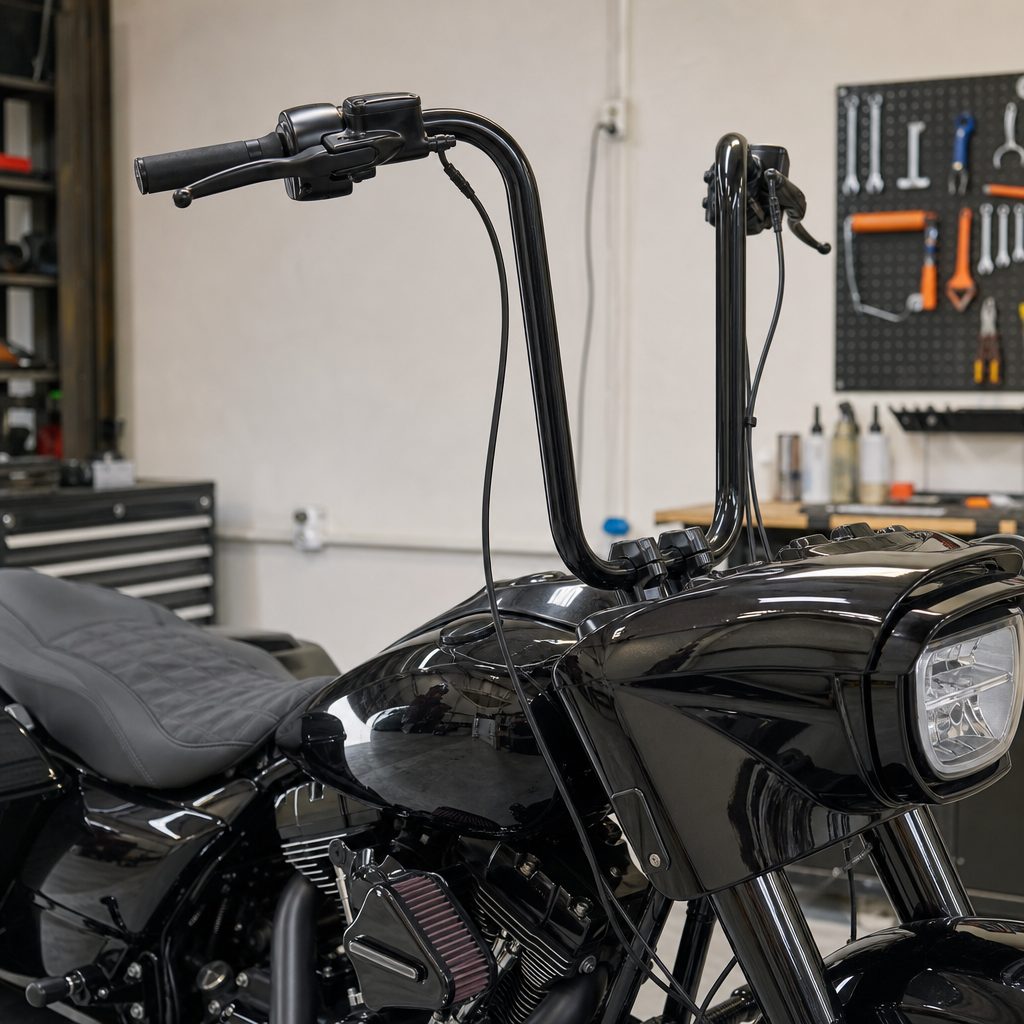
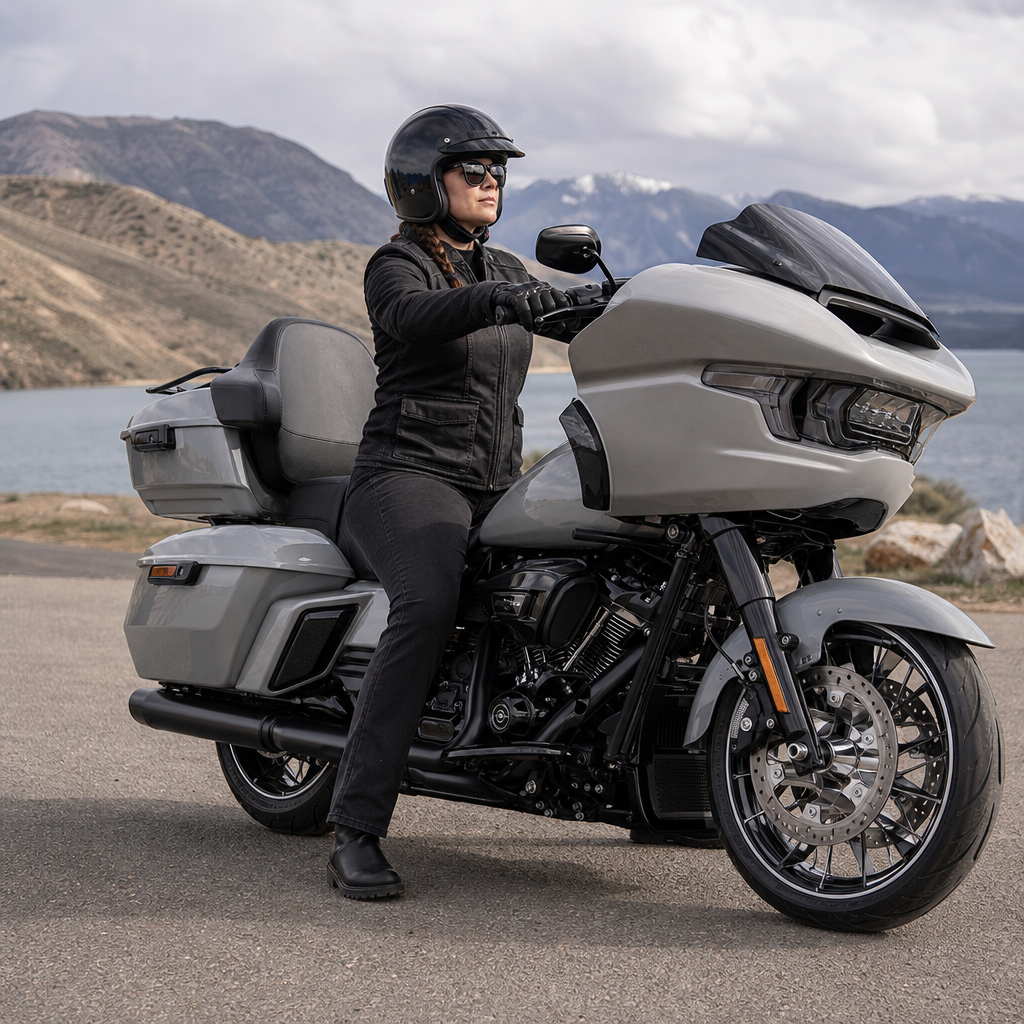
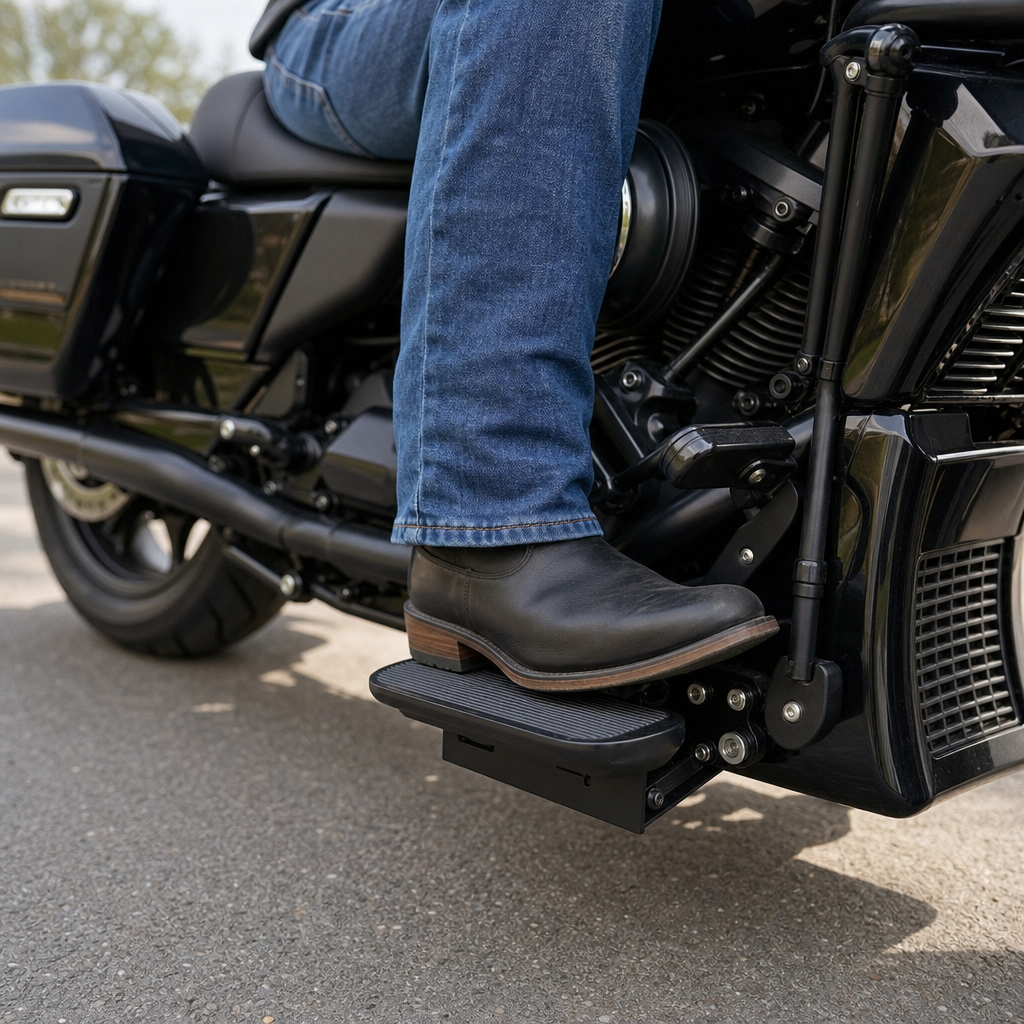
Ergonomics shape suspension outcomes more than most spec sheets admit. On a Road Glide with mid-rise moto-style bars, a firm seat pocket, and slightly elevated rear ride height, the rider naturally supports the torso better and can load the front more consistently. On a Street Glide with swept bars and a deep touring seat that rotates the pelvis rearward, the rider may rely on the bars for support, creating steering inputs that feel like suspension problems. Before changing valving, assess wrist angle, shoulder reach, seat-to-floorboard relationship, and whether the rider can anchor with the feet during braking. Good ergonomics reduce fatigue and make damping changes easier to feel and evaluate.
| Rider and bike profile | Showa recipe tendency | Ohlins recipe tendency | Main ergonomic priority |
|---|---|---|---|
| 160-180 lb solo, fast street Road Glide | Lighter spring, softer initial compression, moderate rebound | Standard spring, open low-speed compression slightly, trim rebound | Neutral reach, seat that keeps hips forward |
| 190-220 lb solo, aggressive canyon Street Glide | Higher spring rate, more mid-stroke support, increased rebound control | Standard to +1 spring, firm low-speed support, balanced rebound | Bar width for leverage, stable foot pressure |
| 220-260 lb solo with audio and cargo load | Higher spring, increased oil height, firmer compression stack | +1 spring, maintain compliant initial stroke, stronger rebound | Seat support under braking, reduced rearward slide |
| Two-up touring with occasional spirited riding | Comfort-biased compression, stronger spring, controlled rebound | Touring-oriented spring choice, less aggressive low-speed damping | Passenger load balance, bar comfort over distance |
These are tendencies, not universal settings. A 17-inch front wheel conversion, oversized rotors, fork-offset changes, or a heavy audio fairing can shift what works. Tire choice also changes the recipe. A stiff-carcass sport-touring tire may demand less low-speed compression than a softer touring tire because the carcass already contributes support. Brake package matters too. High-friction pads and large rotors increase pitch forces, often exposing weak rebound damping on corner exit after hard entries. That is why any serious Harley-Davidson performance recipe should be written around the complete build, not the fork in isolation.
How to choose between Showa and Ohlins for your Harley-Davidson build
Choose Showa when your goals are strong real-road compliance, sensible cost, easy service, and a tailored setup built from a solid OE foundation. This is especially true for riders who want one motorcycle to cover commuting, weekend pace, and long-distance touring without a sharp comfort penalty. Choose Ohlins when your priority is clearer damping definition at higher pace, stronger support during repeated hard braking, and access to a deep performance tuning ecosystem. For many riders, the answer is not brand prestige but local support. A perfectly matched Showa build from a tuner who understands Harley-Davidson weight transfer will outperform an Ohlins package installed by guesswork.
The practical process is straightforward. First, define rider weight with gear, percentage of solo versus two-up use, luggage habits, and road surface quality. Second, confirm ergonomics: bars, seat, floorboards, controls, and rear ride height. Third, set spring rates front and rear together. Fourth, establish sag and preload. Fifth, tune rebound before chasing compression clickers. Last, test on a repeatable loop with braking zones, rough patches, and one long corner where you can feel support. This hub is designed to guide those model-specific articles: Road Glide ST recipes, Street Glide fit and front-end support, heavy-rider bagger tuning, two-up touring compromises, and wheel-and-tire effects on inverted fork behavior. Use it as the starting map, then build a recipe around the rider, not the logo on the fork leg.
The key lesson is that Showa versus Ohlins is the wrong debate if it ignores rider ergonomics, total chassis balance, and the actual job of a Harley-Davidson performance bagger. Showa can be exceptionally good when revalved intelligently for the rider and road, often delivering excellent comfort and grip at a realistic budget. Ohlins can be outstanding when the build demands stronger mid-stroke support, sharper feedback, and more aggressive pace control, but it still depends on correct springs, geometry, and testing. In both cases, the fork must work with the rear suspension, tire construction, braking package, and the rider’s seating and bar position. That is what turns isolated parts into a coherent performance recipe.
As the hub for model-specific ergonomics and performance recipes, this article sets the framework for every Harley-Davidson subtopic that follows. Start with measurements, not assumptions. Match springs to real load. Tune damping for the roads you ride, not internet folklore. Fix the rider triangle before blaming the valving. Then compare Showa and Ohlins based on repeatable behavior: dive control, compliance, line holding, recovery, and fatigue. If you are planning your next bagger upgrade, use this page to identify your rider profile and build goals, then move into the linked model-specific recipes to choose the fork tune that will make your Harley-Davidson faster, calmer, and easier to ride well every mile.
Frequently Asked Questions
What is the biggest difference between tuning Showa and Ohlins inverted forks on a performance bagger?
The biggest difference usually comes down to how each fork responds to valving changes across the speed range of fork movement. On a performance bagger, Showa and Ohlins can both be made to work extremely well, but they often arrive with different baseline characteristics. Showa inverted forks on Harley-Davidson touring platforms are commonly tuned from a more production-oriented starting point, which means the rider may notice compromises built around comfort, broad usability, and cost. Ohlins systems, by contrast, are typically designed with a more performance-focused baseline, so they often provide a wider adjustment window and more precise control when the bike is pushed hard in canyon riding, aggressive braking, and fast transitions.
In practical tuning terms, Showa valving recipes often require more deliberate changes to improve brake support, mid-stroke control, and chassis calmness without making the fork harsh over sharp inputs. Ohlins valving recipes are often about refining an already capable package, balancing support with compliance, and tailoring the fork to rider weight and geometry changes such as taller rear ride height, shorter trail numbers, or more aggressive corner-entry technique. That does not mean Ohlins automatically outperforms Showa in every case. A correctly valved Showa setup can be outstanding on a Road Glide or Street Glide if spring rate, oil height, shim stack philosophy, and damping balance are chosen correctly.
The real takeaway is that Showa versus Ohlins is not just a brand comparison. It is a question of internal design, piston behavior, adjuster authority, and how each fork reacts when the bagger is loaded under hard braking, carrying fairing weight, and changing direction quickly. The best tuning recipe is the one that matches the actual use case: rider weight in gear, luggage or audio system mass, wheel and brake package, tire carcass stiffness, and the pace the motorcycle will be ridden. On a heavy Harley touring chassis with inverted forks, the fork has to manage much more than bumps. It has to control pitch, maintain front tire contact, and preserve steering precision. That is where the right valving recipe matters more than the logo on the fork leg.
How do rider weight and bike setup affect the ideal valving recipe for a Road Glide or Street Glide?
Rider weight and overall bike setup are two of the most important inputs in any fork tuning decision, especially on performance baggers. A Road Glide or Street Glide fitted with inverted forks may look similar from bike to bike, but the ideal valving recipe can change significantly depending on who is riding it and how the chassis is configured. A 160-pound rider who prioritizes smooth canyon flow will need something very different from a 240-pound rider who brakes deep into turns and accelerates hard off the apex. The fork has to support the combined mass of the rider, the motorcycle, and any added components while keeping the tire planted and the chassis stable.
Rider weight influences spring rate first, but it also changes the damping demand. Heavier riders generally need more support in the compression circuit to resist excessive dive and more rebound control to keep the fork from extending too quickly after big braking zones or large chassis inputs. Lighter riders often struggle with setups that are overdamped, where the fork feels dead, reluctant to move, or harsh on smaller pavement imperfections. That is why a proper valving recipe should never be copied blindly from another build, even if both bikes are based on the same Harley-Davidson touring platform.
Bike setup matters just as much. A Road Glide with tall rear shocks, aggressive ride height, radial brakes, sticky tires, and lightweight wheels will transfer load differently than a lower, heavier Street Glide with stock geometry and more touring-oriented rubber. Fairing weight distribution also changes steering feel and braking pitch. Add a big audio system, crash protection, saddlebags, or passenger gear, and the fork may need more low-speed compression support and better rebound management simply to maintain consistency. In other words, the right valving recipe is not just about making the fork firmer or softer. It is about matching the damping curve to the real load path of the motorcycle so the front end stays predictable in turn-in, mid-corner, and corner exit.
What fork symptoms indicate that the current valving is wrong for aggressive canyon riding?
There are several classic signs that a performance bagger’s fork valving is not aligned with the demands of aggressive canyon riding. One of the most common is excessive brake dive. If the fork collapses too quickly or too deeply during hard braking, the bike will pitch forward, steepen its geometry abruptly, and feel nervous entering corners. This can overload the front tire, upset rider confidence, and make the bagger feel heavier and less precise than it really is. On a Road Glide or Street Glide that is being ridden quickly, the front end should settle under braking in a controlled way, not drop all at once.
Another major symptom is mid-corner instability. If the fork lacks proper support in the right part of the stroke, the bike may drift wide, feel vague at the contact patch, or require constant bar correction. That often points to a mismatch in spring rate, damping balance, or both. If rebound damping is too light, the fork may extend too quickly after turn entry or over bumps, creating a loose, unsettled front end. If rebound damping is too heavy, the fork can pack down over successive corners or rough pavement, reducing available travel and making the motorcycle feel harsh and reluctant to finish the turn.
Harshness over sharp-edged bumps is another indicator. Riders often assume this means the fork needs to be softer, but that is not always true. A fork can feel harsh because high-speed compression damping is excessive, because oil height is too high, because the shim stack transitions poorly, or because the fork is riding in the wrong part of the stroke due to bad spring preload or geometry. Conversely, if the front end feels floaty, undercontrolled, or vague during fast direction changes, the valving may be too open in low-speed damping even if the bike still feels harsh on square-edge hits. That combination is very common on poorly balanced setups.
The best way to read fork symptoms is to look at the entire pattern: brake behavior, turn-in, line holding, bump absorption, and how the bike behaves over repeated corners. One symptom alone can be misleading. On a heavy Harley touring bike built for speed, the fork has to do several jobs at once. If the bike dives, chatters, runs wide, or feels nervous after bumps, the valving recipe likely needs to be revisited with rider weight, spring choice, oil level, and chassis geometry all considered together.
Are clicker adjustments enough, or do most performance baggers need internal valving changes?
Clicker adjustments are important, but they are not always enough for a true performance bagger build. Adjusters are designed to fine-tune damping around a baseline, not completely transform a fork that is fundamentally mismatched to the motorcycle’s weight, geometry, or intended riding style. On Harley-Davidson touring models using inverted front ends, especially Road Glide and Street Glide builds meant for canyon speed, it is common for riders to reach the limit of what clickers can do. If the bike still dives too much, rides harshly, or lacks front-end confidence after sensible external adjustments, the internal valving is probably the real issue.
Internal valving changes allow the tuner to reshape how the fork responds at different shaft speeds. That means low-speed compression can be increased for better brake support and chassis discipline without making the fork punishing over sharp pavement transitions. Rebound can be tailored so the front end recovers quickly enough for fast direction changes but not so quickly that it feels springy or uncontrolled. On a big bagger, this is crucial because the front suspension is constantly dealing with a lot of inertia, weight transfer, and steering load. External clickers can trim those behaviors, but they usually cannot fully compensate for an unsuitable shim stack or piston setup.
That said, not every rider needs immediate internal work. If the fork is already in the right spring range and the bike is used mostly for spirited street riding, careful clicker tuning can often produce a meaningful improvement. But once the rider starts pushing harder, raising rear ride height, upgrading brakes, or demanding race-like consistency from a touring chassis, internal valving becomes much more valuable. The front end has to maintain composure during heavy deceleration, quick transitions, and rough mid-corner surfaces. That level of control typically comes from a properly built base valve and rebound stack, not just a few clicks on the adjusters.
What should a good valving recipe accomplish on a Harley-Davidson touring bike with inverted forks?
A good valving recipe should make the motorcycle feel calmer, more accurate, and more confidence-inspiring everywhere, not just stiffer. That is one of the most misunderstood points in performance bagger suspension tuning. The goal is not to create a harsh, race-bike front end on a Harley-Davidson touring platform. The goal is to control mass and maintain tire contact so the bike responds predictably at speed. On a Road Glide or Street Glide with inverted forks, a strong valving recipe should reduce excessive dive under braking, improve front tire feel at turn-in, support the chassis through the middle of the corner, and