The 2026 Softail Standard is one of Harley-Davidson’s most adaptable big-twin platforms, but for riders under 5’4″, the stock reach to the controls can turn a simple ride into a constant ergonomic compromise. Reach controls, in practical terms, include the distance from the seat to the handlebars, foot controls, clutch and brake levers, and the way those points work together when the bike is stopped, launching, cornering, and braking. On this model, small changes in one area often affect another, so a useful setup is never just about “bringing things closer.” It is about preserving control authority, balance, and confidence without ruining the motorcycle’s basic geometry.
I have set up multiple Harley-Davidson cruisers for shorter riders, and the same pattern shows up every time: discomfort is rarely caused by one dimension alone. A rider may blame the bars, but the real issue is often that a wide stock seat forces the hips apart, effectively shortening inseam reach. Another rider may think forward controls are the problem, when the actual limiter is shoulder extension combined with a heavy clutch pull. The 2026 Softail Standard matters in this discussion because it is commonly chosen as an entry point into the Milwaukee-Eight Softail family, and its clean, minimal layout makes it a strong base for model-specific ergonomics and performance recipes.
This hub article explains how to modify 2026 Softail Standard reach controls for riders under 5’4″ in a way that is repeatable, safe, and easy to evaluate. It covers the rider triangle, seat shaping, handlebar selection, lever setup, foot control strategies, suspension effects, and test-fit methodology. It also serves as the central guide for related Harley-Davidson fitment articles, because these adjustments influence low-speed handling, braking feel, and long-distance comfort more than most owners expect. If you want a Softail Standard that feels manageable at every stoplight and natural on every back road, this is the blueprint.
Understand the Softail Standard rider triangle first
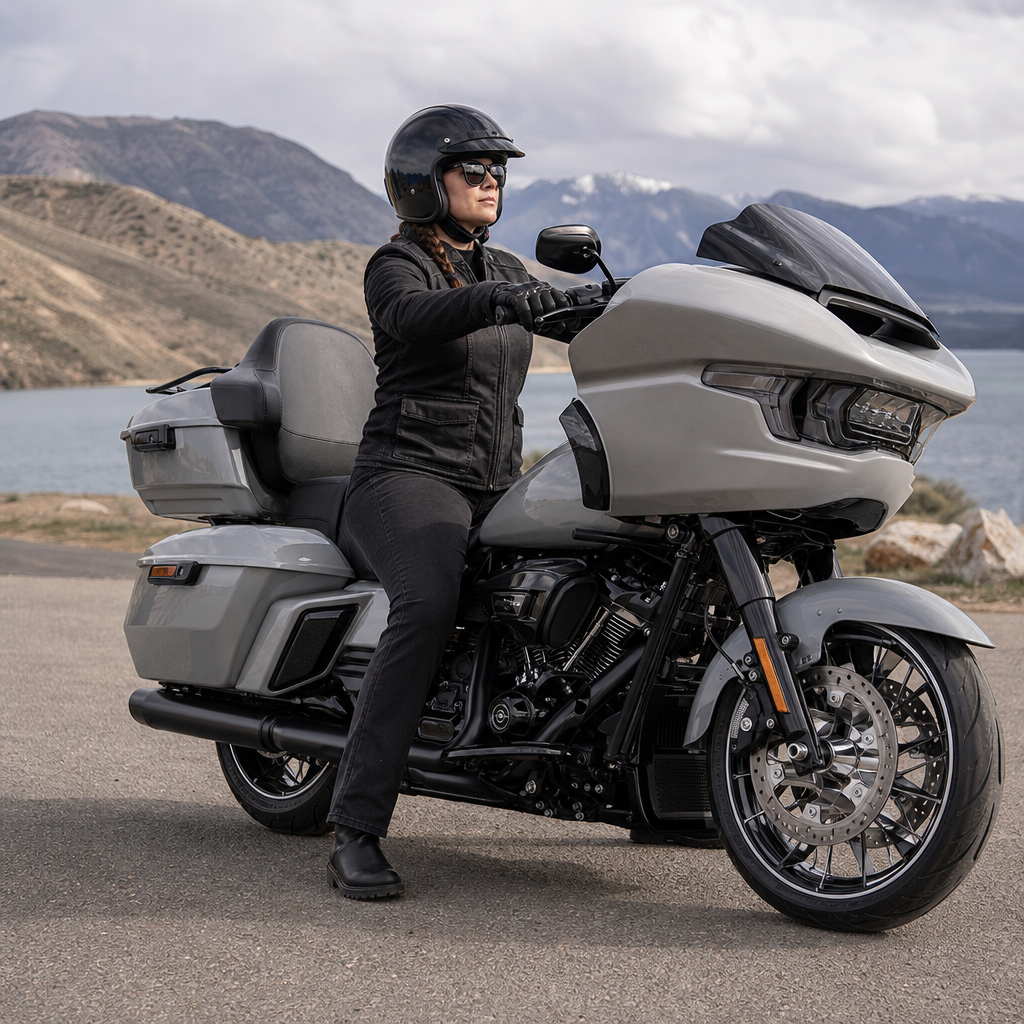
The rider triangle is the relationship among seat, bars, and foot controls, and it determines whether a motorcycle fits a shorter rider before any cosmetic part ever matters. On the 2026 Softail Standard, the challenge is not extreme seat height on paper; it is the combined effect of cruiser-style control spacing, tank reach, and a seat profile that can widen the stance near the front. For riders under 5’4″, every extra inch of hip spread reduces how effectively the legs can drop straight down, which is why official seat height numbers only tell part of the story.
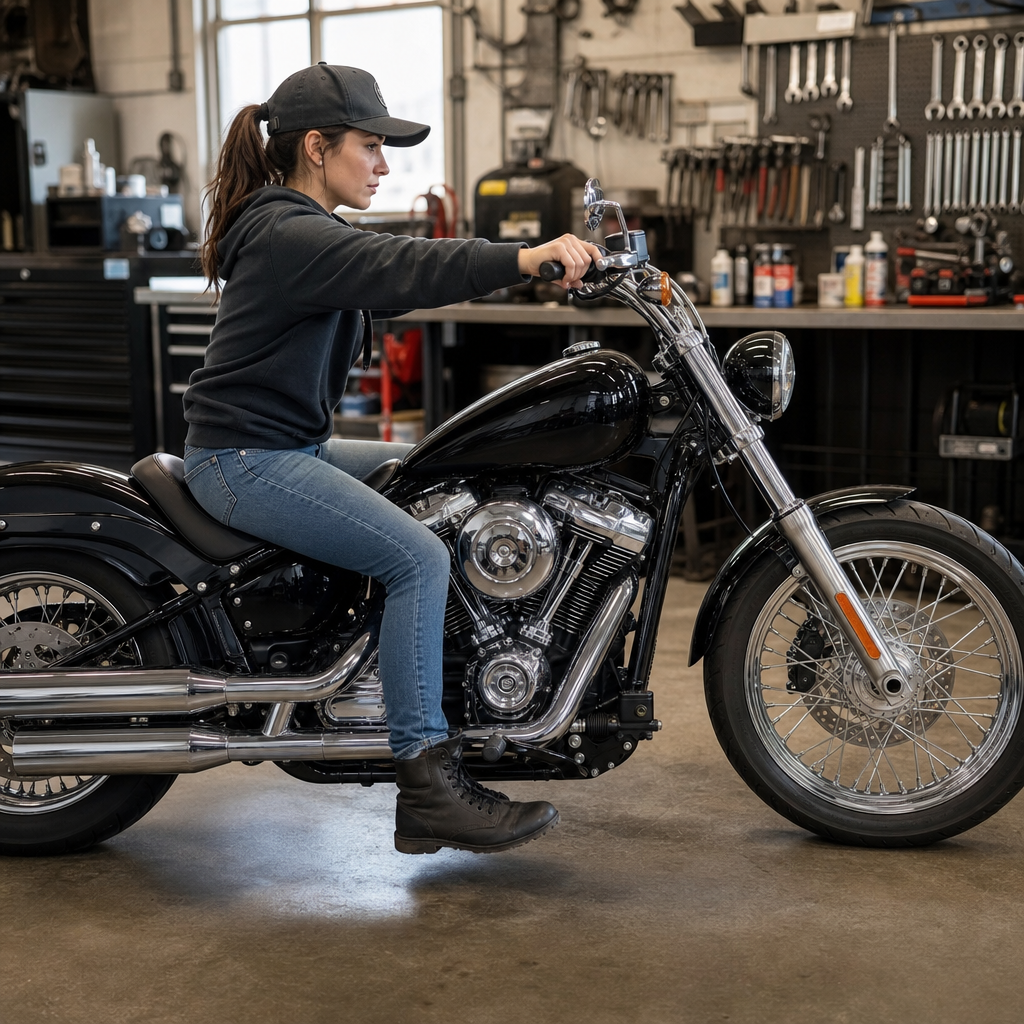
When I fit a shorter rider to a Softail, I start with three measurements: seated hip-to-grip distance, butt-to-peg distance, and one-foot-down stability at a stop. The third measure is usually the most important in the real world. Many shorter riders do not need to flat-foot both sides; they need to plant one foot securely while keeping the bars neutral and the bike predictable. If the rider must lock the elbows, slide far forward off the seat, or point the planted foot awkwardly because the bars or controls are too far away, the setup is wrong no matter how attractive the parts list looks.
That is why model-specific ergonomics and performance recipes must begin with the full chassis context. A handlebar that works on a Street Bob may not work the same way on a Softail Standard because riser height, cable length, and seat pocket position change the effective reach. Likewise, a low seat can improve stop confidence while worsening bar reach if it drops the rider farther from the grips. Good fit on this Harley-Davidson platform comes from coordinated changes, not isolated purchases.
Seat shape is usually the first and most effective reach modification
For riders under 5’4″, the highest-value modification on a 2026 Softail Standard is often a seat with a narrower nose and a deeper rider pocket positioned slightly forward. That combination does three jobs at once: it reduces the splay angle of the thighs at stops, shortens reach to the handlebars, and supports the pelvis so the rider does not slide backward under acceleration. In practice, this can improve control more than dramatic bar swaps.
A well-designed reach seat is not simply lower. If it is too low without enough support foam, the rider can sink into the chassis, increasing hip flexion and transmitting more road shock through the spine. Better options use firmer foam, contour shaping, and a narrower front section. Harley-Davidson accessory seats, Saddlemen, Le Pera, and Mustang have all produced seats that solve fit problems differently. Mustang tends to favor support over minimalism, while Le Pera often prioritizes low profile and style. The right answer depends on whether the rider struggles more at stoplights or over longer distances.
On Softail builds I have worked on, moving the seating pocket forward by even 0.75 to 1.5 inches often changed everything. A rider who was stretching for the bars could suddenly keep a slight bend in the elbows, which improved steering inputs and reduced neck tension. At the same time, the narrower front let the rider plant a boot more confidently. This is why seat work belongs at the center of any Harley-Davidson ergonomics hub: it influences reach, confidence, and performance simultaneously.
Handlebars, risers, and grip angle determine upper-body control
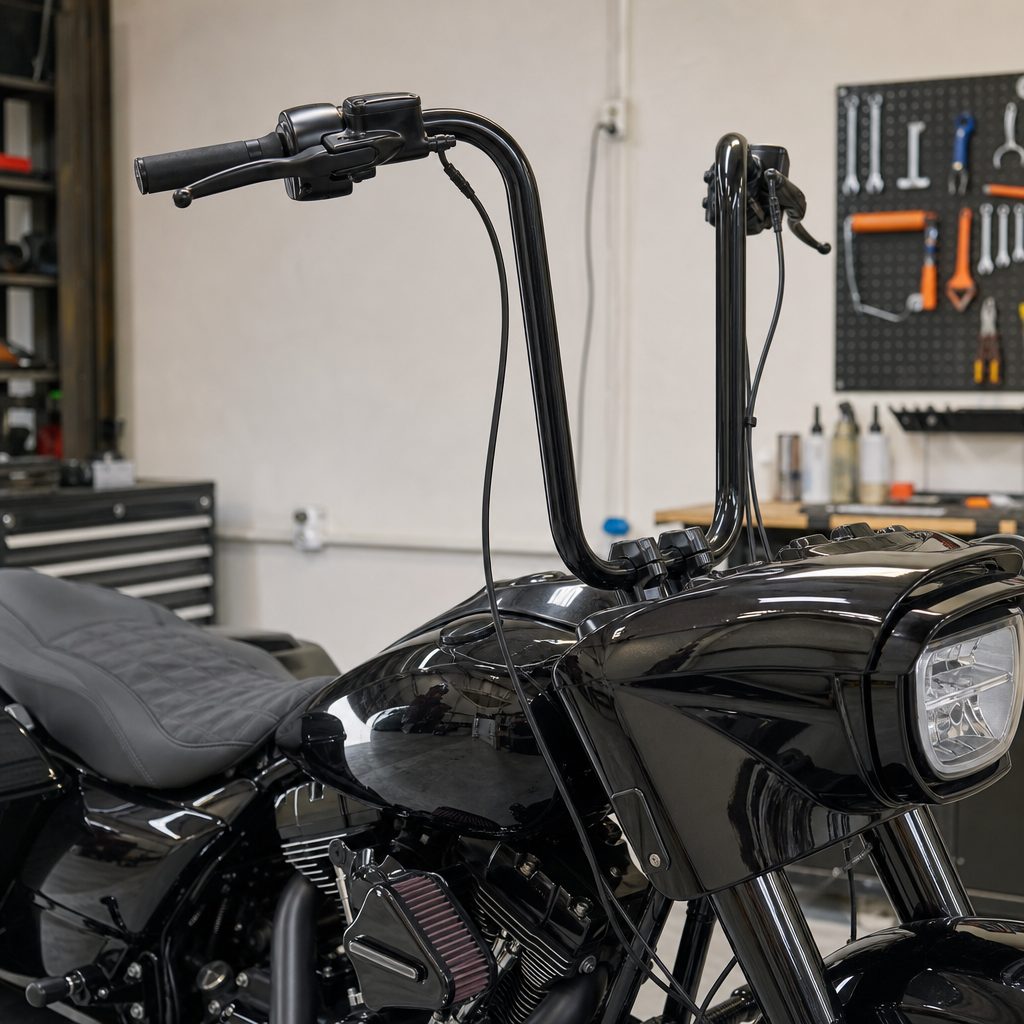
After the seat, the next priority is the bar position. Riders under 5’4″ usually need less forward reach and sometimes less bar width, but they do not automatically need tall ape-style handlebars. The target is neutral shoulder posture with relaxed elbows and straight wrists when cruising, plus enough leverage at parking-lot speeds. On the 2026 Softail Standard, compact mini-apes, pullback bars, or modest riser changes can work better than extreme height because they bring the grips rearward without making steering vague.
Grip angle matters as much as location. If the wrists are bent outward to meet the grips, shorter riders will feel numbness in the hands and tension between the shoulder blades. A bar that is one inch closer but has poor sweep can feel worse than a stock bar with better alignment. During setup, I check whether the rider can turn the bars lock-to-lock while keeping the shoulders down and the elbows soft. If the rider has to reach or shrug at full lock, low-speed control suffers exactly when confidence is most needed.
Cable and brake line limits also matter. Many Harley-Davidson bar changes look simple until the installer discovers that throttle-by-wire harness slack, clutch cable routing, or front brake hose length no longer works cleanly. This is one reason careful planning beats impulsive parts swapping. Before ordering bars, confirm rise, pullback, width, and compatibility with stock wiring. A fit-focused bar change should improve leverage and posture without creating routing issues or a cramped cockpit.
Levers and foot controls are where comfort becomes safety
Shorter riders often notice lever effort before they notice lever distance, yet both are critical. If the clutch lever is too far from the grip, a rider with smaller hands may release it inconsistently, producing shaky starts and stalling anxiety. Adjustable-reach clutch and brake levers are among the smartest upgrades for the 2026 Softail Standard because they reduce finger extension without altering the entire control layout. Correct setup lets the first joint of the fingers engage the lever cleanly while the wrist stays straight.
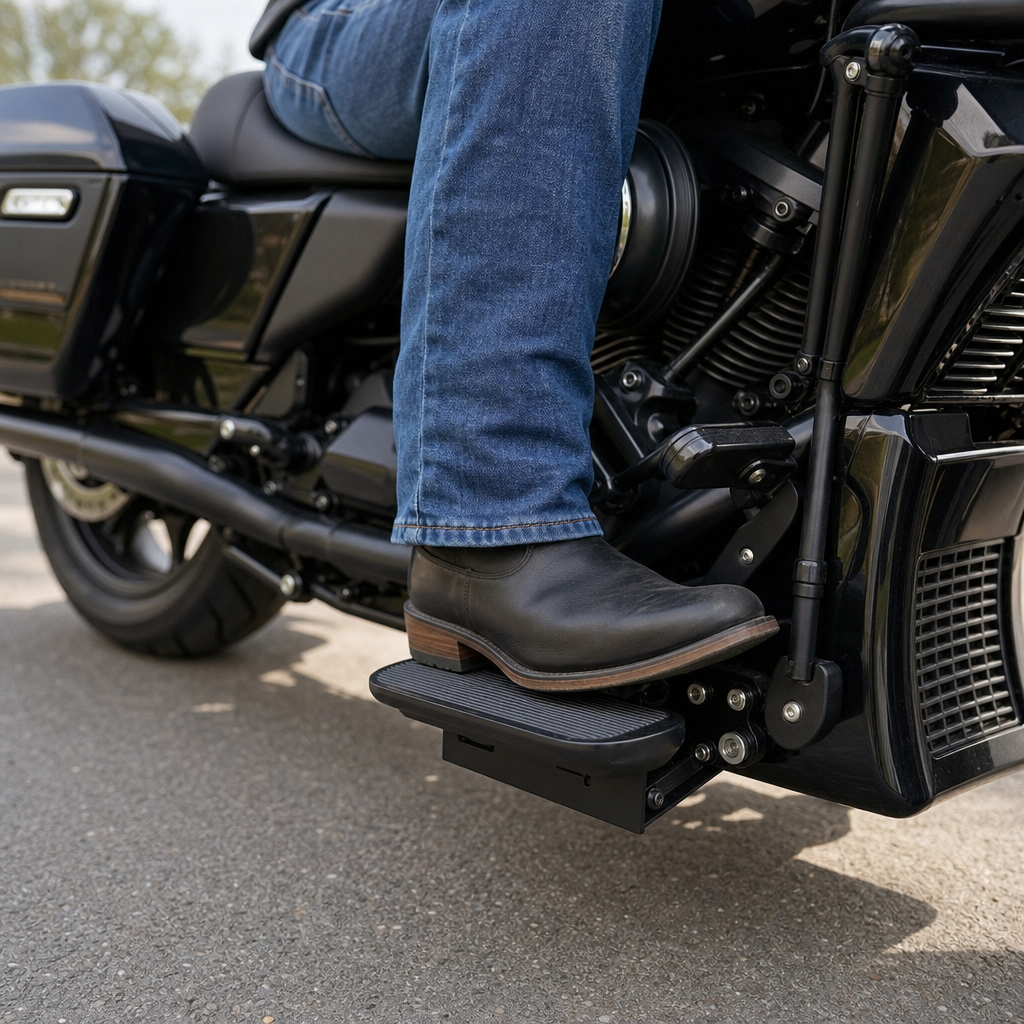
Foot controls on the Softail Standard create a more nuanced problem. Mid-controls generally help shorter riders more than forwards because they keep the knees bent and make it easier to support the body over bumps and during braking. However, some riders under 5’4″ still struggle if the seat is too wide or if the control placement forces the toe to hunt for the shift lever. Boot size, ankle mobility, and peg shape all affect the answer. The goal is positive access to rear brake and shifter without the rider lifting off the seat or rotating the hips dramatically.
| Modification area | Main benefit for riders under 5’4″ | Typical tradeoff | Best use case |
|---|---|---|---|
| Narrow reach seat | Better stop confidence and shorter bar reach | May reduce long-haul padding if too thin | Riders struggling to plant a foot |
| Pullback handlebar | Less shoulder extension and improved steering comfort | Can feel cramped if moved too far back | Riders overreaching to the grips |
| Adjustable levers | Easier clutch and brake control with small hands | Quality varies by brand | Riders with limited hand span |
| Mid-control refinement | Improved braking posture and body support | Less leg stretch on highway rides | Urban and mixed-road riding |
| Lowering suspension | Easier one-foot or two-foot stops | Reduced cornering and bump travel | Last-step confidence tuning |
When riders ask what modification makes a bike “feel smaller,” they usually mean they can operate every control without planning around it. That is the real safety threshold. A Softail Standard set up for short reach should allow a smooth clutch take-up, immediate brake access, and intuitive shifting while the rider keeps stable body position. Anything less is an incomplete fit solution.
Suspension changes help reach, but they must respect performance
Lowering a 2026 Softail Standard can help a rider under 5’4″, but it should rarely be the first step. Suspension changes alter ride quality, lean angle, and chassis attitude, so they are best used after seat and control refinements have been tested. In many cases, riders discover they do not need as much lowering as expected once the seat shape and handlebar reach are corrected.
If lowering is still necessary, the most responsible path is conservative adjustment paired with sag measurement. Excessive rear lowering can reduce cornering clearance and make the bike feel harsher because there is less available travel before the suspension reaches the bump stop zone. A lowered front without balanced rear changes can also upset steering response. For Harley-Davidson cruisers, confidence at a stop should not come at the cost of unpredictable behavior in a fast sweeper or over broken pavement.
Suspension setup also connects directly to rider weight. A shorter rider is often lighter than the average baseline used for stock preload assumptions, and that can actually help or hurt depending on spring rate and damping. I have seen shorter owners chase lower seats when the better fix was setting sag correctly and reducing unnecessary seat width. The useful rule is simple: lower only as much as needed, and verify the result in real riding, not just in the garage.
Build a repeatable fitment recipe for this Harley-Davidson platform
The most effective 2026 Softail Standard reach-control build for riders under 5’4″ usually follows a sequence. First, establish the rider’s actual problem: inseam limitation, hip spread, grip reach, hand span, or foot control access. Second, install the highest-impact ergonomic part, which is usually a reach-oriented seat. Third, adjust the upper body with bars or risers. Fourth, fine-tune clutch and brake lever reach. Fifth, evaluate foot control access and only then consider lowering.
This sequence saves money because it prevents stacked modifications that solve the same issue twice. For example, a rider who buys a low seat and aggressively pullback bars at the same time may end up cramped, with knees too bent and elbows tucked uncomfortably. By contrast, a staged approach reveals what each change actually did. That is how professional fitment works on Harley-Davidson models and why hub articles in this subtopic should emphasize recipes rather than random accessories.
Document the process. Take side-profile photos with the rider seated in boots, bars centered, and one foot down. Note elbow bend, wrist angle, and whether the rider can cover the rear brake naturally. Then road-test in three conditions: parking-lot U-turns, stop-and-go traffic, and a 30-minute mixed road loop. The best recipe is the one that reduces workload everywhere, not just when the bike is stationary.
Common mistakes shorter Softail riders should avoid
The biggest mistake is assuming seat height alone determines fit. On the 2026 Softail Standard, width, reach, and control effort matter just as much. Another common error is choosing style-driven handlebars that look right in photos but force awkward wrist extension. I also see riders buy lowering kits before trying a narrower seat, even though width reduction often delivers a bigger real-world gain in stop confidence.
A second mistake is ignoring boots. A quality riding boot with a supportive sole and modest heel can materially improve footing and shifter access without changing the bike at all. That is not a substitute for proper ergonomics, but it is part of a complete system. Finally, do not evaluate changes only while balancing in the driveway. The true test is whether the rider can launch smoothly, brake hard, shift cleanly, and maneuver at low speed without tension.
The key takeaway is straightforward: modify the 2026 Softail Standard as an integrated rider triangle, not as a collection of isolated parts. Start with seat shape, then refine bars, levers, and foot controls, and use suspension changes carefully. Riders under 5’4″ can absolutely make this Harley-Davidson platform fit, but the winning recipe is precise, staged, and honest about tradeoffs. Use this hub as your baseline, compare each adjustment against real riding results, and build a Softail Standard that gives you confidence every time you leave a stop.
Frequently Asked Questions
What parts of the 2026 Softail Standard usually need modification first for riders under 5’4″?
For most shorter riders, the first priority is not a single part but the overall rider triangle: seat, handlebars, foot controls, and hand levers. On the 2026 Softail Standard, the stock setup can place the rider slightly stretched between the bars and the mid-mounted controls, which may not sound extreme on paper but becomes very noticeable at stops, during slow-speed maneuvers, and when repeatedly working the clutch in traffic. The seat is often the smartest place to begin because it affects nearly everything else. A narrower seat front and a lower effective seating position can improve the rider’s ability to get both feet down, but it can also slightly increase the reach to the bars and controls depending on the seat’s shape. That is why seat changes should be evaluated together with bar position, not in isolation.
Handlebars are typically the second area to address. If the rider has to lock the elbows, roll the shoulders forward, or reach excessively while turning at low speed, the bars are too far away or not positioned correctly. Many shorter riders benefit from bars with less reach, more pullback, or a revised rise that brings the grips into a more natural position without forcing the wrists into an awkward angle. Hand controls matter just as much. Proper clutch and brake lever adjustment can reduce hand fatigue and make the bike feel far more manageable, especially if the rider has smaller hands. If the front brake lever is too far out or the clutch engagement zone is difficult to manage, confidence drops quickly.
Foot control position is the next major concern. Even when a rider can technically reach the pegs and pedals, the issue is often whether they can do so while keeping a stable posture on the seat. If the rider has to slide forward every time they stop, lift for the shifter awkwardly, or overextend for the rear brake, the setup is still not working. Because the Softail Standard is highly adaptable, the best results usually come from making a sequence of measured changes rather than replacing everything at once. Start with the seat and bar relationship, fine-tune the hand controls, then evaluate whether the foot controls need repositioning or adjustment to create a balanced, confident fit.
Can a lower seat alone solve reach issues on a 2026 Softail Standard?
A lower seat can help significantly, but by itself it rarely solves every reach-control issue for a rider under 5’4″. What a lower seat does best is improve ground access and reduce the insecurity that can happen at stops. Being able to plant the feet more confidently can transform how manageable the Softail Standard feels in parking lots, at intersections, and during uneven road stops. However, lower is not automatically better. If the seat simply drops the rider downward without also considering seat width and forward positioning, it may actually increase the reach to the handlebars and alter the knee angle in a way that makes the foot controls feel farther away.
Seat shape is often more important than published seat height. A seat with a narrow nose lets the legs fall more naturally toward the ground, which can make the bike feel effectively lower even if the measured height difference is small. At the same time, some low-profile seats position the rider farther back in the pocket, which can worsen the stretch to the bars. Others move the rider slightly forward, which may help reach the bars and controls but can reduce long-distance comfort. This is why shorter riders should think in terms of seating position, not just seat height.
There is also a handling and comfort tradeoff to consider. Lower seats may reduce foam thickness and support, and on a big-twin platform like the Softail Standard, that matters on longer rides. A seat that helps you flat-foot the bike but causes hip pain or forces you into a cramped riding posture is not a complete solution. In practice, the most effective approach is to treat the seat as the foundation of the fitment plan. A well-chosen low or reach-oriented seat can make the bike immediately more approachable, but it should be paired with proper handlebar placement and control adjustment to create an ergonomic package that works both when stopped and while riding.
How do handlebar changes affect shorter riders on the Softail Standard?
Handlebar changes can make one of the biggest real-world differences for riders under 5’4″ because the bars influence posture, steering confidence, wrist comfort, and overall control of the motorcycle. On the 2026 Softail Standard, if the grips sit too far forward, the rider may end up reaching with straight arms, rounded shoulders, and excessive pressure on the hands. That position can make the bike feel larger and heavier than it really is, especially during U-turns, lane changes, and low-speed counterbalance situations. Bringing the bars closer with more pullback or a more rider-friendly bend usually creates an immediate sense of control because the rider can keep a slight bend in the elbows and stay more centered over the bike.
For shorter riders, the goal is not just to move the bars back as far as possible. The goal is to place the grips where the rider can steer naturally without compromising leverage or wrist alignment. Bars that are too close can tuck the elbows in awkwardly and make steering inputs feel cramped. Bars with too much rise or the wrong sweep can create numbness in the hands or strain in the shoulders. Ideally, the rider should be able to sit in a neutral posture, reach the grips without stretching, and operate the clutch and front brake without changing body position. That neutral position becomes especially important during braking, because the rider should be supported by the core and lower body, not hanging from the handlebars.
Changing bars may also affect cable and wiring needs, control housing angles, mirror visibility, and the relationship between the bars and the seat. On a Softail platform, even a modest bar swap can change how the entire bike feels at slow speed. That is why many shorter riders and fitment specialists prefer to test bar pullback, riser position, and control rotation carefully before committing to a final setup. A properly chosen handlebar configuration can reduce fatigue, improve confidence at every speed, and make the motorcycle feel like it was built for the rider instead of adapted after the fact.
Are foot controls and lever adjustments enough to improve comfort and confidence for smaller riders?
They can make a major difference, but whether they are enough depends on how severe the reach issue is and how the rest of the bike fits. For many shorter riders, simple adjustments to the clutch lever, front brake lever, shift lever, and rear brake pedal can noticeably improve confidence right away. Lever reach is especially important if the rider has smaller hands. When the clutch lever sits too far from the grip, smooth launches become harder because the friction zone is more difficult to control. If the front brake lever is a stretch, emergency braking and low-speed modulation both suffer. Properly adjusted levers let the rider keep a stronger hold on the grips while still operating the controls precisely, which improves safety as much as comfort.
Shift and brake pedal setup matters just as much. On a bike like the 2026 Softail Standard, a rider under 5’4″ may be able to physically reach the pedals but still have to alter foot position in a way that disrupts balance. If the shifter is too high or too far away, upshifts can become clumsy and force the rider to lift the entire leg off the peg. If the brake pedal is poorly positioned, the rider may hover the foot awkwardly or hesitate during quick stops. Fine-tuning pedal height and angle can create a more natural movement pattern and help the rider stay connected to the bike.
That said, foot and lever adjustments work best when the seat and handlebar position are already close to correct. If the rider is constantly sliding forward on the seat to reach the bars, no pedal adjustment will fully solve the problem. Likewise, if the bars are too far away, the rider may brace with the arms and feel unstable even if the foot controls are well set. Think of lever and pedal adjustments as essential refinements rather than guaranteed stand-alone fixes. They are often the difference between a bike that is merely rideable and one that feels intuitive, but they deliver the best results when integrated into a complete ergonomic setup.
What is the best way to modify the 2026 Softail Standard without hurting handling or making the bike awkward to ride?
The best approach is to make coordinated, incremental changes and evaluate the bike after each step. Shorter riders sometimes run into trouble by trying to solve every problem with one dramatic modification, such as an ultra-low seat, extreme bar change, or aggressive lowering setup. On the Softail Standard, each change affects another part of the rider triangle. Lowering the seating position may improve footing but increase bar reach. Bringing the bars back may improve upper-body comfort but alter steering feel. Adjusting the foot controls may help at stops yet feel cramped on longer rides. The key is to improve fit without creating a new compromise that is worse than the original one.
A smart process usually starts with identifying the primary problem. If the biggest issue is getting secure footing at stops, begin with seat shape and effective seat height. If the rider feels stretched while moving, focus first on the handlebar position and control rotation. If launches, shifting, and braking feel awkward, inspect lever and pedal setup before replacing major components. Once