The 2026 Road Glide Limited passenger armrests matter because long-haul comfort on a heavyweight touring motorcycle is never a luxury feature; it is a stability, fatigue, and confidence issue that affects every mile. On the Road Glide Limited, passenger comfort is shaped by a specific mix of seat height, floorboard position, top case backrest angle, suspension response, and the amount of upper-body support a second rider has when the bike accelerates, brakes, or crosses uneven pavement. Passenger armrests are part of that system. They give the passenger a repeatable place to brace, reduce the tendency to grip the rider during speed changes, and make full-day rides far less tiring for older passengers, shorter passengers, and anyone with limited shoulder mobility. That is why this topic deserves hub-level treatment within Harley-Davidson model-specific ergonomics and performance recipes.
In practical terms, a comfort recipe is a combination of fitment choices that work together for one model and one riding use case. For the 2026 Road Glide Limited, that means evaluating armrests not as isolated accessories, but as linked components in a touring setup that may also include a Sundowner-style seat, a Tour-Pak backrest pad, suspension preload adjustment, passenger floorboard extenders, and communication headset placement. I have set up multiple Harley touring bikes for couples who ride eight to ten hours in a day, and the pattern is consistent: the biggest improvement often comes from reducing small sources of instability rather than adding more cushion. A properly positioned armrest can do exactly that, especially on interstate rides, mountain descents, and stop-and-go urban touring where passengers repeatedly shift their torso position.
The 2026 model year matters because buyers expect factory-level refinement, cleaner integration with existing luggage and backrest hardware, and compatibility with modern touring habits such as phone charging, heated gear, and two-up communication systems. Riders shopping this category usually ask direct questions: Do passenger armrests really improve comfort, or are they just cosmetic? Will they interfere with mounting and dismounting? Are they better than changing the seat? Can they affect handling? The answer is that they improve comfort when they match the passenger’s body dimensions and the motorcycle’s geometry. They are not a substitute for a poor seat or overloaded suspension, but they can be the missing support point that turns a tolerable day ride into a sustainable cross-state touring setup. As a sub-pillar hub, this article maps the full topic so you can evaluate fit, function, tradeoffs, and the supporting upgrades that make armrests work as intended.
Why Passenger Armrests Matter on the 2026 Road Glide Limited
The Road Glide Limited is built for distance, but factory touring comfort still reflects compromises. Harley-Davidson touring models must accommodate solo riders, occasional passengers, luggage weight, different inseam lengths, and a wide range of road surfaces. That means the passenger area is comfortable in a general sense, yet not always optimized for the biomechanics of long-haul riding. Armrests address one of the most common passenger complaints: the lack of lateral and rearward support when the rider accelerates from low speed or when crosswinds move the passenger’s upper body. With a fixed backrest behind them, many passengers still feel their elbows and shoulders floating without a stable resting position. Armrests create contact points that improve perceived security and reduce muscular tension in the neck and upper back.
That effect is easy to understand in plain terms. On a long ride, the passenger is constantly making tiny posture corrections. Each correction uses muscles in the forearms, triceps, shoulders, and core. Those efforts are small, but over 300 miles they add up. When the passenger can lightly rest their forearms or brace during deceleration, the body does less corrective work. In my experience, this is especially noticeable for passengers over 55, passengers with prior shoulder injuries, and passengers who ride with a more upright spine rather than leaning into the rider. For them, armrests are not decorative trim. They are support equipment that improves endurance and reduces the mental strain of feeling unanchored on a very large motorcycle.
There is also a safety-related comfort angle. Better support often means less sudden shifting of passenger weight during braking, lane changes, or parking lot maneuvers. No armrest will change the motorcycle’s chassis dynamics in a major way, but reducing abrupt passenger movement helps the rider manage low-speed balance more consistently. The benefit is indirect yet real. On a fully loaded Road Glide Limited with luggage, passenger gear, and fuel, even small unplanned weight transfers are noticeable. Armrests can encourage calmer passenger behavior because the passenger feels secure enough to stay relaxed instead of grabbing at the rider or shifting unexpectedly.
Model-Specific Ergonomics: Fit, Body Position, and Real Comfort Gains
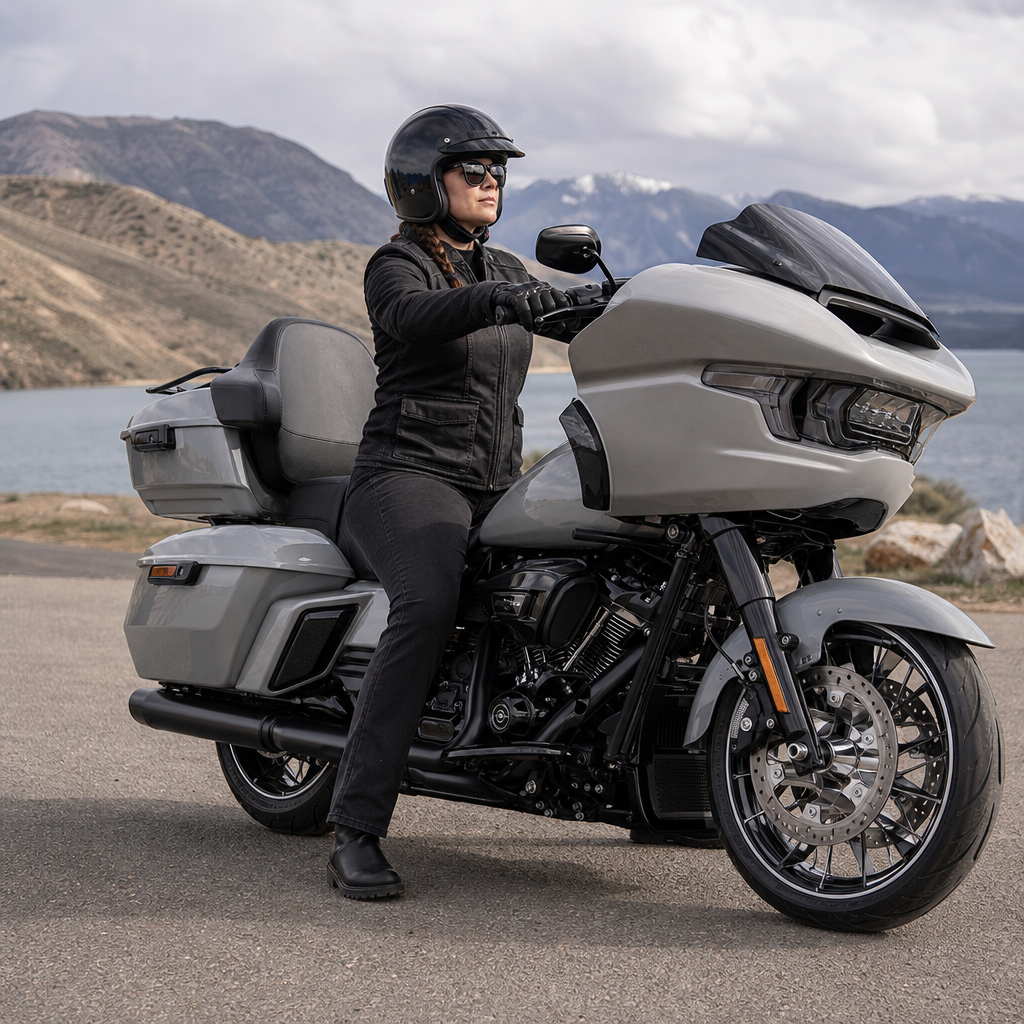
Model-specific ergonomics means measuring the contact triangle for the passenger on this exact motorcycle rather than assuming one touring accessory fits every touring bike equally well. The Road Glide Limited has a trunk-mounted backrest area, generous passenger accommodations, and a seating position that generally places the passenger higher than the rider. That elevated position improves forward visibility, but it can also increase wind exposure and amplify the feeling of being perched rather than planted. Armrests help by giving the passenger a sense of containment. However, the benefit depends on three measurements: armrest height relative to the elbow, fore-aft reach relative to the torso, and width relative to the passenger’s hip and shoulder breadth.
If the armrests sit too high, the passenger shrugs the shoulders and creates tension. If they sit too low, they become decorative and rarely get used. If they sit too far back, the passenger cannot engage them during braking. If too far forward, they crowd the ribs and interfere with jacket bulk. On touring Harleys, the sweet spot is usually a lightly bent elbow with the forearm able to settle naturally without forcing the shoulders outward. That sounds simple, but thick winter jackets, armored textile gear, and heated layers all change the effective fit. The best setups are therefore adjustable or at least carefully matched to the seat and backrest pad thickness already installed on the bike.
Another model-specific issue is the interaction with the Tour-Pak area and passenger entry path. A large touring trunk already narrows how some passengers swing a leg over. Add armrests and the mount-and-dismount routine changes. On some setups, the passenger must step on the floorboard, steady with one hand, then settle into the seat before the armrest is lowered or engaged. This is not a defect; it is part of the use pattern. The important point is that the armrest design should fold away cleanly or allow enough clearance for riders wearing bulky rain gear. Couples who practice the routine before a trip adapt quickly, but buyers should not ignore this practical detail when choosing between fixed and pivoting designs.
Performance Recipes: Matching Armrests with Seats, Suspension, and Passenger Support
Passenger armrests work best when they are part of a broader performance recipe for two-up touring. The central idea is simple: comfort is cumulative. A supportive armrest cannot compensate for an overloaded rear suspension, and a premium seat cannot fix a poor passenger bracing position during throttle transitions. The strongest Road Glide Limited setup combines support at the hips, lower back, feet, and forearms so the passenger stays neutral instead of fighting the bike’s motion. When I build long-distance touring setups, I start with sag and load management, move to seat shape, then assess whether armrests will solve the remaining stability problem.
| Component | Primary Comfort Function | Common Problem Solved | Best Use on Road Glide Limited |
|---|---|---|---|
| Passenger armrests | Upper-body support and bracing | Shoulder fatigue, insecurity during braking | Long interstate days and older passengers |
| Tour-Pak backrest pad | Lumbar and rearward support | Lower-back strain, rearward slide | Essential baseline for two-up touring |
| Passenger seat upgrade | Pressure distribution | Hot spots, numbness after 90 to 120 minutes | High priority if stock foam feels thin |
| Rear suspension preload tuning | Ride-height and bump control | Bottoming, wallow, harsh rebound | Mandatory when luggage and passenger are added |
| Passenger floorboard adjusters | Knee and hip angle improvement | Cramped legs, hip stiffness | Helpful for shorter or taller passengers |
Suspension deserves emphasis because many comfort complaints that riders attribute to seats or armrests are actually preload errors. If the rear sits too low under load, the passenger gets more vertical motion, more abrupt rebound, and a greater tendency to slide or sway. Set correctly, the chassis stays calmer, and the armrests become a light support rather than a desperate handhold. This is one reason Harley touring owners who add premium shocks from companies like Öhlins, Legend Suspensions, or Progressive often report a major passenger comfort gain before changing anything else. The armrest then adds precision to the support system rather than trying to solve every problem alone.
Seat pairing matters too. A wider passenger seat can improve pressure distribution, but it also changes elbow angle and the distance to the armrests. Likewise, a thicker backrest pad can move the passenger forward enough to make previously comfortable armrests feel cramped. That is why fit should be checked as a complete system. For a true long-haul recipe, test the bike loaded with the same luggage, apparel, and hydration gear you plan to use on the trip. Ten minutes in a garage tells you very little. Forty-five minutes on mixed roads tells you almost everything.
Choosing the Right Armrest Design and Installation Strategy
Most buyers in this category will compare integrated Harley-style solutions with aftermarket options designed around the Tour-Pak and passenger backrest structure. The best designs share four traits: solid attachment points, smooth pivoting or fold-up function, enough padding to prevent elbow pressure, and a shape that does not block passenger entry. Hardware quality matters more than many riders expect because touring bikes transmit vibration for thousands of miles. Weak brackets develop play, and once an armrest moves unpredictably, comfort disappears. Look for steel or heavy-duty aluminum brackets, quality fasteners, and padding materials that resist UV breakdown and water intrusion.
Installation should be treated as a fitment task, not just a bolt-on accessory job. On Harley touring models, alignment around the trunk, seat edge, and backrest pad can be tight. Follow torque specifications, use the correct thread treatment where required, and confirm that latches, lids, antenna clearances, and passenger grab areas all remain functional. If the motorcycle already has add-ons such as luggage racks, backrest organizers, or seat covers with extra thickness, check compatibility before purchase. I have seen otherwise good armrest kits become frustrating because the owner assumed all Tour-Pak accessories occupy independent space. They do not. Touring accessories compete for millimeters, not inches.
Material choice affects ownership satisfaction over time. Vinyl must match the bike’s seat finish closely enough to look integrated. Stitching should be weather resistant. Hinges should operate smoothly even after repeated exposure to dust and rain. For riders who tour in hot climates, armrests with dense foam and quality cover material stay more comfortable than soft, low-density pads that collapse and heat soak. For riders who store the bike outside occasionally, corrosion resistance is not optional. Stainless hardware and proper finish quality are worth paying for because an accessory that looks tired after one season undermines a premium touring motorcycle’s overall fit and finish.
Common Questions, Tradeoffs, and Best Practices for Long-Haul Use
Do passenger armrests make a Road Glide Limited harder to use daily? Sometimes, slightly. The tradeoff is access. Passengers may need a more deliberate mount-and-dismount routine, and very broad armrests can complicate cleaning around the rear seat and trunk area. Are they worthwhile if the passenger already has a large backrest? Usually yes, because lower-back support and arm support solve different fatigue patterns. Can they affect handling? Not in the sense of changing steering geometry, but they can improve rider confidence by reducing sudden passenger movement. Are they necessary for every couple? No. If the passenger is younger, flexible, and rides only short distances, a seat and suspension upgrade may deliver more value first.
For true long-haul use, the best practice is to evaluate comfort in stages. First, confirm rear load settings and tire pressures according to the motorcycle’s manual and actual payload. Second, assess whether the passenger seat creates pressure points by the 90-minute mark. Third, evaluate upper-body fatigue, especially during repeated braking and highway turbulence. If that is where discomfort appears, armrests are a logical next step. This staged process prevents overspending on accessories that address the wrong problem. It also creates a clean internal roadmap for the broader Harley-Davidson ergonomics topic: armrests, seats, floorboards, suspension, and backrest geometry are connected decisions, not separate shopping impulses.
The main takeaway is straightforward: 2026 Road Glide Limited passenger armrests improve long-haul comfort when they are chosen and installed as part of a complete two-up touring recipe. They reduce upper-body fatigue, improve passenger confidence, and help calm weight shifts during real-world riding. Their value is highest on full-day trips, for older passengers, and for anyone who feels unsupported even with a trunk backrest. They are not magic, and they will not fix poor suspension setup or a bad seat, but in a well-matched system they deliver measurable comfort gains. Use this hub as your starting point for the full Harley-Davidson model-specific ergonomics and performance recipe set, then evaluate your own bike the way experienced tourers do: one contact point, one load condition, and one ride pattern at a time.
If you are planning a 2026 touring build, start with the passenger. Measure body position, test your current setup on a real ride, and choose armrests only after checking seat fit, backrest depth, and suspension preload. That method produces a motorcycle that feels purpose-built instead of merely accessorized, and that is the difference between enduring a trip and enjoying every mile.
Frequently Asked Questions
Why do passenger armrests make such a noticeable difference on a 2026 Road Glide Limited during long rides?
Passenger armrests improve comfort because they add side support at the exact moments when a passenger would otherwise brace with their core, shoulders, or hands. On a heavyweight touring motorcycle like the 2026 Road Glide Limited, the passenger is constantly reacting to acceleration, braking, lane changes, crosswinds, pavement seams, and suspension movement. Without support, that reaction often turns into muscle tension, especially across the lower back, obliques, forearms, and shoulders. Armrests help reduce that strain by giving the passenger a more secure, planted seating position.
That matters even more on long-haul rides because fatigue builds gradually. A passenger who feels stable does not need to grip the rider as tightly or repeatedly shift position to stay balanced. Instead, they can sit more naturally against the Tour-Pak backrest, keep their upper body relaxed, and handle road inputs with less effort. Over the course of several hours, that translates into fewer pressure points, less fidgeting, and better confidence on the bike.
On the Road Glide Limited specifically, passenger comfort is tied to the complete ergonomics package: seat height, floorboard position, backrest angle, and suspension behavior all work together. Armrests do not replace those factors, but they complement them. They make the passenger compartment feel more supportive and controlled, which is especially valuable when carrying a second rider over rough pavement or through stop-and-go touring traffic.
Do passenger armrests improve safety, or are they mainly a comfort upgrade?
They are primarily a comfort upgrade, but comfort and safety are closely connected on a touring motorcycle. A comfortable passenger is usually a more stable passenger, and a stable passenger is easier for the rider to manage. When the passenger has secure upper-body support, they are less likely to make abrupt balance corrections during acceleration, braking, or cornering. That smoother body movement helps the motorcycle feel more predictable, particularly at lower speeds and during long days when fatigue starts to affect posture and attention.
Armrests can also improve passenger confidence. Many passengers feel most unsettled during transitions, such as pulling away from a stop, rolling over expansion joints, descending uneven roads, or coming to a firm stop with luggage and a full touring load. The presence of armrests can reduce that nervousness by giving them a more defined seating area. When passengers feel physically supported, they tend to stay calmer and move less abruptly, which benefits the overall riding experience for both people.
That said, armrests should never be viewed as a substitute for proper passenger technique, a correctly adjusted suspension, or secure seating. The best results come when the passenger is seated firmly against the backrest, the load is balanced, tire pressure is correct, and the rider communicates clearly about starts, stops, and road conditions. In that setup, armrests become more than a luxury feature. They become part of a more controlled, less fatiguing two-up touring environment.
What should riders look for when choosing passenger armrests for a 2026 Road Glide Limited?
The first priority is model-specific fitment. A touring bike like the 2026 Road Glide Limited has a particular rear seating layout, Tour-Pak configuration, and passenger space, so the armrests should be designed to integrate cleanly with that setup. Proper fit affects not only appearance, but also passenger comfort, movement clearance, and long-term durability. Poorly fitted armrests can interfere with how the passenger mounts the bike, sit at an awkward angle, or create pressure where support is supposed to help.
Next, focus on padding, width, and placement. Good armrests should support the passenger’s forearms naturally without forcing the shoulders upward or inward. If they sit too high, the passenger may tense their neck and upper back. If they sit too low, they may offer little real benefit. Padding should feel firm enough to support weight but not so hard that it creates hot spots over time. The best designs help the passenger relax into the seat and backrest rather than making them consciously “use” the armrests.
It is also worth considering adjustability, fold-up design, and overall build quality. Adjustable or pivoting armrests can make entry and exit easier while allowing a better fit for different passenger sizes. Strong mounting hardware, quality finishes, and materials that hold up against weather and vibration matter on a bike intended for serious mileage. Finally, think about how the armrests work with the entire passenger zone. They should complement the backrest angle, seat contour, and floorboard position so the passenger feels supported from multiple contact points, not boxed into an awkward posture.
Can passenger armrests help reduce fatigue and soreness on multi-hour or multi-day trips?
Yes, that is one of their biggest advantages. On extended rides, passenger discomfort rarely comes from one dramatic issue. More often, it comes from small, repeated stresses that add up over time: bracing during throttle changes, tightening the torso over bumps, shifting to relieve pressure, and trying to stay centered against wind or road movement. Armrests reduce some of that cumulative workload by giving the passenger a stable place to rest their arms and a more secure sense of body position.
When the upper body is better supported, the passenger can distribute effort more evenly. Instead of relying heavily on abdominal tension or gripping the rider for stability, they can settle more comfortably into the seat and backrest. That can lessen soreness in the lower back, shoulders, and hands, especially on full-day rides where repeated corrections become tiring. The effect is often subtle at first but significant after several hours in the saddle.
They can also improve endurance by helping the passenger maintain a more relaxed posture. A relaxed passenger breathes easier, shifts less often, and tends to enjoy the ride more. That matters on the Road Glide Limited, where long-distance capability encourages all-day travel. Combined with a supportive seat, properly tuned suspension, smart rest-stop planning, and good communication between rider and passenger, armrests can play a real role in making multi-hour and multi-day touring more manageable and more enjoyable.
Are passenger armrests worth adding if the 2026 Road Glide Limited already has a Tour-Pak backrest and floorboards?
In many cases, yes. A Tour-Pak backrest and passenger floorboards already provide an excellent foundation for comfort, but they do different jobs than armrests. The backrest supports the passenger from behind, and the floorboards help establish leg position and lower-body stability. Armrests add lateral and upper-body support, which can be the missing piece for passengers who still feel like they need to brace themselves during motion changes.
This is especially relevant for riders who travel frequently with the same passenger, cover long highway distances, or encounter mixed pavement conditions. Even with a good backrest, some passengers still feel exposed at the sides or unsupported when the motorcycle transitions through bumps, braking zones, or uneven surfaces. Armrests help complete the seating environment by creating a more enclosed, secure feeling without requiring the passenger to constantly stabilize themselves with muscle effort.
Whether they are worth it ultimately depends on the passenger’s size, flexibility, confidence level, and how the bike is used. For occasional short rides, the difference may feel modest. For regular two-up touring, however, armrests can provide a meaningful upgrade in comfort, reduce fatigue, and improve the passenger’s overall sense of stability. On a machine built for distance like the 2026 Road Glide Limited, that added support often proves worthwhile because comfort over hundreds of miles is not just about luxury. It directly affects how relaxed, steady, and confident the passenger remains from the first mile to the last.