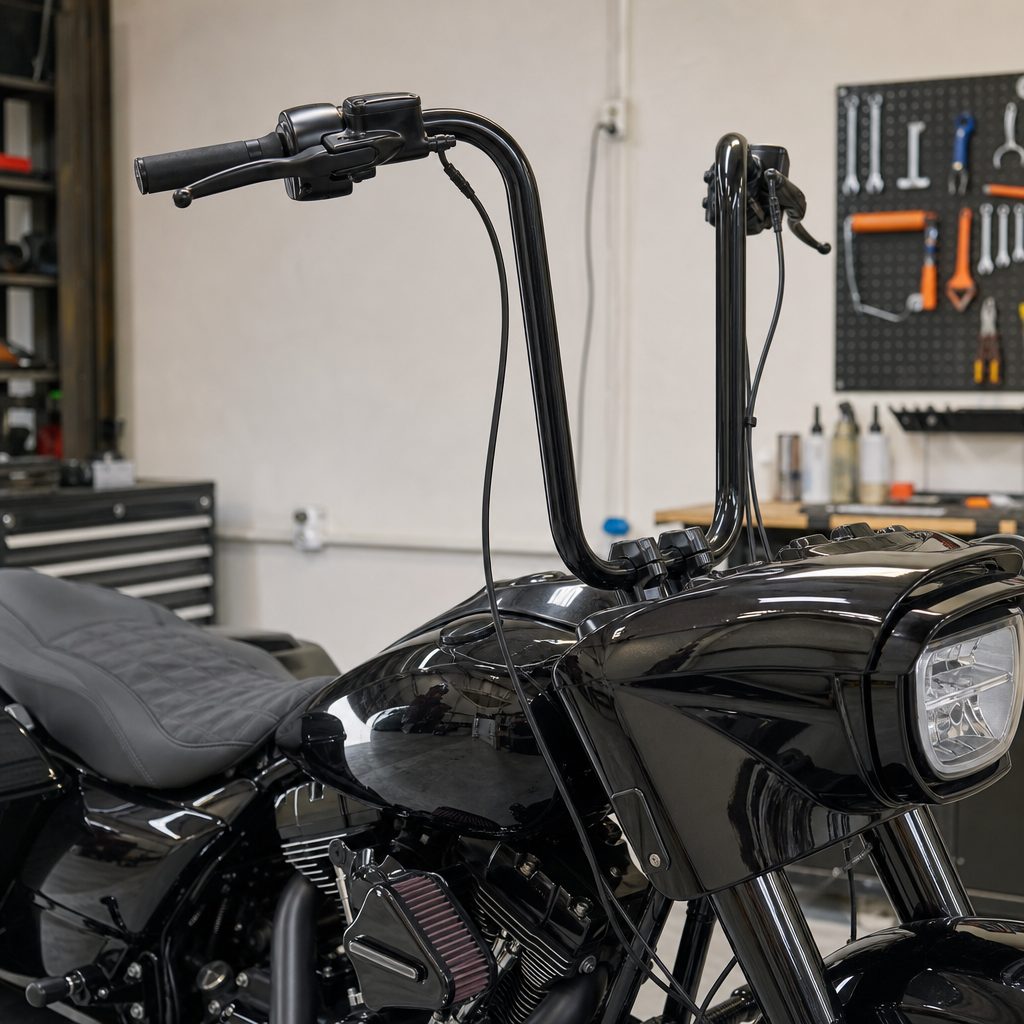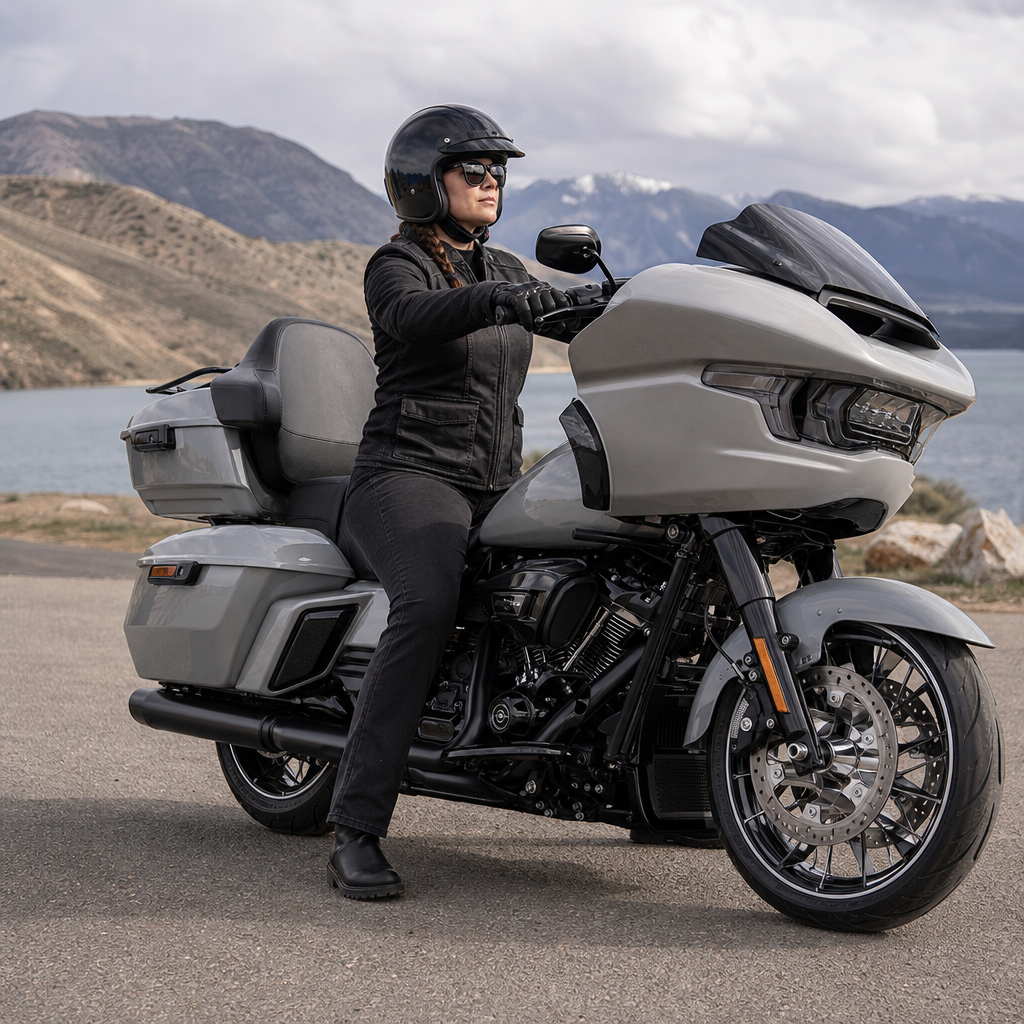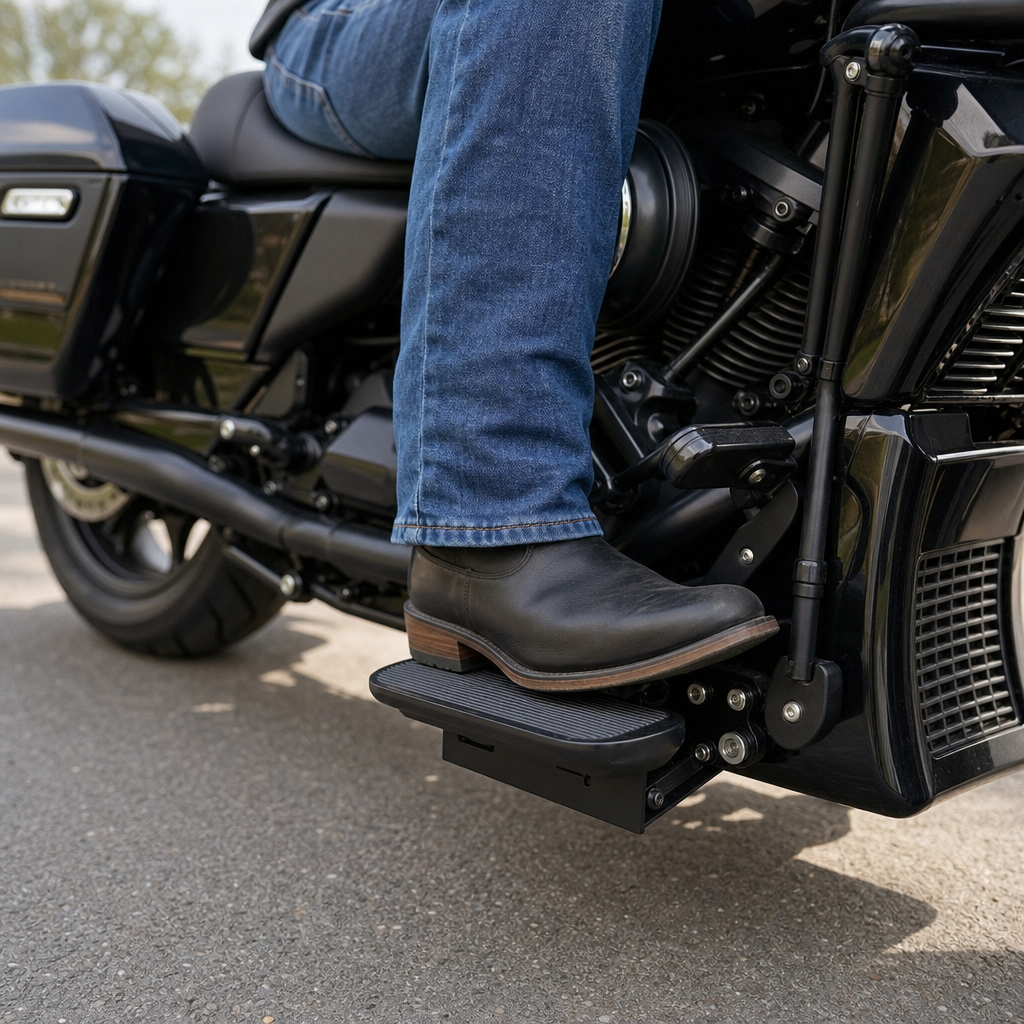
Passenger floorboard relocation is one of the most effective ways to improve 2026 Street Glide comfort because it changes the knee angle, hip position, and long-distance stability of the person riding behind the pilot without altering the motorcycle’s core touring character. On the current Harley-Davidson Street Glide platform, riders often focus on bars, seats, and suspension first, yet I have seen passenger complaints disappear after a careful floorboard move of less than an inch. In this context, “recipes” means repeatable setup patterns: specific combinations of relocation brackets, seat shape, rider height, passenger inseam, and riding use that produce a predictable ergonomic result. “Model-specific ergonomics” means treating the 2026 Street Glide as its own system, with bagger bodywork, exhaust routing, frame geometry, and passenger accommodations that differ from a Road King, Road Glide, or older Touring generation. This matters because a passenger who is cramped, sliding forward, or carrying too much weight through the tailbone will tap out early, shift unexpectedly in corners, and reduce confidence on every ride.
Comfort is not subjective guesswork alone. It can be evaluated through joint angles, pressure distribution, vibration transfer, mount rigidity, and the amount of movement a passenger needs to stay relaxed over one, three, and six hours. The Street Glide’s appeal as a mile-eating touring motorcycle depends on keeping both people comfortable at highway speed, in stop-and-go traffic, and during repeated mount-and-dismount cycles. A relocation setup that lowers the floorboards slightly may open knee angle but increase boot contact in aggressive cornering. A setup that pushes boards rearward may improve legroom for a tall passenger but make it harder for a shorter passenger to climb on with a Tour-Pak trunk installed. The goal is not to chase one dimension. The goal is to build a balanced ergonomic package that supports control, comfort, and real-world usability.
When I fit touring Harleys, I start with the passenger before I buy hardware. Height, inseam, hip mobility, preferred footwear, and whether the passenger braces against a backrest all change the answer. I also look at seat width at the passenger pocket, because wide foam can force the knees outward even when the floorboards seem well placed on paper. That is why this hub article treats passenger floorboard relocation as the center of a broader comfort recipe for the 2026 Street Glide. If you understand the main fit variables, the common bracket types, and the tradeoffs involved, you can choose smarter upgrades and connect them to related topics across the wider Harley-Davidson ergonomics and performance recipe cluster.
What passenger floorboard relocation changes on a 2026 Street Glide
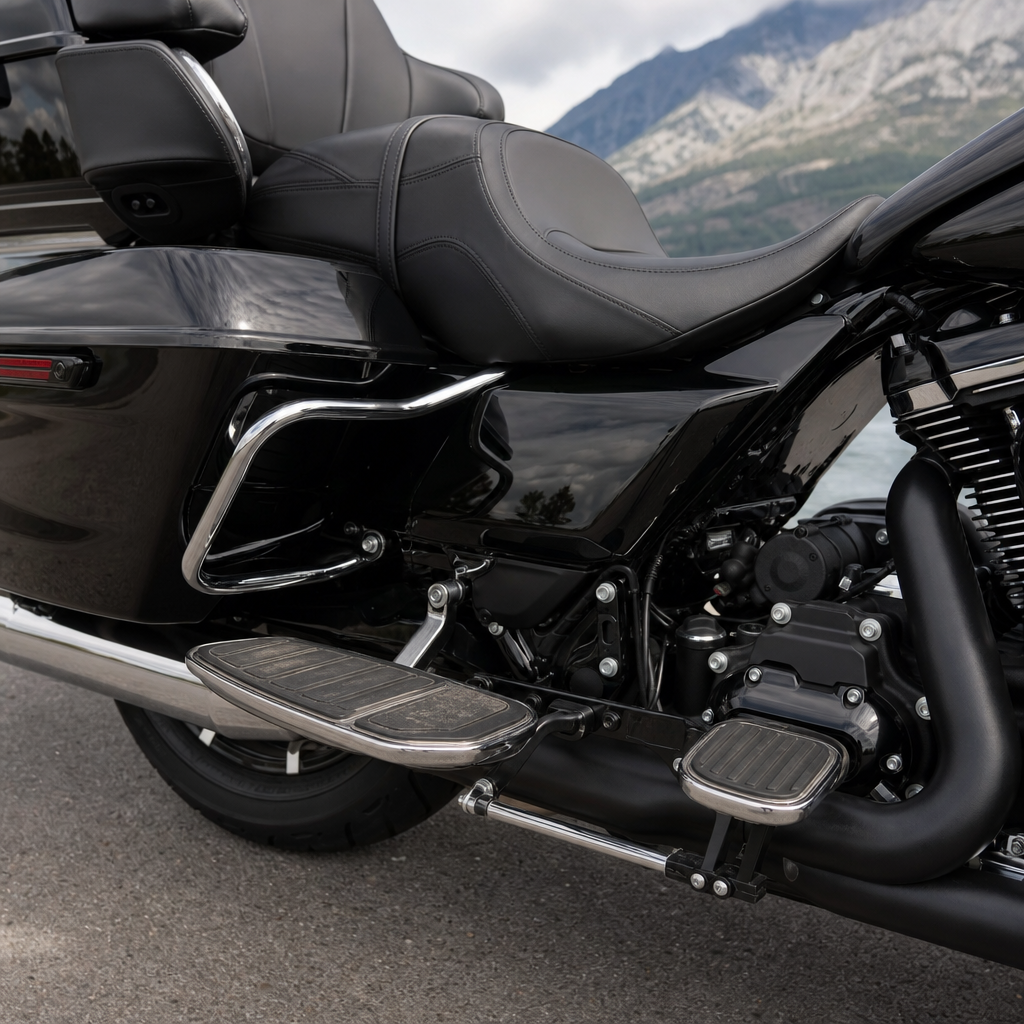
Passenger floorboards define the lower half of the passenger triangle: seat, floorboards, and hand support. Move one point and the whole triangle changes. On a 2026 Street Glide, relocation typically affects four measurable outcomes. First, it changes knee bend. More open knee angle usually reduces cramping and hot spots on longer rides. Second, it changes hip rotation. If the boards move down and forward, the pelvis can settle more naturally into the passenger seat instead of tilting backward. Third, it changes how much the passenger relies on arm tension, especially if there is no trunk backrest. Fourth, it changes how securely the passenger can brace during braking and acceleration.
Most aftermarket relocation kits for Harley touring passengers shift the boards in one or more directions: down, out, back, or occasionally forward. Downward movement is the most common comfort request because it creates legroom quickly. Outward movement can help when side cases, mufflers, or body shape crowd the calves, but too much width can feel awkward and expose boots to more wind. Rearward movement works well for taller passengers on a long saddle because it reduces the tucked-up feeling. Forward movement is less common and usually addresses a specific seat or backrest relationship rather than simple comfort. Each change must be checked against lean angle, exhaust clearance, saddlebag opening, and the passenger’s ability to place both feet flat on the boards without toeing inward.
The 2026 Street Glide remains a big touring machine, but the specifics still matter. Pipe shape, heat shield size, saddlebag line, rear crash bar or guard accessories, and the dimensions of the passenger portion of the seat all interact with bracket geometry. A kit that works beautifully on one Touring model can place the board at an odd angle on another if the passenger peg mount or surrounding hardware differs. That is why fitment notes, torque specs, and bracket offset dimensions matter more than marketing language.
How to choose the right comfort recipe for passenger size and riding style
The best relocation recipe starts with use case. A couple doing thirty-minute dinner rides needs a different setup from a pair riding five hundred miles in mixed weather. I generally break fit decisions into three passenger profiles. Shorter passengers, roughly under a 29-inch inseam, often need easier access first and legroom second. Mid-range passengers benefit most from subtle lowering and slight rearward changes. Taller passengers, especially above a 32-inch inseam, usually need a combination of lower boards and a seat that does not force the knees outward. These are patterns, not hard rules, but they are reliable starting points.
The rider’s style also matters. A passenger behind an aggressive rider who brakes hard, accelerates decisively, and uses more lean angle needs stronger bracing points than a passenger behind a smooth interstate cruiser. In those cases, a lower board can be excellent, but only if it still gives the passenger a secure platform during transitions. If the bike has a Tour-Pak with a supportive pad, you can prioritize leg extension more confidently because upper-body support is already improved. Without a trunk, the lower-body position does more of the stability work.
| Passenger profile | Typical issue | Relocation pattern | Supporting upgrades |
|---|---|---|---|
| Short inseam passenger | Difficult mounting, toes angled inward, calf crowding | Minimal drop, slight outboard move | Narrower passenger seat edge, trunk handholds |
| Average inseam passenger | Knee bend after one to two hours | Moderate drop, slight rearward move | Supportive backrest pad, reduced seat slope |
| Tall passenger | Cramped hips and sharp knee angle | Larger drop with rearward offset | Wider trunk pad, reshaped foam, heat management |
| Passenger on spirited rides | Sliding and unstable bracing during braking | Moderate drop only, preserve firm platform angle | High-friction seat cover, suspension tuning |
In practice, the most successful recipe is usually conservative. Many owners assume the biggest drop bracket will deliver the best comfort. Often it does not. Too much change can create heel interference with exhaust shields, reduce confidence when mounting, and place the ankles in an unnatural position. I prefer to make the smallest move that solves the actual complaint, then evaluate on a one-hour test ride before locking the setup in for a major trip.
Hardware, installation standards, and safety checks that matter
Passenger floorboard relocation hardware looks simple, but bracket quality makes a major difference in comfort and durability. On a heavy touring Harley, the bracket sees repeated vertical loading, vibration, and occasional impact from boots during mounting. Good kits use machined or thick plate steel or billet aluminum, maintain flat mounting surfaces, and include graded fasteners with clear torque guidance. Hardware without proper spacers can twist the mount, causing the floorboard to sit at a poor angle or loosen over time. Any setup that relies on improvised washers instead of engineered stand-offs is a red flag.
Installation should follow the same discipline used for control mounts or highway peg systems. Clean threads, confirm fastener length, use the specified threadlocker where required, and torque to the bracket maker’s specification or the Harley service manual baseline when the manufacturer references OEM values. After installation, cycle the floorboard through its fold range and inspect for interference with mufflers, guards, saddlebag bottoms, and passenger heel travel. Then load-test it. I have a passenger stand on the board while the bike is upright and stabilized, because static pressure often reveals flex or contact that is invisible on the lift.
Safety checks continue after the first ride. Re-torque after fifty to one hundred miles. Watch for witness marks where boots, boards, or brackets are touching nearby parts. If the board angle is adjustable, make sure both sides match. A mismatched angle can create hip asymmetry that becomes painful surprisingly fast. Also confirm that any relocated board still folds enough to avoid damage during tip-over situations or tight garage movement. Comfort gains are not worth compromising a safe and predictable passenger platform.
How relocation interacts with seats, suspension, and heat management
Passenger floorboard relocation rarely works as a standalone miracle. It works best as part of a comfort system. The first paired component is the seat. A passenger seat with a steep forward slope makes the passenger slide into the rider, increasing pressure on the inner thighs and forcing extra knee bend even if the boards are lower. A flatter passenger pocket, firmer support foam, or slightly narrower front edge can transform the effect of a modest relocation bracket. I have seen riders blame floorboards for discomfort that was really caused by soft foam collapse after ninety minutes.
The second paired component is rear suspension. On a Street Glide carrying two adults and luggage, rear sag matters. If preload is too low, the back of the bike squats, changing the relationship between seat and floorboards while also increasing bottoming risk. That means the passenger’s knees stay more bent and every bump transfers more sharply. Correct preload and damping do not just improve handling; they preserve the intended ergonomic geometry. Premium shocks from companies such as Öhlins, Legend Suspensions, and Fox often improve passenger comfort more than owners expect because they reduce repeated compression events that cause the passenger to brace with the legs.
Heat management is the third factor. Many touring passengers complain about leg discomfort that is partly thermal, not purely ergonomic. Exhaust routing, catalyst heat, low-speed airflow, and the position of the right-side muffler can make a floorboard location feel worse than it measures. Heat shields, deflectors, ceramic coating, and tuning choices that reduce unnecessary heat soak can all support the relocation recipe. If a passenger’s right calf is roasting in summer traffic, an extra half inch of room may help, but solving the heat source often matters more.
Common mistakes owners make when chasing 2026 Street Glide passenger comfort
The most common mistake is solving for appearance instead of body mechanics. A sleek bracket with dramatic drop may look custom, but if the passenger’s ankle is overextended or the board sits too far from the natural line of the hip, comfort gets worse. The second mistake is skipping the passenger interview. Owners often buy parts based on forum photos without asking whether the pain is in the knees, hips, tailbone, calves, or lower back. Different complaints point to different solutions.
Another mistake is ignoring the mounting process. A setup can feel good once seated yet be frustrating every time the passenger climbs on, especially with a trunk, luggage rack, or tall exhaust. Ease of access is part of comfort. I also see owners overlook footwear. Thick-sole riding boots can reduce available board space, change ankle angle, and bring heels closer to hot or vibrating components. Test with the actual boots used on trips, not casual shoes in the garage.
Finally, people often fail to test under real load. A ten-minute loop tells you almost nothing about touring comfort. Use a structured test ride: city traffic, highway speed, several stops, one set of rough pavement, and at least an hour in the saddle. Have the passenger rate knee comfort, hip comfort, thermal comfort, and stability under braking. Those notes make later adjustments obvious instead of emotional.
Using this hub to plan the rest of your Harley-Davidson ergonomics recipe
This page is the hub for model-specific ergonomics and performance recipes because passenger floorboard relocation connects to nearly every other comfort decision on a Harley-Davidson touring build. From here, the next logical topics are rider seat shape, passenger seat foam density, Tour-Pak pad selection, rear shock setup, handlebar reach, and heat mitigation around the right leg. If your passenger is comfortable but the rider is cramped, the whole bike still feels wrong. If the suspension is undersprung, no floorboard bracket will deliver consistent comfort over broken pavement. In other words, the floorboard recipe is foundational, not isolated.
The key takeaway is simple. For improved 2026 Street Glide comfort, relocate passenger floorboards only after identifying the passenger’s real complaint, choosing a bracket pattern that matches body size and riding style, and checking the result against seat shape, suspension sag, and heat exposure. The best setups are measured, tested, and refined, not guessed. Start with a modest change, verify clearances and torque, then evaluate on a meaningful ride. If you are building a complete Harley-Davidson comfort package, use this hub as your roadmap and move next to the linked ergonomics and performance recipe articles that complete the system.
Frequently Asked Questions
Why does relocating the passenger floorboards make such a big difference in 2026 Street Glide comfort?
Passenger floorboard relocation works because small changes in foot position create meaningful changes in the way a passenger’s knees, hips, and lower back sit over the motorcycle. On the 2026 Street Glide, the passenger triangle is fixed by the relationship between the seat, the floorboards, and the grab area or backrest. If the boards are too high, too far forward, or too far back for the passenger’s build, the result is usually a cramped knee bend, hip rotation, and a constant need to shift around during longer rides. Moving the boards even slightly can open the knee angle, reduce pressure at the hips, and help the passenger stay planted instead of fighting the bike’s motion.
What makes this upgrade so effective is that it improves comfort without changing the core touring personality of the Street Glide. You are not altering frame geometry, suspension behavior, or overall ergonomics for the rider. Instead, you are refining the support position for the person in the rear seat. In real-world touring use, that often translates into fewer complaints, better stability during braking and cornering, and less fatigue after an hour or two in the saddle. Many owners are surprised that a move of less than an inch can solve issues they assumed required a new seat or more expensive suspension work.
How do I know whether my passenger floorboards should be moved forward, backward, up, or down?
The correct direction depends on the passenger’s size, flexibility, and the specific complaint they have during the ride. If the passenger says their knees feel too bent or they feel cramped, a position that lowers or slightly extends the boards can help open the leg angle. If they feel stretched, unsupported, or as though they are reaching for the boards, a position that brings the boards into a more natural line under the hips may work better. Hip discomfort often points to rotation or tension caused by the feet sitting in the wrong relationship to the seat, while lower back discomfort can come from the passenger bracing awkwardly because the floorboards are not letting them stabilize naturally.
The best way to evaluate this is to ask the passenger very specific questions after a ride. Find out whether discomfort starts immediately or only after time, whether it is concentrated in the knees, hips, lower back, or thighs, and whether they feel secure during acceleration and braking. A passenger who keeps sliding, constantly repositions their feet, or braces hard under deceleration is giving useful ergonomic feedback. In many cases, a small relocation rearward or downward improves comfort by creating a more neutral posture. The key is not to assume that “more forward” always equals “more comfortable.” The goal is balance, support, and a relaxed bend in the legs rather than maximum extension.
Is passenger floorboard relocation better than upgrading the seat or suspension for two-up comfort on a Street Glide?
It depends on the actual source of the discomfort, but passenger floorboard relocation is often one of the highest-value changes you can make. Seats and suspension absolutely matter, especially on a touring motorcycle like the Street Glide, but many two-up comfort complaints are really posture problems rather than cushioning problems. If the passenger’s feet are positioned poorly, even an excellent seat can still leave them cramped, unstable, or sore. In that situation, changing the floorboard location can deliver a bigger comfort gain than replacing expensive components first.
That said, this is not an either-or issue. The most comfortable two-up setups usually come from treating the passenger area as a system. The seat determines pelvic support, the suspension manages impacts and chassis control, and the floorboards determine leg position and bracing leverage. If the passenger seat is too soft, too narrow, or poorly shaped, relocation alone may not fully solve the issue. If the rear suspension is harsh, the passenger may still feel beat up over rough roads. But when the floorboards are the missing ergonomic piece, relocation can dramatically improve comfort, especially because it helps the passenger stay more stable and less tense over long miles.
How much floorboard movement is usually needed to improve long-distance passenger comfort?
In many cases, not much at all. One of the most overlooked truths about motorcycle ergonomics is that the body responds strongly to very small positional changes. On the 2026 Street Glide, a floorboard relocation of less than an inch can be enough to reduce knee compression, ease hip tension, and give the passenger a more natural place to brace. Because the passenger sits higher and has less control over body movement than the rider, even subtle changes can feel significant over the course of a long day.
That is why careful adjustment matters more than dramatic change. Moving the boards too far can create new problems, such as making it harder for the passenger to mount the bike, interfering with natural leg support, or reducing confidence during stops and low-speed transitions. The best approach is incremental. Make a modest change, test it on a meaningful ride, and get detailed feedback. Long-distance comfort is not just about how the passenger feels in the driveway or on a ten-minute loop. It is about whether their posture still feels relaxed after an hour, whether they can stay stable without excessive bracing, and whether they finish the ride less fatigued than before.
What should I consider before installing passenger floorboard relocation brackets on a 2026 Street Glide?
Before installation, think about the complete two-up setup rather than the brackets alone. Start with passenger size and riding style. A shorter passenger may benefit from one relocation pattern, while a taller passenger may need a different position to avoid a cramped knee angle. Consider the seat shape, backrest or tour pack support, and whether the passenger wears bulky boots that change effective foot placement. You also want to confirm that any relocation kit is designed for the current Street Glide platform and does not create clearance issues with exhaust components, bag guards, or bodywork.
It is also important to think about real riding conditions. Check that the relocated boards still fold and function properly, do not compromise cornering clearance more than expected, and allow the passenger to mount and dismount safely. After installation, verify fastener torque, inspect alignment, and do a controlled test ride before committing to a longer trip. Most importantly, involve the passenger in the evaluation process. Comfort changes should be judged by the person actually using the rear position. When chosen carefully, relocation brackets can be one of the most practical upgrades for Street Glide two-up touring because they fine-tune comfort, improve passenger confidence, and preserve the bike’s essential touring character.