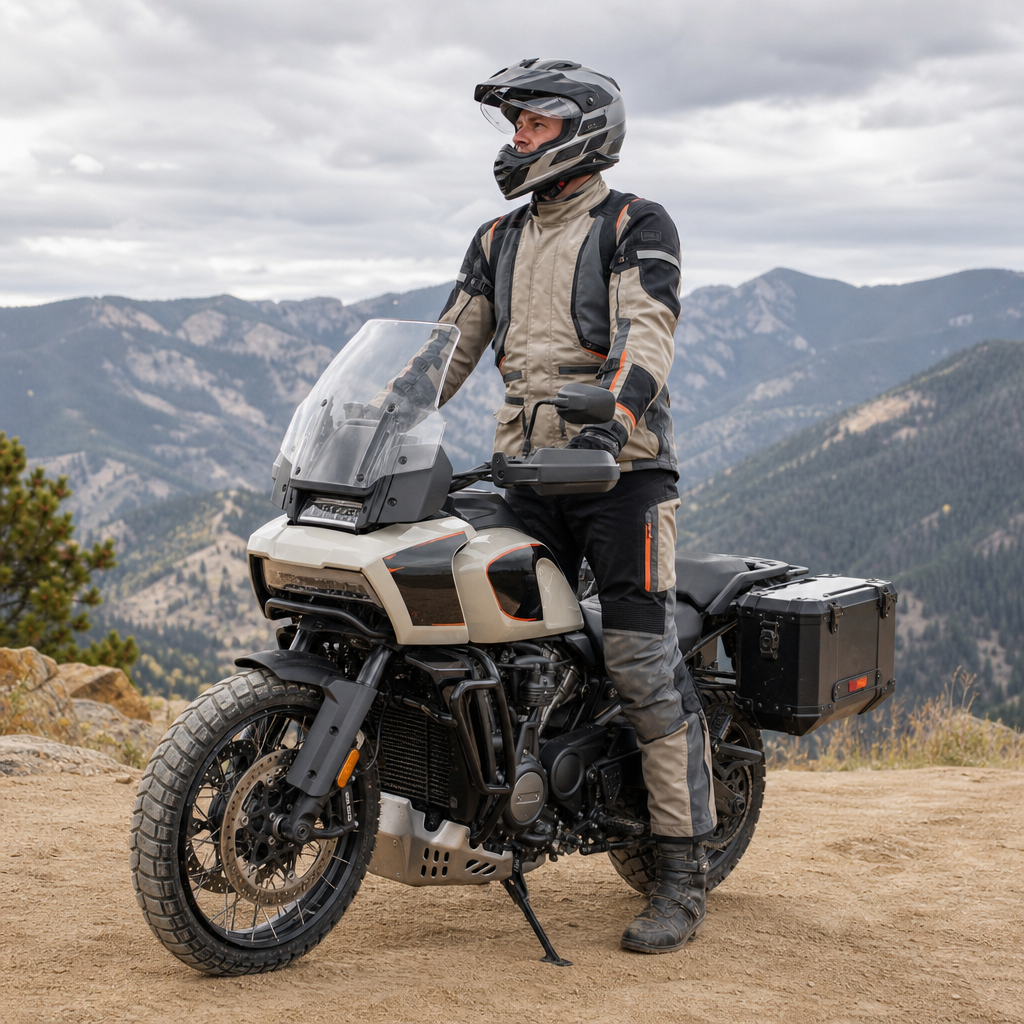
The Harley-Davidson Pan America 1250 Special and Pan America 1250 have become legitimate Backcountry Discovery Route platforms, but luggage choice still determines whether the bike feels balanced, resilient, and easy to live with off pavement. When riders ask about Pan America 1250 Limited luggage for BDR use, they are usually comparing two systems: aluminum panniers and soft bags. The right answer is not universal because luggage changes ergonomics, weight distribution, crash behavior, packing discipline, and even how confidently you ride technical sections. I have set up multiple Pan America builds for mixed travel, and the pattern is consistent: the best luggage recipe depends on route difficulty, overnight style, and how much margin you want when the trail gets rough.
In practical terms, a luggage recipe is a deliberate combination of bag type, rack setup, load placement, and riding adjustments built around a specific mission. A BDR is a multi-day off-road route that mixes gravel, two-track, rocky climbs, sand, water crossings, and pavement transfers. On a heavy adventure motorcycle like the Pan America 1250, the luggage system is not an accessory decision; it is a performance decision. Aluminum cases offer structure, weather sealing, and easy organization. Soft luggage offers impact tolerance, lower injury risk in a dab or fall, and usually less total system weight. Both can work extremely well, but only if matched to the bike’s chassis characteristics and the rider’s needs.
This article serves as the hub for model-specific ergonomics and performance recipes within the Harley-Davidson category. It explains how aluminum and soft luggage affect the Pan America 1250 platform, when each setup makes sense, and how to tune your loadout for real BDR travel. You will also see where this topic connects to suspension setup, seat-to-peg comfort, standing posture, wind management, tire choice, and rider fatigue. Those linked decisions matter because luggage amplifies every strength and weakness in an adventure bike. If you want a Pan America that remains planted, comfortable, and repairable across a long dirt route, start with luggage, then build the rest of the recipe around it.
Why luggage choice changes Pan America ergonomics and performance
The Pan America 1250 uses Harley-Davidson’s Revolution Max 1250 engine as a stressed member, a tall chassis, and adventure-bike geometry that rewards central mass and punishes careless overpacking. With luggage installed, the rider feels changes in three places first: low-speed balance, transitions while standing, and braking on loose surfaces. Put simply, weight carried high and far rearward makes the bike feel larger than it already is. Weight carried low, tight, and symmetrical preserves steering precision and makes the bike easier to catch when traction breaks.
On BDR terrain, luggage also changes body movement. Wide aluminum panniers can interfere with aggressive rearward movement on descents and make tight switchbacks feel more cumbersome. Soft luggage usually narrows the rear profile, which helps when you are weighting pegs, shifting hips, or threading through ruts and brush. That matters on the Pan America because its seat height, tank width, and standing triangle already demand an active riding posture. When the luggage works against that posture, fatigue rises quickly.
Another overlooked factor is crash energy. Hard panniers resist abrasion and keep shape, but they can bend racks, trap legs, or become difficult to open after a drop. Soft bags tend to absorb impacts better and continue functioning after repeated falls, especially in rocky sections. In my experience, riders who expect steep, technical BDR segments almost always ride more freely with soft luggage because they are less worried about expensive damage or leg injuries during a low-speed tip-over.
Aluminum luggage recipes: when hard cases are the better choice
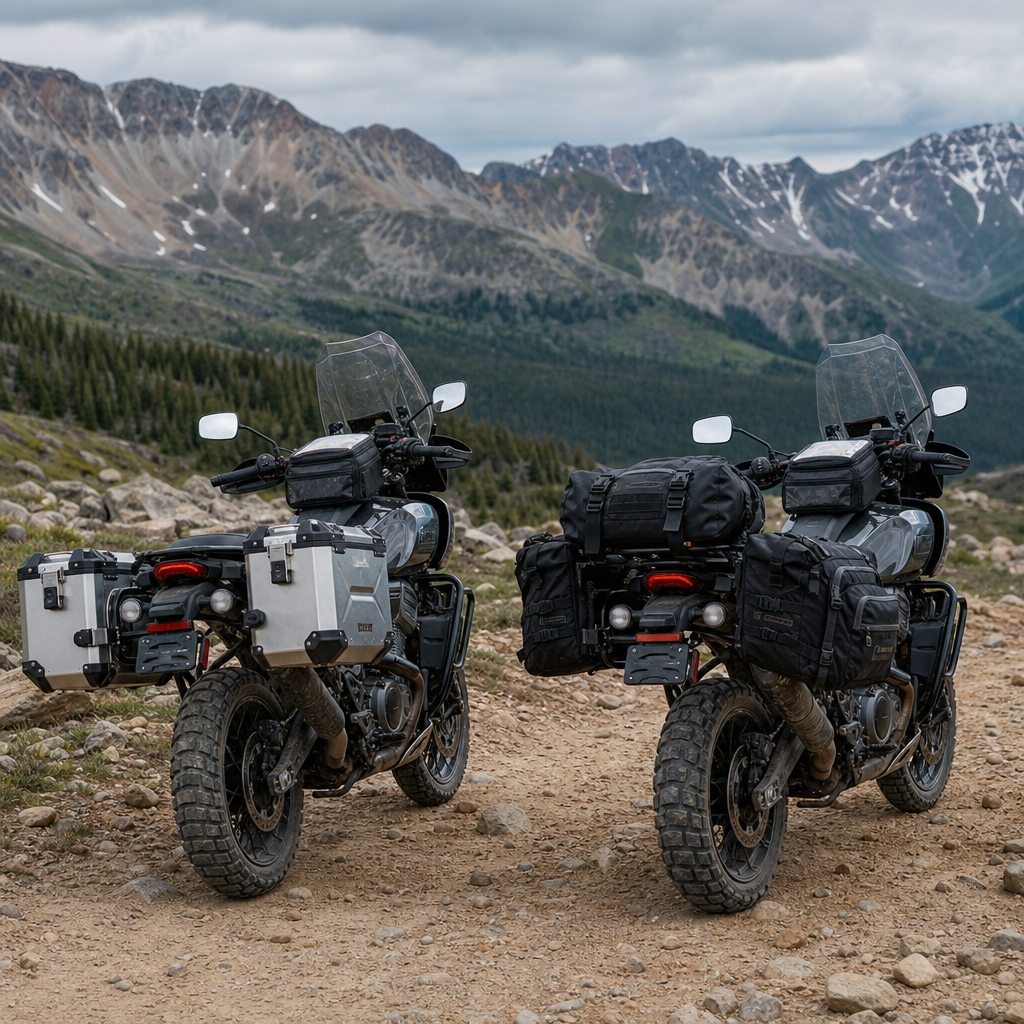
Aluminum panniers make sense when your BDR includes long pavement transfers, variable weather, hotel stops, camera gear, or frequent unpacking. A good hard-luggage recipe on the Pan America emphasizes organization and security rather than maximum capacity. That means using moderate-size side cases, keeping dense items low, and avoiding a top-heavy rear trunk unless the route is mostly tame gravel. The biggest advantage is structure. Rectangular hard cases swallow tools, cooking kits, laptops, and food in a way that is easy to inventory every morning.
Weather protection is the second major benefit. Quality aluminum systems from companies such as Bumot, Outback Motortek-compatible setups, SW-Motech, or Harley-Davidson’s own adventure luggage options typically use gasketed lids and robust latches. In sustained rain or dusty desert conditions, hard cases preserve electronics and sleeping gear with less fuss than many soft bags. They also provide a flat surface for strapping fuel bladders or dry bags, though doing so can worsen high rear mass if you are not disciplined.
The tradeoff is real. Aluminum panniers add rack weight, widen the bike, and punish mistakes in rock gardens or sand. On the Pan America, that extra width can also change how riders mount and dismount, especially when the bike is loaded and parked on uneven ground. If you choose aluminum for a BDR, the winning recipe is conservative packing, no unnecessary top case, and a clear plan for what lives in each side. Hard luggage works best for riders prioritizing weatherproof organization, theft deterrence, and smoother route sections over ultimate technical resilience.
Soft bag recipes: why many BDR riders prefer them
Soft luggage is usually the better BDR recipe for riders who expect repeated drops, deep ruts, rocky ledges, sand, or tight forest sections. Systems from Mosko Moto, Giant Loop, Kriega, Enduristan, and Nelson-Rigg have proven that modern soft bags are not a compromise product. They are purpose-built for off-road travel, often with layered materials, removable waterproof liners, compression straps, and beavertails that hold bulky gear securely. On the Pan America, the biggest benefit is how soft luggage reduces fear. Riders commit more naturally when they know a tip-over is unlikely to destroy a case or twist a subframe-mounted rack.
Weight is another advantage. A rackless or semi-rackless setup can remove several pounds compared with hard panniers plus steel racks, and those pounds sit in a better place. Because soft systems can cinch closer to the bike, they often keep the center of mass more centralized. The result is better slow-speed steering feel and easier recovery when the rear starts to step out on gravel. That is especially valuable on a 150-horsepower adventure bike carrying camping gear and extra water.
Soft luggage does have limitations. Access is slower, shape is less rigid, and security against theft is weaker. Dust and water performance depend heavily on proper closure technique. You also need heat shielding near the exhaust and regular strap checks. Still, for difficult BDR terrain, soft bags are the default recommendation because they improve crash tolerance, rider confidence, and body mobility more than any hard case can.
Best Pan America 1250 luggage recipes for common BDR scenarios
The strongest way to choose between aluminum and soft luggage is to match the system to route conditions and camp style. Riders get into trouble when they buy for appearance or maximum volume instead of terrain. The table below outlines practical recipes I recommend most often for the Pan America platform.
| BDR scenario | Recommended luggage type | Why it works on Pan America 1250 | Key packing rule |
|---|---|---|---|
| Mostly gravel, long pavement transfers, hotel or light camping | Aluminum side panniers, no top case or a very small tail bag | Better weather protection, quick daily access, more secure parking at fuel and lodging stops | Keep tools, water, and spares at the bottom of each pannier and avoid stacking gear above seat height |
| Mixed terrain with moderate rocky sections and full camping kit | Soft panniers on side racks plus small rear duffel | Balances organization with better crash survival and narrower rear profile | Put sleeping gear in the duffel, heavy items low in the side bags, and leave extra capacity unused |
| Technical BDR with sand, ledges, repeated drops, and solo travel | Rackless soft system with minimal tail load | Lowest injury risk, best freedom of movement, easier bike recovery after falls | Pack for self-rescue, not comfort excess; total luggage weight should stay aggressively low |
| Two-up travel or photo-heavy expedition with frequent unpacking | Aluminum panniers with carefully managed auxiliary tail storage | Structured organization helps when more gear categories must stay separated and protected | Use the lightest possible items in the rear bag and recheck preload and sag every time the load changes |
For most solo BDR riders, the middle two recipes are the sweet spot. The Pan America performs best when luggage stays narrow, low, and close to the rider. If you remember only one rule, remember this: pack the bike so it still feels eager to stand on the pegs and pivot underneath you. Once it starts feeling like a loaded touring bike on dirt, the recipe is wrong.
How to pack for balance, comfort, and durability
Packing well matters more than the logo on the bags. Start with mass hierarchy. Tools, tire irons, pump, tubes or plugs, spare parts, and water belong as low as possible. Sleeping bags, clothing, and camp pillows can go high because they are light. Food usually seems harmless, but several days of dense calories add up quickly; split it evenly side to side. On the Pan America, asymmetrical packing is immediately noticeable during low-speed clutch work and downhill braking.
Next, protect rider ergonomics. Items strapped across the passenger seat often block the rider from moving rearward on descents or during sand recovery. Keep the tail bag short enough that you can still scoot back. Standing comfort also depends on not forcing your knees outward around overloaded luggage. If your calves or heels clip bags while standing, the system is too wide or mounted poorly.
Durability comes from friction control and redundancy. Use rack interface panels, heat shields, and anti-chafe film where bags contact bodywork. Secure every strap tail so it cannot reach the chain, rear wheel, or exhaust. Waterproof liners should be rolled consistently, not casually folded. I also recommend a simple field-service rule: every item needed for tire repair, chain service, and first aid should be accessible without unloading the entire motorcycle. BDR days get long, and good luggage organization reduces small mistakes that turn into big delays.
Related performance recipes every Pan America rider should address
Luggage is the hub, but it only works when the surrounding setup supports it. Suspension is first. Added load requires preload adjustment, and on Pan America models with Adaptive Ride Height or semi-active suspension features, you still need to confirm actual ride attitude, ground clearance, and fork behavior under braking. A bike that squats in the rear will steer slower and push the front on loose climbs.
Tires are the next linked recipe. A luggage-heavy Pan America on street-biased tires becomes harder to manage in mud and baby-head rocks. For BDR use, many riders move toward aggressive 50/50 or 60/40 options such as the Michelin Anakee Wild, Dunlop Trailmax Raid, Mitas E-07+, or Motoz Tractionator lines depending on terrain and wear priorities. Tire pressure must then be matched to load, carcass strength, and speed, not guessed.
Ergonomics also matter. Footpeg position, bar rotation, lever angle, seat choice, and windscreen height all affect how well you can control a loaded bike while standing for hours. I have seen riders transform their BDR comfort simply by rotating bars forward slightly, lowering pegs, and reducing turbulence at helmet level. Finally, protection parts matter more with luggage attached. Engine guards, hand guards, skid plates, and rear brake protection can determine whether a harmless tip-over ends the day or becomes a repair stop. Build the whole system, not just the pannier mounts.
Conclusion: choose the recipe that preserves control
The best Pan America 1250 Limited luggage recipe for a BDR is the one that protects control first, convenience second. Aluminum panniers are excellent when you need structured packing, weatherproof storage, and better security on routes with substantial pavement or lodging stops. Soft luggage is the stronger choice when the route is technical, falls are likely, and rider mobility matters more than box-like organization. On this motorcycle, the difference is not subtle. Luggage changes how the bike turns, how safely you can dab a foot, how tired you feel after eight hours, and how much confidence you carry into the next rough section.
If you are building a Harley-Davidson Pan America as part of a broader model-specific ergonomics and performance plan, treat luggage as the central recipe and tune suspension, tires, cockpit fit, and protection around it. Pack low, pack light, and leave room to move on the bike. That approach consistently produces the best BDR experience, whether your trip is a fast hotel-supported route or a fully self-supported backcountry week. Review your expected terrain honestly, choose the simpler system, and test the setup locally before departure. A well-packed Pan America feels smaller, calmer, and more capable, and that is exactly what you want when the route gets real.
Frequently Asked Questions
1. For BDR riding on a Harley-Davidson Pan America 1250, are aluminum panniers or soft bags the better overall choice?
There is no single best answer because the better system depends on how you ride, how often you drop the bike, how much gear you carry, and how much convenience matters to you at camp and on the road. For most riders tackling a Backcountry Discovery Route, soft bags usually make more sense if the route includes technical sections, repeated low-speed drops, deep ruts, rocky climbs, or sand. Soft luggage is generally lighter, more forgiving in a crash, and less likely to bang your legs or trap an ankle during a tip-over. That matters on the Pan America 1250 because it is already a substantial adventure bike, and every pound added high and wide changes how manageable it feels when terrain gets loose or uneven.
Aluminum panniers, however, still have real advantages. They are excellent for organization, easier to pack and unpack, more secure when leaving the bike unattended, and better suited to riders mixing BDR miles with long pavement transfers, hotel stops, and travel where daily access to gear matters. Hard luggage also gives the bike a more structured storage setup, which some riders strongly prefer for electronics, camera gear, tools, and commuting use before or after the route.
The practical divide usually looks like this: if your version of BDR travel prioritizes durability in falls, reduced injury risk, lower weight, and off-pavement handling, soft bags are often the stronger recipe. If your trip prioritizes weather-resistant storage, lockability, quick access, and cleaner packing discipline, aluminum panniers may still be the better fit. Many experienced Pan America riders split the difference by using soft side luggage with a hard top case or tank bag, creating a setup that keeps the bike narrower and more forgiving while still preserving some day-to-day convenience.
2. How does luggage type affect the Pan America 1250’s balance, weight distribution, and handling on a BDR?
Luggage has a bigger effect on BDR performance than many riders expect, especially on a motorcycle like the Pan America 1250 that can feel very planted when packed smart and noticeably top-heavy when packed poorly. Aluminum panniers typically add more system weight before you even load your gear. The racks are often heavier, the cases themselves are heavier, and the whole setup can place mass farther out from the centerline of the bike. That extra width and leverage becomes more noticeable in rocky switchbacks, off-camber climbs, and slow technical maneuvering where balance corrections happen constantly.
Soft bags usually help the Pan America feel less bulky because they weigh less and can compress as contents shift or are reduced during the trip. They also tend to sit closer to the bike depending on the rack system, which improves the bike’s willingness to change direction and reduces the pendulum effect that shows up when hard panniers are stuffed with dense gear. On washboard roads and broken terrain, less unsprung and lateral mass means the bike often feels calmer and easier to correct.
Regardless of luggage style, the packing strategy matters just as much as the luggage material. Heavy items such as tools, spare tubes, tire irons, water, cooking fuel, and dense food should be packed as low and as close to the center of the bike as possible. Light, compressible items like sleeping gear and clothing should live farther outboard or higher up if necessary. Riders who load camp chairs, extra fuel, and water high on a rear rack often blame the motorcycle when the real issue is poor weight placement. On a BDR, the best luggage recipe is one that keeps the bike narrow, low, and predictable, not simply one that holds the most volume.
3. Which luggage system is more durable and safer when the Pan America 1250 gets dropped off pavement?
For repeated off-pavement drops, soft luggage generally wins the safety and survivability conversation. When the bike falls in rocks, mud, sand, or a rut, soft bags are more likely to absorb impact, deform, and bounce back without transferring as much force into the rack, subframe, or rider’s leg. That is one of the biggest reasons serious BDR and off-road travelers often choose soft systems even if they prefer hard luggage in other contexts. The Pan America 1250 carries enough mass that any crash hardware decision should account for what happens when the bike lands awkwardly at low speed several times in one day.
Aluminum panniers can absolutely survive long trips, but their failure mode is different. A hard case may dent, bend a lid, tweak a mounting point, or transfer impact into the rack structure. Sometimes that means you can hammer the box back into shape and continue. Other times it means a latch no longer seals properly or the case sits crooked for the rest of the route. There is also the rider safety issue: hard boxes can become shin, calf, or ankle hazards in dab-heavy terrain or when the bike falls onto a leg. That risk is not theoretical, particularly in rocky climbs and tight two-track where footing is uncertain.
That said, quality aluminum systems are not fragile by default, and quality soft systems are not indestructible. Soft bags can tear, melt on exhausts if installed poorly, or shift if straps loosen. Hard panniers can perform very well on smoother BDR sections and may remain perfectly serviceable for years if the rider is relatively controlled and avoids technical abuse. The real takeaway is that soft luggage usually degrades more gracefully in off-road mishaps, while aluminum luggage prioritizes structure and convenience but asks you to accept more weight and a harsher crash behavior.
4. What should riders pack differently in aluminum panniers versus soft bags for a Backcountry Discovery Route?
The packing recipe should reflect not just what fits, but how each luggage system behaves under vibration, impact, weather, and repeated access. In aluminum panniers, organization is easier because the boxes hold their shape and allow clean separation of gear. One pannier can be dedicated to camp equipment, the other to clothing, food, tools, and daily essentials in smaller cubes or pouches. Fragile items such as camera gear, electronics, chargers, or a compact stove often ride better in hard cases because they are less likely to be crushed by shifting luggage. However, riders should still pad delicate gear because hard boxes transmit plenty of vibration over washboard roads.
Soft bags reward a more minimalist and compressible packing style. Dry bags, stuff sacks, and color-coded packing cubes work especially well. Soft systems are best when loaded with clothing, sleep systems, lightweight shelter, and gear that can tolerate being compressed. Heavy tools, spares, and liquids should still be placed low and securely so they do not swing or sag. Because soft luggage can be less convenient to rummage through, thoughtful packing order matters more. Keep rain gear, tire repair tools, first aid, snacks, and filtration equipment where you can reach them quickly without unpacking the whole bike.
For either setup, many Pan America 1250 riders do best by separating gear into three categories: ride-critical items, camp items, and emergency items. Ride-critical gear includes tools, inflator, plugs, layers, gloves, water, and navigation power. Camp items include shelter, sleeping gear, cooking kit, and food. Emergency items include medical kit, satellite communicator, documents, and recovery essentials. If you build your luggage around those categories instead of just filling space, the bike becomes easier to live with every day of the route. The smartest BDR packing recipe is usually the one that removes duplicate items, cuts unnecessary luxury gear, and preserves quick access to what actually matters on the trail.
5. If I want one Pan America 1250 luggage setup that works for both BDR travel and general adventure touring, what is the most practical compromise?
The most practical compromise is often a modular setup rather than a strict aluminum-versus-soft decision. For many riders, the sweet spot is soft side luggage paired with a small hard top case, tank bag, or rear duffel. That combination gives you the off-road forgiveness and lower side impact risk of soft bags while preserving secure, easy-access storage for valuables, electronics, paperwork, and everyday items. On a Pan America 1250 that sees both BDR use and regular touring, this hybrid approach often delivers the broadest usefulness without making the bike feel excessively wide or top-heavy.
Another smart compromise is to choose a rack system that supports both hard and soft luggage so you can switch depending on the trip. If you mostly ride pavement and gravel with occasional BDR sections, aluminum panniers may remain your default and soft bags become the choice for more technical routes. If you mostly ride dirt-oriented travel, soft luggage can stay on full-time, with a lockable accessory case added only when needed. That kind of flexibility is especially valuable for Pan America owners because the bike itself spans several use cases, from commuting and road touring to legitimate backcountry travel.
When evaluating a long-term luggage setup, think beyond capacity. Consider how quickly the system comes off the bike, whether it interferes with mounting and dismounting, how it behaves in crosswinds, how easy it is to clean after mud, how it affects lane filtering or narrow trail sections, and how it changes your confidence when the route becomes rough. The ideal BDR luggage recipe is not the one that looks most expedition-ready