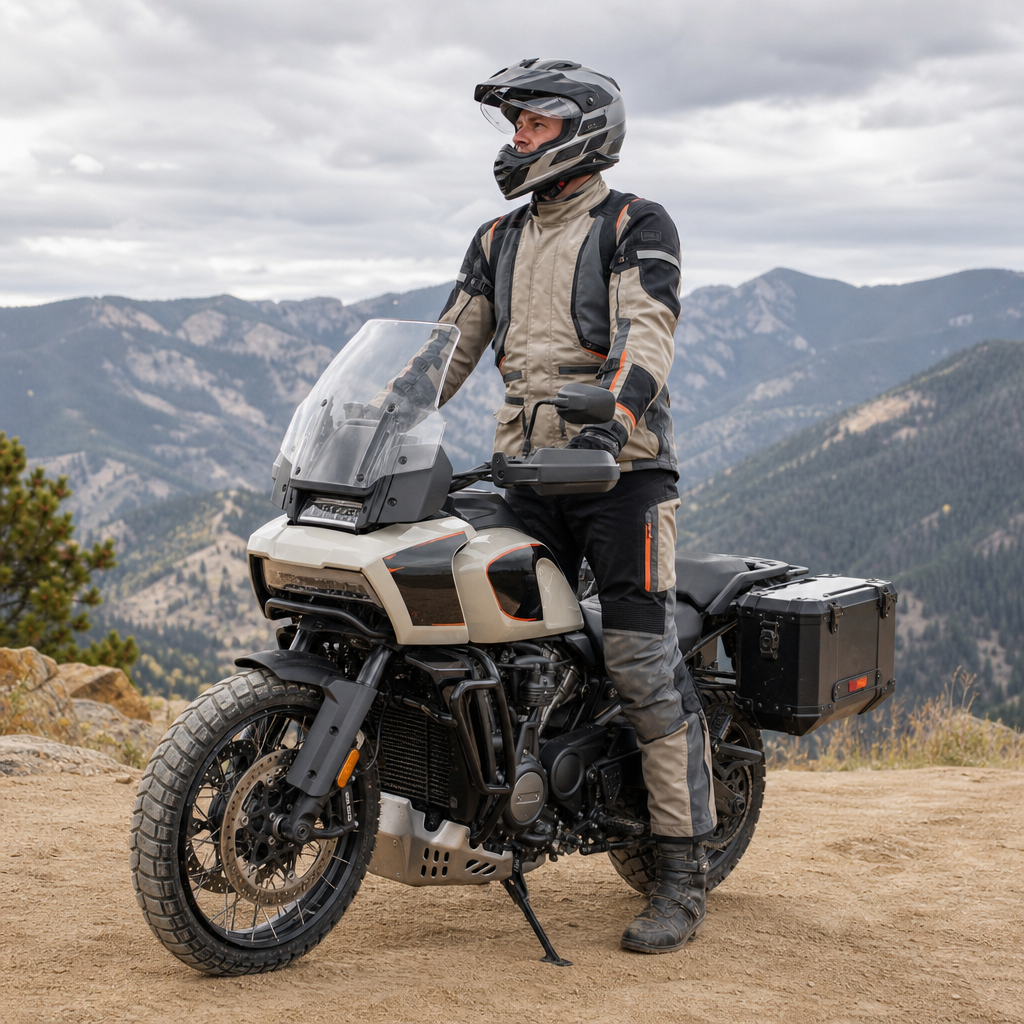
The Harley-Davidson Pan America 1250 skid plate recipe starts with one nonnegotiable fact: the 2026 RevMax sump sits at the center of the bike’s adventure-touring promise, and protecting it correctly is the difference between confident off-pavement miles and an expensive mechanical failure. In practical terms, a skid plate is the structural barrier mounted under the engine to absorb and deflect impacts from rocks, ledges, debris, and hard ground contact. On the Pan America 1250, that plate is not just a cosmetic accessory. It is part of a broader model-specific ergonomics and performance recipe, meaning a tailored combination of protection, fit, rider position, ground-clearance management, weight distribution, and service access that suits the exact motorcycle and the way it is ridden. I have worked on ADV setups where owners focused on tires and luggage first, then discovered after one strike that the underside of a high-performance V-twin deserves the same planning as suspension or braking. For the 2026 platform, the RevMax 1250 remains a stressed-member design, so any lower protection strategy must respect engine architecture, heat flow, and maintenance routines. That is why this hub article matters. It explains how to choose, evaluate, and integrate a Pan America 1250 skid plate while connecting the decision to the wider recipe of ergonomics and performance. Riders shopping this category usually ask the same direct questions: What should a skid plate protect, how strong should it be, what material works best, does it affect cooling, can it reduce clearance, and will it complicate oil changes? Those are the right questions, because a good plate solves for impact energy, vibration, fitment, and rider use case at the same time. As the hub for model-specific Harley-Davidson protection and setup recipes, this guide lays out the standards, tradeoffs, and selection logic clearly so every related article can branch from a solid foundation.
Why the RevMax sump needs a model-specific protection recipe
The RevMax 1250 is compact, powerful, and engineered for performance, but that same packaging places valuable components in the strike zone during serious adventure riding. The lower sump area, drain locations, exhaust routing, and front underside all face threats from square-edge rocks, thrown gravel, log crossings, and bottom-outs on washouts. A universal skid plate approach does not work well here because shape, mounting points, and load paths differ dramatically across bikes. I have seen generic plates bolt on with adapters, only to crack at the brackets because impact forces were transferred into weak tabs rather than distributed across reinforced points. A Pan America skid plate recipe must match the motorcycle’s lower profile, frame interfaces, and intended energy paths. Done correctly, the plate glances off obstacles instead of catching on them, and it protects without creating a maintenance headache.
Model-specific also means rider-specific. A rider using the Pan America 1250 Special for gravel touring with occasional fire roads needs a different balance than someone riding rocky two-track with camping gear. The first rider may prioritize low weight, easy oil service, and noise control. The second may accept a heavier plate with side wings, cross-bracing, and deeper front coverage. In both cases, ergonomics play a role. Standing posture, peg weighting, suspension sag, and line choice all influence how often the underside gets hit. Protection is therefore not separate from performance. It is part of the recipe.
What a proper Pan America 1250 skid plate should protect
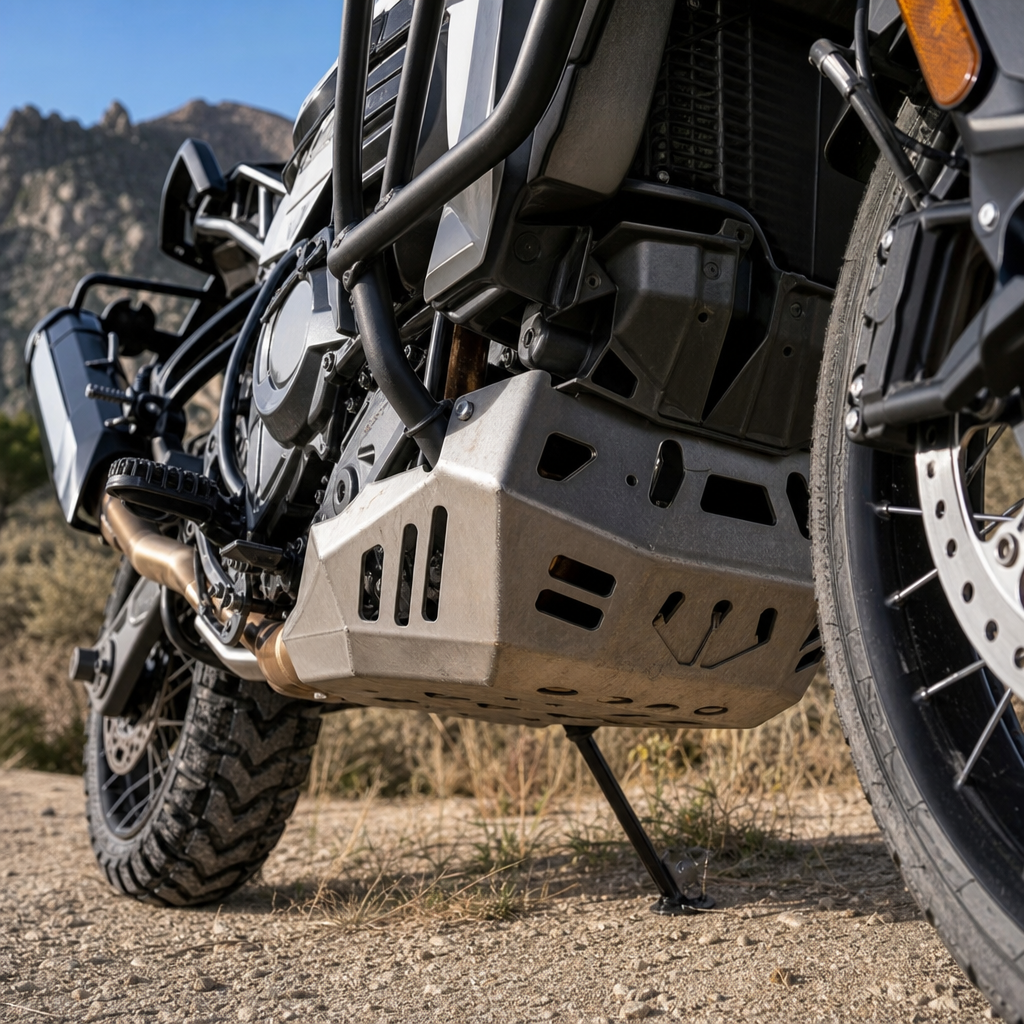
A correct skid plate for the 2026 Pan America should cover more than the drain plug area. At minimum, it needs to shield the lower sump casting, front underside impact zone, lower exhaust crossover exposure where applicable, and the edges most likely to take a glancing blow during a rut exit or ledge drop. Side coverage matters because many impacts are not perfectly vertical. A sliding rock can strike the lower side of the engine or the transition between the plate base and wall. Better designs include formed side flanges, front kick-up geometry, and enough rearward extension to prevent debris from hammering vulnerable lower cases.
Coverage alone is not enough. The plate should manage impact energy. In practice that means formed bends, bead rolls, gussets, and mounting architecture that spread the load. Flat sheet metal without reinforcement tends to drum, flex, and concentrate stress around bolt holes. By contrast, a well-designed 4 mm or 5 mm aluminum plate can outperform a thicker but poorly formed design because shape adds stiffness. Some premium systems use welded corners and replaceable brackets so a severe hit damages a sacrificial part instead of the engine mount interface. That is the kind of engineering riders should reward.
Material, thickness, and mounting: the decisions that actually matter
Most Pan America 1250 skid plates are aluminum, steel, or high-density polymer composites. Aluminum is the common sweet spot because it offers good impact resistance, manageable weight, corrosion resistance, and easy forming. In this class, 5052 and 6061 alloys are frequently used; 5052 generally forms better, while 6061 offers strong structural characteristics but can be less forgiving in sharp bends. Steel plates can be extremely durable but usually add unwanted mass low on the bike, and they may resonate differently. Polymer systems slide well over obstacles and reduce reflected noise, yet they can gouge, deform under heat, or offer less confidence for repeated hard strikes depending on design.
Thickness numbers need context. A 3 mm aluminum plate may be adequate for light gravel use if it has strong ribbing and broad mounting. For repeated rock contact, 4 mm is a more credible baseline, and 5 mm can make sense for aggressive travel where impact frequency is high. Heavier is not automatically better. An overly thick plate with poor isolation can transmit more force into mounts and may amplify vibration. The mounting system often matters more than the extra millimeter. Rubber isolation, shouldered spacers, slotted service access, and brackets that tie into strong points are signs of a mature design. If a manufacturer cannot explain load paths, that is a warning sign.
| Feature | Light Gravel Setup | Mixed ADV Travel | Rocky Technical Use |
|---|---|---|---|
| Material | Aluminum or polymer | Aluminum | Reinforced aluminum or steel-aluminum hybrid |
| Typical thickness | 3 mm | 4 mm | 4–5 mm |
| Coverage focus | Sump and front splash zone | Sump, sides, front kick-up | Deep front, sides, rear extension |
| Priority | Weight and easy service | Balanced protection | Maximum impact management |
Fitment, cooling, and service access on the 2026 Pan America
The best skid plate is the one you leave on because it works with the motorcycle’s normal service life. On the Pan America, cooling and maintenance must be part of the buying decision. The RevMax engine generates substantial heat, and while the primary cooling system is not under the sump, the lower engine area still benefits from airflow management. A plate that hugs too tightly without venting or exit paths can trap heat and collect mud. Good designs provide relief around hot zones, drainage holes for water and silt, and enough spacing to avoid constant contact with the engine cases. Riders in desert climates or slow technical terrain should care about this more than occasional weekend gravel riders.
Service access is equally important. Oil changes, inspections, and cleaning should not require a complete wrestling match with multiple thread-lock-coated fasteners. The strongest aftermarket designs typically include drain access ports or removable panels, although ports must be large enough to avoid oil mess and positioned so they do not weaken a critical strike zone. I prefer simple full-removal systems if removal takes only a few minutes and the mounting hardware is robust. Quick service encourages regular inspection, and inspection catches cracked welds, loose mounts, and trapped damage before a long trip.
How protection interacts with ergonomics and performance recipes
This hub is about more than armor. On the Pan America 1250, every protection part changes the riding recipe. A heavy skid plate shifts mass low, which can help planted feel, but it can also slightly slow transitions and add effort during recovery from a lean on loose surfaces. Plate width can affect how boots brush the bike when dabbing. The lower profile can influence how the bike slides over trail features versus hanging up. Even reflected mechanical noise matters, because some plates bounce engine and valvetrain sound back toward the rider, making the bike feel harsher than it is. I have tested setups where adding thin adhesive damping strips or isolators made long highway transfers far less fatiguing.
Suspension setup is part of this recipe too. If the bike is undersprung for the rider and luggage, the skid plate will work harder because bottoming becomes more frequent. Correct sag, damping, and preload reduce impact frequency before the plate ever gets involved. Ergonomically, riders who stand well, keep elbows relaxed, and unweight the front over ledges strike the plate less often. That is why model-specific recipes should connect hardware with technique. The right plate protects the bike; the right setup reduces the need for protection.
Buying criteria, brand evaluation, and what to avoid
When comparing Pan America 1250 skid plates, ignore marketing adjectives and look for five concrete things: material specification, thickness, mount design, service procedure, and documented real-world use. A reputable manufacturer will name the alloy or composite, state thickness clearly, show underside photos, and explain whether the system mounts to frame points, crossmembers, or dedicated brackets. Look for hardware quality such as zinc-nickel or stainless fasteners where appropriate, but also confirm that dissimilar-metal issues are addressed with coatings, washers, or inserts. Torque specs and installation instructions should be easy to obtain. If the only selling point is appearance, move on.
Avoid plates that rely on flimsy front tabs, expose the sides of the sump, or require removing crash bars for routine service unless the entire protection ecosystem was designed together. Also be cautious with very rigid mounts that have no allowance for vibration or slight chassis movement. Failure often starts at the mount, not the plate center. Reviews are useful, but the best reviews include photos of actual impacts, notes about noise, and comments after several thousand miles, not just unboxing impressions. As the Harley-Davidson sub-pillar hub for model-specific ergonomics and performance recipes, this article should guide every downstream choice: protection, rider fit, luggage, suspension, and terrain all need to work as one system. Start with the sump because it is vulnerable, expensive, and mission-critical. Then build the rest of the Pan America recipe around real use, not catalog fantasy. Measure your terrain honestly, choose a plate with engineered coverage and sensible service access, and inspect it regularly. If you are outfitting a 2026 Pan America 1250 now, use this guide as the baseline, then continue into the related Harley-Davidson setup articles to refine your full adventure build with confidence and fewer costly surprises on the trail.
Frequently Asked Questions
Why is the skid plate so important for the 2026 Harley-Davidson Pan America 1250 and its RevMax sump?
The skid plate is critical because the 2026 Harley-Davidson Pan America 1250 uses the RevMax engine as a stressed member, and the sump area underneath is one of the most exposed and vulnerable components when the bike leaves smooth pavement. In adventure riding, the lower engine region is routinely threatened by sharp rocks, broken trail debris, ledges, ruts, and unexpected bottom-outs. A properly designed skid plate acts as the sacrificial shield between that terrain and the sump, helping absorb, spread, and deflect impact before it reaches expensive engine components.
That matters in real-world terms. A damaged sump is not just a cosmetic issue; it can lead to oil loss, cracked housings, compromised sealing surfaces, and potentially catastrophic engine failure if the motorcycle is ridden after impact. Even a moderate strike that does not immediately strand the rider can create stress fractures or subtle leaks that become major problems later. On a bike built to bridge highway touring and legitimate off-pavement use, sump protection is not an accessory afterthought. It is a foundational part of making the machine reliable in the environment it is meant to handle.
For Pan America owners, confidence is a big part of the equation. With a strong skid plate in place, riders are more willing to tackle rocky access roads, uneven two-track, and trail obstacles without constantly worrying about what is happening under the bike. The best setup preserves ground clearance as much as possible, mounts securely, and is engineered to manage impact loads intelligently rather than simply covering the underside with metal. In that sense, skid plate protection is less about decoration and more about risk management, durability, and preserving the core mechanical integrity of the 2026 RevMax platform.
What makes a good skid plate “recipe” for the Pan America 1250 instead of just any plate that fits?
A good skid plate recipe is a combination of material choice, coverage area, mounting strategy, serviceability, and real impact performance. Fitment alone is not enough. Many plates may physically bolt to the motorcycle, but the better question is whether they truly protect the RevMax sump and surrounding vulnerable zones under adventure riding conditions. A well-thought-out recipe starts with sufficient coverage under the sump and forward-facing lower engine area, then extends attention to the sides where glancing hits, roost, and edge strikes can still do damage.
Material is part of that formula, but not the entire story. Aluminum remains popular because it offers a strong balance of impact resistance, manageable weight, corrosion resistance, and field-proven durability. Thickness matters, but shape and reinforcement often matter just as much. A properly formed plate with strategic bends, gussets, and load-distribution features can outperform a flatter, heavier design that lacks structural refinement. Some riders assume thicker always means better, but a skid plate that is too rigid, too heavy, or poorly mounted can transfer impact forces into places you do not want them going.
Mounting strategy is where the recipe becomes truly serious. The best Pan America skid plates are engineered so impact loads are distributed through robust attachment points and support structures rather than concentrated into weak spots. This is especially important on a modern adventure bike where under-engine packaging is tight and every mounting location has consequences. A quality plate should stay secure under repeated vibration and hits, avoid creating noise or resonance issues, and be designed with enough precision that it does not interfere with suspension movement, exhaust routing, or routine maintenance access.
Finally, serviceability is often overlooked. A smart skid plate recipe allows for oil changes, inspection, and cleaning without turning basic maintenance into a frustrating teardown. Adventure riding means mud, grit, and water will accumulate, so drainage and cleanout considerations also matter. In short, the right recipe is not just “metal under the engine.” It is a protective system designed specifically around the Pan America 1250’s geometry, use case, and the practical realities of keeping the 2026 RevMax sump safe over thousands of miles.
What features should riders look for when choosing a skid plate for maximum sump protection on the Pan America 1250?
Riders should start by looking at coverage, because the primary mission is to protect the 2026 RevMax sump from direct impact and sliding contact. A strong skid plate should shield the lowest and most exposed underside areas while also offering useful front and side protection. Forward coverage helps when the bike contacts rocks or ledges head-on, while side wrap can reduce damage from oblique strikes and thrown debris. Plates that leave obvious gaps around critical lower-engine areas may look rugged but can still expose the sump to exactly the kind of impact that causes expensive failures.
Next, examine the construction quality. Good welds, clean bends, reinforced corners, and a shape that encourages the bike to slide over obstacles instead of hooking onto them all make a difference. A plate should not be a floppy panel. It should feel purpose-built, with enough stiffness to handle impacts but enough engineering intelligence to distribute force effectively. If the product includes replaceable wear points, internal bracing, or thoughtfully formed contours around vulnerable sections, those are strong signs the manufacturer understands actual off-road use rather than just visual styling.
Mounting hardware and bracket design deserve close attention. A skid plate is only as good as the structure that holds it in place. Riders should look for hardware that is substantial, corrosion-resistant, and designed to stay tight under vibration and repeated impacts. Isolation systems or well-designed spacers can also help control noise and reduce unwanted metal-on-metal resonance. At the same time, the system should not rely on questionable attachment points that may become the weak link during a hard hit. The goal is secure protection without creating a new failure point elsewhere on the motorcycle.
It is also wise to consider practical ownership details. Can you access drain points or remove the plate without excessive labor? Does it trap mud and heat, or is there sensible provision for drainage and airflow? How much weight does it add, and is that weight positioned in a way that preserves the bike’s balance? Does it integrate cleanly with crash bars or other protection accessories? The best skid plate for the Pan America 1250 is one that protects the sump decisively while still supporting routine maintenance, long-distance travel, and the broader adventure-touring mission of the bike.
Can a skid plate prevent all damage to the RevMax sump, or are there limits to what it can do?
No skid plate can guarantee total invincibility, and it is important to be realistic about that. Even an excellent skid plate is a defensive component, not a magic barrier. Its job is to dramatically reduce the chances of sump damage by absorbing impacts, deflecting debris, and spreading load in a controlled way. In many scenarios, that is exactly what saves the engine from a trip-ending or wallet-draining incident. But there are still limits based on speed, angle of impact, obstacle size, rider line choice, bike weight, and how the plate is mounted.
For example, a low-speed strike against a loose rock is very different from slamming the full weight of a loaded adventure bike onto a sharp ledge at pace. The skid plate may survive both, but the forces involved can be radically different. In extreme cases, the impact energy can exceed what the plate, brackets, or mounting points were designed to handle. That does not mean the skid plate failed in concept; it may still have prevented much worse damage. Protection systems are about mitigation, not absolute immunity.
Rider behavior also plays a role. A skid plate works best as part of a complete protection mindset that includes line selection, suspension setup, tire choice, and speed management in rough terrain. If the bike is regularly ridden through terrain that causes repeated hard bottoming, even high-quality armor is being asked to manage conditions at the edge of its design envelope. Periodic inspection is equally important. After major strikes, owners should check the plate, hardware, and surrounding areas for dents, looseness, cracks, or evidence that the impact has transferred force elsewhere.
The right takeaway is this: a well-designed skid plate is one of the best investments a Pan America 1250 owner can make to protect the 2026 RevMax sump, but it should be treated as essential protection rather than limitless protection. It raises the bike’s survivability significantly, helps preserve confidence in rough terrain, and often turns what could have been serious mechanical damage into a manageable scrape or dent. That is exactly why choosing the right plate and using it intelligently matters so much.
How should a Pan America 1250 owner install, inspect, and maintain a skid plate for long-term protection?
Installation should begin with the manufacturer’s instructions, the correct hardware, and a clean understanding of where the plate mounts and how load is meant to be distributed. This is not a component to rush. A skid plate that is misaligned, unevenly torqued, or fitted with substituted hardware can rattle, loosen, interfere with nearby components, or provide less protection than intended. Before final tightening, it is smart to confirm clearances around the exhaust, engine cases, and any crossmembers or brackets. If threadlocker is specified, use the correct type and amount, and always torque fasteners to the recommended values rather than guessing.
After installation, owners should perform a short shake-down inspection. Ride