The 2026 Road Glide 3 de Dion bushing recipe is the practical maintenance and setup plan that keeps this three-wheeled Harley-Davidson feeling controlled, quiet, and comfortable deep into 2027. On the Road Glide 3, the de Dion rear suspension layout uses a transverse tube and related mounting points to manage wheel movement while preserving alignment, and the bushings in that system absorb vibration, limit unwanted deflection, and maintain predictable handling. When riders talk about ride quality, they usually mean several things at once: impact harshness over sharp bumps, body control in sweepers, steering calmness in crosswinds, driveline smoothness during throttle transitions, and the absence of clunks, squeaks, or rear-end wiggle. Bushings influence all of those. I have seen trikes that looked mechanically sound still feel unsettled because the rear bushings had hardened, shifted, or been torqued in the wrong loaded position after service. That is why a “recipe” matters. It is not a single part number or magic upgrade. It is a repeatable sequence covering inspection, material choice, torque discipline, alignment checks, tire pressure verification, load assumptions, and post-installation evaluation. For Road Glide 3 owners, this subject matters because the machine’s mission is long-distance comfort with touring stability, and small chassis errors become obvious on a heavy reverse trike carrying passengers, luggage, and accessory weight. If you want 2027 ride quality to match or improve on 2026 delivery-day feel, the de Dion bushing system is one of the highest-leverage service points in the entire platform.
In model-specific ergonomics and performance recipes, the goal is always to tune the machine around the way a specific Harley-Davidson is built rather than applying generic trike advice. The Road Glide 3 has its own geometry, weight distribution, frame rigidity, steering effort, floorboard relationship, seat height, and fairing mass. That means the same bushing compound, preload assumption, or torque sequence that works on another trike may not produce the best result here. A proper hub article should answer the central owner questions directly: what parts matter most, how do you diagnose wear before it becomes a handling complaint, which adjustments protect comfort without dulling control, and how should this topic connect to tires, shocks, alignment, rider fit, and cargo habits. The de Dion bushing recipe sits at the center of those decisions because it links structure to comfort. Done correctly, it reduces rear steer effects, preserves tire contact consistency, and lowers fatigue on long rides. Done poorly, it can make the Road Glide 3 feel busy, vague, or noisy even when major components are technically within spec.
What the de Dion bushing system does on a Road Glide 3
On a reverse trike such as the Road Glide 3, the rear suspension has to carry significant mass while resisting lateral and torsional inputs generated by two rear contact patches. The de Dion arrangement keeps wheel relationship more consistent than a loosely controlled live axle setup, but it depends on compliant mounting elements to balance isolation with control. Those mounting elements are the bushings. In plain terms, bushings are engineered cushions placed between metal parts. They allow a measured amount of movement, filter noise and vibration, and prevent metal-to-metal shock transfer. On the Road Glide 3, they help the rear assembly move through suspension travel without introducing excess slop. That matters because too much compliance can create delayed response and instability, while too little can transmit harshness into the frame and seat.
From service experience, the most common misunderstanding is assuming bushings are either good or bad only when visibly torn. In reality, ride quality often degrades earlier through compression set, hardening from age and heat, bond separation, or improper tightening while the suspension is hanging. A bushing can look acceptable at a glance yet still hold the rear structure in a preloaded state that changes the way the trike settles on the road. This is why owners should think in terms of system health rather than isolated replacement. A useful recipe includes bushing condition, fastener integrity, pivot freedom, shock function, tire state, and frame-to-suspension alignment.
The maintenance recipe that preserves 2027 ride quality
The most reliable recipe begins with baseline measurements before any parts are changed. Record tire pressures cold, rear tire brand and tread depth, shock settings if adjustable, total accessory load, and rider-plus-passenger weight assumptions. Then inspect the rear suspension unloaded and loaded. Look for off-center bushing sleeves, cracked rubber, rust trails at bonded interfaces, witness marks showing contact where none should occur, and asymmetrical ride height side to side. If the trike has developed a new clunk on throttle pickup, a wag over expansion joints, or extra steering correction in sweepers, note the exact conditions. Precision here saves guesswork later.
Next, confirm that any replacement bushings match the intended use. For a touring-focused Road Glide 3, original-equipment-style bonded rubber usually delivers the best balance of compliance, noise isolation, and long-distance comfort. Higher-durometer aftermarket materials can sharpen response, but they may also raise noise, vibration, and harshness. On a heavy touring trike, that tradeoff is not theoretical; riders often feel it through the seat base, passenger backrest, and floorboards within the first fifty miles. If the machine routinely carries a trailer or maximum luggage, a slightly firmer option may be justified, but it should be chosen as part of a full package with shock and tire evaluation, not as a standalone fix.
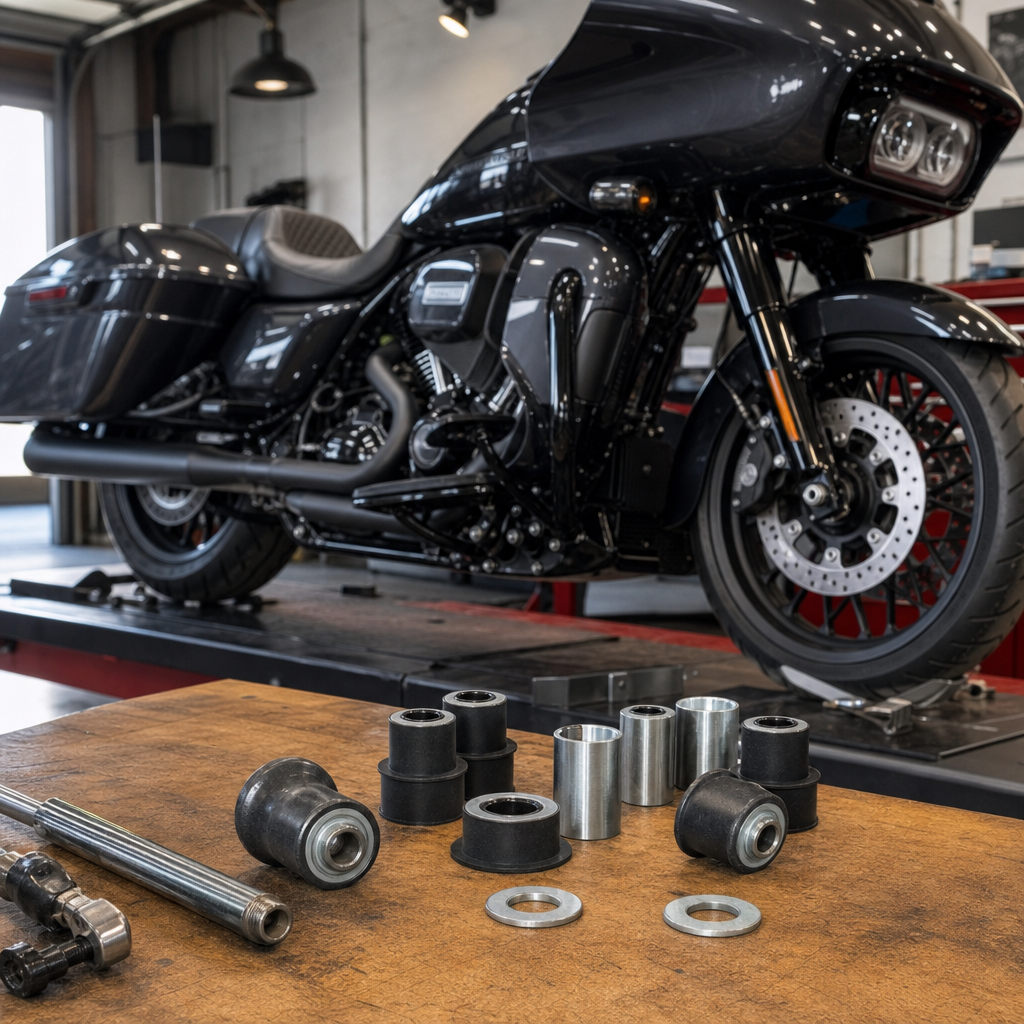
The installation sequence matters as much as the parts. Support the suspension properly, clean all mounting bores, inspect sleeves and bolts for wear, and replace any fastener that shows stretching, corrosion, or damaged threads. Press bushings squarely to avoid twisting the bond. Most important, final torque should be applied with the suspension at normal ride height or simulated loaded position, not with the assembly fully drooped. This single detail prevents trapped torsional preload in bonded rubber bushings. In the workshop, I have corrected harsh-riding trikes simply by loosening and re-torquing pivot points at loaded height after an earlier install was done in the air.
| Recipe Step | What to Check | Why It Affects Ride Quality |
|---|---|---|
| Baseline setup | Cold tire pressures, tread depth, load, shock setting | Establishes whether the complaint is chassis-related or basic setup |
| Bushing inspection | Cracks, hardening, sleeve shift, bond separation | Worn bushings add noise, harshness, and rear-end wander |
| Hardware review | Bolts, sleeves, washers, bore condition | Loose or worn hardware changes alignment and introduces clunks |
| Loaded-height torque | Final tightening at normal ride position | Prevents binding and false spring effect in bonded rubber |
| Post-service road test | Straight tracking, bump response, throttle transitions | Confirms the repair improved comfort and control together |
Ergonomics: why chassis bushings affect rider comfort more than most owners expect
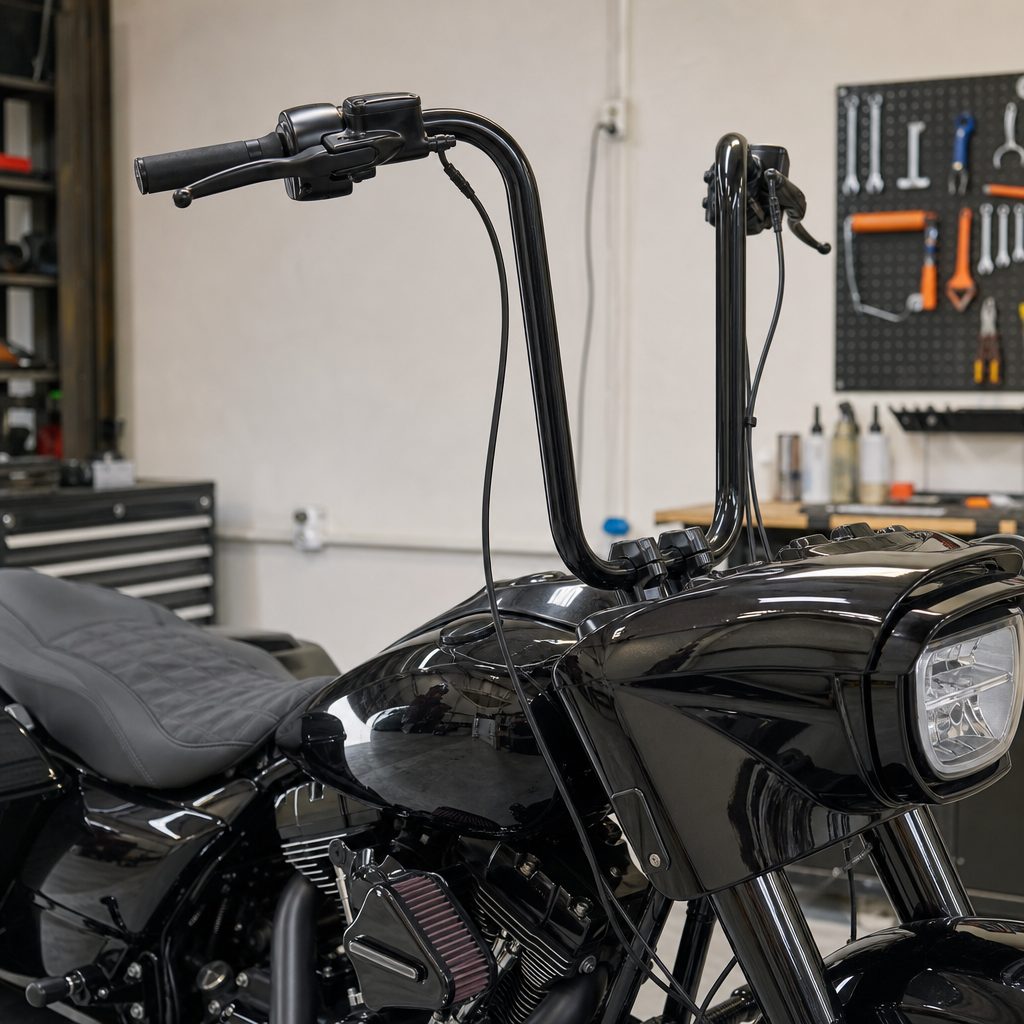
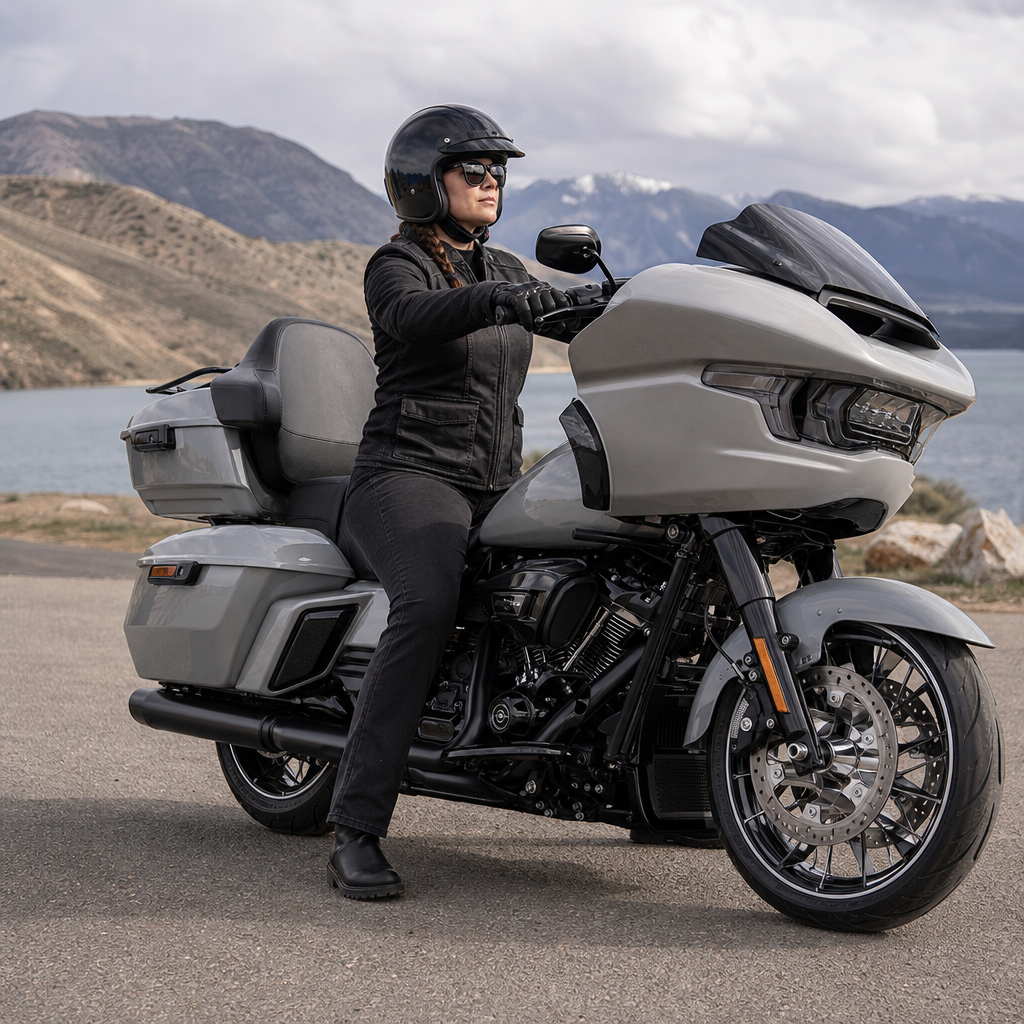
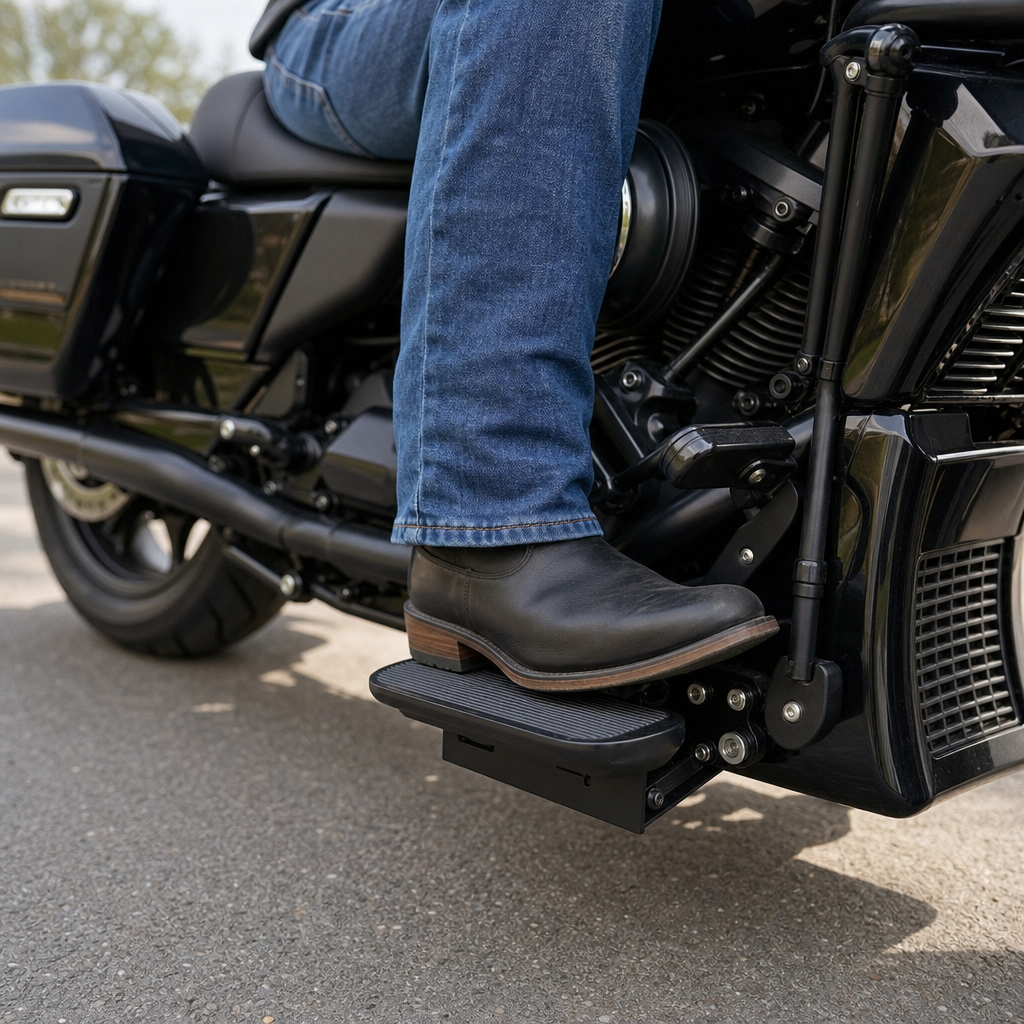
Ergonomics on a Harley-Davidson trike are not limited to bar reach, seat foam, and floorboard position. They also include how vibration, impact loads, and steering corrections reach the rider over time. The Road Glide 3 places the rider in an upright touring posture with substantial support from the seat and lower body. That posture is comfortable only when the chassis is calm. If the de Dion bushings are too stiff, too worn, or bound from incorrect installation, the resulting inputs travel directly into the contact points the rider uses all day. A slight rear axle shimmy becomes a constant handlebar correction. A sharp edge that should be muted becomes a hit through the seat pan. The passenger notices it too, often before the rider does.
This is where model-specific recipes become valuable. On the Road Glide 3, a rider with a taller torso and more weight on the seat may prefer the plushness of fresh OE-style rubber bushings paired with carefully set tire pressures and fully healthy shocks. A lighter solo rider who mostly runs unloaded may perceive excessive compliance if rear tires are overinflated or if bushings have aged unevenly side to side. In other words, owners should not isolate ergonomics from performance. The best ride quality recipe is the one that keeps the trike settled enough that the rider’s body is not constantly making micro-corrections.
Performance outcomes: handling, tire wear, and confidence in real use
When the de Dion bushing system is right, the Road Glide 3 tracks cleanly, takes a set in corners without a delayed rear reaction, and remains composed over patched pavement. Throttle application feels smoother because the rear structure is not shifting before load reaches the tires. Braking feels more linear because the chassis is not adding secondary motion. These improvements are subtle in a parking lot and obvious on a 300-mile day. Riders usually report that the trike feels less busy, especially on crowned roads and bridge joints.
There is also a measurable maintenance payoff. Excess rear movement can contribute to irregular tire wear patterns, especially when combined with pressure errors or alignment drift. While bushings are rarely the sole cause of tire wear, they can magnify scrubbing and heat. Keeping the system healthy helps preserve the expensive rear tires and reduces the temptation to chase comfort problems with pressure adjustments alone. In practice, if a Road Glide 3 owner says the machine suddenly needs more steering input and the rear tires are wearing unevenly despite correct inflation, bushing inspection belongs near the top of the checklist.
Confidence is the final performance outcome, and it matters most. Touring riders do not evaluate chassis health with data logs; they judge it by whether the trike feels trustworthy in gusts, on rough freeway sections, and with a passenger aboard. A good de Dion bushing recipe builds that trust because it removes ambiguity. The machine responds the same way every time, which reduces fatigue and allows the rider to focus on line choice, traffic, and distance instead of constant correction.
How this hub connects to the wider Harley-Davidson setup strategy
As a hub for model-specific ergonomics and performance recipes, this topic should connect owners to the broader Harley-Davidson maintenance ecosystem. The de Dion bushing article does not replace guidance on rear tire selection, shock tuning, steering geometry, or passenger-load setup; it organizes them. Bushings work with all of those variables. If rear shocks are weak, fresh bushings cannot restore control by themselves. If tire pressures are set by guesswork instead of load and manufacturer guidance, even perfect bushings will not deliver ideal comfort. If luggage is packed high and asymmetrically, the rear suspension will communicate that imbalance no matter what material is installed.
For that reason, the smartest maintenance path is sequence-based. Start with tires and pressures, verify suspension hardware and bushing condition, confirm shock health, then evaluate alignment and load distribution. This mirrors the way experienced technicians diagnose touring trikes in the real world. It also prevents expensive parts swapping. The owner who understands this hub topic will make better decisions across the whole Harley-Davidson platform, whether the next task is seat fit, handlebar reach, rear damping, or long-distance passenger comfort.
Common mistakes, service intervals, and when to act
The biggest mistakes are ignoring early symptoms, mixing mismatched bushing materials side to side, and tightening suspension pivots at full droop. Another common error is blaming every ride-quality complaint on shocks when the real issue is bushing bind or sleeve wear. Owners should inspect the rear suspension visually at every tire service and perform a deeper bushing evaluation whenever handling changes, unusual noise appears, or the trike has seen heavy seasonal mileage on rough roads. Heat cycles, ozone, contamination, and static load all age rubber, even on lower-mileage machines.
Act sooner if the Road Glide 3 develops rear clunks, abrupt harshness over repetitive bumps, visible cracking around bonded areas, or a new tendency to steer from the rear under throttle lift. Those symptoms rarely improve on their own. Replacing bushings before collateral wear develops is cheaper than waiting for elongated bores, damaged fasteners, or accelerated tire loss. The best 2027 ride quality comes from preventive correction, not from chasing a fully developed problem after comfort and confidence have already dropped.
The core lesson is simple: the 2026 Road Glide 3 de Dion bushing recipe is not about chasing novelty, but preserving the balanced touring feel Harley-Davidson intended. Bushings are small parts with outsized influence because they govern how the rear structure carries load, isolates vibration, and maintains alignment under real riding forces. When owners inspect them carefully, choose materials that match touring use, torque hardware at loaded height, and evaluate results with a disciplined road test, the payoff is immediate: smoother impact control, calmer tracking, more even tire behavior, and lower rider fatigue. As the central hub for model-specific ergonomics and performance recipes, this topic also points to the larger truth that comfort and handling on a Road Glide 3 are inseparable systems, not separate checklists.
If you want your trike to feel right through 2027, start with the de Dion bushings and build outward in the correct order. Verify pressures, inspect hardware, service worn components, and document how the machine responds before and after changes. That method saves money, protects confidence, and keeps the Road Glide 3 performing like a serious touring Harley-Davidson instead of a machine slowly adapting to wear. Use this hub as your starting point, then apply the same recipe mindset to shocks, tires, rider fit, and load management for a better ride every mile.
Frequently Asked Questions
What does the “2026 Road Glide 3 de Dion bushing recipe” actually mean?
The phrase “de Dion bushing recipe” refers to the full maintenance and setup approach used to keep the 2026 Harley-Davidson Road Glide 3 riding the way it should as mileage adds up and the calendar moves into 2027. It is not just about replacing one worn rubber part. On a de Dion rear suspension, the transverse tube, mounting points, hardware, and bushings all work together to control rear wheel movement, reduce harshness, and preserve alignment under load. The bushings are especially important because they isolate vibration, absorb small impacts, and limit unwanted side-to-side or fore-aft deflection that can make a trike feel loose, noisy, or less predictable.
In practical terms, the “recipe” includes inspecting the condition of the bushings, checking for cracking, compression set, tearing, or oil contamination, confirming that all related fasteners are torqued correctly, and making sure the surrounding suspension parts are not introducing stress that shortens bushing life. It also includes evaluating ride symptoms. If the rear feels busier over sharp edges, if the chassis develops clunks or squeaks, or if handling starts to feel less settled in sweepers and during braking, the bushings may be part of the cause. A good recipe is systematic: inspect, measure wear, replace in matched sets when needed, use quality parts, and verify the suspension is loaded and tightened according to service procedure. That disciplined approach is what helps preserve ride quality, quiet operation, and confidence well into 2027.
How do worn de Dion bushings affect ride quality on a 2026 Road Glide 3?
Worn de Dion bushings can change the entire character of how a Road Glide 3 feels on the road. When the bushings are healthy, they help the rear suspension do its job without transmitting every vibration and impact directly into the chassis. They keep motion controlled, support alignment, and allow the suspension to move through its travel in a predictable way. As they age, harden, crack, or deform, they lose their ability to isolate noise and control deflection. The first signs are often subtle: a slightly harsher ride over expansion joints, a faint knock from the rear, or a sense that the back of the trike is not as composed over uneven pavement.
As wear progresses, the symptoms usually become easier to notice. You may feel more vibration through the seat and chassis, especially at speeds where the machine previously felt smooth. The rear end can sound noisier over potholes or driveway transitions. In handling, the trike may feel less planted in long curves, less settled during quick lane corrections, or more reactive when carrying cargo or a passenger. Because the de Dion layout is designed to maintain controlled wheel relationship and stable behavior, excessive bushing compliance undermines that advantage. Instead of the suspension absorbing inputs cleanly, it allows extra movement where you do not want it, which can reduce comfort and driver confidence. That is why bushing condition matters so much if your goal is preserving 2027 ride quality rather than merely keeping the machine operational.
What inspection and maintenance steps are most important for keeping the de Dion bushings in good condition through 2027?
The most important step is consistent inspection rather than waiting for a major symptom to appear. Start with a visual check of the bushings and their surrounding mounts. Look for surface cracking, splits, distorted shapes, off-center sleeves, rust staining around the bushing interfaces, and any signs that the rubber or elastomer has begun separating from its bonded surfaces. If the Road Glide 3 has been exposed to heavy heat, frequent rain, road salt, or chemical cleaners, inspect even more carefully because those conditions can accelerate deterioration. It is also wise to check for fluid contamination. Petroleum-based products can damage some bushing materials and shorten service life dramatically.
Next, pay close attention to operational symptoms. Listen for clunks, squeaks, or dull thuds from the rear suspension. Feel for increased vibration, a choppier ride, or changes in how the trike responds when loaded with luggage or a passenger. Then verify the basics that support bushing life: proper fastener torque, correct installation orientation, healthy shocks, and no excessive play in adjacent mounting points. If one part in the system is loose or worn, the bushings often end up carrying forces they were never meant to absorb. A smart maintenance plan also avoids piecemeal fixes. If one bushing is clearly worn and the matched side is aged the same amount, replacing both at the same time usually produces better balance and more consistent ride behavior. Finally, after any replacement, the suspension should be rechecked under proper load conditions so the bushings are not preloaded incorrectly. That detail alone can make the difference between long-lasting smoothness and early repeat wear.
Should you replace de Dion bushings proactively, or only after symptoms appear?
For most Road Glide 3 owners who care about preserving ride quality, proactive replacement is usually the better strategy once inspection shows meaningful aging or when mileage, use, and symptoms start lining up. Bushings rarely fail all at once. More often, they degrade gradually, and riders adapt to the decline without realizing how much smoothness and control has been lost. By the time obvious noise or handling inconsistency shows up, the machine may already have been operating with excess movement for a while. That can increase wear on related components and make the suspension feel older than it should.
That said, replacement should still be based on condition and use, not guesswork alone. A lightly used trike stored indoors and ridden mostly on smooth roads may keep its original bushings in acceptable condition longer than a heavily loaded machine that sees heat, rough pavement, and frequent touring miles. The best approach is to inspect regularly and decide before the bushings become severe enough to affect comfort, alignment control, and noise isolation. If your goal is maintaining 2027 ride quality rather than just getting through a season, acting at the early-to-moderate wear stage is often ideal. You preserve the composed feel of the chassis, minimize extra stress on related mounts and hardware, and avoid the gradual decline that makes a premium touring trike feel less refined than it should.
What else should be checked along with the de Dion bushings to maintain a controlled, quiet, and comfortable ride?
The de Dion bushings are central, but they are only one part of the full ride-quality equation. To keep a 2026 Road Glide 3 feeling controlled and comfortable into 2027, inspect the entire rear suspension environment. That includes the shocks, shock bushings, mounting bolts, brackets, wheel bearings, rear tires, and alignment-related components. A weak or unevenly performing shock can mimic bad bushings by allowing extra motion and impact harshness. Tire condition matters just as much. Incorrect pressure, cupping, uneven wear, or a mismatched set can create vibration, road noise, and twitchiness that riders sometimes blame on suspension parts. Even a perfect bushing setup cannot fully compensate for tired shocks or compromised tires.
It is also worth checking the frame-side mounting points and hardware condition, because looseness or wear there can produce the same clunks and instability that worn bushings do. Pay attention to passenger and cargo loads as well. Touring use puts different stresses on the rear structure than solo commuting, and setup should reflect that reality. If the machine is routinely carrying extra weight, suspension settings and inspection intervals should be adjusted accordingly. Finally, after servicing any part of the de Dion assembly, take the trike on a careful test ride over a variety of road surfaces. Listen for noise, evaluate straight-line stability, note behavior in sweepers, and feel how the rear responds to sharp impacts. That complete check confirms whether the bushing recipe is doing what it should: preserving the quiet, settled, confidence-inspiring ride that owners expect from a well-maintained Road Glide 3.