The Harley-Davidson Pan America 1250 invites a different kind of setup thinking than most adventure bikes because its luggage choices directly affect comfort, handling, passenger space, and how quickly the motorcycle can switch from weekday commuter to travel machine. In this guide, I use the phrase quick-release luggage recipe to mean a repeatable combination of racks, bags, mounting hardware, packing layout, and suspension adjustments that can be installed or removed fast without compromising stability. That matters on the Pan America 1250 because the bike spans several roles at once: pavement touring, gravel travel, daily transport, and light to moderate off-road exploration. A luggage system that feels excellent for one role can feel awkward or top-heavy in another.
Model-specific ergonomics and performance recipes are the practical settings and hardware combinations that make a particular motorcycle work for a specific rider and use case. On the Pan America, luggage is a core part of that equation. Side case width changes lane filtering and standing posture. Bag weight changes low-speed balance. Rack shape affects passenger heel room. Even the way a quick-release mechanism sits relative to the rear bodywork can change how easy it is to mount the bike with camping gear loaded. I have set up adventure motorcycles for long pavement tours and rough backcountry weekends, and the repeated lesson is simple: there is no universal best luggage, only the best recipe for your priorities.
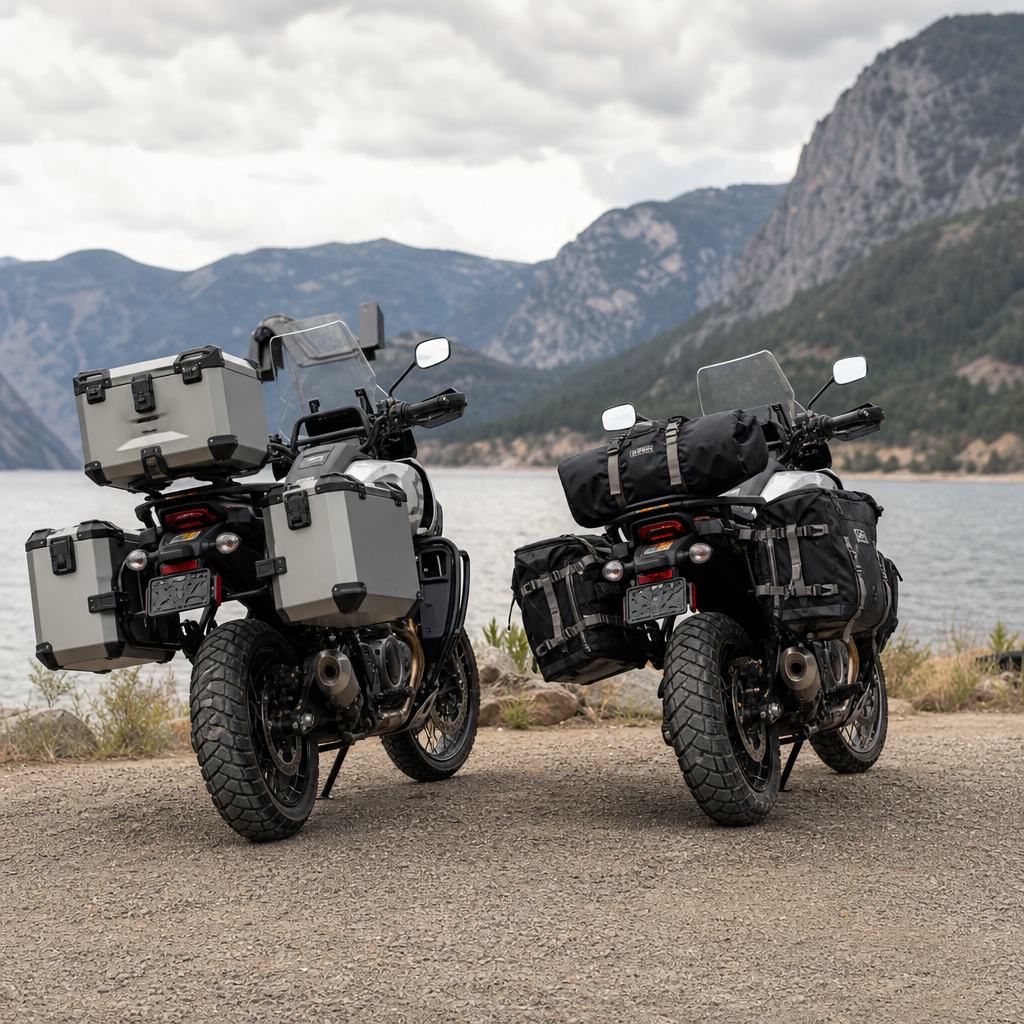
This article compares the factory Harley-Davidson quick-release luggage path with a Mosko Moto-based approach, then explains how each choice fits the broader Pan America ergonomics and performance picture. If you are trying to decide between OEM integration and a more modular soft-bag system, the answer depends on security needs, off-road risk tolerance, loading habits, and passenger use. The hub purpose of this page is to give you the decision framework first, then make it easier to branch into detailed setup articles on fit, suspension, wind management, and travel packing within the Harley-Davidson category.
What the factory Pan America luggage system does best
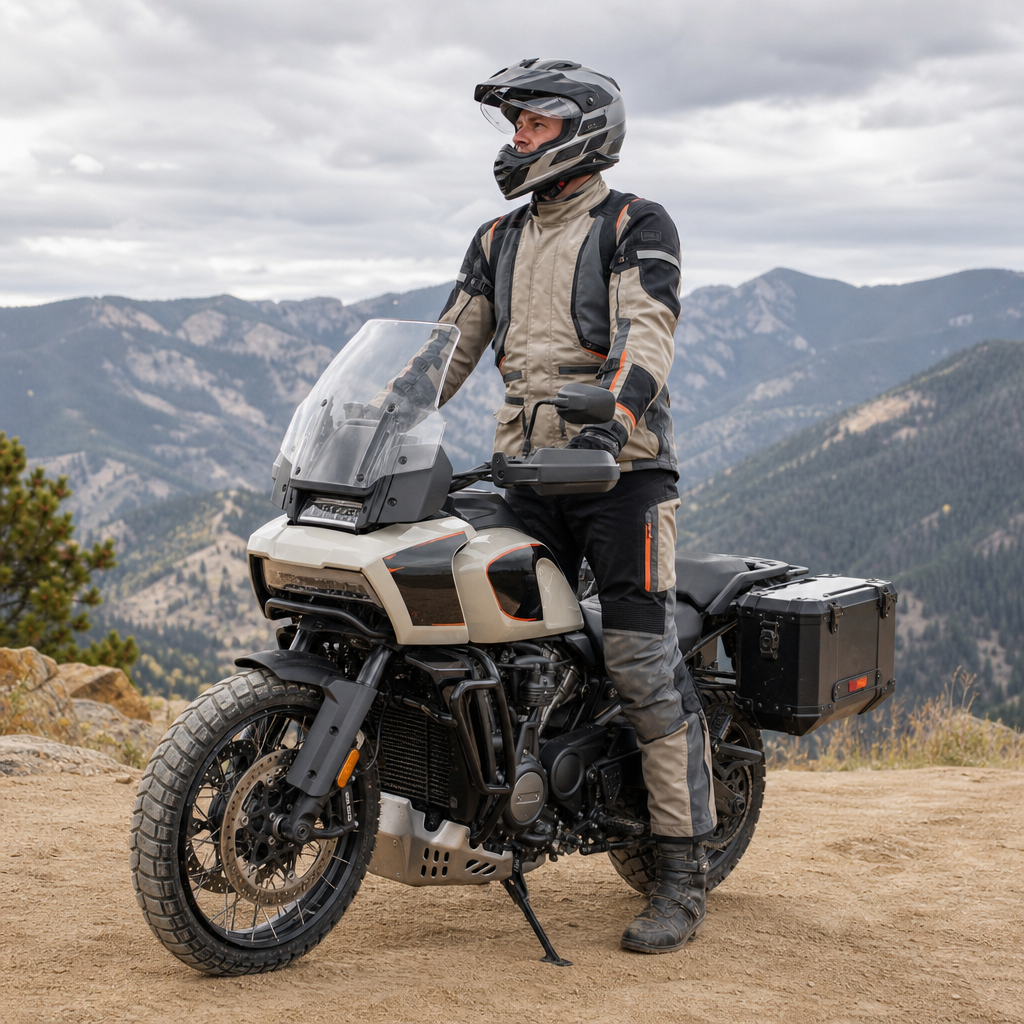
The factory Harley-Davidson luggage system for the Pan America 1250 and Pan America 1250 Special is designed around convenience, visual integration, and predictable street-touring use. In plain terms, it is made for riders who want hard cases that lock, detach quickly, and look like they belong on the motorcycle because they were engineered with the bike’s tail shape, passenger accommodations, and accessory ecosystem in mind. The strongest reason to choose factory luggage is seamless fit. The racks align tightly to the subframe, installation instructions are straightforward, and the overall package preserves a polished OEM finish that many owners value on a premium motorcycle.
Hard luggage also offers a clear advantage in theft deterrence and weather resistance. Lockable aluminum or composite cases protect laptops, camera bodies, tools, and urban parking loads better than most soft systems. For commuting, hotel-based touring, or road-biased adventure travel, factory side cases are usually the fastest path to “leave work, buy groceries, ride home” practicality. The quick-release behavior matters here: being able to remove a case and carry it inside simplifies travel days and reduces time spent unthreading straps. For many Pan America owners, that simplicity is worth the extra weight.
There are tradeoffs. Hard cases add width, and width changes rider behavior immediately. A wider rear profile affects lane splitting where legal, increases the chance of clipping rocks or posts off pavement, and makes dab recovery harder if a loaded bike starts to tip on uneven ground. Hard boxes also punish crashes differently. In a low-speed dirt fall, a rigid case can bend mounts, dent permanently, or transmit force into the rack and rear structure more directly than a soft bag. Ergonomically, the pannier corners can reduce freedom of movement when swinging a leg over, especially for shorter riders or anyone mounting from the left peg with camping gear strapped on top.
Where a Mosko setup changes the Pan America recipe
Mosko Moto occupies a different position in the adventure luggage market. Its systems are typically chosen by riders who prioritize modularity, off-road survivability, and packing flexibility over the polished lock-and-go simplicity of factory hard cases. On the Pan America, a Mosko recipe usually means a rack-compatible soft pannier system, a duffel or tail bag, and sometimes a tank bag, all configured to sit securely without excessive sway. The key difference is not just hard versus soft. It is also how the luggage interacts with body movement, crash energy, and route choice.
Soft panniers are usually lighter than metal hard cases and often compress inward when partially loaded, reducing perceived bulk. On rough trails, that lower injury risk matters. If your leg gets trapped in a dab or tip-over, a soft bag is generally less punishing than a square aluminum box. In repeated real-world use, I have found that riders who stand frequently and move their hips rearward off road often prefer soft luggage because it feels less like furniture bolted to the subframe. That freedom is especially relevant on the Pan America, whose chassis is capable enough that luggage decisions can either unlock or blunt the bike’s off-pavement strengths.
The compromise is convenience and security. Soft luggage usually takes longer to remove, longer to repack, and relies more heavily on proper strap routing and discipline. Some Mosko systems include quick-detach interfaces and robust mounting plates, but they still ask more from the rider than simply unlocking a hard case and lifting it off. Soft bags are also not equivalent to hard luggage for urban theft resistance. They can be made inconvenient to tamper with, but not truly secure. If your riding life includes office parking lots, city errands, or expensive electronics left unattended, this limitation should be weighted heavily.
Factory vs. Mosko: the practical comparison that matters
The fastest way to decide between factory Harley-Davidson luggage and a Mosko setup is to compare them by use case rather than brand loyalty. Riders often overfocus on capacity numbers and underfocus on how luggage changes the motorcycle’s behavior during the exact moments that define ownership: filtering through traffic, mounting up in boots, lifting the bike after a stall on a trail, loading groceries, packing rain gear, and checking into a motel after dark. Those moments reveal whether a luggage recipe is working.
| Decision factor | Factory quick-release luggage | Mosko-based setup |
|---|---|---|
| Best use case | Commuting, road touring, mixed travel with frequent stops | Backcountry travel, rough roads, riders prioritizing off-road resilience |
| Removal speed | Usually faster and simpler | Varies by mount; often slower with more steps |
| Security | Better due to locking hard cases | Lower; soft luggage resists weather better than theft |
| Crash behavior | More likely to dent or stress mounts | Usually more forgiving in low-speed falls |
| Weight and bulk | Typically heavier and visually wider | Often lighter and less intrusive when partly loaded |
| Passenger friendliness | Strong if designed around OEM grab space | Depends on rack width and bag placement |
If most of your miles are on pavement and you remove luggage frequently, the factory system is usually the better answer. If your route plans include ruts, sand, rocky two-track, or repeated drops, Mosko usually makes more sense. The decision gets more nuanced for riders who do both. In that middle ground, the right answer depends on whether you are optimizing for the ninety percent use case or the ten percent use case that carries the most consequence. A commuter can tolerate a heavier hard case. A rider crossing baby-head rocks should not ignore the penalty of rigid boxes.
How luggage changes Pan America ergonomics
On a Pan America 1250, ergonomics do not stop at bar risers, seat height, and footpeg position. Luggage changes the rider triangle indirectly by influencing how you get on the bike, how far back you can move, how the passenger sits, and how often you stand. That is why this page belongs in the model-specific ergonomics and performance recipes hub. For shorter riders, top-loaded tail bags can make the leg swing awkward enough that a previously comfortable motorcycle becomes annoying to mount. For taller riders, wide panniers can interfere with heel position during aggressive standing transitions.
Passenger ergonomics deserve equal attention. Factory systems tend to preserve predictable passenger hand access and foot clearance because they were designed as an integrated travel package. A soft-luggage setup can also work well, but only if the rack geometry keeps the front of the bag from crowding the passenger calf and only if strap routing does not obstruct grab handles. On long travel days, these details matter more than brochure capacity. A passenger who feels boxed in or constantly brushes straps will fatigue faster and move around more, which affects the bike’s stability.
There is also the issue of packing height. Heavy gear stacked high on the tail raises the center of gravity and exaggerates rearward weight transfer under acceleration. On the Pan America, that can make low-speed maneuvering feel more cumbersome, especially with a full fuel load. A good recipe keeps dense items low and close to the bike’s centerline: tools, spares, water, and cooking gear in lower side luggage; lighter compressible items like clothing in the tail bag. That packing logic improves both ergonomics and performance because the rider does not have to fight unnecessary pendulum effect.
How luggage changes performance, handling, and suspension setup
The Pan America platform is sensitive to load distribution in ways that riders notice immediately. Add ten to fifteen kilograms high and rearward, and steering response slows, front-end feedback softens, and the motorcycle can feel less planted entering paved corners. Add side weight unevenly, and low-speed balance becomes inconsistent during U-turns or technical climbs. This is not a flaw in the bike. It is normal chassis behavior. The recipe mindset matters because luggage should always be paired with suspension and preload decisions, not treated as an isolated accessory purchase.
On models equipped with semi-active suspension, riders still benefit from understanding basic setup principles. Auto-leveling and electronic adjustment can compensate for some load change, but they cannot erase poor weight placement. If a rider puts all heavy items in a top duffel, the bike may maintain ride height while still feeling top-heavy. With conventional luggage logic, the better move is to spread mass laterally and keep the heaviest pieces low. Tire pressure also matters. A loaded Pan America used for highway travel should run pressures appropriate to the load and tire manufacturer guidance; airing down for dirt only makes sense when terrain, speed, and carcass design justify it.
Braking and acceleration are affected too. Hard cases with square profiles can add aerodynamic drag and crosswind sensitivity at interstate speed, while soft bags often present a less abrupt side profile. In strong wind, either setup can create yaw effect, but wide metal panniers are generally more noticeable. During off-road riding, softer luggage can help the rider recover from mistakes because the bike carries less rigid mass outboard. That is why many experienced adventure riders accept the inconvenience of straps and dry bags: the riding benefit appears when the route becomes unpredictable.
Recommended Pan America luggage recipes by rider type
For an urban commuter and weekend road tourer, the best Pan America 1250 quick-release luggage recipe is usually factory side cases plus a compact tail solution only when needed. This keeps removal simple, protects valuables, and supports everyday practicality. Pair that with disciplined packing: lockable electronics and rain layers in the side cases, no permanent heavy tail load, and suspension settings matched to solo or two-up use. This rider values speed at the curb and confidence in parking lots more than ultimate trail forgiveness.
For a mixed-surface traveler who rides mostly pavement but wants real dirt-road capability, the strongest recipe is often hybrid. Use side luggage that can come off quickly and keep total volume moderate, then reserve the tail area for lightweight camping items only. Some riders will still prefer factory luggage here, but many find that a Mosko pannier setup gives enough convenience while improving confidence when the route deteriorates. The deciding factor is usually how often the bike sees genuine low-speed off-road risk rather than smooth gravel tourism.
For the backcountry-focused rider, a Mosko-based system is the clearer answer. Choose a rack and bag combination known to fit the Pan America securely, keep weight low, and avoid overpacking simply because the bike can carry it. Add abrasion protection where bags contact body panels, verify exhaust-side clearance carefully, and test the setup locally before a major trip. This rider should think in terms of crash management, standing mobility, and field repairability first. If you regularly ride terrain where a tip-over is expected rather than hypothetical, soft luggage is the more rational recipe.
Conclusion: choose the recipe that matches how the Pan America is really used
The central lesson of the Pan America 1250 quick-release luggage decision is that factory and Mosko options solve different problems, and the right choice becomes obvious once you evaluate your real riding pattern. Factory Harley-Davidson luggage is strongest where quick removal, integrated fit, lockable storage, and polished street-touring function matter most. A Mosko setup is strongest where off-road resilience, lighter feel, modular packing, and reduced crash penalty matter more than urban security and instant removal. Neither is universally better; each becomes excellent when matched to the correct use case.
As a hub for model-specific ergonomics and performance recipes, this page should help you think beyond catalog features. Luggage changes rider movement, passenger comfort, handling balance, wind response, and suspension demands. That is why the best luggage recipe is not just a bag choice. It is a whole-bike setup choice. Start by defining your primary mission, then build around it with honest attention to terrain, theft exposure, passenger needs, and loading discipline.
If you are setting up a Harley-Davidson Pan America 1250 now, map your riding into three categories—daily, touring, and off-road—then choose the luggage system that serves the most important category without creating avoidable compromises in the others. Use this hub as your starting point, then move into detailed Pan America setup guides for suspension, fit, wind protection, and travel packing to refine the motorcycle into a recipe that works every time.
Frequently Asked Questions
What does a “quick-release luggage recipe” mean for the Pan America 1250?
On the Pan America 1250, a quick-release luggage recipe is more than just picking a set of panniers. It is a repeatable system that combines the racks, cases or soft bags, mounting interface, packing strategy, and suspension setup into one practical formula that can be added or removed quickly. The point is not simply convenience in the garage. It is to make the motorcycle adaptable without creating new compromises every time you change the loadout.
For example, a solid luggage recipe answers several questions at once: what hardware stays on the bike permanently, what can be removed in seconds, how much weight sits high or wide, whether a passenger still has enough room, and whether the bike needs preload or damping changes when loaded. On a Pan America, that matters because the bike can feel very different when equipped for commuting, off-pavement travel, or two-up touring. A recipe gives you a known setup you can trust instead of improvising each time.
In practical terms, factory Harley-Davidson luggage typically favors a cleaner OEM fit, predictable installation, and hard-case convenience, while a Mosko-based setup usually emphasizes modularity, off-road resilience, and soft-luggage flexibility. So when riders compare factory versus Mosko, they are really comparing two different quick-release philosophies. One is often about simplicity and integrated fitment; the other is about adaptable packing and lighter-impact behavior when the terrain gets rough. The best recipe is the one that lets you switch roles fast without compromising comfort, handling, or day-to-day usability.
How does factory Harley-Davidson luggage compare with a Mosko setup for daily use and touring?
Factory Harley-Davidson luggage generally makes the strongest first impression if your priorities are seamless fitment, straightforward lock-and-go functionality, and an appearance that looks native to the Pan America 1250. OEM systems are usually attractive to riders who commute during the week and tour on weekends because the cases tend to be easy to open, secure, and remove, with minimal guesswork about compatibility. If you want a setup that feels integrated from the start and do not want to experiment with different rack and bag combinations, factory luggage is often the cleaner path.
Mosko, by contrast, usually appeals to riders who want a more configurable system. A Mosko setup can be tailored around trip length, terrain, and cargo type. Many riders like that they can run a lighter soft-luggage arrangement for mixed-surface travel, then change the bag sizes or add accessories as needed. For touring, that modularity can be a major advantage because the system can be refined around your actual packing habits rather than forcing you into fixed hard-case dimensions. It also tends to suit riders who value off-bike portability, dry-bag style organization, and the ability to cinch gear down tightly.
For pure daily use, factory luggage often wins on convenience and speed. Hard cases are easy for carrying work items, groceries, or a laptop, and they typically feel more secure when parked. For longer travel or rougher routes, Mosko often gains ground because soft luggage can be more forgiving, easier to compress when half full, and less punishing in a tip-over. The real decision comes down to your riding mix. If your Pan America spends most of its time as a commuter and road-tourer, factory luggage may feel more natural. If it regularly shifts between pavement, gravel, and longer adventure travel, Mosko’s flexibility can make it the more versatile recipe.
Which setup is better for comfort, handling, and passenger space on the Pan America 1250?
There is no universal winner, because comfort, handling, and passenger space are shaped by how the luggage carries weight as much as by the brand name on the bags. That said, factory hard luggage can be very strong for rider and passenger convenience because it often maintains a predictable shape and position on the bike. The passenger may benefit from a cleaner seating area and more consistent leg clearance if the cases are designed specifically around the Pan America’s rear structure. Hard luggage can also make packing more organized, which helps prevent awkward load placement that affects balance.
The tradeoff is that hard cases can add width and place weight farther outward, which can be felt during low-speed maneuvering, filtering through tight spaces, or riding technical sections. Mosko soft luggage often helps here because it can keep the system more compliant and, depending on the rack and bag combination, sometimes feel less intrusive in real-world movement. Soft luggage can also be packed in a way that centralizes mass more effectively, especially if heavy items are kept low and close to the bike. That can improve rider confidence and reduce the top-heavy sensation that some adventure bikes develop when overloaded.
Passenger space depends heavily on the exact rack, bag size, and rear seat strategy. A large duffel mounted too far forward will reduce passenger room no matter which brand you choose. In many cases, the best two-up recipe is the one that limits bulk on the pillion side of the bike, keeps the top load narrow and low, and avoids forcing the passenger into a cramped or forward-leaning posture. If passenger comfort is a top priority, factory luggage may offer an easier, more polished solution. If handling and route flexibility matter more, a carefully planned Mosko configuration can be excellent. The key is disciplined packing and proper suspension adjustment, because even the best luggage system feels bad when the load is placed poorly.
What should riders consider about racks, mounting hardware, and removal speed when comparing factory luggage to Mosko?
Removal speed is not just about how fast the bags come off. It is also about how much hardware remains on the bike and whether the leftover setup still looks tidy and functions well. Factory Harley-Davidson luggage often has an advantage here because the rack and case interface is typically engineered as one integrated system. That usually means fewer surprises in fitment, quicker attachment, and a more finished appearance when the cases are installed. In some cases, it also means less fiddling with strap tension, backing plates, or alignment points every time you swap configurations.
Mosko systems often involve more setup decisions at the beginning, especially if you are choosing the rack platform, wedge mounts, pannier frames, heat shielding, or rear duffel strategy separately. Once dialed in, though, they can become very efficient. Many riders build a Mosko-based recipe that allows the main bags to come off quickly while leaving a stable rack structure in place. The real advantage is that the hardware can support multiple bag sizes and trip types. So while the initial installation may be more involved than factory luggage, the long-term versatility can be significantly better.
It is also worth thinking about maintenance and failure points. Factory systems often reduce compatibility guesswork, but proprietary parts may limit how much you can customize. Mosko setups tend to invite customization, but that means you need to pay attention to bolt security, rack compatibility, clearance around exhaust and bodywork, and how straps or mounting points behave under vibration. If your goal is the fastest possible transition from stripped commuter bike to ready-to-travel machine, OEM may be the simplest route. If your goal is a repeatable, adaptable system you can refine over time for different travel styles, Mosko may be worth the extra planning.
How should suspension and packing layout be adjusted when switching between factory and Mosko luggage on the Pan America 1250?
Suspension and packing layout are where a good luggage recipe becomes a great one. The Pan America 1250 responds noticeably to changes in load, so riders should not treat luggage as an accessory that has no effect on the chassis. Regardless of whether you run factory hard luggage or a Mosko soft setup, the basic rule is the same: keep heavy items low, close to the center of the bike, and balanced side to side. Tools, water, and dense gear should live in the lowest practical position. Light, bulky items should go higher or farther rearward if necessary. This one habit improves handling more than most riders expect.
With factory hard cases, the temptation is to fill every available box evenly by volume, but that can lead to poor weight distribution if one side carries tools and liquids while the other carries clothing. With Mosko, riders often have more flexibility to compress and rearrange loads, which helps, but it also creates more opportunities to pack inconsistently. The best approach is to establish a standard layout: recovery gear in one side, cooking or camp system in the other, electronics and valuables in a top or tail bag, and rain gear where it can be reached quickly. Once that layout is standardized, your loading process becomes faster and the bike behaves more predictably.
Suspension should then be adjusted to match the actual load, not the idealized one. If the bike is carrying luggage for travel, increase preload or use the appropriate load setting so the chassis stays level and steering remains controlled. If the Pan America is equipped with electronically adjustable suspension features, use the mode that best reflects solo, loaded, or two-up riding. Damping may also need attention if the bike feels wallowy, harsh, or slow to settle after bumps. The goal is to keep the motorcycle composed under braking, stable in corners, and comfortable over rough surfaces. Riders who switch luggage often should think of suspension settings as part of the quick-release recipe itself. When you know your luggage combination, you should