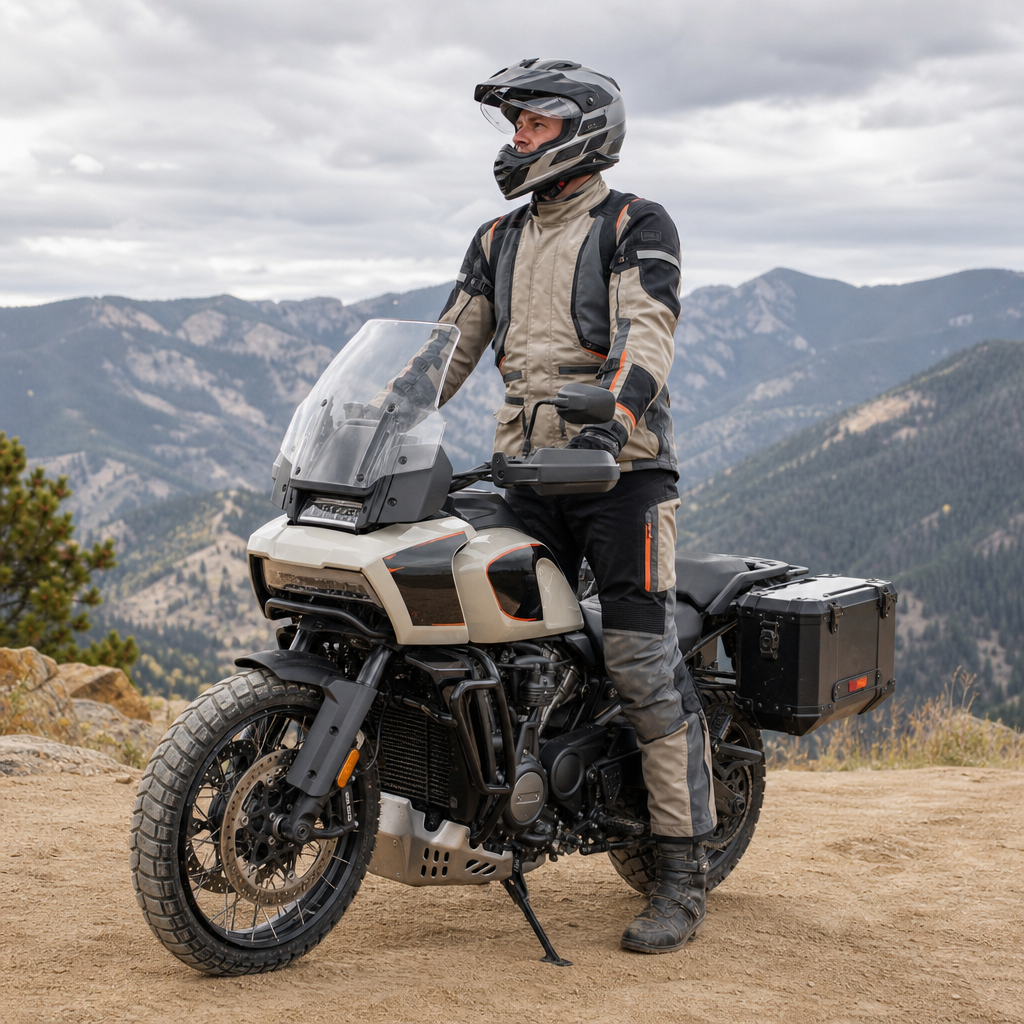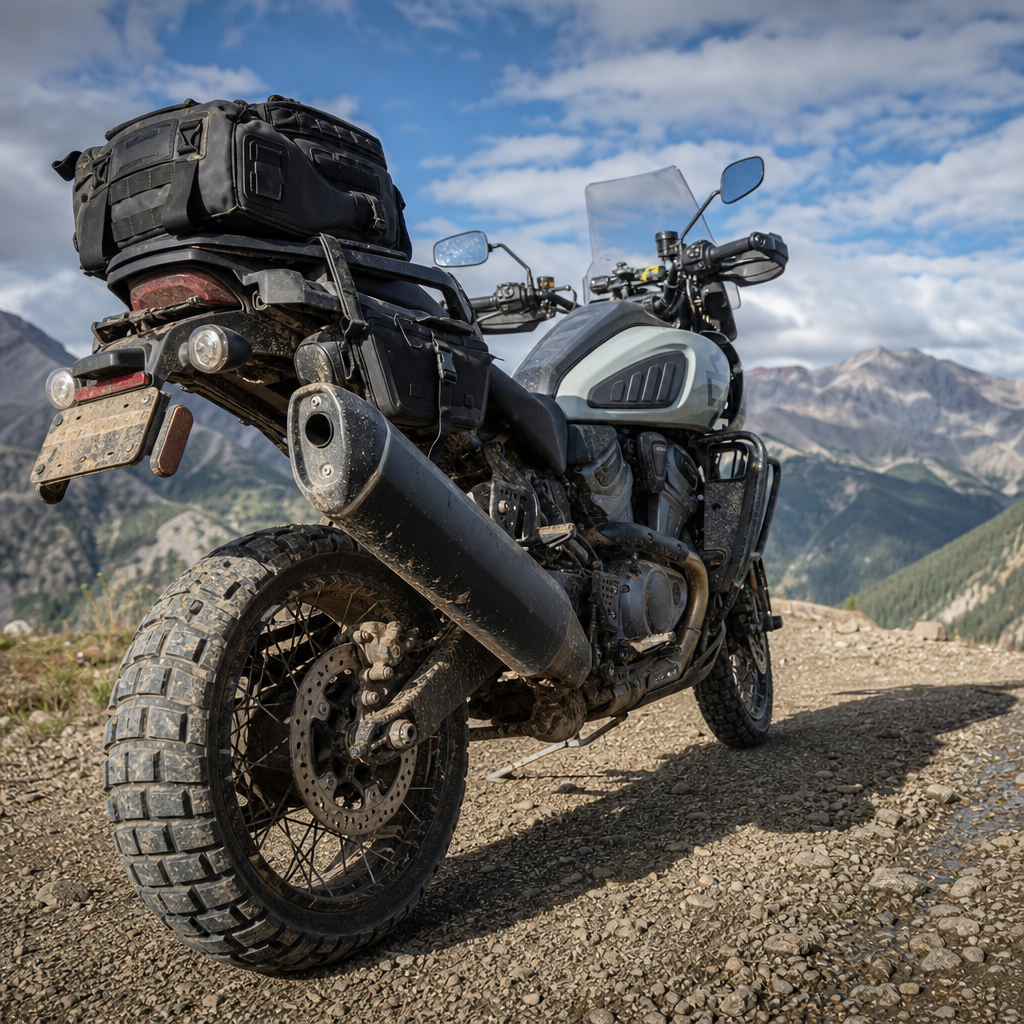
The Harley-Davidson Pan America 1250 is already one of the most versatile adventure motorcycles on the market, but gearing changes can turn it from broadly capable into purpose-built for a 2026 Backcountry Discovery Route trip. A gear ratio recipe is a practical combination of front and rear sprocket sizes chosen to match terrain, luggage weight, rider skill, cruising speed, and tire diameter. On the Pan America 1250, small gearing changes noticeably affect first-gear crawl control, clutch heat, roll-on response, highway comfort, fuel range, and how manageable the bike feels when it is fully loaded on steep, loose climbs. That matters because BDR riding asks one motorcycle to do conflicting jobs: creep through rocky switchbacks in the morning, cover long pavement connectors in the afternoon, and still carry camping gear, tools, and extra water without beating up the rider.
I have set up adventure bikes for mixed travel where one tooth on the countershaft made the difference between relaxed technical riding and a day spent feathering the clutch. The Pan America responds the same way, but with its own constraints. Its Revolution Max 1250 engine makes strong torque, electronics help traction, and the six-speed gearbox is well spaced for travel, yet the stock final drive is still a compromise intended for a wide global audience. Riders building a Pan America 1250 gear ratio recipe for 2026 BDR routes usually want three things at once: lower effective gearing for rough sections, stable highway behavior at legal cruising speeds, and a setup that does not create avoidable wear or chain management problems. This hub article explains how to make those tradeoffs intelligently and how gearing fits into the larger picture of model-specific ergonomics and performance recipes for Harley-Davidson adventure travel.
When riders talk about performance sprockets, they usually mean changing the tooth count on the front sprocket, rear sprocket, or both to alter final drive ratio. A smaller front sprocket or larger rear sprocket lowers gearing, increasing torque multiplication at the rear wheel and reducing road speed for a given engine rpm. A larger front or smaller rear does the opposite. Ergonomics enters the conversation because gearing changes affect standing balance, clutch workload, fatigue, throttle precision, and how confidently shorter or less aggressive riders can manage the Pan America in difficult terrain. For a BDR-focused build, gearing is not an isolated modification. It is a recipe component linked to seat height strategy, bar position, peg placement, lever setup, wheel and tire selection, luggage mass, and suspension sag. Get the recipe right, and the motorcycle feels calmer, easier, and more controlled across the exact surfaces that define backcountry travel.
Why gearing is the foundation of a Pan America 1250 BDR recipe
On any adventure bike, final drive gearing shapes how the engine’s torque reaches the ground more directly than bolt-on power parts. On the Pan America 1250, that effect is especially useful because the engine has enough output that you rarely need more horsepower for BDR conditions; you need better access to controllable thrust at low and moderate speeds. Lower gearing lets the bike tractor over ledges, embedded rock, washboard climbs, and sandy exits with fewer clutch inputs. That reduces heat at the clutch, cuts rider fatigue, and improves consistency when traction varies. In practical terms, a bike that is geared slightly shorter often feels lighter than one that is technically the same weight, because it requires less body English and less frantic control work in awkward moments.
The reason this article serves as a hub for model-specific ergonomics and performance recipes is that gearing decisions expose the whole setup philosophy. A rider who spends most of a 2026 BDR on western routes with long gravel roads and short technical sections may accept stock or near-stock gearing for quieter highway travel. A rider targeting tighter eastern routes, steep baby-head climbs, or slow two-track while carrying hard luggage may benefit from lower gearing immediately. The same logic applies to rider height and off-road confidence. If you are tall, athletic, and comfortable slipping the clutch, you can tolerate taller gearing. If you are shorter, newer to heavy ADV bikes, or planning loaded solo travel, a lower final drive often produces more real-world control than any power upgrade.
There is also a reliability argument. Chain-drive adventure bikes live hard lives in mud, dust, water crossings, and long mileage intervals. Changing gearing within sensible ranges is a low-risk, high-return modification compared with altering engine mapping or chasing peak output. Reputable sprockets from brands such as JT, Supersprox, and AFAM use known metallurgy and standardized fitment, while modern X-ring chains from DID, RK, and Regina handle adventure mileage well when alignment and tension are correct. The key is to choose ratios that improve use without creating chain guide issues, excessive swingarm wear, or constant sixth-gear hunting on pavement. A Pan America prepared for BDR travel should feel composed everywhere, not optimized for one obstacle and annoying for the next 200 miles.
The three proven sprocket recipes for 2026 BDR travel
Most Pan America 1250 riders do not need a dozen gearing options. In workshop practice, three recipes cover nearly every BDR use case: stock-biased travel, all-around BDR, and technical-loaded BDR. The stock-biased travel recipe suits riders doing long interstate approaches, moderate luggage, and mostly fast gravel. The all-around BDR recipe is the best default because it lowers gearing enough to help off road without making highway cruising busy. The technical-loaded recipe is for riders expecting steep, slow terrain, heavier camping loads, or a preference for precise low-speed throttle control over relaxed freeway rpm.
| Recipe | Front/Rear Change | Best Use | Main Benefit | Main Tradeoff |
|---|---|---|---|---|
| Stock-Biased Travel | Keep stock or add +2 rear | Long connectors, mild dirt, light luggage | Minimal highway penalty | Less help in tight technical sections |
| All-Around BDR | -1 front or +3 rear equivalent | Mixed BDR surfaces, average load | Better crawl speed and roll-on control | Slightly higher cruise rpm |
| Technical-Loaded BDR | -1 front with +2 to +3 rear | Steep climbs, sand, heavy luggage | Maximum low-speed manageability | More rpm, range and wear considerations |
The all-around BDR recipe is the one I recommend first because it addresses the Pan America’s most common backcountry complaint: first gear can still feel a touch tall when the bike is loaded and traction is poor. Dropping one tooth on the front sprocket is the strongest change per part, though it also tightens chain articulation and can increase slider wear faster than adding a few teeth at the rear. If packaging, availability, and budget allow, many riders prefer achieving a similar result with a modest rear sprocket increase because it is gentler on chain bend radius. That said, front sprocket swaps are cheaper, faster, and easier to reverse before a major highway trip.
The technical-loaded recipe should be chosen intentionally, not casually. It works extremely well for riders who know they will be in sustained low-speed terrain, especially with oversized fuel loads, camping equipment, crash protection, and aggressive tires that effectively raise drag. It can transform confidence on steep climbs and make U-turns on rough surfaces less stressful. But if your BDR includes very long pavement days at 75 mph, the extra rpm can increase vibration perception, reduce fuel economy, and make the bike feel busy. The right recipe is the one that removes your actual bottleneck rather than chasing the shortest gearing possible.
How sprocket choice interacts with tires, weight, and electronics
Sprocket math is only half the story because effective gearing changes whenever tire diameter changes. Many 50/50 and off-road biased tires differ in actual mounted height even when labeled with the same nominal size. A taller rear tire slightly raises overall gearing, while a shorter one lowers it. Riders often install more aggressive rubber before a BDR and then wonder why the bike feels subtly different. Add a heavily loaded luggage system, skid plate, crash bars, tools, and water, and the machine may demand more clutch work than it did during local test rides. That is why gearing should be decided after the tire and luggage plan is clear, not before.
The Pan America’s electronic rider aids also influence what gearing feels best. Ride modes, traction control calibration, throttle mapping, and engine braking strategies can mask or magnify gearing differences. A lower final drive often makes off-road throttle application feel smoother because the engine spends more time in a responsive part of the rev range with less abrupt load transition. In sand or loose climbs, that can improve confidence more than a rider expects. However, electronics are not a substitute for mechanical advantage. If first gear still requires repeated clutch slipping on technical terrain, the bike is telling you that the ratio is too tall for your use case.
Weight distribution matters too. Soft luggage mounted close to the center of the bike affects handling less than a high, rear-biased hard case setup. If a Pan America carries extra mass high and aft, the front end gets lighter on climbs and low-speed balance deteriorates. Lower gearing helps by letting the rider maintain momentum with gentler throttle and less abrupt clutch engagement. I have found that riders often attribute this improvement to “better power,” when the real gain is improved control over weight transfer. Mechanical leverage, not engine output, is doing the work.
Ergonomics recipes that make gearing work better
Gearing and ergonomics should be tuned together because the motorcycle’s control layout determines whether you can use the ratio effectively. For BDR riding, the Pan America benefits from a standing position that keeps hips neutral, elbows slightly out, and wrists straight while covering the clutch and front brake. Bar risers can help some riders, but they are not automatically the answer. Excessive rise can pull the rider rearward and reduce front-end weighting. Often a modest bar rotation, lever angle correction, and lower or more off-road-oriented footpegs create a better standing triangle than simply stacking risers.
Seat strategy is equally important. A lower seat improves dab confidence for shorter riders, but excessive knee bend can increase fatigue on long transitions and make standing transitions abrupt. The Pan America’s adaptive ride height system, where equipped, changes the equation by improving stops without altering moving ground clearance. That allows some riders to keep a taller, more open cockpit while still benefiting from easier footing at low speed. For a BDR recipe, the best ergonomic setup is the one that lets you stand comfortably for long rough sections, sit neutrally on connectors, and reach the ground predictably when the trail narrows or turns off-camber.
Control feel matters as much as geometry. Adjustable levers, correct clutch free play, peg teeth that support adventure boots, and a rear brake pedal positioned for both seated and standing use all reduce the workload that taller gearing exaggerates. When a rider says a Pan America feels hard to manage in rocks, I check three things before discussing suspension valving: final drive ratio, standing ergonomics, and lever setup. Those three factors solve a surprising number of complaints. They are also affordable compared with deeper chassis modifications, which is why this hub treats them as a recipe system rather than isolated parts.
Parts selection, installation standards, and maintenance for BDR reliability
Choosing performance sprockets for a Pan America 1250 should start with material and fitment, not marketing. Steel rear sprockets last longest for travel. Hybrid aluminum-steel designs reduce weight while preserving tooth durability and are a smart middle ground for riders who care about unsprung mass. Full aluminum rears belong more on lightweight dirt-focused builds than on a loaded adventure bike expected to cross states. For the front sprocket, correct offset, spline fit, and hardened wear surfaces are non-negotiable. A poor-fitting countershaft sprocket can damage expensive components quickly.
Installation quality is where reliable setups separate from noisy, fast-wearing ones. Always verify chain line, inspect the chain slider, confirm torque values from the service manual, and replace worn chains and sprockets as a set. On long-travel motorcycles, chain tension must be checked through the suspension arc, not guessed on a stand. If the chain is too tight at full compression, output shaft bearings, chain rollers, and sliders pay the price. If it is too loose, driveline lash increases and the bike can feel snatchy exactly where you wanted improved control. For BDR travel, I also recommend carrying a compact chain service kit, a master link matched to the chain model, and a small brush for dust-heavy days.
Testing should happen before departure, ideally on the exact tires and luggage load planned for the trip. Ride pavement at your normal cruising speed, then repeat low-speed drills on dirt: hill starts, full-lock turns, rocky climbs, and descending with engine braking. If the bike still feels tall in the slow work, lower the gearing slightly. If highway rpm or fuel burn becomes annoying, step back. The goal is not perfection on paper; it is a Pan America that reduces stress over consecutive long days. That is the standard every Harley-Davidson model-specific ergonomics and performance recipe should meet.
The best Pan America 1250 gear ratio recipe for a 2026 BDR is usually the one that makes the motorcycle easier at walking pace without compromising the miles required to reach the dirt. For most riders, that means a moderate reduction in final drive ratio rather than an extreme change. Pair that with a cockpit built for comfortable standing, a seat and lever setup matched to your body, and durable chain-drive components installed to service-manual standards. The result is not just better acceleration or stronger roll-on. It is lower clutch workload, cleaner line choice, less fatigue, and more confidence when the route turns rough.
As a sub-pillar hub for Harley-Davidson model-specific ergonomics and performance recipes, this page sets the framework for every related setup decision. Gearing affects tires, luggage strategy, electronics feel, rider posture, maintenance intervals, and even route planning through fuel range. That is why sprocket selection deserves more attention than it usually gets in adventure build lists. A carefully chosen ratio is one of the few modifications you will notice on every mile of a BDR, from technical climbs to long transit sections, and one of the few that consistently improves rider control rather than just changing character.
If you are preparing a Pan America 1250 for 2026 BDR travel, start with an honest assessment of your terrain, load, and skill level, then choose a conservative, testable sprocket recipe and build the ergonomics around it. Evaluate the bike with your real luggage, real tires, and real cruising speeds before committing to a long trip. Done properly, this recipe approach creates a Harley-Davidson that feels intentional instead of compromised. Use this hub as your starting point, then map the rest of your setup decisions to the same principle: every part should make the bike easier to ride, longer-lasting, and more predictable when the route gets difficult.
Frequently Asked Questions
What does a “gear ratio recipe” mean for a Pan America 1250 headed onto a 2026 BDR?
A gear ratio recipe is simply a deliberate front-and-rear sprocket combination chosen for how you actually plan to ride the bike, not just what works acceptably in every situation. On a Harley-Davidson Pan America 1250, that matters because even small gearing changes can noticeably alter low-speed control, clutch workload, highway comfort, and how the engine feels when the bike is loaded with camping gear, tools, water, and extra fuel. For a Backcountry Discovery Route, the goal is usually not maximum top speed. The goal is to make the bike easier to manage in slow, technical sections while still keeping pavement transfers relaxed enough to avoid fatigue.
In practical terms, a recipe takes into account your front sprocket tooth count, rear sprocket tooth count, tire diameter, luggage weight, average elevation, expected cruising speed, and your confidence in rough terrain. A rider who spends most of the route on rocky climbs, loose switchbacks, deep gravel, and repeated starts on inclines will usually benefit from slightly shorter gearing. That means gearing the bike down so first gear becomes more useful at walking pace and the engine can stay in a more controllable part of the rev range without constant clutch slipping. On the other hand, a rider doing long liaison miles, carrying lighter luggage, and prioritizing smoother highway sections may want to stay much closer to stock.
The reason this matters so much on the Pan America 1250 is that it has enough power to mask gearing issues on the street, but off-road you feel the difference quickly. A better recipe can reduce clutch heat in technical terrain, improve throttle precision when traction is inconsistent, and make the bike less tiring to ride all day. That is why gearing is often one of the smartest setup changes before a 2026 BDR: it tailors the motorcycle to the route instead of forcing the rider to constantly adapt around the stock compromise.
How do smaller or larger sprockets change off-road performance on the Pan America 1250?
Changing sprocket sizes alters the final drive ratio, which changes how engine speed translates into rear-wheel speed and torque. A smaller front sprocket or a larger rear sprocket creates shorter gearing. That makes the bike accelerate more eagerly at low speed, gives stronger drive at the rear wheel, and helps the bike move through technical terrain with less clutch abuse. For BDR riding, this is often the preferred direction because it improves first-gear crawl behavior and makes the bike feel calmer and more manageable when navigating rocks, ruts, ledges, and steep loose climbs.
The tradeoff is that shorter gearing raises engine rpm at any given road speed. At highway pace, the bike may feel busier, fuel consumption can increase slightly, and the rider may notice more vibration or a stronger urge to shift sooner. None of that is automatically a problem, but it should be considered if your route includes long stretches of pavement or fast gravel where you want to sit at a steady cruise for hours. For many adventure riders, the best answer is not extreme gearing, but a mild reduction that improves off-road control without making transit sections annoying.
A larger front sprocket or smaller rear sprocket does the opposite. It creates taller gearing, lowering rpm at cruising speed and stretching out each gear. That can feel excellent on open road and may suit riders who prioritize long-distance pavement comfort, but it usually makes slow technical riding harder. The bike may demand more clutch slip at walking pace, feel less forgiving on steep climbs, and become more tiring when heavily loaded. On a big adventure bike like the Pan America 1250, those downsides show up quickly once the terrain tightens. For a 2026 BDR build, most riders lean toward a modestly shorter setup because it gives a more useful first gear without sacrificing the bike’s broad capability.
What is a sensible sprocket setup for balancing technical BDR sections and highway transfers?
The most sensible setup is usually a conservative gearing change rather than an extreme one. In BDR use, the sweet spot is often a recipe that lowers overall gearing just enough to improve clutch-free tractability in rough sections while preserving acceptable rpm and comfort during paved transitions. Many riders start by changing only one end of the final drive, because a one-step adjustment at the countershaft or rear sprocket can produce a meaningful difference without dramatically changing the bike’s character. That approach is especially smart on the Pan America 1250, where small changes are easy to feel.
If your route includes frequent rocky climbs, repeated slow-speed maneuvers, heavy luggage, and larger off-road tires, a mildly shorter ratio usually makes the motorcycle easier to ride all day. The biggest benefit is not raw acceleration; it is reduced workload. You spend less time feathering the clutch, less time fighting stalling tendencies at very low speed, and less mental energy trying to keep the engine in the right range while balancing traction and momentum. That translates into better control and less fatigue, which matters far more on a multi-day Backcountry Discovery Route than a theoretical top-speed number.
If your trip includes substantial interstate travel or long fast stretches between dirt segments, it may be wiser to stay close to stock and choose only a subtle change. Riders often regret gearing too low when they have to drone for hours at elevated rpm, especially with luggage and wind exposure. The best “recipe” is therefore the one that matches your actual percentage of technical terrain versus transfer mileage. For most 2026 BDR scenarios, the ideal answer is a moderate gearing reduction that improves first-gear usefulness and low-speed confidence while keeping the bike civilized at cruising speed. That balance is what makes a setup practical rather than merely aggressive.
How do luggage weight, tire choice, and rider skill affect the right gear ratio recipe?
These three factors have a major effect on what gearing will feel correct. Start with luggage weight. A lightly packed Pan America 1250 behaves very differently from one carrying hard luggage, camping gear, extra fuel, tools, water, and protective equipment. More weight increases the demand on the clutch and makes low-speed starts, steep climbs, and technical maneuvers more difficult. In that case, slightly shorter gearing becomes more attractive because it helps the engine get the load moving with less slipping and less heat buildup. A heavily loaded bike with stock gearing may still work, but it can feel more labor-intensive in rough terrain than necessary.
Tire choice matters because tire diameter effectively changes gearing. A taller tire acts like slightly taller final drive gearing, which can undo some of the benefit of a sprocket setup that looked perfect on paper. Aggressive off-road tires can also alter how quickly the bike picks up and carries momentum in loose terrain. If you move to a larger-diameter adventure tire for BDR use, it is often worth considering a corresponding sprocket adjustment so the bike retains the low-speed behavior you want. This is one reason experienced riders think in terms of a full recipe, not just a single sprocket number.
Rider skill is equally important. Advanced riders often tolerate taller gearing because they are comfortable modulating clutch, throttle, and body position in awkward terrain. Newer off-road riders usually benefit from shorter gearing because it slows the bike’s ground speed relative to engine speed and makes the power easier to meter out. That extra control can dramatically improve confidence on loose climbs, switchbacks, descents, and rocky starts. In other words, the “best” ratio is not universal. It depends on whether you are trying to maximize precision and forgiveness, or whether you already have the skill to manage a broader setup range. The most successful BDR gearing choices are the ones that honestly reflect how the bike is loaded, what tires are installed, and how the rider actually rides.
What should riders watch for after changing sprockets before taking a Pan America 1250 onto a 2026 BDR?
After a gearing change, riders should verify both mechanical fit and real-world behavior before committing to a long route. First, confirm chain length, axle adjustment range, chain alignment, and proper chain slack under load. A sprocket swap that technically fits can still create poor adjustment geometry or excessive chain wear if the setup is rushed. Check for clearance issues around the countershaft area, chain guide, swingarm protector, and rear sprocket hardware. Also inspect the condition of the chain itself. Installing new sprockets on a worn chain is rarely a good idea, especially before a demanding off-pavement trip.
Second, test the bike in the conditions that matter. Ride it at walking pace, on steep starts, on loose climbs, and on the highway at your expected transfer speed. Pay attention to whether first gear is now usefully controllable without excessive clutch work, whether second gear remains practical in flowing dirt, and whether cruise rpm is still comfortable for the distances you expect to cover. A good BDR setup should feel easier in technical terrain without making the bike annoying during the transport sections. If one of those areas feels badly compromised, the ratio may be too extreme.
Finally, think beyond feel alone and consider the support systems around the gearing change. Speedometer behavior, fuel range expectations, shift habits, and traction management all deserve a fresh look once the ratio changes. Even if the motorcycle’s electronics handle things well, your own riding rhythm will change. You may shift at different points, carry different