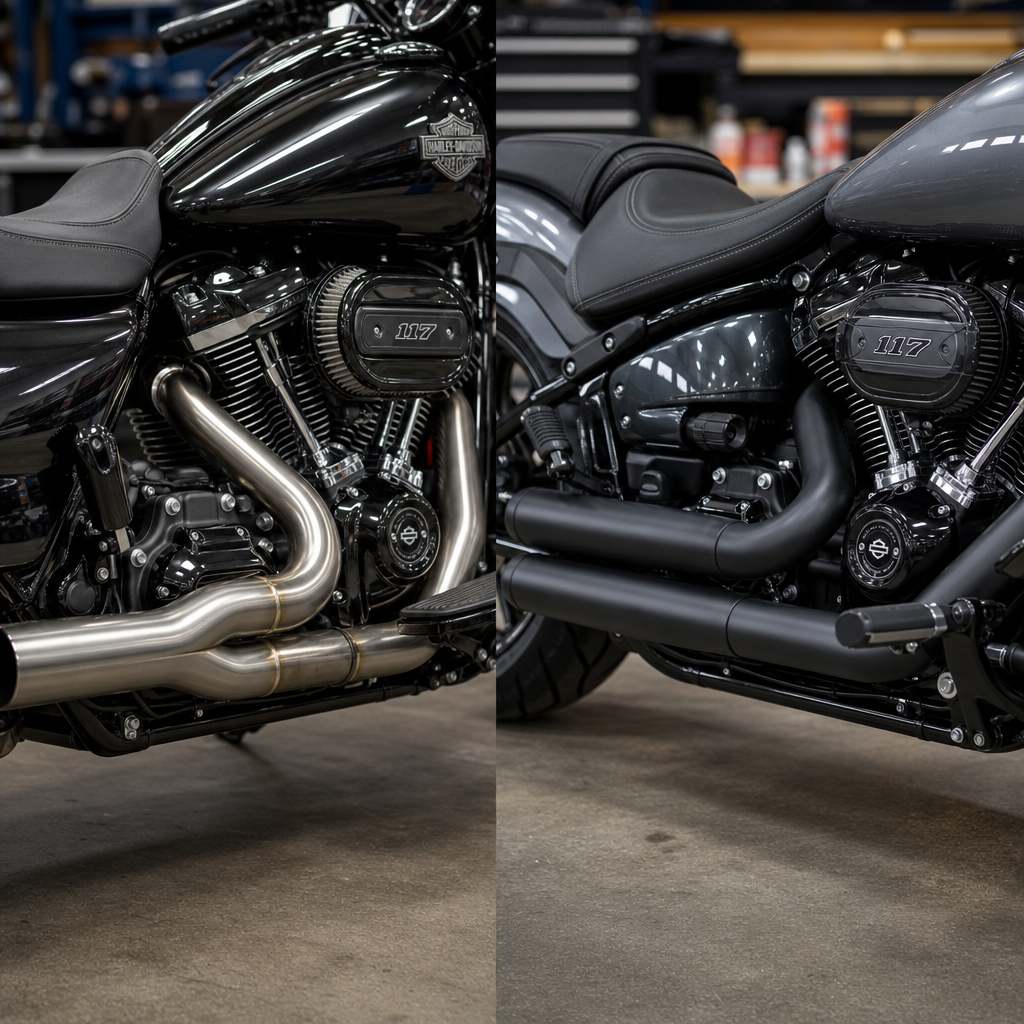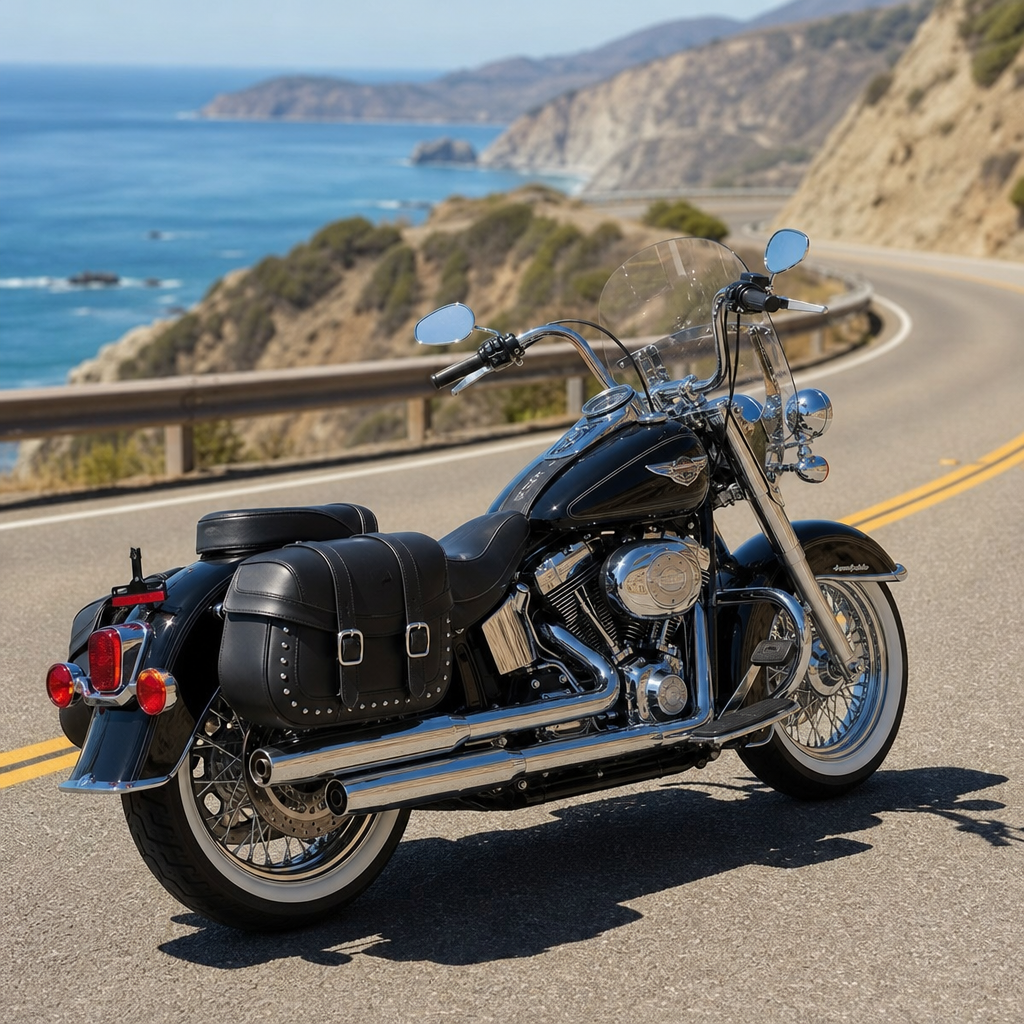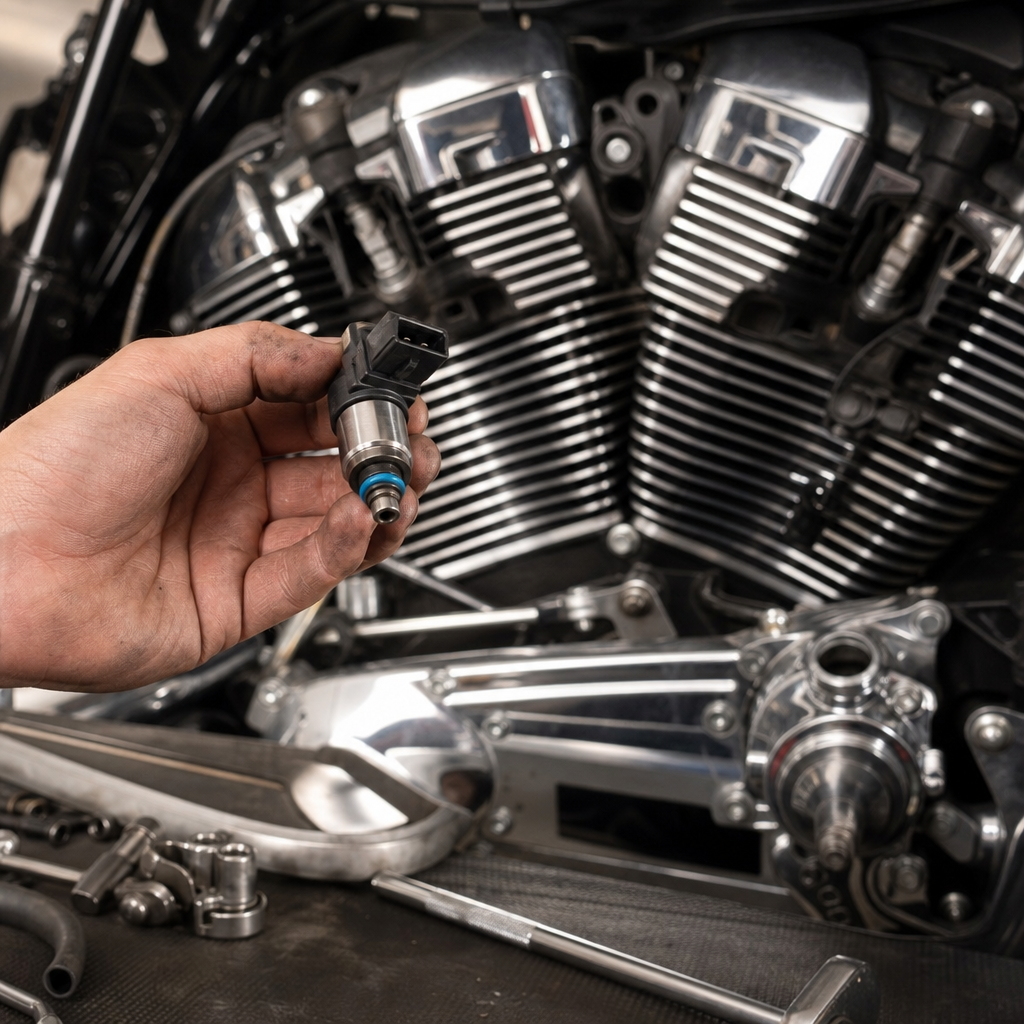
Milwaukee-Eight High-Flow Fuel Injector Recipe: stage III and IV Requirements sits at the center of any serious Harley-Davidson performance build because fuel delivery determines whether added airflow becomes usable power or an expensive tuning problem. In Milwaukee-Eight terms, a “recipe” is the matched combination of injectors, throttle body, manifold, camshaft, cylinder head flow, displacement, exhaust, calibration strategy, and rider-use case. Stage III usually means big-bore cylinders and pistons with supporting intake and exhaust parts, while Stage IV typically adds more aggressive cylinder head work and cam timing that raise airflow demand even further. I have built and tuned enough M8 combinations to see the same pattern repeatedly: riders often buy injectors too early, too late, or simply too large, then chase rough idle, poor hot starts, and inconsistent wide-open throttle fueling. This hub article explains what injector sizing really means, when high-flow injectors become necessary, how ergonomics still matter in a performance recipe, and how the major Harley touring, Softail, bagger, and trike platforms differ. Used correctly, the injector decision protects reliability, power consistency, and rideability across every model-specific ergonomics and performance recipe you will build from this hub.
What high-flow injectors actually do in a Milwaukee-Eight build
High-flow fuel injectors increase the amount of fuel the engine can deliver during a given pulse width, usually expressed in grams per second or pounds per hour at a stated fuel pressure. On a Milwaukee-Eight, injector demand rises when you increase displacement from 107 or 114 cubic inches to 117, 121, 124, or larger, and when cylinder heads, camshaft timing, and intake tract efficiency allow the engine to ingest more air at higher rpm. The stock injector can support many mild combinations, especially torque-focused Stage II builds. It reaches its limit faster on Stage III and Stage IV packages because bigger cylinders and more capable heads increase volumetric efficiency. Once injector duty cycle gets too high, the tuner loses safe headroom, commanded air-fuel ratios drift lean at peak load, and compensation tables cannot fully mask mechanical undersupply. The practical goal is not the biggest injector available. The goal is enough injector to support horsepower targets with reserve capacity, stable atomization at idle, and a calibration that preserves clean transitions, cold-start behavior, and cruise quality.
When Stage III requires upgraded injectors
Stage III does not automatically require high-flow injectors, but many combinations do. A basic 114-to-117 or 117-to-121 big-bore kit paired with a mild cam, stock heads, and a conservative rev limit may still live comfortably on stock or near-stock injectors if brake-specific fuel consumption remains modest and duty cycle stays under roughly 80 to 85 percent at peak power. That changes quickly when the build adds a larger throttle body, ported manifold, free-flowing exhaust, and a camshaft that keeps cylinder fill strong past 5,500 rpm. On the dyno, these are the setups where injector pulse width climbs hard at the top end and the tuner starts removing compromise elsewhere. A heavy touring bike ridden two-up in hot weather is especially unforgiving because sustained load exposes marginal fuel delivery faster than a short solo pull. For a Stage III bagger recipe targeting broad street torque, I usually treat injector data logs, not parts catalogs, as the decision point. If the bike shows limited fuel headroom with the intended tune, upgrade injectors before chasing timing or lambda corrections.
Why Stage IV nearly always changes the injector conversation
Stage IV combinations move the airflow ceiling enough that injector selection becomes a primary planning item, not an afterthought. Bigger valves, ported or CNC-finished heads, aggressive cam overlap, and larger displacement significantly increase the fuel mass required at high load. Even when the peak horsepower number looks manageable on paper, the shape of the fuel curve can demand more injector earlier in the rev range than expected. This matters because Stage IV street engines still need to idle in traffic, restart hot, and recover cleanly from low-speed throttle transitions. I have seen otherwise excellent 124-inch head-and-cam combinations make strong dyno numbers but feel sloppy on the road because oversized injectors were paired with an incomplete tune. Conversely, I have seen well-matched injectors make a Stage IV touring bike behave almost stock at parking-lot speed while pulling decisively to the limiter. For most Stage IV Milwaukee-Eight builds, the right answer is a quality high-flow injector from a reputable supplier, validated flow data, and a tune built around injector characterization rather than generic percentage scaling.
Injector sizing, fuel pressure, and duty cycle explained simply
Injector sizing starts with horsepower goals and realistic fuel demand. Tuners often estimate required injector flow from target crankshaft horsepower, expected brake-specific fuel consumption, injector count, and maximum safe duty cycle. Naturally aspirated V-twins commonly land around 0.45 to 0.60 BSFC depending on efficiency, fuel quality, and tune strategy. If a 124-inch Stage IV build targets 145 crank horsepower with a 0.55 BSFC assumption and an 85 percent duty-cycle ceiling, required injector capacity per cylinder rises quickly. Fuel pressure matters because injector flow increases with pressure, but simply raising pressure is not a cure-all. Higher pressure changes injector characterization, can stress the pump and regulator, and may hurt low-pulse behavior if the system is not designed around it. Duty cycle is the share of available engine cycle time that the injector stays open. When duty cycle approaches saturation, there is little room left for enrichment, transient correction, or environmental variation. That is why disciplined builders choose injectors with measured reserve instead of tuning right at the edge.
Model-specific ergonomics and performance recipes across the Harley-Davidson range
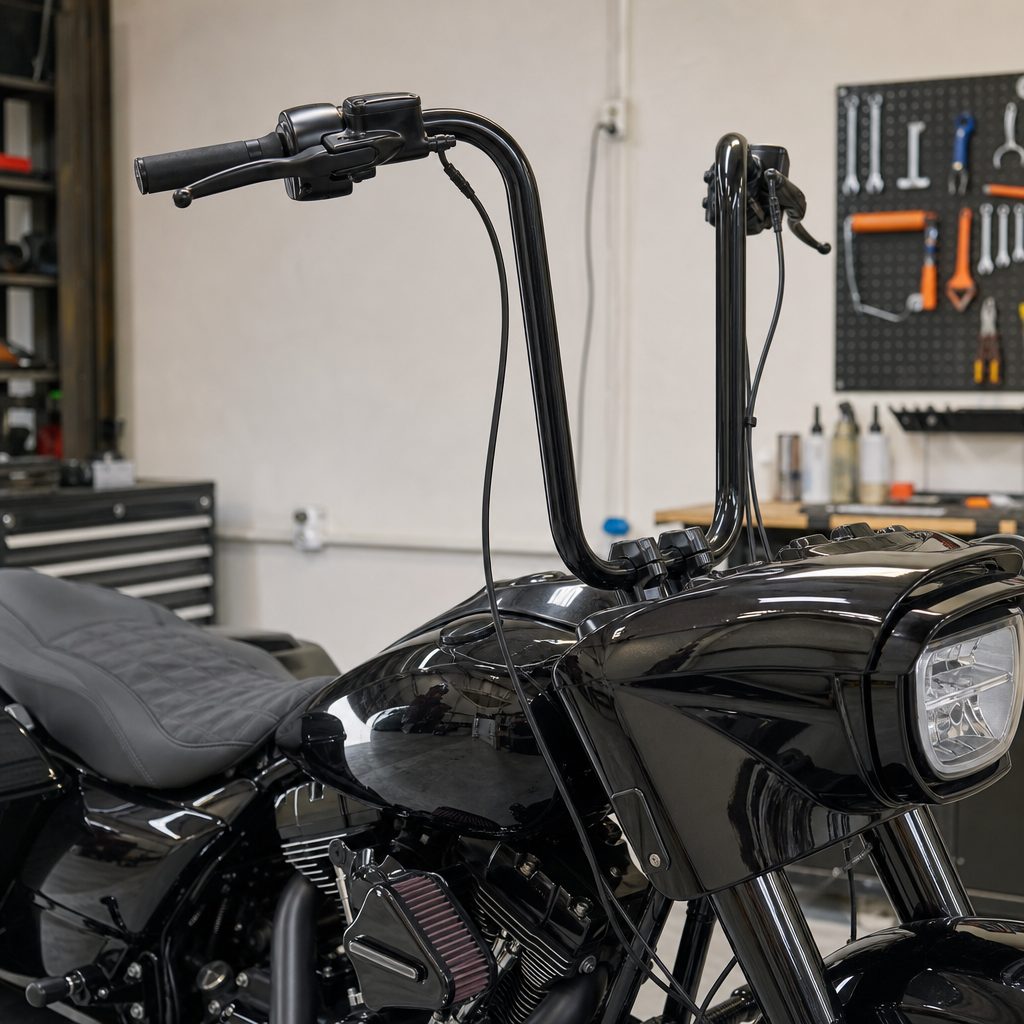
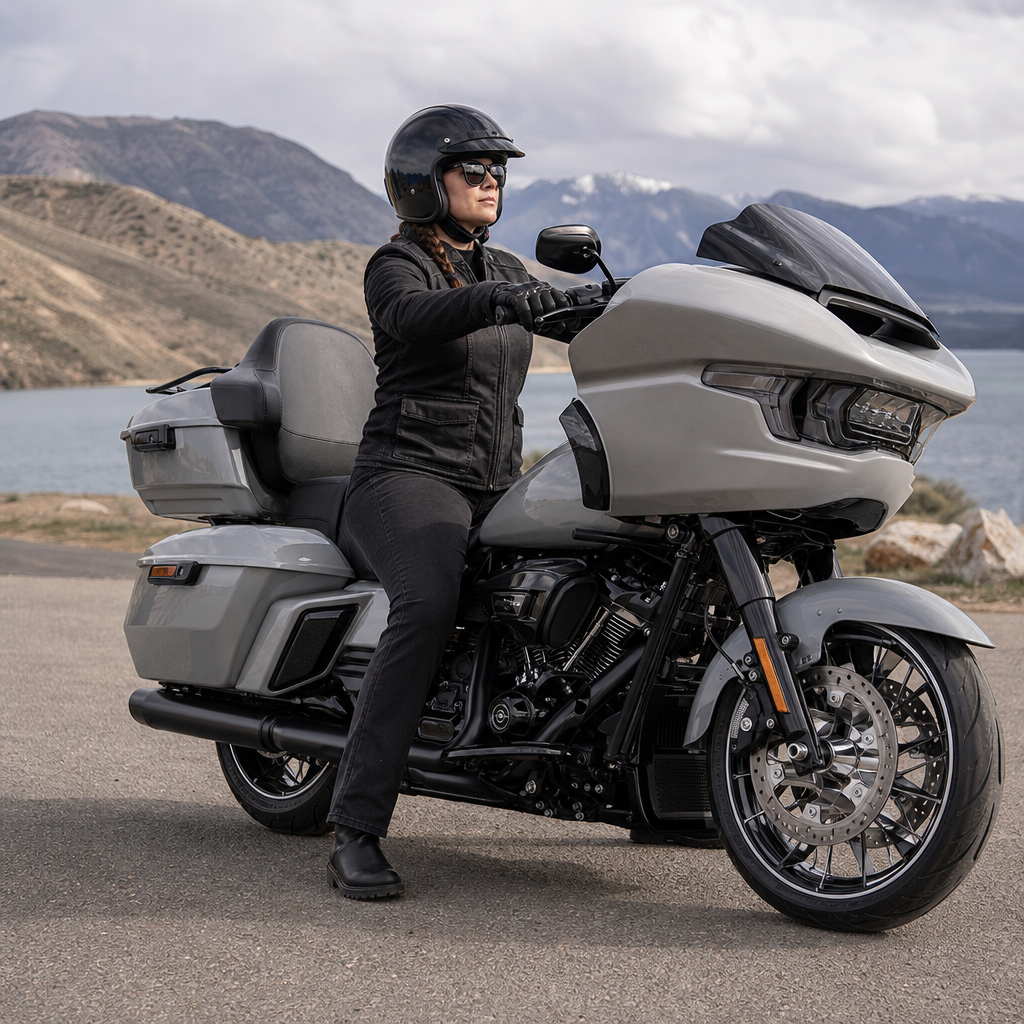
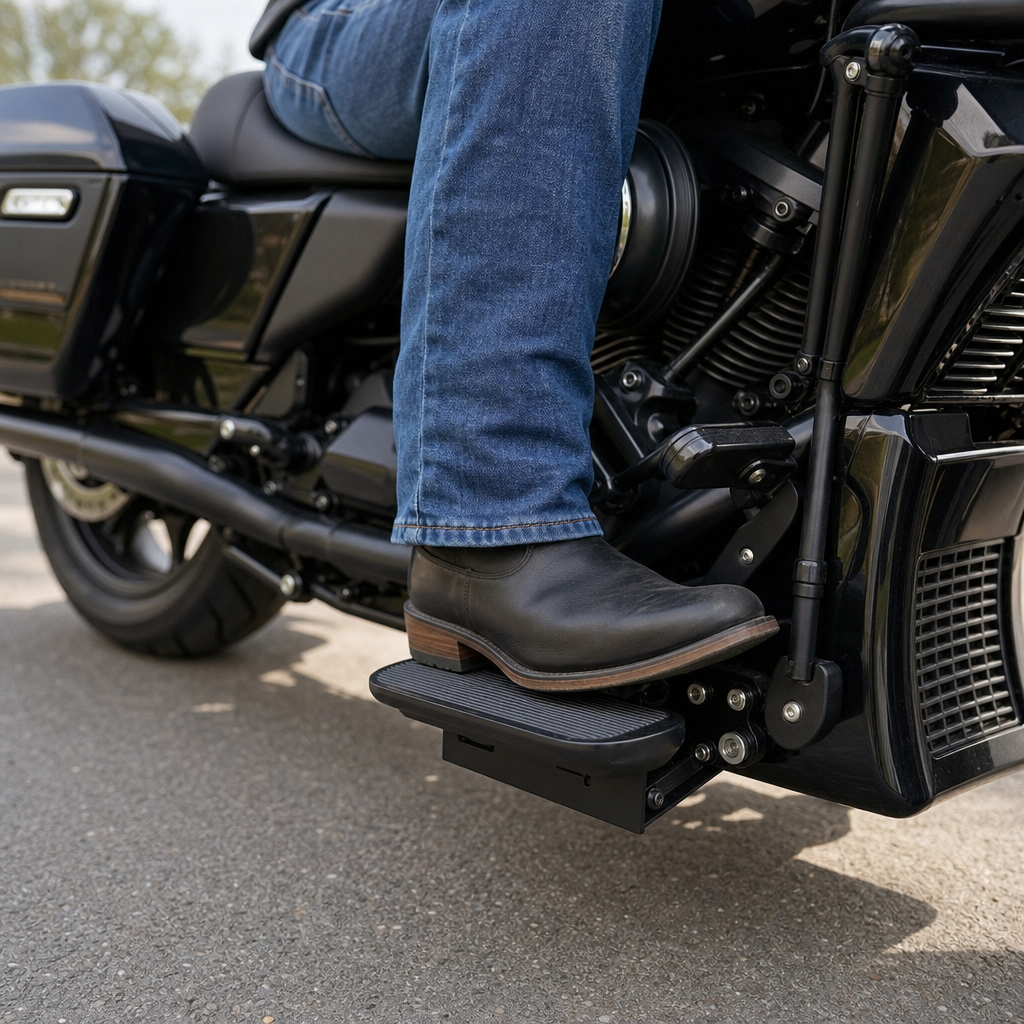
Injector choice belongs inside a full model-specific recipe because the same engine parts behave differently in a Road Glide, Street Glide, Road King, Low Rider ST, Heritage Classic, Breakout, Freewheeler, or Tri Glide. Touring models carry more weight, spend more time under sustained load, and often run taller windshields, luggage, and passenger mass. They reward torque-rich cam timing, moderate throttle-body sizing, and injectors chosen for midrange stability as much as peak output. Performance baggers and Low Rider ST builds tolerate more rpm and sharper throttle response, but rider triangle and heat management still shape the recipe. Forward controls, seat height, reach to bars, and floorboard placement change how often a rider uses low-rpm roll-on versus downshifts, which changes the ideal torque curve. Trike applications add mass and aero drag, making fuel headroom especially important on grades. In practical terms, this hub connects ergonomics with performance: the right injector is not just about displacement, but about how a specific Harley is ridden, loaded, and geared on real roads.
| Model family | Typical Stage III recipe | Typical Stage IV recipe | Injector priority |
|---|---|---|---|
| Touring baggers | 117 or 121 big bore, torque cam, intake, exhaust | 121 or 124, head work, larger throttle body, higher rpm | Midrange stability, heat control, sustained-load headroom |
| Softail cruisers | 117 or 121, mild-to-medium cam, stock or mild head flow | 121 or 124, aggressive cam, ported heads | Clean transitions, hot starts, street rideability |
| Performance cruisers | 117 or 121, intake, exhaust, rev-happy cam | 124-plus, high-flow heads, larger intake path | Top-end fuel supply without sacrificing response |
| Trikes | 117 or 121, torque-biased setup, cooling support | 121 or 124, head work with conservative cam choice | Load resilience, consistency in heat, reserve capacity |
Matching injectors with throttle body, manifold, cam, and heads
Injectors are only one part of the intake recipe. A larger throttle body can improve airflow, but if velocity drops too much for the intended rpm range, throttle response suffers. A high-flow manifold helps only when the cylinder head and cam can use the added volume. Camshaft choice determines where the engine breathes best, and that determines where fuel demand rises. Head work often changes the answer more than riders expect because better valve job quality, bowl blending, and port cross-section can increase airflow enough to push injector demand beyond stock margins even at similar displacement. In my experience, the cleanest Stage III and Stage IV builds start with a horsepower and rpm target, then choose parts backward from that target. For example, a torque-focused 121-inch touring engine with a Woods-style or Star Racing-oriented street cam may need less injector than a 124-inch performance cruiser using a high-lift cam and efficient CNC heads. Matching components prevents the common mistake of buying large injectors to compensate for a poorly balanced airflow package.
Tuning requirements: ECU strategy, dyno validation, and street verification
No injector upgrade is complete without proper calibration. Milwaukee-Eight tuning commonly relies on Screamin’ Eagle calibration tools, Dynojet Power Vision, TTS MasterTune, or dealership-supported flash solutions depending on model year and emissions constraints. The important point is not brand loyalty; it is access to accurate injector data, volumetric-efficiency mapping, spark control, startup enrichment, and closed-loop behavior. After injector changes, the tuner must verify idle fueling, cranking fuel, acceleration enrichment, deceleration transitions, and wide-open throttle air-fuel ratio across the usable rpm range. A dyno pull alone is not enough. I always want hot restart checks, steady-state cruise assessment, and low-speed parking-lot maneuvers because oversized or poorly characterized injectors often reveal problems there first. Data logging matters as much as peak numbers. Watch injector duty cycle, short-term and long-term correction behavior where available, manifold pressure trends, and head temperature under repeated load. A trustworthy Stage III or IV recipe is one that survives real-world heat soak, altitude changes, and rider habits without lean surging or fuel-washed cylinders.
Reliability, fuel quality, and common mistakes to avoid
The biggest mistakes in Milwaukee-Eight injector planning are choosing by marketing stage label, ignoring fuel quality, and treating all horsepower goals as equal. Pump premium quality varies by region, ethanol content changes stoichiometric demand, and hot climates punish thin safety margins. Some riders assume larger injectors always improve power; they do not. If the existing injector already supports the required mass flow, more injector only adds tuning complexity. Another mistake is upgrading injectors while leaving an aging fuel pump, restricted filter, or weak electrical supply untouched. Fuel delivery is a system. Pressure drop under load can mimic an undersized injector and send a builder in the wrong direction. I also caution riders not to judge by dyno glory runs alone. A touring Harley that makes one clean pull but stumbles after heat soak is not sorted. Reliability comes from balanced fuel supply, realistic timing, proper knock margin, and maintenance discipline. On high-output Stage IV combinations, tighter service intervals for plugs, intake seals, and fuel-system inspection are simply part of responsible ownership.
How to use this hub for your next Harley-Davidson recipe
This page is the hub for model-specific ergonomics and performance recipes within the Harley-Davidson category, and its main lesson is straightforward: injector choice must match airflow, displacement, calibration capability, and the way the motorcycle is actually used. Stage III builds sometimes retain stock-style injectors, but only when logs confirm adequate headroom. Stage IV builds almost always justify high-flow injectors because head work, cam timing, and larger displacement raise fuel demand beyond comfortable stock limits. Across touring bikes, Softails, performance cruisers, and trikes, ergonomics influence the ideal torque curve, and that torque curve influences the right fuel system recipe. Build around a clear horsepower target, select injectors from verified data, support them with an appropriate throttle body and manifold, and insist on dyno plus street validation. If you are planning your next Milwaukee-Eight upgrade, use this hub as the starting point, then move into the specific bike-level recipe that fits your model, weight, riding style, and performance goal.
Frequently Asked Questions
What does a Milwaukee-Eight high-flow fuel injector “recipe” actually include for a Stage III or Stage IV build?
A proper Milwaukee-Eight high-flow fuel injector recipe is never just an injector part number by itself. It is a complete fuel-and-air strategy built around the engine’s total demand. In practical terms, that means matching injector flow rate to displacement, camshaft timing, cylinder head airflow, throttle body size, intake manifold, exhaust system, compression level, fuel pressure behavior, and the calibration method being used in the ECU tune. On a Stage III combination, where big-bore cylinders typically increase displacement and airflow, injector needs usually rise because the engine can consume noticeably more fuel at wide-open throttle and under heavy load. On a Stage IV combination, where bigger displacement is paired with more aggressive cam timing and higher-flowing heads, fuel demand increases again, often enough that injector selection becomes a limiting factor if it is treated as an afterthought.
The reason builders refer to a “recipe” is because every part influences the others. A larger throttle body without enough injector capacity can create a setup that breathes well but goes lean at the top end. A cam with longer duration can shift volumetric efficiency higher in the rpm range, which changes where fuel demand peaks. Cylinder heads with better port velocity and flow can improve cylinder filling enough that stock injectors become marginal even if the displacement increase alone did not look extreme on paper. Then tuning enters the equation: some calibrations can compensate better for injector scaling, offset, and transient fueling than others. If the tune does not correctly characterize the injector, the bike may idle poorly, surge in part-throttle cruising, or show inconsistent air-fuel ratios despite using “bigger” injectors.
So the real injector recipe includes hardware selection, fuel supply integrity, and calibration data accuracy. It should answer several questions at once: how much airflow the engine will actually move, what horsepower target the combination is designed to support, what fuel is being used, what duty cycle margin is acceptable, and whether the bike is meant for street torque, hot-weather touring, aggressive roll racing, or dyno-focused peak output. When those factors are considered together, the result is a build that starts cleanly, rides smoothly, and delivers safe power under sustained load instead of just looking good on a parts list.
How do Stage III and Stage IV Milwaukee-Eight builds differ in fuel injector requirements?
Stage III and Stage IV builds differ because they place different levels of demand on the fueling system. A typical Stage III Milwaukee-Eight setup centers on a big-bore upgrade, which increases displacement and therefore the total amount of air and fuel the engine can process. In many cases, Stage III still uses a combination aimed at strong street torque and broad rideability rather than maximum rpm airflow. That means injector upgrades may be required, but the exact requirement depends on the cam profile, throttle body, exhaust restriction, and how aggressively the engine is tuned. Some milder Stage III combinations can operate within the upper safe range of a smaller injector, while others clearly need more fuel capacity once the tune is optimized and the engine is loaded on the dyno.
Stage IV usually moves beyond simple displacement gains and adds cylinder head work and a more airflow-oriented camshaft package. That changes the injector requirement more dramatically because the engine does not just get larger; it gets better at filling the cylinders, especially in the upper midrange and top end. Improved volumetric efficiency means the motor may demand fuel at a rate that surprises owners who focus only on cubic inches. In this context, injector size must support not just peak horsepower, but also duty cycle headroom, thermal stability, and repeatable fueling when the engine is hot and the bike is being ridden hard. A Stage IV build that is properly sorted should not force the injector to live at or near its limit all the time, because that reduces tuning flexibility and safety margin.
Another important difference is sensitivity. Stage IV combinations are generally less forgiving of injector mismatch. If the injector is too small, the engine may go lean at high load. If the injector is too large without proper injector data in the calibration, low-pulsewidth control at idle and cruise can suffer. That is why Stage IV recipes often demand more careful injector characterization and more disciplined tuning than a basic bolt-on setup. In short, Stage III may allow a wider range of workable injector choices depending on the rest of the package, while Stage IV usually requires a more deliberate sizing decision based on measured airflow, realistic horsepower goals, and the tuner’s ability to calibrate the injectors correctly.
How do you know when stock Milwaukee-Eight injectors are no longer enough?
The clearest sign that stock injectors are no longer enough is excessive injector duty cycle during tuning, especially at high load and high rpm. When an injector is operating too close to 100 percent duty cycle, it has little reserve left to maintain safe fueling under changing conditions such as heat soak, fuel quality variation, or barometric differences. Most experienced tuners prefer to keep a reasonable margin rather than running injectors right at the edge. If the tune requires adding significant fuel in the upper cells but the injector is already near its practical limit, that is a strong indicator that the engine combination has outgrown the stock units.
There are also rideability and dyno clues. If the air-fuel ratio trends lean in the upper rpm range despite proper fuel table adjustments, the injectors may be out of capacity. If horsepower flattens earlier than expected and the fuel curve becomes unstable under repeated pulls, injector limitation should be considered along with pump flow and fuel pressure control. In some cases, the bike will feel crisp at part throttle but lose composure at wide-open throttle, particularly in a big-inch or head-and-cam combination where airflow rises sharply as rpm climbs. Owners sometimes misread this as a tuning problem alone, when the real issue is that the hardware cannot deliver the commanded fuel reliably.
It is also important to avoid relying on symptoms alone. A lean condition can come from injector capacity, but it can also come from low fuel pressure, a weak pump, restrictions in the system, inaccurate injector scaling in the tune, exhaust leaks affecting O2 feedback, or a mismatch between claimed and actual injector flow data. The best way to know is to review logs and dyno data with a tuner who understands Milwaukee-Eight fueling behavior. Injector pulsewidth, duty cycle, target versus actual air-fuel ratio, fuel pressure stability, and power curve consistency all matter. Once the rest of the system checks out, a stock injector that is being pushed too hard becomes easy to identify. At that point, upgrading is not about chasing a bigger number for its own sake; it is about restoring fuel control, safety margin, and tuning accuracy.
Can you install larger injectors “just in case,” or does oversizing create problems on a Milwaukee-Eight?
You can install larger injectors as part of a future-proofed build, but only if they are still appropriate for the current combination and the calibration properly supports them. Bigger is not automatically better. Oversized injectors can create drivability issues if their low-pulsewidth behavior is not well characterized in the tune. At idle and light throttle, the ECU is commanding very small amounts of fuel. If the injector is much larger than necessary and the calibration data for flow rate, latency, and short-pulse behavior is inaccurate, fuel delivery can become inconsistent. The rider may experience rough idle, tip-in hesitation, rich smells, poor cold starts, or a tendency to surge or stumble during low-speed cruising. Those are not signs that “big injectors are bad”; they are signs that injector sizing and calibration were not treated as a matched system.
On the other hand, selecting an injector with sensible overhead can be smart for a Stage III build that may later move to Stage IV. The key is moderation and data quality. An injector should be large enough to support the engine’s realistic near-term power target with safe duty cycle margin, but not so large that it gives away control in the operating range where the bike spends most of its life. Street-driven Milwaukee-Eight engines need excellent transient fueling and low-load manners, not just top-end capacity. That is why reputable builders choose injectors based on actual flow characteristics and proven tuning support, not marketing language. An injector that is slightly larger than immediately necessary but well supported in the tuning ecosystem can be a very good choice. An injector that is dramatically oversized and poorly characterized can turn a strong engine into an annoying motorcycle to ride.
The practical rule is simple: choose the smallest injector that comfortably supports the finished combination with margin. If you are planning a staged build path, tell the tuner and builder that from the beginning. They can then select injectors, throttle body, and calibration strategy that work well now and still leave room for the next step. That approach preserves rideability while preventing the common mistake of buying parts twice. In Milwaukee-Eight performance work, intelligent overhead is valuable; needless oversizing is not.
Besides injector size, what else must be upgraded or checked to support Stage III and Stage IV fueling correctly?
Injectors are only one part of the fuel delivery chain, so a Stage III or Stage IV Milwaukee-Eight should be evaluated as a complete system. First, fuel pressure and pump capacity matter. Even a correctly sized injector cannot do its job if fuel pressure falls off at high load. If the pump cannot maintain stable pressure during sustained