Lithium-ion battery care for the 2026 CVO matters more than most riders expect, especially when winter temperatures, short storage cycles, and modern electronics combine to drain capacity faster than a traditional garage routine can prevent. On current Harley-Davidson touring models, the battery is not just a starter power source; it supports security modules, infotainment memory, electronic rider aids, and control units that expect stable voltage at all times. When riders talk about winter discharge, they usually mean a gradual voltage drop during cold-weather storage that leaves the motorcycle slow to crank, unable to start, or forced into a deep discharge condition that shortens battery life. For a premium CVO model, that is an expensive preventable problem.
The 2026 CVO sits within a broader Harley-Davidson technical conversation that also includes the Milwaukee-Eight, Twin Cam, Evolution, and RevMax families. This matters because battery care is never isolated from the platform around it. Different engines and electrical architectures create different storage loads, charging behavior, and service expectations. Older Evo and Twin Cam bikes often tolerate long storage differently because they have fewer parasitic draws and simpler electronics. Milwaukee-Eight touring models, including CVO variants, add more sensors, modules, and rider conveniences. RevMax machines introduce another layer of electronically managed performance systems. A useful winter battery strategy has to account for those differences rather than treating every Harley the same.
In workshop practice, the biggest mistakes are predictable. Riders either connect the wrong charger, store the bike fully discharged, leave it in an unheated space without checking resting voltage, or assume occasional idling will maintain the battery. None of those habits is reliable. Lithium-ion starter batteries, especially lithium iron phosphate designs commonly fitted in powersports applications, prefer stable voltage management, moderate state of charge during storage, and chargers with a proper lithium mode. Cold weather reduces available cranking power because internal resistance rises, even if the battery is not technically empty. That is why a battery can show acceptable voltage yet struggle on the first freezing morning.
This hub article explains how to avoid winter discharge on the 2026 CVO while connecting that advice to Harley-Davidson technical deep-dives across M8, Twin Cam, Evo, and RevMax platforms. You will find the essential battery principles, the specific winter storage routine that works, and the platform-level context needed to understand why modern CVO battery management deserves more attention than older Harleys ever required.
Why the 2026 CVO Battery Needs a Different Winter Strategy
The 2026 CVO is a premium touring motorcycle with a high electrical baseline. Even when parked, systems such as the security module, keyless functions, and retained memory for display and audio components can continue drawing small amounts of current. Individually these loads are minor, but over weeks of cold storage they become the difference between a healthy resting battery and a no-start event. I have seen late-model touring bikes lose enough charge in three to five weeks that owners assumed the battery was defective, when the real issue was simply storage without maintenance charging.
Cold weather magnifies every weakness. A lithium-ion battery self-discharges more slowly than an old lead-acid unit, which is an advantage, but low temperatures reduce output under load. If the battery enters storage partly charged, winter can push it into a voltage range where the battery management system, if equipped, protects the cells or the starter simply cannot turn the engine at the required speed. The result is often misdiagnosed as a charging-system fault, yet the charging system may be working normally once the battery is restored to the proper state of charge.
Another reason strategy matters is cost. CVO owners are not dealing with a budget replacement part. High-quality powersports lithium batteries from brands such as Harley-Davidson, Antigravity, Shorai, or NOCO-compatible systems can cost significantly more than conventional absorbed glass mat batteries. Protecting that investment means preventing deep discharge, avoiding unsupported chargers, and verifying that charging voltage remains within the battery manufacturer’s specification. On a touring Harley, the battery lives inside a larger system, and winter care has to respect the whole system.
How Lithium-Ion Motorcycle Batteries Behave in Winter
Most motorcycle lithium starter batteries use lithium iron phosphate chemistry rather than the cobalt-based chemistry common in consumer electronics. Lithium iron phosphate offers thermal stability, high cycle life, and strong cranking performance for its weight. It also behaves differently from lead-acid. Voltage stays relatively flat across much of the discharge curve, so a battery can appear fine until it drops quickly near the lower end. That makes periodic measurement more important, not less. A digital multimeter reading after the bike has rested is far more useful than guessing from last month’s start quality.
Winter introduces two separate issues: reduced charge acceptance when the battery is very cold and reduced discharge performance when high starter current is demanded. Riders sometimes hear that lithium batteries “wake up” after a small load. In practice, turning on the ignition or lights briefly can warm the cells internally enough to improve cranking output. That does not mean a weak battery is healthy; it means the chemistry responds to load-induced warming. It is a useful field trick, not a replacement for proper maintenance.
The safe operating window depends on the battery maker, but many powersports lithium batteries should not be charged below freezing unless the manufacturer explicitly allows it. This is where people damage batteries unintentionally. They wheel a cold bike into the garage, connect a charger immediately, and assume all smart chargers are interchangeable. They are not. The charger must support lithium mode, use the correct voltage profile, and avoid desulfation pulses intended for lead-acid batteries. Those pulses can be harmful to lithium packs lacking compatible management electronics.
| Platform | Electrical Complexity | Typical Winter Battery Risk | Storage Priority |
|---|---|---|---|
| Evolution | Low | Long idle storage with little parasitic draw | Check charge monthly, protect from deep discharge |
| Twin Cam | Moderate | Aging connections, mixed accessory loads | Inspect cables and tender compatibility |
| Milwaukee-Eight | High | Security, infotainment, module memory drain | Use lithium-approved maintainer and voltage checks |
| RevMax | High | Sensor-rich platform with strong charging demands | Follow OEM charging guidance and software-aware storage |
Best Winter Storage Routine for a 2026 CVO
The best routine is straightforward and repeatable. Start with a fully warmed bike after a real ride, not a few minutes of driveway idling. That matters because the charging system needs sustained engine speed and time to replenish the battery. After the ride, let the battery rest, then confirm voltage with a meter according to the battery manufacturer’s chart. Clean and tighten terminals, because even slight resistance at the connections can create poor starting performance that looks like battery weakness.
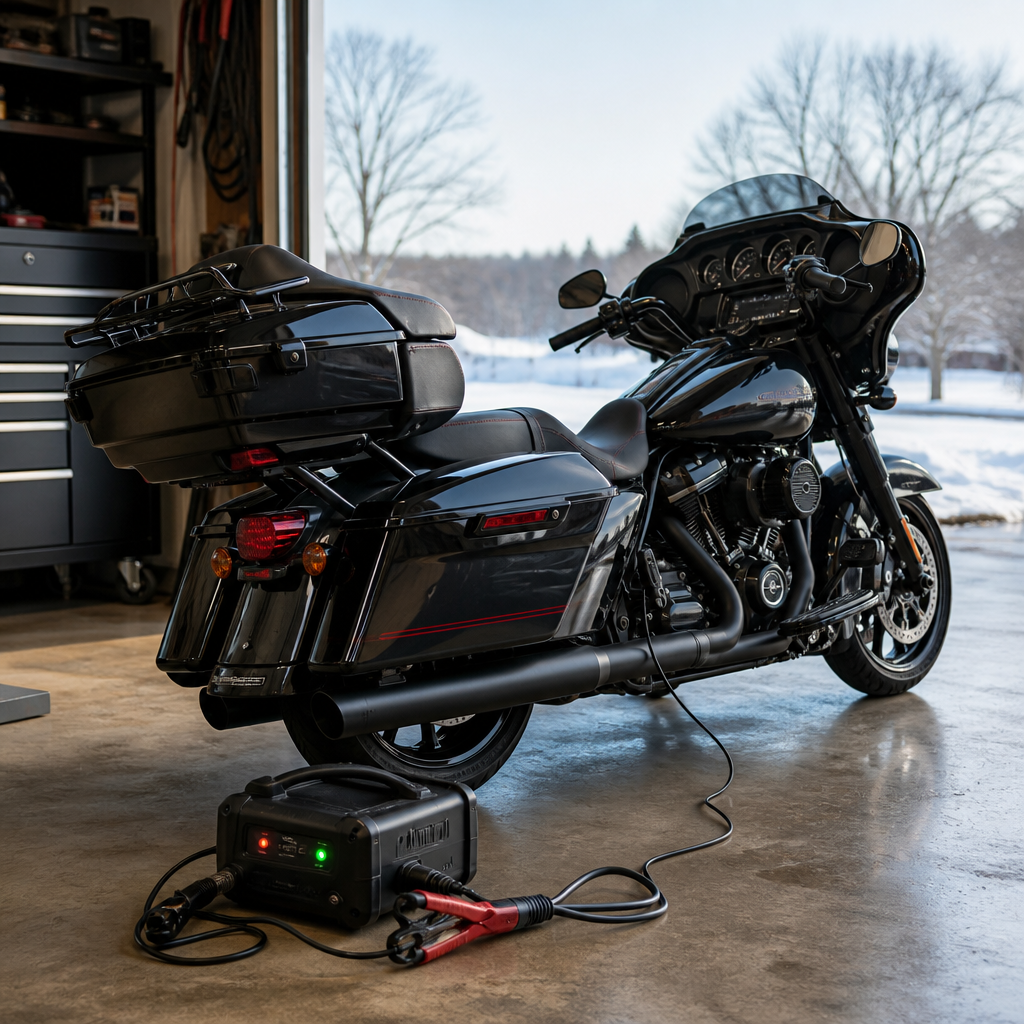
If the motorcycle will sit longer than two weeks in cold weather, connect a lithium-compatible maintainer from a reputable brand such as Battery Tender, CTEK, or NOCO, provided the specific model is approved for lithium iron phosphate batteries. In my experience, owners get into trouble when they reuse an old tender from a previous lead-acid bike without checking the charging profile. A proper maintainer should monitor voltage and supply charge only as needed, not continuously force current into the pack.
Storage environment matters too. A dry garage is more important than a warm one, but temperature stability helps. If the bike is stored in a detached building that drops below freezing, inspect battery status more often. Do not rely on starting the bike occasionally and letting it idle. Modern Harleys can spend that entire idle session supporting lights, fuel injection, and modules without replacing the energy used during cranking. Either ride it long enough to reach full operating conditions or keep it on an appropriate maintainer.
Before the first spring ride, disconnect the charger, check resting voltage, and perform a deliberate start. If cranking sounds labored on a battery that tested healthy, inspect ground paths and starter connections before condemning the battery. Many winter starting complaints are actually connection problems revealed by cold temperatures.
What Harley-Davidson Riders Need to Know Across M8, Twin Cam, Evo, and RevMax
As the hub for technical deep-dives, this page needs to place battery care within the larger Harley-Davidson engine landscape. Evolution models are mechanically simple and electrically modest by modern standards. They are often excellent teaching tools because faults are easier to isolate. A weak winter battery on an Evo usually points to age, poor storage, or charging-system basics such as stator output and regulator performance.
Twin Cam bikes introduced more complexity while remaining familiar to many independent shops. Cam chain tensioner concerns, oiling updates, and accessory-heavy touring setups mean electrical health should be assessed in context. A Twin Cam with heated gear wiring, add-on lights, and an old tender can present winter battery issues that are half battery chemistry and half owner-installed load management.
Milwaukee-Eight, or M8, is where battery strategy becomes central for touring owners. The engine itself is not the problem; the surrounding platform is richer in electronics and rider interfaces. On CVO and other premium touring bikes, stable system voltage affects startup confidence, module behavior, and fault logging. During diagnostics, low battery voltage can trigger misleading symptoms, including communication errors and intermittent warning messages. Good battery care therefore improves both reliability and diagnostic accuracy.
RevMax models add a different character. These engines, used in Harley-Davidson’s newer performance-oriented platforms, are liquid-cooled, high-revving, and deeply integrated with contemporary electronic control systems. They demand careful adherence to charging specifications because the bike’s performance systems depend on consistent voltage quality. Across all four families, the principle is the same: understand the platform’s electrical demands before choosing a storage routine.
Common Mistakes That Cause Winter Discharge
The first mistake is using a charger that lacks a lithium setting. The second is storing the bike partially discharged after several short rides. The third is assuming cold alone ruins batteries, when the real culprit is low state of charge combined with cold. Another common error is installing accessories directly to the battery without accounting for key-off draw. I have measured enough parasitic loads from poorly wired GPS units, amplifiers, and USB modules to know that many “bad batteries” are actually victims of aftermarket wiring.
Ignoring software and system updates can also matter on newer bikes. Manufacturers occasionally refine sleep-mode behavior or module power management. A dealer service visit may not sound related to battery life, but on complex motorcycles it can be. Finally, riders often replace the battery before inspecting the charging system. On a healthy Harley-Davidson, charging voltage should be confirmed at the battery with the engine running, then compared against service specifications and the battery maker’s limits. Replacing parts without those checks is expensive guesswork.
Conclusion
Protecting a 2026 CVO lithium-ion battery through winter is less about tricks and more about disciplined electrical care. Start with a fully charged battery, store the bike with a lithium-approved maintainer when downtime will be extended, avoid charging a frozen battery unless the manufacturer permits it, and verify real voltage rather than guessing. Those habits prevent deep discharge, preserve cranking power, and reduce the false diagnostic trails that low voltage creates on electronically sophisticated Harleys.
As a technical hub for Harley-Davidson deep-dives, this topic connects directly to M8, Twin Cam, Evo, and RevMax ownership. Older platforms teach the fundamentals, while newer platforms make those fundamentals nonnegotiable. The more electronics your bike carries, the more important winter battery management becomes. If you want reliable spring starts, longer battery life, and cleaner diagnostics year-round, build a battery routine now and use this hub as your starting point for the rest of the Harley-Davidson technical series.
Frequently Asked Questions
Why is lithium-ion battery care especially important for a 2026 CVO during winter storage?
Lithium-ion battery care matters more on a 2026 CVO because the battery does far more than crank the engine. On a modern Harley-Davidson touring platform, it also helps support security systems, infotainment memory, electronic rider aids, control modules, and other always-on or standby functions that continue to draw power even when the bike is parked. During winter, that small but constant parasitic load becomes more significant because the motorcycle is often ridden less frequently, started for shorter periods, or left sitting for days or weeks at a time. Those patterns can allow the battery’s state of charge to fall lower than many riders realize.
Cold weather adds another layer of stress. Lithium-ion batteries generally hold voltage well, but low temperatures can reduce available cranking performance and make a partially discharged battery feel much weaker than it would in mild conditions. If the battery drops too far during storage, the bike may not start reliably, and repeated low-voltage events can interfere with the stable electrical environment modern electronics expect. On a premium touring motorcycle like the 2026 CVO, protecting battery voltage through the winter is not just about convenience. It is about preserving starting reliability, avoiding unnecessary strain on electrical components, and preventing the kind of deep discharge that can shorten battery life.
What causes winter battery discharge on a 2026 CVO even when the motorcycle is not being ridden?
The most common cause is parasitic draw from the motorcycle’s onboard systems. Even when the ignition is off, the battery may still be supplying low-level power to a security module, keyless functions, memory retention for infotainment settings, clock functions, and various electronic control units. Each individual demand may be small, but over time those draws add up. If the motorcycle sits for extended periods without being ridden long enough to replace that energy, the battery gradually loses charge.
Winter storage habits can make the problem worse. Riders sometimes start the motorcycle briefly in the garage, let it idle for a few minutes, and shut it off thinking they are helping the battery. In reality, short run times may not restore the energy used during starting, especially when cold oil, cold ambient temperatures, and electrical accessories increase demand. Repeated short starts can leave the battery at a lower state of charge than before. Add in freezing or near-freezing temperatures, and the battery may have less effective output available right when the engine needs the strongest crank. Another factor is improper charging equipment. A charger that is not designed specifically for motorcycle lithium-ion batteries can undercharge, overcharge, or maintain the battery incorrectly. That is why understanding both the bike’s standby electrical load and the correct charging strategy is essential for winter battery care.
How should I store and maintain the 2026 CVO lithium-ion battery to avoid winter discharge?
The best approach is to keep the battery at a healthy state of charge before storage begins, then maintain it with equipment approved for lithium-ion motorcycle batteries. Before parking the bike for an extended winter period, make sure the battery is fully charged according to the battery and motorcycle manufacturer’s guidance. If the motorcycle will sit for more than a short period, connect a compatible lithium-specific battery maintainer rather than a generic tender intended for conventional lead-acid batteries. The charger should be designed to use the correct charging profile for lithium chemistry and should not rely on old-style desulfation or high-voltage recovery modes that may be unsuitable for lithium batteries.
Storage environment also matters. A dry, stable-temperature garage is better than a location exposed to wide swings in temperature and humidity. While many riders focus only on extreme cold, repeated cycling between cold nights and warmer days can still create less-than-ideal storage conditions. If practical, store the motorcycle where temperatures remain more moderate. Also reduce avoidable electrical load by confirming all accessories are fully shut down before leaving the bike parked. If you use add-on devices such as GPS mounts, auxiliary lighting modules, or aftermarket electronics, verify that none of them are drawing power continuously. For longer storage, it is wise to check battery status periodically rather than assuming the system is fine all season. A consistent maintenance routine is much easier than trying to recover a deeply discharged battery in late winter.
Can I use any battery tender on a 2026 CVO lithium-ion battery, or do I need a special charger?
You should use a charger or maintainer specifically rated for lithium-ion motorcycle batteries and compatible with the battery installed in the 2026 CVO. This is important because lithium-ion batteries charge differently than traditional lead-acid or AGM batteries. A charger built for older battery types may include charging stages or maintenance modes that are harmless for lead-acid chemistry but inappropriate for lithium-ion cells. In some cases, using the wrong charger can reduce performance, shorten service life, or create safety concerns.
A proper lithium-compatible maintainer is designed to deliver the correct voltage and charging logic without applying unnecessary float behavior or reconditioning cycles meant for conventional batteries. Riders often assume a tender is a tender, but that is one of the most common mistakes in modern battery care. Always confirm the charger’s specifications, not just the brand name. It should explicitly state that it supports lithium motorcycle batteries. It is also a good idea to follow Harley-Davidson guidance for charging through the bike’s connector points versus direct battery connection, especially if the motorcycle includes integrated electrical management features. When in doubt, using the manufacturer-recommended charger or a well-matched equivalent is the safest choice for preserving battery health over winter.
What are the warning signs of a weak or discharged lithium-ion battery on a 2026 CVO, and what should I do if I notice them?
Common warning signs include slow or hesitant cranking, a dash or infotainment system that resets unexpectedly, dim or flickering displays during startup, intermittent warning messages, failure of accessories to initialize correctly, or security and keyless systems behaving inconsistently. On a modern CVO, low voltage can show up in ways that are less obvious than a simple no-start condition. Because so many systems rely on clean, stable voltage, a battery that is only partially discharged may still cause unusual electronic symptoms before it becomes completely unable to start the motorcycle.
If you notice any of these issues, avoid repeated starting attempts, especially in cold weather. Repeated cranking can pull the battery down further and make recovery more difficult. Instead, check the battery’s state of charge and connect an appropriate lithium-ion charger as soon as possible. If the battery returns to full charge and the symptoms disappear, the issue may have been winter discharge from inactivity. If the battery will not accept charge normally, loses charge again quickly, or continues to produce low-voltage symptoms after charging, the problem may involve battery degradation, an abnormal parasitic draw, charging system issues, or an accessory draining power while parked. At that point, a proper diagnostic inspection is the smart move. Catching the problem early can prevent a dead battery, inconvenient winter breakdowns, and unnecessary stress on the CVO’s electrical system.