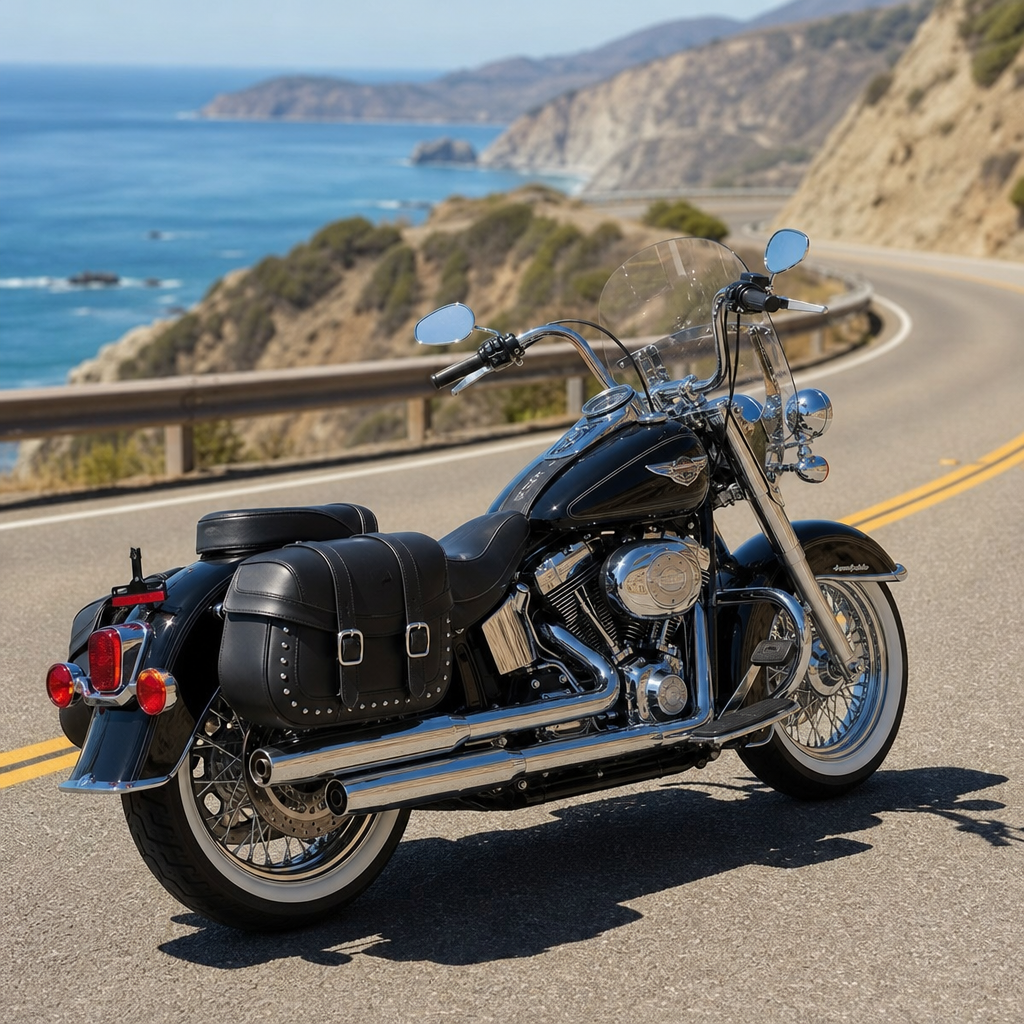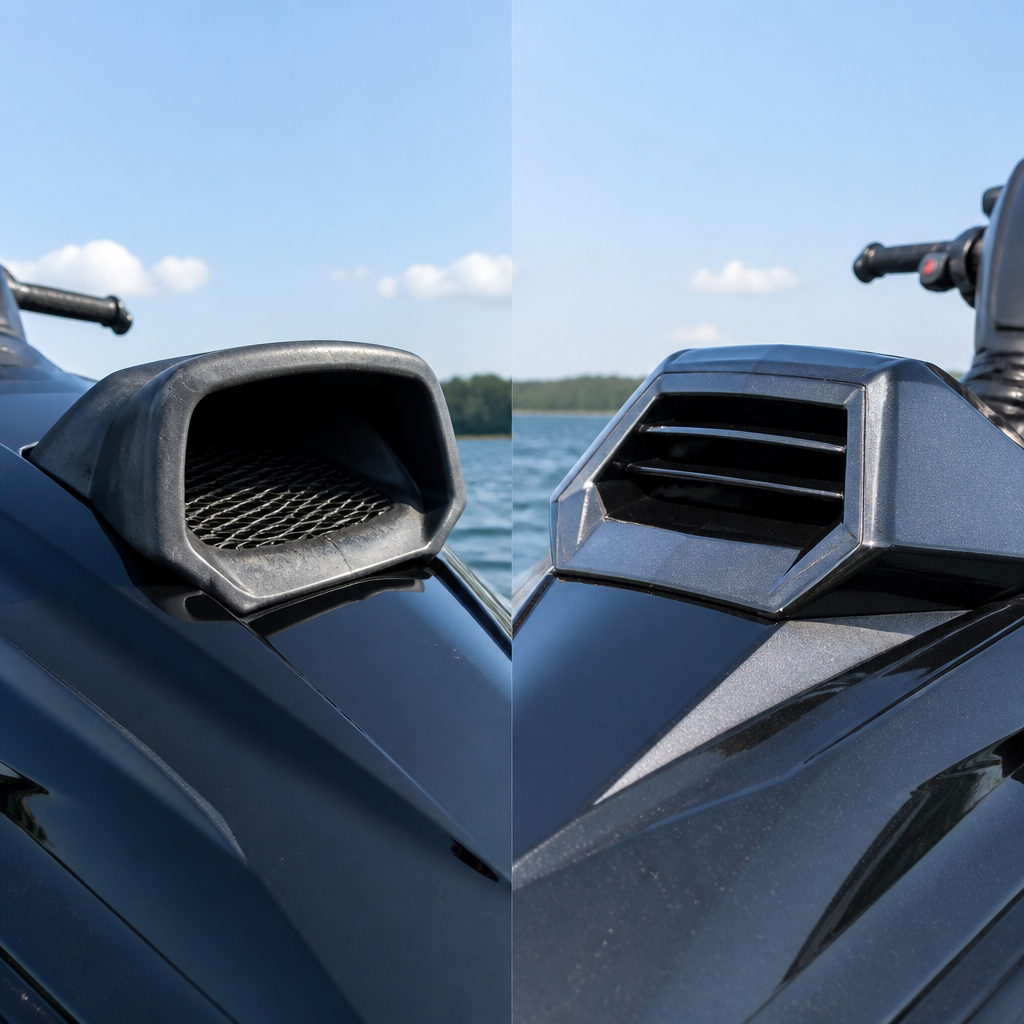
The 2027 Harley-Davidson 121 HO gives touring riders a new benchmark for big-inch Milwaukee-Eight performance, and one of the most important questions surrounding it is simple: does the Heavy Breather or the Ventilator deliver better intake efficiency? Intake efficiency is the engine’s ability to draw in clean, dense air with minimal restriction, stable flow, and acceptable inlet temperature across the rpm range where the motorcycle actually operates. On the 121 HO, that matters because Harley’s high-output calibration, cam timing, and exhaust tuning can only deliver their full effect when the induction side keeps pace.
I have spent years comparing Harley intake systems on dynos, in tuning sessions, and on road tests, and the same lesson keeps repeating: air cleaner choices are never cosmetic on a performance bagger. They affect torque shape, throttle response, rider comfort, rain tolerance, service intervals, and the headroom available for later upgrades. For owners shopping the 2027 121 HO, the Heavy Breather versus Ventilator debate is really a broader technical gateway into Harley-Davidson engine development, because each intake design highlights how Milwaukee-Eight engines breathe differently from Twin Cam, Evolution, and RevMax platforms.
This article serves as the central hub for Technical Deep-Dives: M8, Twin Cam, Evo, and RevMax. It explains how intake design works on the 121 HO, where the Heavy Breather and Ventilator each excel, and how to think about airflow strategy across Harley’s modern and legacy engines. If you are building a roadmap for future reading on camshafts, throttle bodies, cylinder head flow, exhaust scavenging, oil control, or tuning methodology, this page connects those topics through the one system every engine depends on first: the path air takes from atmosphere to combustion chamber.
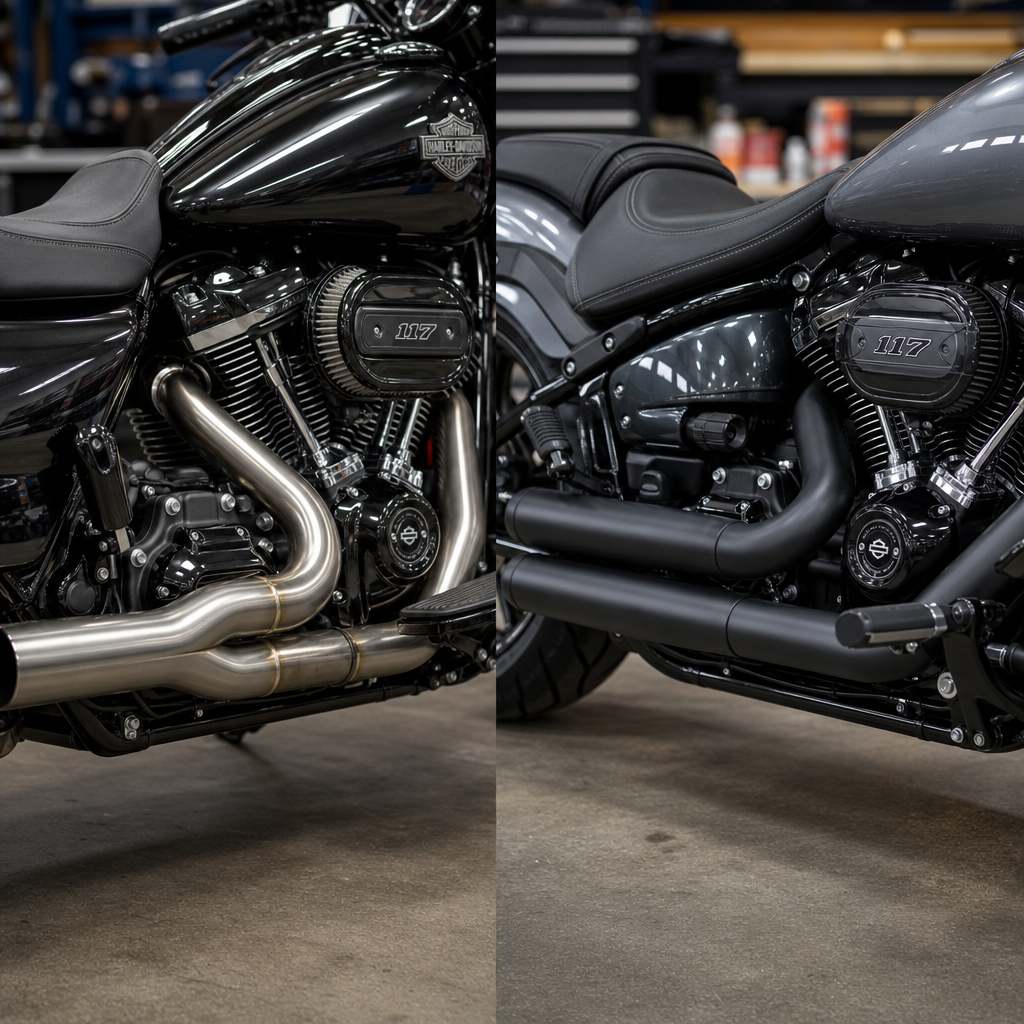
For clarity, the Heavy Breather is Harley-Davidson’s forward-facing, exposed-filter performance intake, traditionally aimed at maximizing direct airflow and visual aggressiveness. The Ventilator is a more compact high-flow assembly that generally preserves tighter packaging while improving intake area over stock touring cleaners. Both can support strong numbers, but efficiency is not measured by peak cfm alone. Real intake efficiency includes pressure drop, filter media effectiveness, inlet tract turbulence, sensitivity to rider leg interference, water ingestion risk, crankcase reversion management, and how the chosen cleaner interacts with the 121 HO’s electronic throttle, fuel tables, and volumetric efficiency curve.
Why the 2027 121 HO changes the intake conversation
The 121 HO sits at the top of the current factory touring discussion because it combines displacement, more aggressive breathing intent, and calibration sophistication in a package many owners will leave mostly stock except for intake and exhaust. That makes the air cleaner a disproportionately influential modification. On a mild engine, a freer-flowing filter may show only small gains. On a 121 cubic-inch high-output engine, especially one asked to pull hard above the midrange, restriction on the inlet side shows up quickly as slower manifold filling, reduced torque carry, and greater sensitivity to heat soak.
Milwaukee-Eight architecture already improved combustion efficiency compared with Twin Cam by using four valves per cylinder, centrally located spark plugs, and stronger tumble characteristics. Those features let the engine make better use of airflow once it enters the port. In practice, that means upstream restrictions become easier to expose on the dyno. When I compare intake swaps on recent M8 touring bikes, the difference often appears less as a giant peak-horsepower spike and more as improved area under the curve from roughly 3,000 rpm to the upper pull, where touring riders pass traffic, merge, or run loaded with passenger and luggage.
The 121 HO also matters as a hub topic because it provides a reference point for understanding Harley’s broader engine families. Evo taught simplicity and durability. Twin Cam introduced new packaging and tuning challenges around cam support, heat, and breathing upgrades. Milwaukee-Eight delivered a much more modern top end. RevMax pushed Harley into liquid cooling, higher rpm, and variable operating expectations. Intake efficiency means something slightly different on each platform, but the underlying principles stay consistent: colder, cleaner, less turbulent air makes more reliable power.
Heavy Breather vs. Ventilator on the 121 HO
The direct answer is this: the Heavy Breather usually offers the higher ceiling for outright airflow on the 2027 121 HO, while the Ventilator usually offers the better balance for most street-touring riders. That conclusion comes from how each unit manages entrance area, flow path length, exposure, and packaging. A forward-facing Heavy Breather benefits from ram-air-style orientation at speed and a less convoluted path into the throttle body. Its shape can reduce pressure drop at high demand, which is why it often shows the best gains on engines with cams, headwork, and larger throttle bodies.
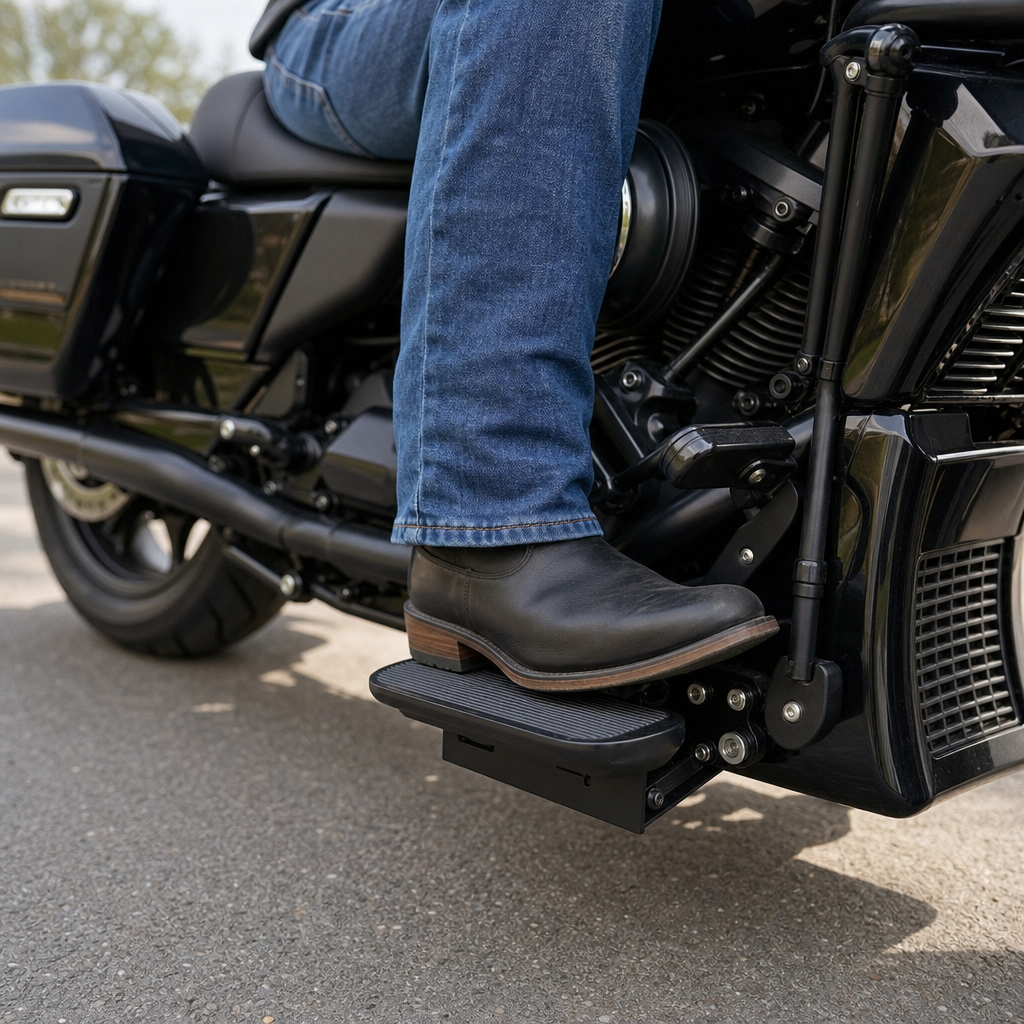
The Ventilator, however, often performs closer to the Heavy Breather than bench-racing suggests, particularly on near-stock or Stage-oriented combinations. Its more compact form can reduce interference with the rider’s knee, preserve better side clearance, and lower the practical downsides that make some owners remove exposed intakes later. On a 121 HO used for long-distance road work, consistency matters as much as peak flow. The Ventilator tends to be easier to live with in traffic, rain, tight parking maneuvers, and daily cleaning routines, while still supporting meaningful performance gains over stock.
| Criterion | Heavy Breather | Ventilator |
|---|---|---|
| Peak airflow potential | Usually higher | High, but typically slightly lower |
| Best use case | Maximum output builds | Street and touring balance |
| Rider ergonomics | Can intrude on leg space | Usually better packaging |
| Weather exposure | More exposed to rain and debris | Generally better protected |
| Tuning sensitivity | Higher on modified engines | Moderate and predictable |
On the dyno, the difference between these systems depends heavily on the complete combination. With stock heads and a mild calibration, do not expect miracles from either intake alone. Once cam timing and exhaust flow improve, the Heavy Breather tends to separate itself more clearly. Yet intake efficiency is not only about the highest cfm at full lift or wide-open throttle. A Ventilator that keeps filtration quality high, resists heat soak reasonably well, and maintains repeatable fueling can be the smarter performer over thousands of real touring miles. For many riders, the best intake is the one that preserves both usable power and everyday function.
How intake efficiency is measured in the real world
When evaluating the Heavy Breather versus Ventilator, I look at five metrics. First is pressure drop across the filter and backing plate at a given airflow rate. Lower pressure drop generally means the engine spends less work pulling air in. Second is inlet air temperature, because hotter air is less dense and reduces oxygen content per volume. Third is torque curve shape, not just peak horsepower. Fourth is filtration efficiency, usually expressed by the media’s ability to stop fine particles without excessive restriction. Fifth is repeatability across conditions such as heat, rain, and stop-and-go riding.
A chassis dyno reveals only part of the picture. Controlled back-to-back runs can identify torque and horsepower changes, but on-road logs from tuning tools are equally useful. I watch manifold absolute pressure, throttle angle, intake air temperature, short-term and long-term fuel correction behavior where available, and whether spark control becomes more active due to temperature or load changes. On Harley platforms tuned with Screamin’ Eagle calibrations or aftermarket systems such as Dynojet Power Vision, TechnoResearch, or TTS, these patterns tell you whether the intake is helping the engine breathe cleanly or simply making more noise.
There is also a maintenance dimension that enthusiasts underestimate. An exposed conical filter with excellent flow can lose its advantage if it is over-oiled, under-oiled, or loaded with grime. A compact high-flow element can perform very well if serviced correctly and sealed tightly to its backing plate. Leaks after the filter are especially harmful because they bypass measured airflow assumptions and contaminate the engine. On the 121 HO, where owners often expect premium durability alongside premium output, the disciplined choice is the intake that you will inspect, clean, and reassemble correctly every time.
What this means for Milwaukee-Eight, Twin Cam, Evo, and RevMax deep-dives
As the hub for Harley-Davidson technical deep-dives, this comparison helps frame the larger engine-family story. Milwaukee-Eight engines, including the 121 HO, respond strongly to intake and exhaust changes because the four-valve heads can capitalize on improved cylinder filling. Twin Cam engines often show meaningful gains too, but their breathing limitations and vibration context mean results depend more on cam choice, headwork, and manifold sealing. Evolution engines reward straightforward, well-matched upgrades rather than oversized components. RevMax engines, with liquid cooling and higher operating rpm, require a more systems-based view where intake tuning, electronics, and emissions hardware all interact tightly.
For Milwaukee-Eight articles linked from this hub, the key topics are throttle body sizing, injector duty cycle, runner velocity, intake valve closing points, and reversion control. For Twin Cam, readers should focus on cam plate generations, chain versus gear drive implications, intake manifold integrity, and how port velocity affects rideability. For Evo, the important lessons involve preserving low-end response, matching carburetion or EFI upgrades to realistic displacement, and avoiding parts combinations that hurt signal strength. For RevMax, the future-facing discussion centers on ride-by-wire strategy, airbox resonance, knock control, and the packaging constraints of adventure and sport chassis.
Seen this way, Heavy Breather versus Ventilator is not an isolated shopping question. It is an entry point into how Harley engines make power. The common mistake across all four families is choosing the largest or most aggressive-looking intake without confirming that the heads, camshaft, throttle body, exhaust, and tune can use the extra airflow. Efficient systems are matched systems. The best Harley builds I have tuned were never random collections of “high-flow” parts; they were balanced combinations where every component supported the target rpm range and intended riding style.
Choosing the right intake for your 2027 121 HO build
If your 2027 121 HO will remain a mostly stock touring bike with slip-ons, calibration refinement, and regular long-distance use, the Ventilator is usually the better answer. It provides strong real-world breathing improvement, cleaner packaging, and fewer ergonomic compromises. If your plan includes a larger throttle body, performance cam, cylinder head work, and a tune aimed at extracting the upper end of the 121 HO’s potential, the Heavy Breather deserves serious consideration because it leaves more airflow headroom on the table for later stages.
Be honest about environment and usage. Riders in wet climates or dusty rural areas should weigh filter exposure heavily. Riders who spend ten-hour days in the saddle should consider knee room and leg movement, not just dyno charts. Anyone comparing options should also budget for proper tuning; the best intake on paper can underperform when fueling and spark are not recalibrated to suit the changed airflow. A quality map, validated by logs or dyno work, is not optional on a high-output engine if you want safe, repeatable performance.
The headline takeaway is straightforward. For pure intake efficiency at the top end, the Heavy Breather generally wins on the 2027 121 HO. For the best blend of performance, packaging, and touring practicality, the Ventilator often wins overall. Use this hub as your starting point for deeper Harley-Davidson technical reading across Milwaukee-Eight, Twin Cam, Evo, and RevMax topics, then choose the intake that matches your engine combination rather than the one with the loudest reputation. When the parts work together, the 121 HO responds with the kind of effortless, authoritative power that makes every mile feel easier. Explore the linked deep-dives next and build your combination with a plan.
Frequently Asked Questions
1. Which intake is generally more efficient on the 2027 Harley-Davidson 121 HO: the Heavy Breather or the Ventilator?
In most real-world touring use, the answer depends on what you mean by “efficient.” If you define intake efficiency as the ability to deliver a large volume of clean, dense air with minimal restriction at higher airflow demand, the Heavy Breather often has the edge because it is typically designed around a more aggressive flow path and larger effective intake area. That can make it especially attractive on the 2027 121 HO, where the engine’s larger displacement and higher-performance calibration increase the importance of reducing intake restriction under load.
That said, the Ventilator can remain extremely competitive because efficiency is not just about peak airflow. It is also about maintaining stable, usable airflow across the rpm and throttle positions where a touring bike actually spends most of its time. On a big-inch Milwaukee-Eight like the 121 HO, much of the riding happens in the broad midrange rather than only at wide-open throttle. In that operating window, a well-designed Ventilator may provide excellent balance between filter area, flow quality, weather protection, packaging, and rider comfort. In other words, the Heavy Breather may win the “maximum potential airflow” conversation, while the Ventilator may win for riders prioritizing broad, practical efficiency across mixed riding conditions.
The key takeaway is that intake efficiency on the 121 HO should be judged by the whole operating envelope: part-throttle response, sustained highway performance, resistance to heat soak, filtration quality, and consistency over time. Peak dyno numbers matter, but on a touring motorcycle, repeatable performance in varying temperatures, road speeds, and weather conditions matters just as much.
2. What exactly does intake efficiency mean on the 121 HO, and why is it such an important topic?
On the 2027 121 HO, intake efficiency refers to how effectively the engine can pull in air that is clean, cool, dense, and delivered with minimal turbulence or restriction. The goal is not merely to move more air, but to move air in a way that supports stable combustion and reliable power throughout the engine’s usable rpm range. For a large-displacement touring engine, this matters because airflow limitations can directly affect throttle response, torque delivery, top-end power, fuel metering accuracy, and even engine feel under load.
The reason this topic gets so much attention on the 121 HO is simple: the engine is built to move a substantial amount of air. A high-output version of the Milwaukee-Eight naturally puts more demand on the intake path than a milder setup. Once airflow demand rises, differences in intake architecture become more meaningful. Filter media, housing shape, internal tract smoothness, inlet location, and heat exposure can all influence how much usable air reaches the throttle body and combustion chambers.
For touring riders, intake efficiency is especially important because the bike is expected to perform under a wide range of conditions. It may spend hours at highway speeds, carry luggage and a passenger, run through hot weather, climb grades, and still need instant roll-on torque. An intake that looks good in a short burst on a dyno but suffers from heat exposure, inconsistent airflow, or poor contamination control may not be the best real-world choice. That is why the Heavy Breather versus Ventilator comparison is about much more than appearance or even raw advertised flow numbers. It is about how each design supports the way the 121 HO is actually used.
3. Does the Heavy Breather always make more power than the Ventilator on a 2027 121 HO?
No, not always. While the Heavy Breather is often associated with stronger high-rpm airflow potential, actual power gains depend on the complete setup of the motorcycle. The intake is only one part of a larger system that includes throttle body behavior, exhaust flow, cam timing, fuel and ignition calibration, cylinder head characteristics, and even ambient temperature. On the 121 HO, an intake can only outperform another if the rest of the combination is able to take advantage of that additional airflow.
In many cases, a Heavy Breather may show an advantage near the upper end of the rev range or under wide-open throttle because it is intended to minimize intake restriction when engine demand is highest. However, that does not automatically mean the power difference will be large, noticeable in everyday riding, or worth the trade-offs for every owner. A Ventilator may deliver nearly identical seat-of-the-pants performance in the midrange, where touring riders spend far more time, especially if the calibration is well sorted and the overall combination is not airflow-limited.
Another factor is tuning quality. An intake swap without proper fuel mapping can leave performance on the table or even make the bike run less cleanly and consistently. On a modern high-output touring platform, the ECU strategy and supporting tune heavily influence whether a freer-flowing intake translates into real gains. If two different intake systems are each paired with optimized calibration, the Heavy Breather may hold the stronger peak-power argument, but the Ventilator can still be an excellent performer when judged by rideability, smoothness, and broad torque delivery.
4. How do rider comfort, weather exposure, and touring practicality affect the Heavy Breather vs. Ventilator decision?
These factors matter more than many riders expect, especially on a motorcycle like the 2027 121 HO that is built for serious road miles. Intake efficiency is not purely a laboratory concept. A system that flows extremely well but creates ergonomic annoyance, is more exposed to rain, or requires more frequent service may be less desirable for long-distance touring. The Heavy Breather’s more outward and forward-oriented design can offer flow advantages, but depending on exact configuration, it may also change knee room or the way the rider interfaces with the bike. For some riders, that is a non-issue. For others, especially those spending all day in the saddle, comfort becomes a major part of the equation.
Weather management is another practical consideration. Touring riders encounter rain, road spray, dust, and changing climates. A more exposed intake arrangement can sometimes increase airflow opportunity, but it may also place a greater burden on filter maintenance and water management. The Ventilator is often favored by riders who want a more compact, integrated setup that balances performance with day-in, day-out usability. A design that protects the filter well and maintains consistent airflow in imperfect conditions can be highly efficient in the real world, even if another system has a theoretical edge in ideal conditions.
Maintenance intervals and service access also deserve attention. If one intake is easier to inspect, clean, and maintain properly, it may preserve its efficiency better over time. A neglected high-flow system can quickly lose its advantage if the filter loads up with debris or the sealing surfaces are not kept in good condition. For riders putting major miles on a 121 HO, practicality is not secondary to efficiency; it is part of efficiency.
5. What should riders look at when choosing between a Heavy Breather and a Ventilator for the 2027 121 HO?
Start with riding style. If the 121 HO is being set up for the strongest possible intake performance under high-load, high-air-demand conditions, the Heavy Breather is often the more logical candidate. Riders who prioritize aggressive acceleration, upper-rpm breathing, and future performance modifications may appreciate the extra airflow headroom it can provide. If the motorcycle will later receive supporting upgrades such as exhaust, cam changes, or custom tuning, choosing the intake with the greater flow ceiling can make strategic sense.
If the goal is a refined touring package with strong overall performance, predictable behavior in all weather, a more compact profile, and excellent all-around rideability, the Ventilator may be the smarter fit. That does not mean it is the lesser performer; it means its strengths may align better with the actual mission of the bike. On a touring Harley, broad midrange response, filtration consistency, comfort, and low-maintenance operation can be just as valuable as squeezing out a little more airflow at the top.
Riders should also evaluate data carefully. Look beyond marketing claims and focus on independent dyno comparisons, air-fuel consistency, inlet air temperature tendencies, filtration quality, and owner reports from long-distance use. Most important, consider whether the intake will be paired with proper tuning. On the 2027 Harley-Davidson 121 HO, the best intake is not automatically the one with the biggest visual presence or the highest theoretical flow rating. It is the one that delivers the most stable, repeatable, and useful airflow for the way the motorcycle is actually ridden.