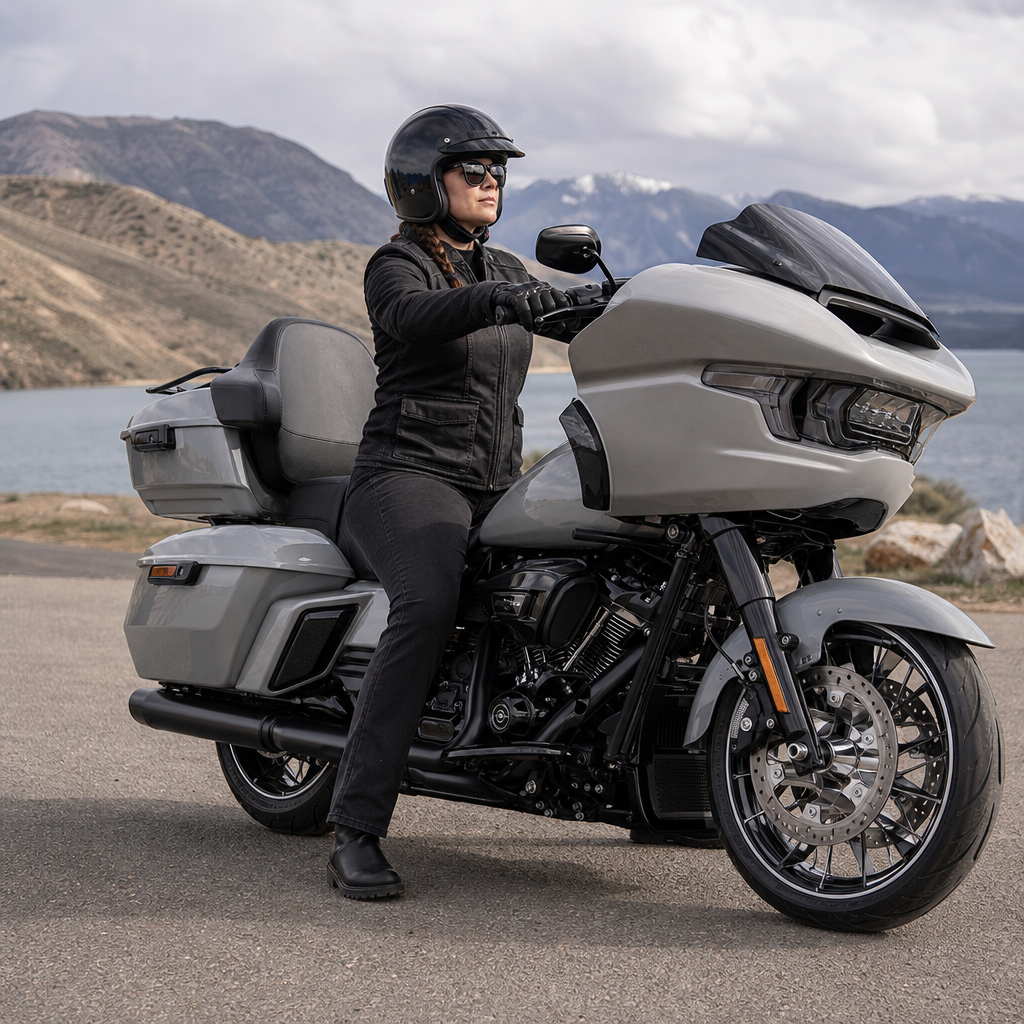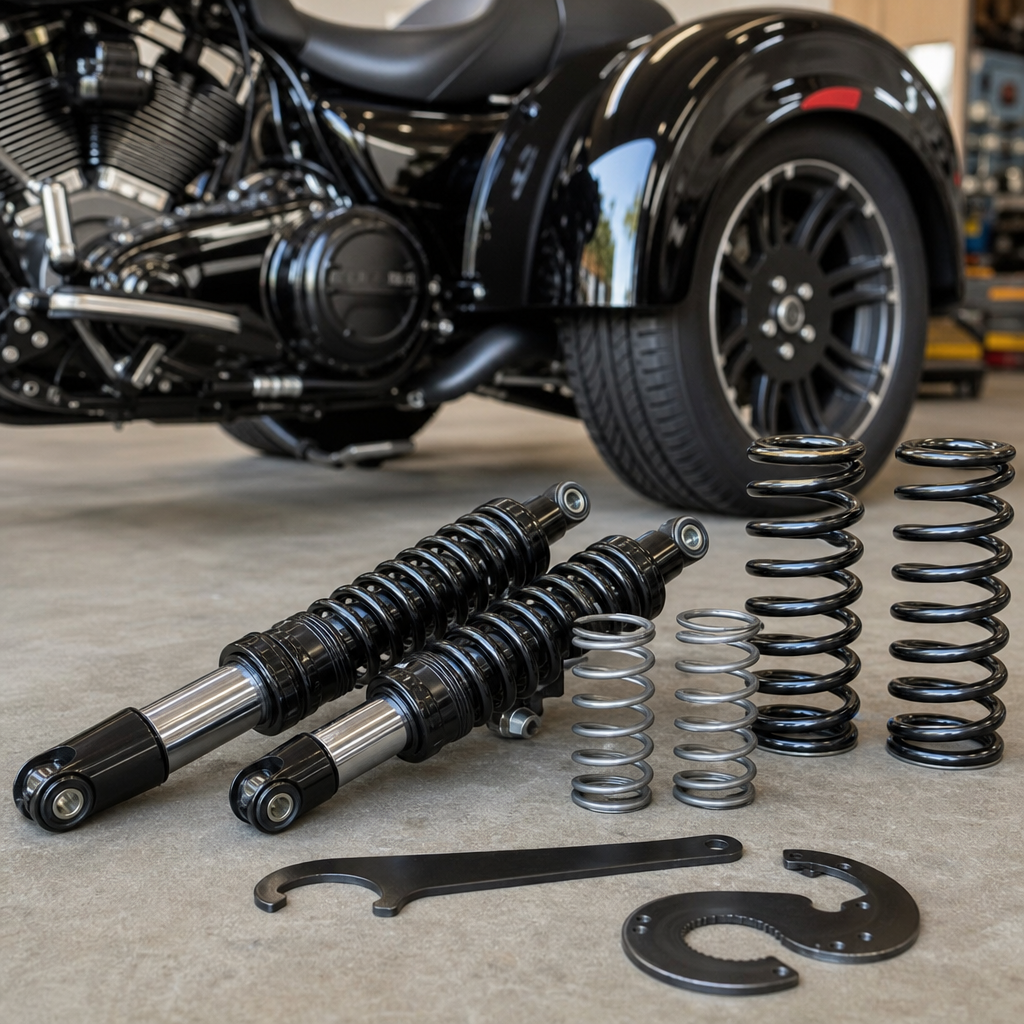
Heavy Rider Setup: Upgrading Springs on the 2026 H-D Trike Emulsion Shocks starts with one hard truth: the stock suspension on a Harley-Davidson trike is designed around an average load case, not every rider, passenger, cargo combination, or touring goal. When a heavier rider sits on a 2026 H-D trike, the rear suspension can ride too deep in the stroke, reducing ground clearance, upsetting steering balance, and making sharp-edge bumps feel harsher instead of more controlled. In practical terms, spring rate is the amount of force required to compress the spring, preload is the initial compression applied before riding, sag is how much the suspension settles under weight, and damping is the shock’s control over spring movement. Getting those four elements aligned matters because comfort, tire contact, cornering stability, and braking confidence all depend on ride height and controlled wheel motion. I have set up touring bikes and trikes for heavier riders often enough to see the same pattern repeatedly: owners try to fix bottoming with more preload alone, then complain that the ride became stiff without gaining real support. Correcting that usually means selecting the right spring for the actual load, then using preload and damping adjustment, where available, to fine-tune behavior. This hub article covers the model-specific ergonomics and performance recipes that make spring upgrades work on the 2026 Harley-Davidson trike platform, while also showing where this topic connects to seat fit, bars, floorboards, tires, and touring payload management.
Why heavier riders overwhelm stock trike shock springs
A heavier rider does not automatically need an extreme suspension build, but stock emulsion shocks have limits. Emulsion shocks mix oil and gas in one body rather than separating them with an internal piston or external reservoir. That design is durable, compact, and cost-effective, but it is more sensitive to heat and repeated heavy-load compression than premium remote-reservoir units. On a trike, where rear axle loads are substantial and luggage is common, the spring carries the bike at ride height while damping manages how quickly it moves. If the spring is too soft for the rider-plus-gear load, the trike sits low, uses travel too early, and can hit bump stops over expansion joints, bridge seams, or driveway transitions. The rider experiences this as a wallow-then-thump pattern.
Harley-Davidson trikes also magnify setup errors because they do not lean like two-wheel motorcycles. Weight transfer still occurs, but chassis attitude influences steering effort and directional stability differently. Too much rear sag can increase understeer feel, reduce front-end authority, and make the machine feel reluctant when changing lanes or holding a line through decreasing-radius corners. For taller or heavier riders, ergonomic compromises pile on quickly. A low rear ride height changes the seat-to-floorboard relationship and can rotate the pelvis rearward, increasing tailbone pressure on long rides. That is why suspension setup belongs in any serious discussion of model-specific ergonomics and performance recipes. Seat foam and backrests matter, but they cannot compensate for an overloaded spring.
Most owners first notice the problem with a passenger aboard or when loading a tour trunk and trunk rack for a week on the road. The trike may feel acceptable solo around town, then become vague and harsh on the interstate. That shift is a clue that the spring window is too narrow for the rider’s real use case. A heavy rider who tours should tune for actual touring weight, not parking-lot impressions when unladen.
How to choose the correct spring rate for a 2026 H-D trike
The correct spring rate is the one that places the suspension in the right part of its travel with the rider’s real operating weight. Real operating weight means rider, passenger if frequent, riding gear, trunk contents, accessories, and fuel. In suspension shops, we use sag numbers first because they are objective. For street use, a rear suspension target around 25 to 35 percent of total travel under laden conditions is a practical baseline, then adjusted for rider preference and available travel. If the trike settles more than that with preload near the top of its range, the spring is too soft. If it barely settles with preload backed off, the spring is too stiff.
On Harley-Davidson trikes, many heavier riders land one or two spring-rate steps above stock, not because they are chasing sport handling, but because they need to restore ride height and preserve travel. The mistake is assuming the stiffest spring is safest. Overspringing creates poor compliance on broken pavement, can reduce traction over chatter bumps, and may make the rear feel skittish if damping is unchanged. A proper spring upgrade matches the rider’s total mass and intended use, then leaves enough preload adjustment to account for solo versus two-up riding.
When evaluating options, ask for spring rate data in clear units, rider weight assumptions, and whether the recommendation is based on measured sag. Reputable suppliers provide all three. Progressive Suspension, Legend Suspensions, and Traxxion Dynamics are recognized names riders often compare, while Race Tech’s spring-rate methodology remains useful for thinking systematically even when buying model-specific parts elsewhere. The strongest recommendation is the one tied to dimensions, travel, and load, not vague language such as heavy duty or touring plus.
| Rider Scenario | Common Symptom | Likely Spring Need | Expected Result |
|---|---|---|---|
| 250 lb rider, solo, light cargo | Frequent deep sag, occasional bottoming | Moderately higher spring rate | Better ride height and smoother control |
| 275 lb rider, passenger on weekends | Harsh hits with preload maxed | One to two rate steps up | Usable preload range and less bottoming |
| 300 lb rider, full touring load | Wallow, reduced clearance, vague steering | Touring-focused heavy-load spring | Stable chassis and preserved travel |
| Heavier rider seeking comfort only | Stiff ride after preload increase | Correct spring before more preload | Support without excessive harshness |
Installation, preload setting, and sag measurement that actually work
Spring upgrades succeed or fail during setup. The hardware change is only half the job. Start by confirming the shock eye-to-eye length, bushing hardware, clearance around exhaust and bodywork, and the spring’s free length and installed length. Trikes often carry accessories that complicate access, so support the chassis correctly before removing rear shocks. Torque values should come from the service manual, and fasteners that require thread treatment should get the specified compound, not a guess. On Harley-Davidson platforms, that discipline prevents bushing bind, loosening, and alignment issues.
Once installed, measure unloaded and loaded ride height consistently from repeatable points. I prefer one mark on the chassis and one on the axle area, then a helper to steady the bike while the rider sits in normal gear with feet placed as they would be on the road. Take three measurements: fully extended, bike only, and rider laden. The difference between extended and rider laden is rider sag. If the number is excessive, increase preload only enough to hit target sag. If target sag cannot be reached without excessive preload, the spring is still too soft. If the trike tops out or feels nervous with minimal sag, the spring is too stiff.
Many riders expect preload to make the suspension softer or stiffer in the same way damping does. It does not. Preload changes ride height and the force required to begin movement from that initial position, but it does not change the actual spring rate. That is why a heavy rider on a soft spring can crank in preload, gain some height, and still bottom out over larger bumps. The spring rate remains inadequate deeper in the travel. After sag is set, road test on the same route: smooth pavement, patched asphalt, freeway joints, and one corner taken at a repeatable speed. Good setup reveals itself through consistency, not a single dramatic impression.
How spring changes affect comfort, cornering, and ergonomics
For the 2026 H-D trike owner, suspension tuning is not isolated from ergonomics. It changes how the machine fits the body and responds to control inputs. A correctly rated spring raises the rear back into its intended operating window, which can improve hip angle, reduce the sensation of sitting in a hole, and lessen the abrupt spine compression that occurs when a low-riding shock runs out of travel. Riders with lower-back sensitivity often describe the improvement not as plushness, but as reduced accumulation of fatigue across a full day. That distinction matters. The best heavy rider setup is supportive first, cushioned second.
Cornering benefits are equally tangible. On a trike, maintaining rear ride height helps the front end preserve its designed relationship to the road. Steering feels cleaner, and the machine is less likely to plow wide when loaded. Over mid-corner bumps, the rear axle tracks more predictably because the shocks have travel in reserve instead of operating near the bump zone. Braking also improves because chassis pitch becomes more consistent. If the rear suspension is under-sprung, hard stops can feel unsettled as weight transfer interacts with a sagged rear platform.
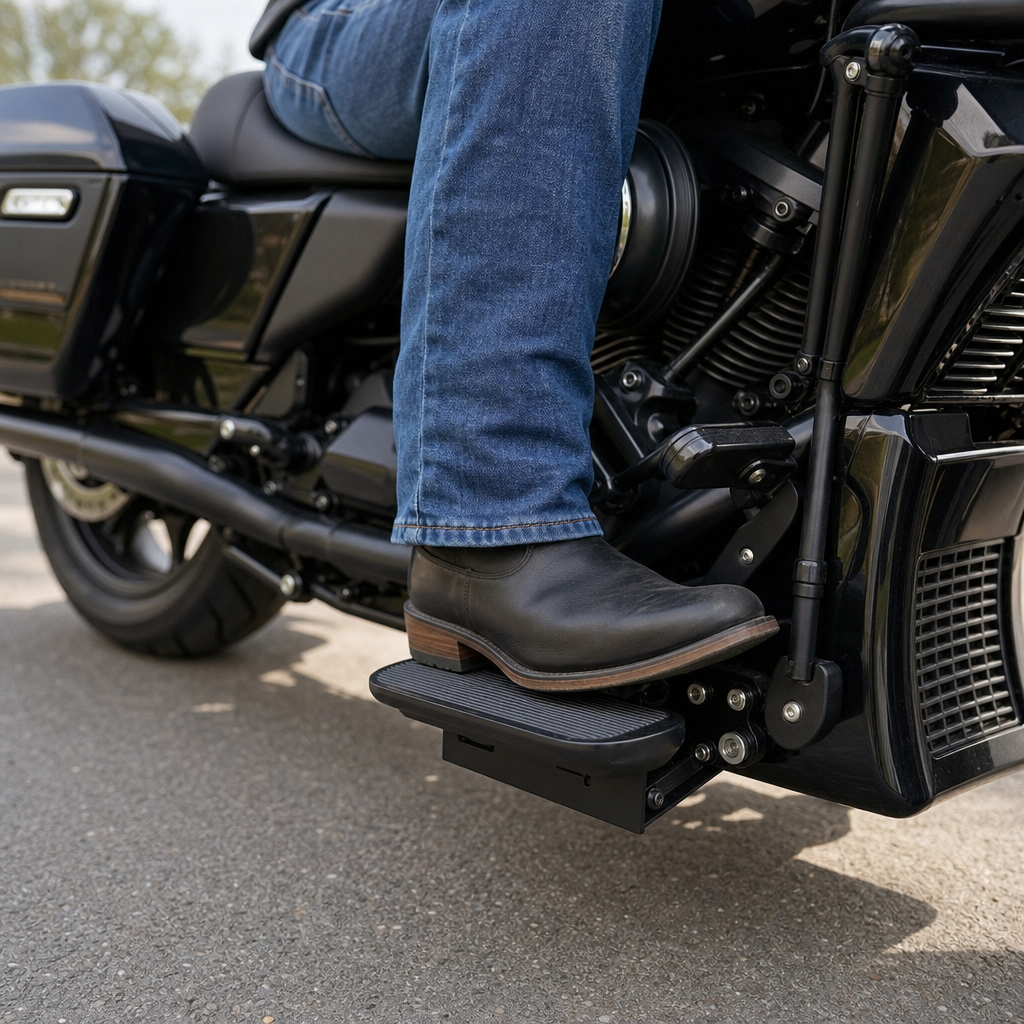
This is why model-specific ergonomics and performance recipes should be treated as a system. A heavier rider may also need a firmer seat pan, a different lumbar support position, handlebars that reduce reach strain, and floorboard or brake pedal adjustments that maintain ankle comfort after ride height changes. Tire pressure and tire construction then become part of the same conversation. I have seen riders blame seats, bars, and even wind buffeting for discomfort that was rooted in chronic rear bottoming. Correct the spring first, then refine the contact points.
Related setup recipes across the Harley-Davidson trike platform
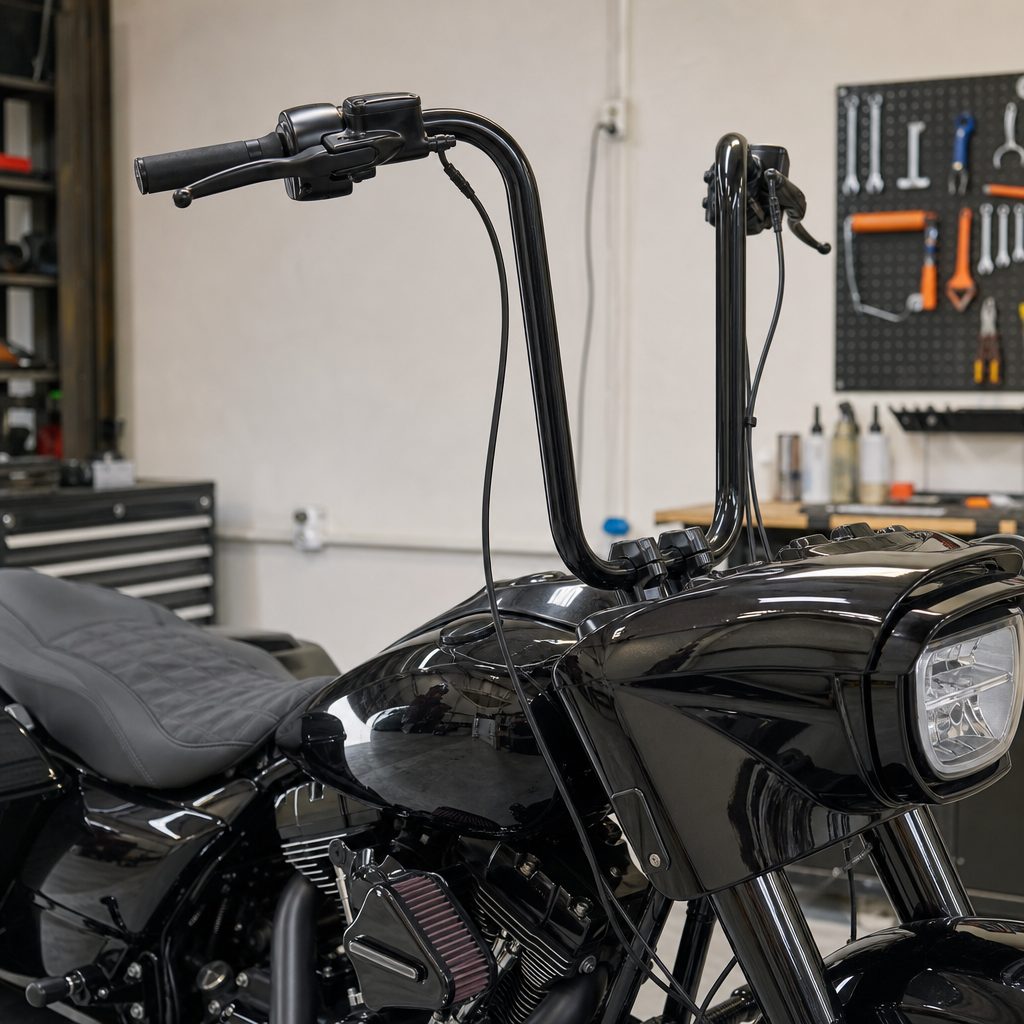
As the hub for this subtopic, this page should guide owners toward the supporting recipes that complete a heavy rider trike setup. Start with seat selection by inseam and pelvic support, because seat width and contour change effective reach to floorboards and bars. Then review handlebar positioning, especially on Tri Glide and Freewheeler touring applications, where shoulder angle strongly affects endurance. Another essential companion topic is passenger and cargo loading strategy. Packing dense weight low and forward in available storage areas reduces rear leverage and can improve suspension behavior more than riders expect. Tire setup deserves its own page as well, including pressure adjustment within manufacturer guidance, sidewall characteristics, and replacement tire choices that maintain steering feel under load.
There is also a separate recipe for riders deciding between spring-only upgrades and complete shock replacement. Spring upgrades are often the highest-value fix when damping is still acceptable and the main problem is support. Full shock replacement makes more sense when the stock emulsion units overheat on rough roads, lose composure during repeated big hits, or simply lack the damping control needed for a rider who tours aggressively. Budget matters, but so does use case. For many heavy riders, a properly selected spring on a healthy shock transforms the trike enough to postpone or eliminate the need for premium dampers.
Finally, every setup article in this cluster should point owners back to measurement. Comfort is personal, but suspension function is measurable. Document sag, preload position, tire pressure, load carried, and route impressions. That record turns random tinkering into a repeatable tuning process and helps any suspension specialist give better advice.
Conclusion
Upgrading springs on the 2026 H-D Trike emulsion shocks is the foundation of a serious heavy rider setup because it restores the one thing every other adjustment depends on: correct ride height under real load. When spring rate matches rider weight, passenger use, and touring cargo, the trike gains support without unnecessary harshness, keeps more travel in reserve, and responds more predictably in corners, over bumps, and during braking. Preload then becomes a fine-tuning tool instead of a desperate workaround, while seats, bars, floorboards, and tire choices can finally be evaluated on their own merits.
The practical takeaway is simple. Measure sag, define your true riding weight, choose a spring based on data rather than marketing labels, and test the result on familiar roads. If the trike still feels underdamped or heat-sensitive after the spring change, move to the companion recipe on full shock upgrades. If fit remains off, continue through the linked ergonomics guides for seats, controls, and cargo layout. Build the setup as a system, and the 2026 Harley-Davidson trike will carry a heavier rider with far more comfort, control, and confidence. Start with the springs, record your numbers, and tune from there.
Frequently Asked Questions
Why do heavier riders often need spring upgrades on the 2026 H-D trike emulsion shocks?
The factory rear suspension on a 2026 Harley-Davidson trike is built around a broad, average-use target. That means it is intended to work reasonably well for a wide range of riders, but it is not optimized for every real-world load. If the rider is significantly heavier than average, or regularly rides with a passenger, luggage, trailer tongue weight, or touring gear, the stock springs can allow the rear suspension to sit too low in its travel before the ride even begins. This is commonly described as riding too deep in the stroke.
When that happens, several issues show up at once. First, the trike loses available suspension travel, so impacts that should be absorbed smoothly feel sharper and less controlled. Second, reduced ride height can affect steering attitude and chassis balance, making the front end feel less precise. Third, lower rear ride height can reduce ground clearance, which matters on uneven roads, driveway transitions, and during spirited cornering. A proper spring upgrade addresses the root cause by increasing spring rate to better support the actual load, allowing the shocks to operate in the correct part of their travel range instead of constantly hovering near the bottom of the stroke.
It is also important to understand that a heavier spring does not automatically mean a harsher ride. In many cases, the opposite is true. If the stock spring is too soft, the suspension can blow through travel too easily and hit bump zones that feel abrupt and uncontrolled. A correctly matched spring helps the shock move through its travel more predictably, improving support, comfort, and stability at the same time.
What are the signs that the stock springs are too soft for my weight and riding setup?
There are several practical warning signs. One of the most obvious is excessive sag, meaning the rear of the trike compresses too much just from the rider climbing on, or from adding a passenger and cargo. If the rear sits noticeably low even after preload adjustments, that is a strong indication the stock spring rate is below what your setup needs. Another sign is frequent bottoming or near-bottoming over potholes, bridge joints, expansion cracks, and sharp-edged bumps. If the rear suspension feels like it runs out of travel too quickly, the spring may not be holding the trike high enough in the stroke.
Handling symptoms also matter. A trike with undersprung rear shocks may feel less composed in turns, less settled over mid-corner bumps, or more wallowy when the road surface gets uneven. Some riders describe it as a floating or lazy rear response, while others notice that the steering balance feels off because the rear is riding lower than intended. You may also find that comfort gets worse, not better, despite the softer spring, because the shock is spending too much time in the wrong part of its travel where impacts feel abrupt.
Tire wear and passenger feedback can offer clues as well. If the trike feels dramatically different with a passenger aboard, or if loaded touring quickly overwhelms the rear suspension, the springs are probably undersized for your real usage. The key is to evaluate the whole operating condition, not just solo rider weight. If you consistently ride with touring loads, that combined weight is what should drive your spring selection.
Will upgrading to heavier springs make the ride harsh on rough roads?
Not if the spring rate is selected correctly for the actual load. This is one of the biggest misconceptions in suspension setup. Riders often assume that a stiffer spring will always reduce comfort, but in suspension tuning, the real goal is balance. A spring that is too soft can feel harsh because the shock uses up too much travel too early, causing the suspension to hit firmer portions of the stroke or bottom on larger impacts. That creates a sharp, uncontrolled sensation that riders often blame on the road, when the true issue is inadequate support.
With the right spring rate, the rear shocks hold the trike at a better ride height and preserve more usable travel for absorbing bumps. That usually translates into improved composure over rough pavement, better control when crossing sharp edges, and less chassis disturbance with a passenger or cargo onboard. Instead of collapsing into the stroke and reacting abruptly, the suspension works in a more controlled, predictable range.
That said, spring rate is only one part of the ride quality equation. If the spring is dramatically oversized for the load, the ride can become overly firm and busy. The best outcome comes from matching the spring to the actual rider and operating weight, then setting preload appropriately. On emulsion shocks, overall damping character also matters, but spring rate is the foundation. Get the spring right first, and the trike is far more likely to feel planted, comfortable, and confidence-inspiring rather than stiff and punishing.
How do I choose the right spring rate for a heavy rider on a 2026 H-D trike?
The correct spring rate is determined by total operating load, not rider weight alone. Start with the rider’s fully geared weight, then add the passenger if one is regularly carried, plus luggage, trunk contents, accessories, and any other consistent load. A touring trike setup can easily carry significantly more weight than many riders estimate. Once you know the realistic operating weight, spring selection should be based on that number and on how the trike is actually used, whether that is mostly solo cruising, two-up touring, long-distance travel with cargo, or aggressive back-road riding.
Sag measurement is one of the most useful tools in this process. If the rear suspension compresses too much under normal load even with preload adjusted properly, the springs are likely too soft. A quality suspension supplier or tuning specialist can use your loaded weight, riding style, and target ride behavior to recommend a spring rate that supports the trike without making it unnecessarily firm. This is usually more accurate than choosing springs based on guesswork or generic labels like “heavy duty.”
It is also smart to think ahead. If your riding pattern includes frequent passenger use or extended touring, choose for that real-world scenario rather than the rare light-load ride. Many riders make the mistake of selecting springs for solo use, then find the suspension overwhelmed the moment the trike is fully packed. A good spring choice should put the suspension in the correct operating window most of the time, not just in ideal conditions. If you want the best result, provide exact weight numbers and usage details to a suspension expert rather than relying on assumptions.
What performance benefits should I expect after upgrading the rear springs on my 2026 Harley-Davidson trike?
A well-matched spring upgrade typically improves support, ride height, comfort, control, and confidence all at once. The first thing many riders notice is that the trike no longer sags excessively under load. That alone helps restore proper chassis attitude and keeps more suspension travel in reserve for real bumps. As a result, the rear end usually feels more stable and less overwhelmed when carrying a heavier rider, passenger, or luggage.
On the road, that translates into better bump absorption, less bottoming, and more predictable handling. Sharp-edged impacts often feel less jarring because the suspension is no longer collapsing too far into the stroke before doing its job. Cornering confidence can improve as well, since the trike maintains better ground clearance and a more consistent posture through turns. Many riders also report that the rear feels calmer over uneven pavement and less likely to wallow or bounce when the road gets rough.
Another major benefit is consistency. With the correct springs, the trike behaves more like the same machine whether you are riding solo, carrying gear, or heading out on a loaded trip within the spring’s intended range. That makes setup easier and reduces the feeling that the suspension is always one step behind the conditions. In short, the upgrade is not just about carrying more weight. It is about allowing the 2026 H-D trike emulsion shocks to work in the range they need to deliver proper support, control, and touring comfort for a heavier rider setup.