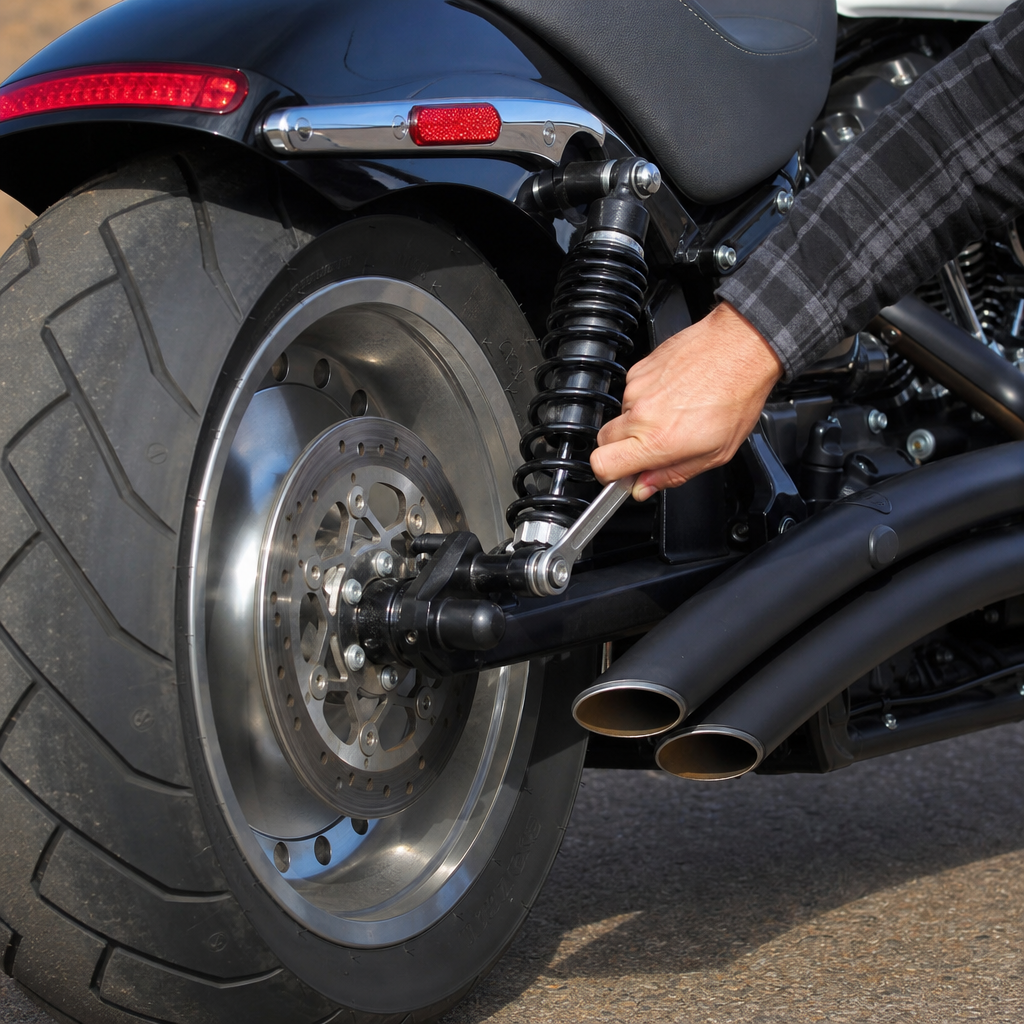
The Harley-Davidson Fat Boy 114 rear suspension looks simple from the outside, but riders quickly learn that preload adjustment matters more on this model than on many other cruisers because the chassis carries a wide 240mm rear tire, a low seat height, and a softail-style hidden monoshock that has to balance comfort, cornering clearance, and drivetrain composure at the same time. In plain terms, preload is the amount of spring compression dialed in before the bike even moves; it does not make the spring stiffer, but it changes ride height, sag, and how much suspension travel remains available for bumps, acceleration, and passenger load.
That distinction matters because owners often describe the Fat Boy 114 as harsh over square-edged bumps one day and wallowy the next, when the actual issue is setup rather than a defective shock. I have adjusted these bikes for solo riders under 170 pounds, larger riders over 240 pounds, and two-up touring loads, and the same pattern repeats: once rear sag is brought into a sensible range, the Fat Boy tracks cleaner, steers with less effort, and stops scraping floorboards quite so early. For a hub article on model-specific ergonomics and performance recipes, this topic sits at the center, because preload is the baseline setting that influences seat comfort, confidence at parking-lot speed, highway stability, and even whether a rider feels cramped or planted.
The Fat Boy 114 combines Milwaukee-Eight torque, solid-disc Lakester wheels, a long wheelbase, and that signature oversized rear rubber. The 240mm tire improves visual stance and straight-line footprint, but it also changes rider perception. Wide rear tires can make transitions feel slower, amplify the sensation of squat under throttle, and mask a poorly set shock because the bike still looks level while sagging too deep into its travel. That is why a preload discussion for this machine cannot stop at “turn the adjuster up for more weight.” It has to explain rider triangle effects, clearance tradeoffs, passenger use, luggage load, and how a low cruiser chassis responds when rear ride height changes by even a small amount.
This article serves as the main hub for Fat Boy 114 ergonomics and performance setup recipes. It explains how to adjust rear preload for the massive 240mm tire, what problems preload can and cannot solve, and how to create repeatable setups for solo cruising, spirited backroad riding, and two-up travel. It also points naturally toward related Harley-Davidson topics such as handlebar reach, floorboard position, tire pressure strategy, and front-end balance, because rear suspension setup never works in isolation.
Why Rear Preload Is So Important on the Fat Boy 114
On the Fat Boy 114, rear preload sets the starting position of the hidden monoshock within its travel. If preload is too low for the rider and cargo, the suspension sags excessively, reducing available compression travel and letting the rear end sit deeper. The practical results are familiar: more frequent bottoming, slower steering, earlier floorboard contact, and a vague feeling when accelerating out of a bend. If preload is too high, the rear rides taller, but small-bump compliance suffers, traction can feel skittish on broken pavement, and the rider may feel perched rather than settled into the chassis.
The reason this model is especially sensitive is geometry. Harley gave the Fat Boy a low visual stance and substantial rear tire width, so small changes in rear ride height have outsized effects on feel. A quarter inch of extra sag may not sound dramatic, yet on a long, low cruiser it can materially change steering response and cornering clearance. Add a passenger or loaded saddlebags, and the shock must control more mass while still keeping the tire in contact with the road. That is why preload is the first adjustment to revisit whenever the bike’s mission changes.
What Preload Changes and What It Does Not
Preload changes sag and ride height. It does not change the actual spring rate, and it does not replace damping control. Riders sometimes increase preload trying to eliminate every hard impact. If the shock valving is overwhelmed or the spring is mismatched to total load, more preload may only reduce comfort while doing little for sharp-edge harshness. Conversely, backing preload off to chase plushness often pushes the suspension deeper into its stroke, where the bike feels comfortable on smooth roads but clumsy and underdamped on real roads.
For the Fat Boy 114, the cleanest mental model is this: preload is the load-matching adjustment. You use it to position the bike correctly in its travel for your body weight, passenger, and gear. Once that position is right, you evaluate whether the stock shock’s damping and spring behavior suit your riding. Many owners eventually move to aftermarket units from Öhlins, Legend Suspensions, Progressive Suspension, or Fox because they want more tuning range, but even premium shocks perform poorly if preload is guessed rather than measured.
How to Measure Sag and Build a Repeatable Setup
The best way to adjust Fat Boy 114 rear suspension preload is by measuring rider sag. Sag is the amount the suspension compresses from fully extended length to the bike’s loaded, ready-to-ride position. On cruisers like the Fat Boy, chasing a perfect sportbike-style percentage is less useful than establishing a practical target that preserves comfort and cornering clearance. In workshop use, I aim for a balanced loaded stance that leaves enough travel in reserve for real bumps while avoiding the slammed look that comes from excessive sag.
Use the same measuring points every time: one point on the rear axle centerline and one fixed point on the fender strut or frame reference above it. Lift the bike enough to top out the shock safely, measure extended length, then let the bike rest under its own weight and measure again for static sag. Finally, sit on the bike in full gear, feet up if possible with a helper stabilizing the motorcycle, and measure rider sag. Write every number down. Repeat twice to confirm consistency. This simple process gives you a baseline you can return to after any experiment.
| Use case | Typical rider/load | Preload direction | Expected effect |
|---|---|---|---|
| Solo comfort cruising | Single rider, no luggage | Lower to moderate | Better bump absorption, softer initial feel, less reserve travel |
| Solo spirited riding | Single rider, aggressive backroad pace | Moderate to higher | Improved support, quicker steering response, more cornering clearance |
| Two-up short rides | Rider plus passenger | Higher | Reduced squat, better stability, lower risk of bottoming |
| Two-up touring with luggage | Rider, passenger, packed gear | Near upper range | Maximum support, preserved geometry, firmer ride on rough pavement |
If you do not have factory sag numbers, work methodically. Start from your current preload position, note ride quality, then increase or decrease in small increments based on your actual load. After each change, test the bike on the same route with the same tire pressures. Include a section with expansion joints, a steady highway sweep, and at least one low-speed turn where you can feel how willingly the bike settles into the corner. The Fat Boy responds clearly when you are close: the rear stops wallowing, the front no longer feels lazy, and the bike holds a line with less midcorner correction.
Performance Recipes for Real-World Fat Boy 114 Riding
For a solo rider using the Fat Boy mainly around town and on weekend cruises, prioritize comfort without letting the rear collapse. This setup suits riders who value the bike’s low-slung feel and are not pushing hard through corners. Set preload toward the softer half of the available range, then test over patched pavement. You want the rear to absorb impacts without producing a second bounce. If floorboards are touching down too early on familiar turns, or if the bike feels like it takes effort to stand back up after a dip, add preload one step and retest.
For solo backroad riding, use a firmer recipe. The Milwaukee-Eight 114 delivers strong low-end torque, and under acceleration the stock rear can squat enough to slow steering and widen your line. Adding preload helps the bike stay more level, keeps the 240mm tire driving predictably, and improves confidence when rolling on throttle exiting a corner. On this setting, expect a slightly busier ride over sharp bumps. That tradeoff is normal; the goal is support and consistency, not showroom plushness.
For two-up use, the difference is dramatic. The Fat Boy’s rear suspension can feel acceptable solo yet underprepared once a passenger climbs aboard. Extra weight behind the rider increases leverage on the rear suspension, deepens sag, and reduces travel rapidly. Add enough preload before the ride rather than after the first bottom-out. With proper support, passenger comfort improves because the shock is no longer smashing through its stroke on freeway joints. The bike also steers more neutrally, which makes low-speed U-turns less awkward than many riders expect from such a wide-tire cruiser.
For touring with luggage, think in systems. A packed sissy-bar bag or saddlebags shifts weight rearward, so rear preload rises, but front feel also changes. If the bike starts to wander in dirty air behind trucks, do not blame only the windshield or tire profile. Check load distribution, secure cargo close to the seat, verify tire pressures against Harley-Davidson guidance, and confirm the rear is not riding too low. A correctly preloaded rear shock is the foundation for every other comfort and stability adjustment on the bike.
Ergonomics, Tire Behavior, and the 240mm Rear Contact Patch
The Fat Boy 114 belongs in any discussion of model-specific ergonomics because suspension setup changes how the rider fits the machine. More rear preload increases ride height slightly and can alter the relationship among seat, floorboards, and handlebar reach. For shorter riders, too much preload may make the bike feel taller at stops, even if the change is modest on paper. For taller riders, a touch more support can open knee angle and reduce the sensation of sitting “in a hole” behind the tank. I have seen riders chase seats and bars when the more immediate fix was simply correcting rear sag.
The 240mm tire adds another layer. A very wide rear tire resists abrupt directional changes compared with narrower profiles, so chassis attitude becomes more important. When the rear sits too low, the already deliberate steering of the Fat Boy slows further. Riders describe this as heavy steering, reluctance to finish a turn, or a need to push harder on the bar. Restoring preload does not make the bike flickable like a naked sport standard, but it does return intended geometry and lets the tire work with the chassis instead of against it.
Tire pressure and suspension preload should always be reviewed together. Underinflation in the 240mm rear can mimic poor preload by making the bike feel sluggish and imprecise. Overinflation can sharpen impact harshness and reduce the contact feel riders expect from a heavyweight cruiser. Use the owner’s manual as your baseline, adjust only within reason for load and conditions, and avoid diagnosing suspension feel from one variable alone. Good setup is cumulative: preload, pressure, load placement, and rider posture each contribute a noticeable piece.
Common Mistakes, Limits of the Stock Shock, and When to Upgrade
The most common mistake is adjusting preload without documenting the starting point. The second is making large changes, riding a different route, and trying to remember whether the bike improved. The third is expecting preload to compensate for worn components or unrealistic loads. If the shock is old, bushings are tired, or the bike is consistently used two-up with luggage, the stock unit may simply be out of its comfort zone. No amount of preload wizardry can fully replace spring and damping capacity.
Signs you may need an upgraded shock include repeated bottoming even with preload near the upper end, uncontrolled rebound after large bumps, and a harsh-yet-underdamped sensation where the rear both kicks and wallows. Quality aftermarket shocks often provide a spring better matched to rider weight, improved damping curves, and easier external adjustment. For owners building the Fat Boy into a serious long-distance cruiser, that investment usually delivers more benefit than cosmetic chassis accessories.
As the central Harley-Davidson hub for ergonomics and performance recipes, this topic connects directly to seat selection, floorboard technique, handlebar positioning, passenger setup, tire choice, and braking balance. Start with preload because it shapes every mile you ride on the Fat Boy 114. Measure sag, make small changes, test one variable at a time, and write down what works for solo, spirited, and two-up use. That disciplined approach turns the massive 240mm-tire Fat Boy from a style statement into a genuinely well-sorted motorcycle. Review your current setting this week and build your first repeatable setup sheet.
Frequently Asked Questions
What does rear shock preload actually do on a Fat Boy 114?
On the Fat Boy 114, rear shock preload is the amount of initial spring compression built into the hidden monoshock before the suspension starts reacting to bumps, acceleration, passenger weight, or luggage. In practical terms, preload changes how much the bike settles under load, which is often described as ride sag. That matters a great deal on this model because the Fat Boy combines a very low stance with a wide 240mm rear tire, so small changes in rear ride height can have an outsized effect on stability, comfort, cornering clearance, and how planted the bike feels when rolling on the throttle.
What preload does not do is make the spring stiffer in the true spring-rate sense. Instead, it changes where in the spring’s travel the suspension begins working. If preload is too low, the rear can sit too deep in the stroke, making the bike feel low, soft, and sometimes vague or wallowy over uneven pavement. It may also reduce cornering clearance sooner than expected and allow the chassis to squat more under acceleration. If preload is too high, the rear may ride too tall in the stroke, feel harsher over sharp bumps, and transmit more impact into the rider because there is less available droop for the wheel to follow uneven surfaces cleanly.
Because the Fat Boy’s rear suspension is visually hidden, many owners underestimate how much influence that monoshock has on overall ride behavior. On this bike, preload is one of the main setup tools you have for adapting the machine to solo riding, two-up use, cargo, and different road conditions. When it is set correctly, the Fat Boy feels more controlled, more predictable in sweepers, and less likely to bottom out or wallow. When it is off, the motorcycle can still be rideable, but it rarely feels as composed as it should.
Why is preload adjustment especially important on a Fat Boy 114 with the massive 240mm rear tire?
The Fat Boy 114’s 240mm rear tire adds a distinctive look and a lot of rear-end presence, but it also influences how the motorcycle reacts to changes in chassis attitude. A tire that wide creates a broad contact patch and can make the rear feel very substantial, but it also means the bike benefits from a well-controlled suspension so the tire stays loaded consistently and predictably. If preload is not matched to the rider and load, the rear can settle too much or too little, which changes swingarm angle, steering feel, and the way the wide tire tracks through turns and over pavement seams.
This is also a low motorcycle with limited cornering clearance compared with more sporting machines. If rear sag is excessive because preload is too low, the bike sits even lower and can touch down earlier in turns. Riders may interpret that as a limitation of the tire or chassis, when in reality the rear suspension may simply be riding too deep in its travel. On the other hand, if preload is cranked up excessively, the bike can feel more abrupt over bumps and may lose some of the calm, planted character that makes the Fat Boy comfortable on real roads.
There is also a drivetrain composure element. The Softail chassis and hidden monoshock are designed to balance comfort with control, but they rely on proper ride height to work as intended. With the torque of the Milwaukee-Eight 114, improper preload can make squat under acceleration more noticeable, especially with a passenger or loaded saddlebags. Correct preload helps the rear suspension support the bike without feeling overworked, which allows the wide rear tire to do its job more consistently and helps the whole motorcycle feel tighter and more confidence-inspiring.
How can I tell if the rear preload on my Fat Boy 114 is too low or too high?
The clearest signs of too little preload are excessive sag and a rear end that feels under-supported. On the road, that often shows up as the bike squatting heavily when you sit on it, bottoming or nearly bottoming over larger bumps, and feeling vague or floaty through fast sweepers. You may also notice that the motorcycle runs out of cornering clearance sooner than expected, especially on roads you already know well. If the rear suspension is too deep in the stroke, the bike can feel comfortable at first because it is soft, but that softness often turns into poor control when the pace increases or the surface gets rough.
Too much preload tends to create a different set of symptoms. The rear may feel firm, busy, or choppy over broken pavement, and the bike may seem to kick more sharply over abrupt impacts instead of absorbing them smoothly. Sometimes riders describe it as the suspension feeling “topped out” or unwilling to settle. The rear tire may not track uneven pavement as calmly, and the ride can become less comfortable, especially on long highway runs. In some cases, the bike may steer a bit quicker because the rear ride height is higher, but that does not automatically mean it is better if comfort and traction compliance suffer.
A practical way to judge preload is to think about support versus harshness. If the bike feels low, squats excessively, bottoms easily, and drags early, preload is probably too low. If it feels tall, brittle, and less willing to absorb rough pavement, preload may be too high. The best setting is usually the one that keeps the rear suspension in the middle of its usable range for your actual riding load. That means enough preload to support the rider, passenger, and cargo without bottoming, but not so much that the rear loses its ability to follow the road naturally.
How should I adjust preload for solo riding, a passenger, or extra luggage on the Fat Boy 114?
The basic rule is simple: add preload as the load increases. For solo riding, start with a setting appropriate for your body weight in normal riding gear and evaluate how much the bike settles when you sit on it. If the rear feels compliant but controlled, does not bottom over typical bumps, and maintains reasonable cornering clearance, you are probably close. If you frequently ride with a passenger or carry luggage, the rear spring needs more initial compression to keep the bike from sagging too deeply and upsetting the intended chassis geometry.
When adding a passenger, do not assume the solo setting will be “good enough.” The additional weight changes much more than comfort; it affects acceleration squat, braking balance, steering response, and the bike’s overall composure. With a passenger on a low, heavy cruiser like the Fat Boy 114, too little preload can quickly make the rear feel overwhelmed. Increasing preload helps return the suspension to a more useful operating position so the shock retains travel for bumps and the bike preserves more of its normal stance. The same idea applies when carrying extra luggage, especially if the weight is mounted high or rearward.
The smartest approach is to make changes methodically. Record your baseline solo setting, then add preload in measured steps for two-up or loaded riding rather than guessing. After each change, ride the bike over familiar roads and pay attention to support, bump absorption, cornering clearance, and whether the rear feels settled under throttle. If you return to solo riding later, back the preload down to your original setting instead of leaving the bike over-preloaded for convenience. That habit keeps the Fat Boy feeling balanced in each configuration rather than compromised in all of them.
What is the best way to fine-tune preload on a Fat Boy 114 for comfort and handling?
The best method is to approach preload tuning as a balance, not as a search for the softest or firmest ride. Start by establishing a realistic baseline based on how you actually use the bike most of the time. If you mainly ride solo, set the rear for solo use first. If you are often two-up, tune for that situation separately. Make one change at a time and test it on the same stretch of road so you can feel the difference clearly. Random adjustments made without a reference point tend to create confusion, especially because changes in preload can affect more than one sensation at once.
During test rides, pay attention to four things: how much the rear settles under your weight, how the bike reacts to medium and large bumps, whether it feels stable and planted in sweepers, and how soon hard parts begin to touch in turns. If the rear feels plush but bottoms too easily or drags early, add some preload. If it feels controlled but too sharp over rough pavement, reduce preload slightly and test again. The ideal setup is the one that preserves ride quality while still keeping the rear high enough in the stroke to maintain support, traction, and clearance.
It is also important to remember the limits of preload adjustment. If you are far outside the weight range the stock spring was intended to support, preload alone may not fully solve the problem. You can only compensate so much before the bike becomes either under-supported or overly harsh. But within the normal operating range, careful preload tuning makes a noticeable difference on the Fat Boy 114. Set correctly, the hidden monoshock does a much better job of controlling that heavy rear section and wide tire, and the bike feels more refined, more comfortable, and more confidence-inspiring everywhere from city streets to long highway runs.