Engine displacement math explains why a bigger V-twin can make stronger torque with less stress, and that is exactly why the 2026 131ci crate motor still rules the drag strip. In Harley-Davidson terms, displacement is the total volume swept by all pistons as they travel from top dead center to bottom dead center. It is calculated from bore, stroke, and cylinder count, then expressed in cubic inches or cubic centimeters. For riders comparing Milwaukee-Eight, Twin Cam, Evolution, and RevMax platforms, understanding that math is the fastest way to separate marketing claims from real mechanical advantage. I have built and tuned street and strip Harleys long enough to know that racers do not win by brochure language; they win by moving more air, burning more fuel efficiently, and putting torque to the tire in a usable rpm range.
The 2026 Harley-Davidson Screamin’ Eagle 131 crate motor sits at the center of that discussion because it represents the largest factory-backed plug-and-play displacement option for many Milwaukee-Eight touring and trike applications. At 131 cubic inches, or roughly 2,147 cubic centimeters, it offers a significant step up from stock 107, 114, 117, and even 121 cubic inch combinations. That extra swept volume matters on a drag strip because elapsed time depends on average acceleration, and average acceleration improves when the engine creates more torque across more of the run, not just a peak number at one dyno point. Bigger displacement does not automatically guarantee victory, but all else being reasonably equal, it gives a decisive head start.
This article is the technical hub for Harley-Davidson engine deep-dives, covering Milwaukee-Eight, Twin Cam, Evolution, and RevMax architectures through the lens of displacement, airflow, durability, and racing usefulness. You will see how engine size is calculated, why bore and stroke choices change the power curve, where each platform excels, and why the 131 crate motor remains the benchmark for riders who want factory-supported big-inch performance. If you are researching M8 performance builds, comparing Twin Cam stroker math, evaluating Evo reliability, or wondering why the liquid-cooled RevMax behaves differently, this guide gives you the framework to understand every later article in the series.
How engine displacement math translates into drag strip advantage
The formula for displacement is simple: bore squared multiplied by 0.7854, multiplied by stroke, multiplied by the number of cylinders. Bore is cylinder diameter. Stroke is how far the piston travels. On a Harley V-twin with two cylinders, small changes add up quickly. The 131 crate motor uses a 4.310-inch bore and a 4.500-inch stroke. Run the calculation and you get about 65.5 cubic inches per cylinder, or 131 total. Compare that with a 114 Milwaukee-Eight using a 4.016-inch bore and 4.500-inch stroke. Same stroke, much smaller bore, much less area for the pressure created during combustion to act on. That is the root of the 131’s advantage.
On the track, more displacement generally allows more air-fuel mixture per cycle, which means more cylinder pressure and torque when the rest of the combination supports it. Torque is what accelerates a heavy bagger off the line and through the middle of the run. Horsepower still matters, especially near the top end, but drag racing a Harley is rarely about chasing only peak rpm. Most bikes spend the run transitioning through launch, shift recovery, and midrange pull. A large-displacement engine with a broad torque curve recovers better after shifts and asks less from gearing and clutch setup. That makes the motorcycle easier to tune consistently.
Displacement also affects how hard you must work the engine to achieve a target power level. A 131 can make strong numbers with moderate cam timing and relatively civilized rpm. A smaller engine trying to reach the same output typically needs more compression, more camshaft, more head work, or more rpm. Every one of those choices can reduce margin for heat control, drivability, or longevity. That tradeoff is familiar to anyone who has tuned Harley race bikes in hot weather. More cubes often mean less strain for the same result, which is one reason big-inch naturally aspirated combinations remain so dominant in bracket and heads-up V-twin racing.
Why the 2026 131ci crate motor remains the factory big-inch benchmark
The 2026 131ci crate motor still rules because it combines displacement, OEM integration, and repeatable performance in one package. Harley-Davidson’s Screamin’ Eagle crate engines are designed around production-based Milwaukee-Eight architecture, so they fit real touring and trike chassis without the fabrication burden common to one-off race motors. Riders get a complete path that includes matched induction, calibration support, and known compatibility points. In the real world, that matters almost as much as raw output. A bike that starts cleanly, idles predictably, and survives repeated passes is worth more than a dyno queen that needs constant teardown.
Its larger bore improves breathing potential because bigger valves and more curtain area can be used effectively. With the same 4.500-inch stroke as several smaller M8 variants, the 131 leans on bore increase rather than a radical stroke jump. That is important. Extreme stroke can raise mean piston speed and amplify load on rods, pistons, and crankpin assemblies. The 131’s geometry keeps the package comparatively sane while still delivering a major displacement gain. In practice, that allows builders to pair the engine with performance cams and quality headwork without turning it into a maintenance-intensive science project.
The factory-backed nature of the package also influences why racers choose it. Parts availability, baseline calibrations, and community knowledge shorten build time. When a platform becomes common, tuners refine maps, clutch setups, and launch strategies faster. I have seen this repeatedly with Milwaukee-Eight drag bikes: the popular combinations develop an ecosystem. That means dyno operators know where timing wants to be, racers know which exhausts respond best, and mechanics know which oil temperatures become problematic in repeated hot laps. The 131 has earned its status not just through displacement math, but through the maturity of the surrounding support network.
Milwaukee-Eight technical deep-dive: why M8 responds so well to cubic inches
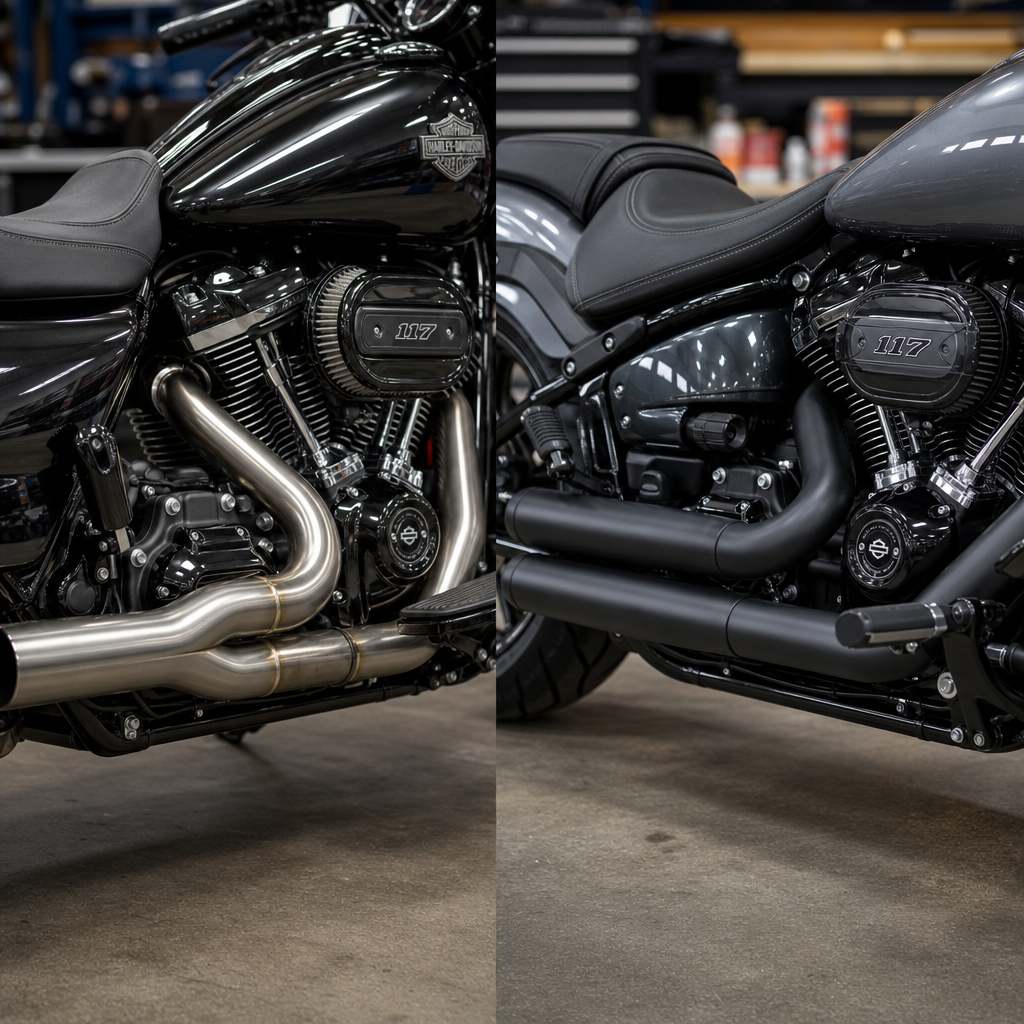
The Milwaukee-Eight platform, introduced for 2017 touring models, replaced Twin Cam with four valves per cylinder, revised combustion chambers, improved cooling management, and a more efficient intake and exhaust path. Those changes matter because they let added displacement work harder. A 107 or 114 M8 already shows better volumetric efficiency than earlier big-twin generations in stock form. When you scale that architecture to 117, 121, or 131 cubic inches, the head design, valve area, and chamber shape support strong torque without demanding the extreme valve events often required by older two-valve platforms.
From a builder’s perspective, the M8 is an unusually friendly big-inch foundation. The single-cam layout simplifies certain valvetrain considerations compared with Twin Cam’s dual-cam arrangement, and the oiling system is generally more stable in sustained performance use when the rest of the build is executed correctly. The platform also benefits from extensive aftermarket support from S&S Cycle, Feuling, Woods Performance, Zipper’s, Fuel Moto, and others. Those companies have spent years validating cam profiles, compression targets, injector sizing, throttle body choices, and exhaust combinations, making it easier to build a package that wins races rather than just making noise.
For drag racing, the M8’s practical advantage is area under the torque curve. A well-tuned 131 bagger can launch hard and still pull cleanly after each shift, especially with proper clutch setup and gearing. That is why so many late-model race builds begin with an M8 foundation. The platform scales cleanly from street performance to serious competition, and it does so with a factory lineage that preserves fitment and serviceability. As a hub topic, any serious discussion of Harley-Davidson technical deep-dives starts here, because the M8 currently defines the modern air-oil-cooled big-inch performance standard.
Twin Cam technical deep-dive: where older architecture still fights back
Twin Cam engines, produced from 1999 through 2017 in various big-twin applications, remain deeply relevant because they still power huge numbers of race-prepped Dynas, Softails, and touring bikes. Their architecture uses two cams and two valves per cylinder, with generations that include 88, 96, 103, 110, and Screamin’ Eagle 120R combinations. While the stock heads do not match Milwaukee-Eight breathing efficiency, Twin Cam motors respond well to thoughtful displacement increases, ported heads, compression work, and cam selection. They have also benefited from two decades of accumulated tuning knowledge, which makes them far from obsolete.
The displacement math on Twin Cam builds often revolves around balancing bore kits and stroker flywheels. A common path is taking a 103 toward 110 or 117 cubic inches. Bigger cubes increase torque, but Twin Cam builders must pay close attention to crankshaft trueness, cam chest stability, oiling upgrades, and chain or gear-drive decisions. Those details are not glamorous, yet they determine whether the engine survives repeated hard launches. In my experience, the fastest Twin Cam bikes are not always the biggest ones; they are the best-matched combinations, where cylinder pressure, gearing, and chassis setup work together.
On the drag strip, a sorted Twin Cam still delivers impressive results because the aftermarket solved many weak points years ago. Stronger compensator solutions, hydraulic tensioner upgrades, better cams, larger throttle bodies, and proven ignition strategies have kept the platform competitive in the hands of knowledgeable racers. Still, when you compare a top-tier naturally aspirated Twin Cam to a modern 131 Milwaukee-Eight, the M8 usually reaches the same or greater power with less compromise. That is the essential comparison: Twin Cam can absolutely run hard, but the newer architecture extracts more from every cubic inch.
Evolution and RevMax technical deep-dives: two engines with very different missions
The Evolution, or Evo, remains one of Harley-Davidson’s most respected engines because of its simplicity, durability, and cultural importance. Introduced in 1984 for big twins and later used in Sportster form, the Evo cleaned up many reliability problems associated with the Shovelhead era. Its two-valve heads, pushrod valvetrain, and comparatively straightforward design make it easy to service and easy to understand. On the strip, Evo engines can still be quick, especially in lighter chassis, but they generally require substantial head work, compression, and rpm to challenge modern big-inch Milwaukee-Eight combinations. Reliability is a strength; peak airflow is not.
The RevMax sits at the opposite end of Harley-Davidson engineering. Used in the Pan America, Sportster S, and Nightster families in related forms, it is a liquid-cooled, high-compression, double-overhead-cam engine designed for broad modern performance rather than classic big-twin pulse. It revs higher, makes power differently, and relies on variable behavior from cam timing and electronic control strategies that simply do not exist on older pushrod Harleys. RevMax displacement numbers, such as 975 and 1250 cubic centimeters, can look modest next to 131 cubic inches, but the platform compensates with rpm, cooling efficiency, and combustion sophistication.
| Engine family | Typical displacement range | Valvetrain | Cooling style | Drag strip character |
|---|---|---|---|---|
| Milwaukee-Eight | 107-131ci+ | Pushrod, 4 valves per cylinder | Air/oil or mixed cooling | Broad torque, excellent big-inch response |
| Twin Cam | 88-124ci+ | Pushrod, 2 valves per cylinder | Air/oil | Strong aftermarket, rewards careful matching |
| Evolution | 80-100ci+ big twin, varied Sportster sizes | Pushrod, 2 valves per cylinder | Air-cooled | Simple, durable, lighter vintage builds |
| RevMax | 975-1250cc | DOHC, 4 valves per cylinder | Liquid-cooled | High-rev modern performance, different racing use case |
These two platforms matter in a Harley-Davidson technical hub because they show that displacement alone never tells the full story. Evo demonstrates how a simpler engine can remain viable through accessibility and proven parts. RevMax demonstrates how modern design can produce speed with less displacement through higher rev ceilings and superior thermal control. Yet for traditional Harley drag racing, especially with heavier chassis, the 131 crate motor still holds the practical advantage because it combines large swept volume, familiar pushrod torque delivery, and easy integration into the bikes most racers already use.
What really determines whether a Harley runs quicker than its displacement suggests
Displacement is foundational, but elapsed time comes from the entire system. Cylinder head flow, combustion efficiency, cam timing, compression ratio, throttle body size, injector capacity, exhaust design, clutch calibration, tire selection, swingarm geometry, rider consistency, and tuning quality all shape the result. A poorly tuned 131 will lose to a disciplined 117. That is not theory; it happens regularly. The best drag bikes are balanced combinations. Builders who focus only on cubic inches often leave major time on the table because they ignore fuel delivery, launch control, or chassis squat behavior.
Thermal management is another overlooked factor. Air-cooled and oil-cooled Harleys can produce impressive power, but repeated passes in hot staging lanes raise head temperatures, thin oil, and increase knock sensitivity. Good tuners watch air-fuel ratio, spark advance, oil temperature, and intake air temperature together. They also understand the fuel being used, because pump gas, race gas, and ethanol blends tolerate different compression and timing windows. The 131 crate motor benefits here because it can make substantial torque without being forced into an extreme state of tune. That gives racers more room before heat and detonation become limiting factors.
Finally, gearing and weight decide how effectively the engine’s torque reaches the track. A touring bike with bags, audio equipment, and a heavy rider asks much more from the engine than a stripped Dyna. That is exactly why the 131 shines in real drag racing. Its broad torque curve masks weight and gearing compromises better than smaller engines do. If you are building within the Harley-Davidson ecosystem and want a reliable path to faster passes, start with honest displacement math, then build the surrounding package with the same discipline. From there, explore the deeper guides on M8, Twin Cam, Evo, and RevMax, and choose the platform that matches your racing goals.
Frequently Asked Questions
What does 131 cubic inches actually mean, and how is engine displacement calculated?
In Harley-Davidson terms, 131 cubic inches refers to the total swept volume of all the cylinders in the engine as the pistons move from top dead center to bottom dead center. Displacement is calculated using bore, stroke, and the number of cylinders. The formula is cylinder area multiplied by stroke, then multiplied again by cylinder count. In simple terms, a larger bore increases the diameter of the cylinder, a longer stroke increases how far the piston travels, and both changes increase total displacement. On a V-twin, that extra swept volume means the engine can pull in and burn more air and fuel per revolution, which is the foundation for making more torque.
That math matters because displacement is not just a spec-sheet bragging point. It directly affects how much work the engine can do each cycle. A 131ci engine has a meaningful size advantage over smaller Milwaukee-Eight combinations, as well as many Twin Cam and Evolution builds, so it naturally has more torque potential before aggressive tuning even enters the conversation. That is a big reason the 2026 131ci crate motor remains so dominant in drag racing discussions: it starts with a larger mechanical advantage, and that advantage shows up as harder launches, stronger mid-range pull, and quicker acceleration without needing to spin the engine as hard as a smaller motor.
Why does a bigger-displacement V-twin usually make stronger torque with less stress?
A larger-displacement V-twin can make stronger torque with less stress because it does not need to rely as heavily on high rpm to achieve a given power target. Torque is fundamentally related to cylinder pressure and the leverage applied through the crankshaft, and a bigger engine can generate more cylinder filling and more combustion force per revolution simply because it moves more volume. That means a 131ci engine can deliver strong acceleration at lower engine speeds where many riders and racers spend a lot of time, especially at launch and through the early part of a drag pass.
Less stress comes from the fact that the engine can meet performance demands without being pushed as close to its mechanical limits all the time. A smaller engine often needs more rpm, more aggressive cam timing, or more extreme tuning to make the same kind of output. By contrast, a larger engine can reach impressive torque numbers with a broader, more usable powerband. In real drag strip terms, that means the bike can leave harder, recover quicker after shifts, and keep pulling with less dependence on razor-thin tuning windows. For riders comparing Milwaukee-Eight to older Twin Cam or Evolution combinations, this is one of the clearest benefits of bigger displacement: more performance potential with a more relaxed path to getting there.
Why does the 2026 131ci crate motor still rule the drag strip compared with smaller Harley engine platforms?
The 2026 131ci crate motor still stands out on the drag strip because it combines displacement advantage, proven V-twin torque character, and a package that is purpose-built for riders who want serious straight-line performance. Drag racing rewards engines that can produce immediate, repeatable thrust, and the 131ci setup delivers exactly that. Bigger displacement helps the bike launch harder off the line, carry momentum through the middle of the run, and stay responsive after each shift. On a drag strip, that broad torque curve is often more valuable than a peaky top-end number that only appears in a narrow rpm band.
Compared with smaller Milwaukee-Eight options, the 131 simply starts with more swept volume, which means more torque potential everywhere in the rev range. Compared with many Twin Cam and Evolution builds, it benefits from newer architecture and a modern performance foundation while still delivering the kind of muscular V-twin character riders expect. Even when people compare it to the RevMax platform, the conversation changes because drag-strip success is not only about high-rpm horsepower. It is about usable thrust, chassis behavior, launch consistency, and how forcefully the bike accelerates under load. The 131ci crate motor remains a favorite because it brings all of those advantages together in a way that is hard for smaller-displacement combinations to match.
How does engine displacement affect the difference between Milwaukee-Eight, Twin Cam, Evolution, and RevMax platforms?
Displacement is one of the most important variables when comparing Harley-Davidson engine families because it shapes the engine’s torque profile, riding feel, and modification potential. In Milwaukee-Eight, Twin Cam, and Evolution engines, increasing displacement generally reinforces the classic big-twin formula: more low-end and mid-range torque, stronger roll-on response, and less need to chase high rpm for real-world acceleration. A larger-displacement Milwaukee-Eight such as the 131ci crate motor magnifies those traits, which is why it feels so authoritative in both street and strip applications.
The RevMax platform changes the conversation somewhat because it is designed with a different performance philosophy, including higher-revving behavior and a broader modern sport-oriented operating range. Even so, displacement math still matters. More displacement still means more air-fuel volume moved per cycle, and that still supports stronger torque production. The practical takeaway is that engine platform design determines how and where the power is delivered, while displacement determines how much raw torque potential is available to work with. For riders comparing these engines, the 131ci crate motor makes such a strong impression because it pairs large displacement with a drag-friendly power character that feels immediate, dense, and forceful where it counts most.
Is bigger displacement always better, or is the 131ci crate motor especially effective because of how it uses that displacement?
Bigger displacement is not automatically better in every application, but in the context of drag racing and big V-twin performance, the 131ci crate motor is especially effective because it uses its displacement in a very practical, performance-oriented way. An engine can have a large displacement and still fall short if the supporting components, calibration, airflow, gearing, or chassis setup are not aligned with the goal. What makes a 131ci crate motor so compelling is that the displacement advantage is paired with a combination designed to turn extra swept volume into real acceleration, not just a larger number on paper.
That is why displacement math should be viewed as the starting point rather than the entire story. The 131ci size gives the engine a strong baseline for torque and cylinder filling, which is exactly what riders want for hard launches and aggressive roll-ons. But its continued reputation comes from how effectively that larger volume is converted into usable, repeatable performance. In drag-strip conditions, that means strong bottom-end response, a broad power curve, and less need to overwork the engine to get serious results. So while bigger is not universally better in every engine category, the 2026 131ci crate motor remains a standout because its displacement advantage directly supports the kind of power delivery that wins attention, and often races, in straight-line competition.