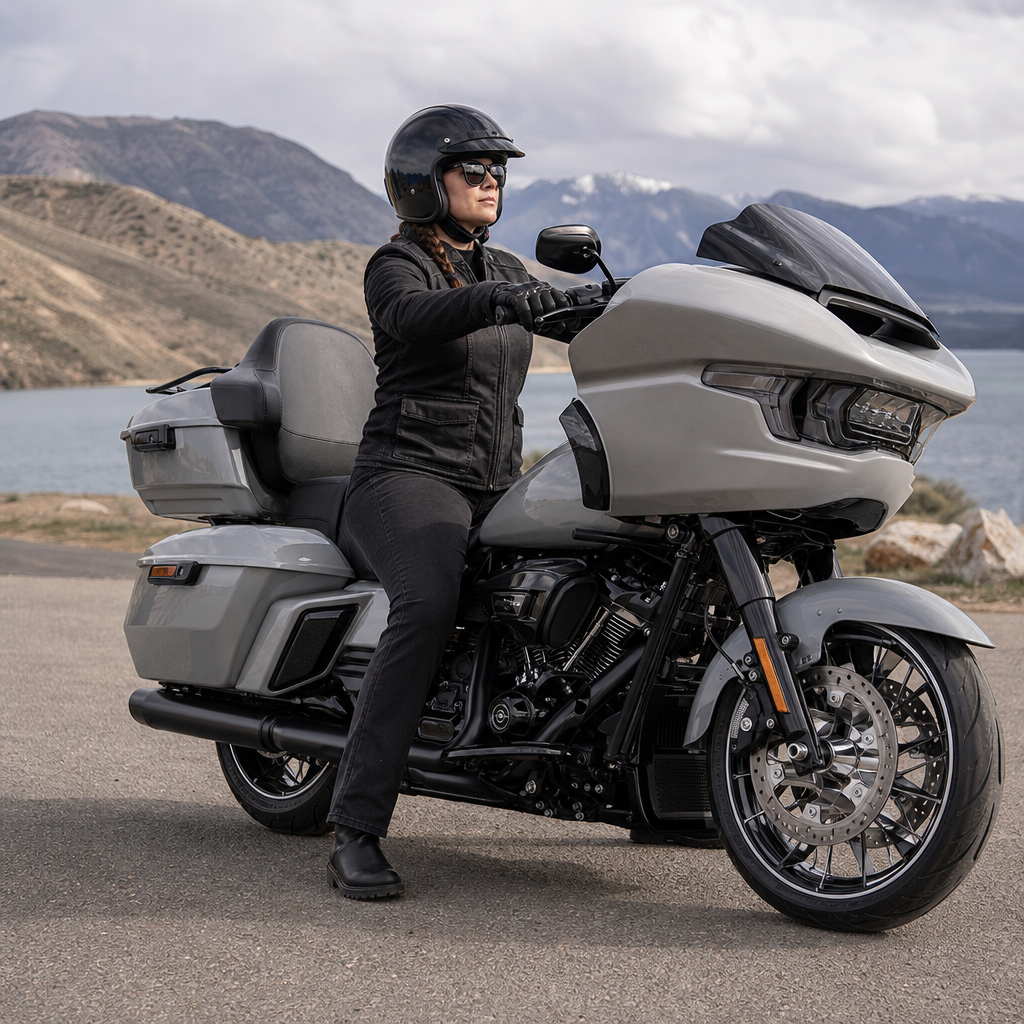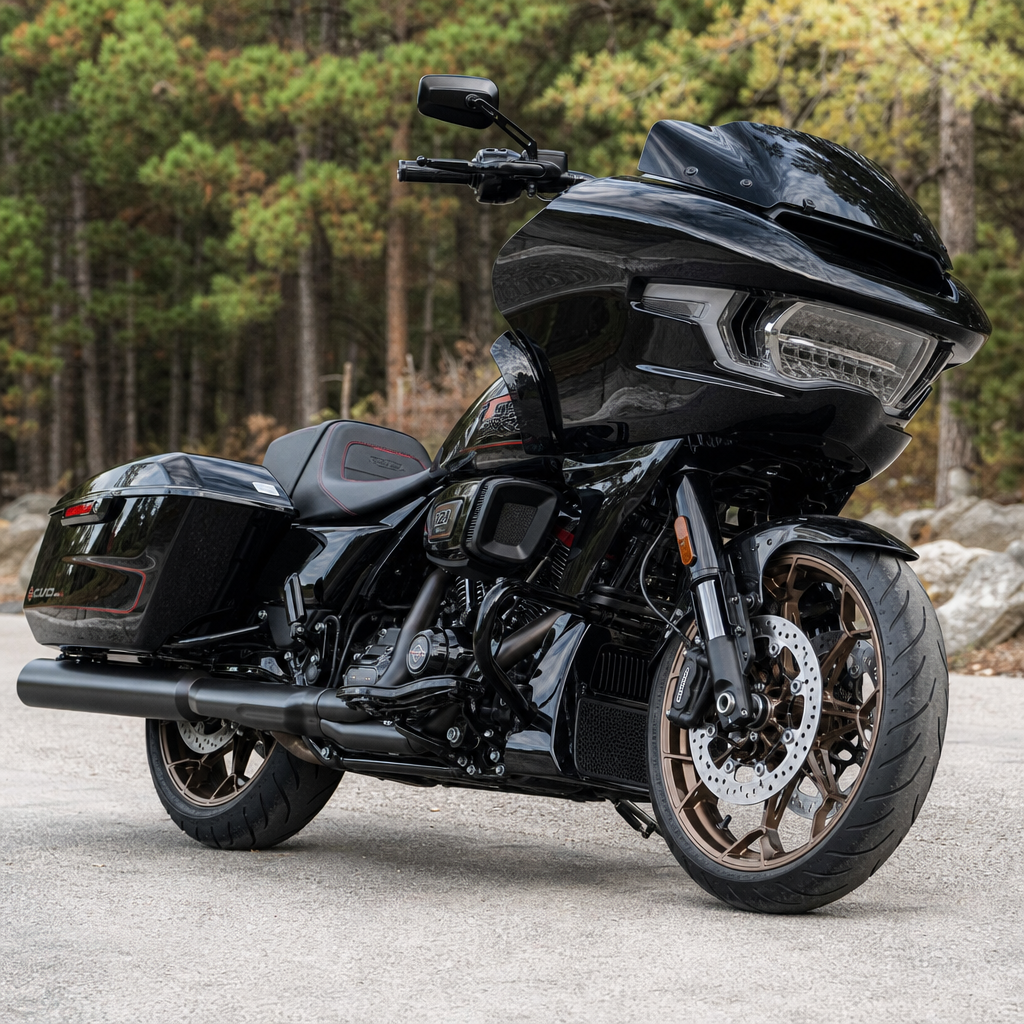
The CVO Road Glide ST rewards careful setup more than almost any recent touring Harley, and the fastest improvement most owners can feel is a lightweight wheel recipe that cuts unsprung weight, sharpens steering, and preserves the bike’s long-distance stability. In practical terms, unsprung weight is everything not supported by the suspension springs: wheels, tires, brake rotors, calipers to a degree, axle hardware, and portions of the fork and swingarm assemblies. Reducing that mass helps the suspension react faster to pavement changes, which improves tire contact, ride quality, braking control, and turn-in response. On a heavy bagger with a 121 cubic inch Milwaukee-Eight, wide bars, premium suspension, and substantial rotating mass, those gains are noticeable immediately.
I have built and ridden several performance touring Harleys, and the same pattern repeats on the CVO Road Glide ST: owners chase horsepower first, then discover the bike still feels reluctant in transitions because the stock wheel and tire package asks the suspension to control too much mass. A good wheel recipe is not just “buy the lightest wheel.” It is a balanced parts strategy that considers wheel construction, rim width, tire profile, rotor weight, ABS ring compatibility, bearing quality, offset, and intended use. This matters because a hub article for model-specific ergonomics and performance recipes must answer the foundational question: what combination of parts changes the way this motorcycle actually rides, without compromising fit, reliability, or touring usefulness?
For the CVO Road Glide ST, the answer starts with priorities. Most riders want quicker steering, less effort at the bar, improved bump compliance, and better drive off the corner. They also want clean fitment with Brembo components, accurate speed sensing, safe fender and bag clearance, and no loss of high-speed confidence. The lightweight wheel recipe sits at the center of that goal because wheels influence both unsprung mass and rotational inertia. Drop weight at the rim and the suspension has less to control while the engine and brakes have less spinning mass to accelerate or slow. That is why wheel changes often feel larger than the number on the scale suggests.
This article serves as the hub for model-specific ergonomics and performance recipes under Harley-Davidson by using the CVO Road Glide ST as the anchor example. The same decision process applies when you tune rider triangle, suspension height, brake feel, seat support, and tire selection. Start with the machine’s geometry and intended use, then choose parts that work as a system. Lightweight wheels are one of the clearest examples of that system thinking, because every choice affects handling, comfort, and rider confidence at once.
What a Lightweight Wheel Recipe Really Means on a CVO Road Glide ST
A proper recipe is a matched set of components, not a single catalog item. On this motorcycle, that usually means forged aluminum wheels front and rear, quality bearings, correctly sized spacers, rotors chosen for both weight and heat capacity, and tires selected to complement the wheel widths Harley designed around. Forged wheels are the common recommendation because they deliver a strong stiffness-to-weight ratio and predictable durability for street use. Cast wheels can be durable, but they are usually heavier for the same strength target. Carbon fiber can be lighter still, yet for a bagger that sees potholes, touring loads, and heat cycles, forged aluminum remains the safest mainstream answer for most owners.
In the shop, I define success with four metrics. First, static weight savings at each end. Second, where that weight comes off, because rim weight matters more than hub weight for inertia. Third, fitment quality, including rotor alignment and ABS function. Fourth, handling outcome: easier line changes, less deflection over rough pavement, and improved front-end composure under trail braking. If a wheel package saves pounds but creates shimmy, bearing issues, or awkward tire profiles, it failed the recipe test.
The CVO Road Glide ST is especially sensitive to front wheel changes because the frame-mounted fairing separates steering effort from wind management, making handlebar inputs more direct. Reduce front-end rotating mass and the bike feels less reluctant to tip in. Reduce rear mass and the shock can recover faster over broken pavement while drive transitions feel cleaner. Riders often describe the result as making a large touring bike feel “100 pounds lighter,” which is not literally true, but accurately captures the change in response.
How Much Unsprung Weight Matters and Where to Remove It First
Unsprung weight matters because suspension works best when it controls as little free-moving mass as possible. Every bump forces the wheel assembly upward, and the damper then has to settle it back down while keeping the tire in contact with the road. Lighter assemblies move with less inertia, so they track the pavement more faithfully. On a performance bagger, the front wheel is usually the best first target because steering response and bump compliance improve at the same time. The rear is a close second because it affects acceleration squat, edge grip, and ride quality with luggage or a passenger.
Not all pounds are equal. One pound removed from the outer rim has a larger effect on acceleration, braking, and steering than one pound removed near the axle because rotational inertia rises with distance from the center. That is why lightweight rotors and sensible tire selection can amplify the effect of a forged wheel. A heavy touring-spec tire with a stiff carcass may erase some of the benefit you paid for. The best builds treat wheel, tire, and rotor as one rotating system.
Real-world numbers vary by brand and size, but forged wheel swaps on baggers commonly save several pounds per wheel compared with stock cast assemblies. Add lighter rotors and you can remove meaningful mass at both ends without touching engine reliability or rider comfort. In my experience, the rider notices the first five to eight pounds of rotating and unsprung savings more than many expensive engine modifications, particularly on technical roads and broken pavement where the suspension finally gets to work freely.
The Best CVO Road Glide ST Wheel Recipe for Street and Fast-Touring Use
The strongest all-around recipe for most CVO Road Glide ST owners is a forged aluminum front and rear wheel set in stock-compatible diameters, paired with premium sport-touring tires and lightweight stainless floating rotors from a reputable manufacturer. Staying close to stock diameter protects geometry, ABS calibration, and fender clearance while allowing the bike’s suspension and chassis balance to remain familiar. This is important on a machine intended to cover distance at speed. Extreme diameter changes can look dramatic but often slow steering, complicate setup, and move the bike away from the handling gains riders actually want.
For tire choice, profile matters as much as compound. A tire with a more neutral crown can make the bike feel linear and predictable, while an aggressive profile can exaggerate quick turn-in and feel nervous when loaded. Brands change frequently, but current premium options from Michelin, Dunlop, and Metzeler are common reference points because they publish size data, load ratings, and intended use clearly. Match the tire to your real riding. A rider who spends time in mountain sweepers and urban pavement joints needs a different carcass feel than someone doing interstate miles two-up in hot weather.
| Component | Recommended Direction | Why It Works |
|---|---|---|
| Front wheel | Forged aluminum, stock-compatible diameter and width | Reduces steering effort and improves fork response without disrupting geometry |
| Rear wheel | Forged aluminum, stock-compatible fitment | Helps shock control, drive grip, and transition speed |
| Rotors | Lightweight floating stainless units | Removes rotating mass while maintaining braking stability and heat management |
| Tires | Premium sport-touring construction with correct load rating | Preserves grip, ride quality, and predictable turn profile |
| Bearings and spacers | High-quality direct-fit hardware | Protects alignment, durability, and ABS accuracy |
The key lesson for the larger ergonomics and performance recipes topic is that the best answer is rarely the most radical part. It is the best-matched combination for the motorcycle’s mission. On the CVO Road Glide ST, that mission is fast road use with real-world comfort and stability, not a dyno sheet or a bike night spec list.
Fitment, Compatibility, and Geometry Checks You Cannot Skip
Wheel swaps fail when owners underestimate fitment details. The CVO Road Glide ST uses premium braking hardware, modern ABS, and tight packaging around fenders, calipers, and belt alignment. Before ordering anything, verify wheel width, brake rotor bolt pattern, rotor offset, hub spacing, axle size, bearing specification, and ABS tone ring compatibility. If the wheel maker does not publish these clearly for your exact model year, do not guess. Ask for fitment confirmation in writing.
Geometry also matters. Changing front diameter or tire overall height affects rake, trail, and ride height, which in turn changes line-holding and low-speed feel. Small changes can be useful if you are intentionally correcting a setup, but accidental geometry shifts create confusion. Riders often install wheels, then blame the suspension when the real problem is altered trail or a mismatched tire profile. Use baseline measurements before the swap, including axle-to-fender clearance, fork protrusion in the triples if adjusted, rear ride height, and loaded sag. Then test one change at a time.
Brake performance deserves special attention. Lighter rotors can improve response, but they must still manage heat on a heavy motorcycle. Reputable rotor designs balance mass reduction with proper button float, stainless metallurgy, and stable friction surfaces. Pair them with pads that suit your use. An overly aggressive pad may bite hard when cold but become noisy or inconsistent on long descents. The point of this recipe is better control, not drama.
How Lightweight Wheels Change Ergonomics, Confidence, and Rider Fatigue
Wheel upgrades are usually discussed as handling parts, but they are also ergonomics parts because they change the physical effort required to ride the motorcycle. When steering effort drops, the rider carries less tension through the hands, shoulders, and upper back. On the CVO Road Glide ST, that matters because many owners pair performance riding with long hours in the saddle. If the bike resists tip-in or deflects over midcorner bumps, the rider compensates with grip pressure and body bracing. Reduce that workload and comfort improves even if the seat and bars remain unchanged.
This is why the wheel recipe belongs inside a broader hub on model-specific ergonomics and performance recipes. A motorcycle is experienced through contact points and control loads, not just geometry charts. The lighter, more settled front end lets a rider use gentler bar inputs. The calmer rear contact patch reduces the need to “manage” the chassis with throttle corrections over rough exits. Those gains add up on a 300-mile day. Riders report arriving less fatigued, with less wrist pressure and more confidence in unfamiliar corners.
Confidence is not a vague feeling here; it is the result of improved feedback. A lighter wheel assembly tracks the road better, so the rider gets clearer information through the chassis. That makes braking into corners less stressful, especially on patchy pavement where a heavy front wheel can feel wooden or slow to recover. The motorcycle does not become a sportbike, but it becomes easier to place accurately, and that precision is what experienced touring riders value most.
Common Mistakes, Cost Priorities, and Smart Next Steps
The most common mistake is overspending on wheels while ignoring tires, setup, and suspension tuning. A premium forged set on worn or poorly chosen tires will disappoint. The second mistake is chasing appearance-driven sizes that complicate geometry and reduce tire choice. The third is neglecting baseline maintenance. Steering head bearings, fork oil condition, rear shock settings, and swingarm alignment all affect the outcome. I have seen owners declare a wheel package transformative only after we corrected sag and tire pressure, which shows how interdependent these systems are.
Budget wisely. If you can fund only one stage, prioritize a front forged wheel, matched high-quality tire, and a careful setup check. That usually delivers the biggest immediate improvement in steering feel. If the budget allows a full package, do both wheels, rotors, fresh bearings where applicable, and a suspension review at the same time. Then ride the bike enough to learn the change before adding more variables such as bar height, seat reshaping, or ride-height alterations.
For readers using this page as a hub for Harley-Davidson model-specific ergonomics and performance recipes, the transferable principle is simple: solve the rider’s real problem with the minimum number of coordinated parts. On the CVO Road Glide ST, the lightweight wheel recipe solves several problems at once by cutting unsprung and rotating mass, improving steering clarity, and reducing fatigue without sacrificing touring practicality.
The best CVO Road Glide ST lightweight wheel recipe is a system built around forged aluminum wheels, correct fitment, sensible tire profiles, and braking components chosen for both weight and control. That system works because unsprung weight reduction lets the suspension react faster, while lower rotational inertia makes the bike easier to steer, stop, and accelerate. For a performance touring Harley, those changes are not theoretical. They are felt in the first corner, the first rough patch, and the first long day when the rider realizes the bike needs less effort everywhere.
As the central hub for model-specific ergonomics and performance recipes under Harley-Davidson, this topic shows how meaningful upgrades should be evaluated. Start with the motorcycle’s mission, identify the rider workload, then select parts that improve the whole riding experience instead of one isolated number. Lightweight wheels are a perfect case study because they influence comfort, confidence, line accuracy, suspension compliance, and braking consistency all at once.
If you are planning your next CVO Road Glide ST upgrade, begin by documenting your current setup, confirming exact fitment, and choosing a wheel package that keeps geometry and reliability intact. Then build outward to tires, suspension settings, and rider contact points. Done properly, this recipe turns a fast bagger into a more precise, less tiring, and more rewarding motorcycle every mile you ride.
Frequently Asked Questions
What does “unsprung weight” mean on a CVO Road Glide ST, and why does it matter so much?
Unsprung weight is the mass that moves directly with the wheels instead of being supported by the suspension springs. On a CVO Road Glide ST, that includes the wheels and tires, brake rotors, axle hardware, and portions of the fork and swingarm assemblies. Some components, like brake calipers, are often discussed as partially unsprung because they are mounted to parts that move with the suspension. The reason this matters is simple: the heavier those parts are, the harder it is for the suspension to control them over bumps, pavement seams, mid-corner ripples, and quick direction changes.
On a big-performance touring Harley, reducing unsprung weight can transform how the motorcycle feels without changing its basic character. Lighter wheels require less force to move up and down, so the suspension reacts faster and maintains better tire contact with the road. That improves grip, ride compliance, and steering accuracy. At the same time, wheels are rotating mass, so weight savings there also reduce gyroscopic resistance. In real-world terms, the bike feels easier to tip into a corner, quicker to transition, and less reluctant to hold a clean line when the pavement gets imperfect.
The CVO Road Glide ST is an especially good candidate for this kind of upgrade because it already has strong engine performance and sporty chassis intent for a bagger. Owners often notice that the bike responds dramatically to careful wheel, tire, and brake component choices because those changes address both suspension behavior and steering effort at once. That is why a lightweight wheel recipe is frequently described as one of the highest-value handling upgrades available.
What is the best lightweight wheel recipe for improving handling without making the bike nervous on the highway?
The best recipe is not simply “buy the lightest wheels you can find.” The smarter approach is to build a balanced package that reduces weight while preserving the CVO Road Glide ST’s long-distance composure. That usually means choosing high-quality forged aluminum wheels from a reputable manufacturer, pairing them with appropriate tire sizes and construction, and keeping brake components matched to the bike’s intended use. Forged wheels are often preferred because they deliver meaningful weight reduction while retaining strength, precision, and durability for a heavy touring platform.
For most riders, the ideal setup starts with a lighter front wheel because changes there are immediately noticeable in steering effort and suspension response. A lighter rear wheel also contributes to acceleration feel, rear suspension compliance, and overall agility, but the front tends to deliver the first “wow” factor. From there, tire selection matters just as much as wheel choice. A tire with a reasonable profile, predictable carcass stiffness, and suitable load rating for touring use will help maintain straight-line stability. Extremely aggressive attempts to chase every last ounce can create a setup that feels sharp at low and medium speeds but less settled over rough pavement or while fully loaded for travel.
The goal is to make the motorcycle more responsive, not twitchy. That means respecting the original geometry and load demands of the platform. Staying with proven wheel widths and diameters, using premium bearings and correct spacers, and ensuring rotor fitment and runout are exact will do more for confidence than any spec-sheet weight number alone. In other words, the best wheel recipe is a complete system: wheels, tires, rotors, setup, and suspension tuning working together.
How much of a handling difference can riders realistically expect from lightweight wheels on a CVO Road Glide ST?
Most riders feel the improvement immediately, especially in steering response and front-end feedback. The bike typically requires less effort at the bars to initiate a turn, and it transitions from side to side with less heaviness. That matters on a Road Glide ST because the chassis is capable, but the motorcycle still carries the physical size and mass of a performance touring machine. Taking weight out of the wheels helps the bike feel more cooperative and less reluctant when riding briskly through sweepers, tighter back-road sections, or urban traffic with frequent lane changes.
The difference is not just about “quicker steering.” Riders often report that the bike feels calmer over rough pavement because the suspension can react faster to bumps instead of trying to manage heavier wheel assemblies. That translates into better tire contact and a more planted feel when leaned over. Braking feel can also improve because the front end is not being asked to control as much rotating and unsprung mass at the same time. The overall impression is a motorcycle that feels lighter than the scale says it is.
That said, expectations should be realistic. Lightweight wheels will not mask worn suspension components, poor tire pressures, bad alignment, or an unsuitable shock and fork setup. They also will not change the fact that the CVO Road Glide ST is a large-displacement bagger designed to cover distance comfortably. What they do is let the chassis operate more efficiently. When riders say the bike feels more precise, more eager, and less cumbersome after a well-chosen wheel upgrade, that is usually an accurate description of the combined effects of lower unsprung and rotational mass.
Should rotors, tires, and other parts be changed at the same time as the wheels?
Yes, in many cases that is the smartest way to do it. A wheel upgrade is the perfect time to think about the whole rotating assembly because every component attached to the wheel influences weight, balance, and function. Brake rotors are a prime example. If the new wheel accepts lighter, high-quality rotors that meet the bike’s braking needs and fitment requirements, that can add to the handling benefit. The same goes for axle hardware, cush-drive components where applicable, and even valve stems and wheel balancing methods.
Tires are especially important because they can either enhance or dilute the benefits of lightweight wheels. A heavy touring tire with a very stiff carcass may still be the right choice for some riders, particularly those carrying passengers and luggage regularly, but it can offset part of the weight reduction you just paid for. On the other hand, choosing an ultra-light tire that sacrifices load capacity, wear, or wet-road confidence would be a mistake on a bike like the CVO Road Glide ST. The right tire is one that supports the bike’s weight, matches the riding style, and preserves the planted, confidence-inspiring nature that makes the Road Glide platform so effective over long distances.
This is also the right moment to inspect bearings, verify rotor spacing, confirm ABS ring compatibility if equipped, and ensure proper wheel alignment and torque procedures. A lightweight wheel package only works as intended when the installation is exact. If you are going through the process, treating the wheels, tires, and brake hardware as one integrated upgrade usually delivers better results than changing only one piece in isolation.
Are there any downsides or mistakes to avoid when building a lightweight wheel setup for a CVO Road Glide ST?
The biggest mistake is chasing the lowest possible weight without considering how the bike is actually used. The CVO Road Glide ST is not a track-only machine; it is a fast, capable touring motorcycle that still needs to remain stable at highway speeds, carry gear, handle rough roads, and deliver predictable braking. If a wheel package compromises structural confidence, fitment precision, tire choice, or long-term reliability, then the weight savings are not worth it. Quality and compatibility matter more than marketing claims.
Another common mistake is overlooking suspension tuning after the wheels go on. Because the suspension is now controlling less unsprung mass, damping and spring behavior may feel different. In many cases, that is a good thing, but it can reveal that the bike would benefit from clicker adjustments, sag verification, or even upgraded fork and shock settings. Riders sometimes install lighter wheels, feel a major improvement, and stop there, when a small amount of follow-up suspension tuning could make the result even better.
It is also important not to ignore fitment details such as rotor offset, bearing quality, axle spacer dimensions, fender and caliper clearance, and ABS or speed-sensor compatibility. Even a premium wheel can perform poorly if installed with incorrect supporting parts. Finally, remember that stability comes from the total setup: chassis geometry, tire pressures, suspension condition, rider load, and aerodynamic influences all contribute. A well-planned lightweight wheel recipe sharpens the CVO Road Glide ST beautifully, but the best results come from treating it as part of a complete handling strategy rather than a standalone magic fix.