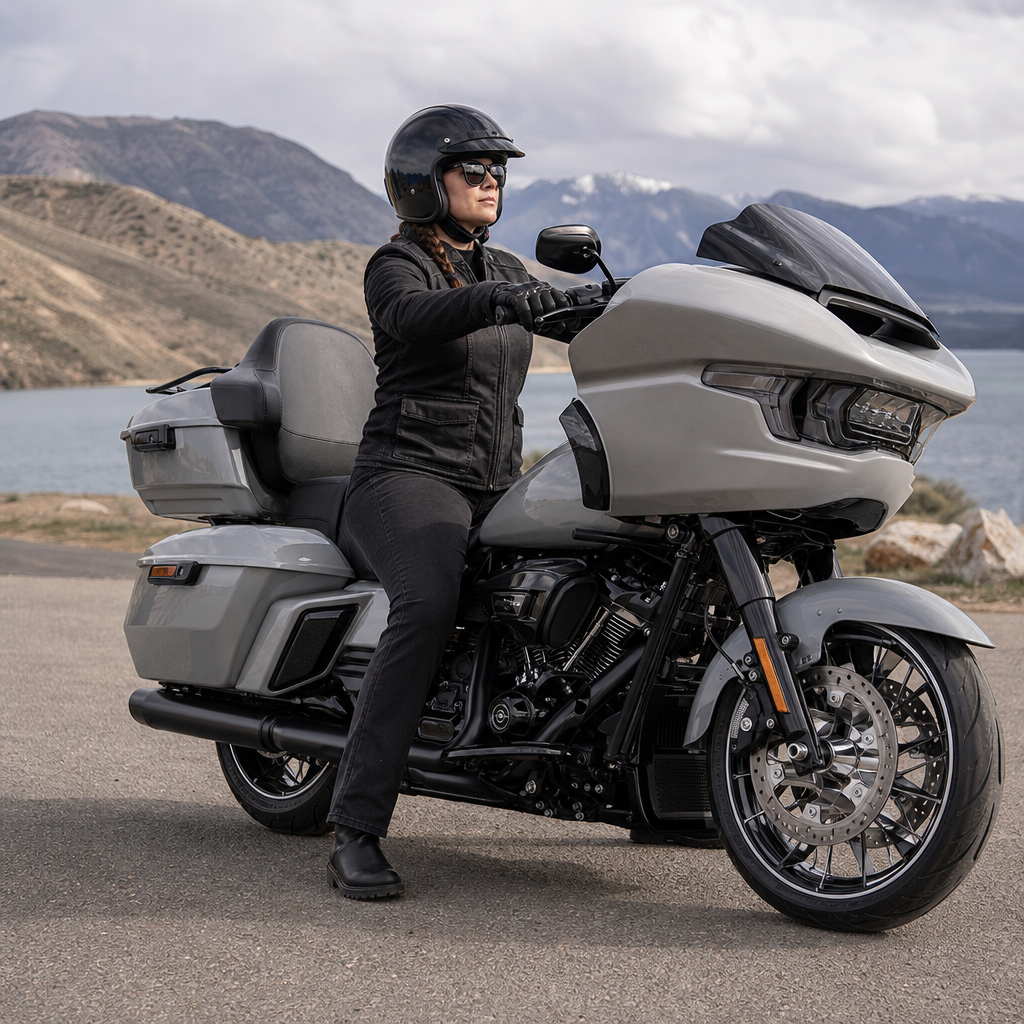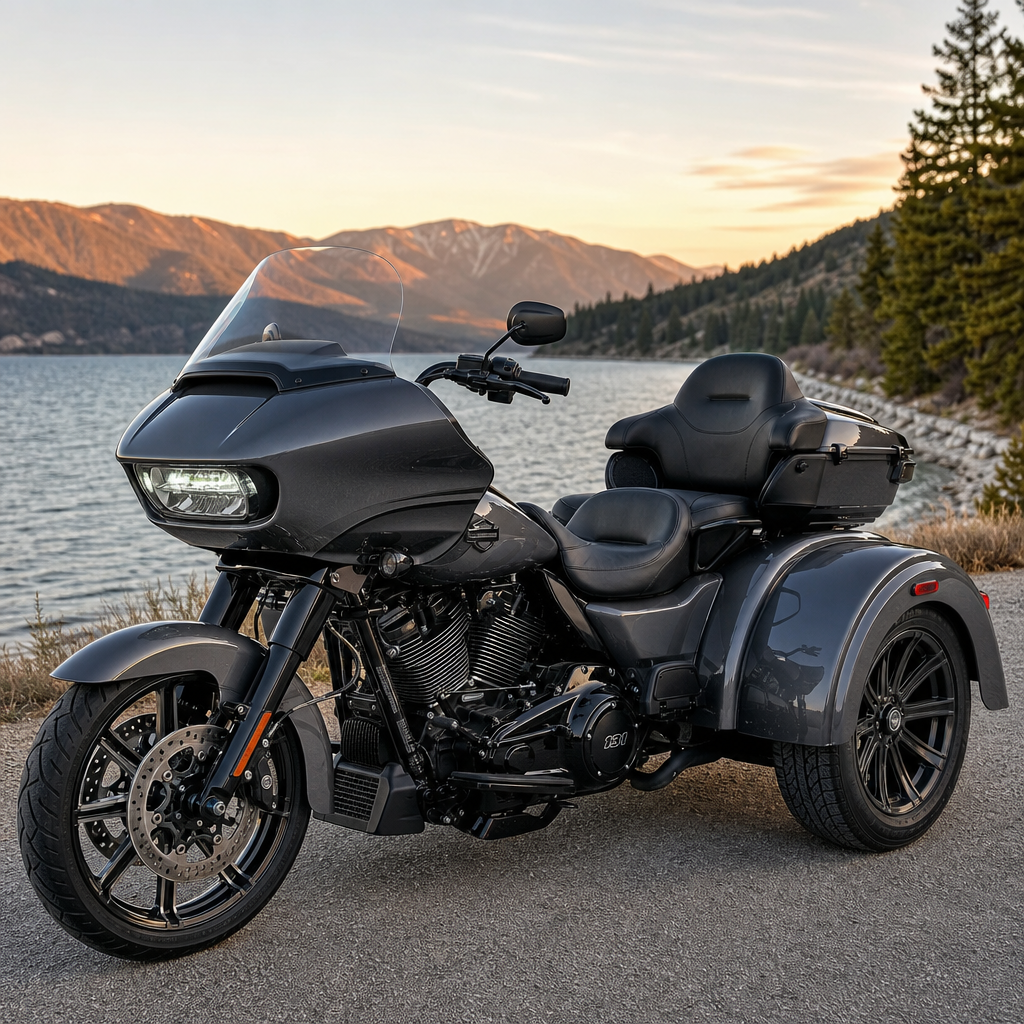
The 2026 Road Glide 3 shifting logic recipe centers on one practical goal: making a heavyweight three-wheel touring motorcycle easier to maneuver, easier to understand, and easier to set up for real riders with different strength, reach, confidence, and travel demands. In Harley-Davidson terms, a “recipe” is the combination of controls, ergonomics, drivetrain behavior, rider technique, and accessory choices that turns a stock machine into one that feels intuitive from the first parking-lot turn to the last fuel stop of a cross-state day. For this model, the conversation starts with electric reverse and forward movement because no feature changes low-speed usability more dramatically on a loaded trike.
I have worked with large touring Harleys in dealer handoff settings, parking-lot coaching sessions, and rider fit consultations, and the same pattern shows up every time: most complaints about shifting, confidence, and fatigue are not really about the transmission alone. They come from the interaction between seat height, floorboard position, clutch hand effort, throttle calibration, rider posture, rear load, and the machine’s response when creeping, backing, or launching. On a trike platform, that interaction matters even more because there is no ability to paddle-walk the machine backward with your feet the way many two-wheel riders instinctively do.
The 2026 Road Glide 3 matters within the Harley-Davidson lineup because it sits at the intersection of touring comfort, sharknose-style fairing familiarity, and three-wheel accessibility. Riders considering this platform often ask direct questions: How does electric reverse work? Does the trike move forward under electric assist too? What is the safest shifting sequence when parking on an incline? Which ergonomic changes reduce left-hand strain and right-shoulder fatigue? How should a rider adapt when carrying a passenger and luggage? This hub article answers those questions and frames the broader set of model-specific ergonomics and performance recipes that support every ownership stage, from delivery day orientation to long-haul touring refinement.
“Shifting logic” deserves a clear definition. It is not only the order of gears in the transmission. It is the full decision tree a rider follows to choose Park strategy, neutral selection, clutch timing, reverse engagement, launch technique, low-speed throttle inputs, and re-entry into normal forward riding. Good shifting logic reduces errors. It prevents rollback, driveline shock, awkward stops, and confidence-killing parking incidents. On a large trike, especially one that may be loaded with travel gear, the correct logic saves energy and protects components because it keeps the rider from forcing the machine in situations where electric assist or a different setup choice should handle the work instead.
What Electric Reverse and Forward Actually Mean on the Road Glide 3
Electric reverse on a Harley-Davidson trike is a low-speed assist system designed for controlled maneuvering, not a substitute for normal propulsion. In plain terms, it helps move the trike backward under power so the rider does not have to push several hundred pounds of machine and luggage with leg strength alone. The paired forward function is equally important because it lets the rider creep ahead under the same low-speed assist logic when straightening the machine, correcting parking angle, or easing away from a wall, curb edge, or trailer position. This is why the feature should be thought of as electric maneuver assist rather than reverse alone.
The practical advantage is easiest to understand in common real-world scenarios. Picture a hotel parking lot with a slight uphill grade at the exit. A two-wheel rider might back out by walking the bike and feathering the front brake. On a trike, that strategy is inefficient and often unrealistic. Electric reverse lets the rider remain seated, maintain steering alignment, monitor surroundings, and move at a predictable crawl. If the rider overshoots the line or needs to straighten the nose, electric forward assist can correct the position without a clutch-heavy launch. That small capability change can turn a stressful stop into a routine one.
Riders should also understand the limitations. Electric maneuver systems are built for short, deliberate movements on suitable surfaces. They are not intended for prolonged operation, high-speed travel, or steep-grade abuse. Battery condition matters. So does rider discipline. If a trike is heavily loaded, parked on loose gravel, or angled sharply against an obstacle, the system may feel slower than expected. That does not mean it is malfunctioning; it means the rider should reset the plan, reduce load if possible, or choose a better parking orientation next time. Good technique begins before the rider presses any button.
The Core Shifting Logic Recipe for Daily Use
The best daily-use recipe is simple: stop with the bars straight, choose a stable line, shift to neutral cleanly, engage maneuver assist only when the space truly requires it, then return to normal riding mode before any meaningful acceleration. I teach riders to think in phases rather than isolated actions. Phase one is approach. Scan the grade, surface, and escape path before stopping. Phase two is settle. Bring the trike to a complete halt with minimal steering angle. Phase three is choose. Decide whether normal clutch-and-throttle movement is sufficient or whether electric reverse or forward will produce a safer result. Phase four is execute calmly.
For most parking situations, use this sequence: stop fully, hold brake control, shift deliberately, confirm the trike is where you want it before releasing attention from the controls, then make one short movement at a time. Riders get into trouble when they rush or try to combine too many actions. On a heavy touring trike, smoothness beats speed every time. If backing into a spot, leave enough front clearance to pull out without a full-lock correction. If nose-in parking is unavoidable, stop early enough that reverse has room to work without contacting curbs, bollards, or the bumper line of the vehicle beside you.
Another important rule is to avoid using the engine and clutch as a substitute for planning. The Road Glide 3 is happiest when low-speed corrections are intentional. Repeated half-clutch dragging on awkward inclines creates heat, increases rider fatigue, and often amplifies jerky inputs. Electric maneuver assist exists to solve exactly that problem. In practice, riders who commit to a calm stop, a clean neutral selection, and a short assist move are smoother leaving gas stations, gravel shoulders, and scenic pull-offs than riders who insist on muscling the machine through every correction with body effort alone.
Ergonomics That Change How the Trike Shifts and Feels
Ergonomics are not cosmetic on the 2026 Road Glide 3. They directly affect shifting quality, low-speed control, and rider confidence. Seat shape determines hip rotation and how well the rider can brace during starts and stops. Handlebar reach changes shoulder angle, which influences clutch-hand precision and steering steadiness. Floorboard relationship to the seat affects knee bend and the speed with which the left foot can move between resting position and shift lever. Even passenger load changes front-end feel enough that a rider may perceive shifts and launches differently on the same route.
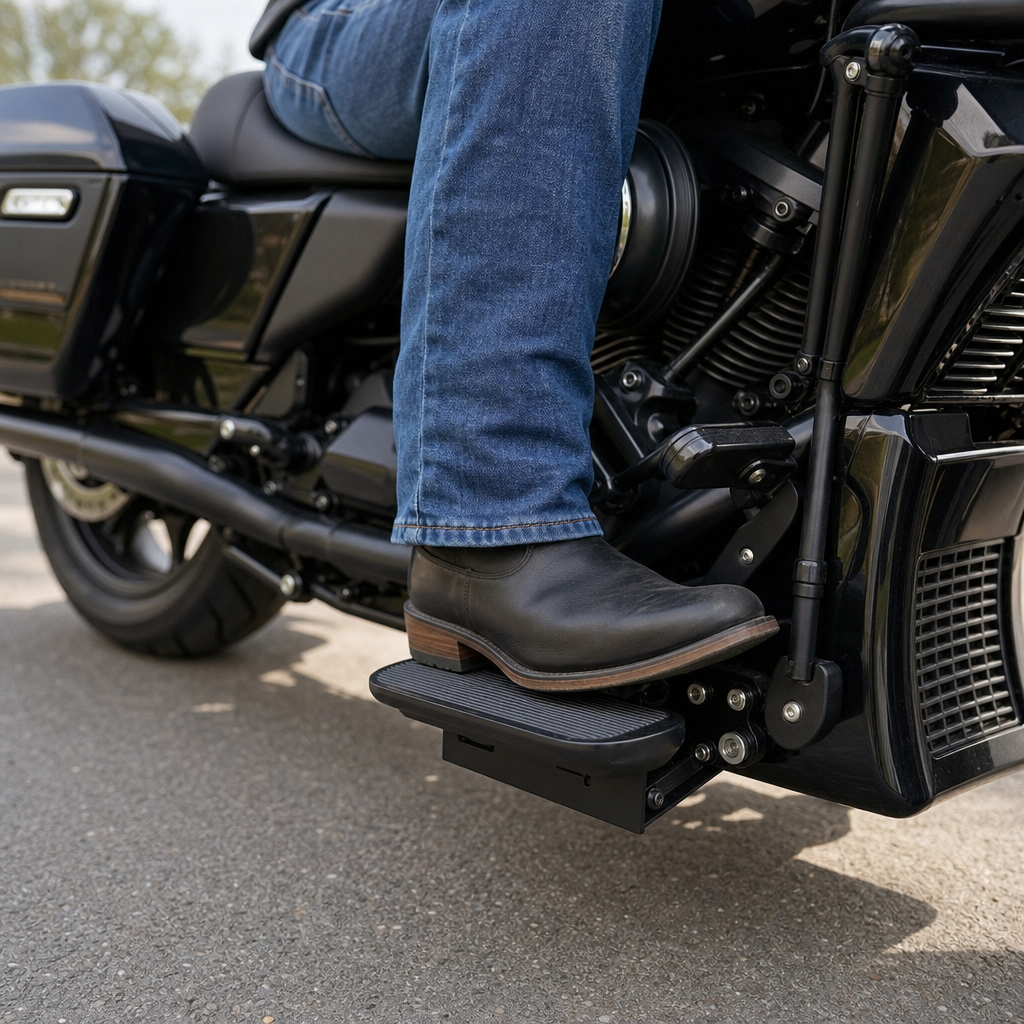
When I fit riders to Harley touring models, three measurements matter first: seated reach to grips with elbows soft, boot access to the shifter without lifting the whole leg, and lumbar support over a two-hour sample ride. Riders who are overreaching to the bars often pull against the grips during clutch release, which creates wandering starts and vague shift timing. Riders cramped at the hips tend to overuse ankle motion at the shifter and may under-shift when fatigued. A correct setup lets the rider separate tasks: left hand modulates, left foot shifts cleanly, right hand meters throttle, and torso stays relaxed.
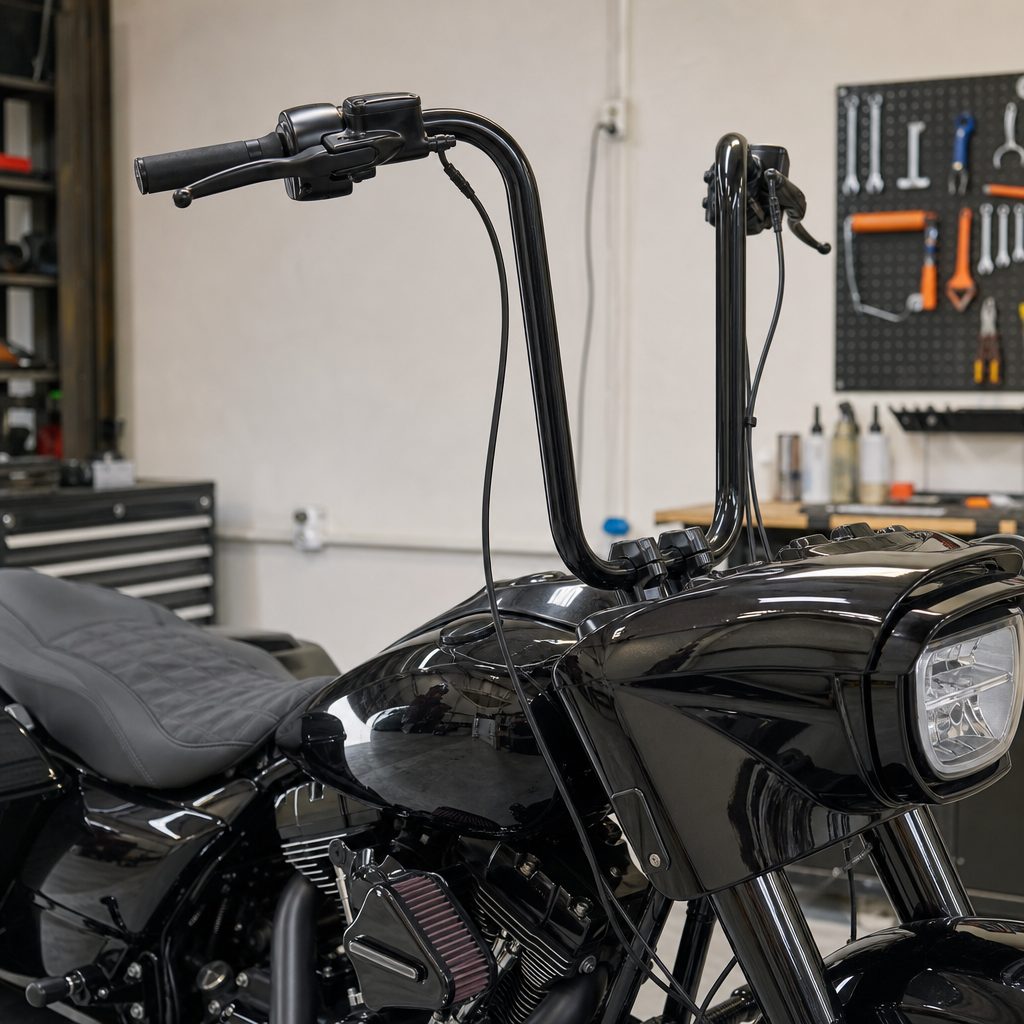
The strongest recipe for many owners is a supportive touring seat, bars that reduce wrist extension, and a shifter position set for the rider’s actual boot, not showroom assumptions. A half-inch change at the lever can transform consistency. So can reducing clutch effort through proper adjustment and maintenance. This is why model-specific ergonomics articles matter within the Harley-Davidson ecosystem: every platform has its own packaging constraints, and the trike adds width, rear weight bias, and parking behavior that make generic advice unreliable.
| Setup Area | What to Check | Common Symptom | Practical Fix |
|---|---|---|---|
| Seat | Hip support and reach to bars | Lower-back fatigue, tense launches | Touring seat with firmer lumbar support |
| Handlebars | Elbow bend and wrist angle | Heavy steering feel, clutch inconsistency | Adjust reach or choose bars with less pull strain |
| Shifter position | Boot clearance and ankle angle | Missed or lazy upshifts | Reposition lever for natural toe access |
| Floorboards | Knee bend and foot movement path | Slow foot transitions at stops | Match board setup to inseam and boot size |
| Load distribution | Passenger and luggage balance | Awkward launch feel, extra steering correction | Pack low, center weight, confirm tire pressures |
Performance Recipes for Loaded Touring, City Use, and Confidence Building
The Road Glide 3 does not need one universal setup. It needs recipes matched to use case. For loaded touring, prioritize smooth first-gear launches, predictable brake balance, and parking plans that avoid steep backward exits. Check tire pressures cold, center heavy items low in the trunk area, and rehearse the stop-back-straighten sequence before the trip begins. Riders who do this are less likely to fight the machine at destination hotels and scenic overlooks. If carrying a passenger, agree on mount and dismount timing so chassis movement does not interrupt the rider’s shifting rhythm.
For city use, the winning recipe is visibility, repeatability, and reduced hand strain. Urban riding creates more stops, more low-speed turns, and more opportunities to park in imperfect spaces. This is where electric reverse and forward save the most effort over time. Instead of dreading every tight coffee-shop lot, the rider can prioritize a clean line, stop square, and use assist only as needed. Pair that technique with deliberate early downshifts and light clutch work, and the trike becomes much easier to thread through congestion without drama.
For newer trike riders or returning riders, confidence building should happen in a controlled lot before the first long trip. Practice starting, stopping, straight backing, slight-angle backing, and one correction forward under assist. Then practice returning to normal riding mode and launching smoothly. This progression matters because many riders understand the feature in theory but have never integrated it into a repeatable routine. Once the sequence becomes automatic, stress drops fast. That confidence is often the difference between using the trike often and letting it sit because every unfamiliar parking lot feels like a test.
Maintenance, Standards, and the Bigger Harley-Davidson Recipe Hub
No shifting logic recipe works if maintenance is neglected. Battery health is critical because electric maneuver systems depend on reliable electrical power. Weak batteries, poor terminal condition, or charging issues can make assist performance inconsistent. Clutch adjustment and fluid condition affect feel at every stop. Shifter linkage wear, floorboard hardware looseness, and tire condition all influence precision. Follow the service intervals in the owner documentation, and if the trike develops abnormal hesitation, noise, or warning indicators, diagnose the cause before assuming the feature itself is at fault.
Use recognized tools and standards when evaluating setup changes. A battery tester gives more meaningful information than guesswork. A torque wrench matters on rider-contact components. Tire pressure should be checked with a known accurate gauge, not judged by appearance. If you add accessories, confirm that they do not interfere with control travel or body positioning. In dealership service departments and independent Harley shops alike, the best outcomes come from combining rider feedback with objective checks: where the rider feels strain, where the machine hesitates, and what measurements confirm the source.
As the hub for model-specific ergonomics and performance recipes under Harley-Davidson, this page points to a larger ownership strategy. The Road Glide 3 shifting logic recipe connects naturally to related topics such as touring seat fit, handlebar reach tuning, trike parking strategy, passenger ergonomics, low-speed training drills, and luggage weight distribution. Each article in this subtopic should answer one practical question thoroughly, then link back to the complete recipe: fit the rider correctly, use electric reverse and forward intelligently, maintain the machine precisely, and build repeatable habits that make every mile easier.
The main takeaway is straightforward: the 2026 Road Glide 3 becomes dramatically more manageable when riders treat shifting logic as a system rather than a single control action. Electric reverse and forward are not gimmicks. They are core usability tools for a heavy touring trike, especially in real parking environments where grade, load, and limited space expose poor technique immediately. Combine those tools with rider-specific ergonomics, smart parking choices, clean clutch and shifter habits, and routine maintenance, and the machine feels calmer, safer, and more predictable every day.
That is the real value of a recipe-based approach. Instead of chasing random accessories or blaming the transmission for every awkward moment, you identify the interaction between body position, machine setup, electrical assist, and riding routine. Small changes add up. A better seat can improve launch control. A corrected shifter angle can reduce missed shifts. A stronger battery can restore confidence in maneuver assist. A practiced backing sequence can eliminate the panic that makes many riders avoid tight spaces. On a trike intended for travel, those gains translate directly into comfort, time, and willingness to ride more often.
If you are building out your Harley-Davidson touring setup, start with this hub’s core sequence: fit the rider, test the parking routine, verify the electrical and control systems, and practice electric reverse and forward until they feel ordinary. Then move deeper into the linked model-specific ergonomics and performance recipes for seats, bars, passenger comfort, luggage balance, and low-speed control. That step-by-step process will give you a Road Glide 3 that works with you, not against you, whether you are backing out of a sloped hotel space or setting off on a thousand-mile tour.
Frequently Asked Questions
What does the “2026 Road Glide 3 shifting logic recipe” actually mean?
The “shifting logic recipe” is best understood as the complete strategy that makes the 2026 Road Glide 3 feel predictable and manageable in real-world riding, especially at low speeds and during parking maneuvers. It is not just about the transmission itself. It includes how the rider uses the hand and foot controls, how the machine responds to throttle and clutch inputs, how electric reverse and forward assist are applied, how the rider’s body position affects balance and confidence, and how accessories or ergonomic changes can reduce effort. On a heavyweight three-wheel touring motorcycle, those details matter more than many riders expect because the machine must remain easy to control in tight spaces, on uneven pavement, and under full touring load.
In practical terms, the recipe is about building a setup and routine that feels natural from the first parking-lot turn. That means the rider should know when to use standard drivetrain control, when to rely on electric reverse, when electric forward movement is useful, and how to avoid overcomplicating simple maneuvers. It also means considering rider-specific variables such as leg strength, hand size, seat position, reach to the controls, and confidence level. A strong, experienced rider may be comfortable slipping the clutch and feathering the rear brake in a tight turn, while another rider may benefit more from adjusting levers, changing the seat, or practicing a repeatable maneuver sequence that reduces physical strain.
Harley-Davidson riders often use the word “recipe” because there is rarely one single fix that transforms a touring trike. Instead, the best results come from combining several small decisions: correct control familiarization, smooth clutch release habits, measured throttle inputs, intelligent use of reverse and forward assist, proper tire pressure, suitable luggage loading, and accessories that support easier operation. When all of those factors work together, the Road Glide 3 becomes less intimidating and much more intuitive in garages, gas stations, sloped parking lots, and crowded travel stops.
How do electric reverse and electric forward improve maneuvering on the 2026 Road Glide 3?
Electric reverse and electric forward are valuable because they reduce the physical effort required to reposition a heavy three-wheel touring motorcycle in situations where muscle alone can be inconvenient, awkward, or unrealistic. Backing a loaded trike up a slight incline, correcting a parking angle, or inching the bike into a tight storage space can be challenging even for experienced riders. Electric reverse gives the rider controlled rearward movement without the need to push with body weight or rely on uncertain footing. Electric forward complements that capability by allowing equally controlled inching ahead when the rider wants small corrections without abrupt clutch engagement or unnecessary strain.
The biggest benefit is confidence. Riders who worry about getting stuck in a poor parking position often become tense before the maneuver even begins. That tension can lead to rushed decisions, jerky inputs, and poor line choice. Electric assist systems help remove that anxiety by giving the rider a deliberate, low-speed repositioning option. Instead of trying to “power out” of a bad angle or wrestle the machine by hand, the rider can make small, careful adjustments with much less effort. That is especially useful for shorter riders, older riders, riders with limited lower-body strength, and anyone traveling two-up or with luggage.
Another important advantage is consistency. Traditional low-speed technique still matters, but electric reverse and forward can make parking-lot routines more repeatable. For example, if a rider pulls into a fuel stop and realizes the machine needs to be moved back a few inches to align with the pump or curb, electric reverse allows that adjustment without repeated stop-start clutch work. Likewise, a slight forward reposition can be handled with more precision than a quick clutch release. Used correctly, these systems do not replace good riding technique; they support it by reducing fatigue, limiting awkward corrections, and making low-speed control feel less like a strength contest and more like a planned process.
Does using electric reverse and forward change proper riding technique?
Yes, but only in the sense that proper technique becomes more strategic. Electric reverse and forward are tools, not substitutes for foundational control skills. A rider still needs to understand smooth clutch use, controlled throttle application, braking balance, steering inputs, and parking-lot awareness. What changes is the decision-making process. Instead of forcing every low-speed adjustment through the standard drivetrain, the rider can choose the least stressful and most precise method for the specific situation. That is a major part of the shifting logic recipe: matching the control method to the maneuver rather than treating every movement the same way.
For example, when rolling through a slow U-turn or creeping in stop-and-go traffic, normal riding controls remain the primary method. The rider should continue using steady vision, light throttle, smooth clutch modulation, and stable steering technique. But when the motorcycle is parked on a slight incline, boxed into a tight hotel lot, or loaded for a long trip, electric reverse may become the smarter option. Similarly, electric forward can be helpful when the goal is not to launch the motorcycle into regular riding, but simply to move it ahead a few inches in a controlled way. Good technique means knowing that distinction and using the system early, before the situation becomes awkward.
Riders should also remember that low-speed confidence improves when procedures are simplified. Before moving the trike, check surface conditions, choose the path, straighten the bars when appropriate, verify clear space around the machine, and apply controls smoothly. Avoid abrupt transitions between assist functions and standard riding controls. The best habit is to practice each function in an open, flat area until operation feels automatic. Once the rider knows exactly how the Road Glide 3 responds in reverse, in electric forward movement, and under normal clutch-driven takeoff, the machine becomes easier to trust. That trust is what ultimately improves technique.
What setup changes can make the Road Glide 3 feel easier to understand and control?
The most effective setup changes are usually ergonomic and practical rather than dramatic. The goal is to make the trike fit the rider so that every maneuver takes less concentration and less physical effort. Start with the controls the rider uses most: handlebar reach, hand lever comfort, seating position, and foot placement. If the rider is stretching for the bars, locking the elbows, or struggling to apply consistent pressure at the controls, low-speed precision suffers. A seat that positions the rider more securely, bars that reduce reach strain, or lever adjustments that suit hand size can make the Road Glide 3 feel significantly more intuitive.
Loading and weight distribution also matter. Touring motorcycles behave differently when packed for travel, and a trike that feels manageable at home can feel more cumbersome when loaded with luggage, passenger gear, and accessories. Smart packing improves low-speed response by keeping unnecessary weight down and placing cargo in stable, sensible locations. Tire pressures should also be checked regularly because improper inflation can affect steering feel and overall predictability. Riders often underestimate how much confidence comes from a machine that feels mechanically settled before a maneuver even begins.
Accessories can also play a meaningful role in the shifting logic recipe. Floorboard preferences, backrest support, seat shape, lighting upgrades for visibility in parking areas, and even storage choices can contribute to a more user-friendly experience. For some riders, the right accessory package reduces mental load because the motorcycle becomes easier to mount, easier to stabilize during stops, and easier to manage in travel conditions. The key is to avoid random modifications and instead choose changes that directly support the rider’s real needs: easier reach, better comfort, improved control feedback, and less strain during low-speed positioning. When setup decisions are made with those goals in mind, the Road Glide 3 starts to feel less like a machine that must be “handled” and more like one that naturally cooperates.
Who benefits most from refining the Road Glide 3 shifting logic recipe, and how should they practice it?
Almost every rider benefits from refining the recipe, but it is especially valuable for riders transitioning into heavyweight three-wheel touring for the first time, riders returning after time away, shorter riders, older riders, and anyone who wants greater confidence in parking-lot or travel-stop situations. Even experienced Harley-Davidson touring riders can discover that a trike introduces different maneuvering demands than a two-wheel motorcycle. The Road Glide 3 does not rely on balance in the same way, but it still requires clear habits for speed control, line planning, surface awareness, and repositioning in confined spaces. The recipe helps convert those demands into a repeatable routine.
The best way to practice is in stages. Begin in a flat, open area with no traffic pressure. Familiarize yourself with the controls and deliberately rehearse the sequence for starting, stopping, reversing, moving forward with assist if equipped, and transitioning back to normal riding. Practice small corrections rather than big dramatic movements. Move the trike backward a short distance, stop smoothly, then move it forward again with equal control. Repeat until the process feels calm and predictable. After that, add common real-world variables such as slight slopes, parking-space angles, tighter turning approaches, and simulated travel loads. The purpose is not speed; it is consistency.
Riders should also practice decision-making, not just control operation. Before each maneuver, ask simple questions: Is there enough room? Is the surface level? Should I back in or pull through? Would electric reverse save effort here? Would a small electric