Buying a 1990s Harley-Davidson Fat Boy sounds straightforward until one detail changes the stakes: many sellers casually label any black-and-chrome Softail as a “Terminator bike.” For buyers, collectors, and riders, that shortcut creates confusion, inflated prices, and avoidable mistakes. A 1990-1999 Fat Boy buyer guide needs to separate standard used-bike inspection from movie-linked authenticity checks, because the 1991 Fat Boy associated with Terminator 2: Judgment Day occupies a special place in Harley-Davidson history. In practical terms, authenticity means confirming whether a motorcycle is merely similar to the screen bike, a correctly configured period Fat Boy, a tribute build, or a documented promotional or studio-connected machine. Those categories have very different values, insurance implications, and restoration priorities.
I have inspected enough older Harleys to know that excitement can make buyers overlook ordinary mechanical issues while chasing a story. That is backwards. A genuine early Fat Boy still has to pass the same scrutiny as any thirty-year-old motorcycle: frame integrity, engine health, title accuracy, originality of major components, and evidence of competent maintenance. Then, and only then, should you test the seller’s claims about “Terminator” provenance. This matters because the 1990s Fat Boy line changed year to year, and because movie mythology often blends factory specifications, dealer accessories, owner modifications, and internet folklore into one unreliable narrative.
Within the Harley-Davidson used buyer guides for 1990-2026, the 1990-1999 Fat Boy is one of the most misunderstood ranges. These bikes sit at the intersection of Evo-era simplicity, collectible styling, and mass-market fame. The hub topic here is broader than one film reference: it covers how to evaluate condition, identify period-correct parts, understand model-year changes, compare originality against usability, and decide when a premium is justified. If you are shopping this category, the core question is not “Does it look like Arnold’s bike?” but “What exactly is this motorcycle, what evidence supports that description, and what will it cost me after purchase?” Answer that with discipline, and you avoid paying collector money for a dressed-up rider.
Understand what “Terminator authenticity” actually means
The first inspection step is definitional. A real 1990s Fat Boy can fall into four buckets. First, a standard production Harley-Davidson FLSTF Fat Boy built during the 1990-1999 period. Second, a period-correct 1991-style bike restored or maintained to closely match the visual specification associated with the movie. Third, a tribute or clone assembled from a later Fat Boy or mixed Softail parts. Fourth, a machine with documented link to production, promotion, licensing, or recognized museum provenance. Most bikes advertised online sit in the first three categories, not the fourth.
The movie association centers on the 1991 model year, even though sellers routinely stretch the claim to any Evo Fat Boy from the decade. A buyer should know the distinction immediately. If a seller says “authentic Terminator Fat Boy,” ask whether they mean authentic FLSTF production bike, authentic 1991 specification, or authentic documented screen-related machine. If they cannot answer clearly, treat the claim as marketing. Provenance requires paperwork, not resemblance.
Collectors sometimes overfocus on cosmetics and miss the legal side. Authentication starts with matching the Vehicle Identification Number on the steering head to the title and to factory decoding for year and model family. Engine case numbers should also align with what is expected for the motorcycle’s era. Harley-Davidson VIN formats changed over time, but by the 1990s decoding year, manufacturer, and model attributes is straightforward with factory literature or recognized decoder references. A title branded salvage, reconstructed, or specially assembled does not automatically make the bike bad, but it severely weakens any originality premium.
Ask a simple chain of ownership question: who owned it, when, and what documents survive? A stack including original bill of sale, owner’s manual, service receipts, factory parts invoices, registration history, and dated photos carries real weight. A seller’s statement that “the previous owner said it was one of the movie bikes” carries none. Studios, museums, auction houses, and serious collectors rely on traceable documentation because visual similarity can be replicated in a weekend.
Model-year differences across 1990-1999 matter more than most buyers realize
The 1990-1999 Fat Boy range spans the Evolution engine era and several detail changes that affect both value and authenticity. The original Fat Boy debuted for 1990 as the FLSTF, built on the Softail platform with solid-disc wheels, broad valanced fenders, and the muscular visual treatment that made the model famous. Early examples used the 80 cubic inch Evolution V-twin and a five-speed transmission. Throughout the decade, Harley-Davidson made running changes to finishes, components, and trim, while the market layered on accessories such as windshields, seats, pipes, and luggage.
If the goal is a bike that matches the famous early-1990s look, later 1990s machines can be excellent riders but are not identical collector substitutes. Small year-specific differences in controls, finishes, badging, exhaust, and ancillary hardware matter to informed buyers. On a used inspection, I always compare the bike against factory brochures, parts books, and service manuals for that exact year rather than relying on memory or generic online listings. Harley parts interchange is both a blessing and a trap: the bike may look right from ten feet away while carrying swapped components from several years.
Understanding the decade also helps pricing. A clean, documented 1990 or 1991 FLSTF with largely original equipment typically commands stronger enthusiasm than a highly modified 1997 rider, even if the newer bike starts more easily and leaks less. That is not irrational; buyers are paying for historical closeness to the original release and movie-era image. But condition still rules. A tired “correct” bike needing cases resealed, tires, brakes, charging-system work, and a full cosmetic recommission can quickly cost more than a well-kept rider with tasteful non-original parts.
Inspect the identifiers, paperwork, and provenance before touching a wrench
On any 1990s Harley purchase, documentation inspection should happen first because it determines whether further effort is worthwhile. Start with the title, VIN tag or stamp on the frame neck, and any emissions or certification labels that remain. Look for tampering, uneven rivets where applicable, fresh paint around the neck, grinding marks, and mismatched fonts. A repainted frame is not automatically suspicious, but unexplained disturbance around identification points is a reason to stop.
Next, compare the seller’s narrative to the paperwork timeline. If the odometer shows 12,000 miles yet maintenance receipts indicate regular tire changes, clutch work, and battery replacements over three decades, the number may still be true, but the bike needs deeper scrutiny. Odometers on older bikes can fail or be replaced. Honesty matters more than a low reading. I would rather buy a 48,000-mile Fat Boy with complete records than a “9,000-mile original” with gaps and convenient myths.
For higher-value claims, request supporting evidence from known institutions. A museum display card, major auction catalog, notarized bill of sale from a recognized collector, or production-company release is useful. A certificate from an unrecognized memorabilia reseller is much less persuasive. If the seller invokes a celebrity or film connection, ask for names, dates, and a direct chain linking the VIN to the claim. Without that, value the bike as a normal used Fat Boy.
| Inspection item | What to verify | Why it matters |
|---|---|---|
| VIN and title | Match frame VIN to title and correct model year | Confirms legal identity and baseline authenticity |
| Engine numbers | Check era-correct case markings and signs of replacement | Affects originality, value, and rebuild history |
| Ownership file | Receipts, registrations, manuals, photos, bill of sale | Supports mileage, maintenance, and provenance |
| Movie claim | Studio, museum, auction, or collector documentation | Separates tribute bikes from documented examples |
| Factory spec | Compare paint, wheels, exhaust, seat, bars, trim to exact year | Identifies clones, modified bikes, and incorrect restorations |
Check the parts that define a period-correct early Fat Boy look
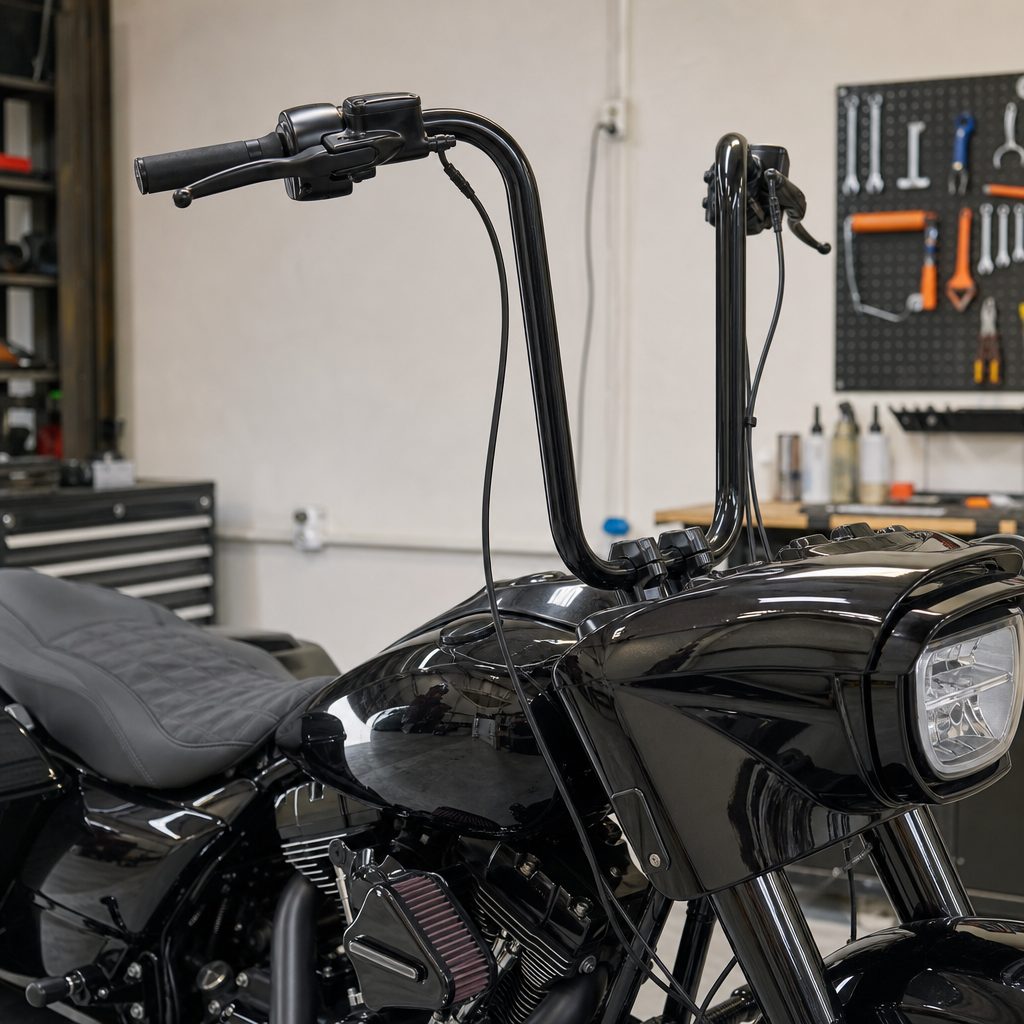
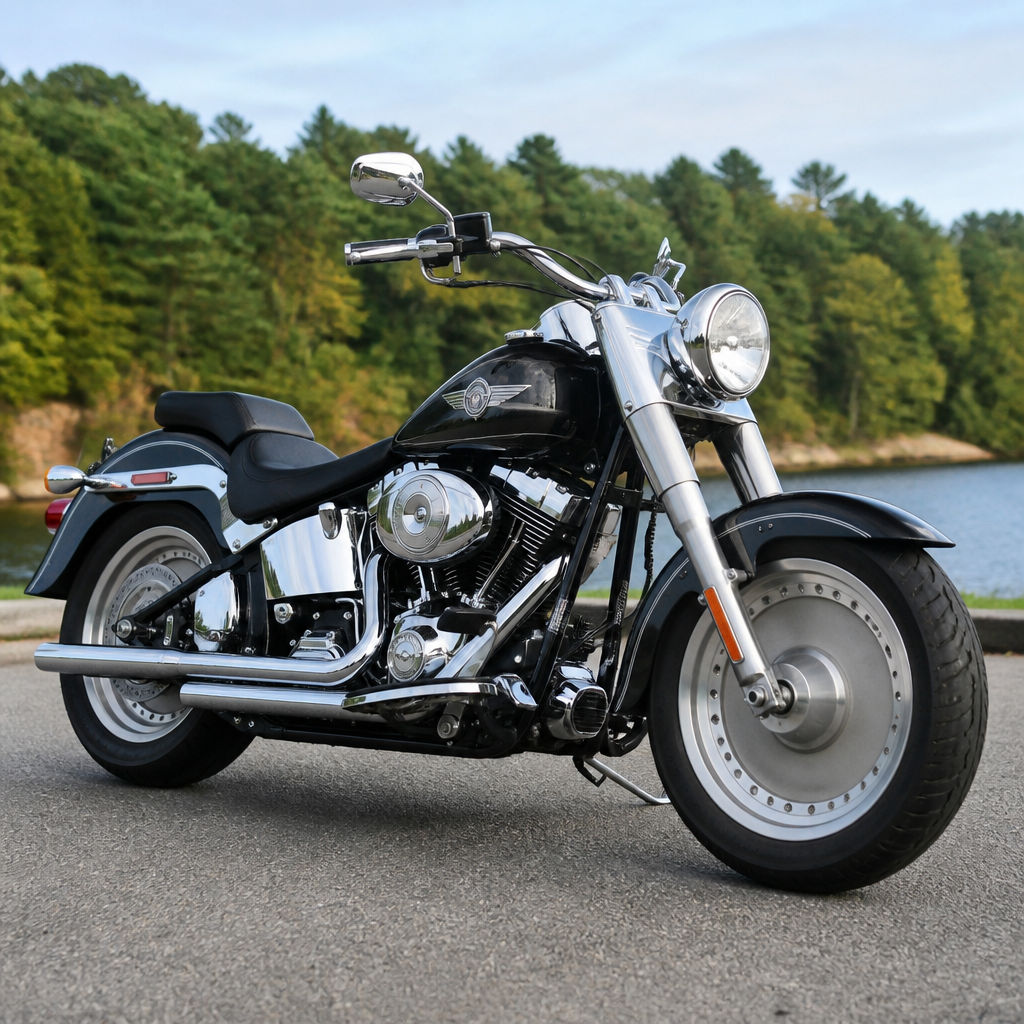
Most “Terminator” confusion comes from visual shorthand, so inspect the visible parts carefully. The Fat Boy’s signature elements include the disc-style wheels, substantial front end, valanced fenders, large fuel tank, and a low, broad stance. On a supposed early-1990s bike, ask whether the paint, tank badges, seat, handlebar setup, mirrors, exhaust shields, and lighting correspond to factory specification or later customization. Many tribute bikes use aftermarket slash-cut pipes, custom bars, and replacement seats that mimic a cinematic vibe while moving further away from true period correctness.
Wheels deserve special attention because they are central to the model’s identity. Damage, curb rash, corrosion, and refinishing are common after decades of use. A wheel can be structurally sound yet cosmetically redone in a way that reduces originality. Likewise, fenders and tanks are easy places to hide old dents and filler under fresh paint. Use a flashlight and magnet-friendly caution where appropriate, inspect mounting hardware for signs of disassembly, and look for overspray on wiring, rubber, and bracket edges.
Exhaust systems are often changed, and that alone should not kill a deal. Plenty of owners installed freer-flowing pipes from brands such as Vance & Hines or Screamin’ Eagle accessories. The key is pricing accordingly and determining whether the original system comes with the bike. Original takeoff parts can materially improve future resale, especially on collectible Evo Harleys. The same goes for seats, air cleaners, and windshields. In this market, a bike sold with a box of correct original components is often worth more than a perfectly polished custom with no parts history.
Evaluate mechanical condition like a rider, not just a collector
The Evolution-powered Softail is durable, but age changes the inspection checklist. Cold start behavior tells you a lot. The engine should fire without dramatic mechanical clatter, prolonged smoke, or obvious carburetion distress beyond what an older carbureted Harley may briefly show. Listen for top-end noise, exhaust leaks at the heads, and primary or transmission sounds that suggest neglected adjustment or worn components. Oil seepage is common on old Harleys; active dripping from multiple areas is not something to shrug off.
Look closely at rocker boxes, pushrod tubes, base gaskets, primary cover, transmission seals, and oil lines. Check charging voltage with a meter if possible, because stator and regulator issues can turn a “great runner” into a stranded project. Inspect the carburetor for amateur tuning, cracked intake seals, and stale-fuel residue. A bike that sat for years may need more than a cleaning; dried seals, hardened tires, corroded brake fluid, and contaminated tanks all add cost.
Softail chassis inspections should include steering-head bearings, fork seals, swingarm play, rear suspension feel, and belt drive condition. On a test ride, the bike should track straight under steady throttle and moderate braking. Pulsation at the lever suggests rotor issues; vague handling can indicate old tires or worn chassis bearings. Brakes on 1990s Harleys will not feel modern, but they should be predictable and strong enough for confident street use. If not, budget for caliper service, hoses, master-cylinder rebuilds, and pads.
Engine originality also intersects with durability. Some buyers want untouched internals; others prefer evidence of sensible updates such as cam chest service or top-end work by a respected Harley specialist. Neither approach is automatically better. What matters is whether the work was done correctly, documented, and reflected in the price. A freshly rebuilt Evo with receipts from a known shop may be a stronger buy than a “never opened” engine that now has poor compression.
Spot common red flags in seller claims and restoration stories
When a seller leans hard on the movie angle, ask what they are avoiding discussing. Common red flags include vague phrases like “believed to be screen used,” “same as the movie bike,” or “one of a few made for promotion” without documentation. Another is an over-restored motorcycle wearing fresh paint, reproduction decals, and polished hardware everywhere, but lacking old photos or receipts. Perfect cosmetics on a thirty-year-old bike are possible, yet they should come with a clear explanation.
Be cautious with mismatched aging. For example, a tank and fenders that look newly sprayed next to heavily patinated controls and engine covers may indicate partial cosmetic work after damage. That does not make the bike bad, but it changes the originality discussion. The same is true when sellers call every non-stock part “dealer installed.” Unless supported by invoices, that phrase is usually impossible to verify decades later.
Internet comparables can also distort judgment. Asking prices for “Terminator Fat Boy” listings are often aspirational, not transactional. A smart buyer studies completed sales, major auction results, and values for ordinary FLSTF examples in equivalent condition. Provenance can create a premium; resemblance alone should not. If the seller demands a rare-bike price for a standard rider with cosmetic similarities, walk away or negotiate from documented market reality.
How this 1990-1999 guide fits the wider Harley-Davidson used-buyer hub
As a hub within Harley-Davidson used buyer guides from 1990 through 2026, the 1990-1999 Fat Boy page serves two jobs. First, it gives model-specific inspection criteria for one of the brand’s most recognized cruisers. Second, it creates a framework buyers can apply across generations: verify identity, confirm year-specific equipment, inspect age-sensitive mechanical systems, and separate cultural cachet from documented value. That same method helps whether you are comparing a carbureted Evo Fat Boy, a Twin Cam-era Softail, or a later Milwaukee-Eight model with electronic aids and modern brakes.
The broader lesson is simple. Buy the best-documented, best-maintained motorcycle that matches your intended use. If you want a rider, prioritize compression, charging health, chassis condition, and parts availability. If you want a collectible, prioritize originality, paperwork, and correct year-specific details. If you want both, expect to pay more and compromise less. The 1990s Fat Boy rewards disciplined buyers because it offers classic Harley-Davidson character, straightforward serviceability, and enduring appeal, but only when evaluated with clear eyes.
Before you commit, bring factory literature, inspect the bike cold, verify every number, and challenge every provenance claim. That process protects your budget and improves your odds of ending up with a Fat Boy that is either honestly period-correct or honestly just a great motorcycle. Start with documentation, follow with mechanical inspection, and let evidence—not movie mythology—determine value. That is the smartest way to buy any 1990-1999 Fat Boy.
Frequently Asked Questions
How can I tell whether a 1990s Harley-Davidson Fat Boy is truly connected to Terminator 2, or just styled to look like one?
The first thing to understand is that most 1990s Fat Boys advertised as “Terminator bikes” are not film-used motorcycles, studio-owned motorcycles, or factory-designated special editions. In the collector market, that label is often used loosely to describe a Fat Boy that resembles the black-and-chrome 1991 machine made famous in Terminator 2: Judgment Day. A real authenticity check starts with asking what the seller actually means. Are they claiming the bike is screen-used, production-related, period-correct to the movie, or simply cosmetically similar? Those are very different categories, and the value difference can be enormous.
If a seller claims true movie linkage, insist on hard documentation. That means provenance such as studio paperwork, chain-of-ownership records, letters from recognized experts, auction documentation from reputable houses, or period evidence linking the exact VIN to production history. Without that, the bike should be treated as a standard Fat Boy with tribute styling. Do not rely on verbal stories, old photos of a similar motorcycle, or statements like “this is one of the Terminator bikes” unless those claims are backed by credible records.
For a buyer who simply wants a bike that is visually faithful to the on-screen look, inspect whether the machine matches the broad 1991-era Fat Boy appearance rather than whether it has a mystical “Terminator” badge. That includes the correct generation of Fat Boy, period-appropriate finishes, and a configuration that makes sense for the year. In short, authenticity comes down to evidence, not seller enthusiasm. If the bike has no documented movie provenance, price it and evaluate it as a normal 1990s Fat Boy, not as a Hollywood artifact.
What specific features should I inspect on a 1990-1999 Fat Boy if I want a bike that is visually accurate to the famous Terminator 2 look?
Start with the model year, because the movie association centers on the early Fat Boy, especially the 1991 model year. A later 1990s Fat Boy can still be an excellent motorcycle, but it will not be the same thing as an early-era bike if your goal is visual and historical closeness to the film. Check the VIN and engine numbers to confirm the actual production year, and compare the bike’s configuration against factory-correct features for that specific year. Many bikes have been repainted, re-trimmed, or updated with later parts, which can make them look convincing at a glance while moving them away from period correctness.
Pay close attention to the finish and trim. The widely recognized movie look is built around a black-and-silver, heavy-chrome visual presence, solid-disc Fat Boy wheels, a muscular Softail stance, and the unmistakable early Fat Boy silhouette. Look for consistency across the fuel tank, fenders, side covers, frame paint, primary cover, exhaust, and wheel finish. A bike that mixes aftermarket chrome accessories, modern custom paint, billet pieces, and non-period controls may still be attractive, but it is better described as a customized Fat Boy than a faithful tribute.
Also inspect the details many buyers overlook: handlebars, seat style, headlamp nacelle area, foot controls, air cleaner, exhaust routing, and any visible fasteners or trim pieces that suggest later modification. Tribute bikes are often assembled from a standard used Fat Boy plus cosmetic parts, so the overall package may not line up cleanly. If visual authenticity matters, bring factory reference photos, period brochures, and known 1991 Fat Boy specifications with you. The closer the bike is to an unmolested early-1990s Fat Boy, the more believable and desirable it usually is to buyers who care about the Terminator connection.
Should I pay a premium for a seller’s “Terminator” claim, and how do I avoid overpaying?
In most cases, no. You should not pay a premium simply because a seller uses the words “Terminator bike” in the listing. A premium is only justified when there is something concrete behind the description, such as documented provenance, highly accurate period-correct restoration, or unusually original early-production condition. The problem in this market is that the movie connection creates emotional pricing. Sellers know the name gets attention, and buyers sometimes jump from “this resembles the movie bike” to “this must be rare and worth more.” That is exactly where overpaying happens.
A smarter approach is to separate value into three buckets. First, determine the base market value of that exact motorcycle as a used 1990-1999 Fat Boy, considering mileage, mechanical condition, originality, cosmetic quality, service history, and title status. Second, decide whether the bike has legitimate collector value because it is a particularly original, low-mile, well-preserved early Fat Boy. Third, if the seller claims movie relevance, assign extra value only if the claim can be substantiated with credible evidence. If not, the “Terminator” wording is marketing language, not a pricing foundation.
To protect yourself, compare several similar Fat Boys from the same era, not just listings with flashy movie references. Ask for photos of VINs, engine cases, paint-code areas if available, and service records. Look for signs of ordinary wear or hidden repair that should lower the price regardless of theme. If a seller resists documentation but pushes the movie angle hard, that is a warning sign. A bike can absolutely be worth buying because it is a strong tribute or a clean early Fat Boy, but the premium should reflect real attributes, not cinematic shorthand.
What mechanical and condition issues should I inspect beyond the movie-authenticity question when buying a 1990s Fat Boy?
This is where buyers can get distracted. A Fat Boy’s connection to Terminator 2 may drive the excitement, but the motorcycle still needs to pass a serious used-bike inspection. Start with the engine: look for oil leaks around rocker boxes, base gaskets, primary areas, and transmission seals. Verify cold-start behavior, idle stability, smoke on startup, and any unusual mechanical noise. A bike that looks visually perfect in photos can still have expensive needs hiding underneath chrome and polish.
Check the transmission, clutch engagement, belt condition, and final-drive alignment. Inspect the wheels and tires carefully, especially if the bike has been sitting or is being marketed as a collectible. Old tires with good tread are still old tires. Evaluate the front end for seal leaks, pitting, or poor alignment, and inspect the rear suspension behavior even though the Softail hides much of its suspension hardware. Brake condition matters too: examine rotor wear, caliper function, fluid condition, and line age, especially on motorcycles that have spent years as display pieces or occasional weekend bikes.
Electrics are another important area. Confirm charging-system output, battery health, lights, switchgear, and any wiring changes linked to accessories or cosmetic customization. Many 1990s Harleys have seen add-ons over the years, and not all of them were installed cleanly. Finally, inspect the frame, neck area, and lower chassis for crash damage, poor repairs, corrosion, or evidence of hard use. Authenticity is valuable only if the bike itself is sound. A mechanically tired “Terminator-style” Fat Boy is far less desirable than a properly maintained standard example with honest condition and paperwork.
What documents and verification steps should I request before buying a 1990-1999 Fat Boy advertised as a “Terminator” bike?
At minimum, ask for the title, VIN photos, engine-number photos if visible and relevant in your market, service records, parts receipts, and ownership history. Those items establish whether the bike is what the seller says it is at the most basic level. If the motorcycle is represented as a 1991 Fat Boy, verify that independently using the VIN and model decoding resources. Confirm that the title is clear, the VIN matches the frame and paperwork, and there are no warning signs such as salvage branding, missing records, or unexplained gaps in ownership.
If the seller is claiming film, promotional, or special historical significance, your standards should go much higher. Ask for provenance documents in writing, not vague references to “a previous owner who worked on the movie.” Request auction catalogs, letters on recognizable letterhead, appraisals from established Harley or entertainment-memorabilia experts, and any period images that can tie the exact bike to the claim. Then verify those documents yourself. Call the auction house, contact the expert, and confirm the details. Provenance that cannot survive basic verification should not influence your buying decision.
It is also wise to request a pre-purchase inspection from a Harley-Davidson specialist or an experienced independent shop familiar with Evo-era Softails. For a higher-dollar purchase, especially one marketed with collectible language, consider combining a mechanical inspection with a model-correctness review. That dual approach helps you confirm both condition and credibility. In the end, documentation is what separates a well-bought collectible-style Fat Boy from an overpriced story. If the paperwork is weak, buy the bike only for what it truly is: a used 1990s Fat Boy, not a guaranteed piece of