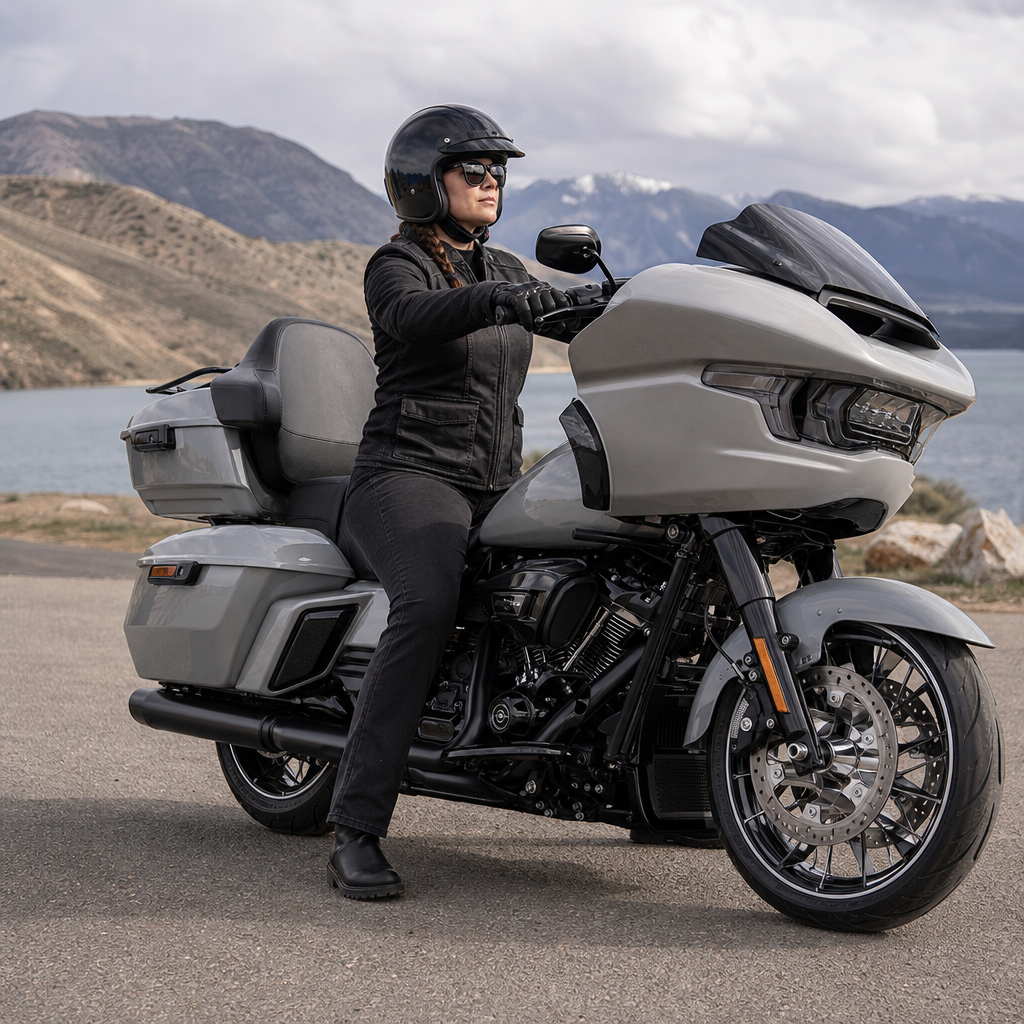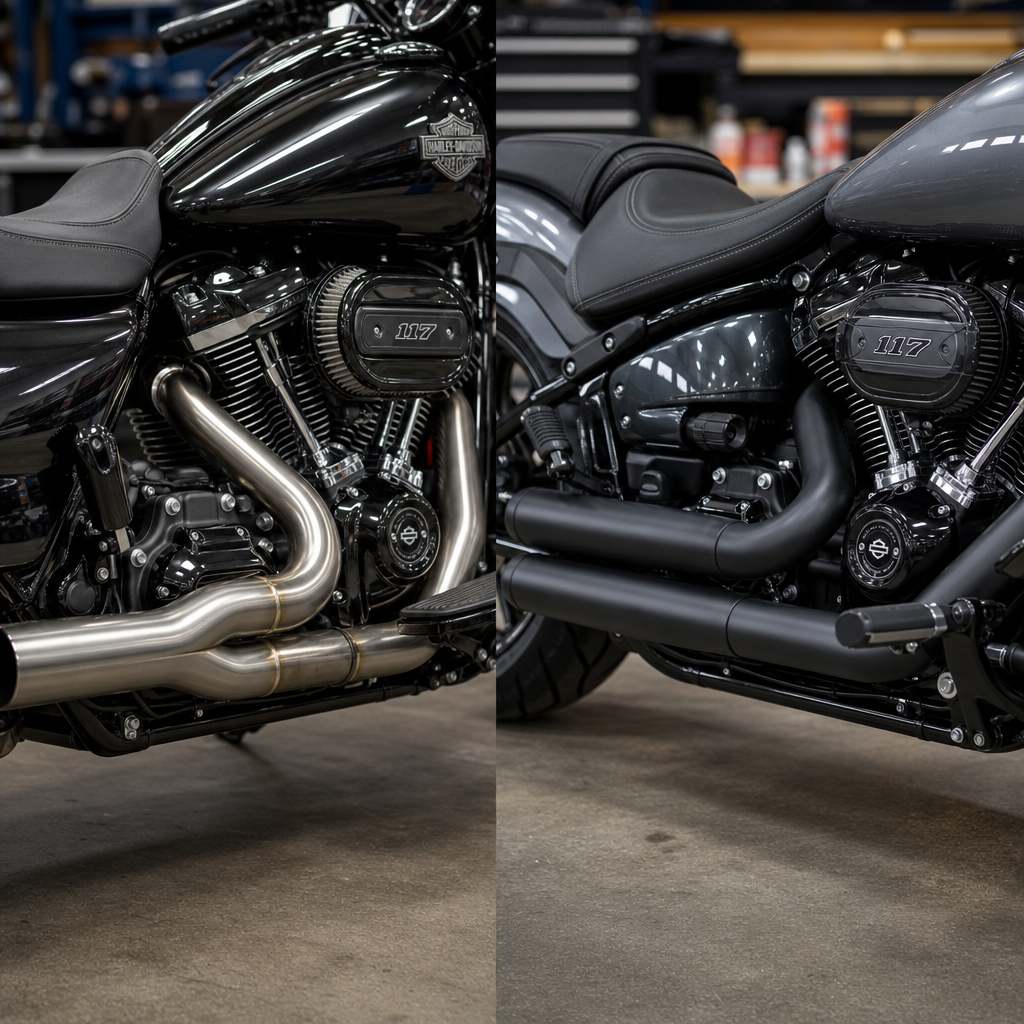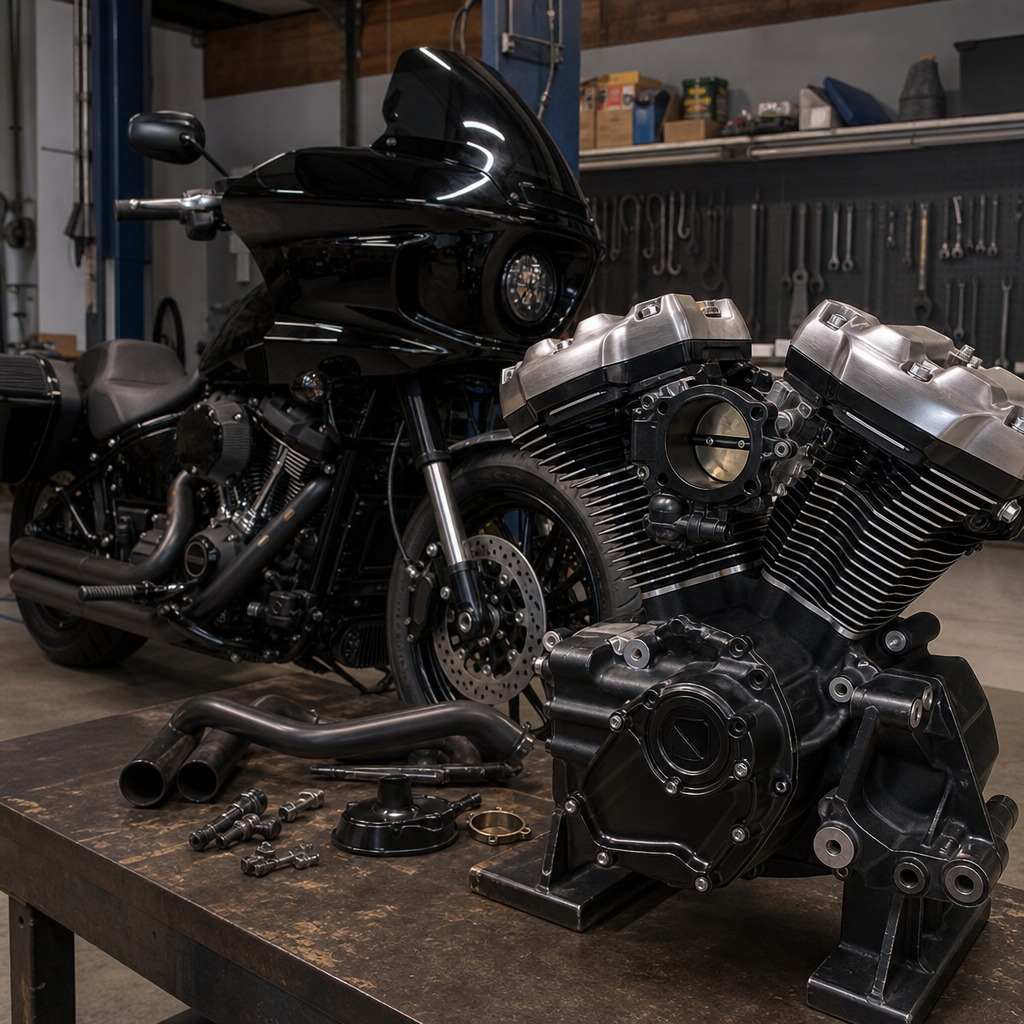
The 2027 Low Rider ST 121ci engine swap rumors are gaining traction because they sit at the intersection of two obsessions every Harley-Davidson owner understands: extracting more real-world performance and preserving the personality that made the bike worth buying in the first place. In shop conversations, forum threads, and dyno-room debates, riders keep asking the same practical questions. Will a 121 cubic inch package fit the Low Rider ST cleanly? What supporting parts are required? Does the swap improve touring power, backroad acceleration, two-up comfort, or all three? Those questions matter because the Low Rider ST is not just another cruiser. It is a performance-oriented bagger built on the Softail platform, blending West Coast styling, mid-mount controls, a frame-mounted fairing, and long-day wind protection with the responsiveness riders expect from a lighter chassis.
Before getting into the rumors, it helps to define the terms. A 121ci engine swap can mean several different things. Some riders use the phrase loosely to describe a complete crate-engine replacement. Others mean a big-bore build that takes an existing Milwaukee-Eight powerplant to 121 cubic inches with new cylinders, pistons, and calibration. In practice, the path matters. A true engine replacement changes cost, labor, registration considerations, and warranty implications. A built 121 based on the original cases may be simpler to package, but it still demands careful attention to heat management, fueling, clutch capacity, and final drive behavior. I have worked around enough Harley builds to know that most disappointing “performance recipes” fail for one reason: owners focus on displacement first and system balance second.
That is why this topic belongs in a model-specific ergonomics and performance hub, not in a generic engine-build roundup. The Low Rider ST responds differently to power than a Road Glide, Street Glide, or standard Low Rider S because rider triangle, seat shape, bar reach, suspension setup, and luggage weight all change how that power feels. An extra twenty or thirty pound-feet on paper can be a gift or a nuisance depending on whether the rider is fighting wind buffeting, cramped hips, rear shock preload, or vague fork control. A useful article on 2027 Low Rider ST 121ci engine swap rumors has to connect horsepower to usability. More importantly, it has to show how to build a coherent package that works for commuting, canyon riding, and weekend travel instead of just producing a screenshot from a dyno graph.
For that reason, the strongest way to evaluate these rumors is not by repeating speculation but by mapping likely engine-swap scenarios against proven setup patterns. The best recipes combine displacement, cam timing, intake flow, exhaust scavenging, clutch strength, suspension support, and ergonomic corrections. When those elements are matched to the rider’s actual use case, the Low Rider ST becomes a much more capable machine without losing its direct, muscular feel.
Why the 121ci rumor persists and what is technically plausible
The rumor persists because Harley-Davidson has already normalized larger-displacement Milwaukee-Eight performance variants across premium models, and riders naturally expect that trend to continue. A 121ci number sounds believable because it already exists in the brand’s performance vocabulary through established Screamin’ Eagle configurations and dealer-installed upgrade pathways. From a technical standpoint, that makes the rumor more plausible than random internet fantasy. The Softail chassis has a known relationship with Milwaukee-Eight packaging, and experienced builders already understand the cooling demands, oiling behavior, and clearance checks involved in high-output combinations.
What remains uncertain is factory intent. A factory-installed 121 on a future Low Rider ST would require more than dropping in displacement. Harley would need to calibrate for emissions compliance, validate driveline durability, maintain rideability in hot-weather stop-and-go use, and ensure that the stock suspension, brakes, and tire choices still match the new torque delivery. Those are not trivial tasks. On custom or dealer-built bikes, owners can accept sharper idle quality, extra heat, louder exhaust, and reduced service intervals. A production motorcycle cannot assume that tolerance. That is why rumors should be filtered through what manufacturers must certify, not just what a tuner can make run well.
Still, for riders evaluating a future 121ci path, the question is less “can it be done?” and more “what version of 121 makes sense on this bike?” In my experience, Low Rider ST owners split into three camps: daily riders who want stronger passing power without losing civility, sport-oriented riders chasing aggressive midrange and corner-exit drive, and light-touring owners who care most about loaded acceleration, two-up comfort, and heat control. Each camp needs a different recipe.
Model-specific ergonomics: why power upgrades succeed or fail on the Low Rider ST
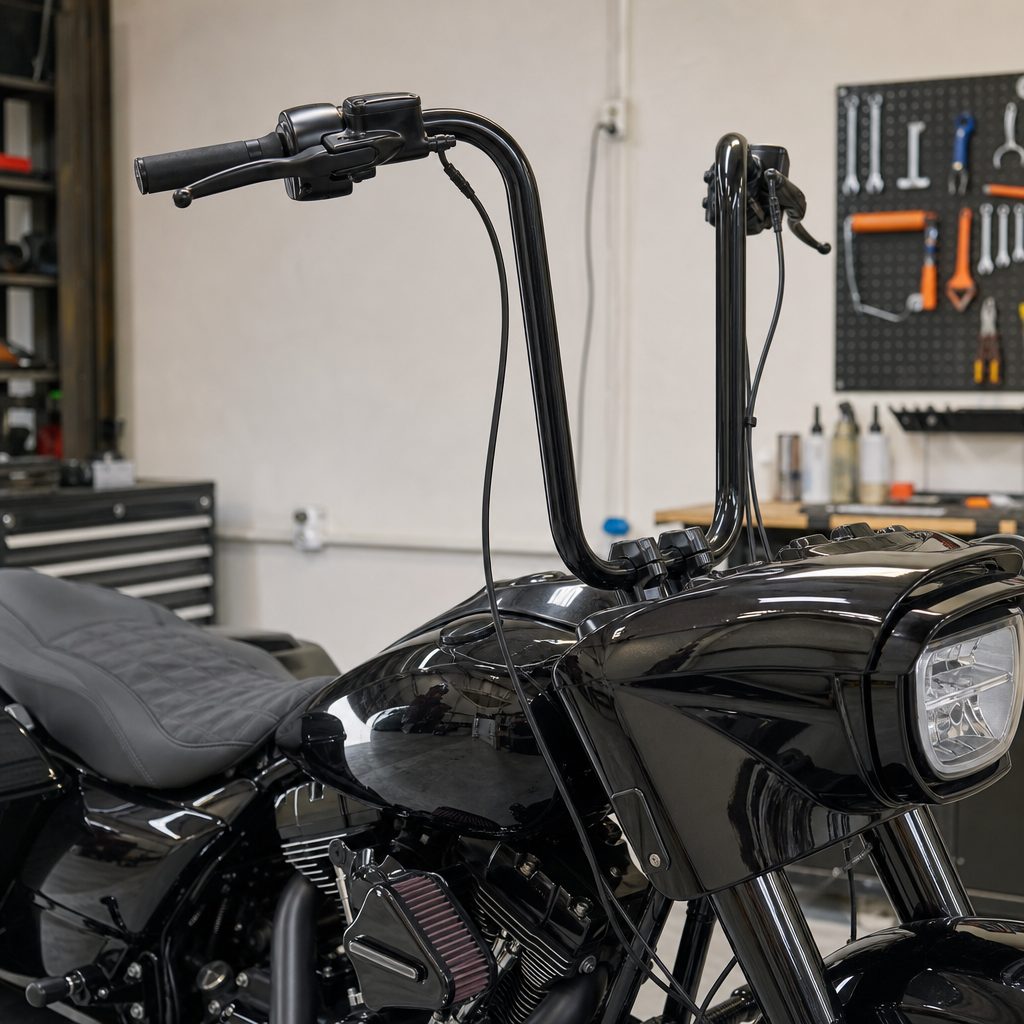
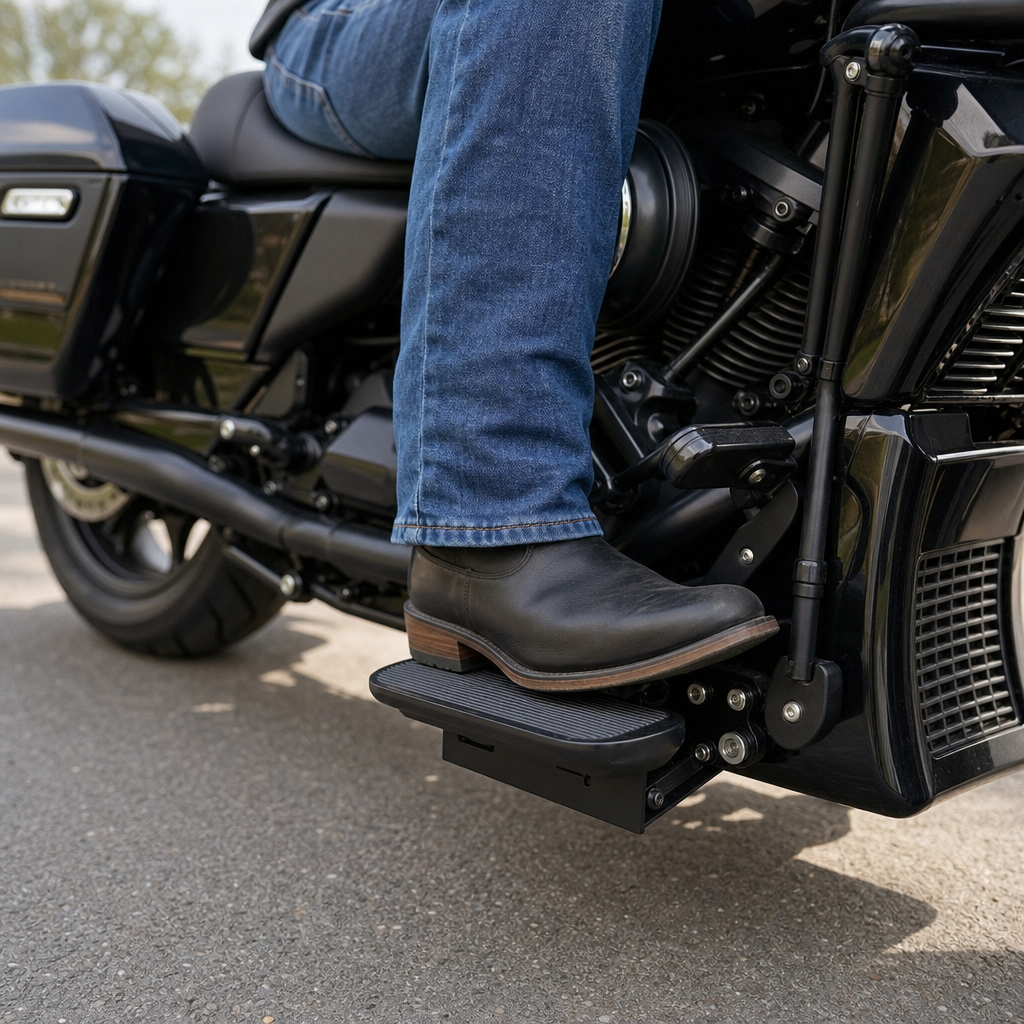
The Low Rider ST has a distinct riding position that shapes every performance modification. Mid controls put more weight through the hips and lower back than floorboards do on touring models. The seat locks many riders into a single pocket, and the stock bar relationship can place wrists at an angle that feels manageable for an hour but tiring over a full day. Add a frame-mounted fairing and saddlebags, and you get a bike that invites longer rides while still transmitting more chassis feedback than a full-dress bagger. That tension is the core of the model’s appeal, but it also means extra engine output magnifies every ergonomic flaw.
For example, a rider chasing a 121ci swap for better two-up touring often assumes engine torque is the missing ingredient, when the real bottleneck may be rear suspension support and seat shape. If the shock rides too deep in the stroke, the bike squats under throttle, steering slows, and the passenger feels every sharp edge. A stronger engine then makes the bike feel less composed, not more capable. Likewise, a solo rider building for canyon pace may blame the stock engine for dull corner exits when the real issue is bar leverage, fork damping, or an abrupt throttle map at small openings.
The practical lesson is straightforward: ergonomics are performance parts. On the Low Rider ST, bars, risers, seat contour, peg position, and suspension spring rates determine whether a 121ci build feels clean and controlled or simply overpowered for the chassis setup. Any hub discussion of performance recipes should start there because comfort, control, and confidence are what allow the rider to use the extra torque repeatedly and safely.
Three proven performance recipes for a 121ci-style Low Rider ST build
Most successful Low Rider ST builds fit into a few repeatable patterns. The table below reflects combinations I have seen work in the real world, not fantasy parts lists assembled for social media. The point is to match engine character with rider use, supporting hardware, and ergonomic corrections.
| Recipe | Primary Goal | Engine Approach | Required Supporting Parts | Ergonomic Priorities | Tradeoffs |
|---|---|---|---|---|---|
| Balanced 121 Tourer | Passing power, two-up riding, highway ease | 121ci with torque-focused cam and conservative tune | High-flow intake, tuned exhaust, stronger clutch, oil cooling attention, quality flash tuning | Supportive seat, passenger-friendly preload range, moderate risers, wind management | Higher cost, more heat than stock, less dramatic top-end feel |
| Backroad Midrange Build | Fast roll-on acceleration and corner-exit drive | 121ci or high-output big-bore with midrange cam timing | Suspension upgrade front and rear, sticky tires, clutch upgrade, precise dyno tune | Bar position for leverage, firmer seat support, peg clearance awareness | Sharper manners, reduced comfort on rough pavement, faster tire wear |
| Streetable Power Cruiser | Strong sound, instant torque, weekend fun | 121ci with broad torque curve and moderate compression | Reliable fueling solution, heat shields, exhaust chosen for usable scavenging not noise alone | Seat pocket fit, wrist-neutral bars, vibration tolerance | Can become style-first if suspension and calibration are ignored |
The Balanced 121 Tourer is the most sensible recipe for the majority of owners. It aims for broad torque from low and mid rpm rather than peak horsepower bragging rights. On the road, that translates into easier sixth-gear passing, less need to downshift when luggage is loaded, and smoother two-up acceleration onto highways. A cam with reasonable intake closing and a tune that keeps combustion temperatures in check will usually make this version more pleasant than a peaky build. Pair it with a quality rear shock from companies like Ohlins, Fox, or Legend Suspension, and the motorcycle immediately feels more expensive and more settled.
The Backroad Midrange Build is for riders who treat the Low Rider ST like a canyon bike with bags. Here, suspension is not optional. A 121ci setup that hits hard in the middle of the rev range will overwhelm stock damping on imperfect pavement. Cartridge kits, improved fork oil control, and a properly sprung rear shock matter as much as the engine. So do brakes and tires. The reward is a machine that exits corners with real authority while still offering wind protection and storage.
The Streetable Power Cruiser is the most common aspiration and the easiest to get wrong. Owners often choose the loudest exhaust and most aggressive cam, then wonder why the bike surges in traffic and cooks the rider in summer. Done correctly, this recipe favors a broad torque curve, a reliable calibration from a respected tuner using tools such as Dynojet Power Vision, and heat-conscious component choices. It should feel fast everywhere, not temperamental half the time.
Supporting systems that determine whether the swap feels factory-level or unfinished
No 121ci conversation is complete without the supporting systems. First is fueling and calibration. Modern Harley performance builds live or die by accurate air-fuel control, spark management, throttle translation, and knock sensitivity. A dyno tune from a reputable shop is not optional on a serious build. Good tuning improves throttle smoothness, starts, idle stability, and cylinder temperature behavior, not just peak numbers.
Second is the clutch and driveline. The extra torque of a well-built 121 can expose clutch slip quickly, especially on loaded bikes or aggressive roll-ons in higher gears. Upgraded clutch packs, stronger springs, or complete clutch solutions are standard practice. Builders should also inspect compensator behavior and primary condition where applicable, because driveline lash feels worse when torque rises sharply.
Third is thermal management. The Milwaukee-Eight platform can be made very streetable at higher output, but only when the builder respects heat. Oil cooler condition, exhaust routing, tune quality, riding environment, and idle time all matter. Riders in hot climates should be especially cautious about chasing compression and lean calibration strategies that look good on paper but punish the owner in real traffic. Fourth is suspension. More power without control simply gets you to the next braking zone faster and less composed.
How to judge rumors, shop proposals, and build sheets intelligently
When evaluating a rumored 2027 Low Rider ST 121ci path or a shop’s recommendation, ask direct questions. What is the target torque curve? What compression ratio is planned? What cam is being used, and why does it fit your riding style? Will the stock clutch hold? What tuning method will be used? How will passenger weight, luggage, and local climate affect the setup? Serious builders answer these questions clearly. Vague promises about “monster power” usually signal an incomplete plan.
Request baseline and post-build dyno charts, but read them intelligently. A huge peak number means little if the bike lost smooth low-rpm response or developed a flat spot where you ride most. Ask for parts brands, labor scope, and break-in instructions in writing. If the package includes no suspension conversation, no ergonomic assessment, and no heat-management plan, it is not a complete Low Rider ST recipe.
For riders researching this subtopic across Harley-Davidson models, that is the central takeaway. The Low Rider ST rewards integrated thinking. A 121ci swap or build can absolutely transform the motorcycle, but the best results come from matching engine character to rider ergonomics, load expectations, climate, and chassis support. Treat the bike as a system, not a displacement number. If you are considering the next step, define your use case first, then build the recipe around how you actually ride.
Frequently Asked Questions
Will a 121 cubic inch engine package fit a 2027 Low Rider ST cleanly, or are the rumors overstating how straightforward the swap is?
A 121ci package is generally believable in a Low Rider ST-sized performance build, but the phrase “bolt-in” gets exaggerated in rumor cycles. In the real world, fitment depends on exactly what people mean by “121 swap.” If the conversation is about a compatible Milwaukee-Eight-based 121 configuration using matched cases, top end, cam chest, intake, exhaust, and calibration designed around the platform, then yes, the concept is mechanically realistic. If people are talking as though any random 121 assembly can simply be dropped in with no secondary changes, that is where rumor turns into wishful thinking.
The important point is that physical fit is only one part of the equation. The Low Rider ST was built around a specific engine, cooling strategy, induction layout, and electronics package. A larger displacement setup changes airflow demand, fuel demand, heat output, and torque delivery. That means the engine package itself may fit, but the finished bike still needs supporting decisions around throttle body sizing, injector capacity, exhaust flow, clutch holding power, and ECU strategy. Riders often focus on cylinders and pistons because those are the headline parts, but the swap only feels “clean” when the supporting systems are chosen to behave like a factory-level combination rather than a pile of high-performance parts fighting each other.
So the rumors are plausible, but the cleanest builds are recipe-driven. The builders who get the best results typically start with a clear target: strong touring torque, aggressive street acceleration, or all-out dyno numbers. Once that goal is defined, fitment becomes less about whether the engine can occupy the space and more about whether the whole package can operate reliably, run cool enough, and retain the Low Rider ST personality riders want to preserve.
What supporting parts are typically required to make a 121ci Low Rider ST build perform correctly and stay reliable?
A serious 121 build is never just about displacement. To make that larger engine perform correctly, you usually need a complete supporting recipe built around airflow, fuel, durability, and calibration. At minimum, most credible combinations include a cam matched to the intended powerband, upgraded intake components, a freer-flowing exhaust, proper fueling hardware, and an ECU tune designed specifically for the compression, cam timing, and riding use. Without those pieces, the larger displacement may produce more heat, inconsistent drivability, and underwhelming power relative to the investment.
Beyond the usual intake-exhaust-tune trio, the clutch becomes a major discussion point. The Low Rider ST can handle performance well, but once torque rises substantially, clutch holding capacity matters. A build that makes impressive dyno torque but slips under load is not sorted. The same goes for cam chest components, oiling strategy, and valvetrain stability. A 121 that is meant to be ridden hard or loaded for distance should be assembled with an eye toward long-term stress, not just peak numbers. That can include upgraded springs, pushrods, lifters, and other durability-minded internals depending on the exact recipe.
Cooling and rideability also deserve attention. More displacement often means more heat, especially in stop-and-go riding or hot-weather touring. Some builds benefit from improved oil cooling or careful tuning choices that prioritize stable combustion and manageable operating temperatures over chasing every last horsepower number. Finally, gearing and chassis behavior should not be ignored. Extra torque changes how the bike leaves corners, carries a passenger, and responds in the midrange. The best supporting parts lists are the ones that treat the Low Rider ST as a complete system, not just an engine platform.
Does a 121ci setup actually improve real-world performance, or is it mainly about dyno bragging rights?
A properly built 121 absolutely can improve real-world performance, and that is why the rumors resonate so strongly. Riders are not just fantasizing about peak horsepower; they are chasing the kind of acceleration and passing power that transforms the way the Low Rider ST feels on the street. In practical riding, the biggest benefit usually comes from stronger midrange torque and a broader usable powerband. That means less effort when rolling on from highway speed, more authority with luggage or a passenger, and a bike that feels less strained when ridden aggressively.
That said, not every 121 recipe improves the motorcycle in the same way. Some combinations are built to impress on a dyno sheet with a high-rpm cam profile and dramatic top-end gains, but they may give up some civility, heat management, or low-speed smoothness. Other combinations are designed like real-world performance packages, where throttle response, part-throttle behavior, and torque delivery between everyday road speeds matter more than one hero pull on the dyno. For a Low Rider ST, many owners actually prefer the second approach because it preserves the bike’s bagger-meets-performance identity rather than turning it into something peaky or temperamental.
So yes, a 121 can be much more than a bragging-rights number, but only if the recipe is honest about the bike’s mission. If the goal is canyon riding, highway passing, two-up touring, and strong roll-on performance, a well-matched 121 can feel exceptional. If the goal is simply the largest number possible on paper, the result may be less satisfying in daily use. Real-world performance comes from balance, not displacement alone.
How does a 121ci engine build affect reliability, heat, and long-distance rideability on a Low Rider ST?
This is one of the smartest questions riders ask, because bigger power is easy to sell and much harder to live with if the combination is careless. A 121 can be reliable and enjoyable for distance, but reliability depends heavily on parts quality, assembly standards, compression strategy, cam selection, and tuning discipline. The internet tends to frame the subject in extremes, as if a 121 is either completely trouble-free or automatically fragile. In reality, the outcome usually reflects how intelligently the build was planned and how honestly it matches the owner’s riding habits.
Heat is the most common practical concern. More displacement and more cylinder pressure can create more thermal load, especially in urban traffic, hot climates, or slow-moving group rides where airflow is limited. A good builder addresses that early through sensible compression, efficient combustion, correct fueling, and a tune that avoids the kinds of conditions that make a large V-twin feel harsh and overheated. Exhaust choice, oil management, and even riding style play a role. A strong-running 121 that is tuned conservatively enough to stay happy on pump gas and in mixed riding conditions is often a better long-term package than a more extreme setup chasing marginal extra output.
As for long-distance rideability, the right 121 recipe can actually improve it. More torque means the engine does not need to work as hard to move the bike at speed, especially with cargo or a passenger. The key is making sure the power delivery remains smooth and predictable. If the build introduces excessive vibration, abrupt throttle transitions, or a narrow sweet spot, touring comfort suffers. But when the combination is mature and properly calibrated, a 121 Low Rider ST can feel muscular, relaxed, and remarkably capable over long miles. The rumor worth believing is not that bigger automatically means worse reliability, but that smart combinations can preserve the bike’s character while adding genuinely useful power.
What is the best “performance recipe” for riders who want more power without losing the Low Rider ST’s personality?
The best recipe is usually not the most extreme one. For most riders, the sweet spot is a balanced 121 package that emphasizes broad torque, clean throttle response, manageable heat, and durability over maximum dyno drama. That means choosing components that work together rather than selecting the most aggressive versions of everything. A street-and-touring-focused cam, a properly sized intake and throttle body, a quality exhaust that supports midrange as well as top-end flow, and a careful ECU calibration will often produce a bike that feels dramatically faster while still behaving like a refined Low Rider ST.
Preserving personality is about more than retaining the stock silhouette or sound. Owners love the Low Rider ST because it blends attitude, agility, and practical range. A good performance recipe keeps that DNA intact. The bike should still pull cleanly from low rpm, remain friendly in traffic, hold steady cruising manners on the highway, and deliver confident roll-on power without feeling nervous or overbuilt. That is why many experienced builders talk less about “the biggest kit” and more about “the right combination.” They know that the engine has to complement the chassis, not overwhelm it.
If there is one guiding principle behind the best 121 rumors, it is that the smartest builds are purpose-built. A rider who wants a fast, usable, everyday performance bagger should tell the builder exactly that and resist getting distracted by race-oriented parts lists that sound impressive but do not fit the mission. In that context, the ideal 121 recipe is one that adds urgency everywhere in the rev range, remains dependable in real conditions, and lets the Low Rider ST keep the charisma that made people fall for it in the first place.