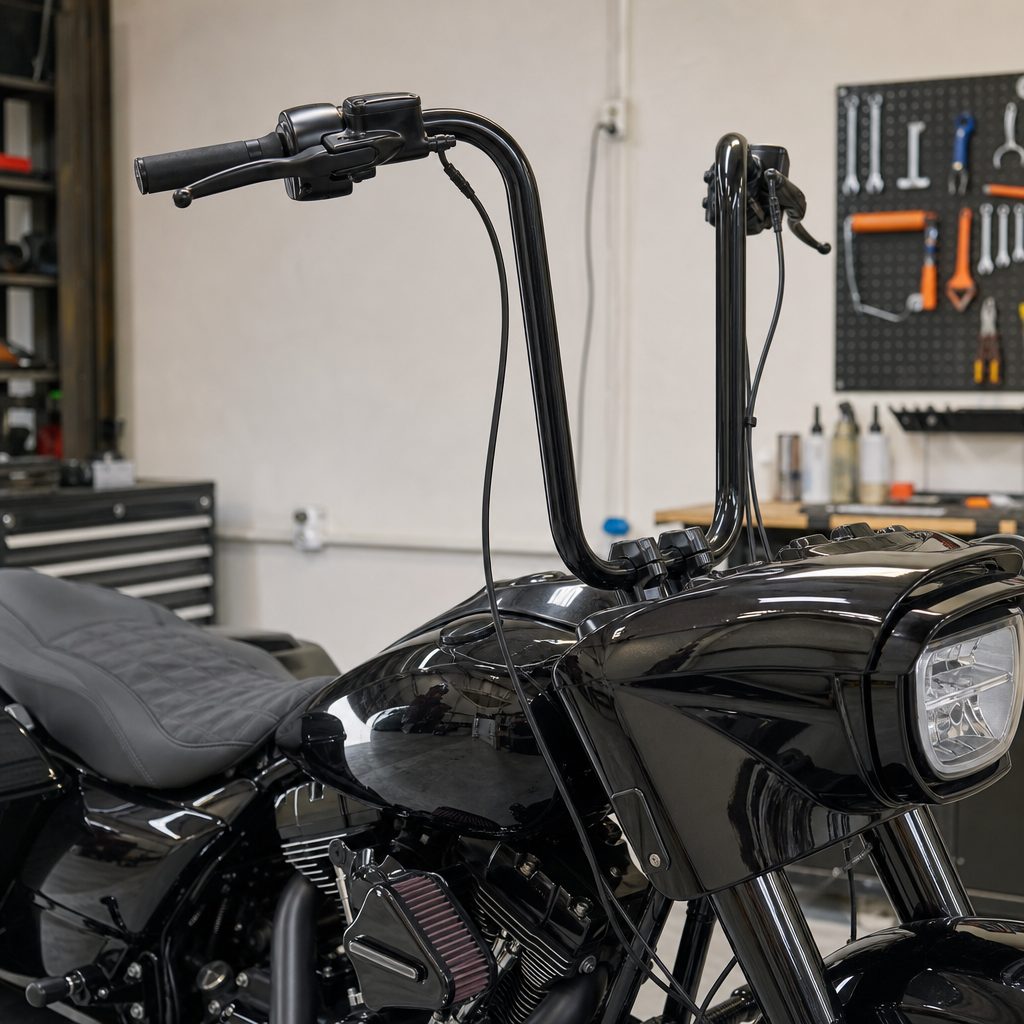
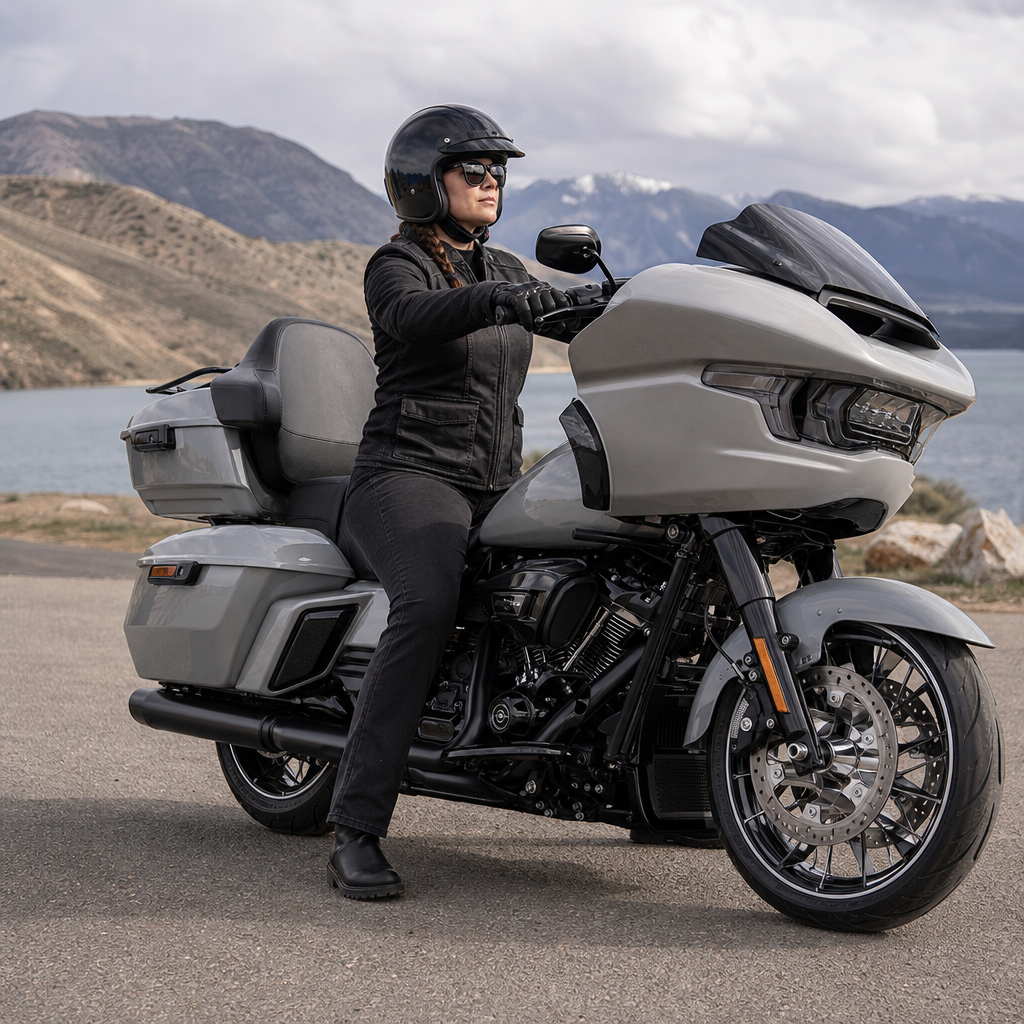
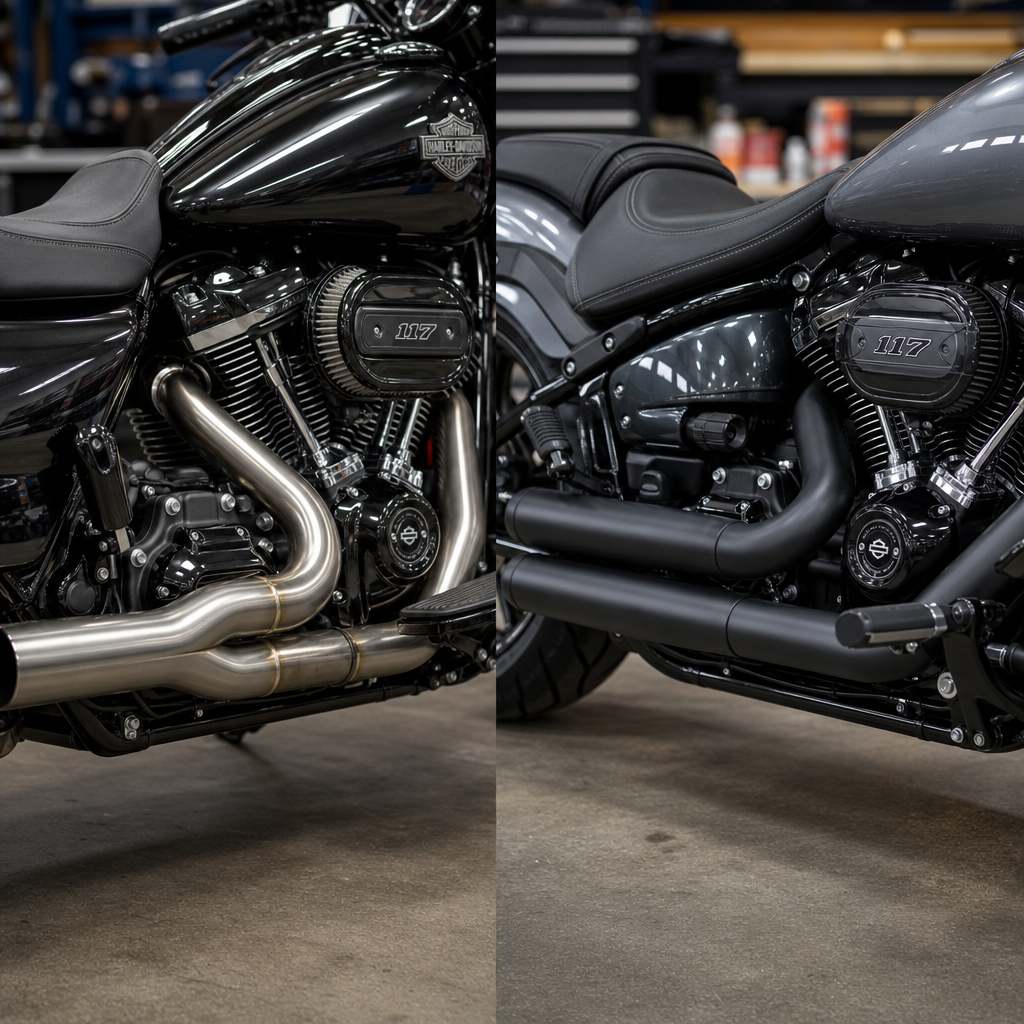
The 2027 CVO Road Glide ST handlebar geometry matters because bar height, pullback, width, and clamp position determine how a performance bagger feels at every speed. Riders often focus on horsepower, suspension, and brakes first, yet cockpit fit decides whether those upgrades can be used confidently for hours at a time. On this model, the 6-inch riser works because it balances aggressive steering input with sustainable shoulder, wrist, and back posture, creating a setup that suits the Road Glide ST chassis rather than fighting it.
When discussing handlebar geometry, four terms matter most. Rise is the vertical distance from the top clamp to the grip centerline. Pullback is how far the grips come rearward toward the rider. Width influences leverage and steering effort. Sweep, sometimes called backsweep, is the wrist angle created by the bar ends. Small changes in any one dimension affect the others. In practice, a bar that is one inch taller but also one inch wider can feel dramatically different from a taller bar with the same width and more sweep.
I have set up enough Harley-Davidson performance baggers to know that numbers on a spec sheet only tell half the story. Fairing clearance at full lock, master-cylinder angle, cable routing, and rider torso length all change the result. The 2027 CVO Road Glide ST is especially sensitive because its frame-mounted fairing, stretched side profile, premium suspension, and performance intent encourage riders to push harder than they would on a standard touring model. That means bad ergonomics show up quickly as numb hands, tight traps, vague corner entry, or a tendency to brace on the bars under braking.
This hub article covers model-specific ergonomics and performance recipes for the Harley-Davidson category with the 2027 CVO Road Glide ST as the anchor example. The central question is simple: why does the 6-inch riser work so well on this bike? The answer combines biomechanics and chassis behavior. A properly chosen 6-inch setup typically raises the grips into a neutral elbow bend, reduces excessive forward reach created by low stock-like positions, and preserves enough front-end feel to keep turn-in precise. It is the sweet spot between a low drag-bar stance that overloads the wrists and a taller setup that can dilute steering feedback.
How the 2027 CVO Road Glide ST riding position shapes handlebar choice
The CVO Road Glide ST sits in a unique space within Harley-Davidson touring. It is not a pure long-distance dresser, and it is not a stripped club-style conversion. Its seat-to-peg relationship, fairing architecture, and performance focus create a moderate forward reach from the saddle. On bikes like this, a rider’s hands should support control inputs, not body weight. If the grips sit too low or too far away, the rider hinges at the hips, rounds the upper back, and locks the elbows. That posture reduces fine steering input and increases neck strain because the head has to crane upward against wind pressure.
The 6-inch riser corrects that geometry for a broad range of riders, especially those between roughly 5 foot 8 and 6 foot 2 with average arm length. It brings the grips up into the rider’s natural “ready” zone, where elbows stay slightly bent and shoulders remain down instead of elevated. In that position, the scapulae can stay stable, which improves leverage during quick transitions. On a heavy bagger, that matters more than many riders expect. A stable shoulder girdle allows smoother countersteering and more consistent pressure on the inside grip when loading the front tire into a corner.
Another factor is the Road Glide’s frame-mounted fairing. Because the fairing does not turn with the bars, the rider receives steering information differently than on a fork-mounted setup. The bars need to communicate front-tire load clearly without forcing a crouch. A 6-inch riser maintains that communication while keeping the hands high enough to avoid the “push-down” sensation common with lower bars. In other words, the rider steers across and slightly forward, not downward into the chassis.
Why 6 inches is the ergonomic sweet spot
For the 2027 CVO Road Glide ST, 6 inches works because it aligns the grips with the neutral range of the thoracic spine and shoulder joint. On real installs, I usually see riders gain comfort immediately when the grips move from lower positions to about sternum or lower-chest height while seated upright. That change reduces wrist extension and ulnar deviation, two common causes of hand fatigue. It also helps the rider relax the grip. A relaxed grip is not just more comfortable; it prevents unwanted bar input over rough pavement and lets the suspension do its job.
Going lower than 6 inches often creates a sportier look but compromises durability in the saddle. After forty-five minutes, many riders start bracing through the palms. Under hard braking, they slide forward and support themselves on locked elbows, which makes trail braking clumsy. Going much higher can solve reach issues for some bodies, but it introduces tradeoffs. The hands may rise above the ideal wind pocket, elbows may flare, and steering can feel less direct if pullback increases too much. For this model, 6 inches usually preserves a purposeful attack position without crossing into ape-hanger posture or forcing cable and line complexity beyond necessity.
There is also a practical fitment reason. Mid-height risers often maintain better compatibility with stock or near-stock brake line routing, clutch line length, and fairing clearance than taller systems. Exact requirements vary by bar bend and control angle, but six inches is frequently the point where the install remains clean and serviceable. A clean install matters because poorly routed lines can bind at full lock, rub paint, or create a vague lever feel. Ergonomics are never just about the rider; they depend on mechanical execution.
Performance recipe: the geometry numbers that make the setup work
A 6-inch riser by itself is not a complete recipe. The best-performing setups pair that rise with controlled width, modest pullback, and a bar bend that keeps the wrists neutral. On this platform, I generally favor a grip width in the low-to-mid 30-inch range, depending on shoulder width and fairing clearance. Too narrow and the rider loses leverage over a heavy front end. Too wide and steering effort increases in slow maneuvers while the shoulders rotate outward into a strained position. Pullback should be enough to keep the elbows soft, but not so much that the hands sit in the lap and reduce pressure on the front contact patch.
Control angle deserves equal attention. The front brake master cylinder should align with the rider’s forearm in the riding position, not when the bike is on the lift. The clutch perch should mirror that line. If the controls are rolled too high, the rider extends the wrists; too low, and the rider cocks them downward. I set the levers so the rider can cover them without dropping the elbows. That setup reduces reaction time and keeps the torso balanced when braking into a decreasing-radius corner.
| Geometry factor | What works on the CVO Road Glide ST | What happens if it is wrong |
|---|---|---|
| Riser height | 6 inches for neutral elbow bend and reduced forward reach | Too low loads wrists; too high dulls steering feel |
| Grip width | Low-to-mid 30-inch range for leverage without shoulder strain | Too narrow feels twitchy; too wide slows transitions |
| Pullback | Moderate, enough to keep shoulders relaxed | Too little causes reach; too much collapses posture |
| Sweep | Neutral wrist angle with minimal forced rotation | Excess sweep creates numb hands and weak input |
| Control angle | Levers aligned with forearms while seated | Poor alignment causes wrist pain and rough braking |
These numbers are not abstract. They are the difference between a bike that can carve mountain roads all morning and one that feels impressive for fifteen minutes, then punishes the rider. The best bar setup disappears beneath the rider. That is the goal.
Real-world riding effects: corner entry, braking, and highway comfort
On the road, a well-executed 6-inch riser setup improves three areas immediately. First is corner entry. Because the rider is no longer reaching downward, countersteering inputs become cleaner and more deliberate. The bike tips with less hesitation, especially in linked corners where body position changes quickly. Second is braking stability. With the grips closer to the rider’s natural centerline, deceleration loads go into the core and legs instead of the hands. That makes threshold braking easier to modulate and reduces the tendency to overgrip the front brake lever.
Third is highway comfort. Touring miles reveal ergonomic mistakes faster than any parking lot test. At 70 mph, a low bar can force the rider to lean into windblast and support body weight with the palms. A 6-inch riser lets the chest stay open and the shoulders rest. Riders often report less neck tension because the head can remain stacked over the spine instead of jutting forward. The benefit is cumulative. After several hours, reduced fatigue means better attention, smoother throttle control, and fewer correction inputs in crosswinds.
This is why the 6-inch riser deserves to be treated as a performance modification, not just a style choice. On a heavy, powerful Harley-Davidson bagger, comfort and control are inseparable. If a rider finishes a day less fatigued, that rider is faster, safer, and more consistent.
Fitment, installation, and tuning details riders should not ignore
Before ordering parts, measure the current grip position relative to the seat and tank, then compare that to your seated posture in riding boots. Use a digital angle finder if needed. I also recommend checking full-lock clearance with the fairing, tank, and windshield before final torque. On a Road Glide, even a bar bend that looks right on paper can place the switch housings too close to the inner fairing at lock. Reputable riser and bar manufacturers usually provide dimensional drawings; use them.
Torque values and clamp sequence matter. Follow Harley-Davidson service literature and the riser manufacturer’s instructions for top-clamp gaps and fastener torque. Uneven clamp pressure can distort the bar and change feel. After installation, inspect brake hose routing through the full suspension stroke and steering sweep. If the bike uses electronic features integrated into the controls, confirm no wiring is stretched or pinched. A proper test ride starts with basic function: lock-to-lock movement, lever pressure, switch operation, and mirror visibility.
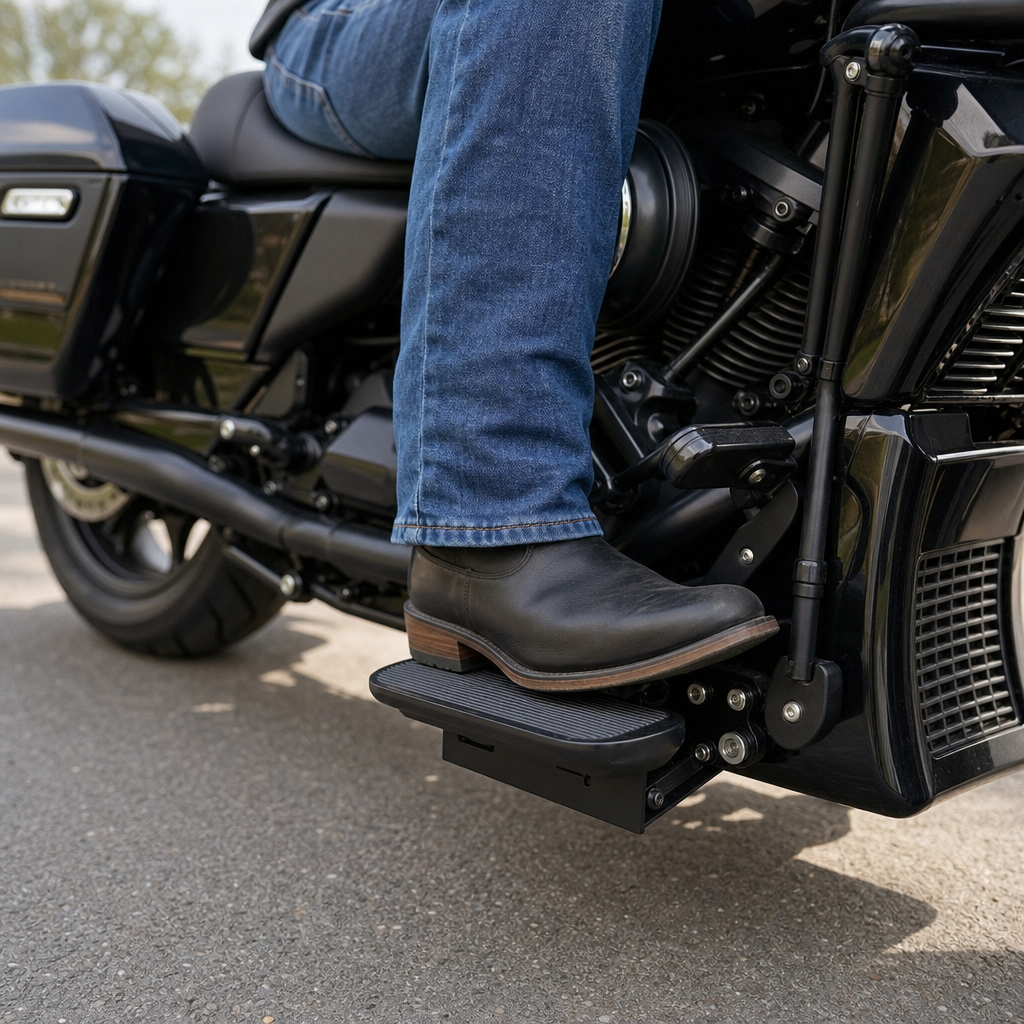
Do not ignore the rest of the ergonomic triangle. Seat shape changes effective reach. Floorboard or peg placement affects pelvic tilt, which changes shoulder position. Windshield height influences whether the rider sits naturally or hunches to escape buffeting. The best performance recipe treats bars, seat, controls, and wind management as one system.
How this hub connects model-specific ergonomics and performance recipes across Harley-Davidson
This page serves as the hub for model-specific ergonomics and performance recipes within the Harley-Davidson topic because the same principles repeat across the lineup, even though the numbers change. A Low Rider ST may want a different combination of rise and pullback because its fairing, seat, and rider triangle differ from a Road Glide ST. A Street Glide or Road King used for long interstate travel may prioritize reduced shoulder load over maximum steering immediacy. The method stays the same: define rider posture, map grip position, confirm control alignment, then tune around the bike’s intended use.
For the 2027 CVO Road Glide ST specifically, the 6-inch riser works because it respects the chassis mission. It supports assertive riding without sacrificing distance comfort, and it does so with manageable installation complexity. That is exactly what a good Harley-Davidson performance recipe should deliver: a measurable improvement that matches the motorcycle’s character.
If you are building your own setup, start with the 6-inch benchmark, then evaluate width, pullback, and control angle with the same discipline you would apply to suspension sag or tire pressure. Small ergonomic changes produce outsized gains. Get the cockpit right, and the rest of the motorcycle becomes easier to use well. That is the real advantage of the 2027 CVO Road Glide ST handlebar geometry, and it is why this configuration remains the smartest foundation for riders who want both control and comfort.
Frequently Asked Questions
Why does the 6-inch riser work so well on the 2027 CVO Road Glide ST?
The 6-inch riser works because it places the rider’s hands in a position that supports both control and endurance, which is exactly what a performance-oriented touring bike needs. On the 2027 CVO Road Glide ST, handlebar geometry is not just about where the grips sit visually; it is about how bar height, pullback, width, and clamp position combine to influence steering leverage, upper-body tension, and rider confidence. A riser that is too short can force the rider to reach down and forward, loading the wrists, tightening the shoulders, and making longer rides more fatiguing than they need to be. A riser that is too tall can reduce front-end feel, alter the rider’s sense of connection to the chassis, and create a posture that looks relaxed but can feel vague during aggressive riding.
The 6-inch height lands in the middle of those extremes. It lifts the hands enough to reduce unnecessary forward lean while still keeping the rider engaged with the front of the motorcycle. That matters on a Road Glide ST because the bike is meant to do more than cruise straight highways. It is designed to respond well when ridden briskly through sweepers, transitions, and uneven pavement. The 6-inch riser helps the rider make clean steering inputs without overextending the elbows or collapsing the shoulders inward. In practical terms, that means less strain during long miles and better precision when the pace picks up. It is a geometry choice that supports the full character of the motorcycle rather than favoring comfort at the expense of handling, or vice versa.
How do bar height and pullback affect comfort on a performance bagger like the Road Glide ST?
Bar height and pullback are two of the biggest factors in cockpit comfort because they determine where your arms rest in relation to your spine, shoulders, and hips. On a performance bagger, the goal is not to sit bolt upright with no engagement, and it is also not to lean so far forward that every mile becomes a workout. The right setup creates a neutral posture where the rider can keep a slight bend in the elbows, relaxed shoulders, and natural wrist angle while still maintaining strong control of the front end. That is why the 6-inch riser matters on the 2027 CVO Road Glide ST: it helps put the grips where the rider can reach them naturally instead of having to adapt their body to a poorly placed handlebar.
Pullback is especially important because it determines how far rearward the grips come toward the rider. Even if the bar height seems correct, too little pullback can force the shoulders forward and rotate the wrists into an awkward position. Too much pullback, on the other hand, can tuck the elbows too close to the torso and make steering feel cramped or less direct. When height and pullback are balanced properly, the rider gets a cockpit that feels open enough for long-distance comfort but focused enough for confident corner entry and quick corrections. On a heavy but capable machine like the Road Glide ST, that balance is essential. It helps prevent the common fatigue points riders experience in the neck, upper back, forearms, and hands, especially on longer rides where even small ergonomic problems become obvious after an hour or two.
Does the 6-inch riser improve handling, or is it mainly about ergonomics?
It improves both, and that is exactly why it is such a compelling setup. Ergonomics and handling are closely connected, especially on a large touring platform with sporting intent. If the handlebar places the rider in a strained position, steering inputs become less precise, reaction time can slow down, and the rider may hesitate to push the bike with confidence. Good ergonomics are not separate from performance; they are a major part of performance. The 6-inch riser on the 2027 CVO Road Glide ST helps the rider maintain a posture that supports repeatable, accurate control. That means steadier countersteering, better leverage during low-speed maneuvers, and less upper-body fatigue when riding aggressively or covering a lot of distance.
From a handling standpoint, the riser height influences how the rider loads the front of the motorcycle and how naturally they can initiate direction changes. A well-positioned bar allows the rider to guide the bike without muscling it. On the Road Glide ST, that matters because this is a substantial motorcycle that still rewards deliberate, athletic riding. The 6-inch riser gives enough elevation to reduce tension while preserving a connected feel at the grips. The result is a front end that feels easier to place accurately, whether you are making slow-speed parking lot turns, stabilizing the bike through fast sweepers, or dealing with mid-corner corrections. So while comfort is a major benefit, the real value is that comfort translates directly into more confident and more effective riding.
Why isn’t a taller or shorter riser automatically better for every rider?
Because handlebar geometry is highly dependent on rider proportions, seating position, and intended use. There is no single riser height that works perfectly for every person, even on the same motorcycle. A shorter rider with a shorter torso and different shoulder mobility may experience the cockpit very differently than a taller rider with longer arms. In addition, seat shape, seat height, foot placement, and even how a rider prefers to sit during spirited riding all affect where the bars should ideally be. That is why the 6-inch riser on the 2027 CVO Road Glide ST is best understood as a highly effective balance point rather than a universal rule.
A shorter riser may look sportier and can increase the sensation of being over the front wheel, but it can also create too much reach and too much wrist pressure for many riders. That can lead to numb hands, tight traps, and fatigue that undermines the bike’s performance potential. A taller riser may reduce that forward reach, but if it brings the hands too high, the rider can lose some directness in steering feel and may end up with elbows in a less powerful position for precise control. The 6-inch setup tends to hit the sweet spot because it keeps the cockpit active and engaged without being punishing over time. Still, the reason it works so well is not magic; it works because it aligns with the Road Glide ST’s mission and with the needs of many riders who want all-day usability without sacrificing chassis communication.
What should riders evaluate before changing handlebar geometry on a 2027 CVO Road Glide ST?
Riders should evaluate their current discomfort points, riding style, and full body position on the motorcycle before making any change. The most useful questions are simple: Are you reaching too far? Are your wrists bent at an awkward angle? Do your shoulders rise toward your ears after an hour? Do you feel locked in during tight turns, or disconnected from the front end at speed? The answers usually reveal whether the problem is bar height, pullback, width, or a combination of all three. On the 2027 CVO Road Glide ST, a 6-inch riser works because it addresses several of those variables at once by improving hand position and rider posture without pushing the cockpit too far toward either extreme.
It is also important to consider how changes in geometry affect cable length, brake line routing, fairing clearance, gauge visibility, and the relationship between the grips and controls. A handlebar setup should not only feel good statically in the garage; it should perform well during starts, stops, countersteering inputs, and long highway stretches. Riders should pay attention to elbow bend, shoulder relaxation, and whether they can keep their wrists straight while covering the controls. The best geometry allows you to ride naturally, not constantly compensate. For many riders, the 6-inch riser on this bike delivers that ideal middle ground: enough rise to promote sustainable posture, enough engagement to preserve sporty handling, and enough overall balance to let the Road Glide ST’s power, suspension, and braking upgrades be used with real confidence.