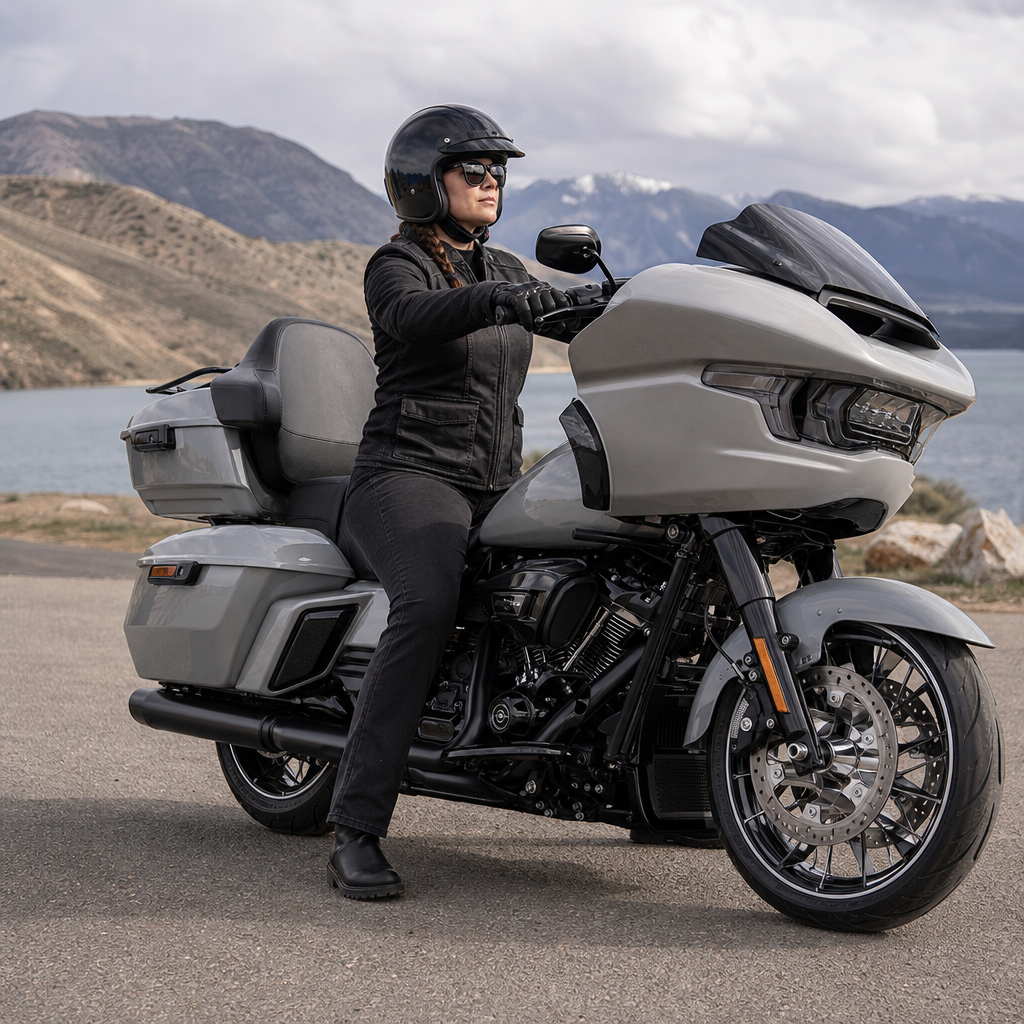
The 2026 Street Glide Limited passenger backrest recipe starts with one goal: give the passenger stable, repeatable support without compromising the bike’s touring balance, luggage access, or long-mile comfort. In Harley-Davidson terms, a passenger backrest is not just a pad behind the pillion. It is part of a wider ergonomic system that includes seat contour, Tour-Pak geometry, floorboard position, suspension sag, handhold reach, and wind management. When riders talk about support, they usually mean three measurable outcomes: reduced lower-back fatigue, less sliding during acceleration, and better confidence when the motorcycle transitions through braking, corner entry, and highway turbulence. On a fully dressed touring machine like the 2026 Street Glide Limited, those outcomes matter because the motorcycle is designed to carry two people, luggage, and accessories over long distances at sustained speed.
I have set up touring Harleys for riders who thought a softer pad would solve everything, only to find that the real problem was seat angle or preload. That is why a useful recipe needs to be model-specific. The Street Glide Limited platform has its own passenger triangle, trunk height, and chassis response. A backrest that works on a Road King or an older Ultra may feel wrong here because the relationship between the pillion, top case, and suspension is different. This hub article explains the complete approach to improving passenger support on the 2026 Street Glide Limited, from component choice and fitment logic to posture, load setup, and testing. It also serves as the central guide for the broader family of model-specific ergonomics and performance recipes under the Harley-Davidson topic, so you can use it as the reference point before drilling into seat tuning, suspension adjustment, wind protection, and two-up packing strategies.
The key term recipe is important. It means a repeatable setup sequence, not a random list of parts. Good passenger support comes from stacking small, correct decisions in the right order. First establish the passenger’s neutral posture. Then match pad height and angle to the natural curve of the lumbar and mid-back region. Next control fore-aft movement with seat shape and surface friction. After that, correct chassis pitch with suspension settings and load placement. Finally, verify everything on the road using the passenger’s feedback at city speed, freeway speed, and over broken pavement. That sequence produces better results than installing the biggest pad available and hoping for comfort. The 2026 Street Glide Limited is a premium touring motorcycle, and it responds best when comfort upgrades are treated as integrated chassis work rather than simple bolt-on decoration.
Understand the 2026 Street Glide Limited passenger support system
Passenger support on this motorcycle is built around contact points. The passenger interacts with the seat base under the pelvis, the backrest pad behind the torso, the floorboards under the feet, and the side grab areas or Tour-Pak structure for security. If one contact point is out of alignment, the rider feels it everywhere else. For example, when the rear suspension sits too low under full touring load, the passenger’s hips rotate backward. That flattens the lower spine and shifts more weight into the backrest. The passenger then describes the pad as hard or intrusive, even when the foam density is reasonable. In practice, the issue is not only the pad. It is the posture created by the whole bike.
On Harley touring models, support quality depends on the relationship between seat pocket depth and backrest setback. A deep, dished passenger seat can prevent sliding, but if the backrest sits too close, the passenger becomes locked upright and starts carrying impact through the tailbone on rough roads. If the backrest is too far rearward, the passenger braces under throttle and eventually leans into the rider. The ideal setup allows light contact at steady cruise and firm contact under acceleration without forcing a rigid spine. In workshops, I look for about a hand’s width of comfortable breathing room at rest, then test whether the passenger reaches the pad naturally when the bike rolls on from 40 to 70 mph. That tells you more than a garage sit test.
The Street Glide Limited also rewards attention to airflow. Buffeting changes how the passenger loads the backrest. Turbulent air around the helmet creates neck fatigue, and the body responds by pressing harder into the pad. Many riders misread this as a support failure. In reality, windshield height, vent management, and top-case wake can be the hidden variables. Any serious passenger backrest recipe must therefore include windscreen evaluation and, where needed, deflectors or a different screen profile.
Choose the right backrest design, shape, and mounting logic
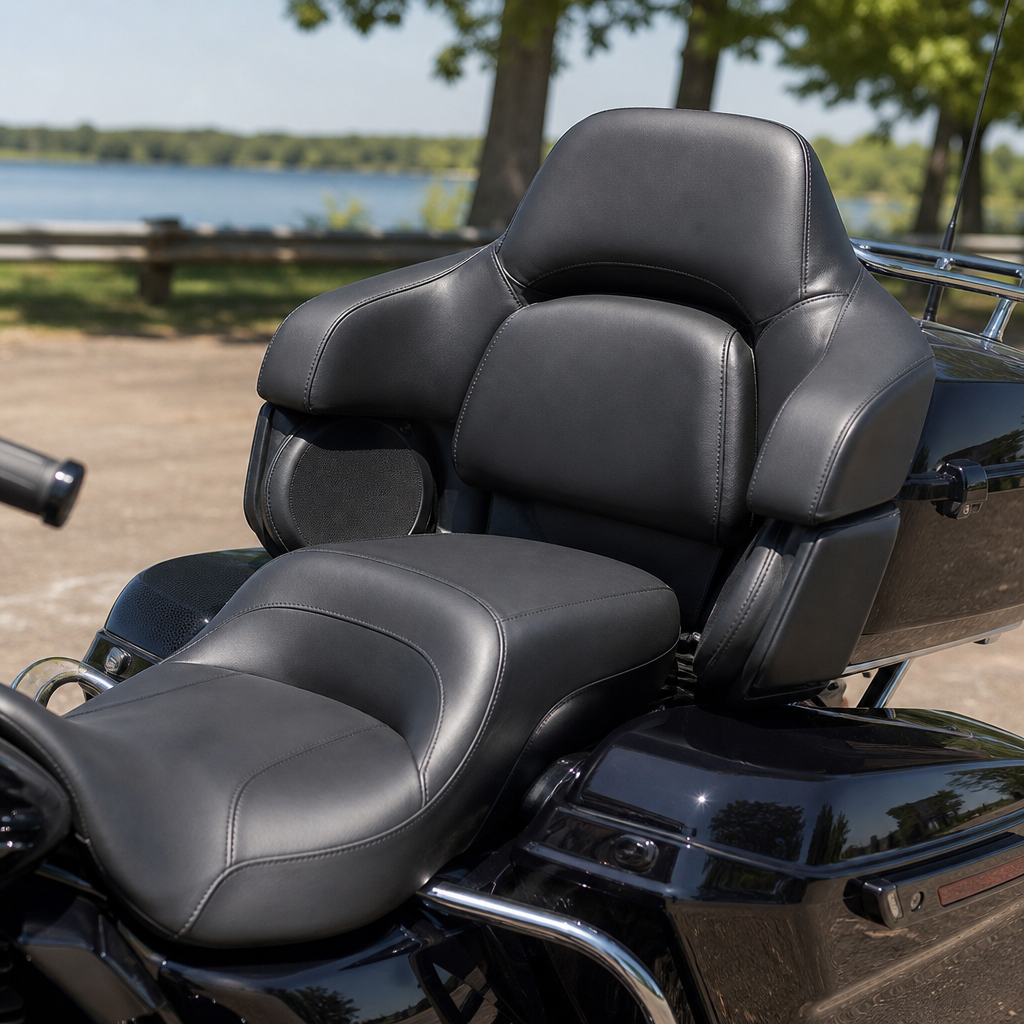
The best passenger backrest for a Street Glide Limited is not automatically the largest one. Size, foam density, contour, and mount rigidity need to match touring use. For two-up highway travel, a medium-to-tall pad with a gentle lumbar swell usually outperforms a flat slab because it spreads pressure across a wider part of the torso. Foam should be supportive rather than plush. Very soft foam feels luxurious for the first twenty minutes, then compresses and creates a hard edge against the internal support plate. Harley-Davidson accessories, premium aftermarket touring pads, and custom upholstery builders all offer viable options, but the selection criteria stay the same: enough surface area to stabilize the upper pelvis and lower thoracic region, enough structure to hold shape under acceleration, and enough adjustability to fine-tune angle.
Mounting logic matters as much as cushion shape. A rigid, well-braced mount gives predictable support and cleaner passenger feedback. Excess flex may feel forgiving in the driveway, but on the road it often amplifies oscillation. The passenger senses that movement and unconsciously tenses the core, which defeats the comfort goal. On Tour-Pak-equipped Harley touring bikes, integrated backrest systems usually give the cleanest packaging and preserve trunk function, but they can still vary in pad rake and stand-off distance. Before buying, check whether the mounting position allows angle shimming or bracket adjustment. A few degrees of tilt can completely change how the pad meets the spine.
| Setup factor | What to look for | Common mistake | Practical result |
|---|---|---|---|
| Pad height | Contacts lower to mid-back, not shoulder blades | Mounting too high | Better lumbar support and less neck tension |
| Pad angle | Natural torso contact at cruise | Vertical or over-reclined pad | Less sliding and better throttle stability |
| Foam density | Medium-firm touring foam | Ultra-soft cushion | More support over long rides |
| Seat relation | Small gap at rest, firm contact on acceleration | Pad too close or too far | Balanced comfort and control |
| Mount rigidity | Minimal flex under load | Relying on weak brackets | Predictable feel on rough pavement |
Material choice deserves attention too. Marine-grade vinyl and well-finished stitching are not cosmetic details on a touring Harley; they affect durability, water management, and heat retention. Dark surfaces in summer can become uncomfortable quickly, especially in stop-and-go traffic. If the motorcycle lives outdoors or sees all-weather touring, choose materials with proven UV resistance and sealed seams. A failed seam in the pad cover changes foam performance and shortens service life.
Dial in seat shape, floorboard reach, and passenger posture
A backrest cannot correct a poorly matched passenger seat. The 2026 Street Glide Limited recipe works best when the seat pocket supports the passenger’s ischial area and limits rearward slide without creating a pressure ridge under the thighs. On custom seat builds, I prefer a subtle rise at the rear of the passenger pocket combined with a grippy but not abrasive cover. That allows the backrest to act as support instead of a barricade. If the cover is too slick, the passenger slams into the pad during every throttle input. If it is too sticky, the pelvis cannot micro-adjust and fatigue arrives sooner.
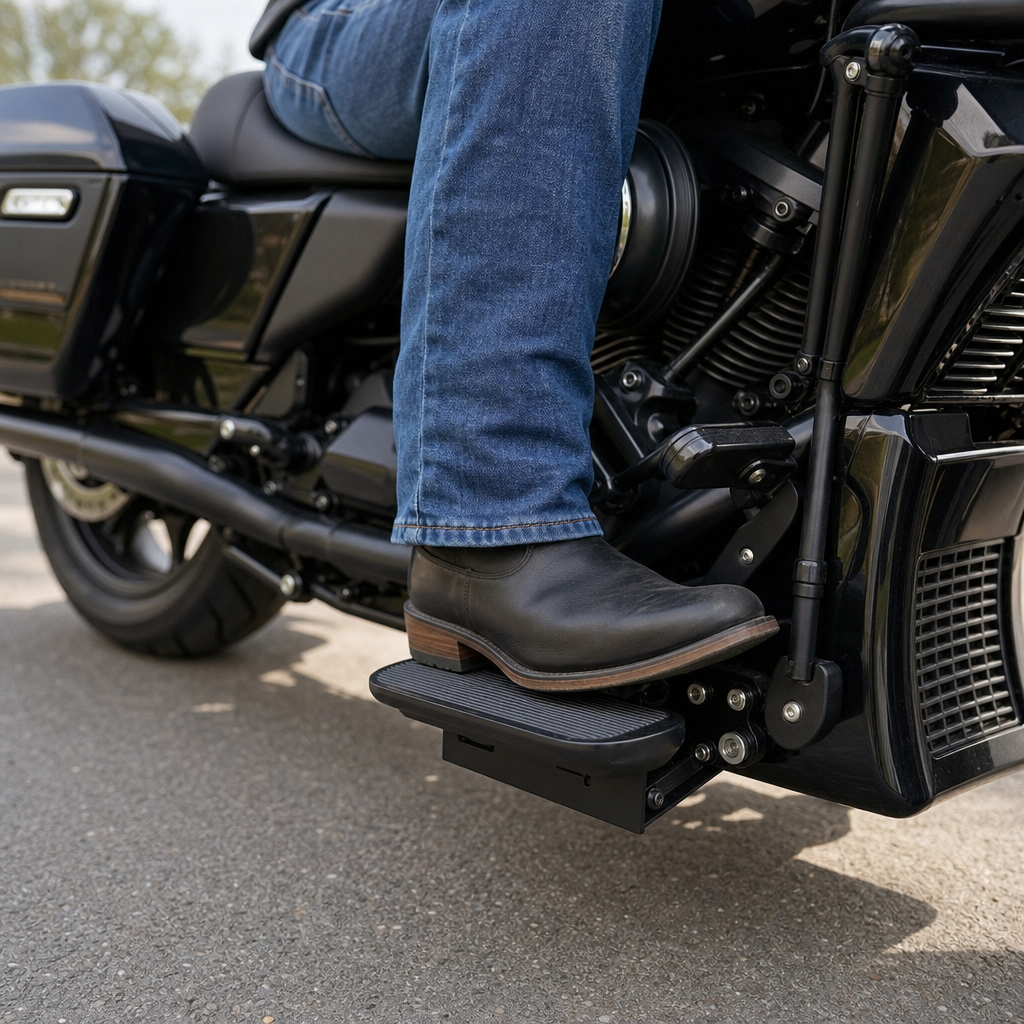
Floorboard reach is another overlooked variable. When the passenger’s knees are too high, the pelvis rolls back and the lumbar curve disappears. The backrest then feels harsher because the spine meets it in a flattened posture. On long tours, that setup also increases hip tightness. The fix may be as simple as choosing footwear with a slightly different sole profile, adjusting riding posture, or fitting components that alter seating geometry. Riders often chase the backrest first because it is visible, but many comfort complaints start lower in the body. A good setup lets the passenger keep relaxed knees, neutral ankles, and light abdominal engagement while still feeling planted during speed changes.
Communication between rider and passenger matters here. I ask passengers to describe where they feel pressure after thirty, sixty, and ninety minutes, using plain body locations rather than general comfort scores. “Sharp point at the tailbone” suggests seat contour. “Constant push between the shoulder blades” suggests pad height. “Need to brace with feet on every pass” points to fore-aft stability or suspension pitch. Those details speed up tuning and prevent expensive parts swapping.
Use suspension, tire pressure, and load placement to support the backrest
Ergonomics on a touring motorcycle are inseparable from chassis setup. If the rear shocks are under-sprung for the combined load or simply under-adjusted, the bike rides low in back, increases steering lightness, and asks the passenger to absorb more movement through the seat and pad. For the Street Glide Limited, proper sag and preload are foundational. Set the motorcycle for real touring weight: rider, passenger, full luggage, fuel, and any added accessories. Manufacturer guidance is the starting point, but live measurements and road feel tell the truth. A bike that sits correctly keeps the passenger in the designed support zone of the seat and backrest.
Tire pressure belongs in the same conversation. Too little rear pressure increases sidewall flex and heat, softens steering response, and can make the rear feel vague over sweepers. The passenger reacts by gripping harder and loading the backrest inconsistently. Too much pressure may sharpen impacts and increase harshness. Use Harley-Davidson specifications for the actual load condition, verify pressures cold, and recheck during seasonal temperature swings. This is basic maintenance, but it materially affects comfort.
Load placement is the final piece. Heavy items packed high and rearward in a Tour-Pak increase pitch and inertia, especially during braking transitions. I have seen riders install an excellent passenger backrest and still get complaints because they packed tools, water, and electronics in the top case while leaving saddlebags half empty. Put dense items low and as close to the bike’s center as possible. Use the Tour-Pak for lighter, bulkier gear. That one change often makes the backrest feel calmer because the whole motorcycle moves more predictably.
Road-test the recipe and build a hub for related Harley-Davidson setups
The right way to validate a passenger backrest recipe is through staged testing. Start with a fifteen-minute urban ride to check stop-start stability, braking support, and low-speed posture. Move to a forty-five-minute highway segment to assess wind exposure, throttle transitions, and seat heat. Finish with broken secondary roads to evaluate mount rigidity and foam behavior under repeated impacts. Have the passenger rate three things only: pressure distribution, security under acceleration, and fatigue after the ride. Simple metrics produce better comparisons than vague opinions.
Because this article serves as a sub-pillar hub for Harley-Davidson model-specific ergonomics and performance recipes, it should connect naturally to deeper guides. The next supporting articles should cover passenger seat foam tuning, Street Glide Limited suspension setup for two-up touring, windshield selection for rider-passenger airflow, Tour-Pak loading strategy, and passenger communication techniques for long trips. Those topics are not separate from the backrest discussion; they are the systems that determine whether the backrest succeeds. Building the hub this way helps readers solve the full comfort equation instead of treating each part in isolation.
When the setup is correct, the benefit is immediate and practical. The passenger stays relaxed, the rider feels fewer abrupt weight shifts, and the motorcycle holds its touring composure over distance. That translates into better confidence, cleaner control inputs, and longer days in the saddle with less recovery time at the end. For owners of the 2026 Street Glide Limited, improving passenger support is not about adding bulk. It is about engineering a stable posture using the correct backrest shape, seat relationship, suspension setting, and load plan.
The simplest takeaway is this: set the motorcycle up in order. Confirm posture, choose a supportive pad, align it to the passenger’s spine, set suspension for actual load, manage tire pressure, pack weight low, and test the result on real roads. That process works because it addresses cause before symptom. If you are building out your Harley-Davidson touring comfort strategy, use this page as the hub, then continue into the linked model-specific recipes for seats, suspension, wind protection, and luggage management. A well-tuned passenger backrest does more than improve comfort; it makes every two-up mile smoother, safer, and easier to enjoy.
Frequently Asked Questions
What does a proper 2026 Street Glide Limited passenger backrest setup actually include?
A proper 2026 Street Glide Limited passenger backrest setup includes much more than simply adding a cushioned pad behind the passenger. The most effective “recipe” combines the backrest itself with the seat shape, the passenger’s seating height, Tour-Pak placement, floorboard position, suspension setup, and even wind protection. On a touring Harley-Davidson, these parts work together as one support system. If one element is off, the passenger may still feel like they are sliding backward, sitting too upright, bracing during acceleration, or absorbing too much road input through the spine and hips.
In practical terms, a good setup begins with a backrest that meets the passenger at the right height and angle. It should support the lower to mid-back without forcing the torso too far forward. From there, seat contour matters because the passenger pocket should help hold the rider in place rather than letting them drift rearward into the pad. Floorboards should allow a relaxed knee bend so the passenger can use their legs for stability instead of relying entirely on the backrest. If the suspension is undersprung or sag is excessive, the passenger can feel every bump more sharply, which reduces the benefit of even a well-padded backrest. Wind management also plays a major role, since buffeting can repeatedly push the passenger away from the seatback or create fatigue over long miles.
The key idea is balance. The best passenger backrest recipe improves support without interfering with luggage access, passenger mounting and dismounting, or the Street Glide Limited’s long-distance touring character. When chosen and adjusted correctly, the backrest becomes part of a stable, repeatable comfort package rather than a single bolt-on accessory.
How do I know if the passenger backrest is improving support or just masking a poor overall fit?
You can tell the difference by paying attention to how the passenger feels over time, not just in the first few minutes of a ride. A backrest that truly improves support will reduce the need for constant repositioning, lessen lower-back strain during acceleration, and help the passenger stay planted through highway cruising, braking, and uneven pavement. The passenger should feel securely supported without having to push against the grab rails, brace heavily with their legs, or tense their shoulders. Comfort should remain consistent as ride duration increases.
If the backrest is only masking a poor fit, the passenger may initially say it feels better, but complaints will usually return after an hour or two. Common signs include pressure points between the shoulder blades, a feeling of being pushed too far forward, numbness in the hips, sliding toward the rider, or continued fatigue in the lower back despite having a padded support behind them. In many cases, these symptoms point to a seat contour issue, suspension problem, or an awkward passenger leg position rather than a flaw in the backrest alone.
A useful approach is to evaluate the bike as a system. Ask whether the passenger can sit naturally with their pelvis supported, feet comfortably on the floorboards, and hands able to reach the appropriate support points without strain. Then compare short rides and long rides under different road conditions. If the passenger reports better stability, less bracing effort, and smoother comfort throughout the day, the backrest is doing its job. If discomfort simply changes location, the full ergonomic recipe likely needs refinement.
Why do seat contour, Tour-Pak geometry, and suspension sag matter so much with a passenger backrest?
These factors matter because the passenger backrest does not operate in isolation. Seat contour determines where the passenger’s weight settles and whether the pelvis stays stable under acceleration and braking. If the seat slopes rearward or lacks a defined passenger pocket, the passenger may constantly drift into the backrest, creating pressure instead of support. If the seat shape locks the passenger into a poor angle, even a high-quality backrest can end up supporting the wrong part of the spine.
Tour-Pak geometry is equally important on a touring Harley-Davidson because it influences the position, angle, and usable depth of the passenger support zone. A backrest pad tied into the Tour-Pak area can feel excellent when it aligns with the passenger’s natural posture, but it can feel intrusive if it sits too far back, too upright, or too high relative to the seat. The passenger should be able to contact the support naturally rather than having to lean back unnaturally to find it. This is why small dimensional changes in mounting position or pad profile can make a surprisingly large difference in real-world comfort.
Suspension sag matters because it affects the entire riding attitude of the motorcycle, especially with luggage and two-up touring load. If sag is excessive, the rear of the bike sits lower, which can alter passenger posture, increase harshness over bumps, and upset the intended relationship between the seat and backrest. That means the passenger may experience more vertical shock and a less stable seating position, even if the backrest itself is well-designed. Correct suspension preload and overall setup help preserve the ergonomic geometry that the backrest relies on. For long-mile comfort, this relationship is not optional; it is foundational.
What are the most common mistakes riders make when trying to improve passenger backrest comfort on a Street Glide Limited?
One of the most common mistakes is treating the backrest as the single cure for every passenger comfort complaint. Riders often upgrade the pad thickness or choose a larger backrest, expecting instant long-distance comfort, but ignore the actual causes of discomfort such as poor seat shape, incorrect rear suspension preload, or turbulent airflow. A larger or softer pad can sometimes make matters worse if it changes the passenger’s posture in an unnatural way or creates concentrated pressure in the wrong area of the back.
Another frequent mistake is choosing a setup based only on appearance or accessory popularity rather than passenger body size and riding use. A passenger who takes short local rides may tolerate a different setup than someone spending full days on the highway. Height, torso length, hip position, and preferred posture all affect where the backrest should contact the body. Riders also often overlook passenger floorboard comfort. If the passenger’s knees are bent too sharply or their legs cannot help absorb movement, the backrest ends up handling loads it was never meant to handle by itself.
A third mistake is failing to test under real touring conditions. A setup that feels fine around town can reveal serious shortcomings at interstate speeds, in crosswinds, or with a loaded Tour-Pak and full luggage. Some riders also neglect access and practicality. If the backrest setup interferes with luggage use, mounting, or passenger movement, it may become annoying enough that the comfort benefit is compromised. The best results come from tuning the entire system: support pad, seat, suspension, floorboards, handholds, and wind management, then validating the setup on the kind of rides the motorcycle is actually built to do.
What is the best way to dial in long-distance passenger support without hurting the bike’s touring balance or usability?
The best way is to make changes in a deliberate order and evaluate each one as part of a complete touring package. Start with the passenger’s basic seating position. Confirm that the seat provides a stable pocket, that the passenger can place both feet comfortably on the floorboards, and that the backrest contact point matches their natural upright posture. Next, check rear suspension preload and sag with the typical two-up load, including luggage. This step is essential because it preserves handling, ride quality, and the intended passenger support geometry all at once.
After that, assess wind management. Long-distance passenger fatigue is often caused by repeated buffeting that forces the body to tense against the airflow. A strong backrest helps, but it should not be compensating for poor wind control by itself. Then evaluate access and practicality. The Street Glide Limited is a touring motorcycle, so passenger support should not come at the expense of easy luggage entry, clean mounting and dismounting, or cramped cockpit flow. A successful setup feels integrated, not added on as an afterthought.
Finally, test with realistic mileage. Ride under highway conditions, over mixed pavement, and with the actual travel load you expect to carry. Ask the passenger specific questions: Are they bracing less during acceleration? Do they feel planted without being pinned forward? Is their lower back fresher after several hours? Can they relax instead of constantly adjusting? If the answers are yes, you have likely found a backrest recipe that improves support while preserving the Street Glide Limited’s balance, comfort, and touring usability. That is the real goal: repeatable support that works mile after mile, not just a softer pad in the parking lot.