The 2026 Road Glide 3 de Dion linkage recipe starts with a simple truth: alignment is not just a shop measurement, but the combined relationship between rear suspension geometry, trike tracking, rider ergonomics, steering effort, and tire behavior. On the Road Glide 3, the de Dion rear arrangement ties both rear wheels together through a rigid beam while allowing suspension travel as a unit, which changes how owners should think about setup compared with an independent rear suspension trike or a two-wheel touring Harley-Davidson. When riders ask how to adjust a 2026 Road Glide 3 for 2027 alignment, they are usually asking a broader question: how do you set today’s machine so it remains stable, comfortable, and predictable as wear, load, and accessory changes accumulate into the next season?
That question matters because the Road Glide 3 is unusually sensitive to small compounding variables. A trunk packed for two-up touring, a new front tire with a different profile, accessory floorboards, altered preload, and even rider posture can shift steering feel enough to make a trike seem out of alignment when the frame numbers are technically within spec. In workshop practice, I treat alignment as a recipe rather than a single adjustment. The recipe includes ride height, de Dion beam centering, rear axle parallelism, front end condition, tire pressures, toe setting, and the rider triangle formed by bars, seat, and floorboards. If one ingredient is off, the machine may pull, wander, or feel heavy on center.
For this Harley-Davidson sub-pillar hub on model-specific ergonomics and performance recipes, the goal is to provide a practical framework owners and technicians can use before diving into more specialized pages on suspension tuning, steering stabilizers, tire selection, or touring load management. The focus is the 2026 Road Glide 3, but the principle behind adjusting for 2027 alignment is forward-looking maintenance. You are setting baselines now so next year’s service decisions are measured against known-good numbers, not guesswork. That approach saves tires, reduces rider fatigue, and preserves the calm highway tracking that makes the Road Glide 3 a viable long-distance platform.
In plain terms, de Dion linkage geometry controls how the rear wheels remain related to each other and to the chassis centerline. Alignment, in this context, means the trike tracks straight with minimal steering correction, distributes load evenly, and avoids scrubbing tires through incorrect toe or lateral offset. Ergonomics means the rider can hold that line without shoulder strain, hip pressure, or excessive push-pull at the bars. Performance means the trike responds cleanly in sweepers, braking zones, crowned roads, and crosswinds. Get those three areas working together and the Road Glide 3 feels settled. Miss the relationship and no amount of accessory spending fixes the root cause.
Understanding the Road Glide 3 de Dion layout and why it changes the setup process
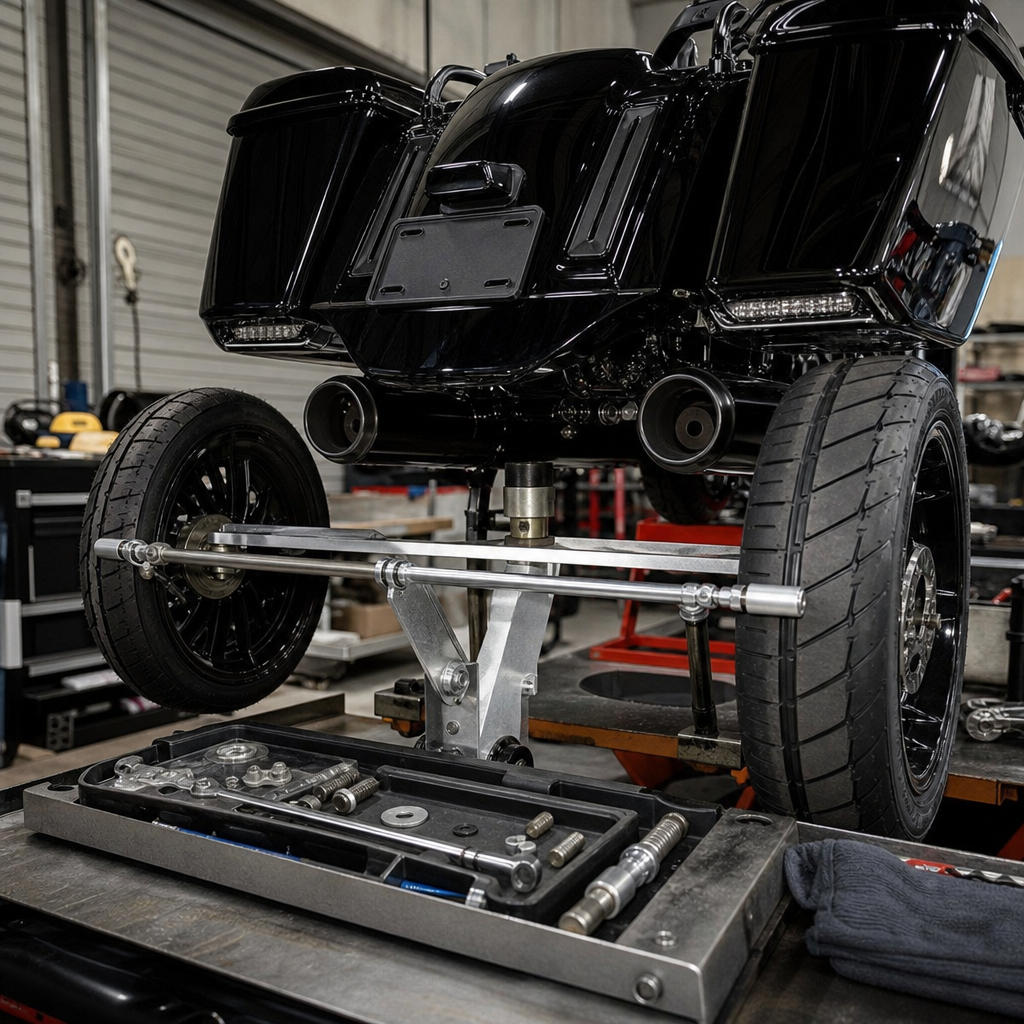
The Road Glide 3 uses a trike-specific rear structure that behaves differently from a two-wheeled Harley-Davidson bagger. With a de Dion style arrangement, the rear wheels are linked by a beam that maintains a constant relationship between left and right wheel camber while the suspension moves. The practical benefit is consistent rear-wheel orientation and a stable cargo platform. The practical consequence is that the whole rear assembly must be referenced carefully to the frame centerline and front wheel direction, because a small error is shared across the entire rear track. On an independent layout, one wheel can hide some issues. On a de Dion trike, the beam exposes them.
That is why owners often describe steering symptoms before they describe measurements. A Road Glide 3 with excessive toe-in may feel darty at low speed and drag one rear tire across pavement in parking maneuvers. Too little toe or toe-out can create highway wandering and a need for constant bar input. If ride height is uneven from preload imbalance or spring sag, the trike can feel like it favors one side on crowned roads. These are not abstract geometry discussions. They show up as shoulder fatigue after fifty miles, heat buildup in one rear tire, and accelerated front tire cupping.
The most useful mindset is to separate three checks: structural alignment, dynamic setup, and ergonomic compensation. Structural alignment asks whether the rear beam, axle references, and front tracking line are correct. Dynamic setup asks whether pressures, damping characteristics, wheel bearings, steering head bearings, and loading preserve that geometry under motion. Ergonomic compensation asks whether the rider is unconsciously correcting a setup issue because the bars are rotated too far back, the seat pocket locks the pelvis, or floorboard position limits leverage. I have seen trikes passed as aligned on gauges but still corrected significantly on the road once cockpit fit and load placement were addressed.
The baseline recipe: measurements to capture in 2026 before making 2027 alignment corrections
The best adjustment plan starts with a baseline sheet recorded before parts are changed. Measure front and rear tire pressures cold, note tire brand and exact model, record tread depths across all three tires, and document loaded ride height with the normal rider, passenger if applicable, and typical touring cargo. Then inspect wheel bearings, swing and beam mounting points, shock hardware torque, steering head play, and front fork condition. Harley-Davidson service procedures matter here because a trike that is mechanically loose cannot be meaningfully aligned. Even a slight steering head notch can mimic poor tracking.
Next, establish reference lines. In a proper alignment bay, technicians commonly use laser trike alignment equipment to compare the rear assembly to the front wheel path and chassis centerline. If a laser rig is unavailable, straightedge methods can still identify gross issues, but they are less precise. The important point is consistency. Use the same reference points each time so your 2027 comparison is valid. Record toe in fractions of an inch or millimeters across the rear track, note any lateral offset, and write down shock preload settings. If you upgrade shocks, seats, bars, or trunk loadouts later, the original baseline tells you whether the geometry changed or only the rider’s perception changed.
For long-term planning, include ergonomic notes with the mechanical numbers. I log bar reach, wrist angle at cruise, knee angle at floorboards, and whether the rider tends to brace with the right arm against road crown. Those observations sound subjective, but they are valuable. Riders who are overreaching often report a pull to one side because they are loading the bars asymmetrically. On a Road Glide 3, where steering effort is higher than on a standard touring bike, body mechanics strongly influence what the rider interprets as alignment quality.
| Checkpoint | What to Record | Why It Matters for 2027 Alignment |
|---|---|---|
| Tire setup | Brand, model, pressure, tread depth | Different carcass profiles can change tracking and steering effort |
| Ride height | Loaded measurements left, right, front | Sag changes toe behavior and beam attitude under load |
| Rear geometry | Toe, centerline relation, beam position | Creates the core straight-line tracking behavior |
| Front end condition | Steering head, fork health, wheel bearings | Faults here are often mistaken for rear misalignment |
| Rider fit | Bar reach, seat support, floorboard stance | Poor ergonomics can mask or exaggerate alignment symptoms |
How to adjust the de Dion linkage recipe for handling, tire life, and straight tracking
When technicians talk about adjusting a de Dion linkage recipe, they are usually working through a sequence rather than changing one number. First confirm tire pressures using the actual tires fitted, not a generic rule. Touring trikes react strongly to pressure imbalance, and one or two psi side to side can influence feel. Then verify rear preload or spring condition so the beam sits at the intended attitude under normal load. Only after ride height is stable should toe and tracking measurements be finalized. Aligning a sagged trike is a shortcut that produces poor results after new springs or preload changes.
Toe is the critical rear alignment variable because it governs scrub and stability. A small amount of toe-in is commonly used on trikes to promote straight tracking, but too much increases drag, heat, and tire wear. Too little can produce nervous behavior and crown sensitivity. Because the Road Glide 3 is a heavy touring platform, the correct setting must match real operating load. A solo rider with an empty trunk may prefer a slightly different feel than a two-up touring pair carrying luggage and a cooler. The right answer is not chasing a universal number; it is verifying the machine runs straight on its intended mission profile.
Centering and lateral tracking are just as important. If the rear assembly is not properly referenced to the front wheel path, the trike can crab down the road even if toe appears acceptable. That condition increases steering correction and can create a subtle off-center handlebar sensation. During road testing, I look for whether the trike settles naturally after a lane change, whether it requires a constant left or right palm pressure on flat pavement, and whether rear tire temperatures are reasonably even after a highway run. Those are practical signs the de Dion setup is working rather than merely passing a static measurement.
Ergonomics as an alignment tool: bars, seat, floorboards, and rider load paths
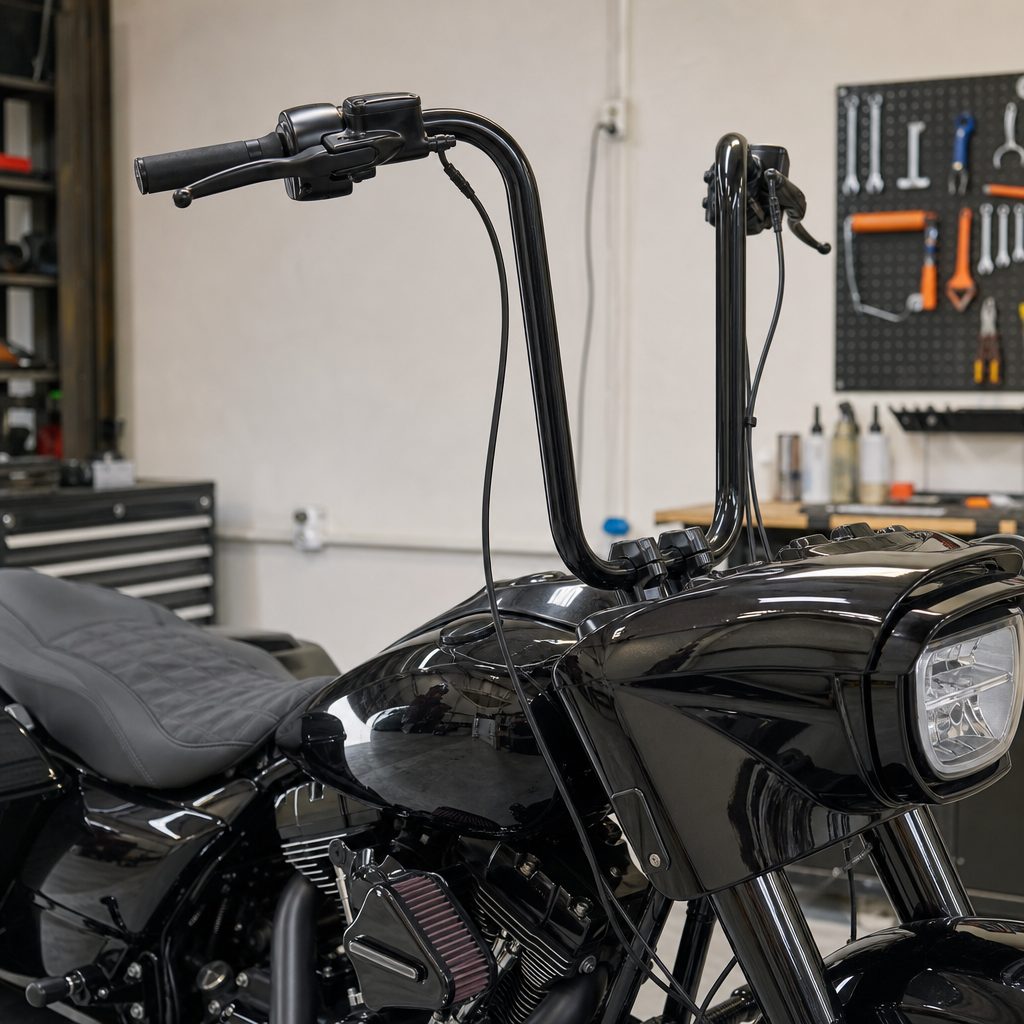
Ergonomics is often treated as comfort trim, but on the Road Glide 3 it is part of the handling recipe. A rider who sits too far back with bars rotated inward tends to steer from the shoulders, which makes the trike feel heavier and more reactive to pavement seams. A seat with a deep rear pocket can lock the pelvis and reduce the rider’s ability to counter lateral motion through the torso. Floorboards that force the knees outward can increase hip fatigue, leading the rider to support body weight through the bars. Every one of those issues shows up as perceived alignment trouble.
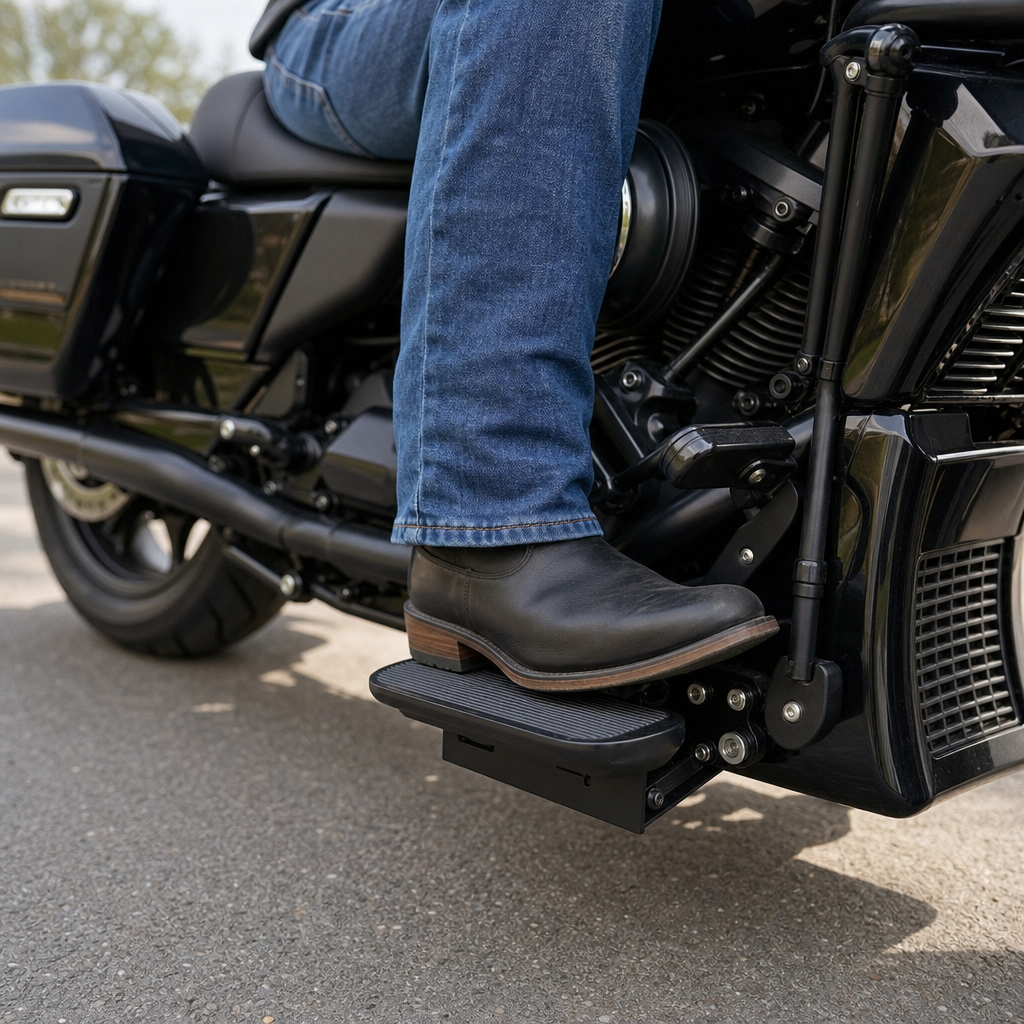
The fix is systematic. Start with neutral wrists at cruising speed, elbows slightly bent, and enough bar reach that the rider can apply small steering inputs without shrugging the shoulders. Then evaluate seat support. On long-haul setups, a flatter seating pocket often helps because the rider can make micro-adjustments as road crown changes instead of fighting a fixed position. Finally, verify foot placement. Good floorboard ergonomics let the rider stabilize through the legs during braking and crosswinds, reducing bar death-grip. In practice, that can transform a trike that seemed to wander into one that tracks calmly with the same alignment numbers.
Load placement matters too. The Tour-Pak style trunk area on a trike invites overpacking high and rearward. That raises the center of gravity and amplifies steering effort in transitions. Heavier items should sit low and centered when possible. If a customer reports that the trike aligned perfectly in spring but feels vague by midsummer, I always ask what now lives in the trunk. The answer is often rain gear, tools, shoes, and electronics stacked above the rear axle line. Geometry has not necessarily changed; weight distribution has.
Planning for 2027: wear patterns, service intervals, and upgrade decisions that preserve alignment
Adjusting for 2027 alignment really means anticipating what changes over a season of mileage. Tires wear into their own profiles, shock springs settle, bushings age, and steering components develop minor play. Front tire wear deserves special attention because trikes place unique demand on the front contact patch. Cupping, feathering, or uneven shoulder wear often indicates a combination of pressure, damping limitations, road crown exposure, and rider correction habits. Replace worn components before chasing alignment numbers, or you will tune around a temporary problem.
Service timing is part of the recipe. Recheck alignment after installing new rear tires, after significant suspension work, and after any impact event such as a pothole strike hard enough to alter steering feel. If you change handlebar bend, seat height, or floorboard arrangement, perform a short test loop before assuming the chassis moved. Many owners benefit from a yearly inspection log that pairs mechanical measurements with rider comments from the same route. Over time, patterns become obvious. A slight annual increase in steering effort might correlate with spring sag, not beam geometry.
Upgrades should be chosen for compatibility, not trend value. Premium shocks, a steering damper if applicable, higher-quality touring tires, and a seat that improves pelvic support can all sharpen the Road Glide 3. But each change should be validated against your baseline. The benefit of a recipe-based approach is that it keeps modifications honest. You know whether a part improved tracking, reduced fatigue, or simply changed feel. For a Harley-Davidson owner building a dependable touring trike, that discipline is what turns scattered adjustments into a coherent performance package.
The 2026 Road Glide 3 de Dion linkage recipe for adjusting toward 2027 alignment comes down to disciplined baselining, precise geometry checks, and rider-focused tuning. Start with mechanical integrity, because no alignment setting compensates for worn bearings, sagged springs, or a notched steering head. Measure tire setup, loaded ride height, toe, and centerline relationship now, while the trike is known and familiar. Then pair those numbers with ergonomic observations, because bar reach, seat shape, and floorboard support directly affect how the Road Glide 3 tracks in real hands on real roads.
The main benefit of this approach is predictability. Instead of reacting to vague symptoms next season, you will compare 2027 handling against a documented 2026 standard and isolate what changed. That protects tire life, reduces steering fatigue, and keeps the trike stable under touring loads. As the hub for model-specific ergonomics and performance recipes within the Harley-Davidson topic, this page sets the method: treat setup as a complete system, not a single spec. Use it as your starting point, then build outward into suspension, tire, cockpit, and load-management articles to refine the Road Glide 3 for the way you actually ride.
If you want the best result, create a baseline sheet this week and schedule a professional trike alignment check before the next major trip. Record the numbers, note your riding impressions, and make one change at a time. That simple process is how a good Road Glide 3 becomes an exceptionally well-sorted one.
Frequently Asked Questions
What does “de Dion linkage” mean on the 2026 Road Glide 3, and why does it matter when adjusting for 2027 alignment?
On the 2026 Road Glide 3, the de Dion rear setup uses a rigid beam to connect both rear wheels so they move together as a unit, while the suspension allows that beam to travel relative to the chassis. That is fundamentally different from an independent rear suspension design, where each rear wheel can react more separately. The practical takeaway is that alignment on a de Dion trike is never just about setting a number and walking away. It is about how the rear beam sits under load, how square it is to the chassis, how the front wheel tracks in relation to the rear pair, and how the entire machine behaves with the rider aboard.
When owners talk about a “2027 alignment” adjustment recipe, they are usually referring to setting the trike up so it tracks correctly in real-world use, with attention to steering effort, tire wear, ride height, and rider position rather than relying on a bare unloaded measurement. Because the de Dion arrangement keeps the rear wheels in a fixed relationship to each other, any small issue in ride height, beam centering, bushing condition, or chassis attitude can influence how the trike follows the road. In other words, the rear suspension geometry has a direct effect on perceived alignment.
This matters because a Road Glide 3 can feel heavy in the bars, wander, or show uneven tire wear even if a quick shop check says the toe is “close enough.” The de Dion design rewards a more complete approach: verify rear ride height, confirm the beam and mounts are in proper condition, inspect tire pressures and tire profiles, and then evaluate front-to-rear tracking with the machine loaded as it is actually ridden. That is the heart of the recipe. Alignment is not isolated from suspension geometry; on this platform, they are tightly linked.
Why isn’t alignment on a Road Glide 3 just a simple toe measurement?
Toe is important, but on a trike like the Road Glide 3 it is only one piece of the setup puzzle. A simple toe reading tells you the directional relationship between wheels at a specific moment, but it does not automatically account for suspension sag, frame attitude, tire construction, steering geometry, cargo load, passenger load, or rider ergonomics. On a de Dion platform, where the rear wheels are tied together by a rigid beam, the way the entire rear assembly sits under the bike can influence tracking and steering feel just as much as a static toe value.
For example, if rear ride height is off because of spring preload, worn components, or unusual loading, the trike can effectively present a different attitude to the road. That changes weight distribution between the front and rear, which changes how the front end steers and how the tires scrub in corners or on crowned pavement. Similarly, if tire pressures are mismatched or if one tire has a different wear pattern, the machine may pull, drift, or feel unsettled even when measured toe appears acceptable.
Another factor is that rider comfort and control are part of alignment outcomes. If the bars are requiring constant correction, if steering effort is high, or if the trike feels nervous in transitions, those are alignment-related symptoms even if they originate in chassis setup rather than a single adjustment point. That is why experienced setup work treats alignment as a system. You evaluate the machine loaded, inspect the suspension and bushings, confirm wheel and tire condition, and then fine-tune tracking. The goal is not merely hitting a specification on paper. The goal is stable tracking, predictable steering, reasonable tire life, and less rider fatigue.
What are the most common signs that the 2026 Road Glide 3 needs a de Dion linkage and alignment check before setting it up for 2027 specs?
The most common sign is a trike that does not track naturally on a straight road. If the Road Glide 3 consistently drifts to one side, requires steady bar pressure to stay centered, or feels like it is “hunting” instead of rolling cleanly forward, that is a strong clue that the relationship between the front wheel, rear beam, and chassis needs attention. Some drift on heavily crowned roads can be normal, but persistent pull beyond road influence deserves a full inspection.
Uneven tire wear is another major warning sign. Feathering, cupping, accelerated wear on one shoulder, or a noticeable difference in wear side-to-side can indicate a toe issue, a load distribution issue, a ride height problem, or even a worn component allowing the rear assembly to sit improperly. Because the de Dion beam keeps the rear wheels tied together, rear tire behavior can reveal a lot about whether the chassis is working squarely and consistently.
Steering effort also tells an important story. If the bars feel unusually heavy at low speed, if the trike resists turn-in, or if it feels twitchy coming out of a corner, the problem may not be isolated to the front end. It can stem from the entire alignment package, including how the rear beam is loaded and how the trike sits with rider and cargo weight onboard. Riders often describe this as the machine feeling “off” even when nothing appears visibly wrong.
Finally, any recent change should trigger a check. That includes replacing tires, changing suspension settings, adding accessories, carrying a regular passenger, installing a trailer hitch, or noticing impact damage after hitting a pothole or curb. Even subtle changes in weight and chassis attitude can alter how a de Dion trike behaves. If the goal is to adjust intelligently for 2027 alignment expectations, you want to start with a baseline inspection, not assumptions.
What is the best process for adjusting a 2026 Road Glide 3 so the alignment works well under real riding conditions?
The best process starts with establishing a realistic baseline. That means inspecting the trike in the same configuration in which it is normally ridden: typical fuel level, common luggage, usual accessories, and ideally the rider’s weight accounted for. On a Road Glide 3, this matters because the de Dion rear arrangement responds to chassis load as a whole, and a setup that looks acceptable unloaded can behave differently once real weight is added.
Begin with the fundamentals. Check tire pressures carefully and make sure the tires themselves are in good condition, evenly matched, and not introducing a false symptom. Then inspect rear suspension hardware, beam mounting points, bushings, fasteners, and any components that locate the rear assembly. If anything is worn, loose, or stressed, alignment work performed before repair can be misleading. The same goes for front-end condition: steering head feel, front tire wear, and fork integrity all affect the final result.
Next, confirm ride height and chassis attitude. This is where many owners and even some shops shortcut the process. On a de Dion trike, the way the rear sits under load strongly influences front-to-rear tracking and steering effort. If preload, sag, or load distribution is wrong, the alignment numbers may need to be revisited after those conditions are corrected. Only after the machine is mechanically sound and sitting correctly should you move into detailed alignment measurements.
From there, measure and adjust with a focus on squareness and tracking, not just one isolated dimension. The front wheel must be working in harmony with the rear pair, and the trike should roll with minimal steering correction on a suitable test road. A proper road evaluation is essential. You are confirming whether the setup reduces rider input, improves straight-line stability, and delivers even tire behavior over time. In practical terms, the best process is inspect, stabilize, measure, adjust, and road-test, then recheck. That sequence produces a result that actually feels right on the road instead of merely looking right in the shop.
How can rider ergonomics and load changes affect alignment feel on a Road Glide 3 with a de Dion rear setup?
Rider ergonomics matter more than many people expect because alignment is experienced through the handlebars, seat, and foot controls. If a rider is stretched too far, sitting unevenly, or bracing against the bars, the trike can feel heavier or less neutral even when the chassis is mechanically close to correct. On a Road Glide 3, which already asks the rider to manage the steering characteristics of a three-wheeled touring platform, small ergonomic mismatches can magnify the sense that the alignment is off.
Load changes have an equally important effect. Add a passenger, fill the trunk, mount travel gear, or install heavier accessories, and you change the way the chassis settles on its suspension. Because the de Dion beam keeps both rear wheels tied together, that load influences the rear as a unit, which can alter front-end weight, steering effort, and how the trike reacts to crowned or grooved pavement. A setup that feels light and neutral when ridden solo can feel more resistant or more prone to drift when carrying touring weight if preload and alignment were not considered together.
This is exactly why a “recipe” for 2027 alignment should include rider and cargo reality, not just idealized shop conditions. If the trike is primarily used for two-up touring, that should be reflected in setup priorities. If it is usually ridden solo with minimal luggage, the alignment target may feel best with a different suspension balance. The point is not that the alignment specs change wildly every time