The 2026 Road Glide 3 passenger floorboard recipe starts with a simple goal: give the person on the back of the trike stable foot support, easier mounting, and less fatigue, then carry those lessons forward when adjusting for 2027 comfort. In Harley-Davidson terms, a passenger floorboard setup is not just a bolt-on accessory. It is an ergonomics package that combines board size, bracket position, rubber isolation, leg angle, suspension behavior, exhaust clearance, and the way the passenger uses grab rails and seating support over distance. I have worked through enough touring fitments to know that riders often focus on bars, seat height, and wind protection while treating the passenger contact points as secondary. That is a mistake, especially on three-wheel touring platforms where long-mile stability encourages longer days and exposes every small fit issue.
This article serves as a hub for model-specific ergonomics and performance recipes across the Harley-Davidson category, using the 2026 Road Glide 3 as the anchor example. A recipe, in this context, means a repeatable setup method: identify the stock geometry, define the comfort problem, choose compatible parts, install them in the right order, then test and refine based on actual ride feedback. For passenger floorboards, the key measurements are knee bend, hip opening angle, ankle neutrality, and the distance between the seat edge and the center of the board. Secondary factors include vibration transfer, heel strike when mounting, and whether the board location forces the passenger to brace during acceleration or on rough pavement. Those details matter because comfort is cumulative. A setup that feels acceptable for twenty minutes can become miserable after two hours.
The reason this topic matters in 2026 and into 2027 is that touring buyers expect custom-level comfort from factory-based machines. The Road Glide 3, built around the Milwaukee-Eight touring architecture with trike-specific rear structure, delivers excellent highway presence, but passenger ergonomics still depend heavily on rider size, passenger inseam, seat choice, luggage configuration, and accessory selection. One passenger may want a higher, tucked leg position for control in city riding, while another needs a lower, flatter floorboard stance to reduce knee flexion on day-long trips. There is no single perfect setting. There is, however, a disciplined process that consistently gets close. That process also creates useful internal pathways to related subjects like two-up seat recipes, rear suspension preload strategy, rider triangle adjustments, and luggage interference checks, which is why this floorboard guide works as a central reference page for the broader family of Harley-Davidson ergonomics and performance recipes.
Understand the Road Glide 3 Passenger Ergonomics Baseline
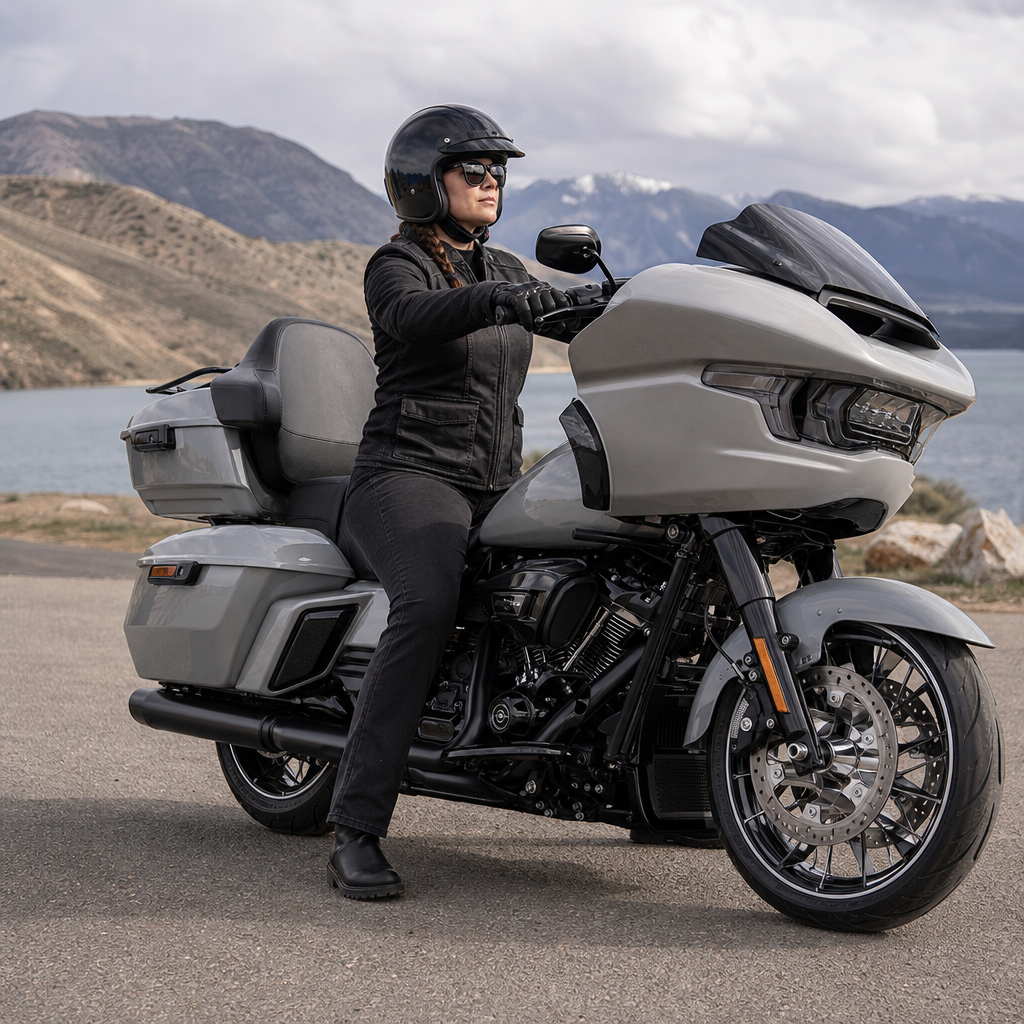
The 2026 Road Glide 3 uses a frame and body layout that changes how passenger comfort should be evaluated compared with a standard two-wheel bagger. Because the rear track remains planted and the bike does not lean, the passenger does not make the same constant balancing micro-adjustments they would on a Road Glide or Street Glide. That can reduce upper-body fatigue, but it also means pressure concentrates more predictably at the seat and floorboards. In practice, passengers on trikes often notice foot placement issues sooner, not later. If the boards are too high, knees stay flexed and hip tightness builds. If the boards are too far forward without enough seat support, the passenger slides and braces under acceleration.
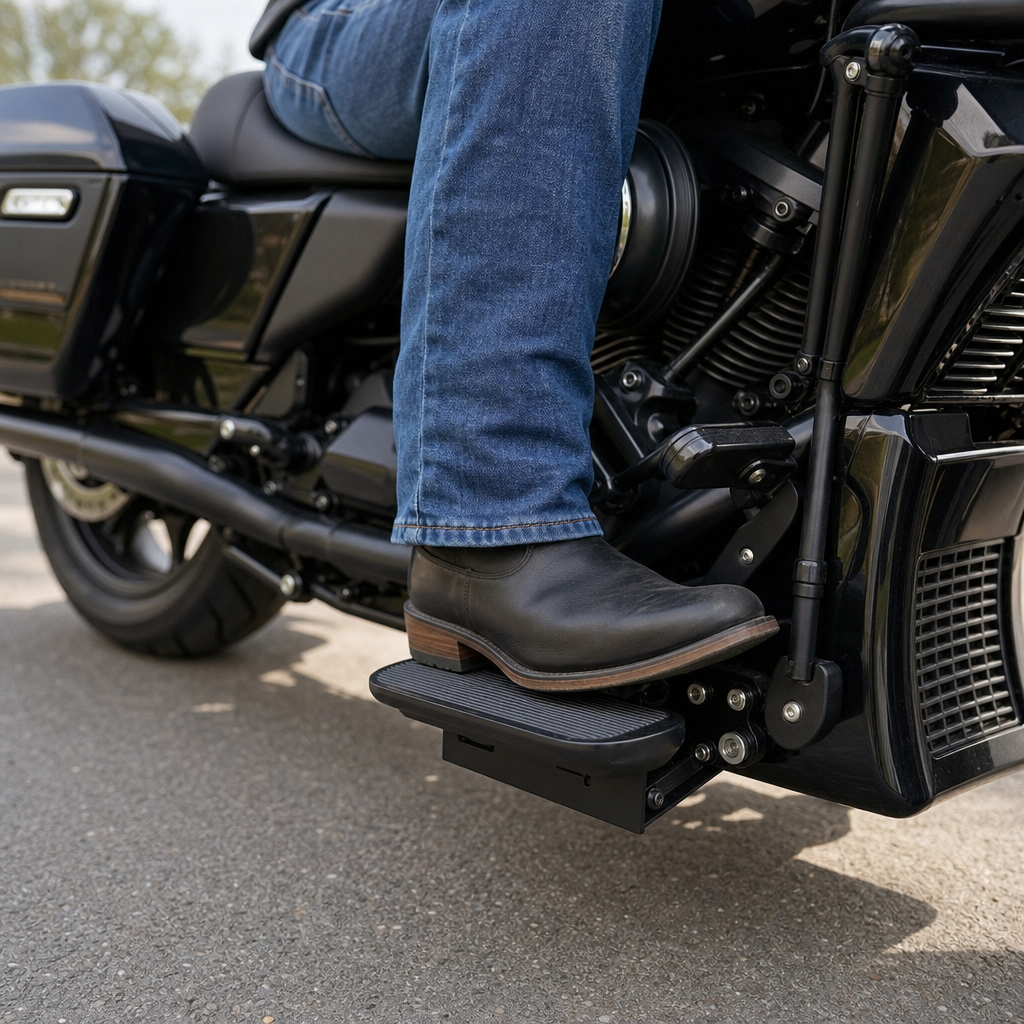
Start by assessing the stock setup with the passenger wearing actual riding boots. Measure from the top front edge of the passenger seat to the centerline of the floorboard pivot or platform midpoint. Then note the vertical drop from seat surface to board top. With those numbers, you can estimate whether the passenger is in a compact, neutral, or stretched posture. In my experience, a neutral touring posture usually keeps the knee comfortably bent without pushing it past a sustained angle that creates pressure behind the kneecap. It also lets the ankle rest flat rather than forcing the toes down to find support. That is especially important on Harley passenger boards with thick rubber inserts, because the rubber helps with vibration but can exaggerate edge loading if the foot only partially contacts the platform.
Baseline testing should include three ride segments: stop-and-go traffic, a 45 to 60 mph back road, and an interstate section. Ask direct questions after each segment. Did the passenger feel cramped? Did they shift feet often? Was one leg worse than the other because of exhaust-side heat or bracket offset? Could they mount and dismount cleanly without clipping the board or bag guard? These answers reveal whether the solution is height, fore-aft location, seat contour, or a combination. Most bad floorboard setups are really system problems, not single-part problems.
Build the Passenger Floorboard Recipe Step by Step
A reliable passenger floorboard recipe for the 2026 Road Glide 3 follows a clear order. First, confirm the seat. Passenger board complaints are often blamed on the wrong part because the seat pocket is too low, too narrow, or too forward. A touring seat with better lumbar support for the passenger can reduce the need for a radical floorboard change. Second, inspect the existing board mounts and rubber inserts. Worn isolators, loose hardware, or sagging brackets can create the impression that the position is wrong when the real issue is movement and vibration. Third, decide whether the passenger needs more room, more support, or easier access. Room usually means repositioning. Support may mean larger platforms. Access may require changing both the board angle and the grab rail strategy.
For most setups, use a test-first method before buying expensive parts. Temporary references can be made by having the passenger place their feet on mock positions while the trike is parked upright on level ground. Mark the preferred location relative to the stock board. Then compare that target with available Harley-Davidson accessory brackets or high-quality aftermarket options from established touring fitment brands. Any chosen bracket should preserve adequate clearance to exhaust components, bodywork, and the passenger’s heel during mounting. It should also maintain fastener integrity consistent with Harley torque requirements and, ideally, use corrosion-resistant hardware because touring trikes see weather, wash cycles, and road debris that quickly expose low-grade finishes.
| Adjustment goal | Typical change | Primary benefit | Main tradeoff |
|---|---|---|---|
| Reduce knee bend | Lower or slightly forward board position | Less joint compression on long rides | Possible reduction in cornering-style clearance during mounting or uneven surfaces |
| Improve foot stability | Larger board surface with fresh rubber | Better full-sole contact and less foot shifting | Can feel bulky for shorter passengers |
| Ease passenger access | Re-angle board and coordinate with grab rail use | Cleaner mount and dismount movement | May not solve long-distance comfort by itself |
| Cut vibration perception | New isolators and tighter bracket tolerances | Smoother feel through boots | Does not change leg geometry |
Installation should be done with medium-strength threadlocker where specified, proper torque values from the service information, and a final clearance check under full passenger load. That last step matters. I have seen floorboards that looked perfect in the shop but contacted adjacent parts once a loaded trunk, backrest, and passenger weight compressed the rear suspension. After installation, test the setup over at least 100 miles before judging it. Passengers often need a ride or two to tell the difference between unfamiliar and uncomfortable.
Adjust for 2027 Comfort Priorities
Adjusting for 2027 comfort means planning for what touring owners increasingly prioritize: all-day flexibility, compatibility with upgraded seats and luggage systems, and easier adaptation for different passengers. The best 2026 Road Glide 3 passenger floorboard recipe is not the most extreme repositioning. It is the one that leaves tuning room. If the passenger alternates between solo support from a top case back pad and a stripped-down weekend setup, the board position should still work in both conditions. If winter boots and summer boots change effective leg length and ankle angle, the setup should remain forgiving across both.
One practical approach is to tune toward a slightly more open posture than the stock baseline while avoiding a stretched leg position. For many passengers, that means lowering perceived knee angle just enough to reduce compression but keeping the foot under the body enough to maintain confidence during starts, stops, and rough pavement. On trikes, body confidence matters because passengers feel chassis motions differently than on leaning motorcycles. A passenger who can plant the whole boot on the board and hold a neutral ankle usually reports more stability, even when the actual suspension has not changed.
Heat management should also be part of the 2027 comfort discussion. Depending on exhaust configuration and ambient conditions, the right-side floorboard area can feel warmer. Heat shields, exhaust routing choices, and boot construction influence this more than many owners expect. If the passenger consistently lifts one foot to escape heat, the issue is no longer just ergonomics; it becomes a fatigue and safety problem. In those cases, solve heat first, then reevaluate position. Likewise, if a new seat raises the passenger, the effective distance to the board increases vertically and can undo an otherwise successful fitment. Every major comfort part should be treated as part of one recipe, not a stack of unrelated upgrades.
Connect Floorboards to the Wider Harley-Davidson Recipe Hub
This page is a hub because passenger floorboard comfort intersects with every other model-specific ergonomics and performance recipe in the Harley-Davidson touring world. A floorboard adjustment affects how the passenger uses the backrest, how much the rider feels movement behind them, and how luggage placement changes available leg room. It also interacts with suspension setup. If rear preload is too soft, the passenger sits deeper, leg angles change, and the boards can feel both higher and closer than they did in the garage. If preload is corrected, the same hardware may suddenly feel right. That is why any serious Road Glide 3 comfort plan should link naturally to rear suspension tuning, seat selection, trunk and tour-pack positioning, and passenger mounting technique.
The same recipe logic applies across Harley-Davidson platforms, though the exact geometry differs. On an Ultra or Road Glide Limited, passenger movement includes lean-related balance inputs, so board location must support cornering body language. On a Freewheeler, passenger seating and rear packaging create their own constraints. On CVO touring models, premium seats may improve support but still leave board position untouched. In every case, the winning process is the same: measure the baseline, identify the discomfort pattern, change one variable at a time, and validate the result over real miles. Owners who skip that process usually buy multiple accessories and end up chasing symptoms.
For a sub-pillar hub under Harley-Davidson, the takeaway is simple. Model-specific ergonomics and performance recipes work best when they are practical, testable, and integrated. Passenger floorboards are a perfect example because they seem minor until they determine whether two-up touring feels premium or punishing. Use this Road Glide 3 guide as the starting point, then build outward into linked topics such as rider floorboard positioning, handlebar reach recipes, seat foam and height comparisons, suspension preload maps for passenger weight ranges, and luggage fit checks around passenger contact points. When the system is tuned together, the trike feels more expensive, more stable, and far easier to ride all day.
Conclusion
The 2026 Road Glide 3 passenger floorboard recipe for adjusting toward 2027 comfort is really a method for solving two-up touring fit with precision. Begin with the baseline geometry, test the stock position with real riding gear, and ask focused questions about knee bend, ankle angle, stability, heat, and ease of mounting. Then make changes in the right order: seat first, hardware condition second, board position and platform size third, and final validation under load last. That sequence prevents wasted money and leads to better outcomes than guessing based on appearance alone.
The biggest benefit of getting passenger floorboards right is not just comfort at the end of the day. It is confidence throughout the day. A passenger who feels supported moves less, braces less, and enjoys the ride more, which improves the experience for the rider as well. On a machine designed for long-distance travel, that matters as much as power, storage, or styling. Use this article as your hub for Harley-Davidson model-specific ergonomics and performance recipes, apply the recipe carefully, and turn your next Road Glide 3 setup session into a measured comfort upgrade instead of another round of trial and error.
Frequently Asked Questions
What does the “2026 Road Glide 3 passenger floorboard recipe” actually include?
The “recipe” is the full passenger comfort setup, not just the floorboards themselves. On a 2026 Road Glide 3, that usually means evaluating the floorboard platform size, the mounting brackets, the fore-and-aft position, the height relative to the seat, the amount of rubber isolation in the boards, the relationship to the exhaust and bodywork, and how the rear suspension behavior affects the passenger’s legs and hips over time. In practical terms, a good setup gives the passenger a stable place to plant both feet, reduces the amount of awkward knee bend, and makes it easier to get on and off the trike without fighting for footing.
That is why riders refer to it as a comfort recipe instead of a single accessory choice. A larger board may improve support, but if the bracket position forces the knees too high, the gain is limited. Better rubber isolation can reduce vibration, but if the passenger’s feet sit too close to heat from the exhaust, comfort still suffers. The best 2026 baseline is one that balances support, leg angle, vibration control, and ease of use, because those same variables are exactly what carry forward when adjusting the setup for 2027 comfort goals.
How do I know if the passenger floorboards on a 2026 Road Glide 3 need adjustment for better 2027 comfort?
The easiest way to tell is to look for repeat complaints after more than a short ride. If the passenger mentions cramped knees, pressure under the arches, hot spots on the calves, difficulty mounting the trike, or the need to constantly reposition their feet, the current floorboard setup is likely leaving comfort on the table. Another common sign is fatigue that appears long before the rider feels tired. On a touring trike, the passenger should feel supported and relaxed, not like they are bracing against the machine the entire time.
You should also pay attention to body mechanics. If the passenger’s knees sit sharply bent, if their ankles are forced into an unnatural angle, or if they cannot easily shift foot position during the ride, the board placement probably needs refinement. The move from a 2026 baseline to a 2027 comfort-focused setup is usually not about dramatic changes. It is often about small ergonomic corrections such as lowering or repositioning the boards slightly, improving the board surface, or reducing vibration transfer. Those modest adjustments can produce a noticeably smoother, less fatiguing experience over longer distances.
What floorboard position usually works best for passenger stability and easier mounting on a Road Glide 3?
In most cases, the best position is one that allows the passenger to place their feet naturally without pulling the knees excessively high or reaching too far forward. Stability comes from a neutral leg position. When the boards sit in a spot that supports a mild bend at the knees and lets the passenger rest their feet flat and securely, they are less likely to shift around during acceleration, braking, and uneven pavement. That matters especially on a trike, where passenger confidence often comes from feeling planted and balanced rather than perched.
For easier mounting, the floorboards should also help create a predictable step and settle motion. If they are positioned too high, too far inward, or too close to surrounding hardware, the passenger may struggle to swing a leg through comfortably and establish footing quickly. A more refined 2027 comfort adjustment often focuses on making entry and exit feel smoother while preserving enough support for long-haul riding. The ideal result is a setup where the passenger can mount cleanly, find the boards immediately, and maintain a relaxed lower-body posture without needing constant correction.
How do suspension behavior, vibration, and exhaust clearance affect passenger floorboard comfort?
They affect comfort more than many owners expect. Suspension behavior changes how force is transmitted into the passenger’s legs and feet. If the rear suspension reacts sharply to bumps, the floorboards can become a primary contact point where impact energy is felt. That can lead to foot fatigue, ankle tension, and a subtle tendency for the passenger to brace instead of relax. A well-tuned setup takes this into account by pairing floorboard placement with a realistic understanding of how the trike behaves on real roads, not just in the garage.
Vibration matters because passenger contact points amplify small annoyances over distance. Rubber-isolated boards can help reduce that constant buzz, making the passenger feel less wear over a full day of riding. Exhaust clearance is just as important. If the floorboards sit too close to hot exhaust components, discomfort may show up as heat on the boots, calves, or lower legs, especially in slower traffic or warm-weather riding. For a 2027 comfort-minded adjustment, the goal is to review the full environment around the passenger’s feet: impact control, vibration management, and thermal clearance. When those work together, the floorboard setup feels intentionally comfortable rather than merely acceptable.
What is the smartest way to refine a 2026 passenger floorboard setup for 2027-level comfort without overcomplicating it?
The smartest approach is to start with the passenger’s actual experience and make measured changes one variable at a time. Begin with the fundamentals: foot support, leg angle, ease of mounting, and any complaints about vibration or heat. From there, assess whether the current boards are large enough, whether the brackets place the feet in a natural position, and whether the passenger can shift posture easily during longer rides. Small improvements in placement and support often do more for real-world comfort than chasing a large catalog of add-ons.
It also helps to test changes under the same riding conditions where discomfort usually appears. A setup that feels fine on a short local ride may reveal pressure points after an hour on mixed pavement. For long-term 2027 comfort, the best results usually come from balancing ergonomics with mechanical realities. That means keeping adequate exhaust clearance, preserving safe and secure mounting hardware, and ensuring the passenger floorboards still support confident entry, exit, and foot stability. In short, refine the system, not just the part. When the floorboards, bracket position, isolation, and passenger posture all work together, the trike becomes much easier to enjoy mile after mile.