The 2026 Road Glide 3 gives Harley-Davidson riders a distinctive starting point for long-distance comfort because its chassis, rider triangle, and factory emulsion rear shocks create a tuning challenge that is very different from a two-wheel bagger. When riders search for a 2026 Road Glide 3 emulsion shock recipe for 2027 comfort, they are usually asking a practical question: how do you make a heavy trike ride smoother, stay planted in corners, and remain comfortable for full-day touring without guessing at preload, damping, tire pressure, or seat position? This hub answers that question by treating comfort as a system, not a single part.
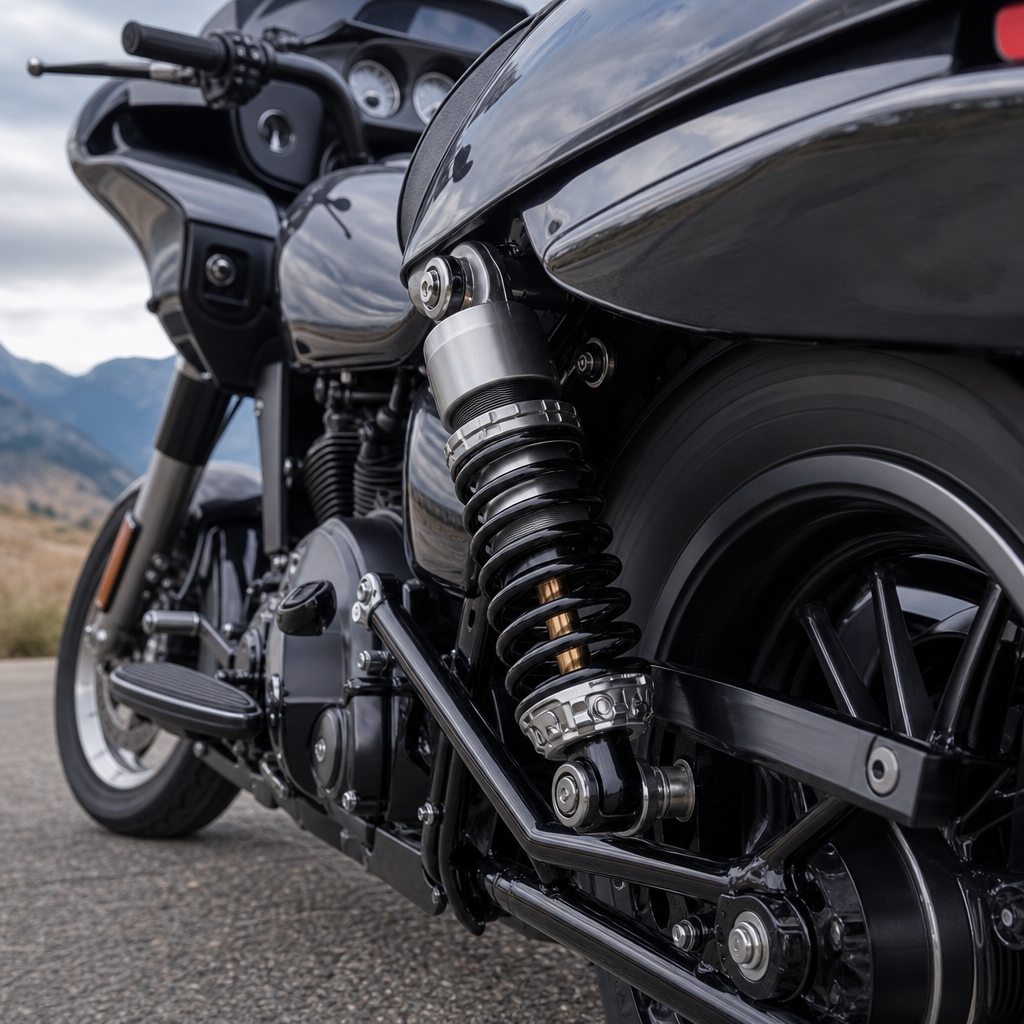
An emulsion shock is a damper where oil and gas share the same internal chamber rather than being separated by a floating piston or remote reservoir. That design is common on stock touring applications because it is compact and cost effective, but it reacts differently to heat, repeated impacts, and heavy loads than higher-end monotube or remote-reservoir units. On the Road Glide 3, the shock recipe must also account for the trike conversion architecture, rear track behavior, and the fact that a three-wheeler cannot lean to dissipate lateral forces the way a standard Road Glide does.
Comfort tuning matters in 2027 because rider expectations keep rising. More owners are mixing interstate travel, rough secondary roads, and passenger duty with larger luggage loads, while also comparing stock behavior against premium upgrades from brands such as Legend Suspensions, Progressive Suspension, Fox, and Öhlins. I have worked through this exact problem on heavyweight Harley touring platforms, and the pattern is consistent: riders often blame the shocks first, but the best results come from a recipe that combines sag, spring support, damping control, tire compliance, and cockpit ergonomics in the right order.
This page serves as the hub for model-specific ergonomics and performance recipes under the Harley-Davidson category. It explains what to adjust on the 2026 Road Glide 3, what not to chase, and how to build a baseline setup before you spend money on parts. It also points naturally to deeper topics such as trike suspension upgrades, Road Glide 3 tire pressure strategy, touring seat fitment, handlebar reach tuning, and passenger comfort optimization. If you want a direct answer now, start here: set the bike up for actual loaded weight, tune rear support before front feel, and evaluate every change over the same road loop.
Understand the Road Glide 3 Platform Before You Tune
The Road Glide 3 is not simply a Road Glide with one extra wheel. Its steering geometry, rear suspension behavior, and load transfer all produce a different comfort profile. The frame-mounted sharknose fairing helps stability at speed, but low-speed steering effort, crowned roads, and expansion-joint impacts can feel more pronounced because the rider must steer through every disturbance rather than letting the chassis lean and self-correct. That is why a useful Road Glide 3 shock recipe begins with platform realities instead of generic bagger advice.
Three details shape ride quality most. First, curb weight is substantial, and touring accessories push real-world operating weight much higher. Second, the rear axle assembly and trike bodywork introduce unsprung and semi-unsprung mass characteristics that change how the rear reacts to sharp hits. Third, passenger and luggage loads sit in a way that can quickly overwhelm a lightly preloaded stock emulsion setup. In plain terms, the trike feels best when the rear suspension rides in the middle of its travel, not wallowing near the bottom and not topped out and skittering over broken pavement.
Riders also need to separate comfort complaints into categories. A harsh vertical hit over potholes usually points to excessive spring preload, inadequate shock quality, or too much tire pressure. A floating or hobby-horse sensation over rolling highway undulations often indicates insufficient support or damping control. Steering heaviness after a comfort change may actually come from rear ride height or seat position shifting rider weight, not from the front end itself. This diagnostic discipline saves money because it prevents replacing parts that are not causing the problem.
The Core Emulsion Shock Recipe for 2027 Comfort
A working recipe starts with four inputs: rider weight in gear, passenger weight, typical luggage load, and road mix. If you tune for a solo 180-pound rider and then take a 140-pound passenger plus 40 pounds of luggage on a weekend trip, the bike no longer lives in the setup window you established. I advise owners to define two conditions at minimum: solo day ride and loaded touring. On stock emulsion shocks, compromises are unavoidable, so documenting your priority use case matters.
The baseline sequence is straightforward. Set tire pressures to a realistic starting point using Harley-Davidson guidance, current tire model specifications, and the actual load. Then establish rear sag and preload. Next, assess whether the shock can control rebound after large dips and bridge joints. After that, evaluate the seat, bar reach, and floorboard relationship, because many riders misread posture strain as suspension harshness. Only after these basics should you decide whether the stock emulsion units are good enough or whether an upgrade is justified.
For most Road Glide 3 owners seeking better 2027 comfort, the stock emulsion shock recipe is this: run enough preload to prevent bottoming with your normal load, but no more; keep tire pressures conservative rather than maxed out; use a touring seat that spreads pressure across the sit bones; and avoid bars that force locked elbows. If repeated heat cycles, rough roads, or heavy two-up use still produce fade, pogoing, or hard-edge impact harshness, that is the point where premium shocks become a solution instead of a guess.
Baseline Measurements: Sag, Preload, Pressure, and Load Mapping
On a trike, you cannot rely on feel alone. You need repeatable measurements. Static sag and rider sag tell you whether the spring is carrying the machine in the proper part of its travel. While Harley-Davidson does not always publish trike-specific sag targets in owner-facing language, the principle remains the same as in suspension tuning generally: too little sag means the suspension rides high and transmits impact; too much sag means it blows through travel and destabilizes the chassis. Record unloaded height, bike-only settled height, and loaded height with the rider in normal gear.
Load mapping is equally important. Weighing each touring item sounds excessive, but it quickly reveals why comfort changes from one ride to the next. A trunk organizer, rain gear, battery pack, tools, and a packed top bag can add surprising rear-biased mass. Passenger backrest angle and top-box packing also affect how the rider braces against impacts. I have seen owners chase shocks for months when the real issue was sixty pounds carried too high and too far aft.
| Setup Variable | What to Check | Typical Comfort Effect | When to Change It |
|---|---|---|---|
| Rear preload | Loaded ride height and bottoming frequency | Too low feels soft then harsh; too high feels choppy | Adjust first for solo and touring loads |
| Tire pressure | Cold pressures matched to load and tire model | High pressure sharpens impacts; low pressure adds squirm and heat | Verify before every test ride |
| Seat shape | Pelvic support and pressure distribution | Poor support mimics suspension fatigue | Change after suspension baseline is set |
| Bar reach | Elbow bend and shoulder tension | Locked arms increase perceived harshness | Adjust if wrists or neck tense on rough roads |
| Shock condition | Fade, leakage, repeated bounce, clunking | Worn units lose control as heat builds | Replace when behavior worsens after long rides |
Use one test loop for every change. Include low-speed broken pavement, 45 to 55 mph secondary road sweepers, one set of bridge joints, and a short highway segment. Take notes immediately. The Road Glide 3 responds clearly when you isolate variables, but it can feel confusing when preload, tire pressure, seat padding, and luggage are all changing at once.
When the Stock Emulsion Shocks Work, and When They Do Not
Stock emulsion shocks are not automatically bad. For solo riders on smoother roads, with moderate pace and limited cargo, they can deliver acceptable touring comfort if preload is set correctly and tires are not overinflated. Their strengths are packaging simplicity, predictable behavior when fresh, and a ride that many casual owners find compliant enough for local and regional travel. If your current complaint is only occasional sharpness over square-edged bumps, your answer may be setup, not hardware.
Where stock emulsion shocks struggle is sustained heat and load. Because gas and oil mix in the same chamber, damping consistency can degrade sooner during long rough-road sessions than it does in better-isolated designs. Heavier riders, two-up touring couples, and owners who tow or carry dense luggage often notice that the rear becomes less controlled later in the day. Rebound can feel slower after repeated hits, and once the suspension loses composure, every imperfection reaches the rider more directly.
Another limitation is tuning range. Many factory units provide minimal external adjustment, which means you can alter support more easily than you can precisely shape compression and rebound behavior. If your Road Glide 3 needs contradictory things such as softer initial compliance with firmer big-hit control, you are asking more from the stock package than it was built to deliver. That is when premium replacements with better valving, spring matching, and thermal stability become worthwhile.
Ergonomics Complete the Comfort Recipe
Suspension alone cannot fix a poor rider triangle. On the Road Glide 3, a seat that locks the pelvis into one angle can overload the lower back because the rider cannot use lean angle and body movement to absorb bumps as naturally as on two wheels. A supportive touring saddle from Saddlemen, Harley-Davidson, Mustang, or Corbin can change the whole ride by widening support under the sit bones and reducing the need to brace against the bars. That is not theory; on customer setups, seat swaps often make the biggest day-one difference after preload correction.
Handlebar reach matters just as much. If the grips are too far away, the rider extends the elbows and transmits impacts through straight arms into the neck and shoulders. If the grips are too close, the chest collapses and the lower back rounds, which increases fatigue over hours. The target is simple: neutral wrists, slight elbow bend, relaxed shoulders, and enough back support from the seat to prevent constant bracing during braking and rough-road events.
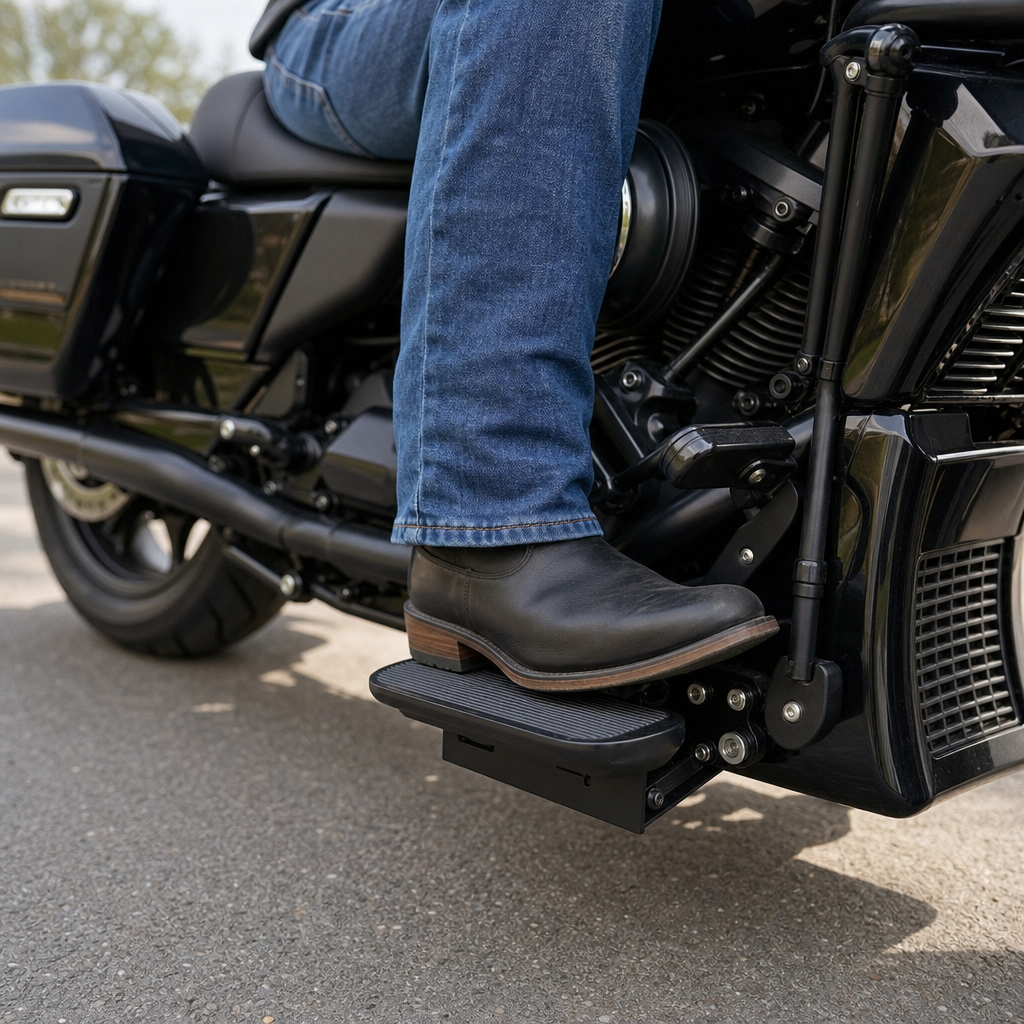
Floorboard position and boot choice also affect comfort. On a trike, small changes in leg angle influence how the rider stabilizes the body through corners and crosswinds. Riders with tight hips or limited knee mobility often report improved comfort when they alternate foot position throughout the day. This is why model-specific ergonomics and performance recipes need to cover the whole contact triangle. A shock upgrade can refine the ride, but body positioning determines how much of that improvement you actually feel.
Upgrade Paths for Riders Who Have Outgrown the Stock Setup
If your baseline is correct and comfort is still lacking, choose upgrades by use case rather than brand hype. Progressive Suspension, Legend Suspensions, Fox, and Öhlins all offer solutions with stronger damping control than basic factory emulsion units, but they serve different rider profiles. Some emphasize plush touring response, others prioritize chassis discipline under aggressive pace, and the best choice depends on rider weight, passenger frequency, and road quality. The smartest purchase is the shock valved and sprung for your actual load, not the one with the loudest marketing.
Remote-reservoir or monotube-style alternatives generally manage heat better and maintain more consistent damping over long rides. Adjustable rebound can be especially valuable on a trike because it lets you reduce the after-bounce that creates the classic floating sensation over rolling pavement. For loaded touring, proper spring rate matters more than exotic adjusters. A premium shock with the wrong spring can ride worse than a modest shock with the correct one.
Think of upgrades as part of a sequence. First fix load and posture. Second confirm the stock recipe. Third identify the exact remaining fault: bottoming, fade, sharpness, or instability. Then buy the component designed to solve that fault. That method consistently produces the best Road Glide 3 comfort results and creates a reliable foundation for every related Harley-Davidson ergonomics article linked from this hub.
The best 2026 Road Glide 3 emulsion shock recipe for 2027 comfort is not mysterious. It starts with understanding that this Harley-Davidson trike needs a different approach than a two-wheel touring bike, because steering inputs, load transfer, and rear suspension behavior all work differently. Riders get the biggest gains by setting up the machine for real-world weight, measuring sag and ride height, using sensible tire pressures, and evaluating changes on a repeatable route instead of relying on memory or online guesses.
From there, the path is clear. If the stock emulsion shocks are fresh and your use is mostly solo on decent pavement, careful preload and ergonomic tuning may deliver the comfort you want. If you ride loaded, cover rough miles, or notice fade and poor control after hours in the saddle, upgraded shocks with better thermal stability and spring matching become a rational investment. Seats, bars, and floorboard relationship complete the package, because comfort is always the sum of suspension plus posture.
Use this hub as your starting point for every model-specific Harley-Davidson ergonomics and performance recipe that follows. Build your baseline, document your setup, and make one change at a time. That disciplined process turns the Road Glide 3 from merely rideable into genuinely comfortable for the way you travel. Start with your current load numbers and test loop today, and your 2027 touring comfort will improve faster than any random parts swap ever could.
Frequently Asked Questions
What does a good 2026 Road Glide 3 emulsion shock recipe for 2027 comfort actually look like?
A strong starting recipe is not one magic clicker setting or a single preload number. On a Road Glide 3, a good comfort-focused setup is a balanced combination of sag, spring support, damping control, tire pressure discipline, and realistic expectations for how a heavy touring trike behaves compared with a two-wheel bagger. Because the factory rear shocks are emulsion shocks, they blend oil and gas in the same body rather than separating them with an internal floating piston or external reservoir. That means they can be tuned to work well for touring comfort, but they are especially sensitive to being run too soft, too hot, or too deep into the stroke over repeated highway expansion joints and uneven pavement.
For most riders, the best recipe begins with setting preload high enough to keep the rear from riding low in the travel. Too little preload is one of the most common causes of harshness on a trike, even though riders often assume soft preload equals soft ride. In reality, if the shocks sit too deep in their travel, the suspension has less room to absorb bumps and more tendency to hit the stiffer part of the stroke. A comfort-oriented setup usually means achieving proper loaded ride height with the rider, passenger if applicable, trunk load, and touring gear accounted for. Then you evaluate damping behavior: the trike should recover from a bump in one controlled motion, not pogo, wallow, or feel like it kicks upward over square-edge hits.
The most effective 2027 comfort recipe usually prioritizes support first, plushness second. That sounds backward, but it is the right order. Once spring preload is correct, the chassis stays flatter in corners, tracks better through fast sweepers, and resists the side-to-side unsettled feel trikes can show on patched pavement. After that, riders can fine-tune around real-world use. A solo rider doing short hops may prefer a slightly more compliant feel. A two-up tourer with a loaded trunk will often need more preload and firmer control to prevent repeated bottoming and heat-related fade. The end goal is simple: the trike should feel settled, composed, and less fatiguing over a full day, not merely soft in the driveway.
Why does the Road Glide 3 require a different suspension approach than a two-wheel touring Harley?
The Road Glide 3 rides and reacts differently because the chassis dynamics are fundamentally different from a two-wheel bagger. A two-wheel motorcycle leans to absorb cornering forces, transfers weight in a different pattern, and generally asks the rear suspension to manage vertical inputs while the whole machine rotates naturally into turns. A trike does not lean in the same way. Instead, the rear suspension must support a wider rear track, more lateral load transfer, and a different relationship between roll stiffness, passenger comfort, and stability. That changes what “comfortable” really means.
On a Road Glide 3, riders often discover that a setup that feels soft at low speed can become tiring at highway speed. That is because the trike may float, bob, or react sharply as both rear wheels encounter road imperfections at different times. The suspension also has to manage body motion in corners without the benefit of motorcycle lean reducing side load. If the shocks are under-supported, the machine can feel vague and busy. If they are over-stiff, it can skip across broken pavement and make long rides exhausting. The tuning window is narrower than many riders expect.
Another difference is weight distribution during touring use. Trikes invite heavy packing because of the trunk and overall long-distance mission. Add a passenger, luggage, accessories, and highway miles in summer temperatures, and the rear shocks are being asked to do a lot. Emulsion shocks can perform capably in this environment, but they are not infinitely tolerant of overload or poor setup. That is why Road Glide 3 tuning should be approached as a system rather than as a quick adjustment. Riders who understand this usually end up with a smoother, more planted machine and fewer compromises between comfort and control.
How do I know if my factory emulsion shocks are set too soft, too stiff, or simply worn out?
The clearest signs of a too-soft setup are frequent bottoming, excessive squat with rider and luggage, repeated bouncing after large bumps, and a vague feeling in sweepers or during lane changes. If the rear end feels comfortable only on perfectly smooth roads but becomes uncontrolled on rough pavement, that usually points to insufficient support or damping control. On a trike, this can also show up as extra steering effort or a sense that the chassis is lagging behind the rider’s inputs. Many owners describe it as “busy,” “boaty,” or “mushy,” especially when riding loaded for touring.
A too-stiff setup produces a different set of complaints. The rear can feel choppy over bridge joints, sharp-edged potholes, and patchwork asphalt. Instead of absorbing the hit, it transmits the impact into the seat and lower back. The trike may feel nervous on rippled pavement and reluctant to settle after repeated small bumps. Riders sometimes mistake this for “good control” at first because the chassis does not wallow, but over a full day it becomes fatiguing, and traction can actually suffer because the tires spend less time following the road surface cleanly.
Worn-out shocks usually combine the worst traits of both conditions. A tired emulsion shock may start the ride feeling acceptable, then become less controlled as heat builds. You may notice more bounce late in the day, inconsistent response from one ride to the next, oil misting or leakage, or a general inability to hold a consistent line over rough pavement. Another clue is adjustment no longer producing meaningful results. If preload changes do not noticeably alter ride height and support, or if the rear still blows through travel when loaded correctly, the shocks may simply be past their useful range for your riding style. At that point, no recipe can fully compensate for hardware that is worn or undersprung for the load.
What adjustments and supporting changes make the biggest difference for all-day touring comfort on a Road Glide 3?
The biggest gains usually come from a few disciplined steps rather than a long list of random modifications. First, set the rear suspension for your true operating weight, not your empty-bike weight. That means considering rider gear, passenger weight, trunk contents, and anything mounted permanently on the trike. A preload setting that works for local solo riding may be completely wrong for a weeklong tour. Second, verify tire pressures with a quality gauge and adjust them for the actual load and conditions within manufacturer guidelines. Incorrect tire pressure can mimic bad suspension and often makes owners chase shock settings that were never the real problem.
Next, evaluate seat and rider ergonomics alongside suspension. The Road Glide 3’s rider triangle matters because poor reach to the bars, awkward floorboard pressure, or an unsupportive seat can amplify every road input. Riders sometimes blame the shocks when the real fatigue source is posture. If the seat shape forces pressure into the tailbone or lower back, even a good shock setup will feel harsher than it really is. In practical terms, the best touring comfort recipe often combines proper preload with a seat that distributes weight well and controls vibration.
It also helps to define your priority before tuning. If your version of 2027 comfort means freeway composure with luggage and a passenger, then support and stability should take precedence over absolute plushness at city speeds. If your trike is mostly used solo on secondary roads, you may prefer a more compliant baseline. Riders who take notes after each change tend to get the best results. Make one adjustment at a time, ride the same test loop, and evaluate braking stability, bump absorption, corner composure, and end-of-day fatigue. That process produces a repeatable recipe rather than a guess.
When is it worth keeping the stock emulsion shocks, and when should I upgrade for better 2027 comfort?
Keeping the stock emulsion shocks makes sense when the bike is relatively new, the rider’s load is moderate, and the current complaints are more about setup than hardware limitations. Many Road Glide 3 owners can achieve a noticeably better ride simply by dialing in preload correctly, managing load intelligently, and avoiding the common mistake of trying to create comfort by running the rear too low and too soft. If the shocks still respond predictably, hold the bike up properly, and do not show signs of heat fade or wear, there is real value in optimizing what is already there before spending money.
An upgrade becomes worthwhile when your use case consistently exceeds what the stock units handle best. That includes frequent two-up touring, heavy luggage, rough regional road surfaces, aggressive long-distance riding in hot conditions, or a rider who is especially sensitive to repeated impacts and chassis motion. In those situations, aftermarket shocks with better spring choices, more precise damping control, and superior heat management can transform the trike. The benefit is not just a softer feel. A quality upgrade can improve traction, corner stability, recovery after big hits, and overall consistency from the first hour of a ride to the last.
The right decision comes down to whether you are asking the stock system to do a job it was never really optimized to do. If proper setup gets you close, stay with it and refine the recipe. If you still feel harshness, fading